

Why Honeymoon Planning Matters More Than Ever in 2025
Planning a honeymoon in 2025 is a genuinely different proposition than it was five years ago. The honeymoon travel market is projected to reach $11.7 billion globally by 2026, and the average American couple now spends between $5,000 and $8,000 on their post-wedding trip—roughly 15% more than pre-pandemic levels, according to data from The Knot. That growth reflects something meaningful: couples are investing more intentionally in this particular journey, treating it not as a luxury add-on to the wedding but as an experience worthy of serious planning in its own right.
The booking window alone tells you everything. For popular honeymoon destinations like the Maldives, Bora Bora, or the Amalfi Coast during peak season, couples who wait less than nine months risk missing their first-choice resort entirely. For more accessible destinations—Caribbean islands, European cities, domestic US escapes—three to six months of lead time is generally sufficient. But knowing which category your dream destination falls into is step one of any solid honeymoon destinations guide.
Equally important is understanding what you actually want from the trip. A 2024 Brides.com survey found that 62% of couples now prioritize experiences over pure luxury—which is why destinations with rich cultural layers, natural spectacles, and hands-on activities are outperforming generic 'beach and pool' resorts in booking data. At the same time, the 'minimoon' trend is growing steadily: short three-to-five-night trips within driving distance or a quick flight, with budgets of $1,500–$3,000, appeal to couples who want to save the bigger journey for a first anniversary. Whatever direction you choose, this honeymoon destinations guide will give you the real numbers, the right questions, and the practical detail to make an informed decision—not just an Instagram-influenced one.
For newlyweds who also need to coordinate airport transfers, private car services, or multi-city ground transportation as part of their trip, planning those logistics early is just as critical as booking the resort itself. Luxury transportation between airports and hotels can be the difference between a seamless romantic arrival and a chaotic scramble with luggage.
Maldives: The Benchmark for Honeymoon Luxury
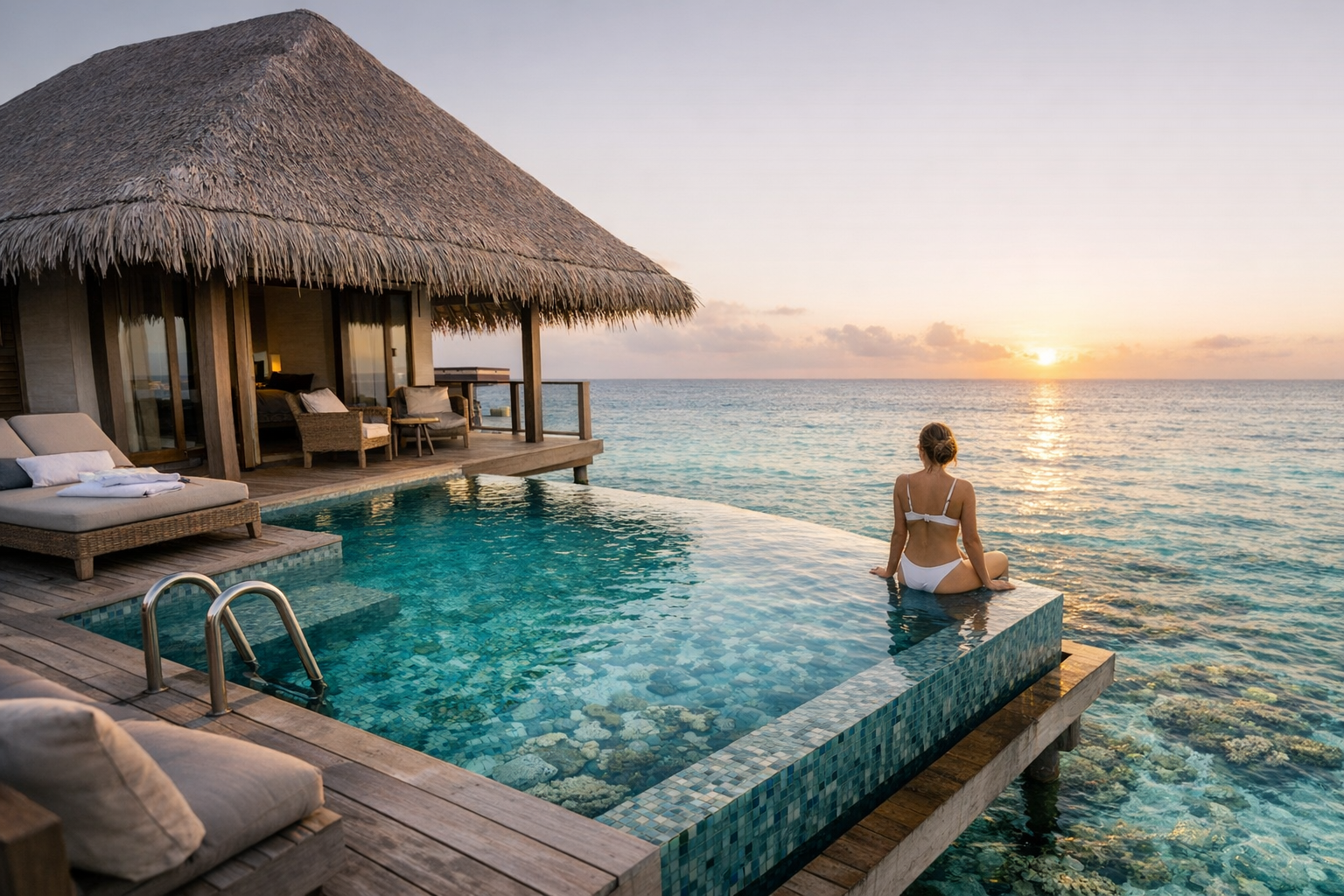
No destination defines romantic escapism quite like the Maldives. Spread across roughly 700 kilometers of Indian Ocean southwest of Sri Lanka, this archipelago of 26 atolls delivers the overwater-bungalow fantasy in a way no other destination has yet replicated. Entry is straightforward—visa-on-arrival, free of charge, valid for 30 days for all nationalities—and USD is accepted almost universally at resort properties, which removes a layer of logistical friction most couples appreciate.
Timing matters enormously. The dry season runs November through April, bringing virtually no rainfall, calm seas, and underwater visibility of 20 to 30 meters—ideal for snorkeling directly off your water villa. January through April is the peak window for diving visibility. The shoulder months of May and October offer 20–30% cost savings with only occasional showers. Avoid June through August when the southwest monsoon brings rougher seas and some resorts reduce their water villa inventory.
Flights route through Velana International Airport (MLE) in Malé. From New York's JFK the journey takes roughly 18–20 hours with one connection, usually in Dubai or Doha. Los Angeles connections run 20–22 hours. Once you land, the transfer to your resort is an experience in itself: speedboats serve resorts closer to the capital ($50–$200 per person round-trip), while seaplanes—daytime only, with sweeping views of atolls from above—reach remote properties for $300–$600 per person. Most ultra-luxury resorts bundle the seaplane transfer into their package pricing.
For accommodation, the range is genuinely vast. At the aspirational end, Soneva Fushi in the UNESCO Biosphere Reserve of Baa Atoll starts water villas at approximately $2,800 per night and beach villas at $1,900, with an open-air cinema experience called Cinema Paradiso that has become something of a honeymoon legend. JOALI Being in Raa Atoll—opened in 2021 and focused on immersive wellness—starts at $2,500–$6,000 per night and requires a seaplane transfer of around 35 minutes from Malé. For couples seeking strong value without sacrificing the water villa experience, Velassaru Maldives in North Malé Atoll sits just 20 minutes by speedboat from the airport, with villas from $650–$1,200 per night and a functioning house reef directly accessible from your deck.
A realistic all-in budget for seven nights in the Maldives breaks down as follows: budget travelers using local island guesthouses with day trips to resort facilities can manage $3,000–$5,000 total; a mid-range water villa resort including flights from the US runs $8,000–$15,000; and a luxury tier like Soneva or Six Senses typically totals $20,000–$40,000 or more. Activities beyond the house reef add up—a two-tank dive runs $120–$180, a private sandbank picnic $300–$600 (complimentary at many luxury resorts), and a couple's spa treatment $300–$600 per session. Nearly every resort offers a honeymoon package with complimentary upgrades, flower decoration, sparkling wine, and a private beach dinner—always request this at the time of booking, and book directly with the resort to maximize your negotiating position on perks.
Bora Bora: Where the Overwater Bungalow Was Born
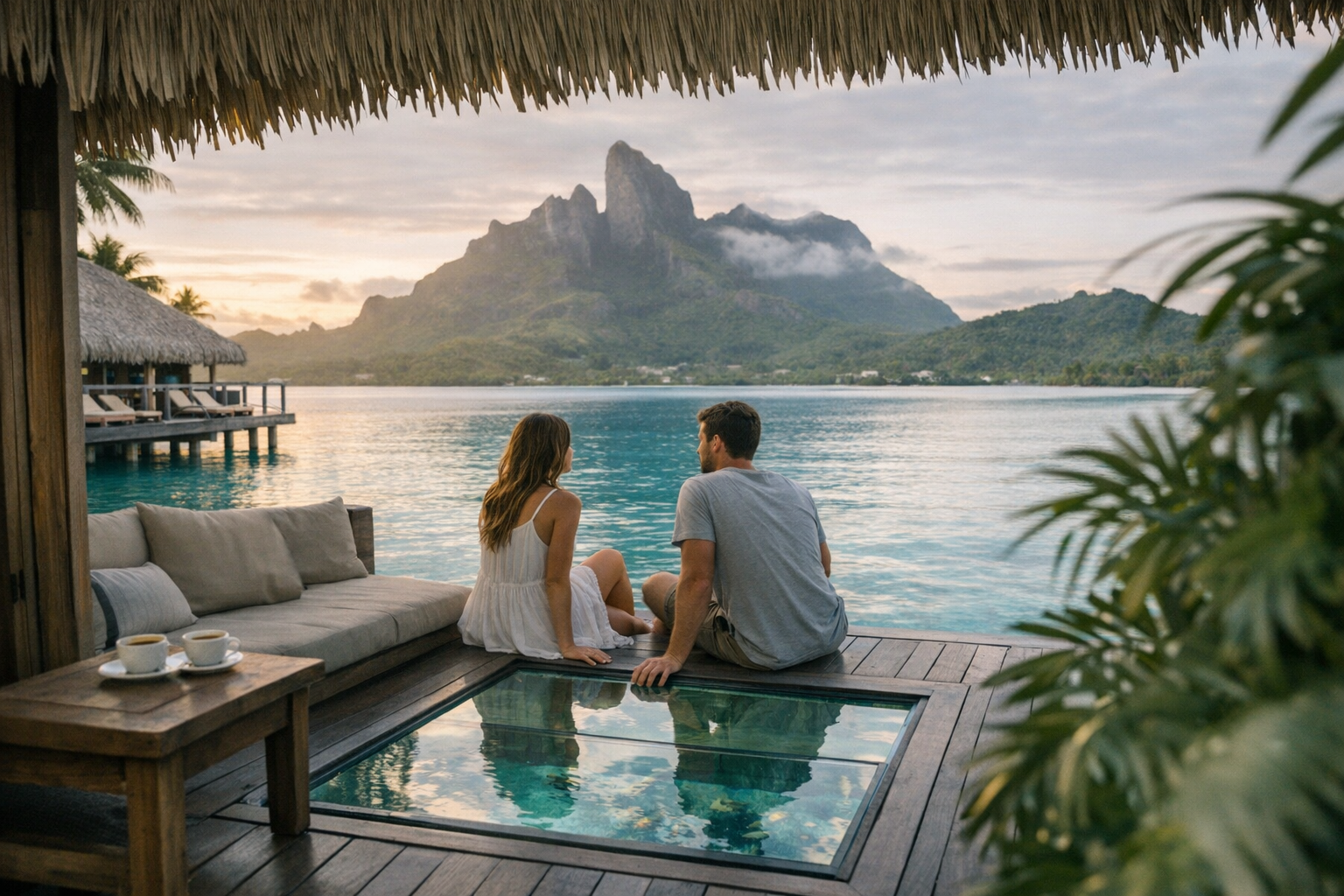
Bora Bora holds a particular claim in the honeymoon world: the overwater bungalow concept was invented here in French Polynesia in the late 1960s, and the island's lagoon—ringed by a protective barrier reef and dominated by the extinct volcano Mount Otemanu rising 727 meters—remains one of the most visually extraordinary environments on the planet. The lagoon cycles through what travel writers routinely describe as 50 shades of turquoise, and the description is, for once, accurate.
Logistically, Bora Bora requires a connection through Papeete's Faaa International Airport (PPT) on the island of Tahiti. Air Tahiti Nui operates direct flights from Los Angeles to Papeete in approximately eight hours, with fares typically ranging from $800–$1,400 per person. United serves the route from San Francisco and Houston. Air Tahiti (no relation to Air Tahiti Nui) then operates the 50-minute inter-island hop to Bora Bora for $200–$350 per person each way. From the airport—located on a separate motu, or small reef island—a short resort boat transfer of 10–20 minutes completes the journey, often complimentary at higher-end properties.
The resort landscape is genuinely competitive. The Four Seasons Bora Bora remains the gold standard, with overwater bungalows from approximately $2,500 per night featuring glass-floor panels, direct lagoon access ladders, outdoor showers, and complimentary kayaks, paddleboards, and snorkeling equipment. A couple's spa journey runs around $650 for two hours. The Conrad Bora Bora Nui, which completed a significant renovation in 2022, offers overwater bungalows from $900–$1,500 per night and is one of the strongest Hilton Honors points redemption opportunities in the South Pacific. The Sofitel Bora Bora Private Island represents the most accessible entry point for the overwater experience, starting at $700–$1,500 per night.
Budget planning for Bora Bora honeymoons should account for the near-total reliance on resort dining—local restaurant options are extremely limited compared to mainland destinations, and food and beverage at resort restaurants typically runs $150–$400 per couple per day. A seven-night trip in an overwater bungalow at the Sofitel level with economy-class flights from the US will generally total $8,000–$12,000; the Four Seasons with lie-flat business-class flights pushes toward $20,000–$35,000. One critical recent change: French Polynesia introduced a small eco-tourism levy of approximately $11 per night effective 2025—a negligible cost but worth noting in your total calculation.
Activities beyond the lagoon are legitimately spectacular. The shark and ray snorkeling experience—where blacktip reef sharks and southern stingrays congregate in the shallow lagoon—is one of the most memorable wildlife encounters available anywhere in the Pacific and costs $100–$180 per person. Helicopter tours over the lagoon and Mount Otemanu run $450–$700 per person for a 30-minute flight. Booking Bora Bora for July or August requires lead times of 12 months or more—this is not a hyperbole, it is the operational reality of a small island with a finite number of overwater bungalows and peak-season demand that absorbs them completely.
Plan this trip
Compare Car Rentals
Compare 500+ suppliers — Hertz, Enterprise, Sixt & more.
Find Cars →Hotels in Best Honeymoon Destinations for Newlyweds Planning Your Perf
Top-rated hotels with free cancellation. Best price guaranteed.
Search Hotels →Vacation Rentals
Entire homes and condos — more space, more privacy.
Browse Rentals →Amalfi Coast & Positano, Italy: Romance Carved Into Cliffsides
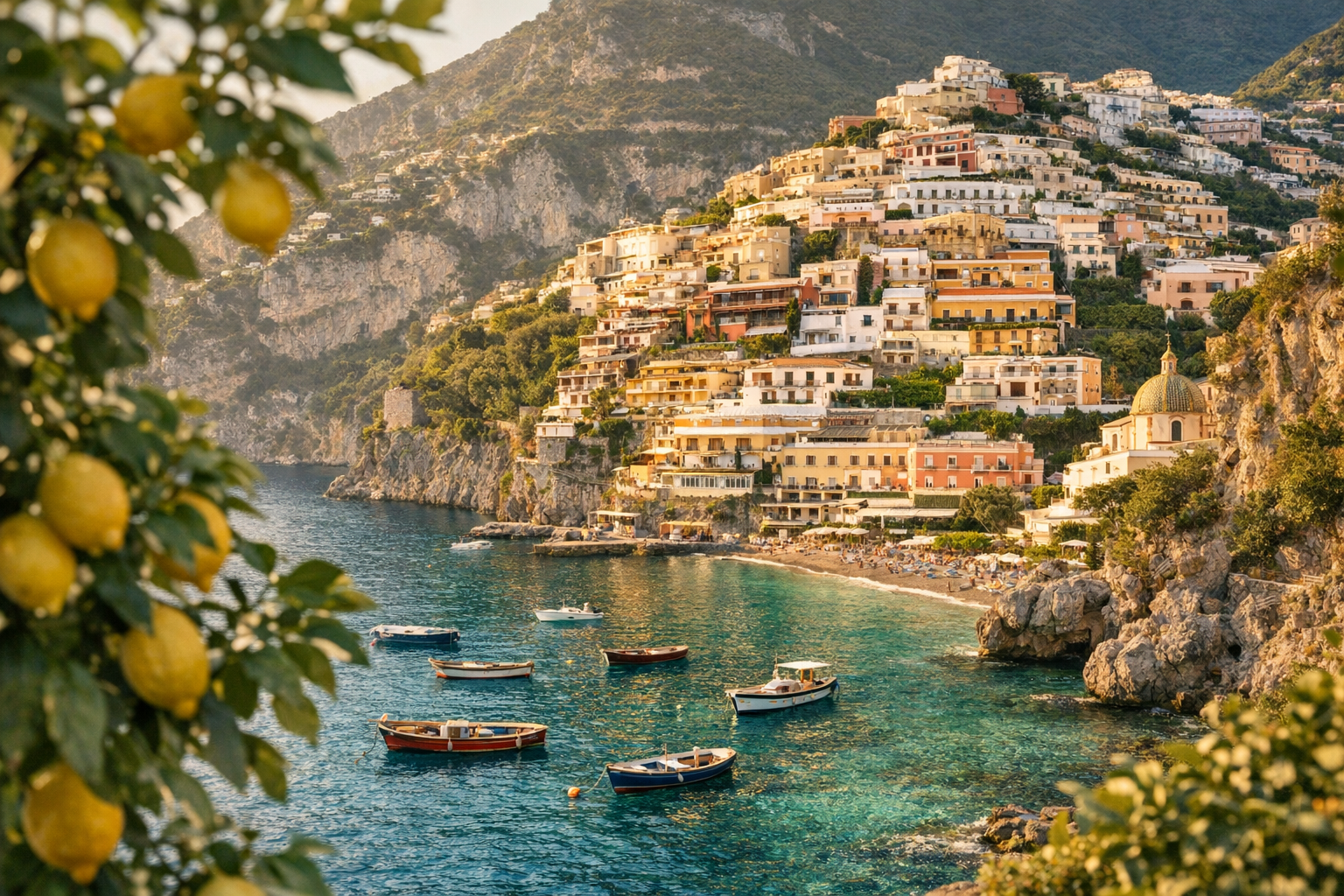
There is a reason the Amalfi Coast appears in more honeymoon mood boards than almost any other destination in Europe: it is a genuinely extraordinary 60-kilometer stretch of Campania coastline where pastel-colored villages cling to vertiginous cliffs above a sea that shifts from jade to sapphire depending on the angle of the sun. Positano, Ravello, and Amalfi itself each offer a distinct emotional register—Positano is cinematic and fashionable, Ravello is serene and classical, Amalfi is a working coastal town with a medieval cathedral at its center.
For honeymoon destinations newlyweds planning a European trip, the timing advice is unambiguous: aim for May through early June or September through October. These shoulder months deliver water temperatures of 24–25°C (warmest in September), fully open restaurants, and a version of the coast that actually allows you to walk through Positano's narrow lanes without being shoulder-to-shoulder with day-trippers. July and August push temperatures to 28–35°C, add traffic jams on the already-notorious Amalfi Drive, and inflate pricing by 30–50%. In 2024–2025, Positano tightened traffic restrictions further: non-resident vehicles are now banned from the coastal road between June 15 and September 30 from 10am to 6pm daily, making water taxis and ferries the practical transport choice.
The gateway airport is Naples International (NAP), roughly 60–90 minutes from the coast depending on your specific destination town. The most elegant arrival for a honeymoon is a private car transfer ($120–$200 Naples to Positano)—it sidesteps the stress of luggage on public buses and delivers you to your hotel with the full theatrical impact of the coastal road views intact. Ferry services from Naples port to Positano and Amalfi operate seasonally from April through October via ALILAURO and Caremar, taking 1.5–2.5 hours at €15–€25 per person. Water taxis between Positano and Amalfi run €20–€35 per person and are one of the more pleasurable ways to move along the coast.
Accommodation ranges from the legendary Le Sirenuse in Positano—58 rooms, a private pool, the Michelin-starred La Sponda restaurant, and a guest history that includes Jacqueline Kennedy, with sea-view junior suites from €1,500 per night in peak season—to genuinely charming guesthouses in the quieter village of Praiano, five kilometers west of Positano, where rates of €80–€200 per night are achievable. The Belmond Hotel Caruso in Ravello offers an infinity pool with a view over the entire coast that ranks among the most photographed hotel amenities in Europe, with rooms from €700–€1,800.
Dining on the Amalfi Coast is one of its strongest selling points. A lunch for two at a traditional trattoria with house wine runs €40–€80; dinner at a well-regarded restaurant with a proper wine selection costs €80–€150. The boat-accessed Da Adolfo in Positano—reached by the restaurant's own red-hulled launch from the beach—is a bucket-list lunch at approximately €40 per person and represents exactly the kind of experience-over-luxury shift that defines modern honeymoon planning. For activity, the Path of the Gods (Sentiero degli Dei) is a free 7.8-kilometer hike from Agerola to Nocelle with panoramic views across the coast that many couples describe as the highlight of their entire trip. A cooking class in Positano or Ravello costs €120–€180 per person and typically includes lunch, wine, and a recipe booklet.
US, UK, Australian, and Canadian travelers should note that the European ETIAS pre-authorization system—a €7 online application comparable to the US ESTA—is expected to launch in 2025. Confirm its current status before booking, as it applies to all Schengen Zone entry for previously visa-exempt nationals.
Santorini, Greece: Sunset Views and Caldera Magic
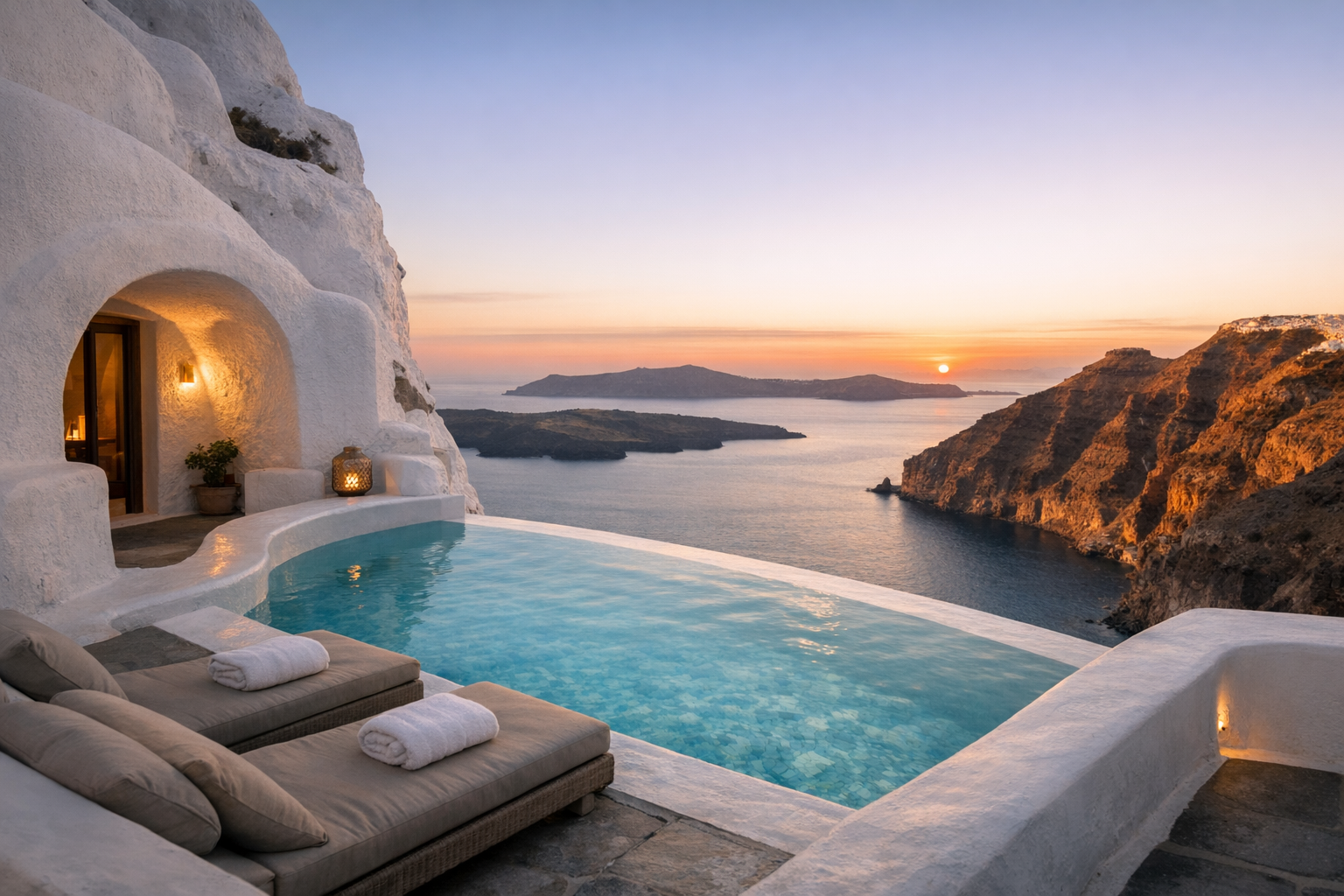
Santorini occupies a unique place in honeymoon imagination—the white-and-blue Cycladic architecture rising above the caldera of an ancient volcanic collapse, with sunsets over Oia that attract visitors from every corner of the world specifically to witness them. The island sits 250 kilometers southeast of Athens in the South Aegean and delivers a romantic visual intensity that very few destinations can match.
For honeymoon destinations newlyweds planning a Greek escape, the timing advice closely mirrors the Amalfi Coast: May, June, and September are the optimal months, delivering sea temperatures of 22–28°C, fully operational hospitality infrastructure, and a version of the island that hasn't yet absorbed the peak-season crush. July and August bring temperatures of 30–35°C alongside an extraordinary volume of cruise ship tourism—between 15,000 and 17,000 cruise passengers can disembark into Fira on a single day during peak season, and the Oia sunset viewpoint fills two hours before the event itself. Experiencing it in September means arriving 20 minutes early and having actual space to stand.
Flights reach Santorini through Athens International Airport (ATH) with connecting island-hopper flights on Aegean Airlines or Sky Express, or via direct summer charter and scheduled services from major European hubs. From the US, the typical routing is a transatlantic flight to Athens followed by a 50-minute domestic connection. Alternatively, the high-speed ferry from Piraeus (Athens' port) takes approximately five hours and is a genuinely pleasant travel experience if you have the time.
Accommodation clusters in Oia and Imerovigli for caldera views, with cave hotels and infinity-pool suites built directly into the volcanic rock face. Caldera-view properties command significant premiums—expect $600–$2,000+ per night at reputable boutique hotels during peak season, with cliff-side suites at top properties like Canaves Oia Epitome or Grace Hotel starting considerably higher. The black sand beaches of Perissa and Kamari offer more affordable accommodation options ($150–$400 per night) for couples who want to allocate budget toward experiences rather than accommodation drama.
As with the Amalfi Coast, the ETIAS pre-authorization requirement for Greece will apply once the system launches. Budget planning for a week in Santorini typically falls between $5,000 and $12,000 per couple depending on accommodation tier, flight class, and dining choices—placing it within reach for many couples working with the $5,000–$8,000 average honeymoon budget, particularly if they book shoulder-season dates and balance one splurge property with more modest nights elsewhere.
Plan this trip
Compare Car Rentals
Compare 500+ suppliers — Hertz, Enterprise, Sixt & more.
Find Cars →Hotels in Best Honeymoon Destinations for Newlyweds Planning Your Perf
Top-rated hotels with free cancellation. Best price guaranteed.
Search Hotels →Vacation Rentals
Entire homes and condos — more space, more privacy.
Browse Rentals →Hawaii: The Luxury Honeymoon Closer to Home
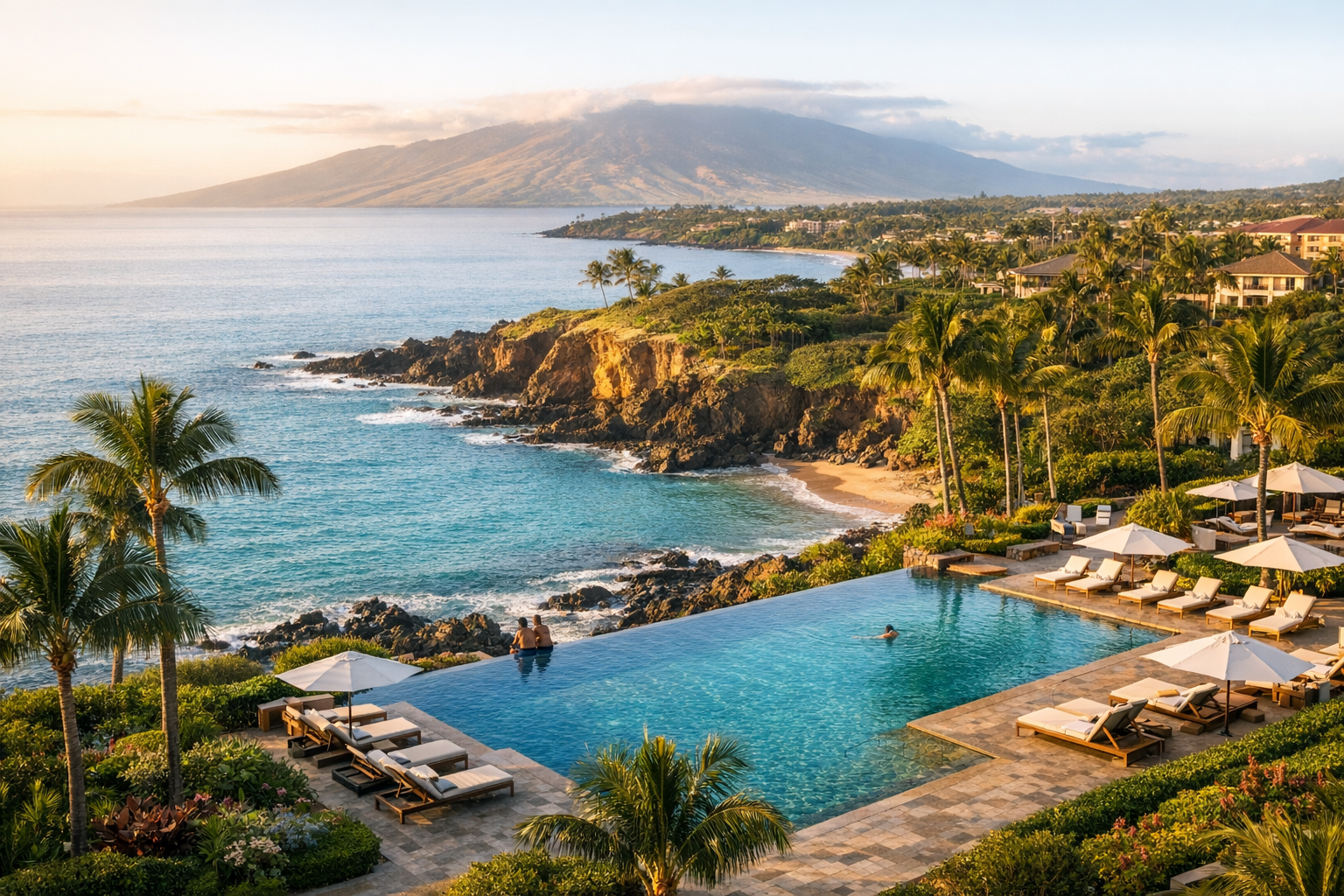
Hawaii remains the third-most-searched honeymoon destination among US couples for a practical reason: it delivers extraordinary natural beauty, reliable luxury resort infrastructure, and no passport requirement—all within a five-to-eleven-hour flight from the continental United States. For honeymoon destinations newlyweds planning with tighter timelines or budget constraints on flights, it is an exceptionally strong choice that frequently rivals international alternatives on sheer romantic impact.
The island choice matters significantly. Maui is the most popular honeymoon island, anchored by the luxury corridor of Wailea on the south shore—home to the Four Seasons Maui at Wailea, the Fairmont Kea Lani, and the Andaz Maui at Wailea, with nightly rates ranging from $600 to $2,500+ depending on room category and season. Maui's Road to Hana is a 65-mile coastal drive encompassing more than 600 curves, 59 bridges, and access to bamboo forests, black sand beaches, and seven sacred pools—free to drive, priceless as an experience. The island of Kauai offers a dramatically wilder, greener alternative, with the Na Pali Coast accessible only by boat, helicopter, or multi-day hiking trail. The Big Island of Hawaii delivers the extraordinary spectacle of active lava flows at Hawaii Volcanoes National Park—a $35 per vehicle park entry fee for one of the most genuinely awe-inspiring natural phenomena on earth.
Best timing for Hawaii honeymoons runs April through June and September through November—outside peak summer season and the holiday crush of December through mid-January, when rates at top Maui resorts can jump 40–60% and availability shrinks. Weather is excellent year-round on the leeward (western) shores; rainfall is confined mainly to the windward (eastern) sides.
For couples combining their Hawaii honeymoon with other travel, or arriving on the mainland before flying onward, coordinating premium ground transportation between mainland airports and departure terminals adds a layer of seamlessness that sets the right tone for the journey ahead. A seven-night Hawaii honeymoon—flights from the continental US included—typically falls between $5,000 and $12,000 at mid-to-luxury tier, making it one of the strongest value propositions in the honeymoon destinations guide for US-based couples.
How to Build Your Honeymoon Budget and Book Smart
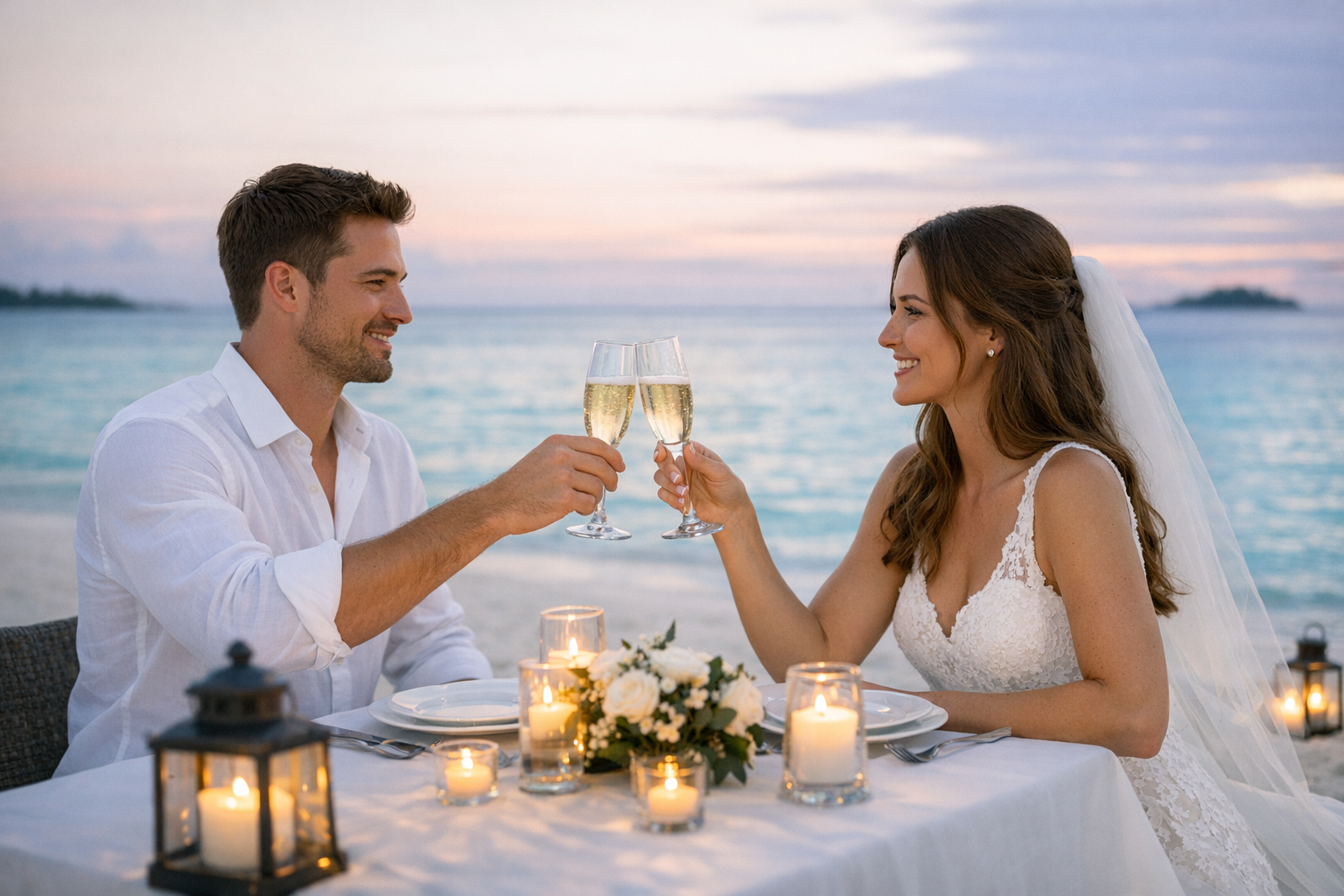
Once you have identified your destination shortlist, the mechanics of budgeting and booking honeymoon travel follow a fairly consistent framework—one that separates couples who arrive to seamless, romantic experiences from those who spend the first 48 hours managing avoidable problems.
Start with the total cost of ownership, not the nightly rate. A Maldives water villa at $800 per night sounds comparable to a Four Seasons Hawaii room until you add seaplane transfers ($300–$600 per person each way), the near-complete lack of dining alternatives to resort restaurants ($300–$500 per day in food and beverage), and 19-hour flights in economy class. The Maldives at that price point typically totals significantly more than Hawaii at a similar nightly rate once every line item is accounted for. Honesty about the full cost from the outset prevents the compressed-budget decisions that diminish the experience.
On flight strategy: for destinations in the South Pacific (Bora Bora, Fiji) or Indian Ocean (Maldives), lie-flat business-class seats on 18–22 hour journeys are a meaningful quality-of-life upgrade, not just a luxury indulgence. Arriving rested and comfortable to your first overwater villa is categorically different from arriving after a full day in economy. Use airline credit card sign-up bonuses and points programs strategically—many couples accumulate sufficient miles in the year before their wedding to cover business-class upgrades on a single international leg, which can reduce the cash cost of the flight category dramatically.
Travel insurance uptake for honeymoon travel now runs at 71%—the highest of any trip category—for good reason. A non-refundable $15,000 resort deposit at a Maldives property represents real financial exposure that a $300–$500 travel insurance policy mitigates with cancel-for-any-reason coverage. Wedding vendors and hotels occasionally fail or change ownership; natural disasters, medical emergencies, and flight cancellations do not care that your honeymoon starts on Saturday.
For booking mechanics: book flagship resort nights directly with the property for best honeymoon package negotiation and complimentary perks. Use consolidator platforms or travel credit cards for flights. For multi-destination itineraries—particularly those combining a coastal resort with city time in Rome, Athens, or Bangkok—working with a specialist honeymoon travel planner adds genuine value rather than just adding cost, particularly for itineraries above $15,000 total.
Finally, build buffer time into your logistics. Arriving at your honeymoon destination the night before the main resort check-in—at an airport hotel or city property—eliminates the risk of a delayed flight eating into your first full day of the honeymoon itself. The same logic applies to departure: scheduling your return flight for the morning after your last resort night, rather than the same evening, protects the final romantic dinner from becoming a race to the airport.
Plan this trip
Compare Car Rentals
Compare 500+ suppliers — Hertz, Enterprise, Sixt & more.
Find Cars →Hotels in Best Honeymoon Destinations for Newlyweds Planning Your Perf
Top-rated hotels with free cancellation. Best price guaranteed.
Search Hotels →Vacation Rentals
Entire homes and condos — more space, more privacy.
Browse Rentals →Frequently Asked Questions
Booking timelines vary significantly by destination. For ultra-popular properties in the Maldives, Bora Bora, or the Amalfi Coast during peak season (June–August), booking 9–12 months in advance is the operational standard—not an exaggeration. For Hawaii, the Caribbean, Greece in shoulder season, or any domestic destination, 3–6 months is generally sufficient. Honeymoon packages at top resorts have limited inventory, and complimentary upgrades and perks go to the earliest bookers.
According to The Knot, the average US honeymoon budget in 2024–2025 runs between $5,000 and $8,000—roughly 15% higher than pre-pandemic levels. That figure covers all-in costs including flights, accommodation, dining, activities, and transfers for a 7–10 night trip. Budget-conscious couples opting for a 'minimoon' (3–5 nights, short-haul travel) spend $1,500–$3,000. Luxury honeymoons at properties like Soneva Fushi in the Maldives or the Four Seasons Bora Bora typically total $20,000–$40,000 or more including flights.
Hawaii offers the strongest combination of luxury resort infrastructure, natural spectacle, and value for US-based couples—particularly when factoring in the absence of international flights. Santorini and the Amalfi Coast in shoulder season (May–June or September–October) offer European romance at prices 30–50% below peak summer rates. In the South Pacific, the Conrad Bora Bora Nui—recently renovated and available on Hilton Honors points—represents one of the best overwater bungalow value propositions available.
Absolutely. Travel insurance uptake for honeymoon travel is 71%—the highest of any trip category—reflecting how much financial exposure is involved. A non-refundable resort deposit at a Maldives or Bora Bora property can run $5,000–$15,000 alone. Comprehensive cancel-for-any-reason policies typically cost $300–$500 and cover medical emergencies, flight cancellations, vendor insolvency, and natural disasters. For any honeymoon involving international travel or non-refundable bookings above $3,000, insurance is not optional.
Italy's Amalfi Coast scores exceptionally high on this front: couples can combine Positano's beach glamour with Pompeii's ancient ruins (€20 per person entry), a classical music concert at Ravello's Festival (€30–€120 per ticket), and Capri day trips—all within a single week. Greece's Santorini pairs naturally with a few days in Athens for Acropolis access and world-class museums. Southeast Asia—particularly Kyoto, Japan or Hoi An, Vietnam—is increasingly popular for couples seeking deep cultural immersion alongside luxury hospitality, typically at lower overall cost than the Maldives or Bora Bora.
For the Maldives: no visa required; tourists receive a free 30-day visa-on-arrival regardless of nationality. For Bora Bora (French Polynesia): US citizens need only a valid passport for stays under 90 days. For the Amalfi Coast (Italy/Schengen Zone): US citizens currently enter visa-free for up to 90 days, but the European ETIAS pre-travel authorization system—a €7 online application—is expected to launch in 2025 and will be required for all previously visa-exempt nationalities. Check the official ETIAS website for current status before booking your Italy or Greece honeymoon.
The dry season from May through October is generally considered the best period, with temperatures of 26–28°C, lower humidity, and calmer conditions. July and August are peak months—the most popular but also the most expensive and hardest to book, requiring lead times of 12+ months at Four Seasons or InterContinental properties. The wet season (November–April) brings warmer temperatures of 28–30°C, a small cyclone risk (rare but possible), and pricing 20–30% lower than dry season peaks. The lagoon itself remains protected by the barrier reef and is calm year-round.
It depends on destination complexity. For single-resort destinations like the Maldives or Bora Bora, booking directly with the resort and requesting a honeymoon package is almost always the best approach—resorts offer complimentary upgrades, flower decorations, private dinners, and sparkling wine that add 15–25% value over the base rate. For multi-destination itineraries (Amalfi Coast combined with Rome, or Thailand combined with the Maldives), a specialist honeymoon travel planner adds genuine value by managing logistics, securing preferred allocations, and handling any on-trip issues without the couple needing to call a contact center from their villa.