Why Matobo National Park Belongs on Every Zimbabwe Itinerary
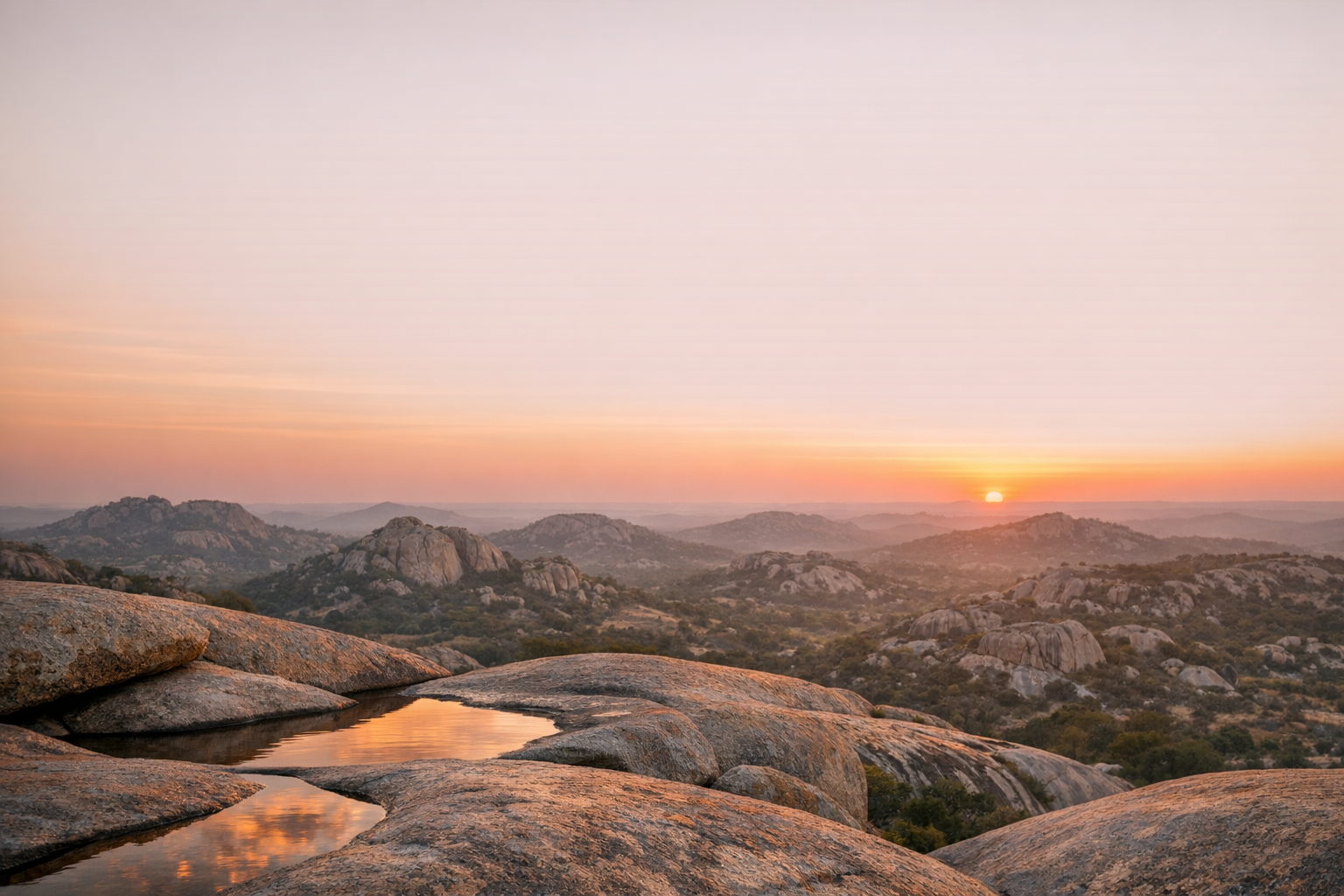
Thirty-five kilometres south of Bulawayo, the granite hills of Matobo rise from the Zimbabwean highveld like the ruins of a civilisation that predates humanity itself. The rock is real: these formations are approximately two billion years old, among the oldest exposed granite on the planet. UNESCO recognised what the Ndebele, San, Rozvi, and Kalanga peoples had always known when it inscribed the wider Matobo Hills as a World Heritage Cultural Landscape in 2003. For travellers who plan their African itineraries around Victoria Falls and the Hwange lion prides, Matobo National Park tends to be the revelation they didn't see coming.
Established in 1926 as one of Zimbabwe's oldest protected areas, the national park itself covers approximately 424 km², though the broader Matobo Hills region extends across some 3,100 km². Inside those boundaries you will find the highest density of white rhinos in Zimbabwe, more than 3,500 recorded San rock art sites spanning up to 13,000 years of human history, one of Africa's premier raptor-watching destinations, and the grave of Cecil John Rhodes — a monument that remains as contested and thought-provoking as the empire it represents. No other park in southern Africa compresses this much geological, biological, and cultural significance into such a compact, drivable area.
For travellers planning a Zimbabwe circuit that includes Bulawayo, skipping Matobo is simply not defensible. For those flying directly to Bulawayo from Johannesburg — a journey of roughly 90 minutes — Matobo can anchor an entire long-weekend trip without the need to travel to Harare at all. This guide covers every practical detail you need to plan the experience properly.
Top Experiences: What to Actually Do in Matobo
White Rhino Tracking on Foot
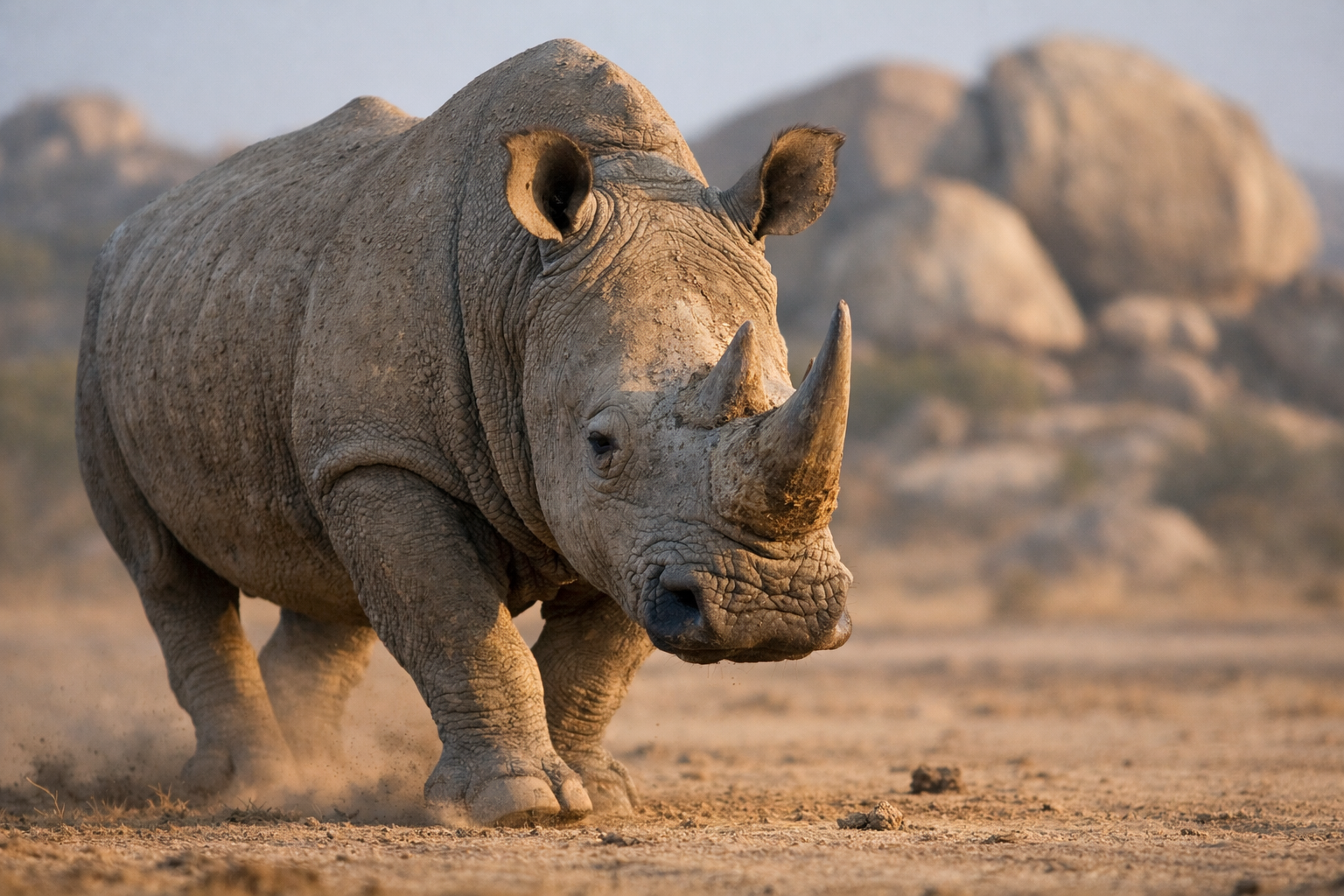
No activity in Matobo — and arguably few activities in all of Zimbabwe — matches the visceral intensity of tracking white rhinos on foot through the Whovi Wild Area. The wider Matobo Hills region supports approximately 700 or more white rhinos, making it the most important white rhino stronghold in the country. A smaller population of critically endangered black rhinos also exists here. Tracking is conducted with armed ZimParks rangers, with groups typically capped at six to eight people. You will walk between two and eight kilometres depending on where the rhinos have moved, and in most cases you will get within five to fifteen metres of animals that weigh over two tonnes. The silence required, the reading of tracks in the dust, and the moment a rhino materialises from behind a granite boulder combine into something that no vehicle-based game drive can replicate. Rhino tracking permits currently cost approximately $30–$50 USD per person, with guide fees of an additional $10–$20 USD. Wear neutral-coloured clothing and sturdy closed shoes. Avoid perfume. Everything else your guide will tell you.
San Rock Art: 13,000 Years of Human Storytelling
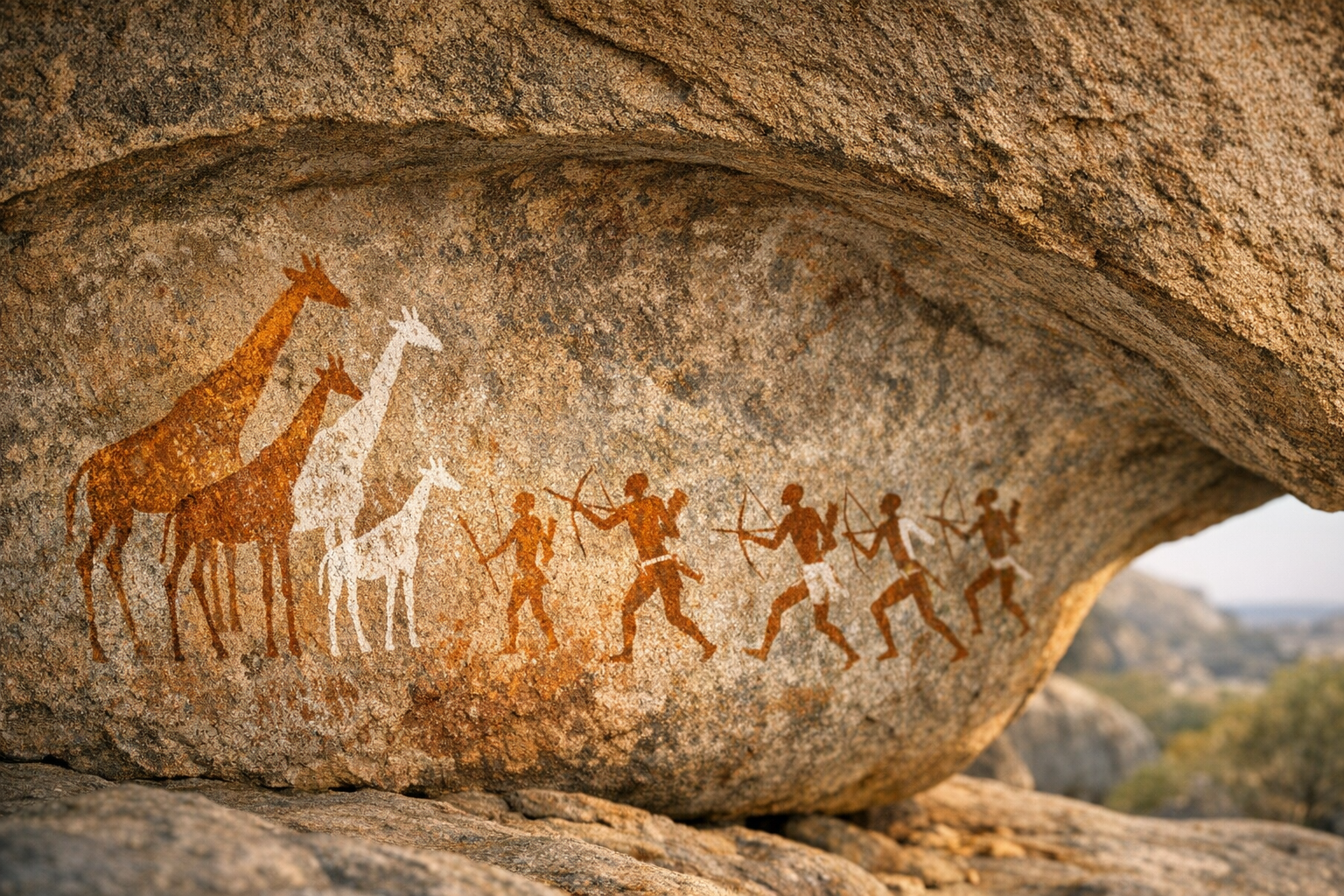
Matobo contains one of the highest concentrations of San Bushman rock art on Earth, with over 3,500 recorded sites spread across its caves and overhangs. Nswatugi Cave delivers some of the most accessible and visually spectacular examples — well-preserved paintings of giraffe, kudu, and sable antelope rendered in ochre and white, dating back thousands of years. Pomongwe Cave offers interpretive displays alongside the art itself. Silozwane Cave, which requires a 45-minute hike, rewards the effort with exceptional paintings and near-complete solitude. Inanke Cave contains near life-size human figures. Guided tours of these sites — essential for cultural context that a sign cannot convey — typically cost $20–$40 USD through lodges or ZimParks. Seek out a guide with Ndebele or San heritage; the layers of meaning they bring to these images are beyond what a generic tour script can offer.
World's View and the Rhodes Grave
Matolindzimu Hill — "dwelling place of spirits" in Ndebele — is the highest point in the park and commands a 360-degree panorama across the kopjes that made Cecil Rhodes choose this as his burial site. He died in 1902 and, per his personal wish, was buried here in one of the most remarkable graves in Africa. Leander Starr Jameson and the soldier known as Shangaan Wilson lie nearby. The site is complicated by history, as it should be, but it is unavoidable as a window into the colonial period that shaped modern Zimbabwe. The Ndebele King Mzilikazi is also commemorated nearby at Entumbane, a site of significant spiritual importance to the Matabele people. Visit in early morning or late afternoon; midday light on granite is brutal for photography and brutal for the skin.
Birding: One of Africa's Elite Raptor Destinations
Matobo supports over 200 bird species, and its claim to fame among birders is the extraordinary density of Verreaux's Eagles — also called Black Eagles — that nest among the kopjes. An estimated 40 or more pairs hunt the rocky hillsides, feeding almost exclusively on rock hyraxes (dassies). Watching a Verreaux's Eagle drop from a kopje summit in a near-vertical stoop is among southern Africa's finest wildlife spectacles. Peregrine Falcons, Lanner Falcons, Augur Buzzards, and African Hawk-Eagles round out a raptor list that draws dedicated birders from across the continent. Half-day guided birding walks run approximately $20–$50 USD.
Game Drives and Self-Drive Exploration
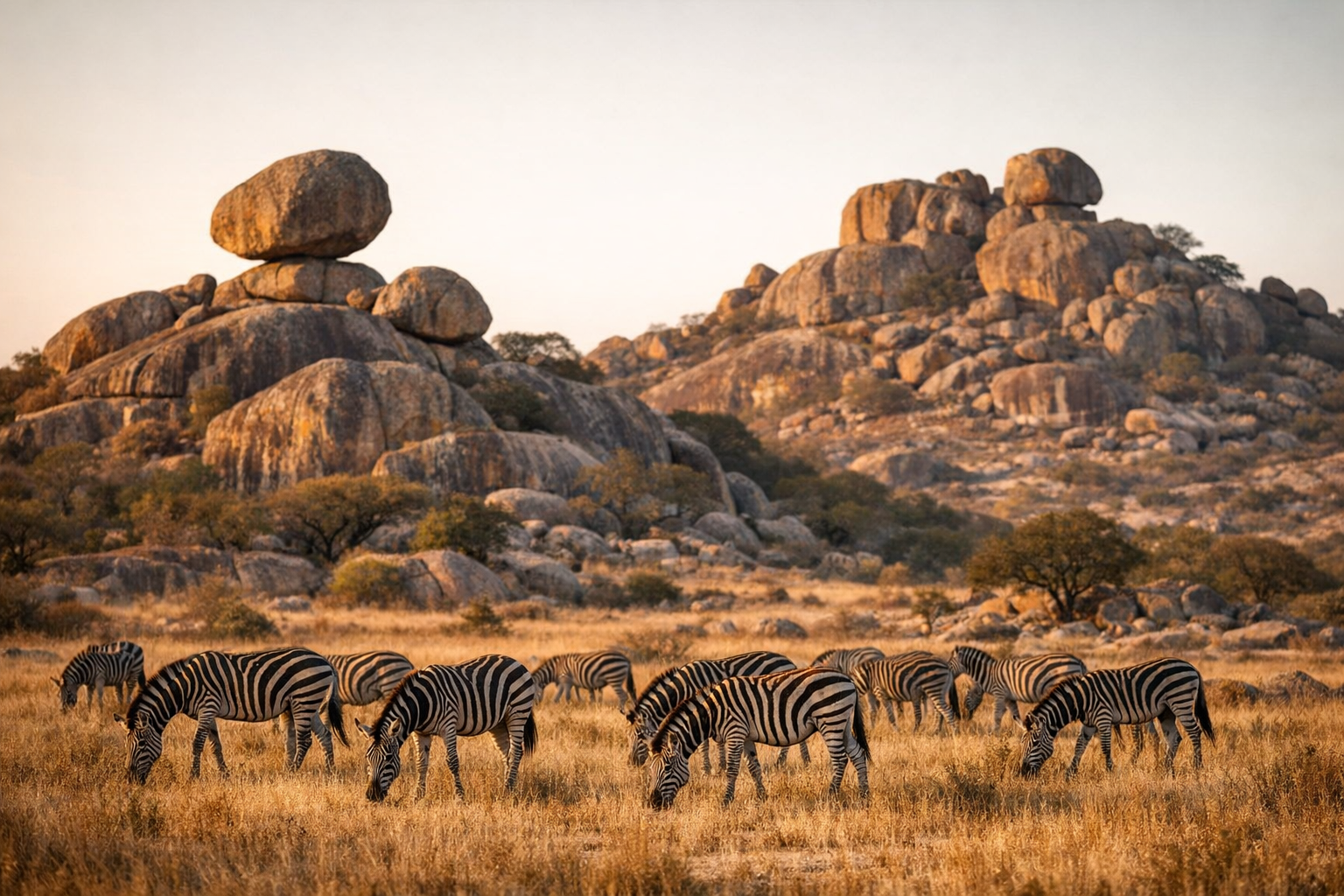
Beyond rhinos, Whovi Wild Area supports zebra, wildebeest, impala, warthog, sable antelope, giraffe, leopard, baboon, and vervet monkey. There are no elephants or lions within the national park boundaries. The recreational zone around Maleme Dam is navigable in a standard 2WD vehicle during the dry season; a 4WD is recommended for serious exploration of Whovi's back tracks. Morning drives from 6 to 9 AM and evening drives from 4 to 6 PM offer the best wildlife encounters.
Best Time to Visit Matobo National Park
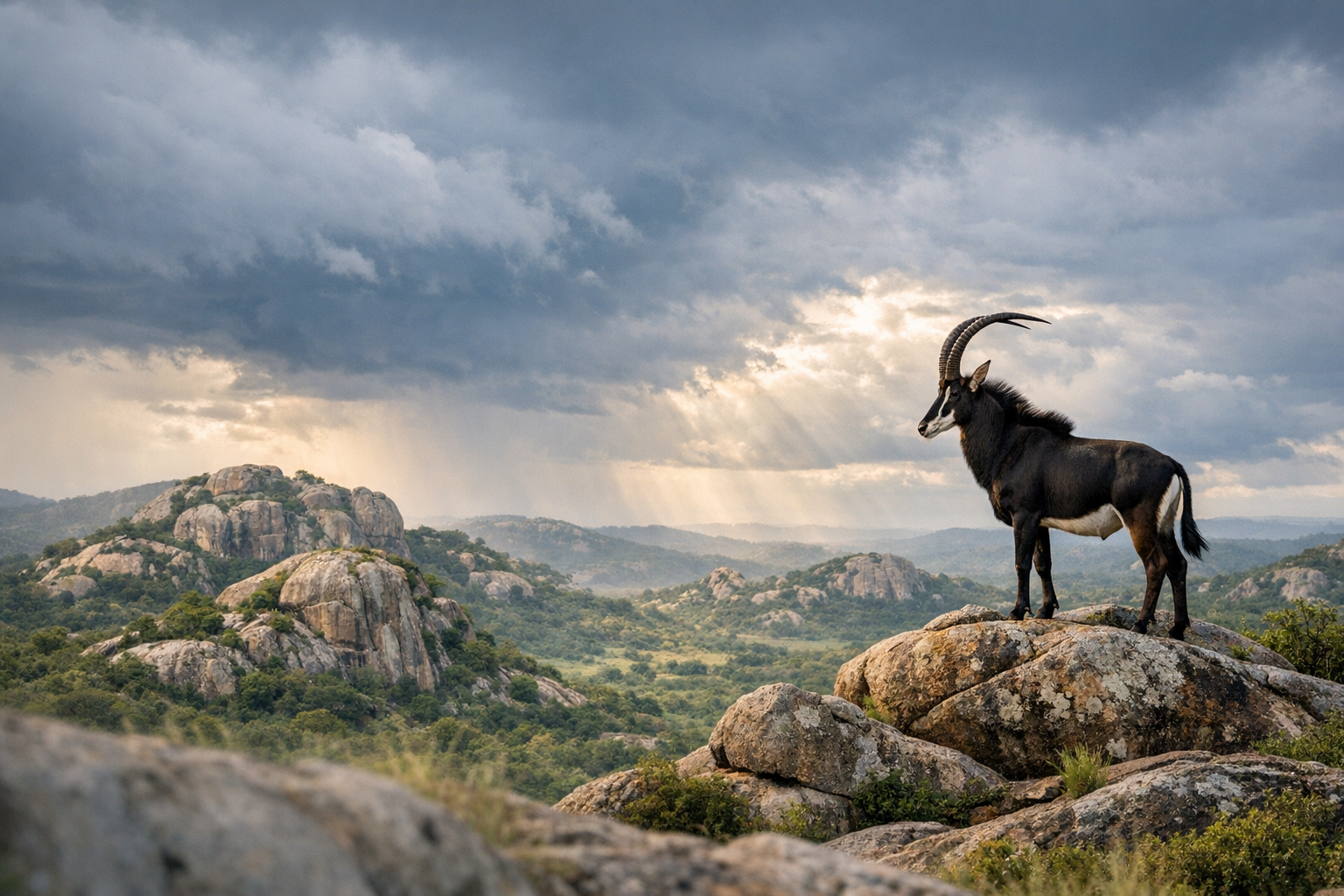
Matobo's climate divides neatly into two seasons, and the best time to visit depends entirely on what you prioritise.
Dry Season: May to October
This is the recommended travel window for most visitors, particularly those focused on rhino tracking and game viewing. May through August brings cool, clear days with temperatures ranging from 10 to 25°C (50–77°F), with nights in June and July dropping to near-freezing — pack a fleece for pre-dawn game drives and early rhino walks. September and October see temperatures climbing toward 30–35°C (86–95°F), the vegetation thins dramatically, and animals concentrate around the remaining water sources. Maleme Dam becomes a reliable focal point for wildlife sightings. Rhino tracking is at its most productive in October when dry grass makes movement quieter and tracks more visible.
July and August are the busiest months due to school holidays across southern Africa and the peak of the global safari season. If you value solitude, September and October offer nearly identical wildlife conditions with significantly fewer visitors.
Wet Season: November to April
The wet season transforms Matobo into a lush, photogenic landscape of deep greens and dramatic cloud formations. Annual rainfall averages 500–600mm, falling mostly between November and April. Migratory bird species arrive in December and January, making this the peak season for serious birders. Lodge rates drop noticeably, and some properties offer significant discounts. The trade-offs are real: some dirt tracks become impassable after heavy rain, vegetation makes game spotting harder, and February and March can be oppressively humid.
The Sweet Spot
Experienced Matobo travellers consistently recommend late April or early May as the optimal window: the rains have ended, tracks are drying, the landscape retains its green colour, and you will share the park with very few other visitors. If your schedule allows this timing, take it.
Plan this trip
Getting to Matobo National Park: Flights, Roads, and Transfers
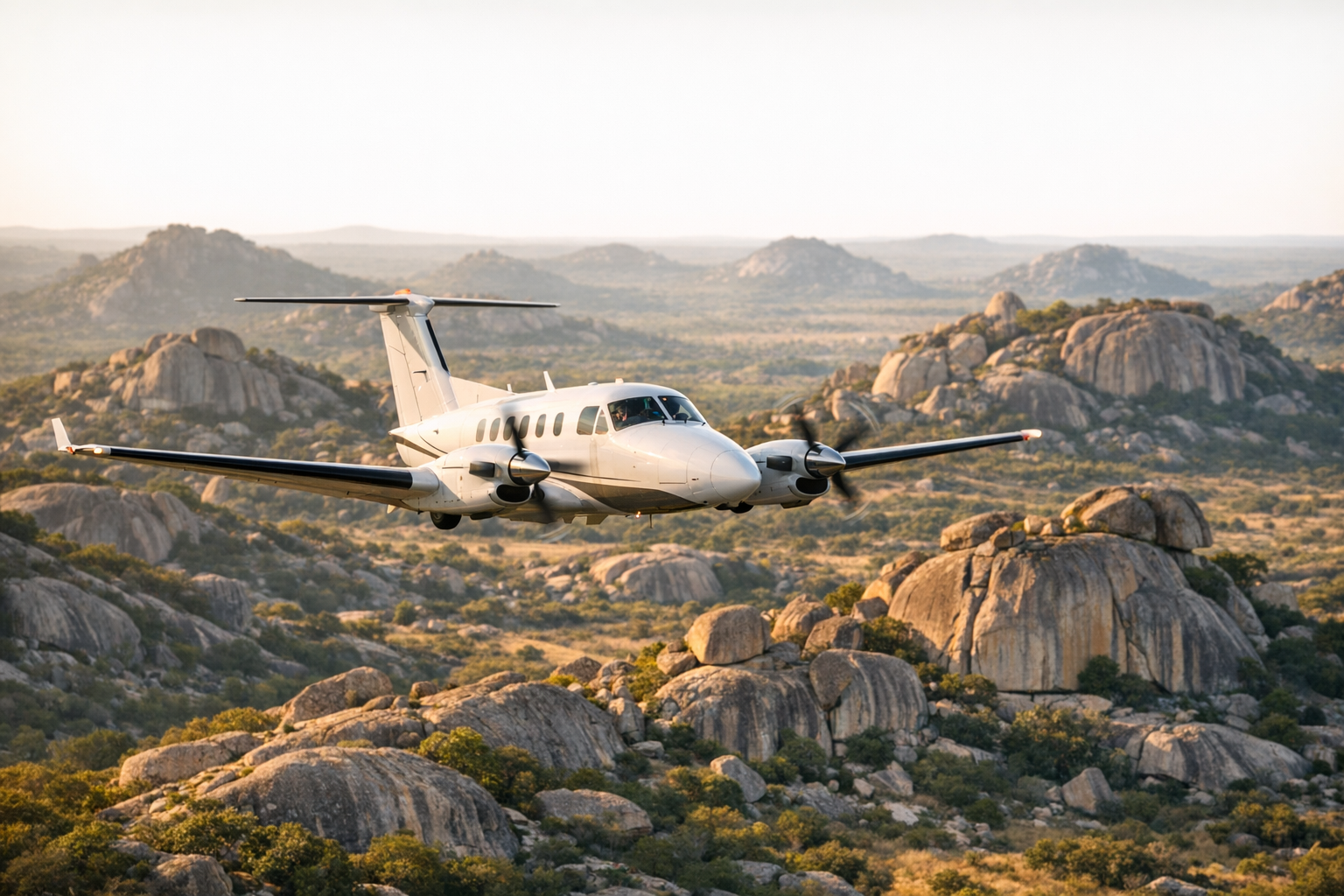
Flying into Bulawayo
The gateway city for Matobo is Bulawayo, Zimbabwe's second-largest city. Joshua Mqabuko Nkomo International Airport (airport code BUQ) handles domestic and limited international traffic. Fastjet Zimbabwe operates multiple daily flights from Harare taking approximately one hour, with fares typically ranging from $80–$150 USD. International travellers flying from Johannesburg's OR Tambo International Airport (JNB) have direct options in the 90-minute range, with fares generally between $150–$300 USD return. Most European and North American travellers will route through Johannesburg, making BUQ an entirely practical entry point that bypasses Harare altogether.
For travellers building a broader Zimbabwe itinerary that includes Victoria Falls, consider flying into Bulawayo and out of Victoria Falls (or vice versa) to avoid backtracking. This routing makes Matobo a logical first stop after arrival.
Overland from South Africa
The Beit Bridge border crossing at Limpopo connects South Africa's N1 highway to Zimbabwe's road network. From Johannesburg, Beit Bridge is approximately 4.5 hours by road. Bulawayo is then a further three hours north, making the total drive around seven to eight hours — long but very manageable in a rental vehicle. South African rental car companies typically prohibit cross-border travel, so if you are driving from South Africa, arrange a Zimbabwe-specific rental through operators who explicitly permit this.
Intercape runs a reliable coach service between Harare and Bulawayo for approximately $20–$30 USD, taking five to six hours. From Bulawayo, you will need a vehicle — either a rental car, a lodge transfer, or a negotiated taxi — to reach the park entrance 35 km to the south. Expect to pay $30–$50 USD each way for a taxi from Bulawayo to the park. There is no public bus service into Matobo itself.
Visa Requirements
Most international visitors require a visa to enter Zimbabwe. A single-entry visa costs $30 USD for most Western nationalities and is available on arrival at Bulawayo airport and major land borders, or in advance through Zimbabwe's e-visa portal (evisa.gov.zw). The KAZA Univisa, priced at $50 USD, is the smarter choice for anyone planning to combine Zimbabwe with Zambia — it covers both countries with multiple entries valid for 30 days. Ensure your passport has at least six months of validity beyond your intended departure date.
Planning your transportation logistics around southern Africa? Our guides on [luxury transfer planning](/luxury-airport-transfers/) and [car rental strategy for Africa](/car-rental-tips-africa/) can help you piece together a smooth multi-destination itinerary.
Where to Stay: Accommodation in and Around Matobo
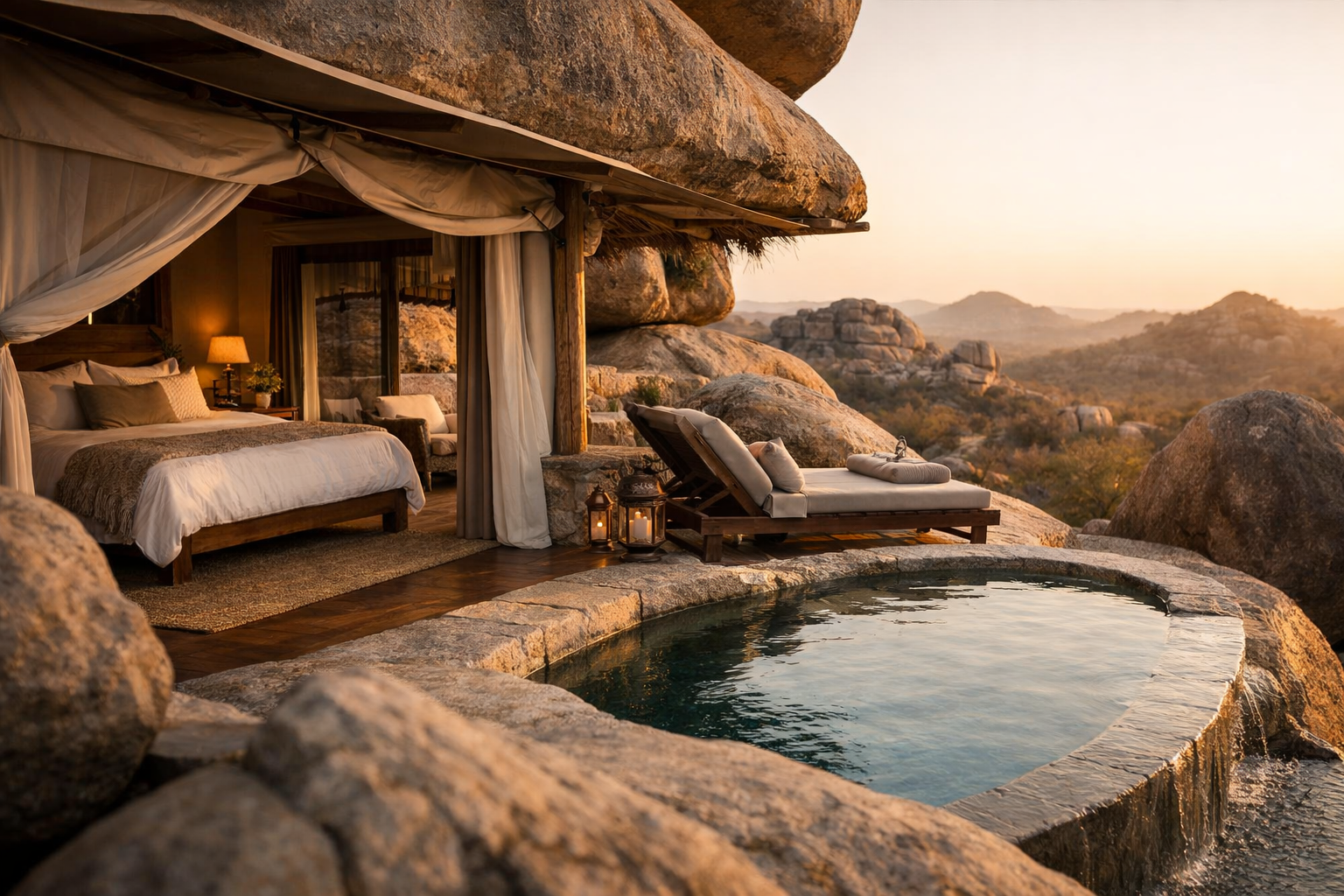
Your accommodation choice fundamentally shapes your Matobo experience. The park rewards those who stay inside or immediately adjacent to it — sunrise over the kopjes from a lodge veranda, and the ability to be at the rhino tracking starting point at first light, are privileges that no Bulawayo hotel can replicate.
Amalinda Lodge (Luxury — Inside the Hills)
Amalinda is the definitive Matobo Hills accommodation. Nine suites are constructed directly into and among the ancient granite boulders, creating an architectural experience that is entirely unique in southern Africa. Rates of approximately $350–$600 USD per person per night are fully inclusive — meals, game drives, rhino tracking, and cave art visits are all covered. Given the small size and high demand, advance booking of three to six months is strongly recommended for peak season. For travellers accustomed to East Africa's top-tier camps, Amalinda delivers a comparable level of immersion and personal attention.
Big Cave Camp (Luxury — Adjacent to the Park)
As the name suggests, Big Cave Camp integrates natural cave formations into its design. With a maximum of 14 guests, this is an intimate experience priced at approximately $200–$400 USD per person per night on a fully inclusive basis. The smaller scale means a higher guide-to-guest ratio and a more flexible daily schedule.
Matobo Hills Lodge (Mid-Range)
Comfortable chalets at approximately $150–$250 USD per person per night with some meals included. A solid option for travellers who want a proper bed and reliable service without the full luxury price point.
Zimbabwe National Parks Chalets and Campsite (Budget)
The National Parks self-catering chalets at Maleme Dam are the budget traveller's answer, at approximately $40–$80 USD per chalet per night. You will need to bring all food and supplies — there is no on-site restaurant. The campsite runs $10–$15 USD per person per night and suits self-sufficient travellers with their own vehicle. Book through ZimParks (zimparks.org.zw); online booking can be unreliable and a direct email or phone call often works better.
Staying in Bulawayo
For those preferring a city base with day trips to the park, Bulawayo offers a decent range. The Bulawayo Club — a former gentlemen's club converted into a hotel — provides a historically atmospheric stay at roughly $120–$180 USD per night. Holiday Inn Bulawayo offers reliable international-standard amenities at $80–$120 USD per night. Budget travellers do well at Banff Lodge or the Rainbow Hotel, both in the $40–$80 USD range.
For planning accommodation across a wider Zimbabwe or southern Africa trip, our [hotel booking strategy guide](/hotel-booking-tips-southern-africa/) walks through the key decisions around flexibility, cancellation, and what fully inclusive pricing actually covers.
Plan this trip
Park Entry Fees, Costs, and Money Essentials
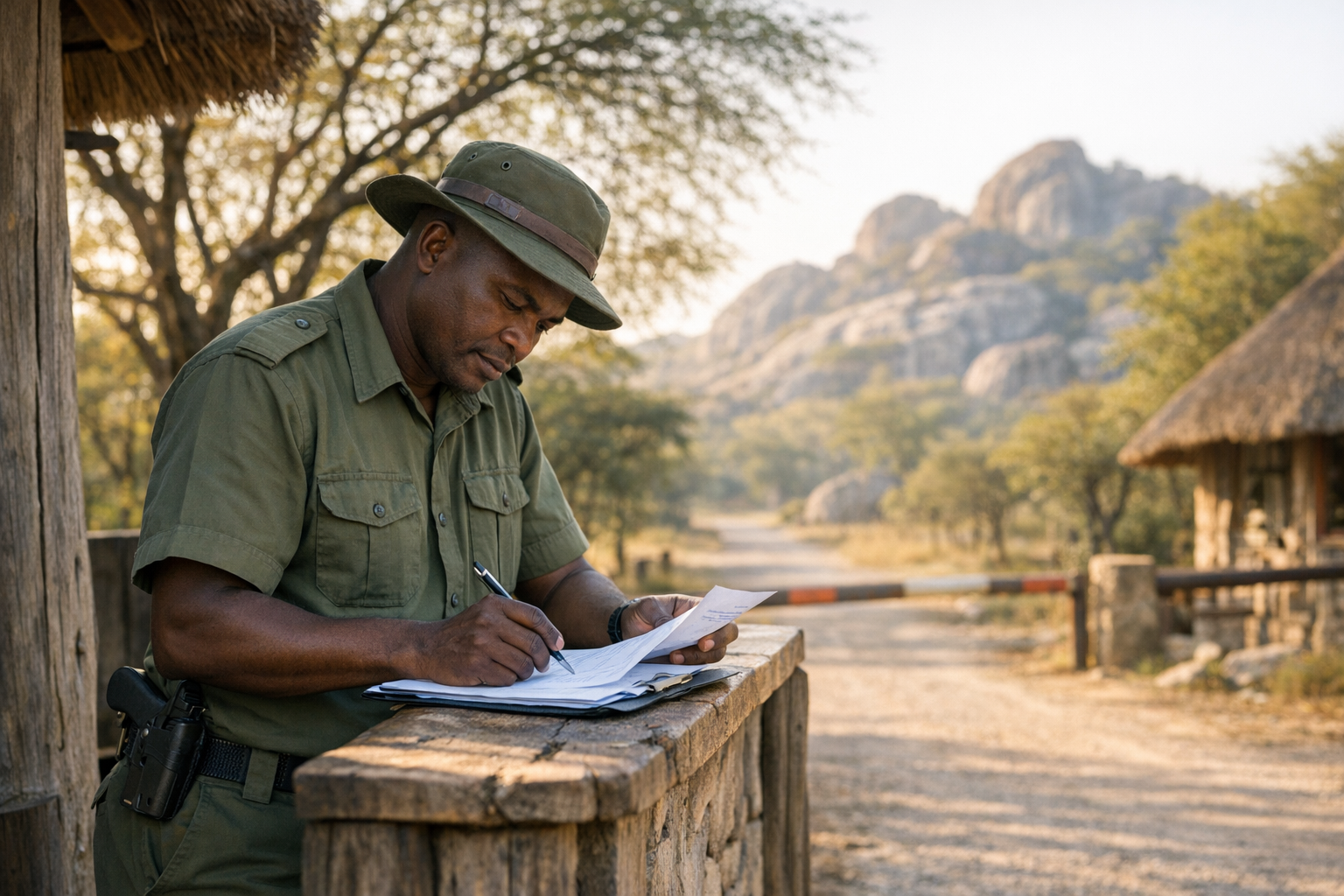
Zimbabwe's national parks pricing has undergone significant change since the introduction of Zimbabwe Gold (ZiG) currency in April 2024. For foreign visitors, all fees are quoted and paid in US dollars — carry cash.
Current fee estimates for 2024–2025 (USD, foreign visitors): - Park entry: $15–$20 per person per day - Vehicle entry: $5–$10 - Rhino tracking permit: $30–$50 per person - Guide fee (rhino tracking): $10–$20 - Cave art guided tour: $20–$40 - Camping: $10–$15 per person per night - National Parks chalet: $40–$80 per chalet per night
Always verify current rates directly with Zimbabwe Parks and Wildlife Management Authority (ZimParks) before travel, as fees are subject to revision. The Cecil Rhodes grave at World's View and most balancing rock areas are included within the standard park entry fee.
Cash is Non-Negotiable
USB cash in small denominations is the practical currency for every transaction in Matobo and across rural Zimbabwe. ATMs in Bulawayo function intermittently; card machines at lodges are improving but remain unreliable. Withdraw what you need in Bulawayo before heading to the park. One-dollar and five-dollar bills are invaluable for tips: $10–$20 USD per person per activity for guides is appropriate, $5–$10 USD per day for camp staff.
Health Considerations
Matobo lies at moderate altitude on the Zimbabwe highveld and carries a lower malaria risk than the northern lowveld areas around Hwange and Victoria Falls. This does not mean zero risk, particularly during and immediately after the wet season. Consult a travel medicine specialist before departure and discuss malaria prophylaxis. Yellow fever vaccination certificates are required if arriving from a yellow fever endemic country. The nearest serious medical facility is Mpilo Hospital or United Bulawayo Hospitals, 35 km away in Bulawayo; lodges maintain emergency protocols and MARS (Medical Air Rescue Service) operates throughout Zimbabwe. Sun protection in the open granite environment is non-negotiable — the UV exposure at altitude on reflective rock is intense.
For comprehensive destination budgeting across your Zimbabwe journey, including how to structure costs across a multi-park itinerary, visit our [Africa safari budget planning page](/africa-safari-budget-planning/).
Cultural Significance: Understanding Matobo's Deeper Layers
Matobo is not simply a wildlife destination with interesting rocks. It is one of the most layered cultural landscapes in all of Africa, and engaging with it seriously requires some understanding of the peoples and histories that shaped it.
The San people — also called Bushmen — inhabited these hills for tens of thousands of years, leaving behind the extraordinary rock art record that now draws researchers and travellers from around the world. Their paintings are not decorative; they document spiritual visions, hunting rituals, rainmaking ceremonies, and inter-group relationships in a visual language that San-heritage scholars are still decoding. Approaching these sites with a knowledgeable local guide transforms what might otherwise feel like a passive museum visit into an active engagement with one of humanity's longest unbroken cultural traditions.
For the Ndebele (Matabele) people, Malindzimu Hill — the site of World's View — is a place of deep spiritual significance, the dwelling place of ancestral spirits. King Mzilikazi, who led the Matabele people from South Africa to establish their kingdom in this region during the 1830s and 1840s, is commemorated near his burial site at Entumbane. The presence of Cecil Rhodes' grave on these same hills speaks to the violent collision of Ndebele sovereignty with British colonial expansion in the 1890s — a history that Zimbabwe continues to process and debate.
When visiting local communities adjacent to the park, ask permission before photographing people. The Matobo Hills area includes communities that have coexisted with and been shaped by this landscape for generations; their relationship with the park is more complex than that of an outside visitor, and that complexity deserves acknowledgment and respect.
Plan this trip
Frequently Asked Questions
Matobo National Park is approximately 35 km (22 miles) south of Bulawayo city centre, a drive of roughly 45 to 60 minutes depending on road conditions and traffic. The route follows the Bulawayo–Kezi road heading south and is well-signposted. Most lodges inside the hills offer transfers, and day tours from Bulawayo typically cost $40–$80 USD per person including transport and guiding.
Yes. Matobo and the wider Bulawayo region are considered among the safer areas in Zimbabwe for travellers. Wildlife-related safety is managed through guided activities — rhino tracking, for example, is conducted with armed ZimParks rangers and strict protocols. The primary precautions are standard safari common sense: follow your guide's instructions at all times, never approach wildlife independently on foot, and avoid driving on park tracks after dark. Check your government's current travel advisory before booking, as the broader political situation in Zimbabwe can shift.
Not necessarily. During the dry season (May to October), the main tracks in the recreational zone around Maleme Dam are navigable in a standard 2WD vehicle. A 4WD becomes important if you want to explore the more remote sections of the Whovi Wild Area or if you are visiting during or immediately after the wet season when tracks can become soft or flooded. If you are self-driving for the first time in the park, a 4WD gives you significantly more flexibility.
Rhino tracking is available year-round but is most productive during the dry season, particularly September and October. During these months the dry grass is shorter and less dense, making it easier to move quietly and to spot tracks. Rhinos also concentrate around the remaining water sources, reducing the area rangers need to search. That said, rhino tracking success rates in Matobo are high throughout the dry season — May through October — because the population density is exceptional.
No. Matobo National Park does not currently have resident lions or elephants within its boundaries. The park's wildlife focus centres on its extraordinary white and black rhino populations, along with zebra, wildebeest, sable antelope, giraffe, impala, warthog, leopard, and an outstanding array of raptors. Travellers seeking lions should combine Matobo with a visit to Hwange National Park, which is approximately three to four hours northwest of Bulawayo.
Rhino tracking can be arranged in two ways: directly through ZimParks (Zimbabwe Parks and Wildlife Management Authority) at the Whovi camp, or pre-arranged through your lodge. Booking through your lodge is significantly easier and more reliable, as they maintain ongoing relationships with the rangers and can build the activity into your daily schedule. If you are self-driving and camping, arrive at the Whovi area early — tracking typically departs in the morning — and speak directly with ZimParks rangers. The permit costs approximately $30–$50 USD per person plus guide fees.
Citizens of the UK, USA, Australia, and most other Western nations require a visa to enter Zimbabwe. A single-entry visa costs $30 USD and is available on arrival at Bulawayo airport, Harare airport, and major land borders, or in advance through Zimbabwe's e-visa platform at evisa.gov.zw. If you plan to visit both Zimbabwe and Zambia on the same trip, the KAZA Univisa at $50 USD covers both countries with multiple entries for 30 days and represents significantly better value.
Pack neutral-coloured clothing (khaki, olive, tan, grey) for game activities — avoid white, bright colours, and camouflage patterns. Sturdy closed-toe walking shoes or hiking boots are essential for rhino tracking and cave art walks. A warm fleece or jacket is important from May through August when pre-dawn temperatures can approach freezing. Strong sunscreen (SPF 50+) and a wide-brimmed hat are non-negotiable given the open granite terrain. Carry your own drinking water — do not drink from streams. USD cash in small denominations should be sorted before you leave Bulawayo, as ATMs and card machines are unreliable in the park.