
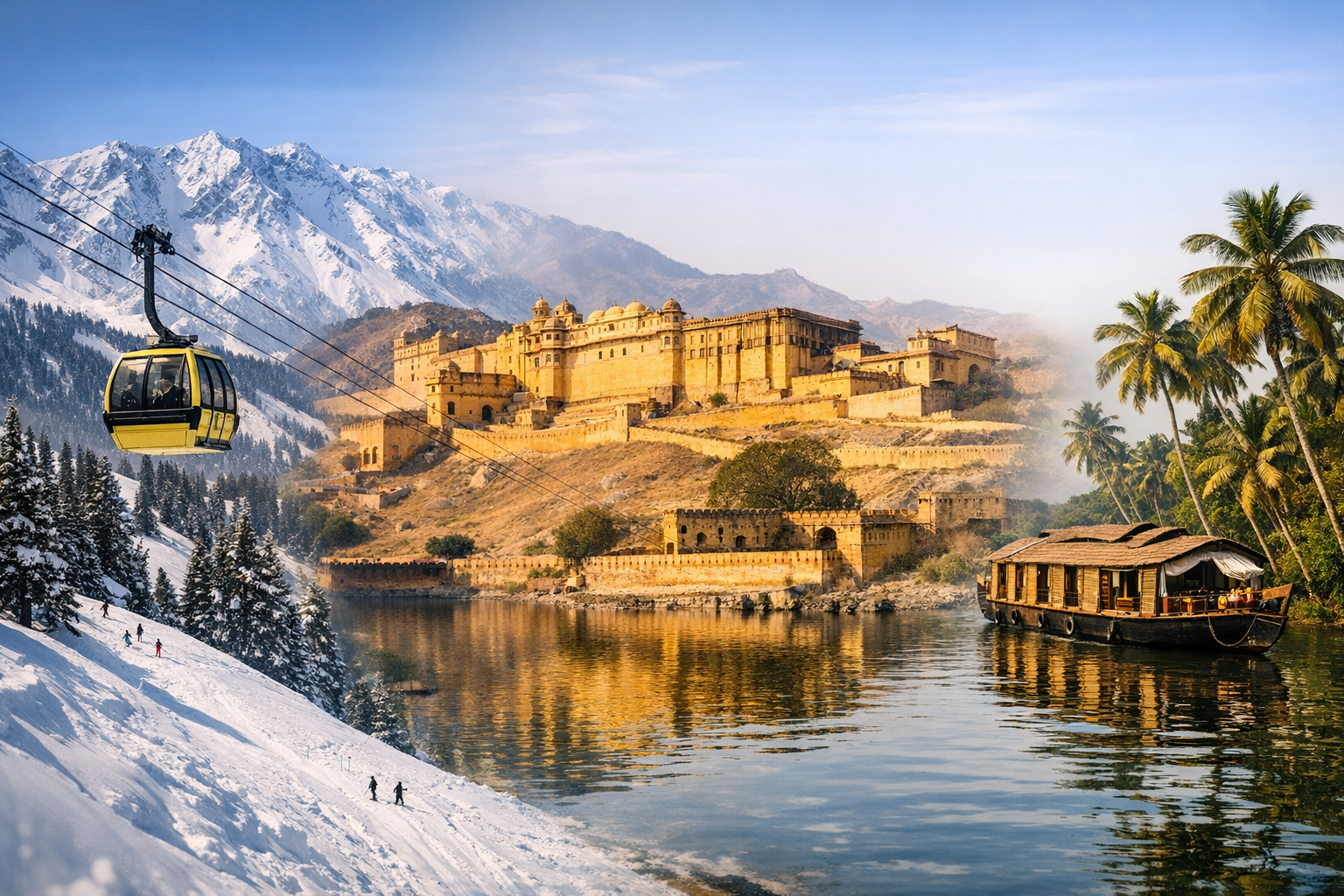
Why Winter Is India's Greatest Travel Season
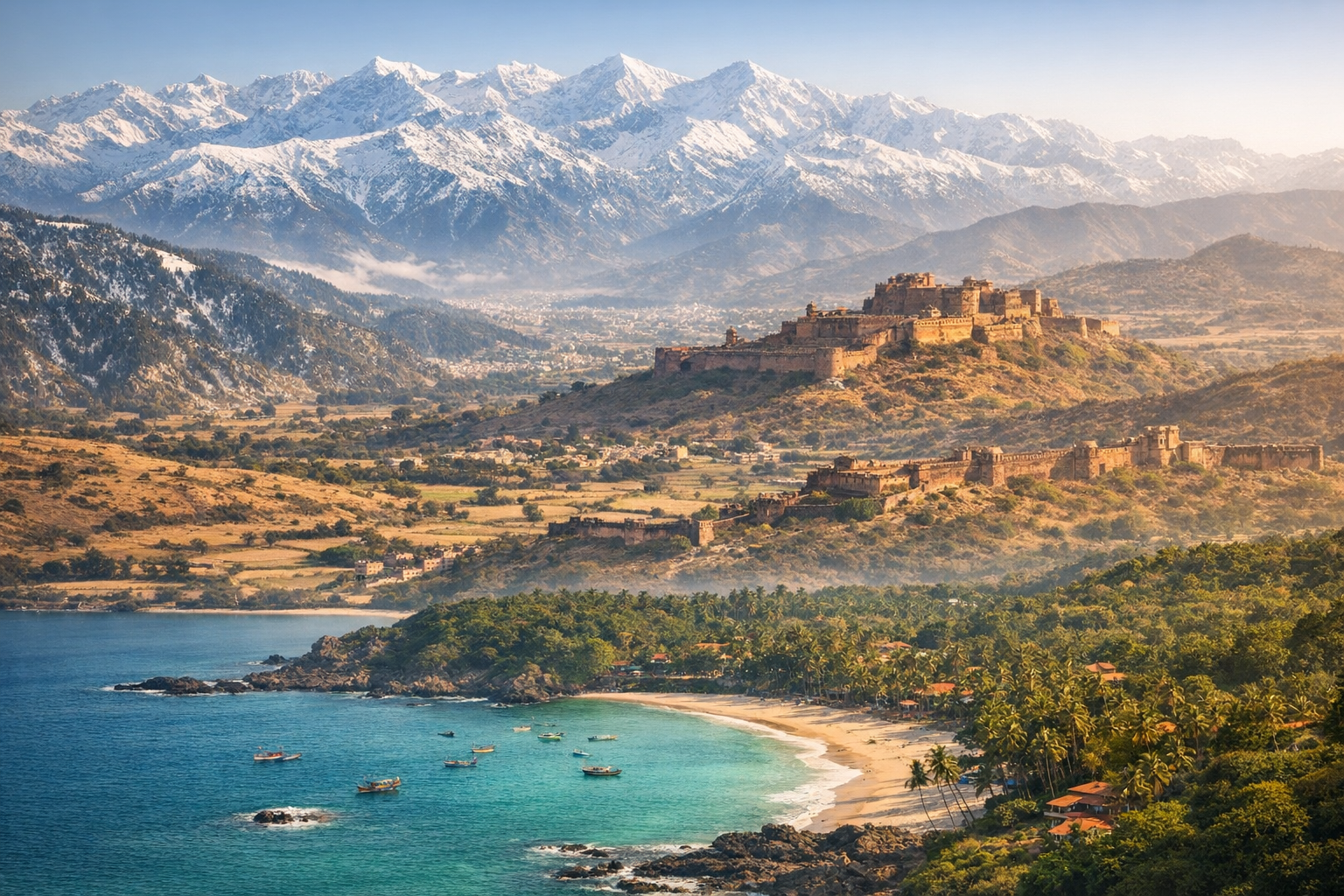
Ask seasoned India hands when to visit, and the answer is almost always the same: December through February. During these three months, the subcontinent undergoes a near-miraculous climatic transformation. The monsoon's oppressive humidity is a distant memory, the air is crystalline, and the light that bathes palaces, temples, and mountain peaks is photographers' gold.
India's winter geography splits into three radically different experiences, each compelling in its own right. In the high Himalayan north — places like Gulmarg in Kashmir and Solang Valley near Manali — snowfall blankets slopes that rival the Swiss Alps for sheer drama, and temperatures plunge to -15°C at night. Drop down to the great plains of Rajasthan and you find the sweet spot: days between 15°C and 25°C, cold crisp mornings, and the legendary desert sunsets that postcards cannot do justice. Further south, Kerala's backwaters and Goa's beaches bask in 28–32°C sunshine with humidity so low it barely registers — the kind of weather that makes northern Europeans weep with gratitude.
This diversity is India's winter superpower. A traveler can ski on fresh powder in Kashmir, take an overnight train to Jaipur, ride a camel into the Thar Desert at Jaisalmer, and end the month watching Arabian Sea sunsets from a Goa beach — all within a single two-week itinerary. No other country of comparable size offers such dramatic contrasts across a single season.
For practical planning purposes, December and January represent the best all-around window. February is excellent for Rajasthan and southern India but sees ski conditions begin to soften at lower altitudes. The national park tiger safari season peaks between October and March, with December through February offering the highest sighting rates — typically 60–75% probability at top reserves like Ranthambore — as sparse vegetation forces tigers into the open near waterholes.
Gulmarg, Kashmir: Skiing Asia's Highest Gondola
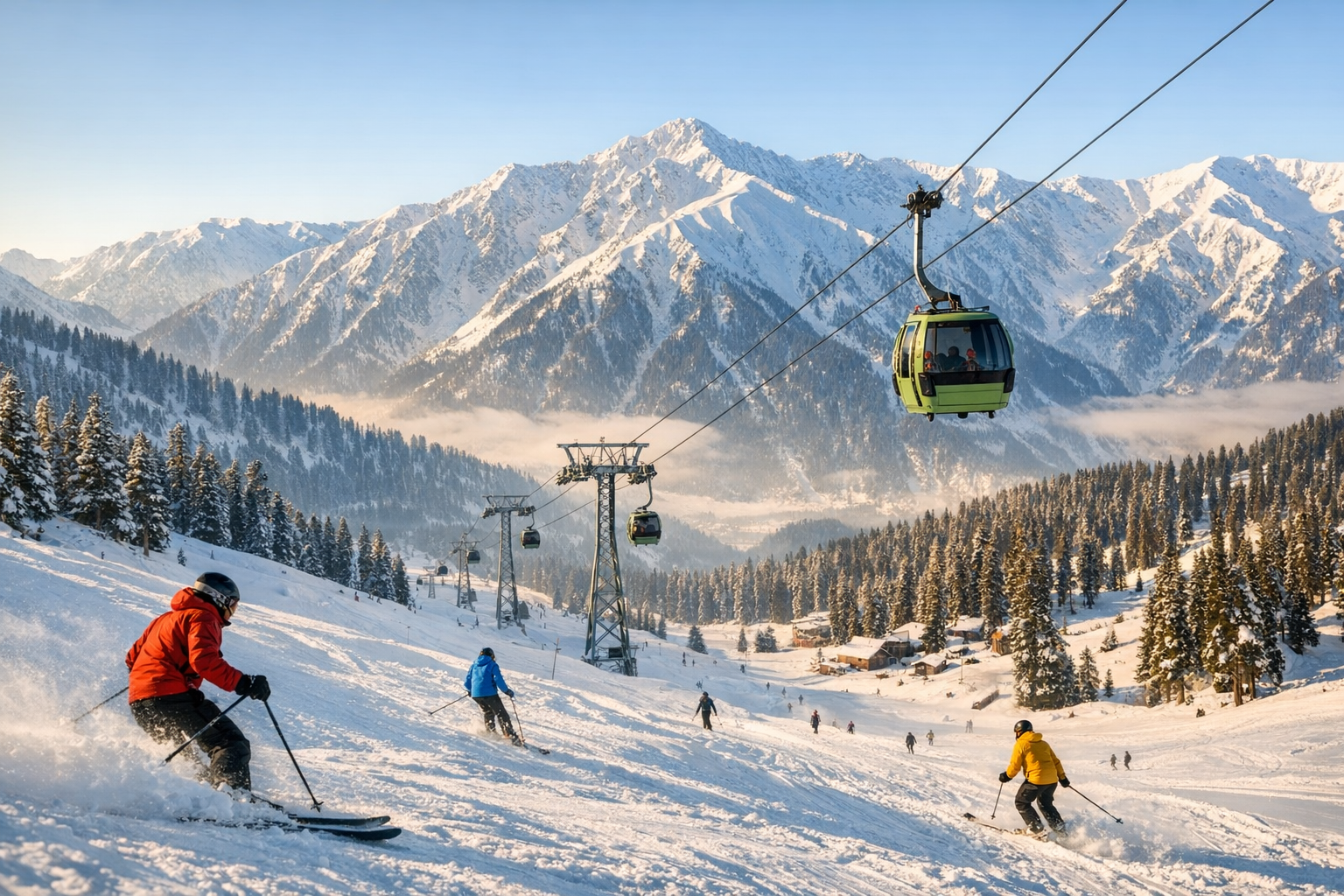
At 2,650 metres above sea level, Gulmarg is not merely India's best ski resort — it is one of Asia's most spectacular winter destinations, full stop. Situated 56 kilometres from Srinagar in Jammu & Kashmir, this former British hill station receives consistent heavy snowfall between December and February, accumulating base depths of four to eight feet by mid-January. The crown jewel is the Gulmarg Gondola, a two-phase ropeway system that rises from the resort floor at 2,650 metres all the way to Apharwat Peak at 3,979 metres — making Phase 2 the highest operating cable car in Asia.
Gondola pricing for the 2024–2025 season sat at ₹900 per person for Phase 1 (Gulmarg to Kongdoori at 3,088 metres), ₹900 for Phase 2 (Kongdoori to Apharwat Peak), or ₹1,800 for both phases combined. Children aged five to twelve pay approximately 50% of the adult rate. Expect a five to ten percent price adjustment for the 2025–2026 season. Critically, book online through the J&K Tourism Authority (JKTA) website during peak season — walk-up queues can stretch to two to three hours in January without advance bookings.
The ski terrain at Apharwat Peak is legitimately challenging. Back bowls opened on the peak in 2024–2025 add to an already impressive range of intermediate and advanced runs. Ski equipment rental costs ₹500–₹800 per day for a complete set; private lessons with a certified instructor run ₹1,000–₹1,500 per hour. For the ultra-adventurous, heli-skiing through operators like Himalayan Heli Adventures starts at USD 250–350 per run above the gondola's reach — genuinely world-class terrain accessible to those with the skill.
The ideal skiing window is January 10 through February 20, when snowpack is deepest and all slopes are fully operational. Daytime temperatures hover between -5°C and 5°C; pack serious base layers, a waterproof outer shell, and good goggles. Accommodation spans a wide range: budget guesthouses from ₹1,500 per night to the five-star Khyber Himalayan Resort & Spa at ₹18,000–₹45,000 per night, widely regarded as one of the finest ski lodge properties in Asia. Mid-range travelers will find the Hotel Gondola (₹6,000–₹12,000) and Pine Spring Hotel (₹3,500–₹6,000) solid choices.
Practical logistics: fly from Delhi to Srinagar Airport (SXR) in roughly 1.5 hours on IndiGo, Air India, or SpiceJet for ₹3,500–₹8,000 one-way. From Srinagar, a private taxi to Gulmarg costs ₹1,200–₹1,500 (1.5–2 hours). Carry cash from Srinagar — ATMs in Gulmarg are limited. Gulmarg Biosphere Reserve rules prohibit single-use plastic bags, so bring a reusable bag for snacks and supplies.
Manali & Solang Valley: Accessible Winter Adventure in Himachal Pradesh
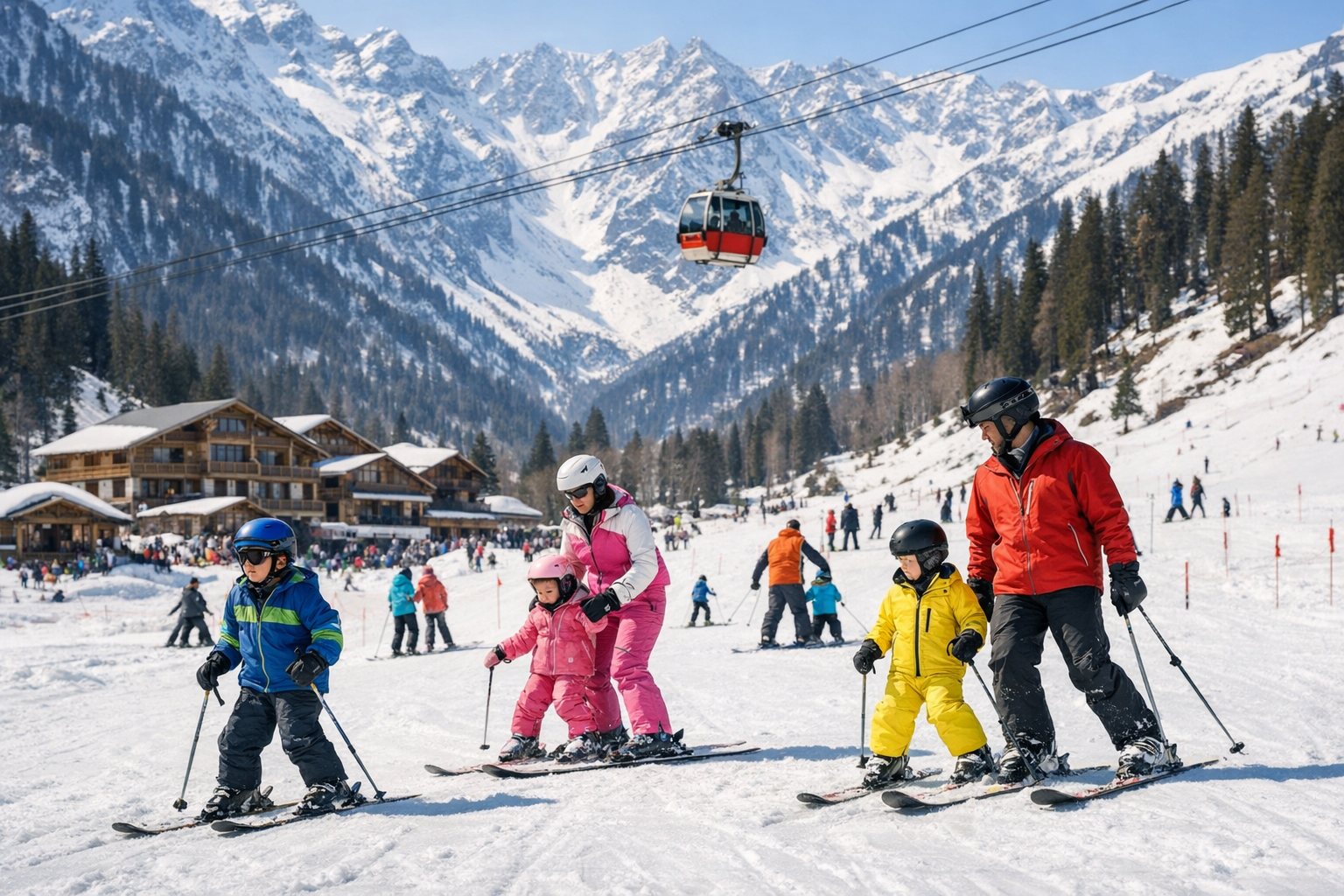
If Gulmarg is India's Chamonix, Manali is its Whistler — more accessible, more family-friendly, and layered with enough culture and nightlife to keep non-skiers thoroughly entertained. Situated at 2,050 metres in Himachal Pradesh's Kullu Valley, Manali has served as a Himalayan gateway for trekkers and adventurers since the 1970s. In winter, Solang Valley — 14 kilometres north of town — becomes the epicentre of snow sports, offering everything from beginner ski runs to snowmobiling, zorbing, snow tubing, and guided snowshoe tours.
Snow activity pricing at Solang Valley is refreshingly affordable. Basic skiing with instruction runs ₹500–₹800 per day; snowmobile rides cost ₹500–₹800 for 15–20 minutes; zorbing on snow goes for ₹400–₹600; and a ride on the Solang Valley cable car is ₹250–₹400 one-way. Those wanting a more immersive backcountry experience can book guided snowshoeing tours for ₹1,500–₹2,500 per person, including equipment and a certified mountain guide.
Beyond the slopes, Manali itself rewards exploration in winter. The ancient Hadimba Devi Temple — a pagoda-style wooden structure built in 1553 set among towering deodar cedars — is free to enter and particularly atmospheric when ringed with snow. The Vashisht hot spring complex offers natural thermal baths at no charge (private cubicles cost ₹100–₹200) and is the perfect antidote to a hard day on the slopes. The 2020 opening of the Atal Tunnel Rohtang (9.02 kilometres long, the world's longest highway tunnel above 10,000 feet at its point of passage) means travelers can now drive through to the Lahaul Valley year-round — the Sissu end of the tunnel offers jaw-dropping views of frozen waterfalls and snow-blanketed valleys that were previously inaccessible to winter visitors.
Reaching Manali from Delhi involves a 540-kilometre road journey via NH3. HRTC Volvo overnight buses depart from Kashmere Gate ISBT and cost ₹1,200–₹1,800 for a 12–14 hour overnight trip — surprisingly comfortable for the price. Private taxis cost ₹8,000–₹12,000. Seasonal flights to Kullu-Manali Airport (KUU) in Bhuntar (52 kilometres south) operate from Delhi in roughly one hour for ₹4,000–₹9,000.
Accommodation ranges from ₹500 per night in Old Manali hostels to ₹25,000 at luxury properties like The Himalayan. Span Resort & Spa (₹8,000–₹18,000/night) is a perennial favourite among those wanting comfortable amenities close to the river. For the most convenient access to snow activities, consider booking a resort on the Solang Valley road itself — several properties here charge ₹4,000–₹10,000 per night and put you steps from the morning's first ski runs. For those planning onward journeys, our guide to planning seamless multi-city itineraries in India covers inter-city transport options in detail.
Plan this trip
Hotels in Winter Travel in India Best Destinations from Snowy Himalaya
Top-rated hotels with free cancellation. Best price guaranteed.
Search Hotels →Compare Car Rentals
Compare 500+ suppliers — Hertz, Enterprise, Sixt & more.
Find Cars →Vacation Rentals
Entire homes and condos — more space, more privacy.
Browse Rentals →Rajasthan: Palaces, Desert Safaris, and Tiger Country
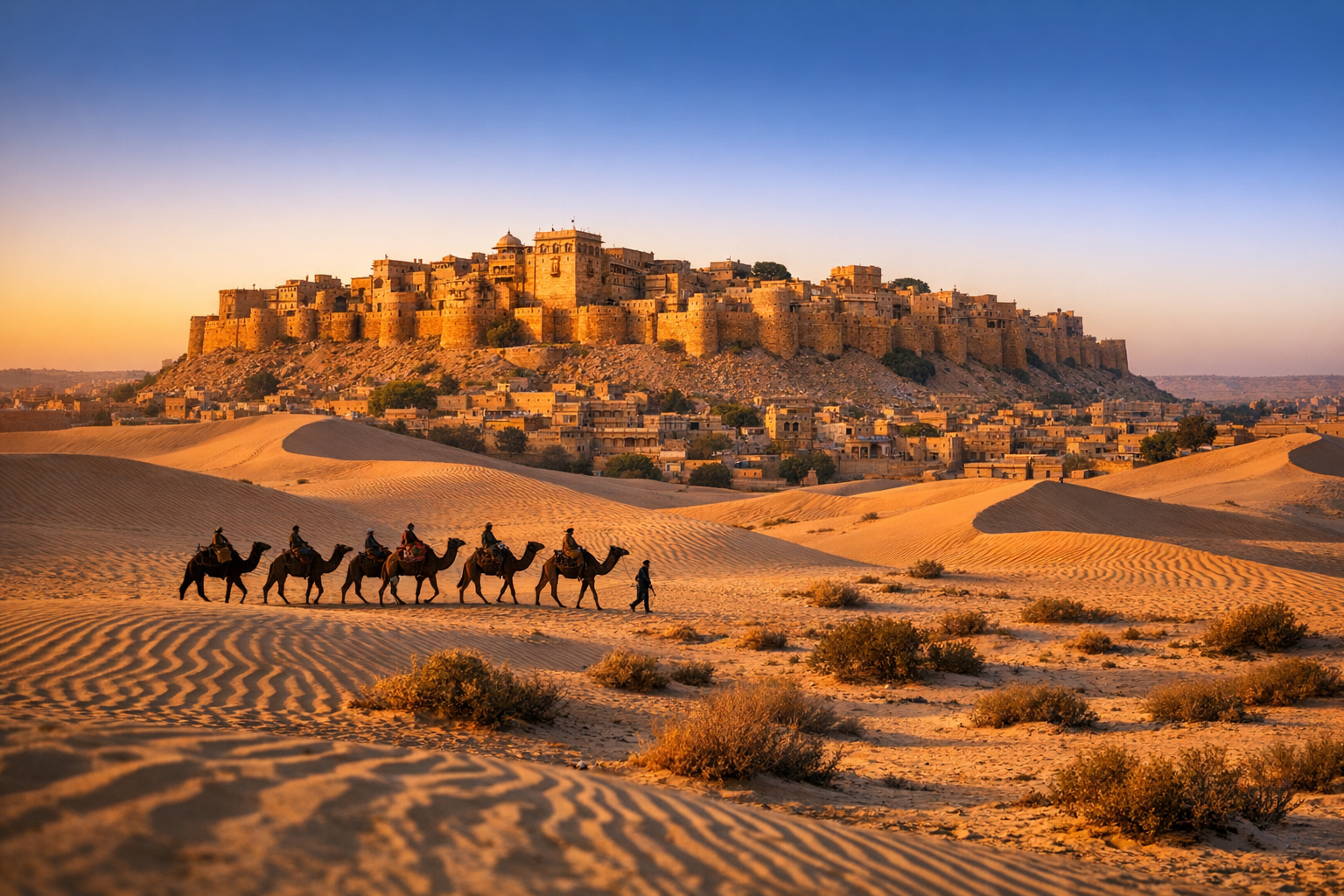
No winter travel guide to India is complete without Rajasthan, and justifiably so. Between November and February, the desert state transforms into one of the world's great travel destinations: temperatures sit at a civilized 10–25°C during daylight hours, dropping to 5–8°C on January nights. The light is extraordinary — warm, low-angle, and rich — and the tourist infrastructure, while busy, is better organized than at any other time of year.
Jaipur: The Pink City's Living Heritage
Jaipur (280 kilometres from Delhi, 4.5 hours by road) is the natural first stop. The city's UNESCO-listed Jantar Mantar observatory — built by Maharaja Jai Singh II between 1727 and 1734 and containing the world's largest stone sundial — costs just ₹50 for Indian visitors and ₹200 for foreigners. Amber Fort, the hilltop Mughal-Rajput masterpiece 11 kilometres from the city center, charges ₹100 for Indians and ₹500 for foreigners; the evening light and sound show adds ₹295. Book a composite ticket covering Hawa Mahal, City Palace, Jantar Mantar, and Nahargarh Fort for approximately ₹300 (Indians) or ₹1,000 (foreigners) — it represents excellent value. Getting around is simple: Ola and Uber operate reliably, and the hop-on-hop-off JCT tourist bus covers all major sites for ₹300–₹500 per day. Heritage accommodation options range from Zostel Jaipur dorms at ₹400–₹600 per night to the legendary Taj Rambagh Palace at ₹25,000–₹80,000 per night — a converted 1835 royal residence that remains one of the subcontinent's most atmospheric stays.
Jaisalmer: The Living Fort and Desert Nights
Five hundred and seventy-five kilometres west of Jaipur, Jaisalmer rises from the Thar Desert like a sandcastle made permanent. The Sonar Quila (Golden Fort), one of the world's few remaining living forts with a population of approximately 3,000 inside its walls, is free to enter at the perimeter and charges ₹100–₹200 for interior museums. The essential experience here is the overnight camel safari to Sam Sand Dunes, 42 kilometres from town. Budget camps with basic tents and camel rides run ₹1,500–₹4,000 per person; luxury Swiss-tent camps with private bathrooms, traditional Rajasthani dinner, and folk music performances start at ₹8,000 per person and climb to ₹25,000+ at properties like Suryagarh's private desert camp. January nights in Jaisalmer can fall to 3–5°C — pack warmer layers than intuition suggests for a desert destination. The Serai, a luxury retreat 45 minutes from town, offers tent accommodations at ₹35,000–₹60,000 per night for travelers wanting the ultimate private desert experience.
Ranthambore: Tiger Safaris in Peak Season
For wildlife, Ranthambore National Park (160 kilometres from Jaipur, near Sawai Madhopur) in winter is arguably the finest tiger-viewing destination on earth. The park's 1,334 square kilometres of dry deciduous forest thin out dramatically in winter, concentrating wildlife near waterholes and dramatically increasing visibility. Tiger sighting probability in December through February runs at 60–75% — exceptional by global standards. Book Gypsy (six-seater open jeep) safaris through forest.rajasthan.gov.in, which opens reservations 90 days in advance. A full Gypsy vehicle costs ₹3,000–₹5,000 per safari plus guide fees (approximately ₹300) and park entry (₹100 for Indians, ₹1,500 for foreigners). There are two daily safari windows: 6:30–10:00 AM and 2:30–6:00 PM. Book as early as the system permits — peak-season slots fill within hours of opening.
For transportation across Rajasthan, India's railway network is efficient and atmospheric. The Shatabdi Express between Delhi and Jaipur takes 4–5 hours and costs ₹750–₹1,100 in AC chair class. The Jaisalmer Express from Delhi covers the 900-kilometre journey in approximately 18 hours, with sleeper berths starting at ₹500. For travelers wanting more flexibility between cities, our detailed guide to booking transportation across India covers both rail and private driver options.
Goa and Kerala: Sun, Sand, and Backwaters in the South
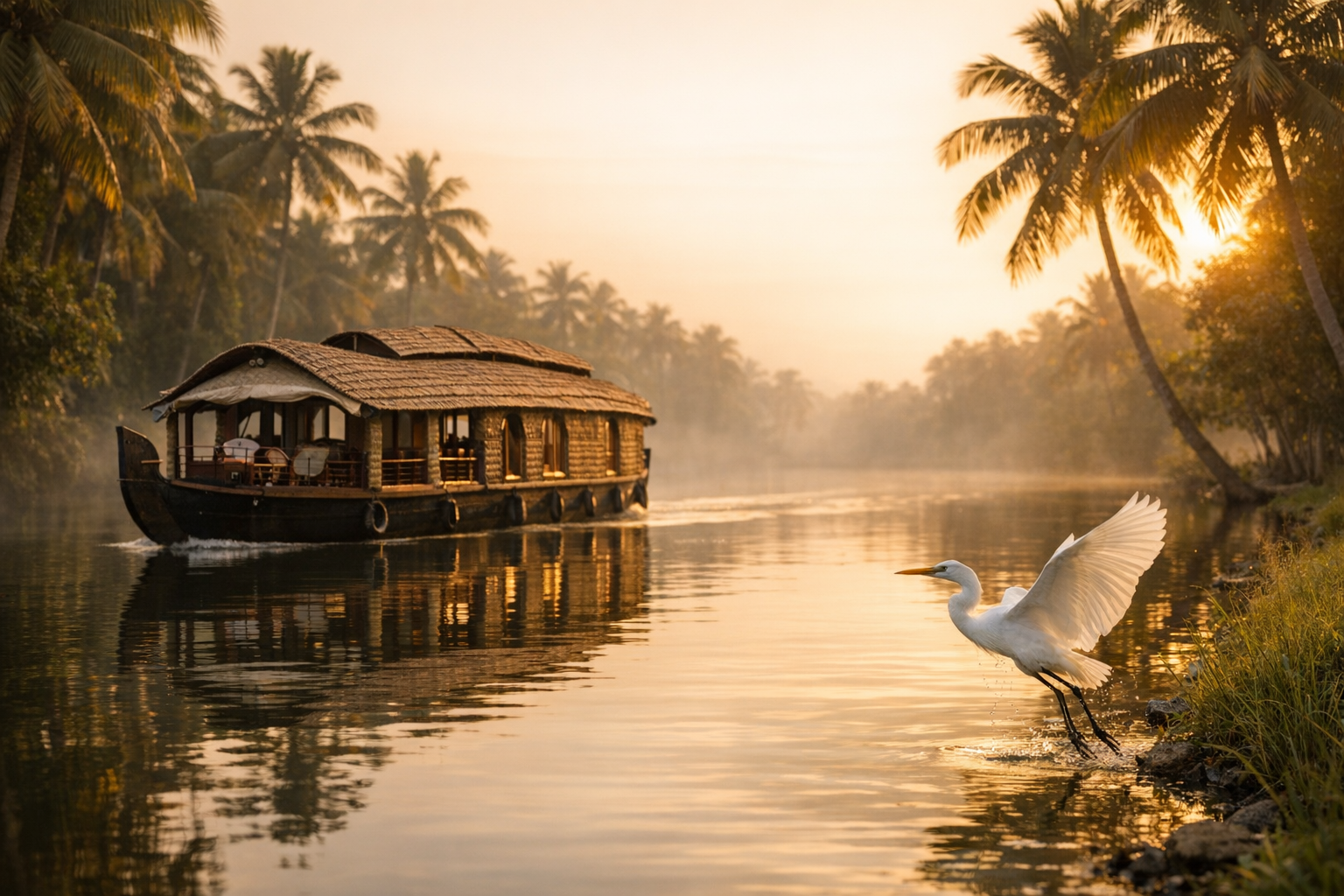
While the north shivers and the mountains pile up snowdrifts, peninsular India basks in some of the most agreeable beach and backwater weather on the planet. December through February is unequivocally the best time to visit both Goa and Kerala — the southwest monsoon ended months ago, the northeast monsoon (which affects Tamil Nadu and the Andaman Islands) has largely cleared the Kerala coast by late November, and temperatures settle into a consistent 28–32°C range with low humidity.
Goa: Beyond the Beach Party Cliché
Goa's reputation as a party destination undersells a genuinely layered destination. Yes, North Goa's Baga, Calangute, and Anjuna beaches pulse with bars and beach clubs in December — the week between Christmas and New Year sees some of the most elaborate beachside events in Asia, with prominent DJs and up to 100,000 domestic and international visitors flooding into the state. But South Goa tells a different story entirely. Palolem Beach (130 kilometres from Panaji) is a perfect crescent of palm-fringed golden sand where beach huts start at ₹1,500 per night in December. Agonda Beach, just north of Palolem, is even quieter and has become a destination in itself for yoga retreats and sustainable tourism operators. The Dudhsagar Waterfalls (60 kilometres from Madgaon, accessible by jeep safari at ₹400–₹600 per person) are at their clearest in winter — 310 metres of four-tiered cascade through lush forest, and one of India's five tallest waterfalls.
Goa's Portuguese heritage adds architectural depth: the Basilica of Bom Jesus in Old Goa (a UNESCO World Heritage Site, free entry) contains the preserved remains of St. Francis Xavier and stands as one of Asia's finest examples of baroque architecture. Fontainhas, Panaji's Latin Quarter, is a compact labyrinth of Portuguese colonial houses painted in ochre, terracotta, and mint green — best explored on foot in the gentle morning light of a January day. Flights from Delhi to Goa International Airport (GOX) take roughly 2 hours and cost ₹3,500–₹9,000 one-way. Beach-road scooter rentals, the standard mode of transport for independent travelers, run ₹300–₹500 per day.
Kerala: God's Own Country at Its Most Beautiful
Kerala in winter is the stuff of travel writing legend. The backwaters of Alleppey (Alappuzha) — a 900-kilometre network of canals, lakes, and lagoons running parallel to the Arabian Sea coast — are at their most serene between December and February, when monsoon silt has settled and the water turns mirror-clear. Houseboats (kettuvallam) converted from traditional rice barges are the iconic way to experience the backwaters overnight. Rates start at approximately ₹8,000 per night for a basic two-bedroom houseboat for two people (including all meals and a crew of two) and climb to ₹25,000–₹40,000 per night for premium air-conditioned vessels with sundeck, chef, and Wi-Fi.
Beyond Alleppey, Kerala's winter menu is extensive. Munnar's tea plantations (130 kilometres east of Kochi) are wrapped in morning mist between December and February, with temperatures dropping to a refreshing 10–15°C — cool enough for sweaters, making it feel like a hill station holiday within a beach holiday. Thekkady's Periyar National Park offers elephant sightings and boat safaris across Periyar Lake (entry ₹300 for Indians, boat safari ₹150–₹300). Kovalam Beach near Thiruvananthapuram and Varkala's dramatic clifftop beach complete a state itinerary that can fill two weeks without repetition. Flights from Delhi to Kochi take 3–3.5 hours on SpiceJet, IndiGo, or Air India for ₹4,000–₹10,000 one-way. Kerala's state-run KSRTC buses connect all major destinations affordably, while taxis and app-based services like Ola operate in all major towns. Our resource on planning a comprehensive South India itinerary covers Kerala and Tamil Nadu circuit options in depth.
Plan this trip
Hotels in Winter Travel in India Best Destinations from Snowy Himalaya
Top-rated hotels with free cancellation. Best price guaranteed.
Search Hotels →Compare Car Rentals
Compare 500+ suppliers — Hertz, Enterprise, Sixt & more.
Find Cars →Vacation Rentals
Entire homes and condos — more space, more privacy.
Browse Rentals →Practical Winter Travel Planning: Budgets, Visas, and Booking Timelines
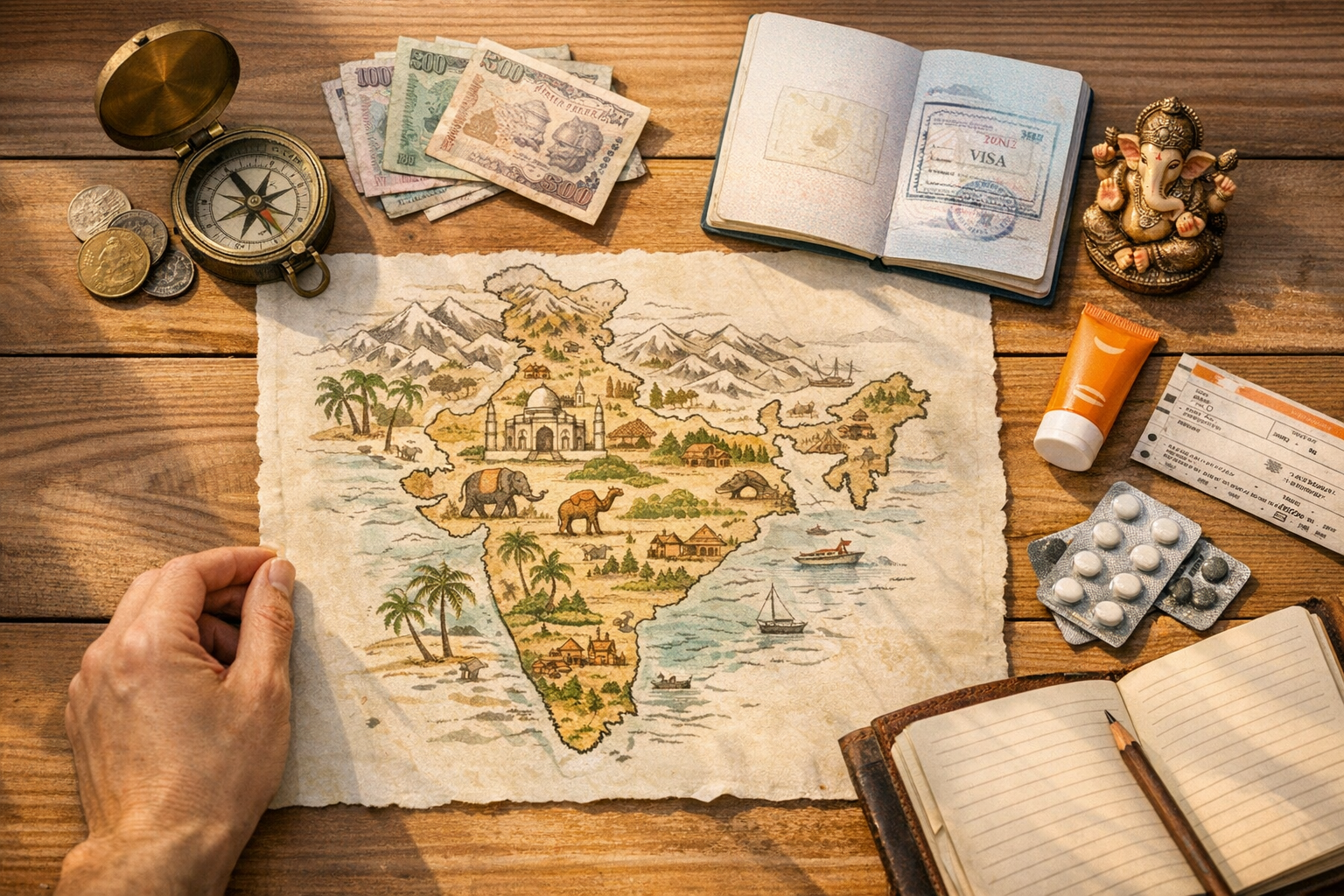
Planning a winter trip to India rewards those who move early. The country receives the bulk of its international visitors between October and March, and in the 2024–2025 season, popular destinations like Ranthambore, Gulmarg, and Jaisalmer's luxury camps were reporting sold-out inventory from September onward for the Christmas–New Year window.
Visas
Most nationalities can apply for India's e-Visa online at indianvisaonline.gov.in. The Tourist e-Visa is available in 30-day, one-year, and five-year variants. The 30-day single-entry e-Visa costs USD 25; the one-year multiple-entry version costs USD 40. Processing typically takes 3–5 business days but apply at least two weeks before travel to allow for delays. Citizens of Pakistan and a handful of other nations must apply through the traditional paper visa process at their nearest Indian embassy.
When to Book
- Gulmarg ski season (January–February): Book hotels and gondola tickets by November at the latest; the best Khyber Himalayan Resort dates sell out in September - Ranthambore tiger safaris: Book exactly 90 days in advance (the system opens at midnight IST) — January Gypsy slots in zones 1–5 disappear within hours - Rajasthan heritage hotels: Book December 23–January 2 dates by October; luxury properties like Taj Lake Palace have a 6–12 month waiting list for Christmas week - Goa beach huts and villas: December and New Year week rates are often double the standard; February offers better availability and 20–30% lower prices - Kerala houseboats: Book 2–3 months ahead for December; January and February have better availability with slight rate reductions
Sample Budget Frameworks
*Budget traveler (hostels, state buses, local restaurants):* ₹2,500–₹4,500 per day including accommodation, meals, and local transport
*Mid-range (3-star hotels, occasional private transfers, restaurant meals):* ₹6,000–₹12,000 per day per person
*Luxury (5-star heritage hotels, private cars, curated experiences):* ₹25,000–₹80,000+ per day
Health and Safety
India requires no mandatory vaccinations for entry from most countries, though the CDC and NHS recommend hepatitis A, typhoid, and tetanus boosters as standard precautions. Altitude sickness is a real consideration for Gulmarg and high-altitude Manali excursions — ascend gradually, stay hydrated, and avoid alcohol for the first 24 hours at altitude. In Rajasthan, the combination of cold nights (carry a fleece layer even in January) and strong midday sun (SPF 50+ essential) catches many travelers off-guard. North India experiences periods of dense fog in December and January — Delhi's Indira Gandhi International Airport can see significant flight delays during fog events, so build buffer time into any connection involving Delhi's airport between December 15 and January 31.
Transportation Between Destinations
India's rail network is the backbone of budget and mid-range travel. The IRCTC website (irctc.co.in) allows international card bookings with an additional ₹100 processing fee. Tatkal (last-minute) tickets at 1.5–2x standard fares are available if advance booking is missed. For road transfers between Rajasthan cities, hiring a private driver with a comfortable SUV for a 7–10 day circuit costs ₹15,000–₹25,000 total — split among three or four travelers, it rivals train costs while offering far greater flexibility for stops and detours. Our transport booking guide covers the full spectrum of options for navigating India independently.
Frequently Asked Questions
January is widely considered the single best month. Rajasthan's temperatures are ideal (15–22°C in the day), Gulmarg's ski slopes are fully operational with maximum snowpack, Ranthambore tiger safaris are at peak visibility, and Kerala and Goa offer perfect beach weather. December is excellent too but Christmas–New Year week brings crowded major sites and premium hotel pricing. February is superb for southern India and Rajasthan, though ski conditions at lower-altitude resorts begin softening toward the end of the month.
A realistic all-in daily budget for Gulmarg skiing is ₹5,000–₹8,000 per person in mid-range accommodation. This covers a room at the Hotel Gondola or similar (₹6,000–₹12,000/night split between two people), both gondola phases (₹1,800), ski equipment rental (₹500–₹800), and meals. Budget travelers staying in guesthouses (₹1,500–₹3,000/night) can manage ₹3,500–₹5,000 per day. Luxury travelers at the Khyber Himalayan Resort & Spa should budget ₹25,000–₹50,000+ per day including heli-skiing.
Most nationalities can obtain an Indian Tourist e-Visa online at indianvisaonline.gov.in. The 30-day single-entry e-Visa costs USD 25; a one-year multiple-entry version costs USD 40. Processing takes 3–5 business days on average — apply at least two weeks before departure. Passport holders from a small number of countries including Pakistan must apply for a traditional visa through their nearest Indian embassy or consulate.
Yes, more than most visitors expect. While Jaipur and Jodhpur reach 20–25°C on sunny December and January afternoons, nights regularly drop to 5–8°C, and early mornings can feel genuinely cold. Jaisalmer's desert nights can fall to 3–5°C in January despite daytime highs of 20°C. Pack layers: thermal base layers, a mid-layer fleece or down jacket, a windproof outer layer, warm socks, and a scarf. Rajasthan markets also sell excellent local woolen shawls and quilted jackets at very reasonable prices if you underpack.
Book online at forest.rajasthan.gov.in, which opens reservations exactly 90 days in advance of the safari date. For peak January dates, try to book the moment the 90-day window opens — often at midnight IST — as Gypsy slots in the most productive zones (1–5) sell out within hours. A full Gypsy (six-seater open jeep) costs ₹3,000–₹5,000 per vehicle per safari plus approximately ₹300 for a mandatory guide and park entry fees (₹100 for Indian nationals, ₹1,500 for foreign nationals). There are two daily safari slots: 6:30–10:00 AM and 2:30–6:00 PM.
They offer genuinely different experiences rather than competing alternatives. Goa suits travelers who want a range of beach scenes — lively party beaches in the north, quieter coves in the south — combined with Portuguese heritage and excellent seafood restaurant culture. Kerala suits travelers wanting natural immersion: backwater houseboat journeys, wildlife parks, hill station tea plantations, and Ayurvedic wellness retreats. Many travelers combine both on a two-week south India itinerary, flying into Goa and out of Kochi (or vice versa) to avoid backtracking.
For December (especially Christmas week) and the first two weeks of January, book two to three months in advance for mid-range houseboats and four to six months ahead for premium vessels on popular Alleppey (Alappuzha) routes. February bookings can often be made four to six weeks in advance with good availability. Prices for a standard two-bedroom houseboat with meals and crew start at approximately ₹8,000 per night; premium air-conditioned vessels with sundeck and chef range from ₹25,000–₹40,000 per night.
Yes — dense fog is a significant operational issue at Delhi's Indira Gandhi International Airport (DEL) between approximately December 15 and January 31. Fog events can cause delays of 4–8 hours and occasional cancellations, particularly on early morning flights. If your itinerary involves a connection through Delhi during this period, build at least a four-hour buffer into any same-day onward connection. Airlines including IndiGo and Air India issue fog-related delay advisories in advance. Direct flights bypassing Delhi are preferable during this window where routes permit.
Plan this trip
Hotels in Winter Travel in India Best Destinations from Snowy Himalaya
Top-rated hotels with free cancellation. Best price guaranteed.
Search Hotels →Compare Car Rentals
Compare 500+ suppliers — Hertz, Enterprise, Sixt & more.
Find Cars →Vacation Rentals
Entire homes and condos — more space, more privacy.
Browse Rentals →