
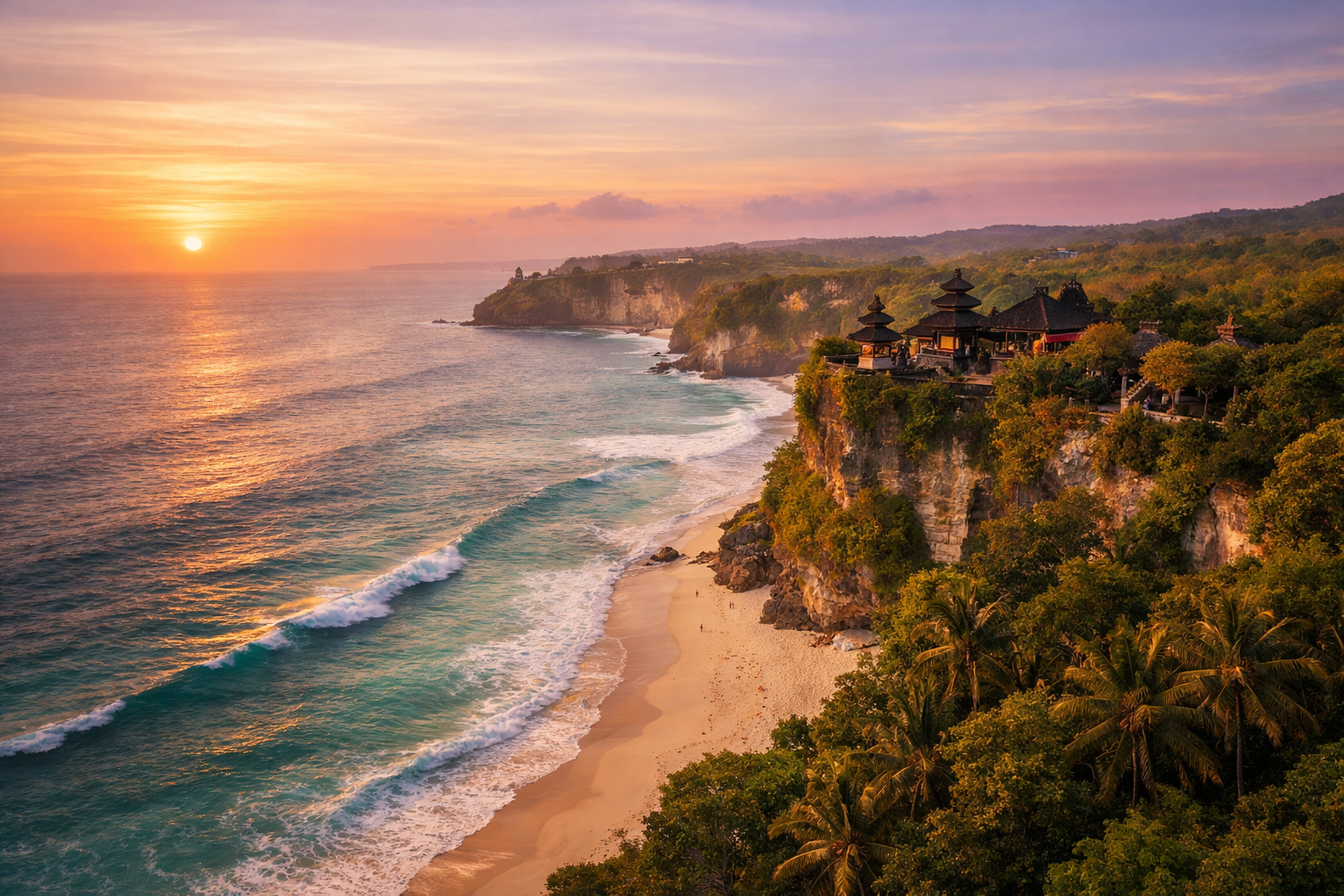
Why Bali Remains Southeast Asia's Most Compelling Island Destination
Bali receives more than six million international visitors annually, yet it continues to surprise first-timers and regulars alike. The island's genius lies in its compression: within a landmass roughly the size of Delaware, you find world-class surf, five-star resort enclaves, ancient Hindu temple complexes, terraced rice paddies that have been cultivated for over a thousand years, and one of the most sophisticated food and wellness cultures in Asia. No other destination in the region delivers this range within a single 30-minute taxi ride.
For 2025 and 2026, Bali has introduced a few administrative changes worth knowing before you book. Since February 2024, every foreign tourist must pay a levy of IDR 150,000 (approximately $10 USD) per person — collected via the Love Bali app or kiosks at Ngurah Rai International Airport (IATA code: DPS). This is separate from the Visa on Arrival fee of IDR 500,000 (roughly $31 USD), which grants 30 days in-country and is extendable once for another 30 days. Citizens of 86 nationalities qualify, including travelers from the United States, United Kingdom, Australia, and all EU member states. Your passport must be valid for at least six months beyond your entry date — immigration officers check this without exception.
The Indonesian Rupiah trades at approximately 15,700–16,000 IDR per US dollar as of 2025. ATMs are widespread throughout tourist areas, but money-changing scams remain common in Kuta — use only officially licensed exchange bureaus and always count your bills before leaving the counter. Dengue fever is present island-wide, so daily application of DEET-based repellent is a non-negotiable travel habit. Tap water is not potable anywhere on the island; budget IDR 3,000–8,000 for 1.5-liter bottled water, available at every minimarket.
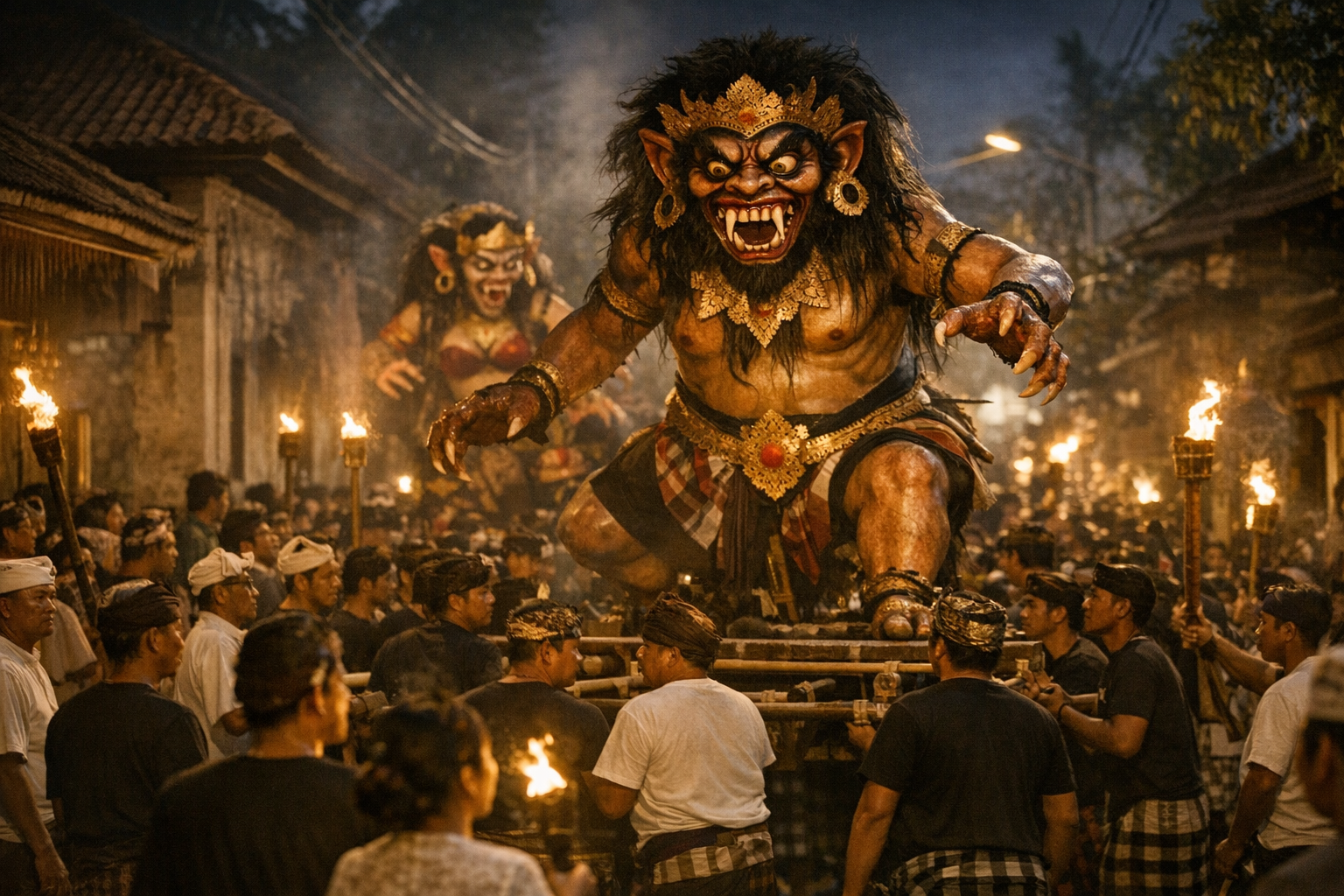
The best time to visit for beach tourism and temple trekking is the dry season running from May through September. July and August bring the highest hotel prices — sometimes 30 to 50 percent above shoulder-season rates — along with the largest crowds at Ubud's Tegallalang Rice Terraces and Tanah Lot temple. June and September offer nearly identical weather with meaningfully thinner crowds. Travelers planning a trip in late March or early April should build their itinerary around Nyepi, the Balinese Day of Silence: in 2026, Nyepi falls on March 19, during which the airport closes for 24 hours, vehicles are banned from roads, and even outdoor activity is restricted. The evening before Nyepi, however, features the spectacular Ogoh-ogoh parade — enormous demon effigies carried through the streets in firelit processions — which alone justifies timing a visit around this extraordinary cultural event.
Getting from Ngurah Rai Airport to Your Destination
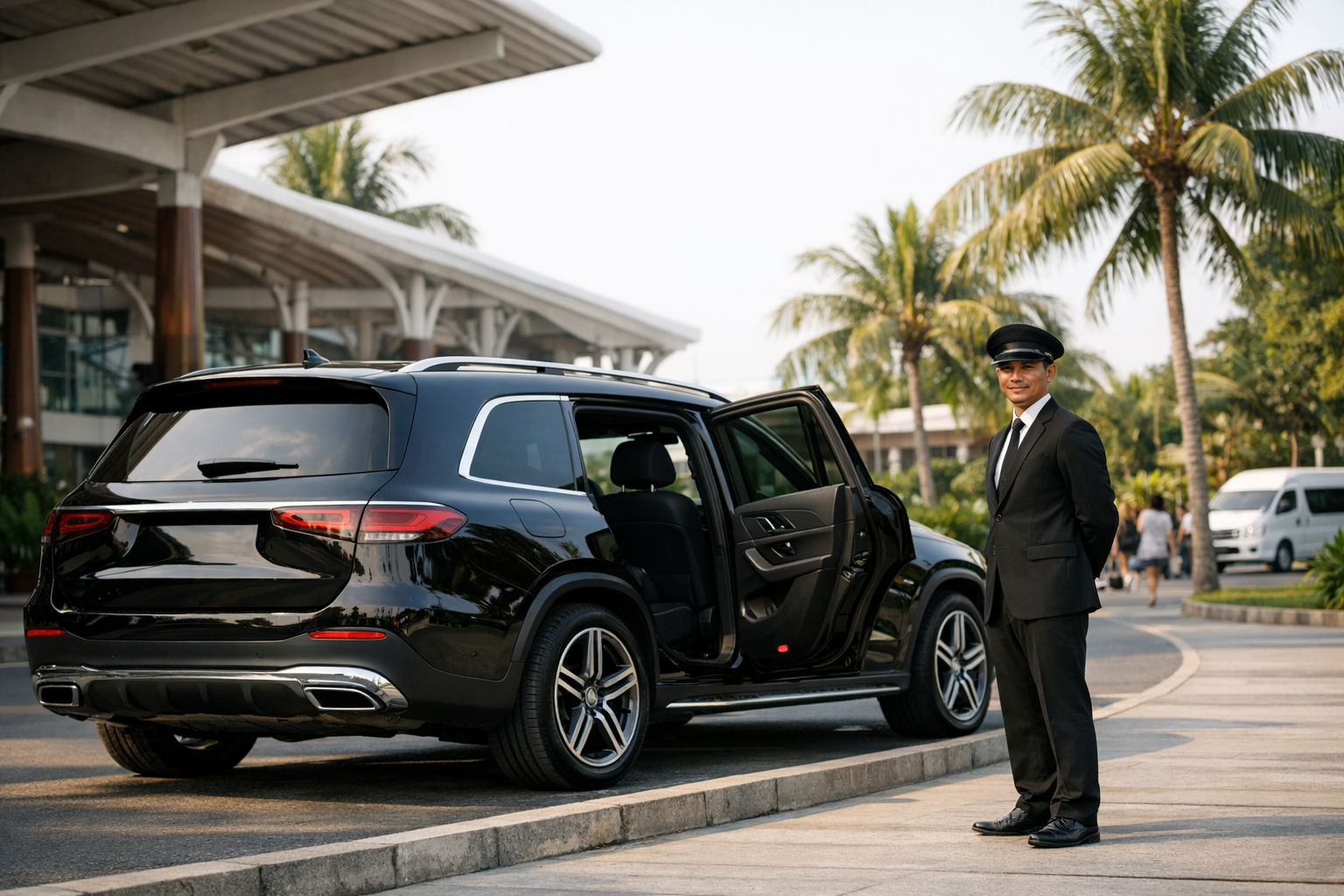
Ngurah Rai International Airport sits in the coastal district of Tuban, placing it roughly 12 kilometers from Kuta, 30 kilometers from Nusa Dua, and a full 40 kilometers from Ubud. Understanding your ground transfer options before landing saves both money and the frustration of being approached by unlicensed drivers the moment you clear customs.
The most straightforward option for first-time visitors is the official Koperasi taxi system, which operates on fixed prepaid fares posted at the airport's designated taxi counters. Expect to pay IDR 80,000–100,000 to Kuta, IDR 150,000–200,000 to Nusa Dua, and IDR 350,000–450,000 to Ubud. These rates are non-negotiable and the drivers are licensed. Ride-hailing apps Grab and Gojek typically run 20 to 30 percent cheaper — Kuta fares drop to IDR 60,000–80,000 and Ubud to IDR 280,000–380,000 — but the critical caveat is that you must exit the airport grounds entirely and walk to a designated ride-share pickup zone before the app will confirm your driver. The walk takes about five to ten minutes.
Pre-booked private transfers, often arranged through your hotel or a reputable travel service, offer the most seamless experience, particularly for long journeys like the 1.5 to 2-hour drive to Ubud. Pricing sits in the IDR 350,000–500,000 range for that route, comparable to taxis but without the uncertainty of negotiation or waiting. For luxury resort guests at Four Seasons Jimbaran or St. Regis Nusa Dua, hotel transfer services typically include meet-and-greet service with a name board at arrivals — worth requesting when you book your room. There is no practical public bus service connecting the airport to tourist areas, so budget travelers should download Grab before departure and have a local SIM card ready upon landing.
Jimbaran is the closest major destination at just 15 to 25 minutes from the airport, making it an ideal first-night base for travelers arriving after a long-haul flight who want a quiet beach and a grilled seafood dinner before exploring further. For groups traveling between Bali's regions, hiring a private driver for the day at IDR 400,000–600,000 — covering an eight-hour period with unlimited stops — remains the most flexible and cost-effective way to move around the island. Explore our luxury airport transfer services for pre-arranged options that ensure a seamless start to your Bali journey.
Nusa Dua: Bali's Most Polished Resort Enclave
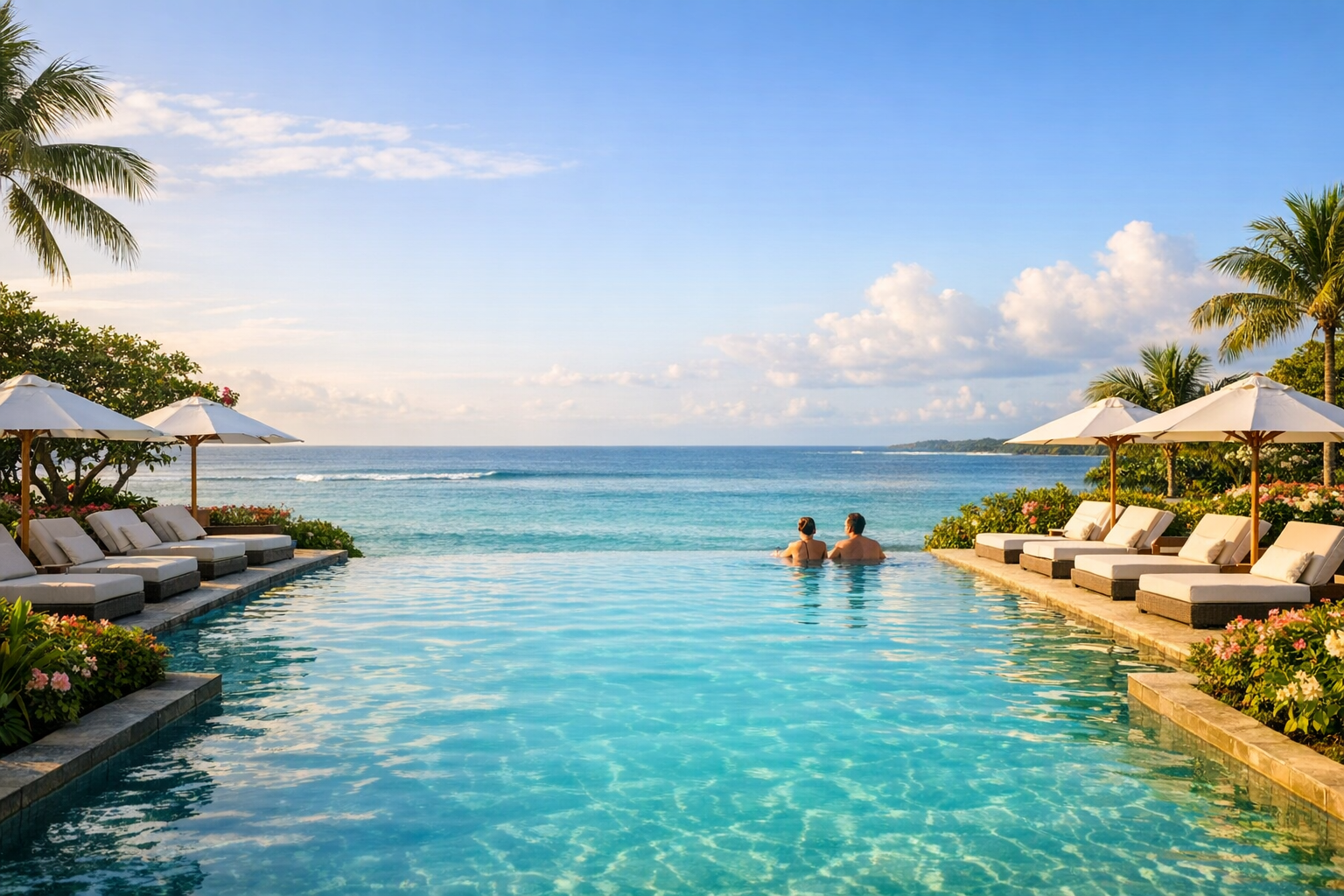
Nusa Dua occupies the northern tip of the Bukit Peninsula, about 10 kilometers south of the airport, and functions as a gated resort district managed by the Bali Tourism Development Corporation. The arrangement means that traffic, street hawkers, and the general controlled chaos of Balinese road life are largely filtered out — which is either Nusa Dua's greatest asset or its most significant limitation, depending on what you want from Bali.
The beaches here rank among the island's finest for swimming. Nusa Dua Beach's protected bay produces calm, flat water year-round, making it safe for children and non-swimmers. The strip in front of the Sofitel Bali and St. Regis is the widest and most pristine. A 10-minute walk south brings you to Geger Beach, where a living coral reef is visible at low tide and snorkeling is genuinely rewarding. Entry costs IDR 10,000. Mengiat Beach offers public access without the polished resort atmosphere and sees fewer visitors than the main strand. For adrenaline seekers, the Waterblow rock formation — where Indian Ocean swells crash through a narrow channel and explode skyward — is a free spectacle worth the five-minute detour.
Activities within Nusa Dua skew toward the well-heeled. The Bali National Golf Club operates an 18-hole championship course with green fees running $120 to $180 USD for visiting players. Museum Pasifika on Jalan Museum houses an impressive collection of Southeast Asian and Pacific artwork across 11 pavilions; admission is IDR 150,000 and the museum opens Tuesday through Sunday from 10am to 6pm. Watersports vendors on the beach offer parasailing (IDR 150,000–300,000), banana boat rides (IDR 100,000–150,000 per person), and jet ski rentals (IDR 250,000–400,000 for 30 minutes).
Accommodation in Nusa Dua is, by design, exclusively upscale. The St. Regis Bali Resort — with its private butler service and rooms starting around $400 per night — sits at the pinnacle, alongside the Mulia Resort and the Conrad Bali, which features lagoon-style pools integrated with beachfront access. The Westin Resort Nusa Dua and Sofitel offer slightly more accessible price points at $180 to $450 per night and both provide excellent beach access. Budget accommodation simply doesn't exist inside the BTDC gates; travelers watching costs should base themselves in nearby Jimbaran and make day trips.
Dining within the resort zone is elegant but expensive. For a more authentic meal, the short drive to Bumbu Bali Restaurant in adjacent Tanjung Benoa delivers some of the most carefully researched traditional Balinese cuisine on the island — the owner, Heinz von Holzen, has spent decades documenting Balinese culinary history and runs cooking classes on the premises. Main courses run IDR 150,000–350,000. Local warungs on Jalan Pratama, just outside the resort gates, serve nasi goreng for IDR 25,000–50,000 and are perfectly safe and delicious. A free shuttle circulates within the BTDC resort complex; for anywhere beyond, Grab and Blue Bird taxis are the most reliable options. Browse our recommended Bali resort packages to find curated stays in Nusa Dua that match your travel style and budget.
Plan this trip
Compare Car Rentals
Compare suppliers — Hertz, Enterprise, Sixt & more.
Find Cars →Hotels in Destinations
Top-rated hotels with free cancellation.
Search Hotels →Hotels in Destinations
Top-rated hotels with free cancellation.
Search Hotels →Vacation Rentals
Entire homes and condos — more space, more privacy.
Browse Rentals →Kuta: Surf, Commerce, and the Art of Bargaining

Kuta is where Bali's mass tourism story began, and despite the competition from polished neighbors Seminyak and Canggu, it remains the island's most accessible entry point for budget travelers and surf beginners. The beach itself stretches more than two kilometers of grey volcanic sand facing west, producing the classic Bali sunsets that have appeared on a million postcards, as well as consistent beginner-to-intermediate surf breaks that roll in from April through October with waves between one and three meters.
Surf lessons are the best first-morning activity in Kuta. Established schools including Pro Surf School and the Rip Curl School of Surf offer two-hour sessions for IDR 200,000–400,000 including board rental. The fundamentals — paddling technique, wave reading, and pop-up mechanics — can realistically be absorbed in a single lesson on Kuta's forgiving white-water waves. The beach has lifeguard coverage from 8am to 6pm and always swim between the red and yellow flags; rip currents are real and occasionally dangerous, particularly after rainfall.
Kuta's commercial heart runs along Jalan Legian and the surrounding gang (alleyways). The Kuta Art Market operates 24 hours a day and sells traditional souvenirs, sarongs, hand-carved wooden items, and the full spectrum of Bali T-shirts. The unwritten rule here is to open negotiations at 30 to 40 percent of the first asking price and work upward — shirts that open at IDR 150,000 regularly settle at IDR 60,000–80,000. The adjacent Beachwalk Shopping Center provides air-conditioned relief from the heat and hosts international brands including H&M, Zara, and Sephora alongside a well-priced food court. Waterbom Bali, roughly one kilometer from the beach on Jalan Kartika Plaza, consistently rates among Asia's top water parks; adult admission runs IDR 450,000–550,000 and the park opens daily from 9am to 6pm.
Nightlife in Kuta is loud, dense, and concentrated along Jalan Legian. Sky Garden operates across multiple floors with rotating DJs and an entry fee of around IDR 150,000 that includes drinks. It's worth noting clearly: Indonesia enforces some of Asia's harshest narcotics laws, with possession carrying potential sentences of life imprisonment or execution. Police stings targeting tourists in Kuta's nightlife district are documented and ongoing. No recreational substance is worth this risk.
For food, Made's Warung on Jalan Pantai Kuta has been serving Balinese and Indonesian food since 1969 and remains a reliable, tourist-friendly benchmark. Nasi goreng (fried rice) costs IDR 80,000–120,000 here — pricier than a local warung but the kitchen is consistent and the setting is comfortable. Poppies Restaurant in Poppies Gang I offers a pleasant garden environment with mains at IDR 100,000–250,000 and has been operating long enough to have genuine institutional credibility. Money changing is a persistent scam vector in Kuta: use only officially licensed bureaus displaying clear signage, and physically count every bill before walking away from the counter. The 'magic hands' trick — where unlicensed changers palm notes during counting — costs unsuspecting tourists tens of dollars every day.
Accommodation ranges from legitimate budget hostels charging IDR 100,000–250,000 for dorm beds to mid-range business hotels like the Ibis Styles Kuta ($40–90 per night) and the Hard Rock Hotel Bali ($120–280 per night), the latter offering an excellent pool complex and reliably safe nightlife. Check our Bali hotel recommendations for vetted accommodation across every price point.
Jimbaran: Candlelit Seafood Dinners on the Bay
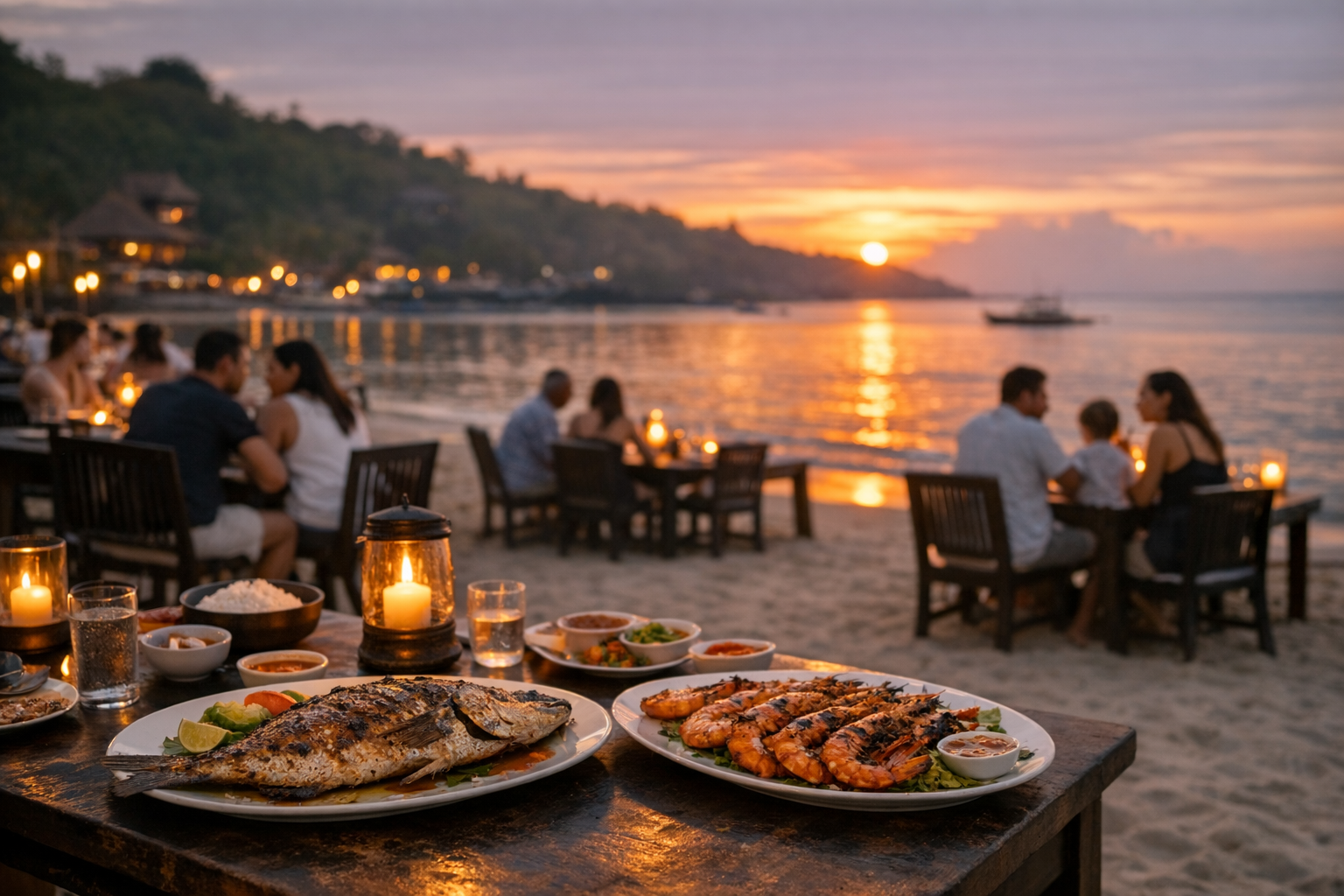
Jimbaran existed as a working fishing village long before Bali became a global tourism destination, and some of that original character persists — most visibly at the Kedonganan fish market in the northern bay, where local fishermen unload their catch between 6am and 9am each morning. Tourists are welcome to observe, and the scene of tuna, mahi-mahi, and prawns moving through a genuine wholesale market is a world apart from anything you'll encounter inside a resort gate.
The bay itself is sheltered and calm, with gentle waves ideal for swimming. Jimbaran is positioned roughly 15 to 25 minutes from the airport, which makes it a compelling base for travelers who want to avoid Kuta's density while remaining close to transport connections. The Four Seasons Resort Bali at Jimbaran Bay — set on a clifftop with individual thatched-roof villas descending toward a private beach — is consistently ranked among the world's finest resort properties; villa rates begin around $700 per night and escalate from there. The AYANA Resort and Spa occupies a neighboring clifftop with 290 meters of private beach and the famous Rock Bar, an open-air lounge literally built into ocean-facing rock at the cliff's edge. Sunset drinks at Rock Bar require advance reservations and are genuinely spectacular. The InterContinental Bali Resort offers excellent beachfront access at a more accessible $200–450 per night.
But Jimbaran's defining experience — the one that draws visitors from every other corner of the island on any given evening — is the seafood beach dinner. The format is consistent across three main clusters of restaurants: tables are arranged directly on the sand, seafood is displayed fresh and priced by weight, it's grilled over coconut husks and served with steamed rice, sambal matah, corn, and water spinach. The central Muaya Beach cluster, home to restaurants including Menega Café, Lia Café, and Jimbaran Café, offers the best combination of atmosphere, food quality, and service. Budget roughly IDR 200,000–500,000 per person for a full meal with drinks; add-on lobster costs approximately IDR 200,000–400,000 per kilogram and is worth ordering if you can find it fresh.
Arrive by 5pm during July and August to secure a table in position for the sunset — the bay faces west-southwest and the sky above the airport and Ngurah Rai Peninsula turns spectacular colors as the light falls. By 5:30pm in peak season, the best spots are claimed. Evening security along the beach is visible and consistent, reflecting the heightened protocols introduced after the 2009 bombing that targeted this area. Jimbaran today is a safe, relaxed destination; the seafood dinner ritual has returned fully to its pre-incident popularity and for good reason — it's one of the most atmospheric dining experiences in all of Southeast Asia.
Plan this trip
Compare Car Rentals
Compare suppliers — Hertz, Enterprise, Sixt & more.
Find Cars →Hotels in Destinations
Top-rated hotels with free cancellation.
Search Hotels →Hotels in Destinations
Top-rated hotels with free cancellation.
Search Hotels →Vacation Rentals
Entire homes and condos — more space, more privacy.
Browse Rentals →Ubud: Bali's Cultural and Wellness Capital

Ubud sits roughly 40 kilometers north of the airport, at an elevation of about 300 meters in Bali's central highlands, and it operates on a fundamentally different frequency from the beach towns to the south. The air is cooler — temperatures hover between 24 and 30°C rather than the coastal 30 to 34°C — humidity is higher, and the prevailing mood is contemplative rather than hedonistic. This is where Balinese art, architecture, music, and Hindu ritual are most visibly alive in daily life.
The Tegallalang Rice Terraces, listed under Bali's UNESCO-recognized Subak irrigation system, are the iconic Ubud photograph — cascading emerald paddies engineered over centuries using a community-managed water allocation system that predates the Dutch colonial period. Entry to the terraces themselves is free; individual landowners along the ridge charge IDR 15,000–30,000 for access to swings, photo platforms, and coconut cafés on their property. Go before 8am to beat tour groups and secure the best light.
Ubud Palace (Puri Saren Agung) sits at the center of town and hosts traditional Kecak, Legong, and Barong dance performances most evenings from around 7:30pm; tickets run IDR 100,000–150,000 and the setting — an open-air courtyard with torch lighting — is exceptional. The Ubud Monkey Forest (officially Mandala Wisata Wenara Wana) houses over 700 long-tailed macaques across a 27-acre sacred forest; admission is IDR 50,000 for adults. A practical warning: keep bags zipped and remove glasses, hats, and dangling jewelry before entering — the monkeys are habituated to tourists and opportunistically quick. Rabies vaccination is worth discussing with your travel medicine provider before visiting Bali.
Yoga and wellness tourism have made Ubud their regional headquarters. Yoga Barn on Jalan Hanoman is the most established center, offering drop-in classes from IDR 130,000–200,000 across multiple styles daily. Healing sessions with traditional Balinese practitioners — the balian or spirit healers featured in Elizabeth Gilbert's Eat Pray Love — are available through local recommendations; expect to pay IDR 200,000–500,000 for a session. The Eat Pray Love phenomenon brought a wave of wellness-focused visitors to Ubud beginning in 2010 and the infrastructure has evolved to meet serious demand: retreat packages, sound healing sessions, raw food restaurants, and plant-based cafés are genuinely world-class here.
Dining in Ubud spans from IDR 15,000 nasi campur at family warungs on Jalan Dewi Sita to sophisticated farm-to-table tasting menus at Locavore — widely acknowledged as one of Indonesia's finest restaurants, where a full tasting experience runs approximately IDR 1,200,000–1,800,000 per person and reservations are required weeks in advance. For the mid-range, Warung Biah Biah and Naughty Nuri's (famous for pork ribs and martinis) represent the Ubud institution category: consistent, honest cooking at IDR 80,000–200,000 per dish.
Accommodation ranges from IDR 300,000–600,000 for well-reviewed guesthouses in the town center to $400–900 per night at Komaneka at Bisma or Alaya Resort Ubud, which offer jungle valley views and infinity pools that photograph as dramatically as advertised. The Alila Ubud, perched above the Ayung River gorge, has been a design benchmark for jungle resort architecture since its opening. Plan transportation carefully: Ubud has no ride-share pickup in the town center due to local taxi union agreements; pre-arranged drivers are the most practical solution for arrival and departure. Visit our Bali private driver services page for day-trip and full-itinerary driver options from Ubud.
Practical Planning: Budgets, Transport, and Itinerary Frameworks
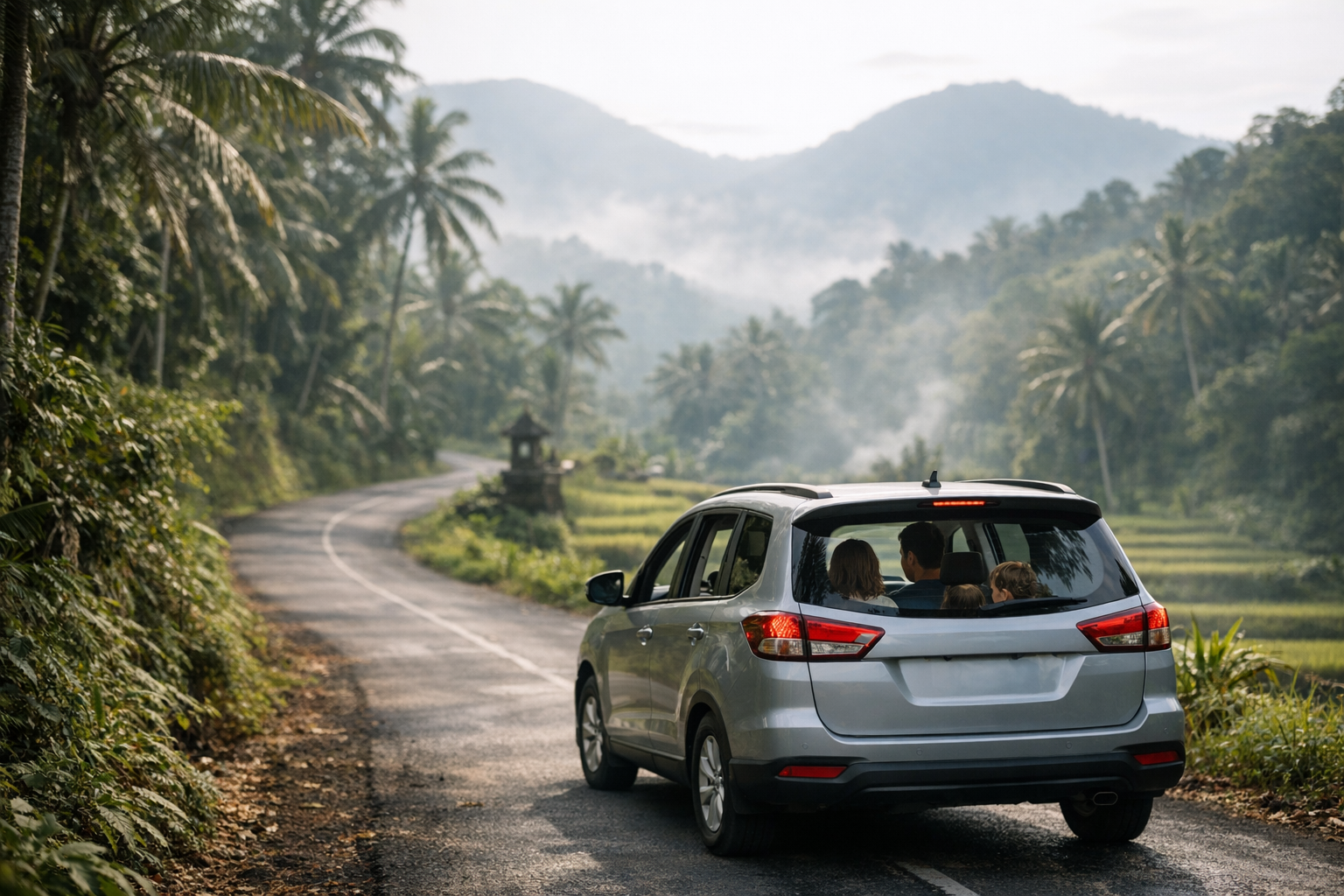
Bali accommodates an unusually wide spending range, from $30-per-day backpackers to $2,000-per-night villa guests — and crucially, both categories can access the same temples, rice terraces, and beaches. The primary cost variable is accommodation, followed by dining choices and transport.
For a realistic mid-range traveler — comfortable guesthouse or three-star hotel, mix of warung meals and occasional restaurant dinners, Grab taxis, and paid entry to main attractions — budget IDR 500,000–900,000 ($32–57 USD) per day excluding accommodation. Add IDR 400,000–800,000 for a quality private room. Budget travelers sharing accommodation can manage the island on IDR 300,000–500,000 per day all-in. Luxury travelers at properties like Four Seasons or St. Regis should budget $350–600 USD per day minimum for accommodation alone, with dining and activities adding $100–250.
A well-structured five-night itinerary might look like this: Night 1 in Jimbaran for a soft landing and seafood dinner; Nights 2–3 in Ubud for cultural immersion, rice terrace sunrise, and an evening dance performance; Night 4–5 in Nusa Dua or Seminyak for beach time and upscale dining. This arc covers Bali's essential geographic and experiential range without exhausting a first-time visitor.
Cellular data is cheap and essential. A SIM card from Telkomsel or XL Axiata with 10–30GB of data costs IDR 50,000–150,000 and can be purchased at the airport immediately after clearing customs. Google Maps works well for pedestrian navigation in Ubud and Kuta; for driving directions, Waze is often more current on road conditions. WhatsApp is the universal communication platform for contacting hotels, drivers, and tour operators — download it before departure if you haven't already.
Motorbike rental is available for IDR 60,000–100,000 per day but requires a valid international motorcycle license; police checkpoints specifically targeting foreign riders without proper licensing are common in Kuta and Ubud, and fines (informal or official) are routine. For most visitors, combining Grab in urban areas with a hired private driver for day trips represents the optimal balance of cost and convenience. A full-day private driver covering up to eight hours and multiple stops runs IDR 400,000–600,000 — competitive with even two or three Grab rides across the island's distances. See our Bali transportation guide for detailed comparisons of every ground transport option available on the island.
Plan this trip
Compare Car Rentals
Compare suppliers — Hertz, Enterprise, Sixt & more.
Find Cars →Hotels in Destinations
Top-rated hotels with free cancellation.
Search Hotels →Hotels in Destinations
Top-rated hotels with free cancellation.
Search Hotels →Vacation Rentals
Entire homes and condos — more space, more privacy.
Browse Rentals →Frequently Asked Questions
Citizens of 86 nationalities — including the US, UK, Australia, and all EU countries — can purchase a Visa on Arrival (VoA) at Ngurah Rai Airport for IDR 500,000 (approximately $31 USD), valid for 30 days and extendable once for another 30 days. ASEAN citizens receive a free 10-day visa-exempt entry. Separately, all foreign tourists must pay the Bali tourist levy of IDR 150,000 (~$10 USD) via the Love Bali app or airport kiosk. Your passport must be valid for at least six months beyond your arrival date.
The dry season from May through September offers the most reliable beach and outdoor conditions, with temperatures of 27–32°C and lower humidity. July and August are the busiest and most expensive months — hotel rates can be 30–50% higher than shoulder season. June and September are widely considered the sweet spot: excellent weather with noticeably fewer crowds. December 20 to January 5 sees a holiday price spike rivaling peak season. Note that Nyepi (Balinese Day of Silence) closes the airport for 24 hours — in 2026 this falls on March 19.
There is no public bus service from Ngurah Rai Airport. Official Koperasi taxis operate on fixed prepaid rates: Kuta IDR 80,000–100,000; Nusa Dua IDR 150,000–200,000; Ubud IDR 350,000–450,000. Grab and Gojek (ride-hailing apps) are typically 20–30% cheaper but require walking to a designated pickup zone outside the terminal. Pre-booked private transfers are available through hotels and travel services. Jimbaran is the closest major area at 15–25 minutes; Ubud is 1.5–2 hours.
Nusa Dua is one of Bali's most family-friendly destinations. The gated resort area keeps traffic and street vendors to a minimum, and the beach's protected bay produces calm, flat water safe for children. The Sofitel Bali Nusa Dua and Westin Resort Nusa Dua both have strong family facilities including dedicated pools and kids' clubs. Waterbom Bali water park is just 15 minutes away in Kuta. The main trade-off is that Nusa Dua lacks authentic local atmosphere — all accommodation is upscale and budget options require staying outside the gates.
Budget approximately IDR 200,000–500,000 ($13–32 USD) per person for a full meal including grilled fish, prawns, rice, sambal, corn, and soft drinks at one of the established restaurants on Muaya Beach such as Menega Café or Lia Café. Lobster, priced by weight at IDR 200,000–400,000 per kilogram, is an optional upgrade. Arrive by 5pm during July and August to secure a beachfront table for sunset — by 5:30pm the best spots are typically taken.
Kuta is generally safe but requires standard urban vigilance. The main risks are petty theft (motorbike bag-snatching on Jalan Legian at night), money-changing scams (use only officially licensed bureaus), and unlicensed taxis (use Grab or Blue Bird exclusively). Indonesia's narcotics laws are among the world's harshest — drug possession can result in life imprisonment or the death penalty, and police stings in Kuta's nightlife district are documented. Swim only between lifeguard flags on the beach due to rip currents. Beyond these precautions, Kuta's infrastructure is well-established for tourists.
Nyepi is the Balinese Hindu New Year and Day of Silence, observed annually according to the Saka calendar. In 2026, Nyepi falls on March 19. For a full 24 hours, the entire island shuts down: Ngurah Rai Airport closes, vehicles are prohibited from roads, and tourists are required to remain at their hotels. Internet is occasionally restricted in some areas. The day before Nyepi features the Ogoh-ogoh parade — an extraordinary spectacle of giant hand-built demon effigies carried through village streets by torchlight. Planning flights to arrive at least two days before or depart the morning after Nyepi is strongly advised.
First-timers to Ubud should prioritize an early-morning visit to the Tegallalang Rice Terraces (arrive before 8am for the best light and fewest crowds), an evening traditional dance performance at Ubud Palace (IDR 100,000–150,000), and at least one meal at a local warung on Jalan Dewi Sita. The Ubud Monkey Forest is visually impressive but requires secure bags and removed jewelry. Serious foodies should attempt a reservation at Locavore restaurant well in advance. If time allows, a 90-minute traditional Balinese massage (IDR 100,000–200,000 at reputable spas on Jalan Hanoman) rounds out the experience beautifully.