Caribbean Cruising in 2026: Why Route Choice Matters More Than Ship Choice
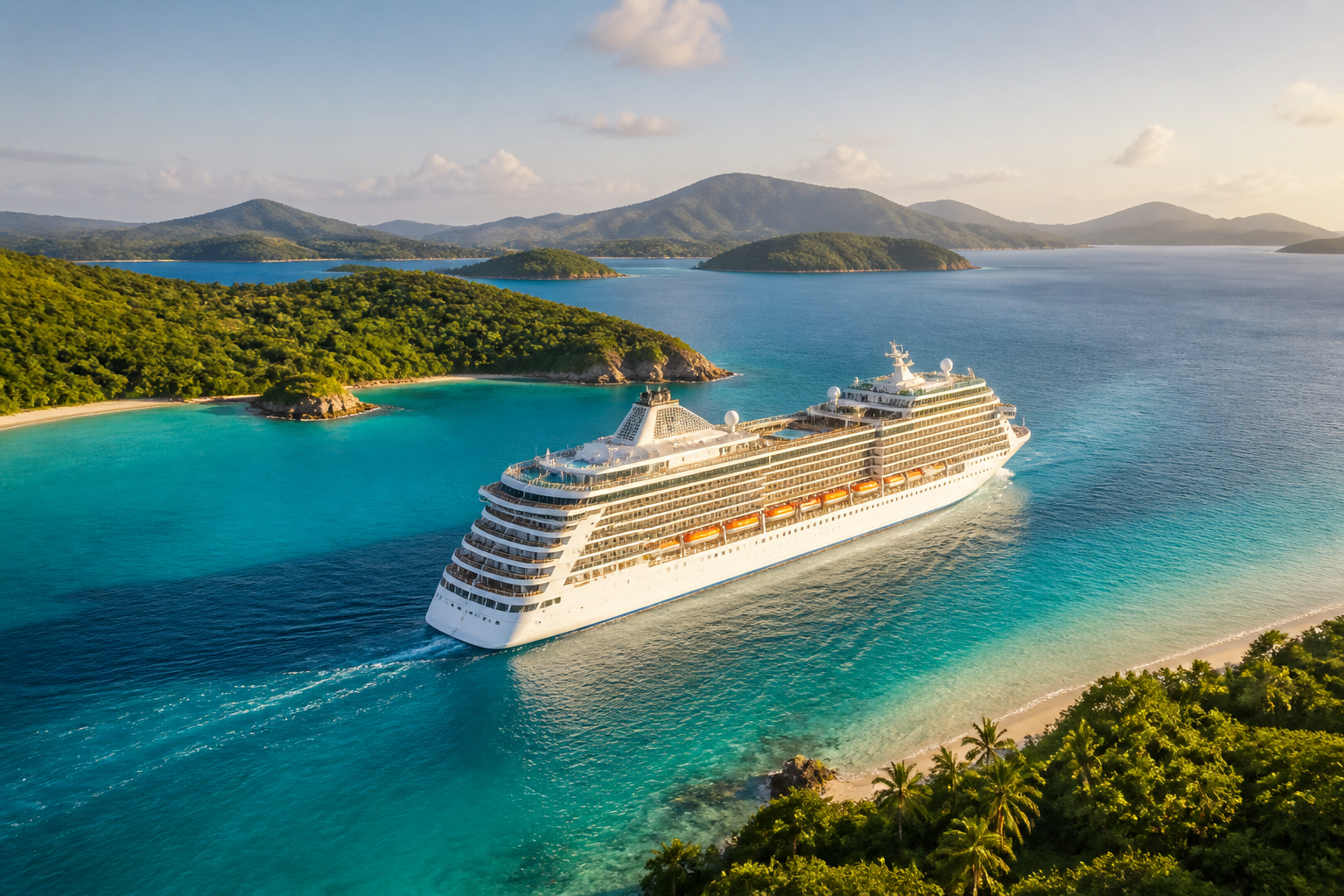
When most travelers start planning a Caribbean cruise, they fixate on the ship — the surf simulators, the multi-deck waterslides, the specialty restaurant menus. We suggest flipping that logic entirely. The route you choose determines your ports of call, your cultural encounters, your weather window, and ultimately whether you come home raving or regretting. In 2026, Caribbean cruise itineraries are more varied than at any point in the industry's history, with over two dozen ships operating year-round from Florida and Texas ports alone.
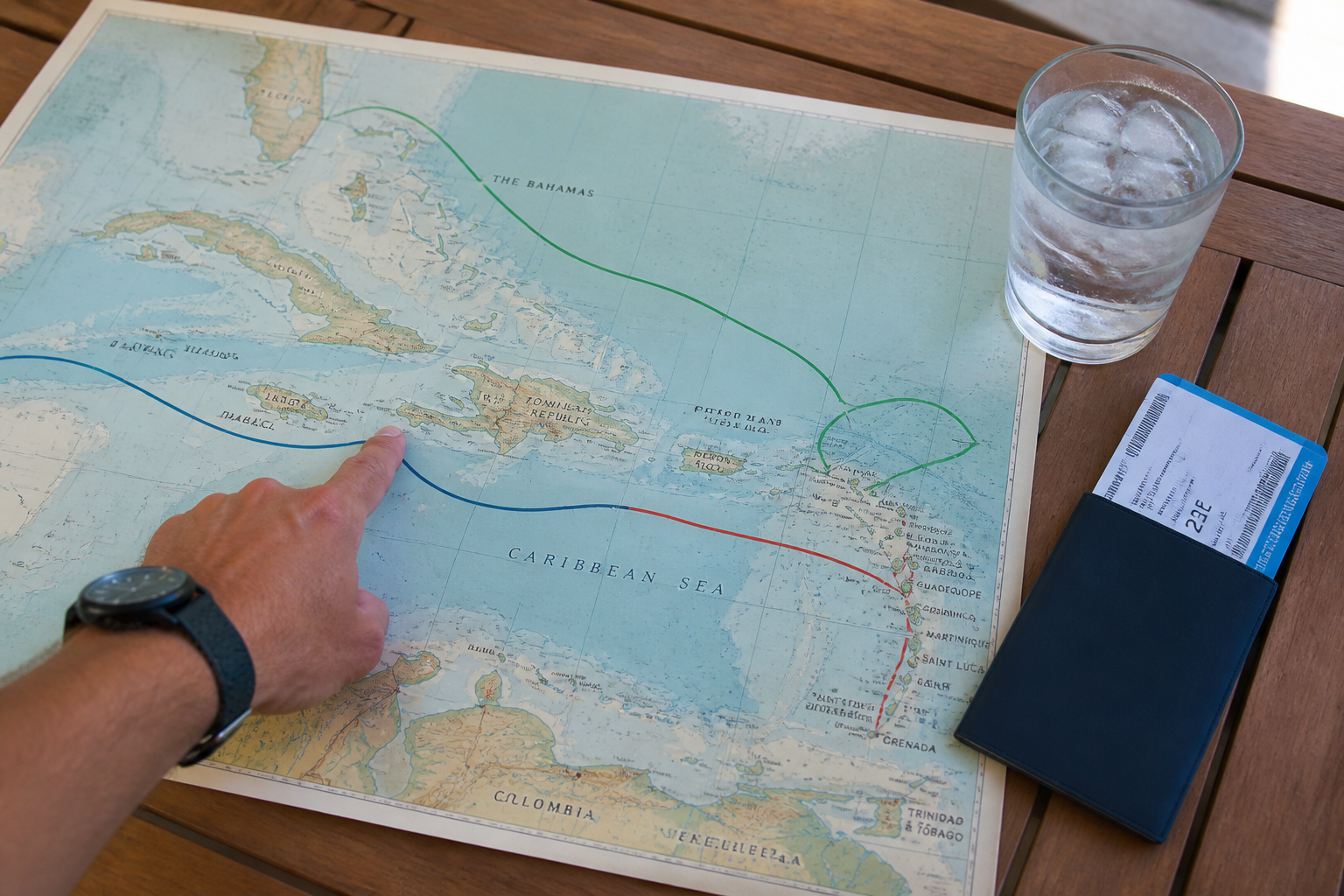
The Caribbean Sea divides into three broadly recognized route corridors: Eastern, Western, and Southern. Each offers a fundamentally different travel experience. The Eastern Caribbean rewards beach purists and duty-free enthusiasts with the turquoise shallows of the Bahamas and the 16th-century colonial streets of San Juan, Puerto Rico. The Western Caribbean delivers Mayan archaeological sites in the Yucatán Peninsula, world-class reef diving along the Mesoamerican Barrier Reef off Cozumel, and the powder-white seven-mile stretches of Grand Cayman. The Southern Caribbean — the most ambitious of the three — ventures deep into the Lesser Antilles, past Barbados, Antigua, and the Dutch ABC Islands (Aruba, Bonaire, and Curaçao), for a cultural and geographic depth that no 7-night itinerary can replicate.
Your departure port is the first practical constraint on that choice. Miami's PortMiami and Fort Lauderdale's Port Everglades both service all three Caribbean route types with daily departures. Port Canaveral, positioned roughly 45 miles east of Orlando, skews heavily toward Eastern Caribbean itineraries and serves as Disney Cruise Line's primary homeport. Galveston, Texas — the dominant Gulf Coast cruise hub — focuses almost exclusively on Western Caribbean routes due to pure geography and sailing time.
We recommend settling your route preference before you open a single cruise line's booking portal. Identify the islands and experiences that genuinely excite you, confirm which departure ports offer those routes, then compare ships and fares. The vessel should serve the destination, not substitute for it. The sections below give you the specific ports, cruise lines, pricing benchmarks, and planning guidance to build your 2026 Caribbean itinerary with full confidence.
Eastern Caribbean: Bahamas, US Virgin Islands & San Juan
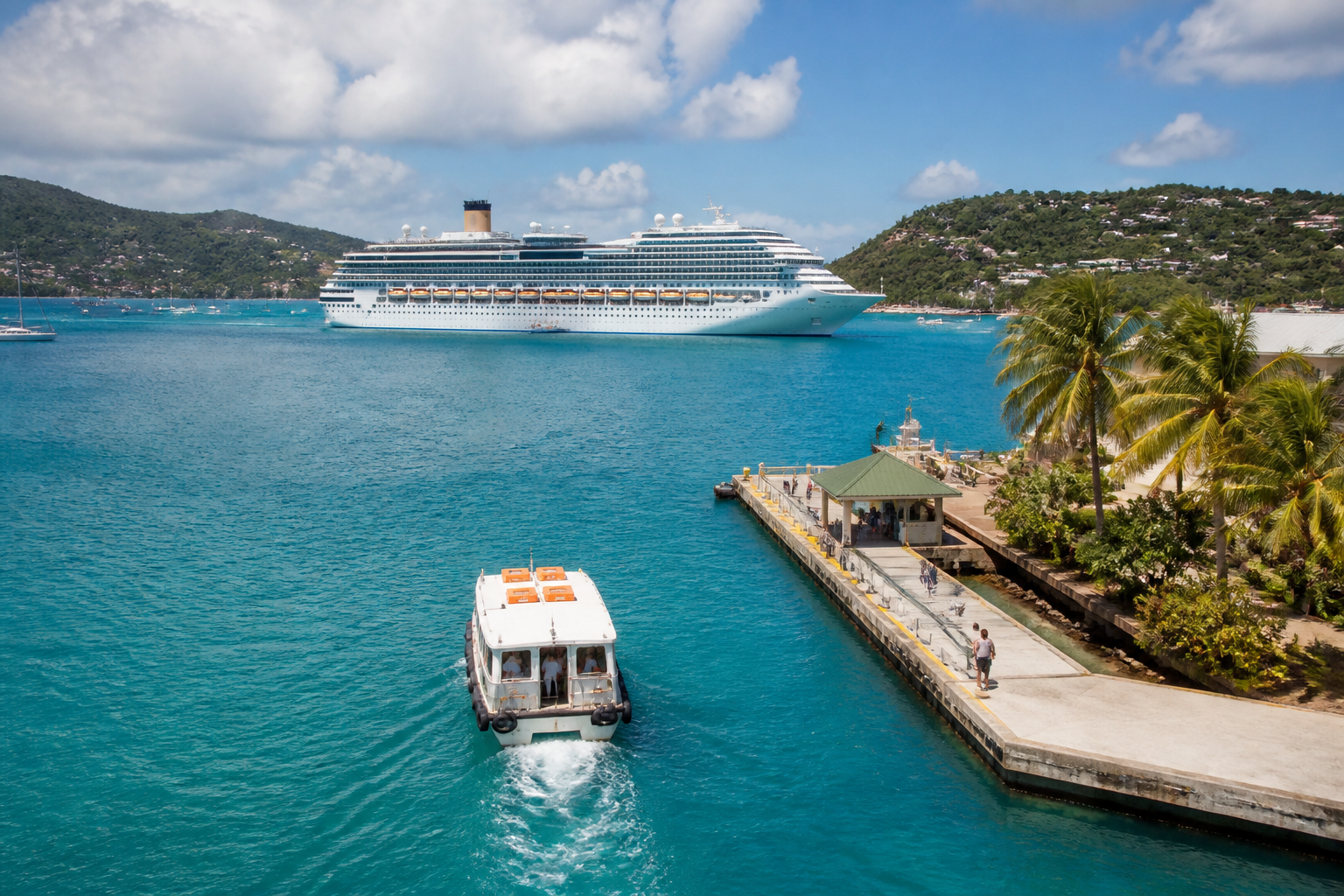
The Eastern Caribbean is the itinerary most first-time cruisers picture when they imagine a Caribbean voyage, and the region earns that reputation consistently. Standard 7-night sailings from PortMiami or Port Everglades call on three to four ports, with Nassau, Bahamas appearing on virtually every Eastern circuit. Nassau's Prince George Wharf handles more than three million cruise arrivals annually, with Atlantis Paradise Island and the Cable Beach corridor both accessible within 20 minutes of the pier — the facility is genuinely built to absorb volume, and it shows.
Beyond Nassau, Eastern itineraries routinely include Charlotte Amalie, St. Thomas, in the U.S. Virgin Islands. Charlotte Amalie's duty-free designation — established under U.S. customs rules — makes it genuinely worthwhile for watches, jewelry, spirits, and perfume, with American shoppers permitted to bring back $1,600 in duty-free goods versus the standard $800 for most international destinations. St. Maarten and St. Martin, the smallest island in the world governed by two separate nations (Dutch and French respectively), adds a distinct dual-culture port stop with Orient Beach on the French side and the famous Maho Beach airplane-spotting strip on the Dutch end.
San Juan, Puerto Rico serves as both a port call and an embarkation option for Eastern itineraries. Old San Juan's UNESCO-listed historic district, anchored by the Castillo San Felipe del Morro — a 16th-century Spanish citadel completed in 1540 — is a genuinely rewarding half-day shore excursion, the kind that holds up whether this is your first Caribbean sailing or your tenth. Norwegian Cruise Line operates weekly Eastern Caribbean departures from San Juan as an alternative embarkation point, which can meaningfully reduce the cost of flights for travelers from the Northeast.
In 2026, Royal Caribbean continues dominating Eastern Caribbean capacity from PortMiami with Icon-class and Oasis-class ships sailing weekly. Disney Cruise Line's Disney Magic departs Port Canaveral on 7-night Eastern itineraries calling on Tortola and St. Maarten, commanding a 25-40% fare premium over comparable Royal Caribbean or Norwegian sailings — a premium the line's onboard programming consistently justifies for families with children under 14.
We suggest targeting January through March 2026 for Eastern Caribbean departures. The region's dry season is firmly established by early January, trade winds are reliable, and post-holiday departures in the first three weeks of January typically carry promotional pricing $200-$400 below comparable peak February sailings.
Western Caribbean: Cozumel, Grand Cayman, Jamaica & Honduras
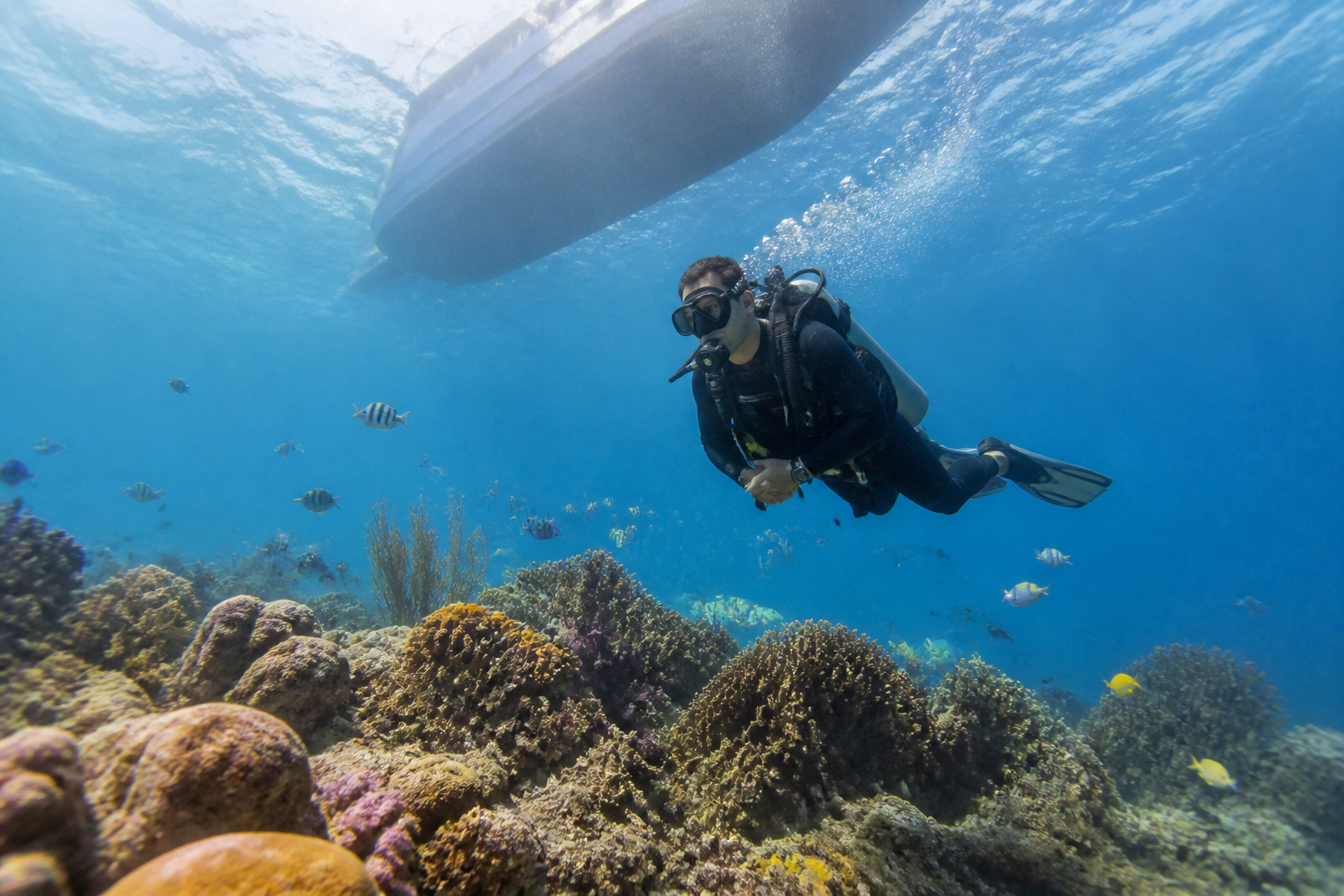
The Western Caribbean is where the region's adventure credentials are most firmly established. Routes from Miami, Galveston, and Tampa anchor on a four-port circuit that typically includes Cozumel, Mexico; George Town, Grand Cayman; Ocho Rios or Montego Bay, Jamaica; and Roatán, Honduras — each island so distinct from the others that the itinerary functions as four separate travel experiences compressed into one departure.
Cozumel is consistently ranked among the top five scuba diving destinations on the planet, with direct access to the Mesoamerican Barrier Reef — the second-largest barrier reef system in the world, stretching over 600 miles from the Yucatán to Honduras. The Puerta Maya and International Pier both deliver passengers within walking distance of certified dive operators and snorkel boat departures. Visibility in Cozumel's reef channels routinely exceeds 100 feet, making it productive even for first-time snorkelers aboard a glass-bottom boat.
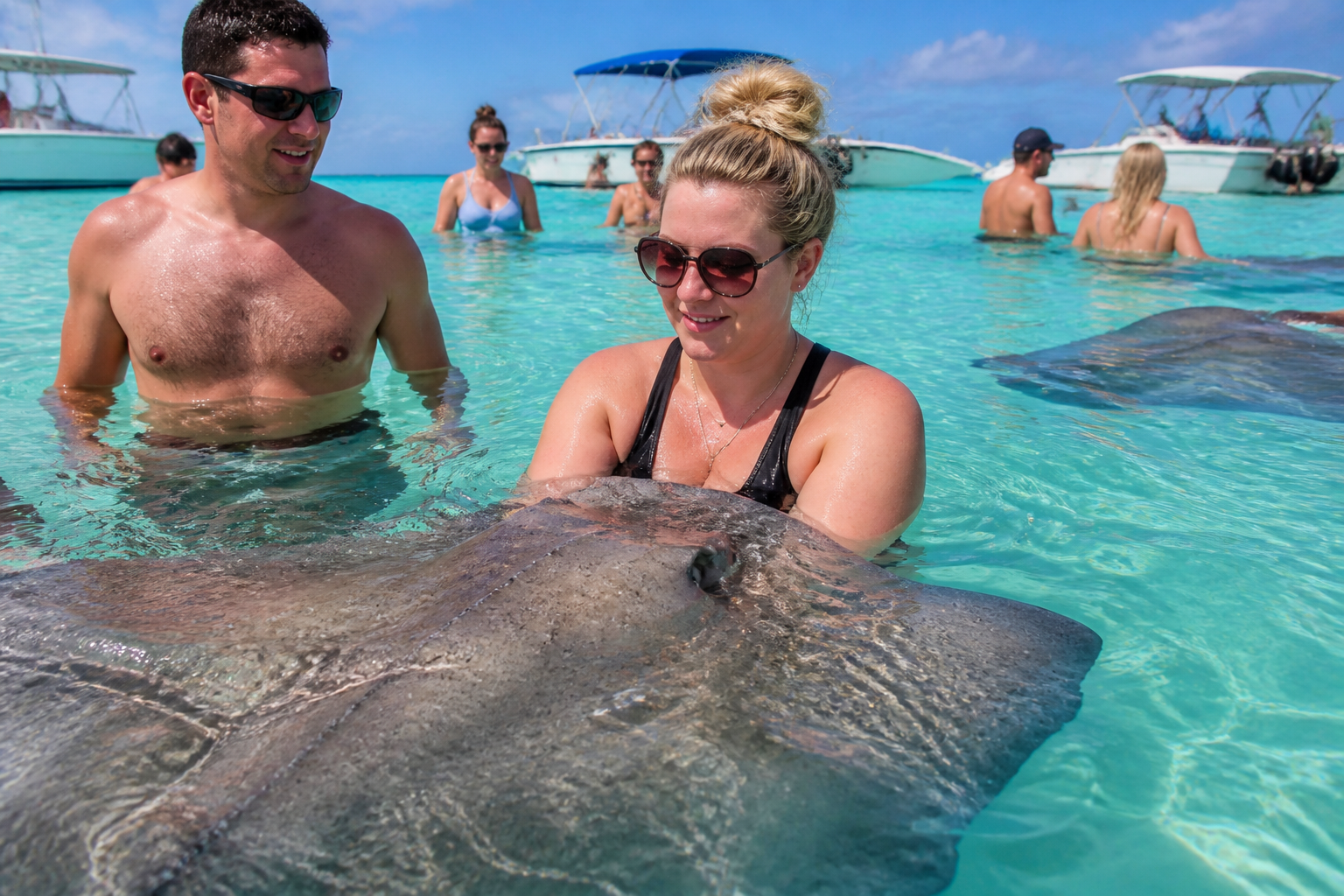
Grand Cayman requires no hyperbole. Seven Mile Beach is exactly as calm, white, and clear as every photograph suggests, and Stingray City — the shallow sandbar where Southern stingrays congregate in the kind of numbers that have made it a genuine Caribbean institution — remains one of the best-value shore excursion experiences at roughly $40-$55 per person booked directly through local operators. Jamaica's port options — Ocho Rios in the north and Montego Bay in the west — both deliver Dunn's River Falls access and Blue Mountain coffee tastings, though Montego Bay's Hip Strip offers a more walkable port environment.
Roatán, Honduras is the Western Caribbean's most underappreciated stop. Its reef walls drop hundreds of feet just offshore, the zip-line circuits through the island's jungle interior rank among the region's best adventure excursions, and the general absence of mega-resort infrastructure gives it an authenticity the better-known ports can no longer match.
In 2026, Carnival Cruise Line operates the largest capacity on Western Caribbean routes from Galveston aboard its Mardi Gras-class ships. Interior cabin berths on a 7-night Carnival Western sailing from Galveston open at approximately $599 per person in shoulder-season windows — the most accessible entry price point in Caribbean cruising. Royal Caribbean's Harmony of the Seas operates a Western loop from PortMiami that adds a private island stop at Perfect Day at CocoCay, a 254-acre Bahamian island Royal Caribbean developed exclusively for its passengers.
Plan this trip
Southern Caribbean: ABC Islands, Barbados & Antigua
The Southern Caribbean demands more from its passengers — longer transatlantic or domestic flights to embarkation ports in San Juan or Barbados, itineraries that run 10 to 14 nights rather than seven, and a budgetary commitment meaningfully above the 7-night baseline. What you get in return is a Caribbean experience that still operates on a human scale in 2026, with port towns that retain genuine local character rather than dedicating themselves to managing cruise passenger throughput.
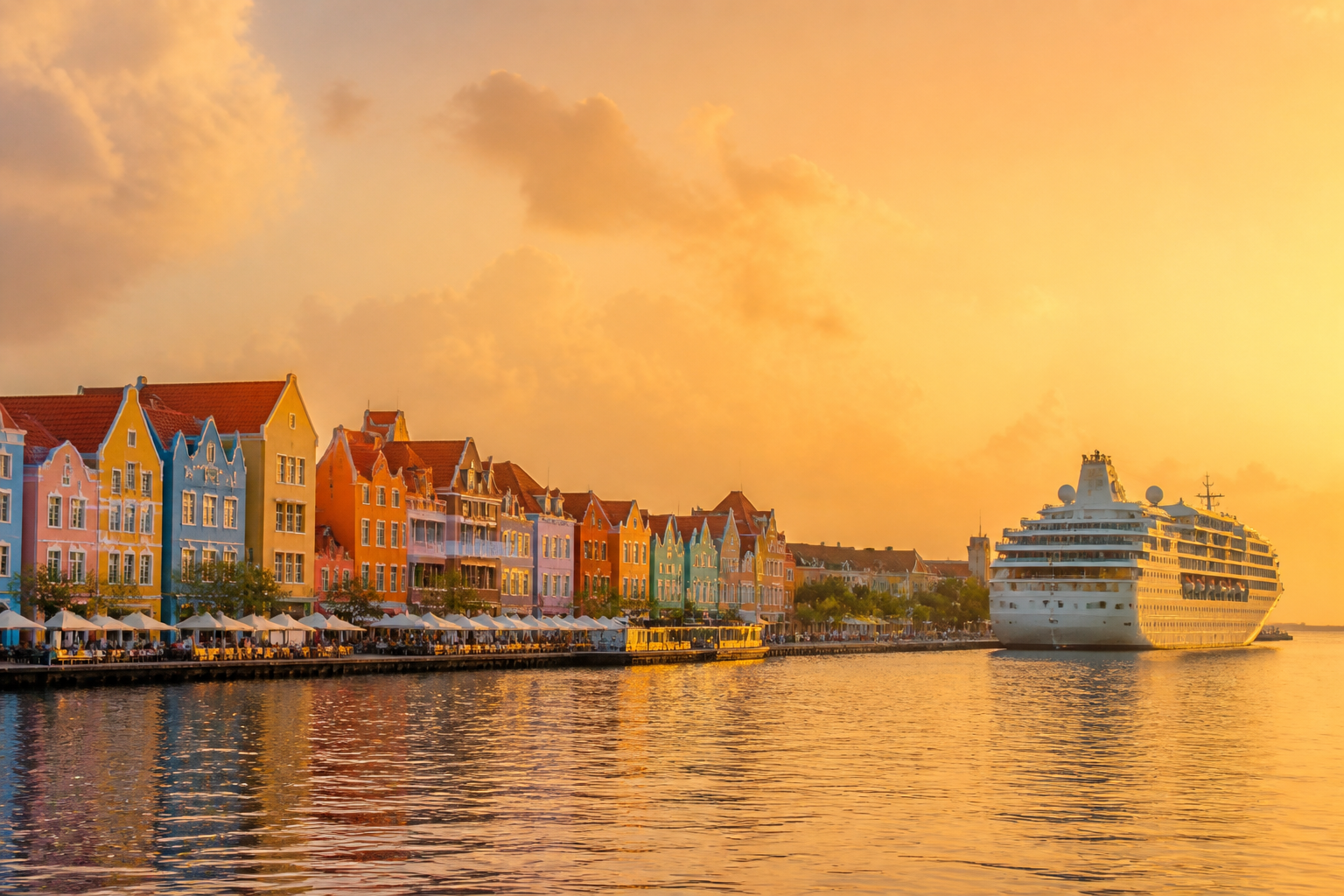
The anchor of the Southern circuit is the ABC Islands — Aruba, Bonaire, and Curaçao — a trio of Dutch Caribbean islands positioned entirely below the primary Atlantic hurricane track. Aruba receives fewer than 20 inches of rainfall per year on average, a climate closer to the Canary Islands than the storm-prone Greater Antilles, and the island's consistent trade winds have made Aruba a premier windsurfing destination, hosting international competitions at Hadicurari Beach annually. Curaçao's capital, Willemstad, carries UNESCO World Heritage designation for its preserved Dutch colonial waterfront — the Handelskade row of pastel-colored merchant houses reflected in St. Anna Bay turns up in more Caribbean travel photography than almost any other urban scene in the region, and it earns every frame. Bonaire, the quietest of the three, is widely considered to have the best-protected reef ecosystem in the hemisphere, with shore diving accessible directly from the island's west coast without a boat.
Barbados rounds out Southern itineraries with genuine historical depth. The Mount Gay Rum Distillery, founded in 1703 and among the oldest continually operating rum producers in the world, offers distillery tours that rank among the most legitimately interesting shore experiences in the Caribbean. Antigua contributes 365 beaches — one for each day of the year, as local tourism literature never tires of noting — while St. Lucia's twin Piton mountains, rising dramatically from the southwest coast to 2,438 feet, provide the most cinematically striking island arrival in the region.
We recommend Southern Caribbean sailings in October through December 2026 for travelers with schedule flexibility. The ABC Islands' position below the hurricane belt makes late-fall sailings reliably low-risk, and cruise lines frequently discount longer Southern itineraries to fill inventory that is harder to sell than popular 7-night routes. A 10-night Southern Caribbean sailing on Holland America Line or Princess Cruises — the two lines with deepest Southern Caribbean capacity — can represent better per-night value than a comparable 7-night Eastern sailing when promotional pricing is applied.
Choosing Your Cruise Line: Royal vs Carnival vs Norwegian vs Disney
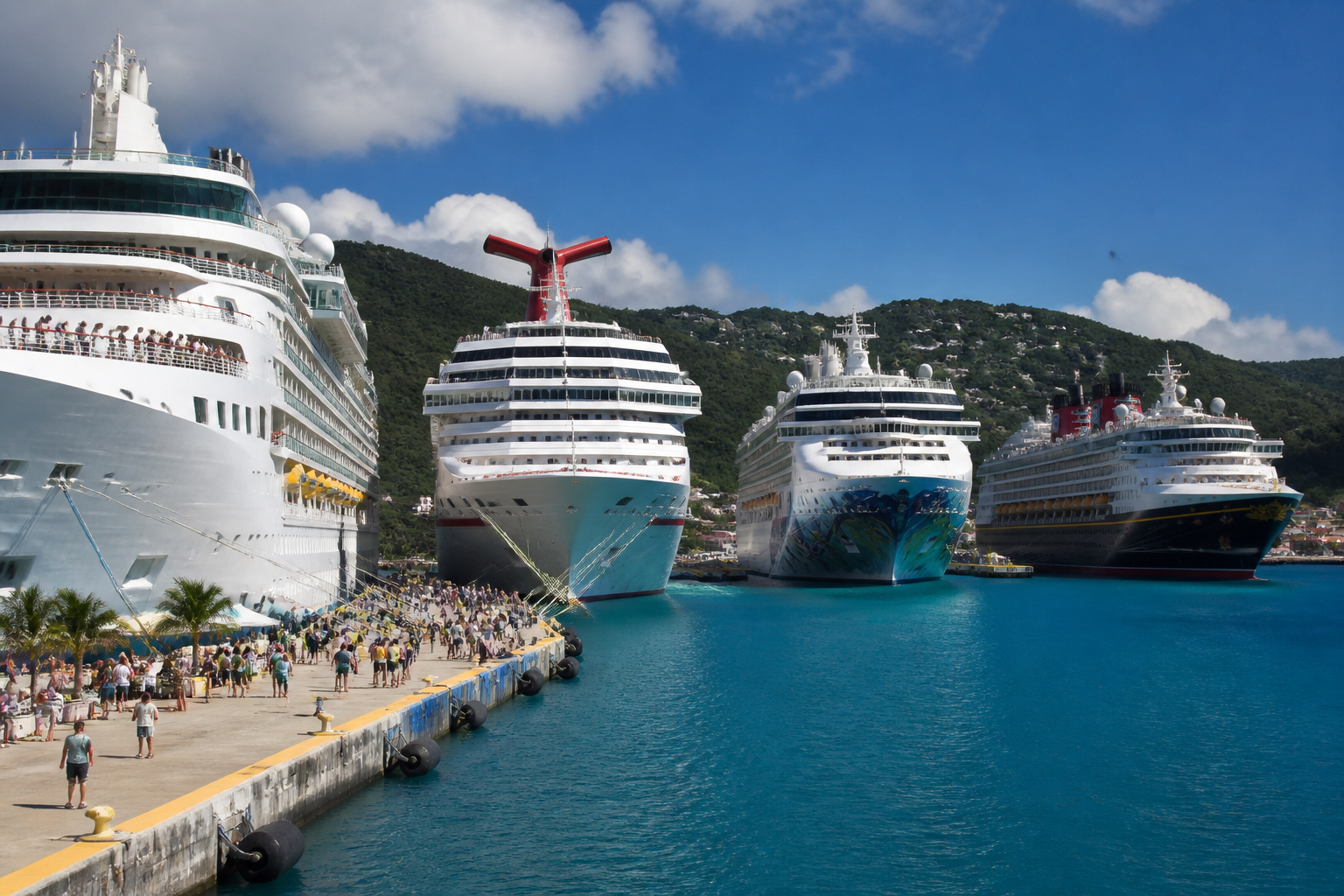
Choosing between Royal Caribbean, Carnival, Norwegian, and Disney is not a quality hierarchy. It is a compatibility question. We suggest evaluating four criteria in this order: demographic fit, dining philosophy, activity priorities, and value sensitivity.
Royal Caribbean International is the world's largest cruise company by passenger capacity and the undisputed leader in onboard infrastructure. Its Oasis-class ships — Oasis, Allure, Harmony, Symphony, Wonder, and the Icon of the Seas, which launched in January 2024 and carries up to 7,600 passengers — represent the current ceiling of what a cruise ship can be in terms of sheer amenity concentration. Caribbean itineraries in 2026 range from 3-night Bahamas getaways departing PortMiami on Thursdays and Sundays to 12-night Southern Caribbean voyages. Base fares for a 7-night Eastern Caribbean sailing run from approximately $899 per person for an interior cabin to $2,400 for a balcony, with suites beginning around $3,500.
Carnival Cruise Line carries more passengers from U.S. homeports than any other cruise company and has systematically modernized its fleet with the Mardi Gras, Celebration, and Jubilee additions — all operating on LNG (liquefied natural gas) propulsion, which reduces sulfur emissions by 99% compared to conventional heavy fuel oil. Carnival's tone is unapologetically social and activity-forward, with its CHEERS! all-inclusive drink package adding approximately $65-$75 per person per day. Interior cabin fares for a 7-night Western Caribbean sailing from Galveston start around $599 per person in 2026 shoulder windows.
Norwegian Cruise Line pioneered Freestyle Cruising — no assigned dining times, no formal dress codes, and a product that attracts slightly older, more independent travelers than Carnival. Norwegian's Caribbean sailings in 2026 include Eastern and Western itineraries from PortMiami aboard Norwegian Joy and Norwegian Encore, with base fares typically starting around $799 per person before Norwegian's bundled Free at Sea promotion applies (which can add a drink package or specialty dining credits at reduced cost).
Disney Cruise Line operates the most clearly defined product in the industry: a premium family cruise experience built around Disney intellectual property, impeccably maintained ships (the Disney Magic entered service in 1998 and has undergone two complete dry-dock refurbishments), and onboard entertainment that genuinely competes with Disney's theme park division. A 7-night Eastern Caribbean sailing from Port Canaveral aboard the Disney Fantasy typically starts at $1,800-$2,500 per person — roughly double a comparable Carnival sailing — and justifies that premium for families with children under 14 through character meet-and-greets, Broadway-caliber production shows, and a youth programming infrastructure that sets the industry standard.
Plan this trip
Departure Ports: Miami vs Fort Lauderdale vs Port Canaveral vs Galveston
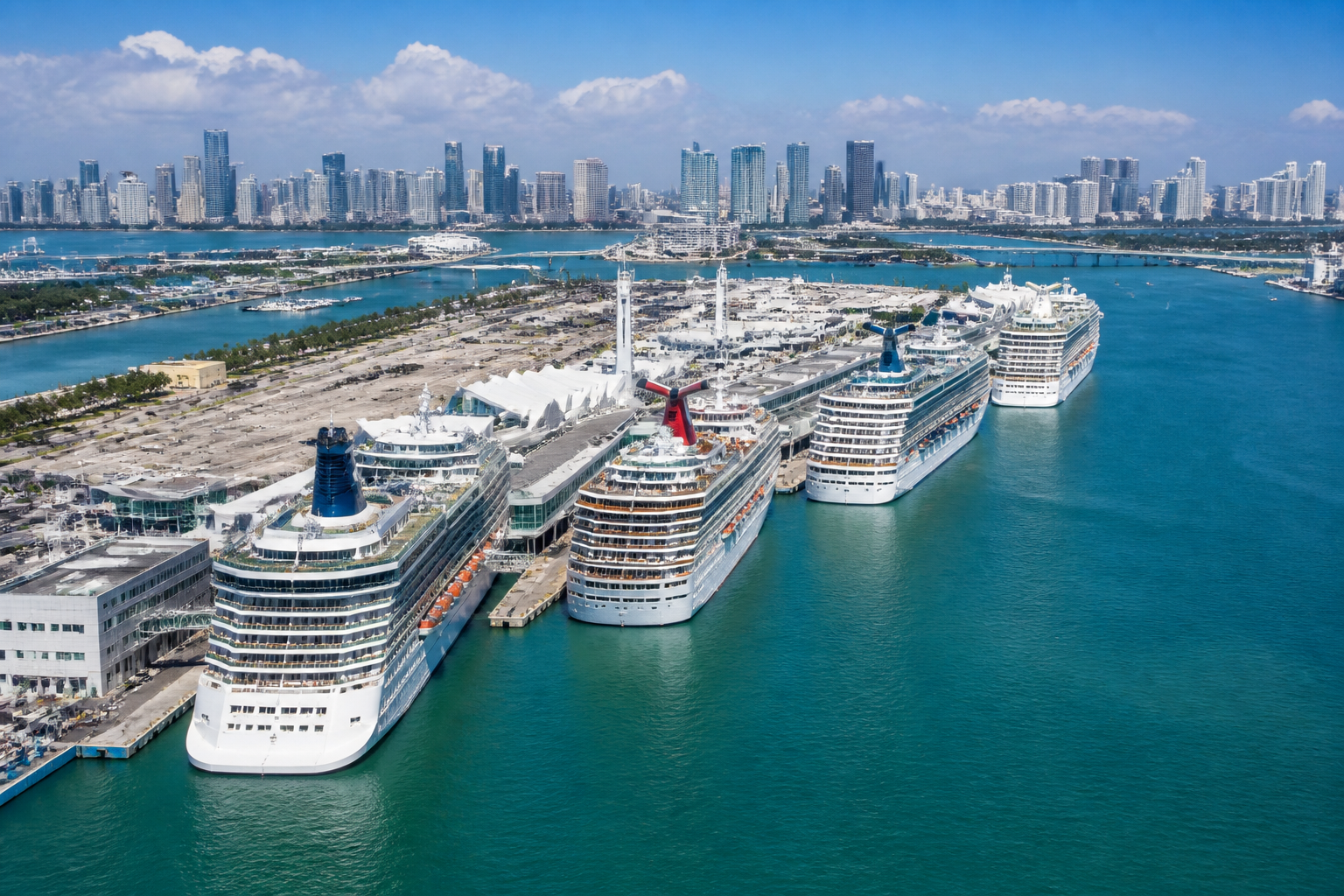
Your departure port is not a logistical footnote. It constrains your route options, determines your pre-cruise hotel costs, and sets the pace for the entire embarkation day. We recommend choosing your departure port based on flight convenience and driving proximity first, then filtering available Caribbean itineraries from there rather than the reverse.
PortMiami is the world's busiest cruise port by annual passenger volume, handling over seven million passengers in peak operating years across 12 active cruise terminals. It services all three Caribbean route types and hosts Caribbean sailings from Royal Caribbean, Carnival, Norwegian, MSC, Celebrity, Azamara, and Virgin Voyages. Miami International Airport (MIA) sits approximately 8 miles west of the port — a 15-to-20-minute transfer under normal weekday conditions. We strongly recommend pre-booking a dedicated cruise port transfer rather than relying on ride-share availability on embarkation mornings, when surge pricing and limited vehicle supply routinely frustrate passengers with early boarding windows.
Port Everglades in Fort Lauderdale ranks consistently as the second-busiest cruise port in the world and PortMiami's direct competitor for South Florida departure capacity. Fort Lauderdale-Hollywood International Airport (FLL) sits just 4 miles east of the port — a 10-minute transfer under standard traffic conditions. For many travelers flying from the Midwest or West Coast, FLL offers meaningfully better nonstop fare options than MIA, making it the smarter budget choice even if the ship itself departs Port Everglades rather than PortMiami. Fixed-price transfer services connect FLL arrivals and downtown Fort Lauderdale hotels directly to Port Everglades terminals.
Port Canaveral, situated on Florida's Space Coast roughly 45 miles east of Orlando, serves as Disney Cruise Line's primary homeport and also hosts Carnival, Royal Caribbean, and Norwegian sailings. The logical arrival airport is Orlando International (MCO), with ground transfers running 50-70 minutes depending on I-528 traffic. We suggest pre-booking your MCO-to-Port Canaveral transfer well in advance of your sailing, as cruise day demand for ground transportation from Orlando is exceptionally high and last-minute ride-share availability is unreliable.
Galveston, Texas is the Gulf Coast's dominant cruise hub, serving the Texas and Oklahoma markets with Western Caribbean itineraries from Carnival, Royal Caribbean, and Norwegian. Houston's George Bush Intercontinental Airport (IAH) sits approximately 55 miles north of the port, making a private transfer the most predictable option for arriving cruise passengers, particularly for early-morning embarkations.
Best Time to Cruise the Caribbean: Hurricane Season, Pricing Curves
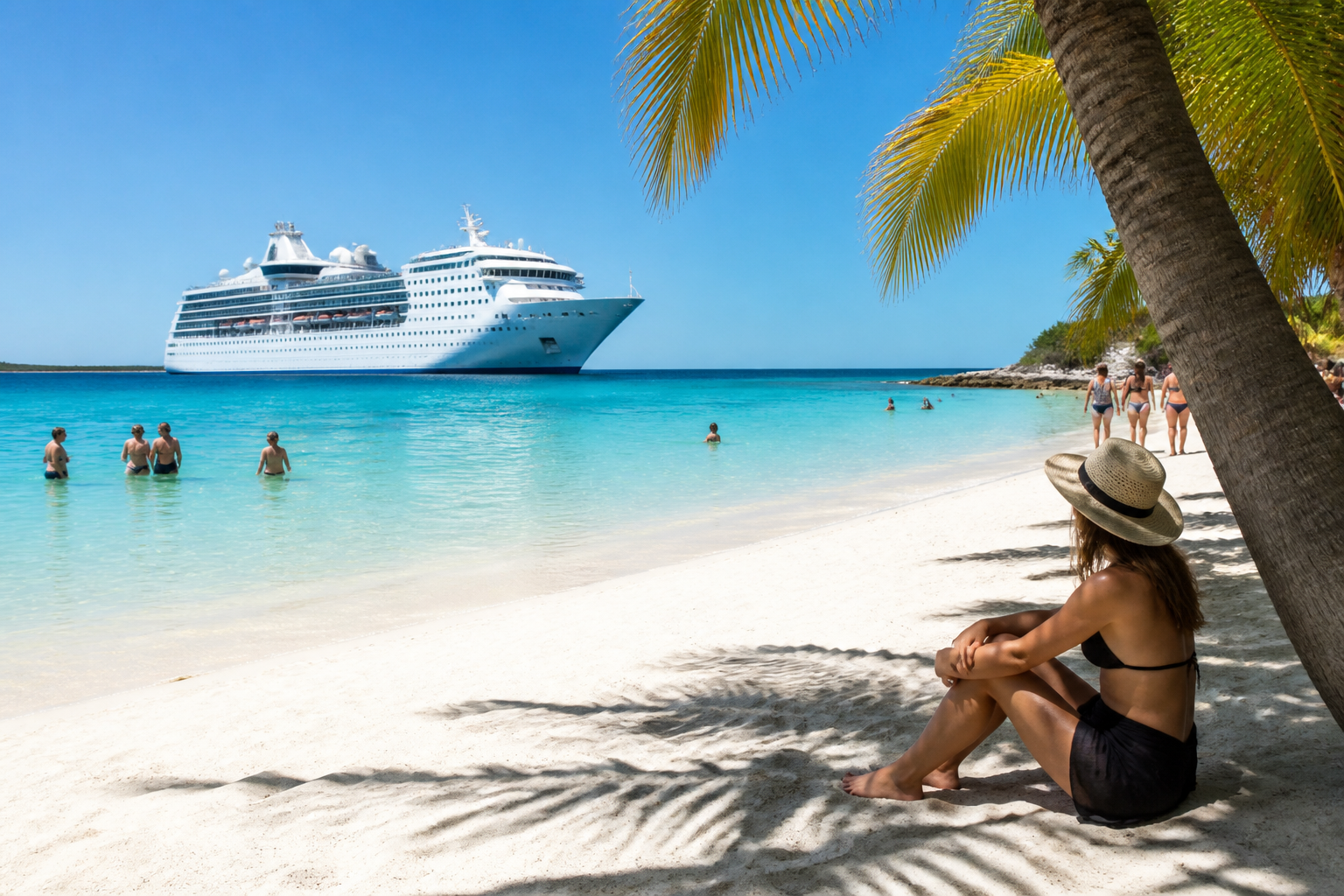
Caribbean cruising follows a well-defined seasonal rhythm that experienced travel planners can map almost to the week. The Atlantic hurricane season runs officially from June 1 through November 30 each year — a calendar that cruise lines manage with itinerary substitution rights and enhanced cancellation protections rather than simply reducing sailings during the risk window.
Peak season runs December through April. This six-month window captures the Caribbean's dry season, consistent northeast trade winds, and the statistical low point for tropical storm activity. Passenger volumes and fares peak during two specific corridors: the Christmas-to-New-Year's window (roughly December 20 through January 3) and the overlapping President's Weekend and Spring Break period spanning mid-February through late March. Within peak season, we have found that the first three weeks of January 2026 represent the single best combination of excellent weather and accessible pricing — post-holiday departures routinely carry promotional fares 15-25% below the comparable Christmas week sailing.
May is a transitional month that we recommend more aggressively than most travel sources acknowledge. The hurricane season begins June 1, so May sailings carry full dry-season weather reliability while consistently offering fares 10-20% below the January-April peak. Late May 2026 sailings on Royal Caribbean's Eastern Caribbean routes from PortMiami show base fares approximately 18% below comparable February departures when booked six or more months in advance.
The summer months of June through August see strong passenger volumes driven by school schedules, but weather risk increases across the Greater Antilles. If you must sail during hurricane season, Southern Caribbean itineraries that include the ABC Islands carry significantly lower weather disruption risk due to those islands' position below the primary hurricane track. September and October represent the statistical peak of Atlantic hurricane season — the National Hurricane Center's historical records show that 96% of all category-3-or-higher Atlantic hurricane activity occurs between August 1 and October 31 — and cruise lines hold explicit contractual rights to substitute ports or alter routes if storm conditions warrant.
November recovers quickly. By the second week of November 2026, storm risk decreases sharply, dry-season conditions begin returning to the Northern Caribbean, and cruise lines frequently run promotional pricing to fill sailings that fall awkwardly between the value season and the peak December run-up. Flexible travelers who can book on short notice can find genuine value in November departures that rivals the summer fare levels without the weather uncertainty.
Plan this trip
Shore Excursions: Booking Direct vs Through the Cruise Line
Shore excursions are the category where Caribbean cruise budgets either remain disciplined or unravel entirely. The average cruise passenger spends between $100 and $200 per port day on organized activities — a figure that compounds quickly across a 7-night itinerary with four port calls, adding $400-$800 per person to the total trip cost before a single cocktail is ordered on the ship.
Booking shore excursions through the cruise line carries one significant and genuine advantage: excursion protection. If your cruise-line-booked tour runs long and you miss the ship's departure time, the cruise line is contractually obligated to either hold the ship or arrange transportation to the next port of call at its expense. This guarantee has real dollar value at ports with unpredictable traffic infrastructure — Ocho Rios, Jamaica is the most frequently cited example, where road congestion between Dunn's River Falls and the Ocho Rios cruise pier has caused missed-ship situations on independently booked tours.
That said, independent booking consistently delivers better pricing and, in most cases, a less crowded and more authentic experience. A Stingray City snorkel tour in Grand Cayman booked directly through a local operator runs approximately $40-$55 per person, versus $75-$95 through a major cruise line's shore excursion desk. In Cozumel, reef snorkel departures run $30-$45 independently versus $65-$80 through the ship. In St. Thomas, a full-island tour with a local taxi operator — a standard 2-3 hour circuit including Mountain Top and Magens Bay — costs $25-$35 per person compared to $55-$70 on a cruise-line bus. The cumulative savings across a 4-port Western Caribbean itinerary can reach $200-$300 per couple.
We recommend a hybrid approach calibrated to each port's logistics. Book cruise-line excursions at ports with complex ground transportation requirements or significant time-sensitivity risk — Roatán, Honduras and Ocho Rios, Jamaica are both strong candidates for this category. Book independently at compact, well-organized ports where the pier-to-activity distance is short and local operators have established TripAdvisor track records — Nassau, Grand Cayman, St. Thomas, and Cozumel all qualify. Research your independent operators 60-90 days before sailing, confirm their cancellation policies, and share the operator's contact details with your cabin steward before going ashore.
Caribbean Cruise Budget: Real 2026 Numbers Per Person
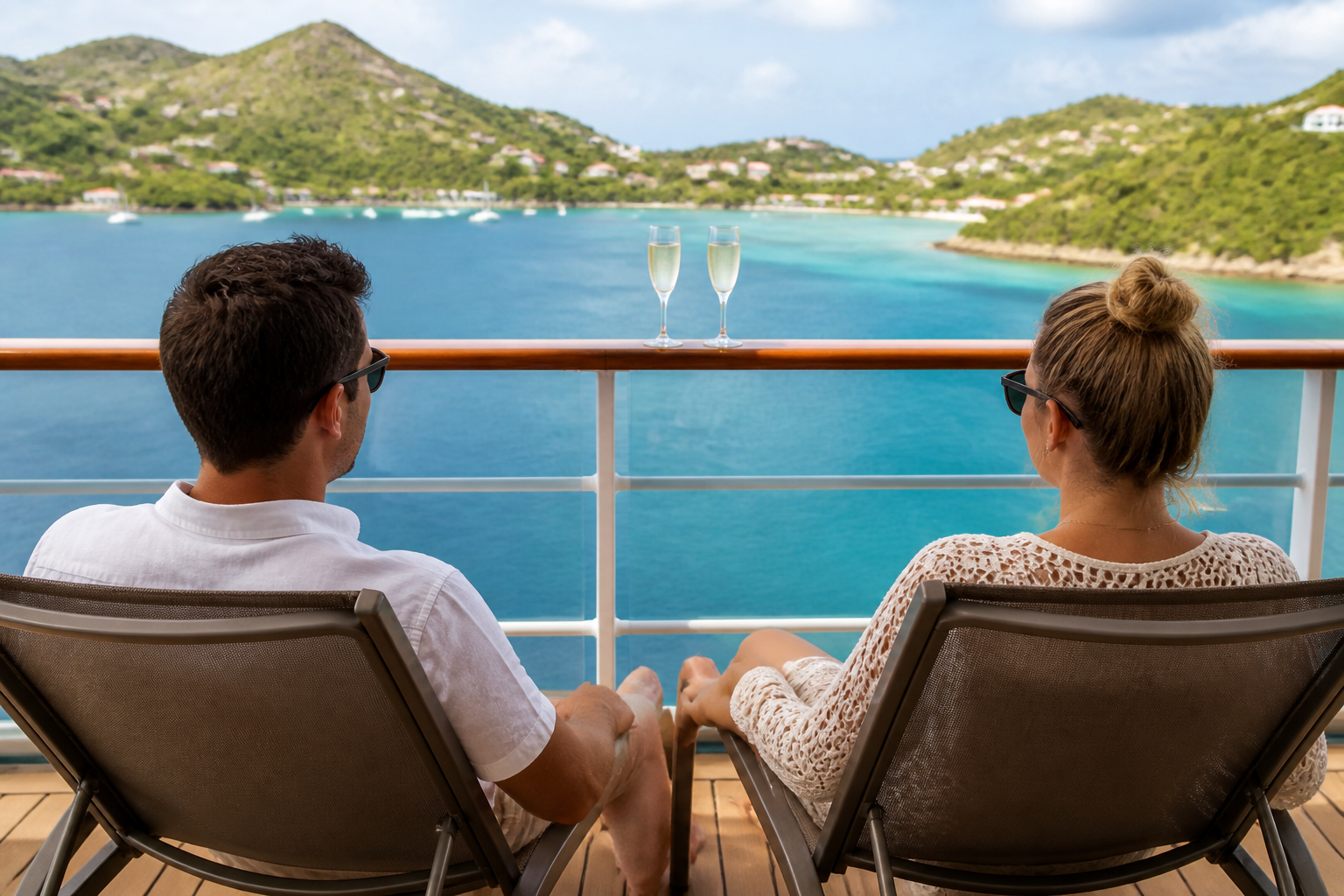
Most Caribbean cruise budget guides dramatically understate the all-in cost of a sailing. The advertised base fare is the floor, not the total, and in 2026, the gap between that floor and the final per-person spend has widened as cruise lines have systematically migrated amenities out of the all-inclusive model and into optional paid packages.
For a 7-night Eastern Caribbean sailing from PortMiami departing in January 2026 on Royal Caribbean or Norwegian, expect cabin fares in the following ranges per person based on double occupancy: interior cabin $799-$999, ocean-view cabin $1,099-$1,299, balcony cabin $1,399-$1,799, junior suite $2,200-$2,800, and full suite $3,500-$5,500 and above. Carnival's comparable Eastern Caribbean itineraries from PortMiami or Port Everglades run approximately 15-20% below those figures at every cabin tier.
Mandatory gratuities are assessed automatically on all major cruise lines in 2026, running $18-$20 per person per day. On a 7-night sailing, that adds $126-$140 per person to the base fare — a line item that surprises first-time cruisers who see it appear at final payment. Beverage packages for alcohol-consuming adults typically cost $65-$85 per person per day and must be purchased for the full voyage (most lines do not permit single-day or single-port packages). A 7-night drink package for two adults therefore adds $910-$1,190 to the total sailing cost.
Specialty dining packages covering three meals at premium restaurants run $70-$120 per person. Internet connectivity packages — near-essential for working travelers or anyone who needs to stay reachable during the voyage — start at $25-$35 per device per day on Royal Caribbean and Norwegian, or roughly $175-$245 per device for a 7-night sailing. Port taxes and fees are quoted separately from base fares and range from $180-$280 per person on a 7-night Caribbean itinerary.
Pre-cruise logistics add another layer: a one-night pre-cruise hotel stay in Miami or Fort Lauderdale averages $180-$320 per night at mid-market properties within reasonable distance of the port. Airport-to-hotel and hotel-to-port transfers, if not arranged in advance, add another $40-$90 per vehicle each way.
The honest all-in budget for two adults on a 7-night Caribbean cruise in 2026 — including one pre-cruise night, round-trip port transfers, a daily drink package, three specialty dining meals, internet for one device, gratuities, and $150 per port in shore excursions across four calls — runs $5,200-$8,400 depending on cruise line and cabin category. We suggest building your budget from that realistic total rather than working backward from a promotional base fare. Travelers who anchor on the advertised price consistently overshoot their budgets by 40-60%, and that is a predictable outcome when you are not planning with accurate numbers from the start.
Plan this trip
Frequently Asked Questions
Eastern Caribbean itineraries focus on the Bahamas, U.S. Virgin Islands, and Puerto Rico, offering calm beaches, duty-free shopping, and colonial history. Western Caribbean routes call on Cozumel, Grand Cayman, Jamaica, and Honduras, with stronger emphasis on reef diving, Mayan ruins, and adventure excursions. Western Caribbean base fares typically run 10-20% lower than comparable Eastern sailings, making them the better-value choice for budget-conscious cruisers.
December through May offers the statistically safest weather window. The Atlantic hurricane season officially runs June 1 through November 30, with peak activity concentrated between August 1 and October 31. If your schedule requires sailing during hurricane season, Southern Caribbean itineraries that include Aruba, Bonaire, and Curaçao carry significantly lower disruption risk because those islands sit below the primary Atlantic hurricane track and receive fewer than 20 inches of rainfall per year on average.
We recommend booking 6 to 12 months in advance for peak-season sailings between December 2026 and April 2026, and 3 to 6 months out for shoulder-season departures. Early booking secures preferred cabin categories at introductory pricing. Most major cruise lines — Royal Caribbean, Norwegian, and Carnival included — offer a Best Price Guarantee that allows you to reprice your booking if the fare drops before the final payment deadline, which is typically 75-90 days before sailing.
Yes, with clear caveats. Independent excursions consistently cost 30-50% less than cruise-line-booked options and typically deliver a less crowded experience. The critical risk is missing the ship: if an independently booked tour runs late and you miss departure, you are responsible for all costs to rejoin the ship at the next port. We recommend cruise-line excursions at ports with complex ground logistics — Roatán, Honduras and Ocho Rios, Jamaica are the two highest-risk ports in the Western Caribbean for tour delays — and independent booking at compact, well-organized ports like Nassau, Grand Cayman, and St. Thomas.
Fort Lauderdale-Hollywood International Airport (FLL) offers the best combination of affordable airfares and port proximity, with Port Everglades just 4 miles from the terminal — a 10-minute transfer under normal traffic conditions. Miami International Airport (MIA) is equally convenient for PortMiami sailings at 8 miles from the port. For most travelers from the Midwest or West Coast, we suggest pricing flights into both FLL and MIA simultaneously, as the connecting options and fare differences often determine the better choice more than the departure port itself.