Charleston in 2026: Why the Holy City Keeps Topping Travel Lists
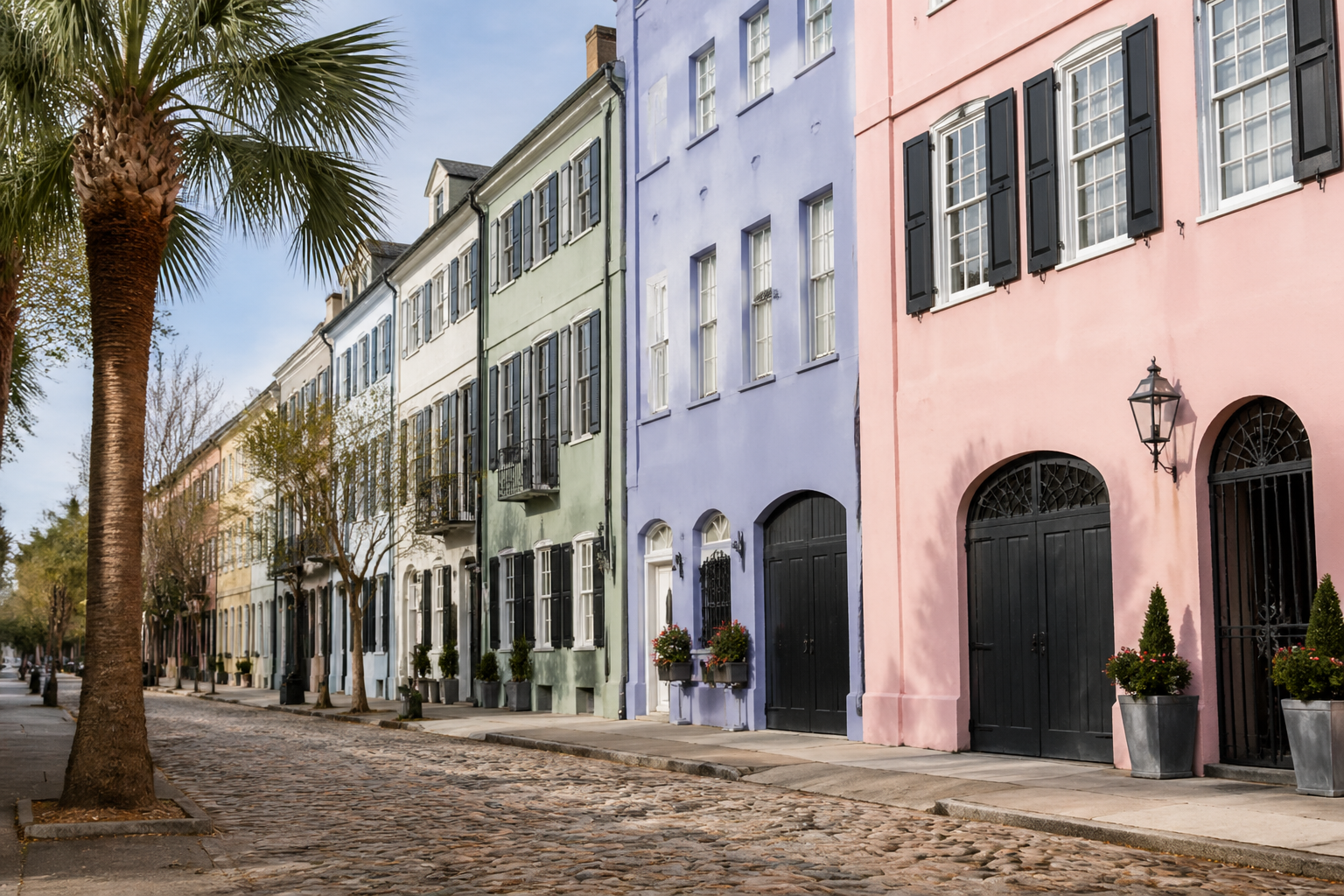
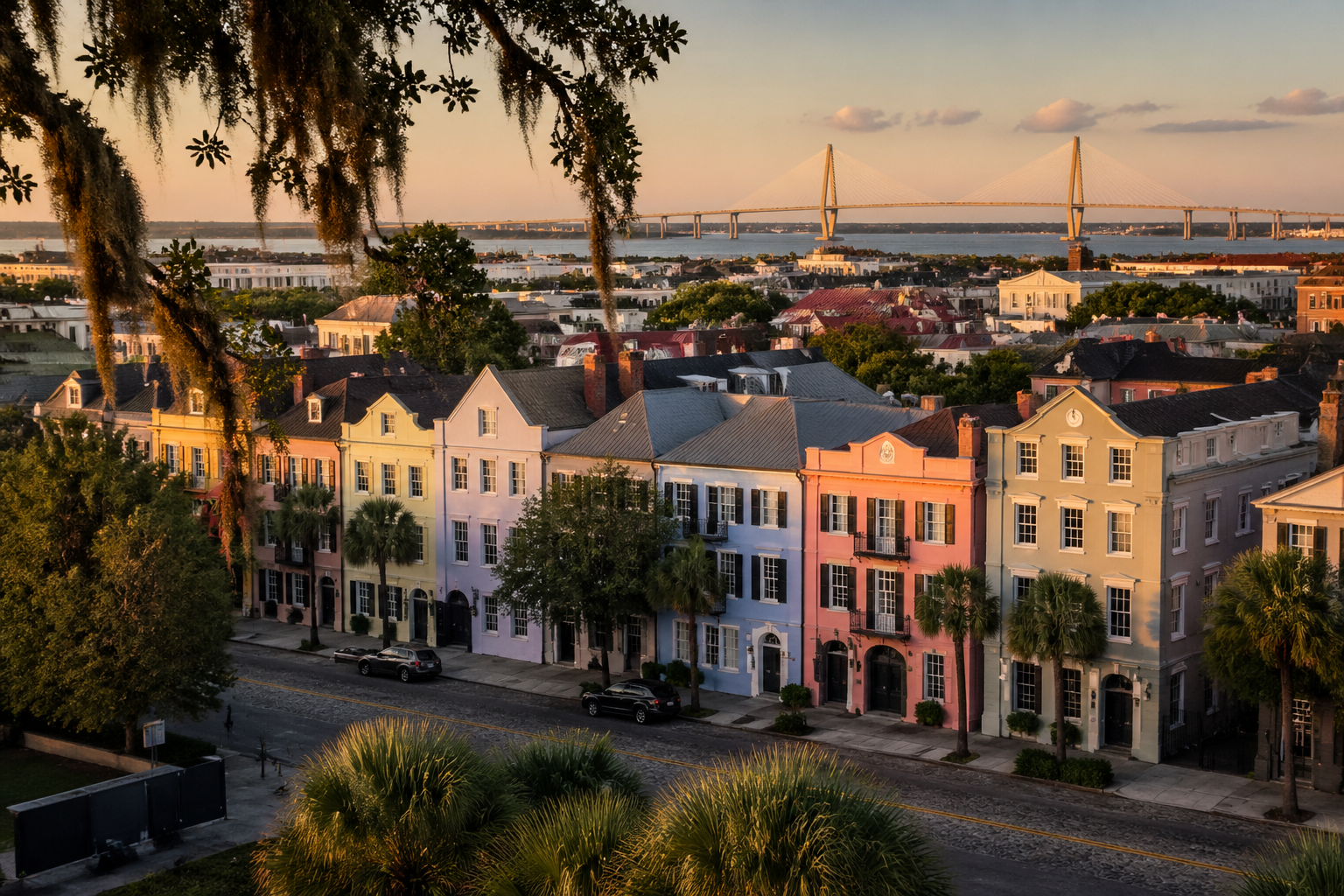
We rolled into Charleston the first time on a humid April afternoon, and the city did the thing it does to everyone — slowed us down inside ten minutes. Horse-drawn carriages clopped past Rainbow Row. The smell of pluff mud drifted up from the harbor. A Gullah woman on Meeting Street was weaving sweetgrass baskets the way her grandmother taught her, and she barely looked up when the tourists snapped photos. That mix of living history and easy Southern pace is why Travel + Leisure readers keep voting Charleston the #1 city in the world — 2016, 2018, 2022, and again in 2024. No other US city has ever repeated the title, let alone four times.
Founded in 1670, the Holy City is the second-oldest English settlement in the South. The historic peninsula downtown holds more pre-Revolutionary architecture than any other American city, and the layout is small enough that you can walk from the Battery to the City Market in twenty-five minutes. What makes the destination work for a full vacation, though, is what wraps around it — roughly 100 miles of barrier-island coast running south from Bulls Bay through Isle of Palms, Sullivan's Island, Folly Beach, Kiawah, Seabrook, and Edisto. You get the cobblestone history mornings and the toes-in-Atlantic afternoons in the same trip. Few US destinations let you do both without a flight in between.
2026 is a notable year to visit. Charleston International Airport opens its new Concourse B this year, expanding capacity to handle 6.5 million annual passengers and adding gates for the direct routes that have been chronically oversold. The McLeod Plantation Historic Site finishes its multi-year expansion focused on enslaved African American history — the most important interpretive update in the Lowcountry in a decade. And Hurricane Helene recovery in the South Carolina coastal zone is essentially complete; the dune lines are rebuilt, the boardwalks reopened, and the rental inventory is back to pre-storm levels. If you've been holding off, this is the year.
Charleston vs the Beaches: Where to Base Your Trip
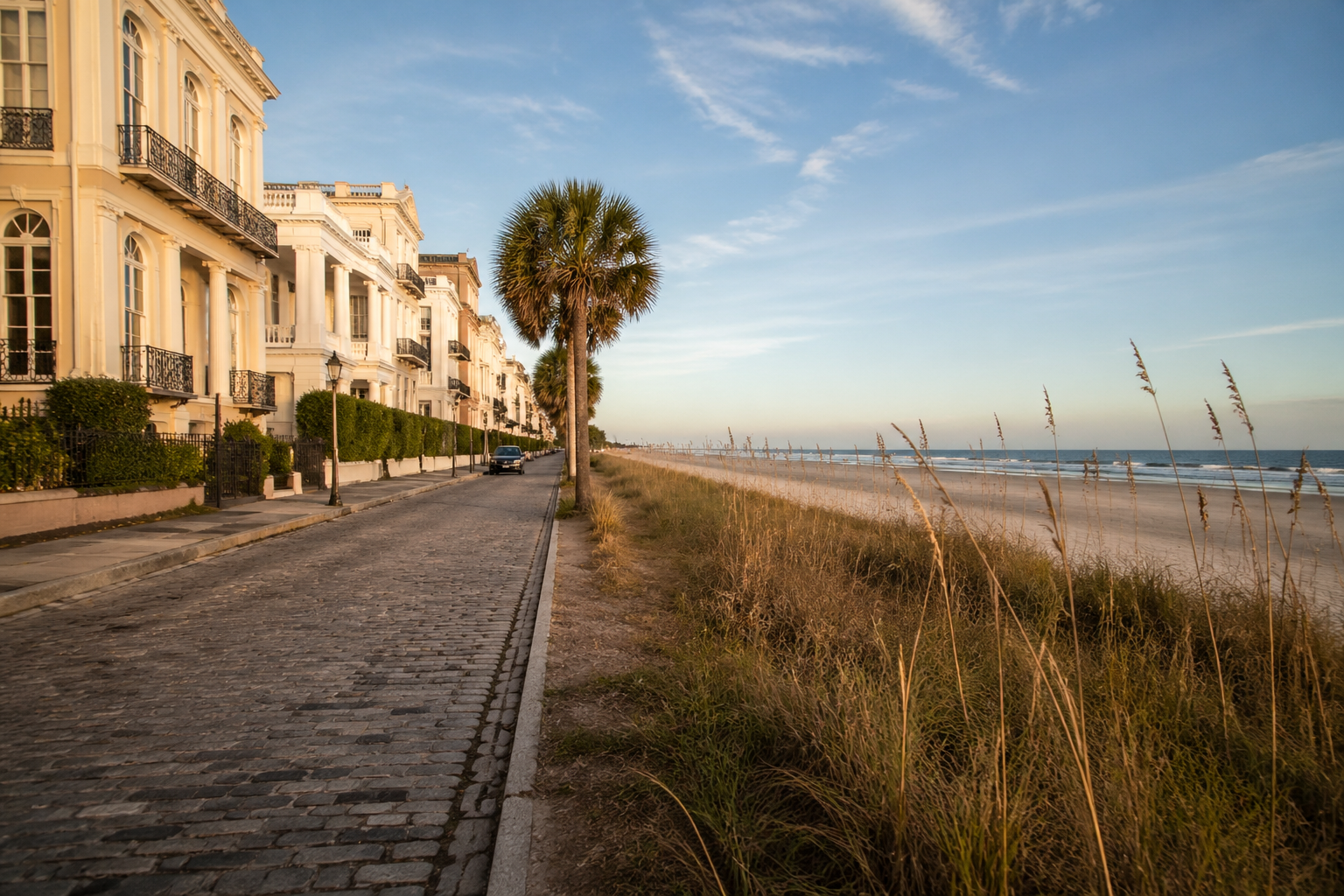
The first decision a Charleston-bound family makes is whether to base downtown or on a barrier island, and the right answer depends entirely on what you're after. Downtown wins for first-timers who want the urban-historic immersion. You wake up in a carriage-house rental on a quiet South of Broad street, walk to Husk for coffee, take a noon Magnolia Plantation tour, and finish at a King Street restaurant — no rental car required, no long drives. Neighborhoods to know: South of Broad (the most photographed antebellum mansions, quietest at night), French Quarter (Rainbow Row, the City Market, livelier evenings), Harleston Village (closer to the College of Charleston, lower nightly rates), and Cannonborough-Elliotborough (younger, foodie-leaning, twenty-minute walk to King Street).
For families with sandcastle priorities, the islands change the math entirely. Isle of Palms sits twelve miles from downtown over the Ravenel Bridge — a 7-mile barrier island with full beach culture, Wild Dunes Resort, casual restaurants on Ocean Boulevard, and the most rental inventory on the coast. Sullivan's Island is the opposite vibe: nine residential blocks, no commercial development beyond a tight cluster of restaurants near Station 22, free street parking, and Fort Moultrie at the south end. Folly Beach, twelve miles south of downtown, is the surfer counter-culture beach — Folly Pier, dog-friendly stretches, the cheapest oceanfront rentals in the area, and a downtown two blocks long that locals call the Edge of America.
Kiawah Island is the luxury play: gated, manicured, ten miles of beach, five championship golf courses, and the Sanctuary Hotel anchoring the south end. The only public access is through Beachwalker County Park at the western tip, so a Kiawah rental is the only way to get the full island experience. Seabrook Island, just past Kiawah, runs similar — gated and quiet — but with less golf and more nature trails. Edisto Beach, forty-five minutes further south, is the quietest of all: state park, no chain anything, and prices that haven't caught up to the rest of the coast yet.
Where to Stay: Vrbo Vacation Rentals on the South Carolina Coast
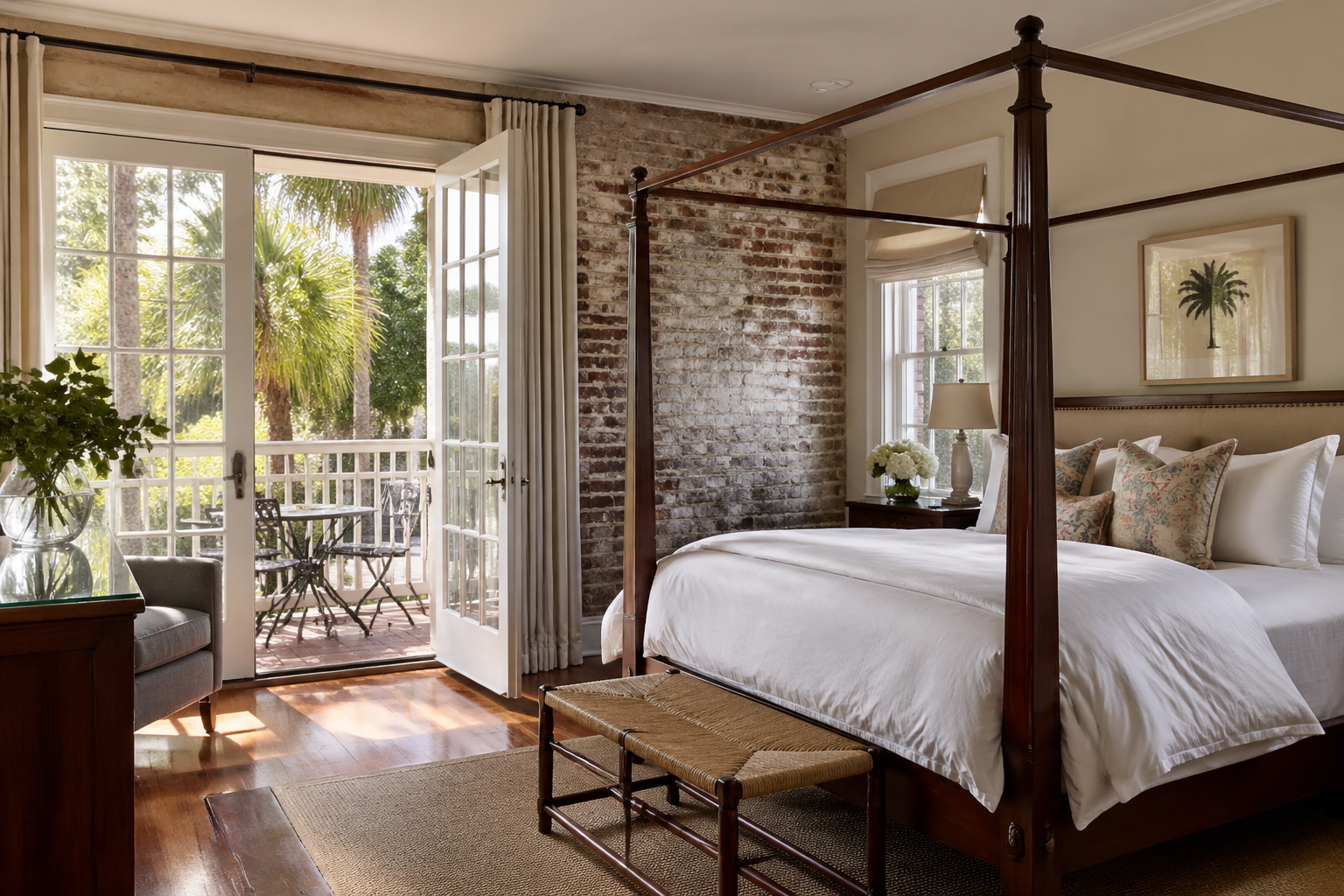
Vrbo dominates the Charleston-area rental market in a way it doesn't in most US destinations, and the reason is structural — short-term rental laws on Sullivan's Island, Folly Beach, and Kiawah favor whole-home rentals over hotel-style stays, and Vrbo's whole-home inventory is deeper than anyone else's. We've booked four trips through the platform across three different islands, and the pricing pattern holds up across seasons.
Downtown Charleston runs $250 to $650 per night for historic carriage houses and one- and two-bedroom condos in the French Quarter, South of Broad, and Harleston Village. The character premium is real — a 200-year-old kitchen courtyard sleeps two for the price of a chain hotel room and gives you a piazza for sunset wine. Isle of Palms is the family-rental sweet spot. Three- to five-bedroom beach houses run $400 to $1,200 per night through summer; oceanfront homes with private boardwalks push $800 to $1,800. Sullivan's Island skews higher because inventory is tight — expect $500 to $1,400 for a comparable home, with the trade-off of zero commercial noise and that nine-block, residential beach feel.
Folly Beach is the budget play for ocean access: 3-bedroom ocean-block rentals start around $350 and top out near $900 in peak summer, with weekday October stays often dropping below $250. Kiawah is the splurge — 4- and 5-bedroom luxury homes run $700 to $2,500 per night at peak, and Vrbo competes directly with Kiawah's official rental program (worth comparing both before booking; the same homes sometimes appear on each).
For anyone weighing a hotel instead, the Charleston anchors are Charleston Place Hotel (Belmond), Hotel Bennett on Marion Square, and the Wentworth Mansion if you want a 21-room mansion with a rooftop. Wild Dunes Resort handles Isle of Palms; the Sanctuary at Kiawah is the island's flagship; and Tides Folly Beach is the one beachfront option on Folly. Hotels make sense for two- or three-night downtown trips. For a week with kids, Vrbo wins on price-per-bed, kitchen access, and laundry — and Charleston is a city where you'll cook at least three nights to keep the budget sane. Browse Charleston and South Carolina coast vacation rentals on Vrbo before you commit; the inventory turns over fast in spring.
Plan this trip
Charleston Things to Do: Plantations, Forts & Historic Tours
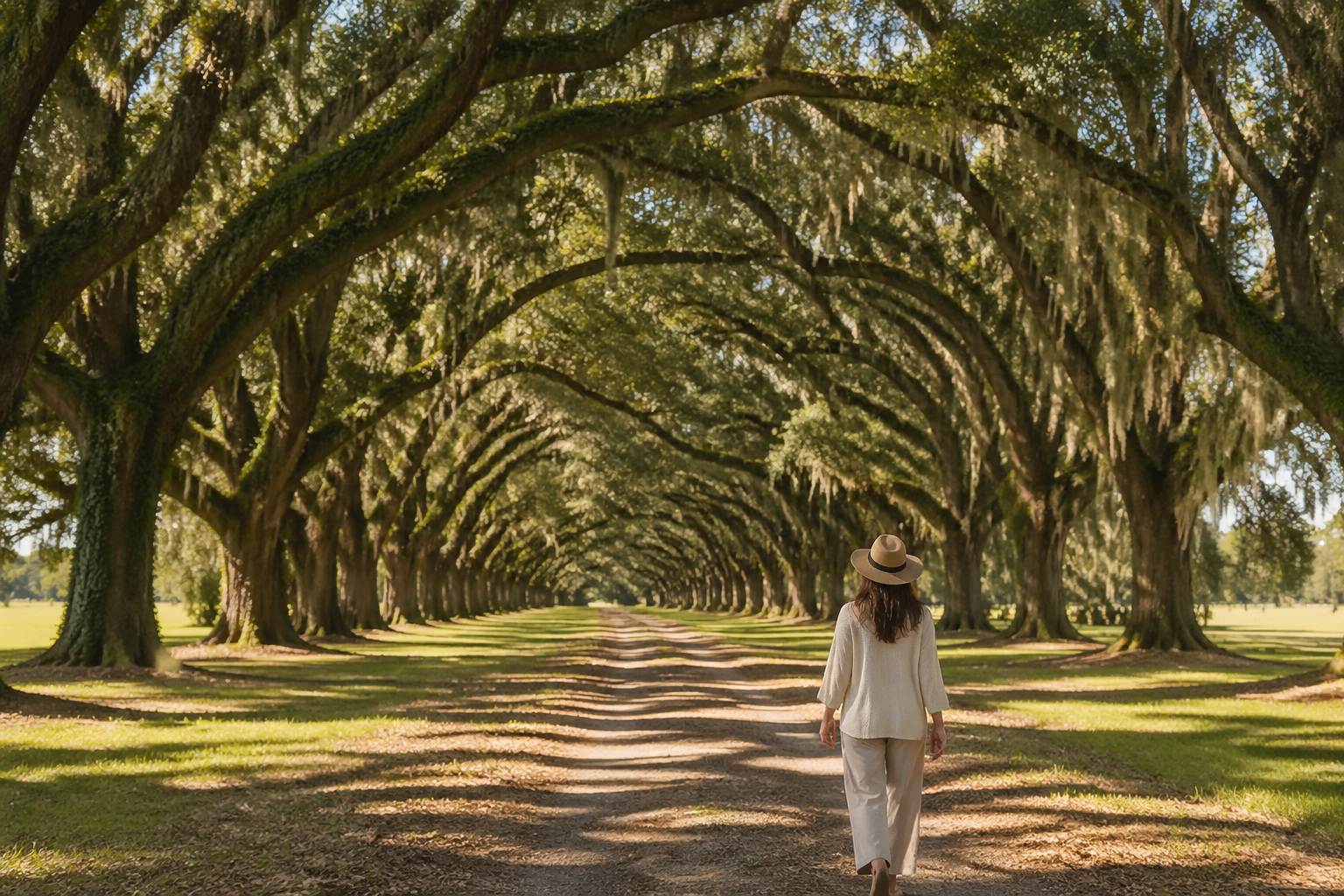
The plantation tours are the headline reason most first-time visitors book Charleston, and they're worth the time — but the city has spent the last decade reframing how that history gets told, and the tour you pick matters more than it used to. Magnolia Plantation ($30) is the oldest in the South, founded in 1676, with the gardens that float on every Charleston brochure. Middleton Place ($35) is the formal-garden masterpiece, with a stable yard that walks visitors through working plantation life. Boone Hall ($28) gives you the Avenue of Oaks — that quarter-mile tunnel of live oaks dripping Spanish moss that you've seen in The Notebook and Forrest Gump.
McLeod Plantation Historic Site ($25) is the one we recommend most strongly to first-time visitors. The Charleston County Park system runs it, and the entire interpretive arc focuses on the enslaved African American men, women, and children who lived and worked there — the cabins, the cemetery, the freedmen's village. The 2026 expansion adds a new orientation center and an extended trail through the upland fields. It's the most honest plantation site in the Lowcountry, and our kids came away with more questions than any other tour we've done.
Fort Sumter National Monument is reached by ferry from Liberty Square — $35 for adults, family-of-four packages around $140 — and runs about two and a half hours round trip. It's the spot the Civil War literally started. Pair it with Fort Moultrie on Sullivan's Island, which is free and self-guided and tells the longer story. The South Carolina Aquarium ($35) is right next to the Fort Sumter dock, so families often combine the two on one downtown day.
For walking the city itself, Bulldog Tours and Charleston Footprints both run history walks at $25 to $35 per adult, with the Footprints tour the more substantive of the two. Carriage tours through the historic district run $30 to $40 and are routed by lottery — you don't get to pick your route, but every route covers the highlights. Twenty minutes south, the Charleston Tea Garden on Wadmalaw Island is the only commercial tea farm in the United States and pairs well with a stop at the Angel Oak on Johns Island, a 1,500-year-old live oak with a 28-foot trunk circumference. Booking plantation and Fort Sumter combo tickets ahead through a tour platform saves the line at the gate during peak season.
Beach Time: Isle of Palms, Sullivan's, Folly & Kiawah
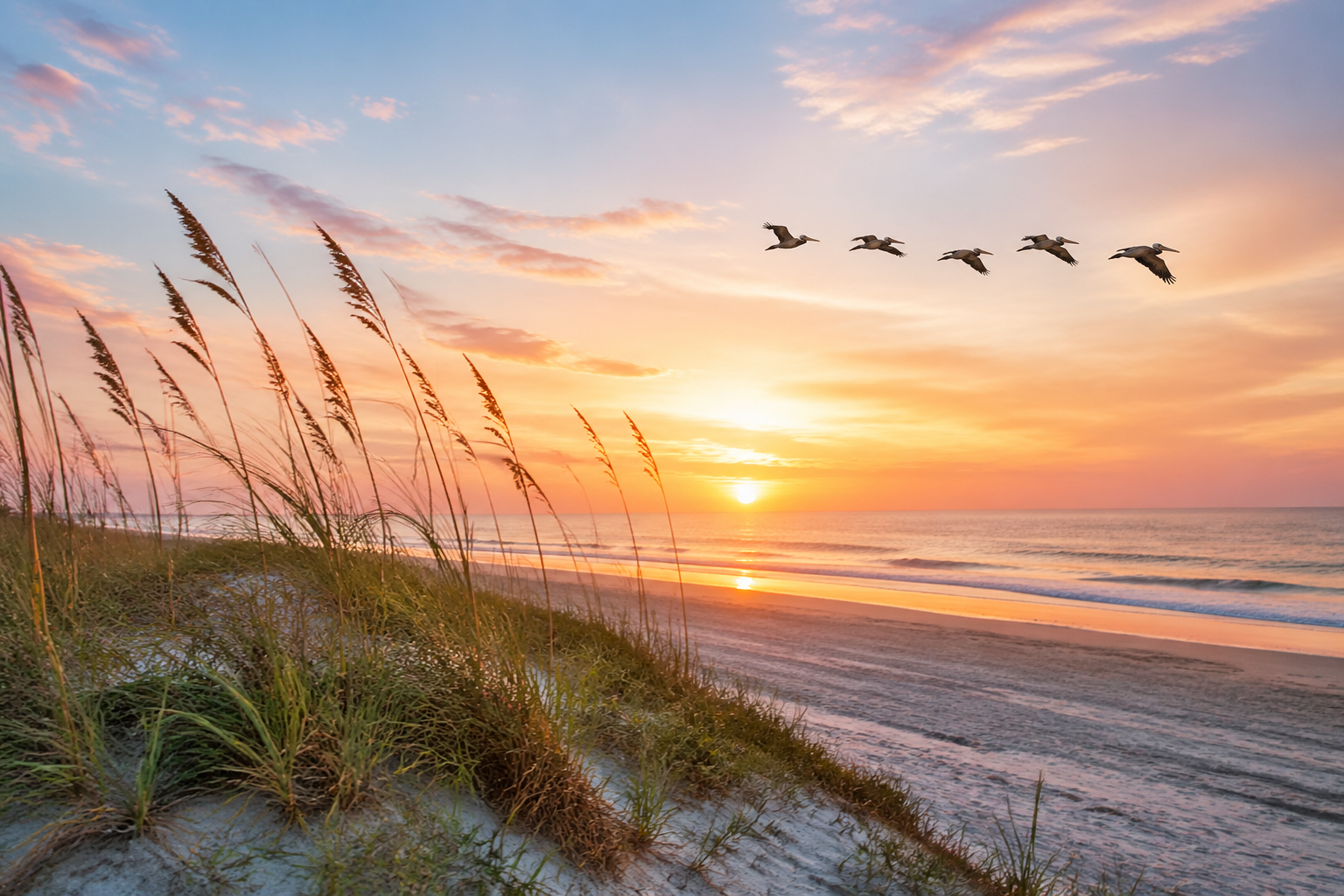
Each barrier island has a personality, and once you've sampled them you'll have a favorite. Isle of Palms County Park runs $10 per car to enter and gives you the most amenities — lifeguards on duty in summer, restrooms, outdoor showers, a snack bar, and umbrella and chair rentals at the beach kiosk. The Wild Dunes Resort beach further north is technically open to the public via the county park access, but parking is the gate; arrive before 10 a.m. on weekends or you'll circle.
Sullivan's Island is our family pick for a quiet beach day. The island runs nine residential blocks of beachfront with free street parking — you have to walk a couple blocks from your car to the sand, but the trade is no commercial development at all. Pack a cooler and the lunch spread for the whole afternoon, then walk to Station 22 or Sullivan's Fish Camp for an early dinner. Folly Beach is the opposite energy. Folly Pier costs $10 for parking with full bathrooms and rental shacks; surf rentals run $25 for a half day, and the pier itself stays open for fishing past sunset. The vibe leans surfer-bohemian and the dog-friendly stretch east of the pier draws regulars from across the Lowcountry.
Kiawah Island's beach is the prettiest stretch on the SC coast — ten miles of hard-packed sand wide enough to bike at low tide. The catch is access. Beachwalker County Park at the western tip is the only public entrance: $10 per vehicle, often full by 11 a.m. on summer weekends. If you're staying in a Kiawah rental, you have boardwalk access from the property and the calculus changes entirely.
Forty-five minutes south of Charleston, Edisto Beach State Park ($7 per vehicle) is the Lowcountry's sleeper hit. It's one of the largest stretches of undeveloped barrier-island beach left on the East Coast, with a campground, a fishing pier, and miles of marsh trails behind the dunes. We've done a Friday day-trip from Isle of Palms and seen maybe thirty other people on the beach. Two logistics tips for any island day: pull up the Charleston tide chart before you go (low tides early morning in summer give the firmest sand and the best shelling), and pack reef-safe sunscreen — the loggerheads nest May through October and Charleston County actively enforces lighting and chemical rules near the dunes.
Plan this trip
Lowcountry Cuisine: Shrimp & Grits to Hot Boiled Peanuts
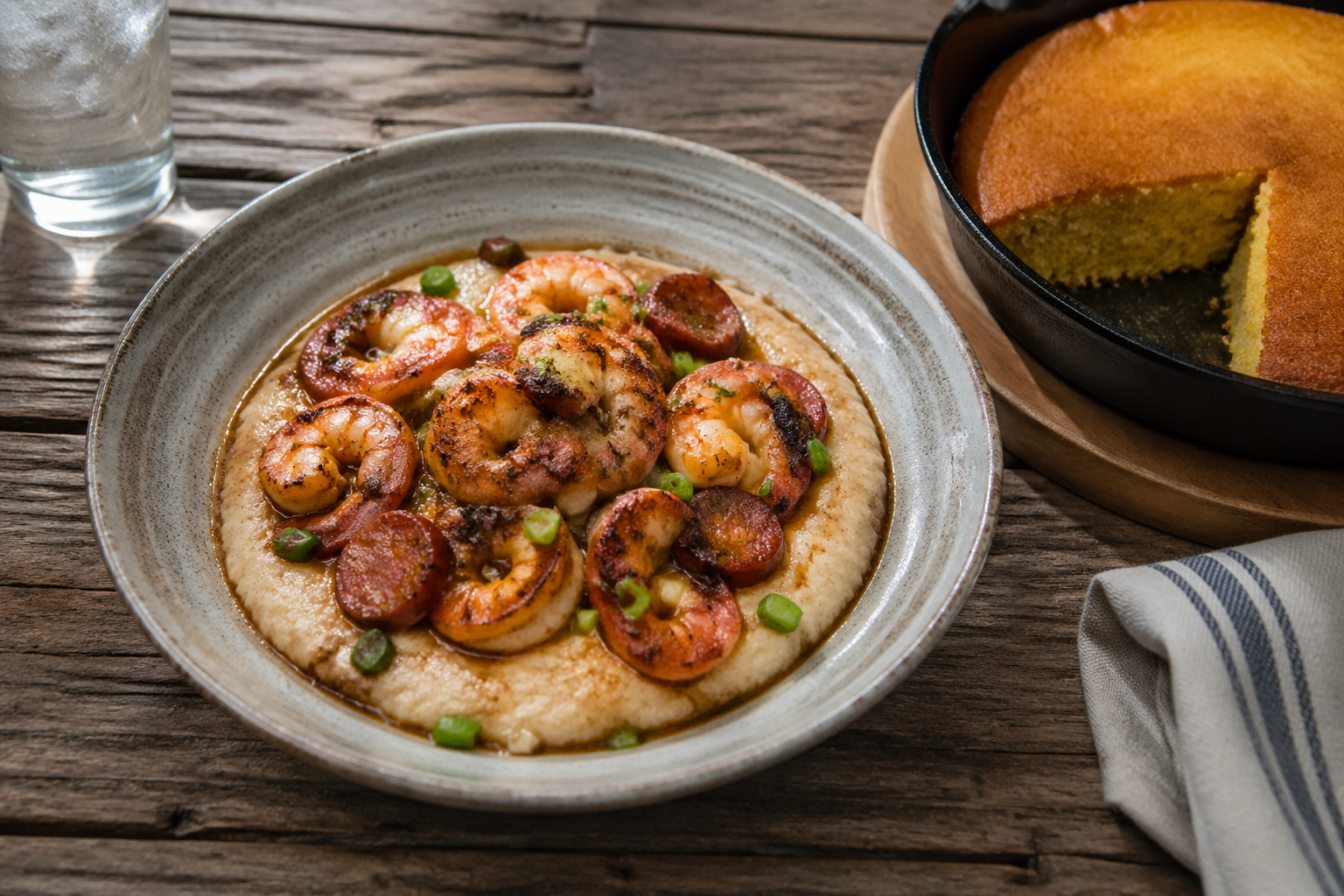
Charleston eats well above its weight class. The James Beard Foundation has been handing out medals to the city's chefs for thirty years, and the food scene has stayed grounded in actual Lowcountry tradition — sweetgrass-basket history, Gullah Geechee techniques, rice culture from the plantation era — instead of drifting into generic Southern revival. Husk, opened in 2010 by Sean Brock, is still the headline reservation. The menu changes with what's available within 250 miles of the kitchen, and the dining rooms occupy a restored 1893 Queen Anne home on Queen Street. Reservations open thirty days out and disappear inside an hour; set a calendar reminder.
The rest of the upper tier is deep. Slightly North of Broad — SNOB to locals — has been the modern-Southern anchor since 1993. Fig, a James Beard winner, runs out of a small space on Meeting Street and does a perfect simple-ingredient menu that changes nightly. Charleston Grill, inside the Charleston Place Hotel, is the high-end jacket-required option with live jazz five nights a week. For mid-range, Edmund's Oast (downtown, big beer program), Indaco (Italian, pasta made daily), and Hank's Seafood near the City Market are reliable bookings.
The casual side of Charleston is where the city's character shows up. Jestine's Kitchen on Meeting Street has been doing fried green tomatoes and pecan pie since 1996 — closer to a country diner than a tourist trap, despite the line. Poogan's Porch (since 1976) runs shrimp and grits that locals actually still eat, served on a wraparound porch in a Victorian house. Marina Variety Store at the city marina is the no-frills harborfront breakfast spot — pancakes, biscuits, pelicans on the dock. For grocery-and-cooler runs, a roadside boiled peanut stand on Highway 17 is non-negotiable; Cajun-style is the default but plain still works. Grab a wheel of pimento cheese from Caviar & Bananas on King Street to pair with crackers back at the rental.
One stop that earns the detour: the Old Slave Mart Museum and the adjoining sweetgrass basket weavers. The museum tells the history; the women weaving baskets outside have been doing it for forty years and the craft moves directly from grandmother to granddaughter. A simple basket runs $40 to $60 and lasts a generation.
Getting to Charleston: Airport, Driving & Local Transport
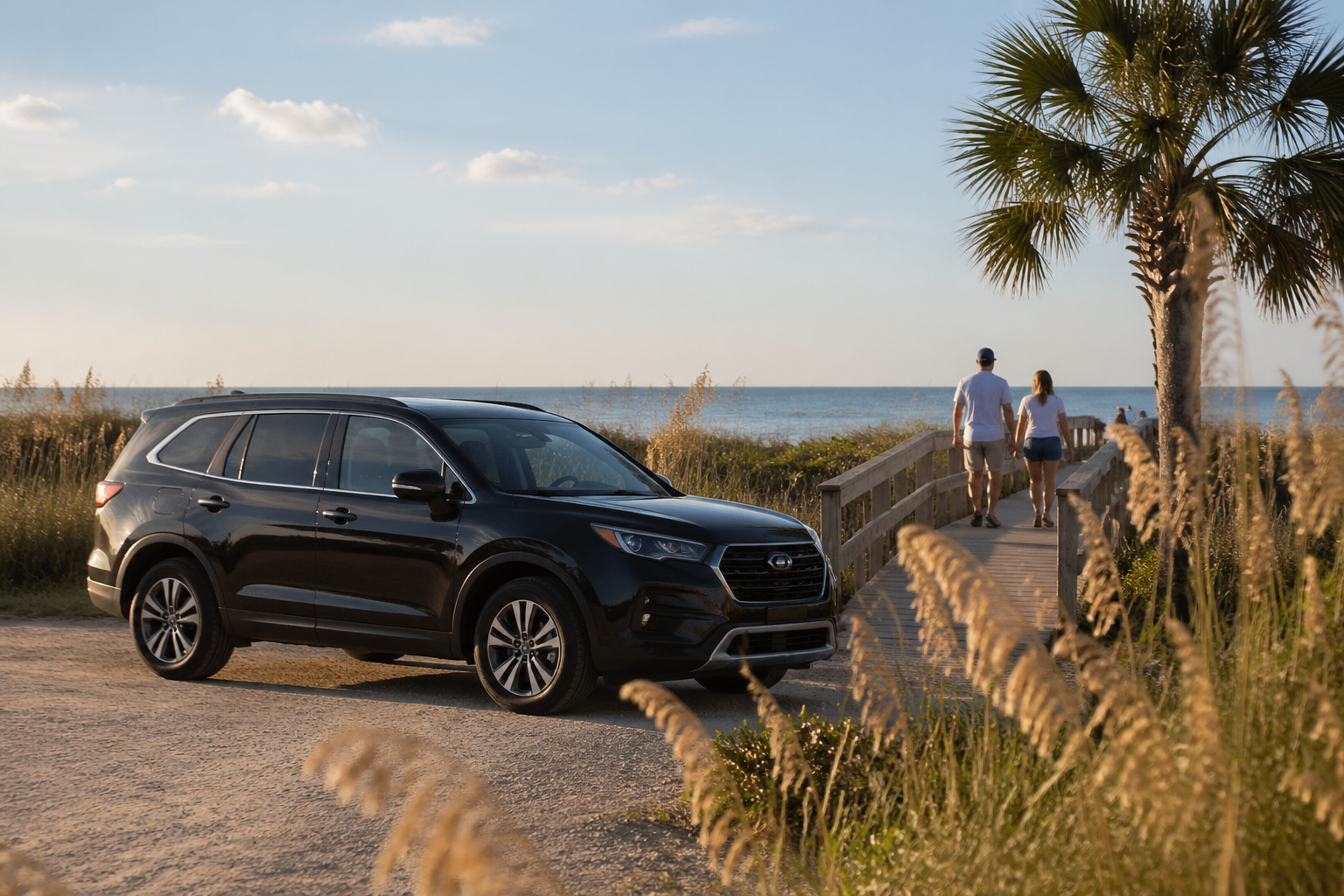
Charleston International Airport (CHS) sits twelve miles from the historic peninsula, twenty-five from Isle of Palms, and thirty-five from Kiawah. The new Concourse B opening in 2026 expands the airport's capacity to 6.5 million annual passengers and adds eight new gates — most of the chronic delay problems of the last few years should ease by summer. Direct flights run year-round from Boston, New York (JFK and LGA), Atlanta, Chicago O'Hare, Dallas, Denver, and Washington DCA; Los Angeles and San Francisco add direct seasonal routes from May through September. Booking three to four months out usually lands fares in the $250 to $400 round-trip range from East Coast hubs.
The rental car decision splits clean by where you're staying. Downtown-only trips do not need a car. Charleston is the most walkable urban core in the South — the historic peninsula is roughly two miles top to bottom — and the DASH downtown shuttle runs free along three loops covering King Street, the City Market, the aquarium, and the Battery. CARTA city buses cover the longer routes for $2. A four-day downtown trip with a couple of plantation visits is cheaper handled with two rideshare days and the rest on foot.
If you're basing on Isle of Palms, Sullivan's, Folly, Kiawah, or Edisto, you'll want a rental car. The bridges and connector roads to the islands aren't served by transit, and the islands themselves are too spread out to walk. Lock in your rental at the airport before you arrive — Charleston runs out of vehicles regularly during festival weekends and spring break, and the walk-up rates are punishing. Comparing rates across the major car-rental aggregators ahead of time is the simplest way to keep the weekly cost under $400 for a midsize SUV.
For mixed itineraries — a few downtown nights, then a beach week — pick up the rental on day three or four and hand it back on departure day. Charleston rideshare runs $20 to $35 between downtown and the closer barrier islands, so a couple of one-way trips can save you four days of parking fees and the hassle of moving the car between hotel garages and beach rental driveways.
Plan this trip
Best Time to Visit Charleston: Climate, Crowds & Festivals
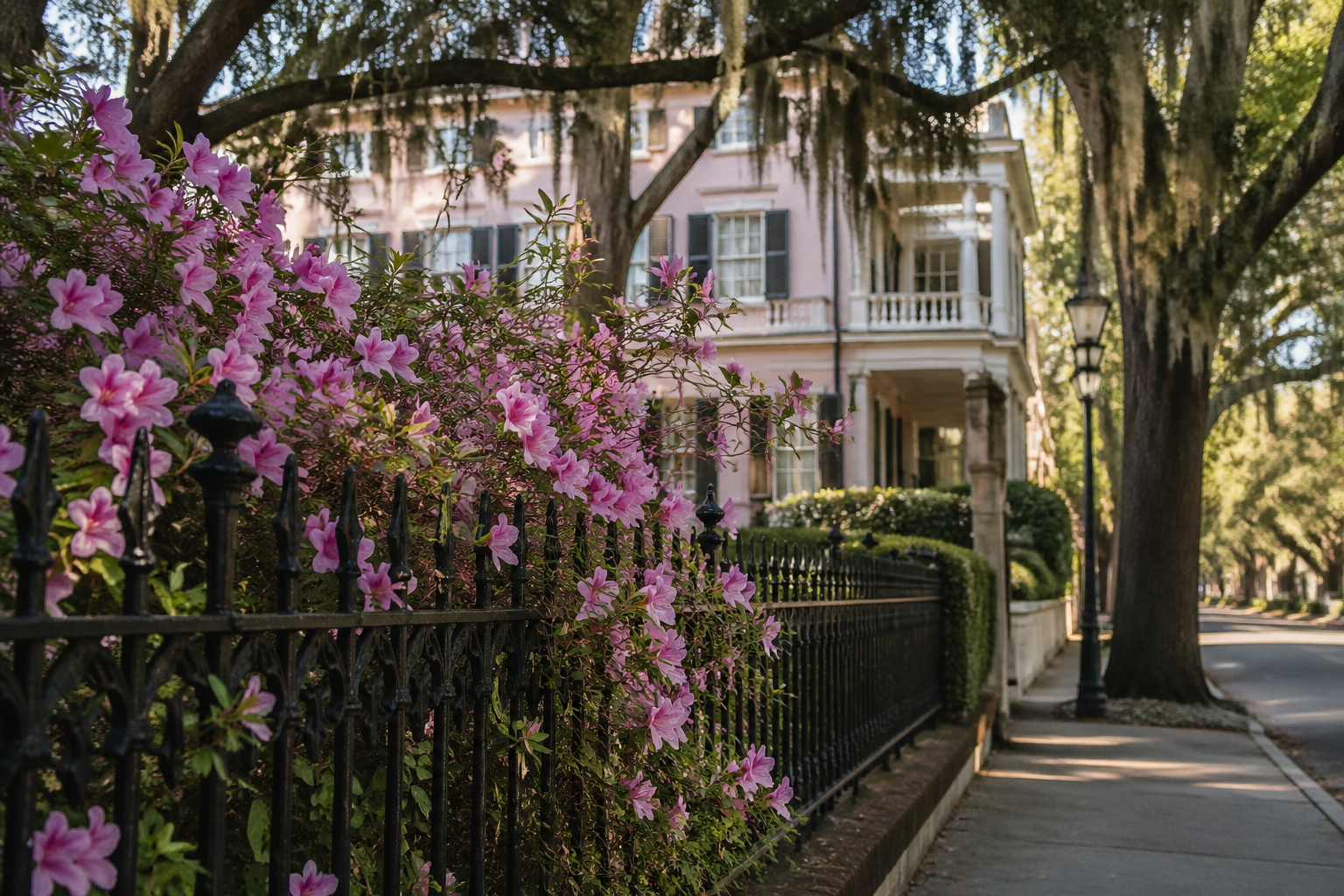
The Charleston year breaks into four very different vacation windows, and matching the window to your trip type saves real money and a lot of misery with humidity. March and April are the peak garden-and-history window. Daytime temperatures sit in the low seventies, the azaleas and dogwoods bloom across the historic district, and Magnolia and Middleton Place look the way every brochure photo promised. The Charleston Wine + Food Festival lands the first week of March, and the Festival of Houses and Gardens runs mid-March through April with private home tours that don't open any other time of year.
May and June kick off Spoleto Festival USA — seventeen days of world-class opera, theater, dance, and chamber music across thirty downtown venues. It's the biggest cultural event in the Southeast and pushes hotel and Vrbo prices up 30 to 50 percent for the festival window. Summer (June through September) is the beach window. Daytime highs run 88 to 95 degrees with humidity in the 75 to 90 percent range — manageable on the beach with the breeze, brutal for walking the historic district past 11 a.m. The trick is to flip the day: beach mornings, indoor museums or shaded carriage tours from 1 to 4, and dinner downtown after sunset when the temperature drops.
Hurricane risk peaks in August and September, and any trip in those months should include trip insurance and a flexible Vrbo cancellation policy. Charleston has been spared the worst of recent storms, but Helene's track in 2024 showed how fast the calculus changes. October and November are our personal favorite window — temperatures back in the 70s, dry, the garden tours quiet down, and rental rates drop 20 to 35 percent off summer peaks. MOJA Festival in late September and early October celebrates African American and Caribbean culture across Marion Square and the East Side.
Winter (December through February) is the bargain window. Daytime temperatures sit in the 55 to 65 range with the occasional 70-degree day, Christmas at Magnolia and Boone Hall runs through New Year's, and the Lowcountry Oyster Festival in late January draws 10,000 people to Boone Hall for steamed oysters by the bushel. Hotel rates downtown drop to mid-shoulder pricing and Vrbo nightly rates can fall below $200 for solid downtown carriage houses. Pack a light jacket, not a heavy coat.
Charleston Family Vacation Budget: Real 2026 Numbers
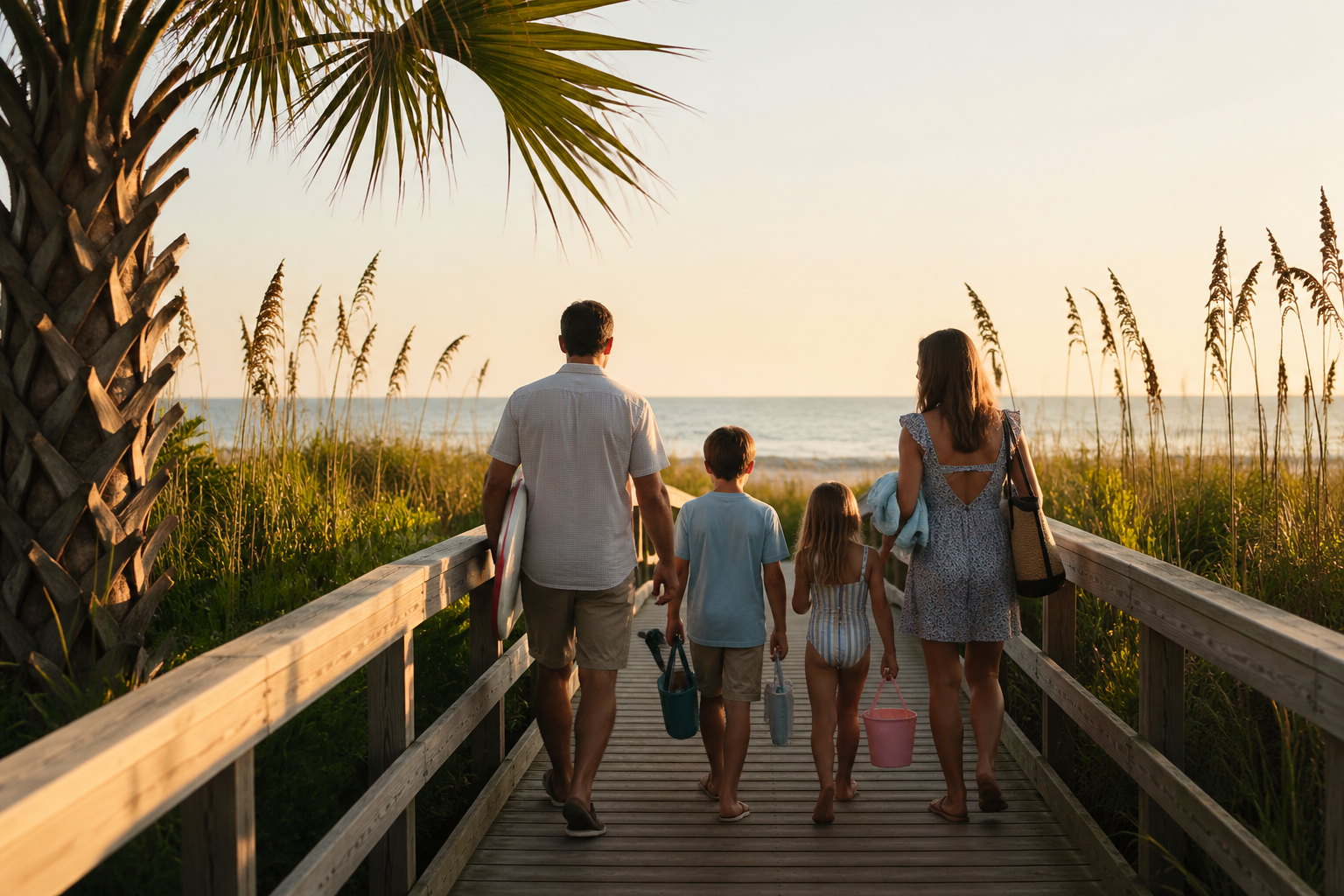
We track every Charleston trip we book against three budget templates, and the 2026 numbers held up across recent reservations and recent grocery receipts. Here's what a real family of four can expect.
The beach-base week — seven nights on Isle of Palms in a 4-bedroom ocean-block Vrbo — runs $3,500 to $5,200 for the rental in summer, depending on how oceanfront you go and how far in advance you book. Groceries for five home-cooked dinners and breakfasts land around $420 if you shop the Mount Pleasant Harris Teeter on the way in. Two restaurant nights — one casual on the island, one downtown reservation — run $550 with kids' menus. A Charleston historic day-trip (parking, two adult plantation tickets, two kids tickets, lunch at Poogan's Porch) sits around $180. The Fort Sumter ferry for a family of four is $140. County park parking for five beach days runs $50, and gas for a week of island-to-downtown trips runs $60. Total: $4,900 to $6,700, ex-flights and ex-rental car. Add $400 to $600 for a midsize SUV rental and $1,000 to $1,600 for four East Coast round-trip flights, and the all-in trip lands $6,300 to $8,900.
The downtown-only short trip — five nights in a 2-bedroom carriage house in Harleston Village — runs $1,800 to $3,000 for the rental, with no rental car needed. Restaurants and tours for five days come in around $800 with a mix of casual lunches and one nicer dinner. Total ex-flights: $2,600 to $3,800. This is the tighter version that delivers most of the Charleston experience for couples or smaller families flying in for a long weekend.
The Kiawah luxury week is the splurge tier — a 4- or 5-bedroom oceanfront home with a pool runs $7,000 to $12,000 for the week at peak. Groceries, three restaurant nights at the Sanctuary or in the Freshfields Village, golf rounds, and tour add-ons push the all-in to $9,000 to $15,000 ex-flights. It's a big number, but the value math holds up against equivalent luxury weeks in Hilton Head, Sea Island, or Watercolor.
We lean on Vrbo as the primary booking layer for all three templates because the inventory is deepest, the kitchens are real (you actually save the money the budget assumes), and the cancellation policies on individual hosts are usually more flexible than hotel chains. Compare a few homes side-by-side on Vrbo before you commit — pricing varies more by host than by neighborhood, and the same comparable bedroom count can swing $400 a night across the same beach block.
Plan this trip
Frequently Asked Questions
Yes. Charleston was named the #1 city in the world by Travel + Leisure readers in 2016, 2018, 2022, and 2024 — the only US city to repeat the title. 2026 brings the new Concourse B at Charleston International Airport, the McLeod Plantation expansion, and complete Hurricane Helene recovery on the SC coast, making it an especially strong year to visit.
Stay downtown if it is your first visit and you want to walk to historic sites, restaurants, and tours without a rental car. Stay on Isle of Palms or another barrier island if you want a beach-focused week with a kitchen, multiple bedrooms, and pool access. Many families split the trip — three nights downtown, four nights on the beach.
Isle of Palms County Park is the best for families who want full amenities — lifeguards, restrooms, snack bar, chair rentals, $10 parking. Sullivan's Island is better for quieter days with no commercial development. Folly Beach is more affordable and dog-friendly. Kiawah's Beachwalker County Park has the prettiest sand but parking fills by 11 a.m. on summer weekends.
Three full days covers the historic downtown, one plantation tour, and Fort Sumter. A full week lets you split between downtown and a barrier island, fitting in two plantations, two beaches, and a Wadmalaw Island tea garden or Angel Oak day trip. We recommend five to seven nights minimum for a first-time family vacation.
Not for a downtown-only trip — Charleston's historic peninsula is the most walkable urban area in the South, and the DASH downtown shuttle runs free. You will need a rental car if you are basing on Isle of Palms, Sullivan's Island, Folly Beach, Kiawah, or Edisto. Pick the car up at Charleston International Airport for the lowest rates.
March and April for gardens, azaleas, and the Festival of Houses and Gardens. May and June for Spoleto Festival USA. October and November for the best mix of warm weather, low humidity, and lower rental rates. Avoid late August and early September for hurricane peak. Winter (December to February) is the cheapest window with mild 55 to 65 degree days.
A seven-night Isle of Palms beach week for a family of four runs $4,900 to $6,700 ex-flights and ex-rental car, including a 4-bedroom Vrbo, groceries, two restaurant nights, plantation tour, Fort Sumter ferry, and county park parking. A five-night downtown-only trip without a rental car runs $2,600 to $3,800 ex-flights. Kiawah luxury weeks start at $9,000 ex-flights.
For families staying four or more nights, yes. Vrbo's whole-home inventory across Charleston downtown carriage houses, Isle of Palms beach houses, Sullivan's Island residential homes, Folly Beach ocean-block rentals, and Kiawah luxury homes typically beats hotel pricing per bedroom and adds full kitchens, laundry, and outdoor space. Hotels make sense for two- or three-night downtown trips.