

Monthly Vacation Rentals in Florida
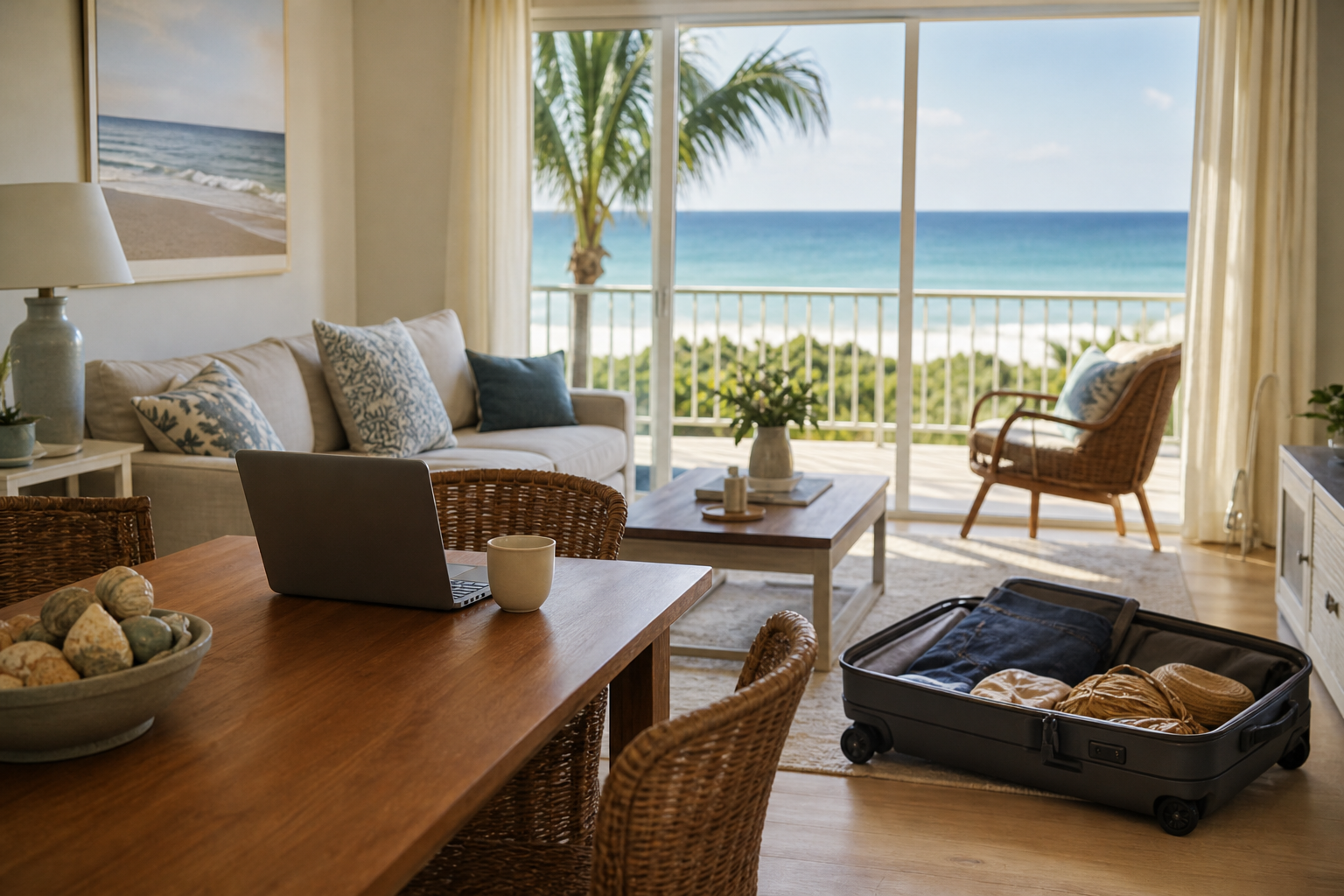
The best way to book a month long stay in Florida is to search for a full 30 nights or more. Many hosts discount longer stays, and some price them under separate monthly terms. Book early for winter, confirm the total cost including cleaning and utilities, and check any minimum-stay rules before you pay a deposit.
Florida is one of the most established long-stay destinations in the United States. Retirees escaping northern winters, remote workers chasing sunshine, families between homes, and travelers who simply want to live somewhere for a month all use the same rental market. A 30-day stay changes the experience completely. You unpack once, learn which grocery store has the best produce, find a favorite breakfast spot, and stop feeling like a tourist.
The practical starting point is a platform that lets you filter by length of stay and see discounts clearly. We suggest beginning on Vrbo, where many whole-home listings, condos and villas often show long-stay pricing when you search for a month or more. You can get a discount on a 30-day stay on Vrbo and compare how the same property is priced across different date ranges. If your plans are not fully settled, browse Florida flexible-cancellation rentals on Vrbo. A month is a bigger commitment than a long weekend, so cancellation terms matter more. If you would rather see everything first, you can find your perfect vacation rental on Vrbo and search for a month or more.
The rest of this guide explains why monthly stays are priced differently, how Florida's main regions compare, when demand peaks, and which checks protect you from surprise charges.
Why 30-Day Stays Are Priced Differently

A nightly rate and a monthly rate are not the same calculation. Hosts who accept long stays save on turnover. They have fewer cleanings, fewer check-ins, fewer vacant gaps between guests, and less guest messaging to handle. Many pass part of that saving to you through a weekly or monthly discount, which is why a search for a full month often surfaces different pricing than a search for a week.
The discount is not automatic, though. Some hosts keep the same nightly rate all year and add a flat cleaning fee, so the saving is small. Others set a deep monthly discount in the off-season and almost none in February or March. The only reliable method is to compare the total for your exact dates, not the headline nightly figure.
Tax is another factor to understand. Under Florida law, rentals of living accommodations for six months or less are generally treated as transient rentals. State sales tax and local tourist development taxes typically apply to a 30-day stay. Stays longer than six months are usually handled as ordinary residential leases. A one-month booking will normally show taxes at checkout, so build them into your budget rather than being caught off guard.
Finally, know the difference between a vacation rental and a lease. A monthly vacation rental is booked through a platform with a booking contract and platform protections. A direct monthly lease may involve a security deposit, a longer application, and local landlord-tenant rules. For one month, the platform route is usually simpler.
Choosing a Region: Gulf Coast, Space Coast, Keys and Orlando

Florida is large, and the right base depends on what you want your month to feel like. If you are still deciding between areas, our broader Florida travel guide gives the statewide picture before you narrow to a single town.
The Gulf Coast is the classic snowbird choice. Naples, Sarasota and Siesta Key, Clearwater, and St. Petersburg offer calm water, long sunsets, and a mature supply of condos and houses. The Gulf side tends to be quieter in the evening and suits walking, cycling, and fishing. Many long-stay communities here also have the best-established services, from farmers markets to medical facilities.
The Space Coast, including Cocoa Beach, Melbourne, and Indialantic, sits on the Atlantic side and has a more relaxed surf-town feel. It is close to Kennedy Space Center, so a month here lets you plan around rocket launches from Cape Canaveral, which are visible from many beaches along the coast. Orlando International Airport is roughly an hour away, which is handy for visiting family.
The Florida Keys suit people who want island life. The pace is slow, the water is clear, and snorkeling and fishing are central to daily routines. Availability is tighter and local rules can be stricter, so book earlier and read the listing carefully. Key West does receive cruise ships on some days, which can make the old town busy, so check the cruise calendar before you plan your busiest outings.
Orlando and Kissimmee work best when you want space, pools, and easy access to theme parks without paying resort rates for 30 nights. A house with a private pool can be a practical home base for a family spending a month, especially if some of you work remotely while others visit the parks. The tradeoff is that you are inland. Beach days mean a drive of about an hour to the Atlantic coast and closer to two hours to the Gulf coast.
Seasonality and Peak Winter Demand

Florida's long-stay calendar is driven by northern weather. The busiest period generally runs from about November through April. Demand and prices are usually strongest from January through March, when snowbirds and Midwestern and Canadian visitors arrive. If you want a specific condo on the Gulf Coast in February, start searching many months ahead, because the best monthly listings are often held by repeat guests.
The quieter months bring flexibility. Summer is hot and humid, with frequent afternoon thunderstorms, but it offers more choice and often easier negotiation on monthly terms. Atlantic hurricane season officially runs from June 1 to November 30, with activity typically peaking from mid-August through October. Booking a month in that window is not a bad idea, but cancellation and rebooking terms become essential, and we suggest considering travel insurance that covers named storms.
The shoulder months of late April, May, October and November can be the sweet spot. Weather is warm, crowds thin out, and hosts are more willing to discuss longer stays. If your dates are flexible, shifting a month by even two weeks can change both availability and price. It is now late October, so anyone planning a January or February stay should treat the next few weeks as the window to lock in a property.
One seasonal note for the Gulf Coast: red tide can affect water quality in some years and locations. Check recent local conditions before you commit to a beach-focused month, and look at properties with a pool as a backup.
What to Check Before You Book
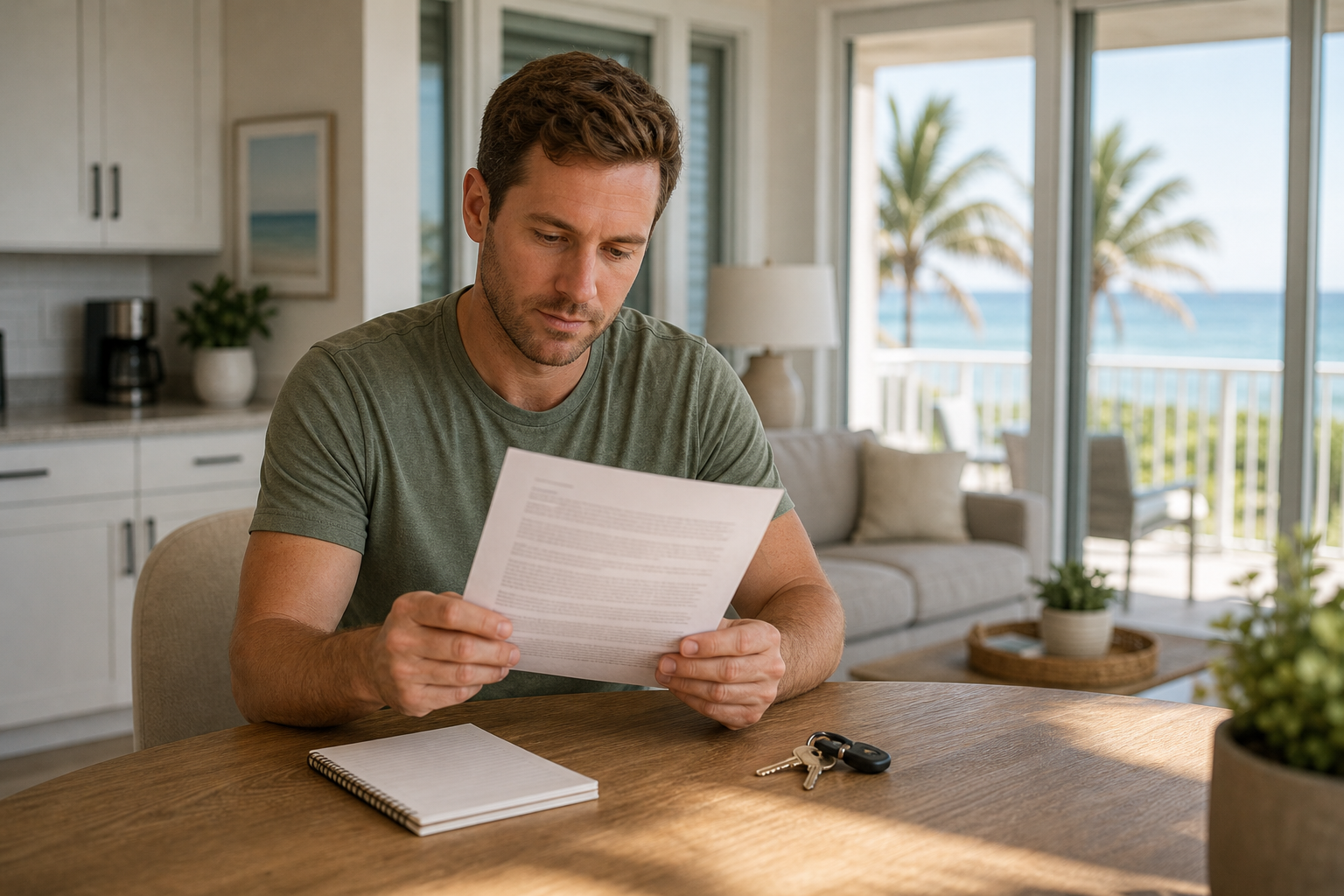
A month-long booking multiplies every small fee, so read the listing closely. Start with the cleaning fee. A single fee spread across 30 nights is usually modest per day, but confirm whether there is also a mid-stay cleaning, a linen change, or an extra charge for additional guests.
Next, ask about utilities. Some monthly rentals include electricity, water, and internet. Others cap electricity at a set amount and bill you for the excess. Air conditioning is the largest electricity load in Florida, and a month of heavy summer use can add up. Get the cap and the rate in writing before you pay.
Cancellation terms deserve the most attention. Look for the exact refund schedule, what happens if a storm forces evacuation, and whether the deposit is refundable. Flexible-cancellation properties usually cost a little more, but for a month-long commitment the protection is often worth it.
Then confirm minimum-stay and local rules. Many condo associations and some municipalities set their own minimum rental periods, and some communities restrict how often a unit can be rented. Many hosts who run vacation rentals in Florida need a state license and tax registration, so ask whether the listing is registered and confirm it is legal. If a host seems vague, move on.
Finally, check the practicalities that affect daily life: parking for your vehicle, whether the unit has a washer and dryer, what the kitchen includes, pet policies, and whether the building has an elevator if anyone in your group has mobility needs. If you are flying in, also consider whether you need a rental car for the month, since a longer rental can change the daily rate you are quoted.
Working Remotely During a Month in Florida

A month is long enough to bring your job with you, and Florida is a practical place to do it. The key is verifying connectivity before you book. Ask the host for the internet provider and the plan speed, and request a recent speed test screenshot. Wi-Fi that works for streaming may not hold up to several video calls at once.
Look for a dedicated workspace. A proper table and a supportive chair matter more than a view when you are working eight hours a day. Many guests set up in a screened lanai or a spare bedroom, then take their breaks on the beach. Also check whether the unit has a strong cellular signal as a backup, since coastal storms can interrupt home internet.
Time zones matter too. Most of Florida is on Eastern Time, but the western Panhandle, west of the Apalachicola River, is on Central Time. If your employer or clients keep a specific schedule, that detail can affect your choice of town.
Finally, treat the stay like a temporary home. Find a grocery store, a gym or yoga studio, and a coworking space or library as a fallback. Setting up a routine in the first week is what separates a pleasant long stay from a long vacation that never quite settles.
Getting There and Getting Around

Most long-stay visitors fly into Orlando International, Tampa International, Southwest Florida International in Fort Myers, Miami International, or Fort Lauderdale-Hollywood International. Choose the airport closest to your rental, because a long transfer with a month of luggage is tiring. Orlando suits Space Coast and theme park stays, Tampa and Fort Myers suit the Gulf Coast, and Miami is the gateway for the Keys.
For a month-long visit with bags, golf clubs, or family members, a pre-arranged private transfer can be easier than a rideshare. Vehicles such as a Chevrolet Suburban, Cadillac Escalade, or Lincoln Navigator carry a lot of luggage, and a Mercedes Sprinter works for groups. Book ahead for arrival days in January and February, when airports are busiest.
Once you arrive, plan on having a car. Florida distances are greater than many visitors expect, and public transit outside the largest cities is limited. A car makes grocery runs, day trips, and medical appointments simple. Driving yourself also gives you the freedom to explore the state beyond the town where you are staying.
Frequently Asked Questions
Yes. Many Florida condos, houses, and villas are available for 28 to 30 nights or longer, and many hosts offer a monthly discount. Search by your exact dates and compare the total price.
Often, but not always. Many hosts discount longer stays because they save on turnover, but some keep the same nightly rate and add fees. Compare the all-in total for your dates.
Winter, from about November through April, has the most comfortable weather but the highest demand. Shoulder months like late April, May, October, and November are often easier to book.
Generally yes. Florida treats rentals of six months or less as transient, so state sales tax and local tourist development taxes typically apply. The exact amount depends on the county.
It depends on your goals. The Gulf Coast is popular for calm water and sunsets, the Space Coast for a surf-town feel and rocket launches, the Keys for island life, and Orlando for space and theme parks.
Check cleaning fees, utility caps, internet speed, the cancellation schedule, minimum-stay rules, and the host's state license number.
Not necessarily, but be careful. Hurricane season runs from June 1 to November 30, with peak activity usually from mid-August through October. Choose flexible cancellation and consider insurance covering named storms.
Yes. Ask the host for the internet provider and speed, confirm there is a proper workspace, and note that the western Panhandle is on Central Time while most of the state is on Eastern Time.
In most areas, yes. Distances are large and public transit outside major cities is limited, so a car makes groceries, errands, and day trips much easier.