
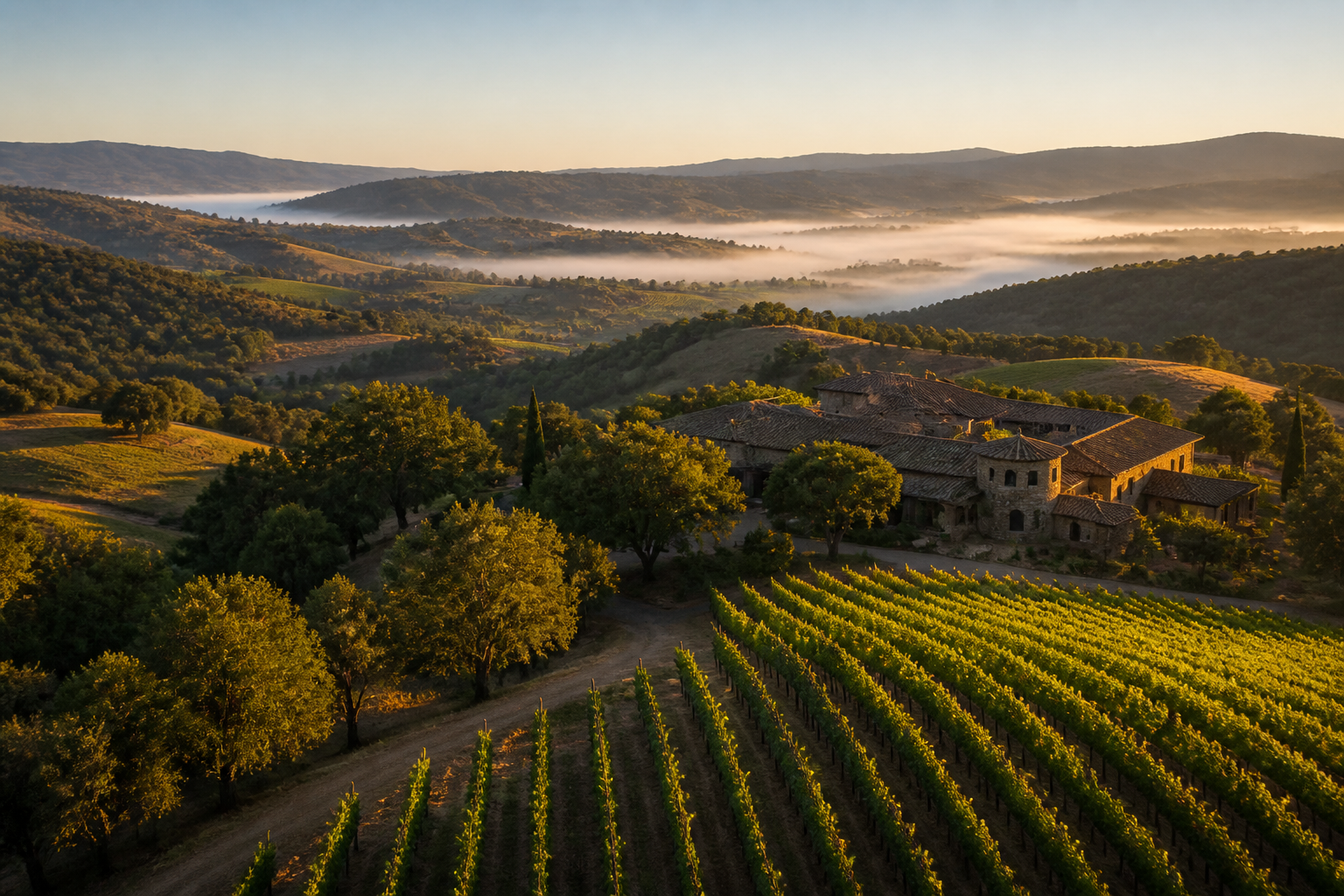
Napa Valley 2026: What Makes Wine Country Essential This Year
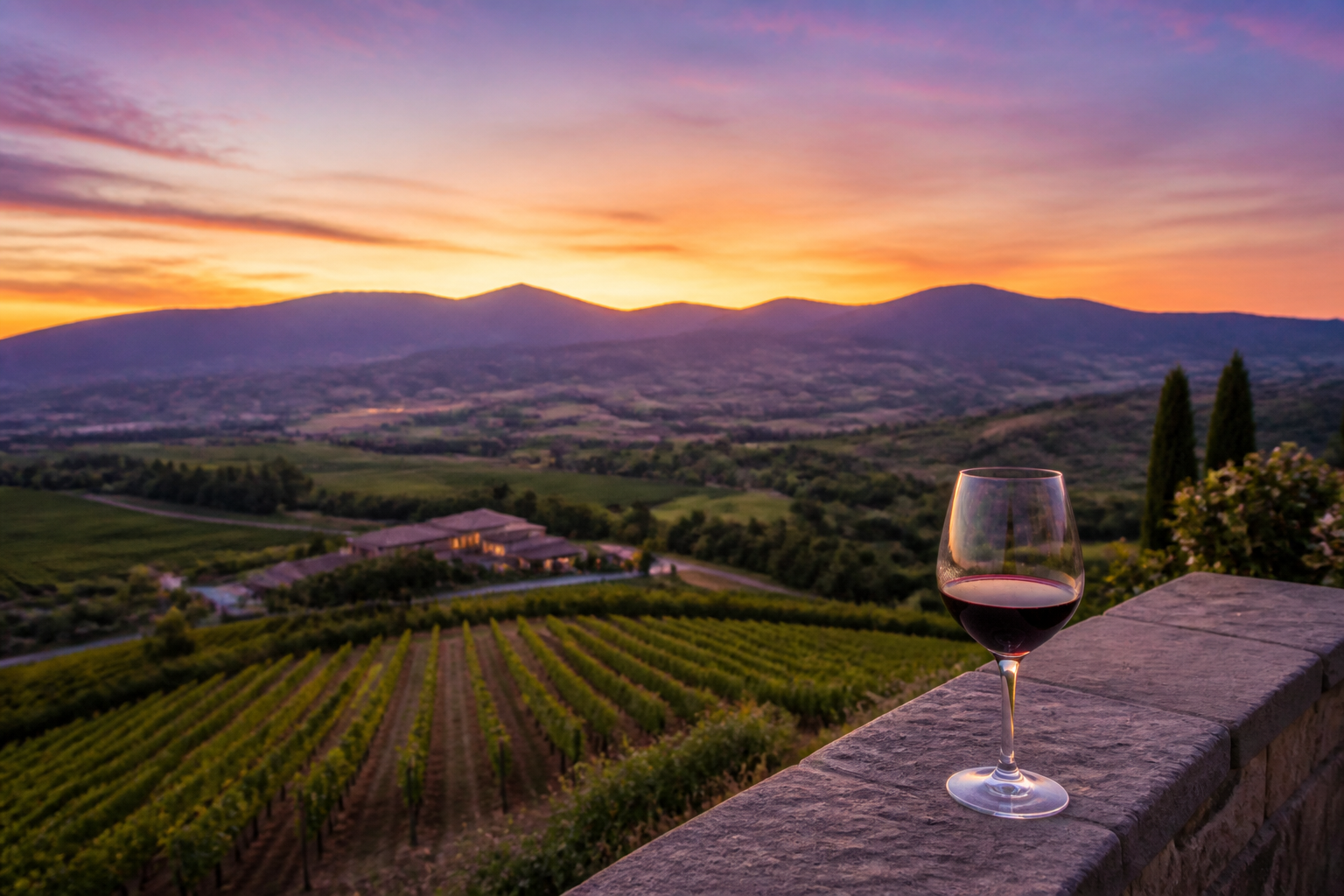
Napa Valley holds a well-earned place among the world's great wine regions, and 2026 finds it at the peak of its hospitality ambitions. Stretching 35 miles north from the city of Napa to Calistoga through Napa County, California, this narrow corridor produces roughly 4 percent of California's total wine output yet accounts for nearly 25 percent of the state's wine revenue. That is a concentration of quality across 45,000 planted acres that no other American wine region has matched.
Arrive with a firm itinerary. Walk-in tastings at premier estates are no longer reliably available; reservation-only policies became standard practice across top-tier producers after 2021 and remain firmly in place for 2026. Budget thoughtfully as well: tasting fees at premium estates now commonly range from $75 to $175 per person, and coveted library experiences at names like Harlan Estate or Scarecrow require winery relationships that take time to cultivate. The average hotel room rate in Napa Valley during peak harvest season sits around $425 per night according to STR industry data, though vacation rentals consistently offer better per-person value for groups of four or more.
Three major airports serve the valley. San Francisco International (SFO) sits approximately 60 miles southwest and offers the broadest domestic and international route network. Oakland International (OAK), roughly 55 miles south, frequently carries fares 25 to 40 percent below SFO for identical travel dates. Sacramento International (SMF) is approximately 70 miles northeast and a strong choice for travelers arriving from the Pacific Northwest or Mountain West. Secure your ground transportation before you finalize hotel bookings; professional vehicle demand spikes sharply during harvest season and BottleRock weekend alike. Our dedicated Napa Valley airport transfer service provides meet-and-greet arrivals from all three airports regardless of which terminal your flight uses.
Best Time to Visit Napa Valley in 2026
Napa Valley rewards visits in every season, but the 2026 calendar carries several specific anchors worth planning around well in advance.
Harvest season runs from late August through mid-October and is the most atmospherically charged time to visit. The 2026 harvest is expected to open in late August, with Chardonnay and Pinot Noir from the cool Carneros AVA typically arriving first. You will smell fermenting grape skins drifting from cellar doors, watch harvest crews working steep hillside blocks at dawn, and find winery staff in a collective state of focused energy unlike any other time of year. Book accommodation for this window at least five months in advance; rates at top properties fill quickly and peak-season cancellation windows are strict.
BottleRock Napa Valley 2026 is scheduled for Memorial Day weekend, May 22 through May 24, 2026, at the Napa Valley Expo grounds on South Main Street. Past editions have featured headliners including Ed Sheeran, Billie Eilish, and Green Day alongside a curated culinary village celebrating local chefs and producers. Hotel rates in the greater Napa area spike 60 to 90 percent during BottleRock weekend. Book at least five to six months ahead, or base yourself in Sonoma and drive the 40-minute route into Napa on festival days.
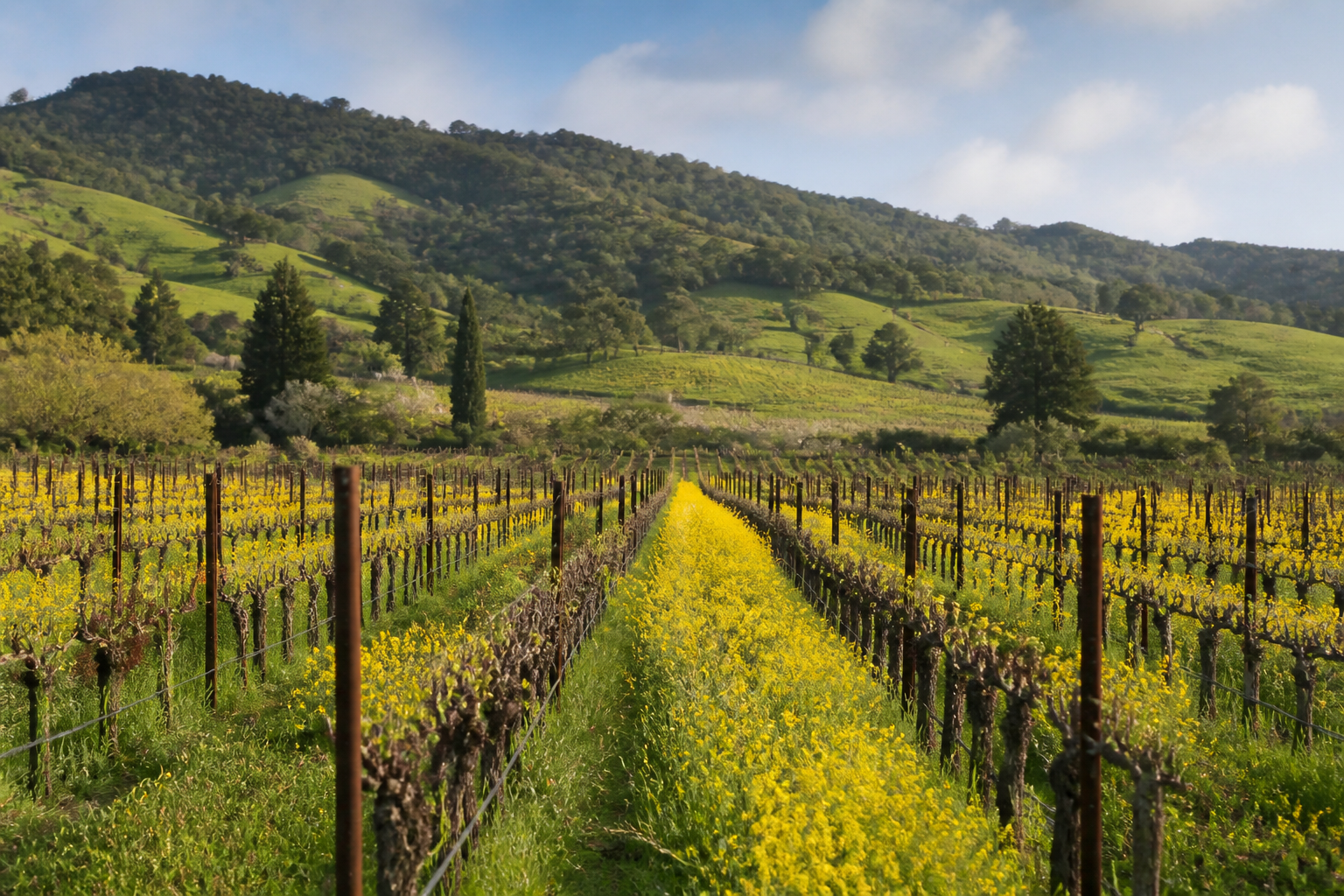
Spring, from March through May outside the BottleRock weekend, is our preferred season for unhurried exploration. Wildflowers carpet hillside vineyards, mustard cover crops turn the valley floor vivid yellow through early March, and tasting room queues thin noticeably compared to summer Saturdays. The Napa Valley Mustard Festival celebrates this seasonal bloom with multi-week programming that typically wraps in early March 2026.
Winter, November through February, brings lodging rate reductions of 20 to 35 percent compared to peak season. Restaurant reservations become substantially easier to secure, and the dormant vine rows draped in morning fog create a moody, cinematic landscape unlike anything summer produces. Many wineries release library wines and allocation offerings during winter months, making it a rewarding time for serious collectors.
Getting to Napa Valley: Airports, Transfers & Arrival Tips

SFO carries the deepest domestic and international route map of the three gateway airports, with nonstop service from over 40 U.S. cities and direct connections to European and Asian hubs. OAK is served by Southwest Airlines, Alaska, JetBlue, and several ultra-low-cost carriers, with fares regularly undercutting SFO by a meaningful margin on identical routes. SMF provides convenient arrivals for travelers from Nevada, Idaho, Washington, and Oregon who may also plan to explore the Gold Country wine appellations east of Sacramento.
Ground transfer time from SFO to downtown Napa runs 75 to 90 minutes under normal weekday conditions. Count on 110 to 130 minutes arriving between 4 p.m. and 7 p.m. during weekday commuter windows on Highway 101 and I-80. From OAK the transfer typically runs 60 to 75 minutes. From SMF via I-80 West to Highway 12 and Highway 29, plan on approximately 70 minutes.
Pre-book a professional vehicle rather than relying on rideshare availability. At SFO specifically, rideshare pickup volume during peak departure cycles pushes wait times to 30 to 45 minutes, and surge pricing during holiday weekends and harvest Fridays compounds the inconvenience. Our airport transportation team deploys the Cadillac Escalade for couples and small groups, the Chevrolet Suburban for families with full luggage sets, and the Mercedes Sprinter for parties of eight to fourteen. Your driver meets you inside the terminal — at SFO's International Terminal G for overseas arrivals, and at Terminals 1, 2, or 3 for domestic flights — and handles luggage directly to your vehicle.
Budget-conscious travelers should know that Amtrak's Capitol Corridor service connects Oakland and Sacramento to the Bay Area, and VINE Transit (Napa Valley's regional bus network) runs Route 29 from the Vallejo Ferry Terminal into downtown Napa for $1.60 per one-way trip. Transit times are considerably longer than a private transfer, but the connection is reliable and worth considering for solo off-peak arrivals.
Plan this trip
Napa Valley Vacation Rentals: Best Options for 2026
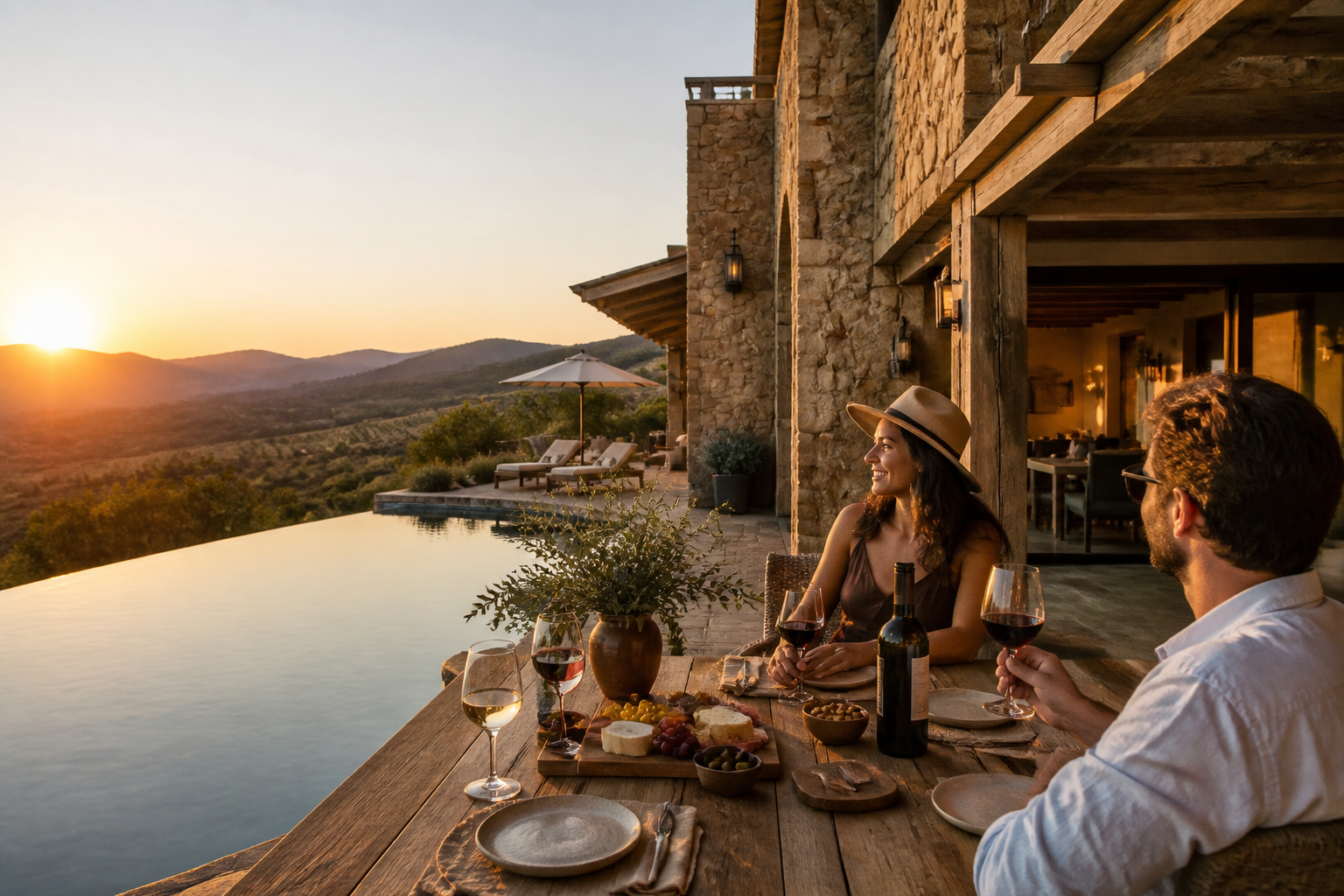
Vacation rentals have become the strategic accommodation choice for Napa Valley visitors who travel in groups of four or more, who want the flexibility of a full kitchen for morning provisions and evening charcuterie assembly, or who plan to purchase bottles at wineries and open them privately without corkage fees that can reach $50 per bottle at restaurant tables. Property inventory across the valley spans creekside two-bedroom cottages in the Coombsville AVA just east of downtown Napa to full estate buyouts in Rutherford or Calistoga with private vineyards, olive orchards, infinity pools, and professional outdoor kitchens.
Start your search with Vrbo, which consistently carries a stronger concentration of full-home wine country properties (particularly estate homes with private pools and outdoor entertaining terraces) relative to other booking platforms. Browse California vacation rentals on Vrbo to review current inventory and check 2026 availability early; popular properties in St. Helena and Yountville fill their summer and harvest calendars well before spring arrives. Weekly rental pricing for a four-bedroom estate with a pool in the St. Helena corridor ranges from approximately $6,000 to $18,000 depending on finishes and season. A two-bedroom cottage closer to downtown Napa can typically be found for $350 to $700 per night, representing strong value compared to hotel rooms at a comparable quality tier.
When evaluating any Napa rental, verify three specifics before committing. First, confirm check-in time flexibility: many estate properties enforce strict 4 p.m. check-in windows that conflict with afternoon tasting schedules, and this is rarely negotiable without direct host communication. Second, confirm road access, as some acclaimed estate properties sit on unpaved access roads that are unsuitable for low-clearance sedans or passenger vans. Third, review outdoor cooking infrastructure. An alfresco kitchen or at minimum a gas grill is central to the Napa vacation experience: picking up provisions at Oxbow Public Market in downtown Napa and bringing them back to a terrace with vineyard views is one of wine country's defining pleasures that a vacation rental enables in a way no hotel room can replicate.
The towns of Yountville, Rutherford, and St. Helena command the highest per-night premiums because of their central valley-floor positions and proximity to flagship dining. Calistoga at the northern terminus prices modestly lower and adds the geothermal hot springs for which it has been famous since the 1860s. Properties in the Carneros AVA straddling the Napa-Sonoma county line are also worth a close look; their position provides same-day tasting access to quality producers from both counties without backtracking. Find your perfect vacation rental on Vrbo for a curated selection spanning intimate Carneros cottage escapes to full Rutherford estate experiences with private vineyard access.
For groups that intend to hire a dedicated wine country driver, a decision we strongly support if your day includes more than two winery stops, coordinate your rental's daily schedule with your driver's availability from the outset. Our wine country tour coordination service can design a day-by-day tasting itinerary built around your rental property's precise location and the AVAs within practical drive time.
Best Hotels in Napa Valley for 2026
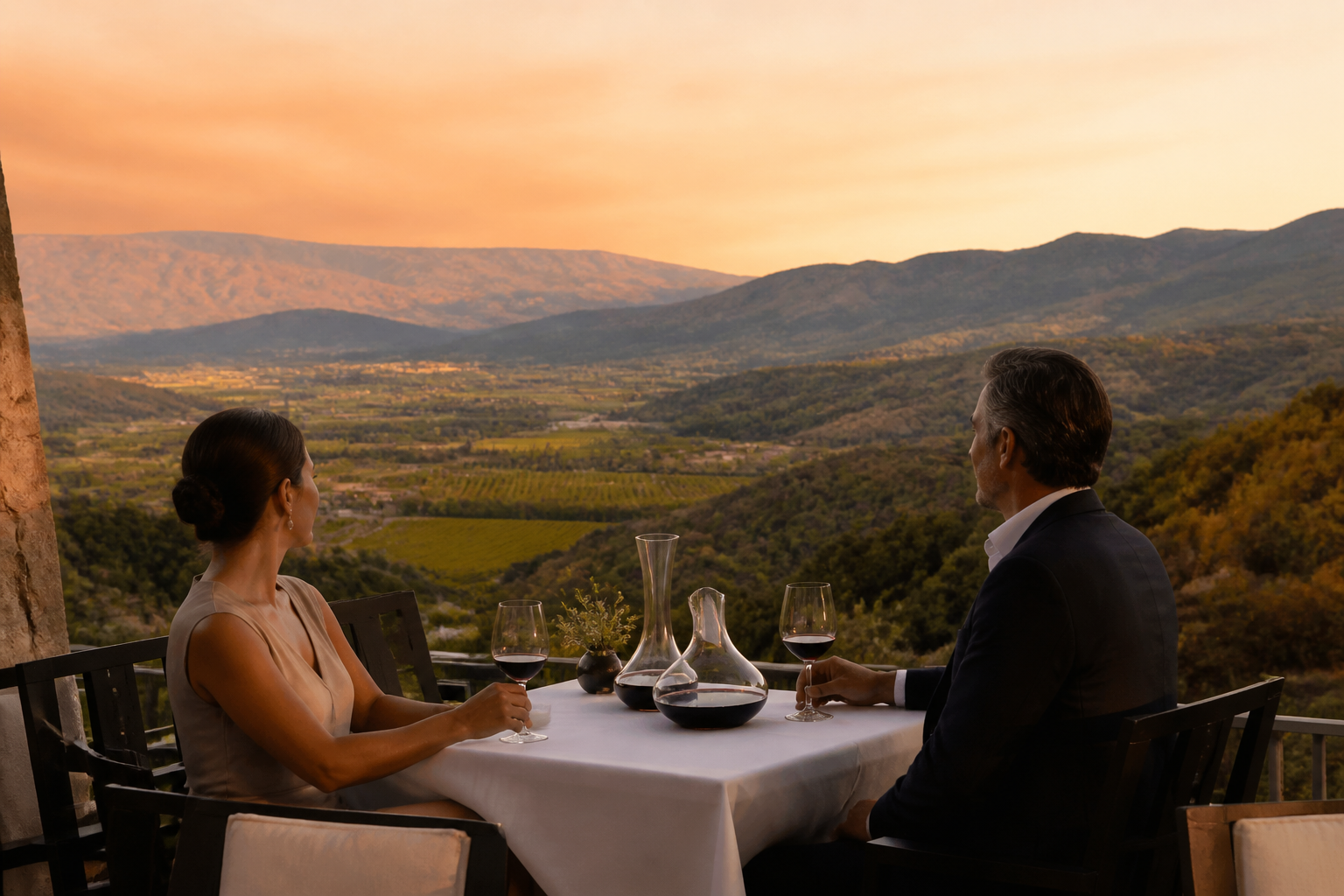
Napa Valley's hotel landscape runs from internationally recognized ultra-luxury resort compounds to intimate inns that have operated under the same family stewardship for decades. The following properties have been evaluated on quality-to-value ratio, strategic location, and verified guest reputation across multiple seasons.
Auberge du Soleil in Rutherford is widely regarded as among the finest resort hotels in the United States. Set on a 33-acre olive grove above the valley floor with panoramic views taking in the Stags Leap cliffs, the Mayacamas Range, and dozens of vineyard estates, its 50 guest rooms and suites each include a private terrace and wood-burning fireplace. High-season room rates begin at approximately $1,100 per night. The resort's AAA Four Diamond restaurant maintains a comprehensive California wine list — with particular depth in Napa Cabernet back-vintages — that few hotel dining rooms in the country can match.
Meadowood Napa Valley, set on 250 acres of sheltered St. Helena canyon, underwent complete rebuilding after the 2020 Glass Fire and reopened to significant critical acclaim. The property spans 85 rooms, suites, and forest cottages alongside a nine-hole golf course, croquet lawn, three swimming pools, and a destination spa. Meadowood's restaurant, which re-earned national attention following its rebuilt opening, offers tasting menu dinners in a forest clearing setting that ranks among California's most memorable dining experiences. Rates begin at approximately $1,200 per night in high season.
For travelers who prioritize walkability and downtown energy over vineyard seclusion, the Archer Hotel Napa delivers 183 thoughtfully designed rooms steps from First Street's restaurant corridor. Standard king rooms run $299 to $450 per night in season, and the rooftop bar Sky & Vine pours an impressive selection of local producers against a panoramic downtown Napa skyline. The Archer sits within a five-minute walk of Oxbow Public Market, the Napa RiverFront Promenade, and a dozen excellent restaurants across every budget tier, making it our top pick for visitors who want centrality over seclusion.
Calistoga Ranch, an Auberge Resorts Collection property at the valley's northern terminus, offers 50 lodge rooms and lakeside lodges tucked within a private canyon. It draws directly on the Calistoga geothermal zone for its spa mineral water treatments, with hot spring mineral soaks incorporated into the guest experience. Rates begin at approximately $850 per night and increase substantially during harvest weekends and holidays.
For boutique character at a more accessible price point, the Napa River Inn occupies the historic Hatt Building on the Napa riverfront, a structure dating to the late nineteenth century, with 66 individually appointed rooms blending Victorian architectural details with current amenity standards. Weekend rates run $250 to $380 per night, representing strong value for a central downtown Napa location with complimentary bicycle lending included. We recommend booking through Hotels.com, where promotional Member Price rates apply to multiple Napa Valley properties year-round. Save 10% or more on hotels with Member Prices at qualified valley properties, and use the platform to Compare hotel deals on Hotels.com to stack up Napa, Yountville, and Calistoga rates side by side before committing. After booking online, call the property directly to communicate room location preferences. At Auberge du Soleil and Meadowood, specific cottages vary dramatically in vineyard view, privacy, and proximity to the pool complex.
Plan this trip
Napa Valley Wineries & Wine Tasting Experiences 2026
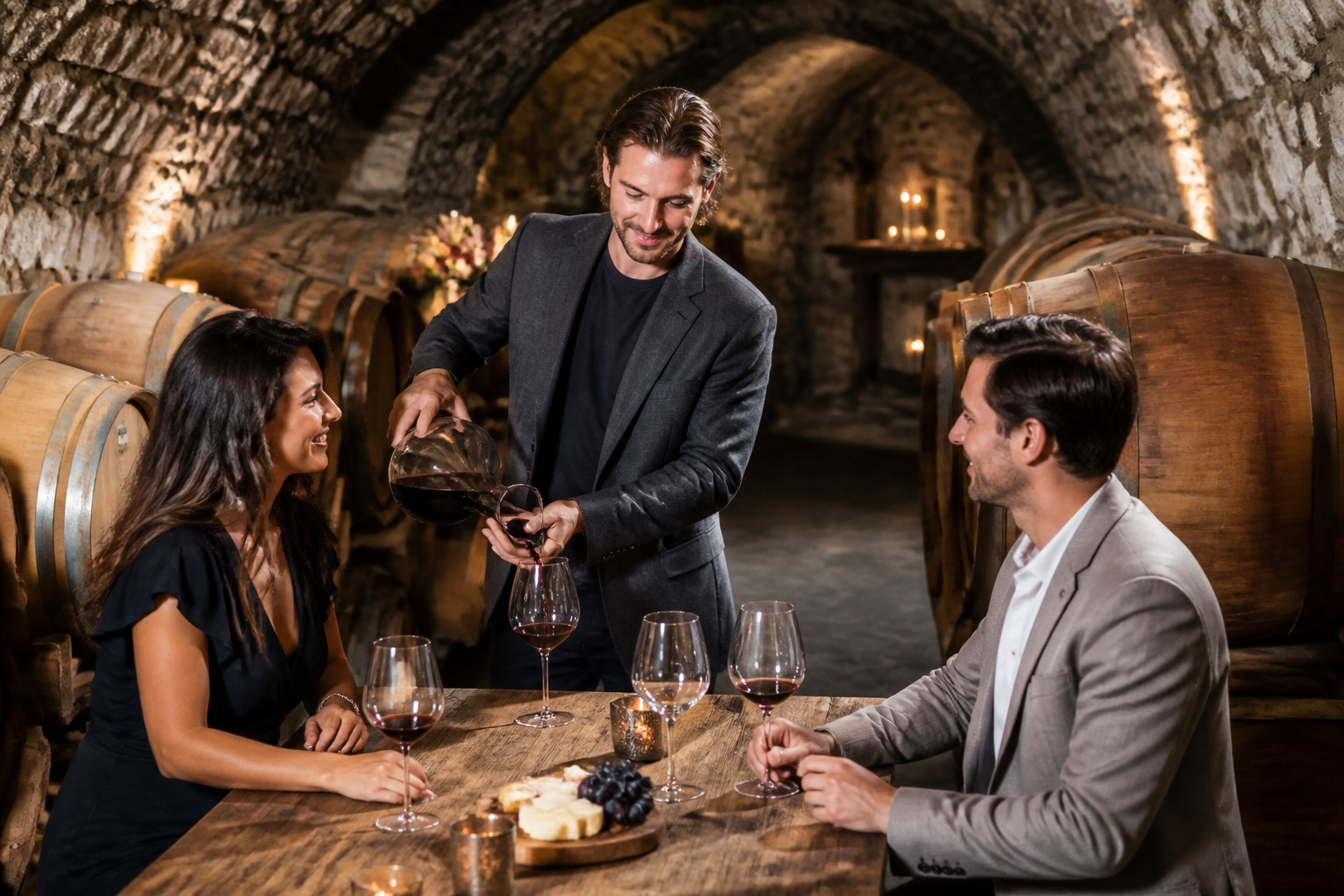
Napa Valley's roughly 400 bonded wineries span a quality spectrum wide enough that thoughtful selection makes the difference between a revelatory visit and a forgettable afternoon. Organize your tasting days around specific AVAs rather than driving the Highway 29 corridor arbitrarily. Doing otherwise produces decision fatigue and fails to take advantage of the distinct soil and microclimate signatures each appellation offers.
In Stags Leap District, Shafer Vineyards produces an internationally celebrated Cabernet Sauvignon in the Hillside Select, harvested from southeast-facing volcanic soils that impart a distinctive mineral core and structural precision. Tastings are by appointment only and typically require reservations six to eight weeks in advance during summer. Stag's Leap Wine Cellars, whose 1973 Cask 23 Cabernet Sauvignon outranked premier Grand Cru Bordeaux in the historic 1976 Paris Judgment tasting organized by British wine merchant Steven Spurrier, offers seated appointment experiences that walk guests through the property's storied history alongside current vintage releases.
In the Rutherford AVA, Beaulieu Vineyard holds the distinction of continuous production through Prohibition under winemaker André Tchelistcheff, whose influence on California viticulture from the 1930s onward was foundational to the state's modern wine identity. The Georges de Latour Private Reserve Cabernet, produced since 1936, remains the benchmark expression of what local vintners call Rutherford Dust — a fine, almost powdery tannin texture unique to the AVA's well-drained benchland soils. Inglenook, the Chateau owned by filmmaker Francis Ford Coppola and restored to estate winery status after decades of fragmentation, offers architectural grandeur alongside serious winemaking; its Rubicon Cabernet blend consistently receives scores in the mid-to-upper 90s from Wine Spectator and Wine Advocate.
For sparkling wine, Domaine Chandon in Yountville remains the definitive Napa destination. Established in 1973 as Moët & Chandon's first American production facility, it produces méthode traditionnelle sparkling wines and the celebrated Etoile Rosé in a setting of formal French-inspired gardens. Walk-in tasting access is available for most experiences, and the salon's afternoon atmosphere is among the valley's most refined.
Plan a minimum of three winery appointments per tasting day, with 90-minute buffer blocks between each to accommodate leisurely pours, bottle purchases, and the parking and road time that Napa's narrow vineyard lanes invariably introduce.
Napa Valley Dining, Spas & Experiences Beyond the Vines
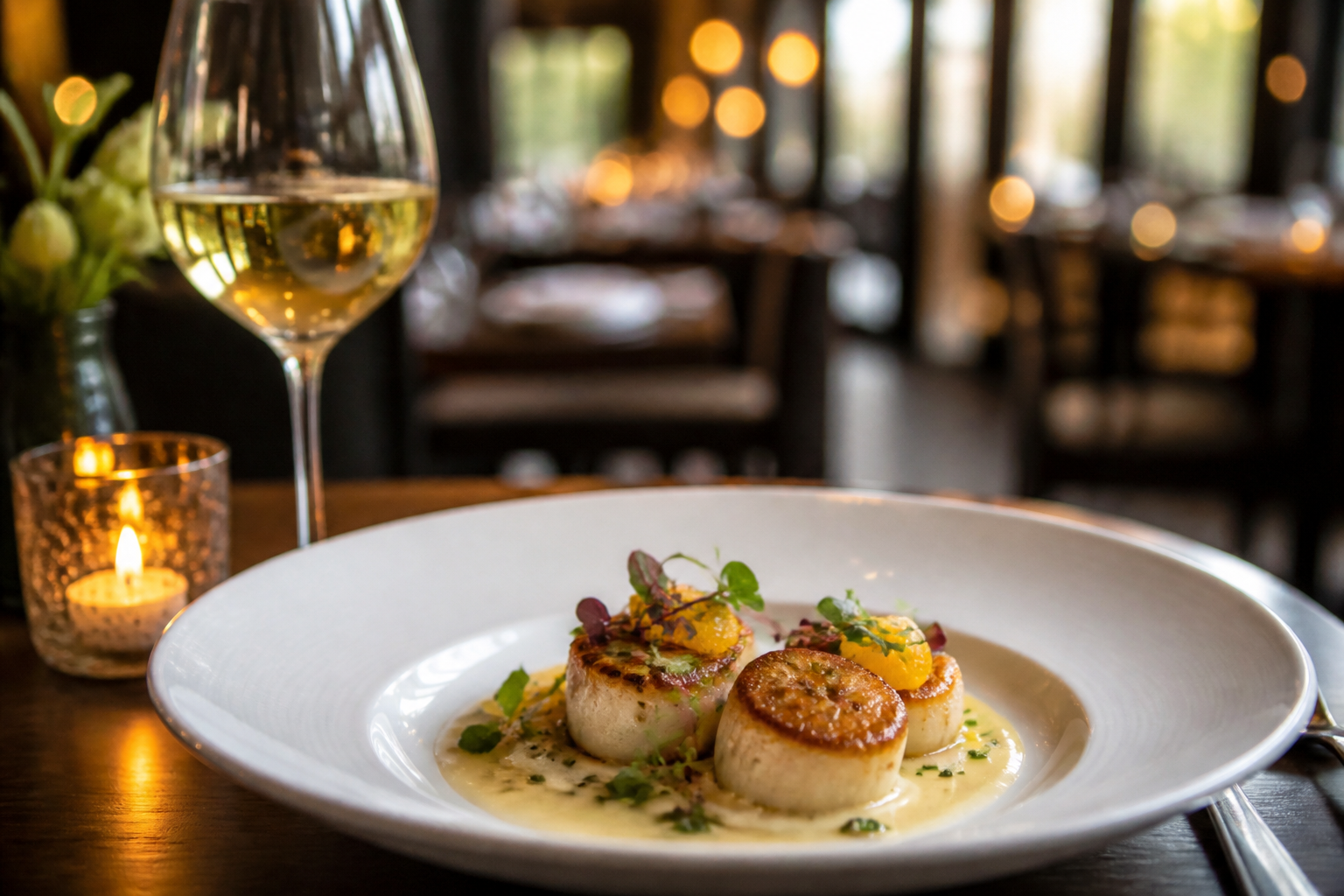
The French Laundry in Yountville anchors Napa Valley's dining reputation with three Michelin stars (a designation it has held since 2007) and a consistent presence on international best-restaurant lists. Chef Thomas Keller's nine-course tasting menu changes daily based on seasonal availability and runs approximately $400 per person before wine, tax, and gratuity. Reservations open exactly 60 days in advance at 10 a.m. Pacific Time on the Tock reservation platform and are claimed within minutes of the window opening. Set a calendar alert and have your party size, date, and credit card ready well before the release moment.
Bouchon Bistro, also in Yountville and also a Thomas Keller property, offers classic French brasserie cooking — steak frites, moules marinières, a remarkable plateau de fruits de mer — at an approachable price point. Dinner for two with a shared local bottle runs approximately $180 to $240, and reservation availability is far more forgiving than at The French Laundry. RH Yountville, the Restaurant at Restoration Hardware's flagship compound, has become a genuine dining destination: its sprawling courtyard garden service on a clear spring afternoon is among the most photographed dining settings in the entire valley.
Oxbow Public Market in downtown Napa functions as both a gourmet marketplace and a social anchor point for visitors. Notable tenants include The Fatted Calf charcuterie, a Fieldwork Brewing Company taproom, and C Casa for inventive California-Mexican fare. Spend a morning here assembling provisions for a vineyard picnic; many wineries in Carneros and Coombsville maintain outdoor picnic areas available to tasting room visitors by reservation.
The Indian Springs Resort and Spa in Calistoga has operated its geothermal volcanic ash mud bath facility continuously since 1913, making it one of California's longest-continuously-running destination spas. A classic mud bath and mineral pool session runs $150 to $230 per person depending on selected treatments and season. The Spa at Meadowood offers elevated therapeutic treatments in a forest canyon setting with access to the resort's mineral pool complex.
The Napa Valley Wine Train provides a distinctly old-world experience: a 36-mile round-trip journey from downtown Napa to St. Helena aboard beautifully restored 1915 Pullman dining cars, with a multi-course meal served over approximately three hours. Tickets range from $165 to $325 per person for standard dining car experiences, with premium winery-stop packages available at higher price points.
Plan this trip
Napa Valley Transportation: Getting Around During Your Stay
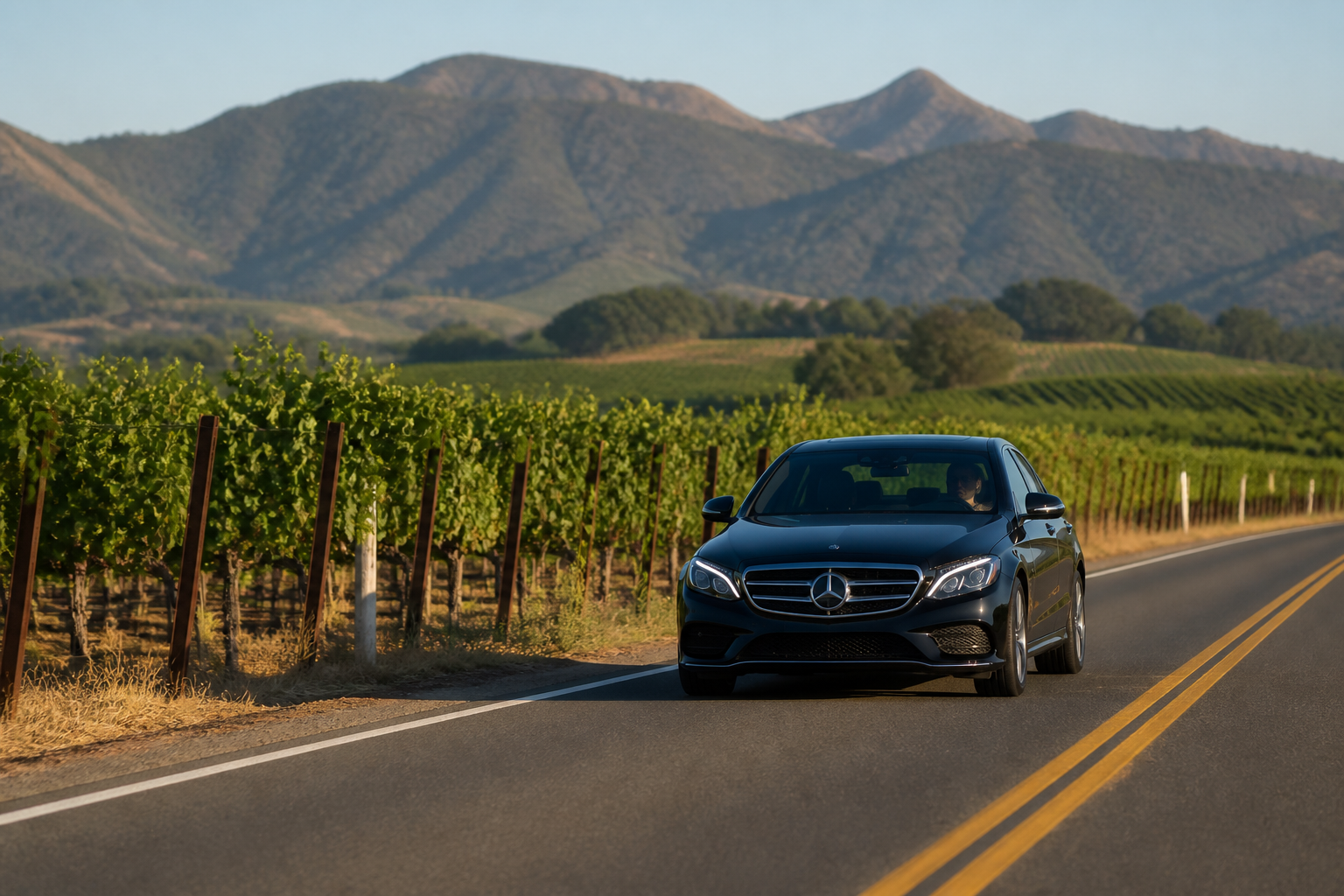
Napa Valley's road infrastructure was built long before the region began attracting three million visitors per year, which makes transportation planning a practical necessity rather than a peripheral consideration. Highway 29 and the parallel Silverado Trail are the two main north-south arteries connecting Napa city to Calistoga. On summer weekends, the Highway 29 corridor through downtown St. Helena backs up noticeably between noon and 5 p.m. Default to the Silverado Trail for north-south movement during peak daytime hours; it runs faster, offers sweeping views across the valley floor to the Mayacamas Range, and connects cleanly to Highway 29 at both its southern Napa and northern Calistoga ends.
Avoid driving yourself if your day includes more than one or two winery visits with poured tastings. A professional wine country driver typically charges $75 to $100 per hour with a four-hour minimum and eliminates safety concerns, parking stress, and the logistical friction of navigating unfamiliar vineyard access roads. Many experienced private drivers maintain personal relationships with winery staff that can unlock same-day appointment flexibility unavailable to self-driving visitors, and most carry insulated chests for bottle purchases made throughout the day.
VINE Transit Route 29 runs the full valley length from downtown Napa to Calistoga for $1.60 per one-way trip, making it a legitimate budget option for solo travelers or those planning a single-destination day. The last northbound departures from Napa city typically run by approximately 7 p.m., which rules out the bus for a dinner reservation at The French Laundry or any evening winery event programming.
Cycling is practical and genuinely pleasurable on the Silverado Trail and on quieter cross-valley lanes in the Carneros and Coombsville districts. Multiple outfitters in downtown Napa rent electric-assist bicycles for approximately $55 to $75 per day, and several wineries in the southern end of the valley have added bicycle parking and free water stations to encourage the option. Avoid cycling on Highway 29 itself, where vehicle traffic volumes and narrow shoulders create hazardous conditions during peak daytime hours. For multi-day visitors who wish to access mountain AVAs including Howell Mountain, Spring Mountain District, or Mount Veeder, a rented mid-size SUV provides the road clearance, luggage capacity, and fuel efficiency needed for the steep, winding access roads those appellations require.
Frequently Asked Questions
The two peak periods are harvest season (late August through mid-October 2026) for the most atmospheric winery experience, and spring (March through May) for lower crowds and blooming mustard fields. BottleRock Napa Valley 2026 runs May 22 to 24, 2026, and is a major draw for music fans but drives hotel rates up sharply that weekend. Winter visits (November through February) offer 20 to 35 percent lower lodging rates and far easier restaurant reservations.
Napa Valley is approximately 55 to 60 miles north of downtown San Francisco. Under normal traffic the drive takes 60 to 75 minutes via US-101 North and Highway 37 or Highway 12. Expect 90 to 120 minutes on Friday afternoons during summer and harvest season when commuter and tourist traffic converges on the same northbound routes.
Average hotel rates in Napa Valley vary significantly by property tier and season. Mid-tier downtown Napa properties like the Archer Hotel run $299 to $450 per night in peak season. Luxury resorts such as Auberge du Soleil and Meadowood start at $1,100 to $1,200 per night. STR industry data places the overall average across all hotel categories at roughly $425 per night during harvest season.
Yes, the majority of premier Napa Valley wineries operate on an appointment-only basis as of 2026. Reservation-only policies became the norm at top-tier estates after 2021 and remain firmly in place. We recommend booking winery appointments four to eight weeks in advance for summer and harvest visits, and at least one to two weeks ahead for spring and winter trips. A limited number of larger commercial producers still accept walk-in guests.
San Francisco International (SFO) offers the broadest domestic and international route network and sits approximately 60 miles southwest of downtown Napa, making it the most convenient choice for most travelers. Oakland International (OAK), about 55 miles away, frequently carries fares 25 to 40 percent lower than SFO. Sacramento International (SMF), 70 miles northeast, is ideal for travelers arriving from the Pacific Northwest or Mountain West.
BottleRock Napa Valley 2026 is scheduled for Memorial Day weekend: May 22, 23, and 24, 2026, at the Napa Valley Expo on South Main Street in Napa. The festival combines major music headliners with a celebrated culinary village. Hotel rooms in Napa fill months in advance for this weekend, and rates spike 60 to 90 percent above normal. We recommend booking accommodation at least five to six months ahead.
Absolutely. Winter in Napa Valley (November through February) is an underrated season for serious wine travelers. Hotel rates drop 20 to 35 percent versus peak season, restaurant reservations are far easier to secure, and the visual atmosphere of fog-wrapped dormant vines over rain-softened hillsides is uniquely beautiful. Many wineries also release library wines and special allocations during winter months, making it a rewarding time for collectors.
Napa Valley vacation rental pricing depends heavily on property size, location, and season. A two-bedroom cottage near downtown Napa typically runs $350 to $700 per night. A four-bedroom estate with a private pool in the St. Helena or Rutherford corridor ranges from $800 to $2,500 per night, or approximately $6,000 to $18,000 for a full week. Vrbo carries the best selection of full-home estate properties in the valley.
The French Laundry in Yountville, the Thomas Keller restaurant that has held three Michelin stars since 2007, is Napa Valley's most celebrated dining destination. Dinner runs approximately $400 per person before wine, tax, and gratuity. Reservations open 60 days in advance at exactly 10 a.m. Pacific Time on the Tock platform and are typically claimed within minutes of the release window opening.
Yes, with planning. VINE Transit Route 29 connects downtown Napa to Calistoga for $1.60 per trip along the main valley corridor. Rideshare services operate throughout the valley but can be scarce in rural vineyard areas during peak times. For winery visits we strongly recommend booking a professional wine country driver rather than driving or relying on rideshares. E-bike rentals in downtown Napa run $55 to $75 per day and are excellent for exploring the southern valley.