What Is Aven Armand and Why It Belongs on Every Traveller's Radar
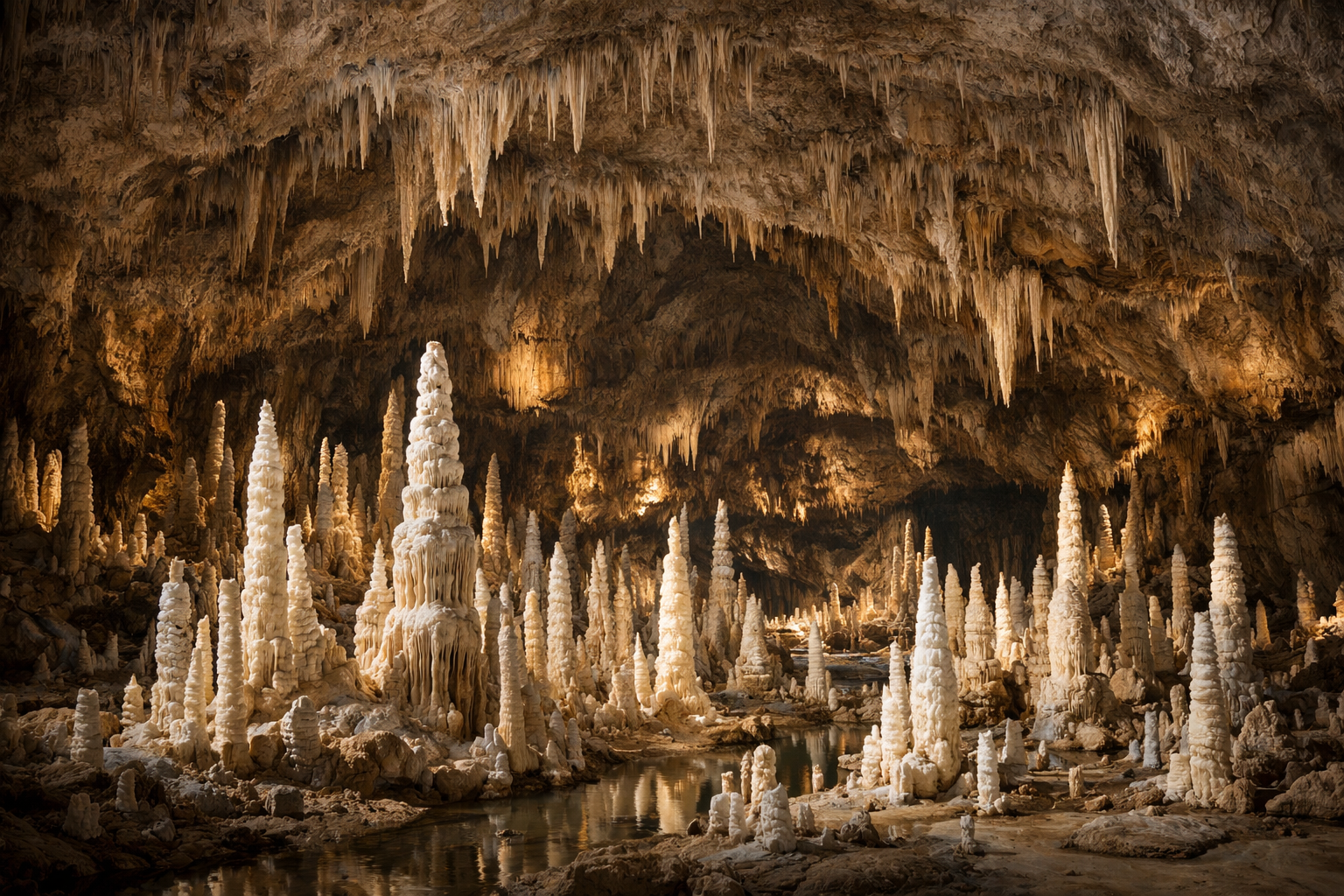
Buried roughly 100 meters beneath the windswept Causse Méjean plateau in France's Lozère department, Aven Armand is not simply another show cave. It is one of the most geologically astonishing spaces on Earth—a single, cathedral-scale chamber measuring approximately 110 meters long, 60 meters wide, and 60 meters high, its floor carpeted by more than 400 stalagmites in a density that prompted the great French speleologist Édouard-Alfred Martel to describe the scene as a "virgin forest" when he first set eyes on it in 1897. That description, more than a century old, still holds.
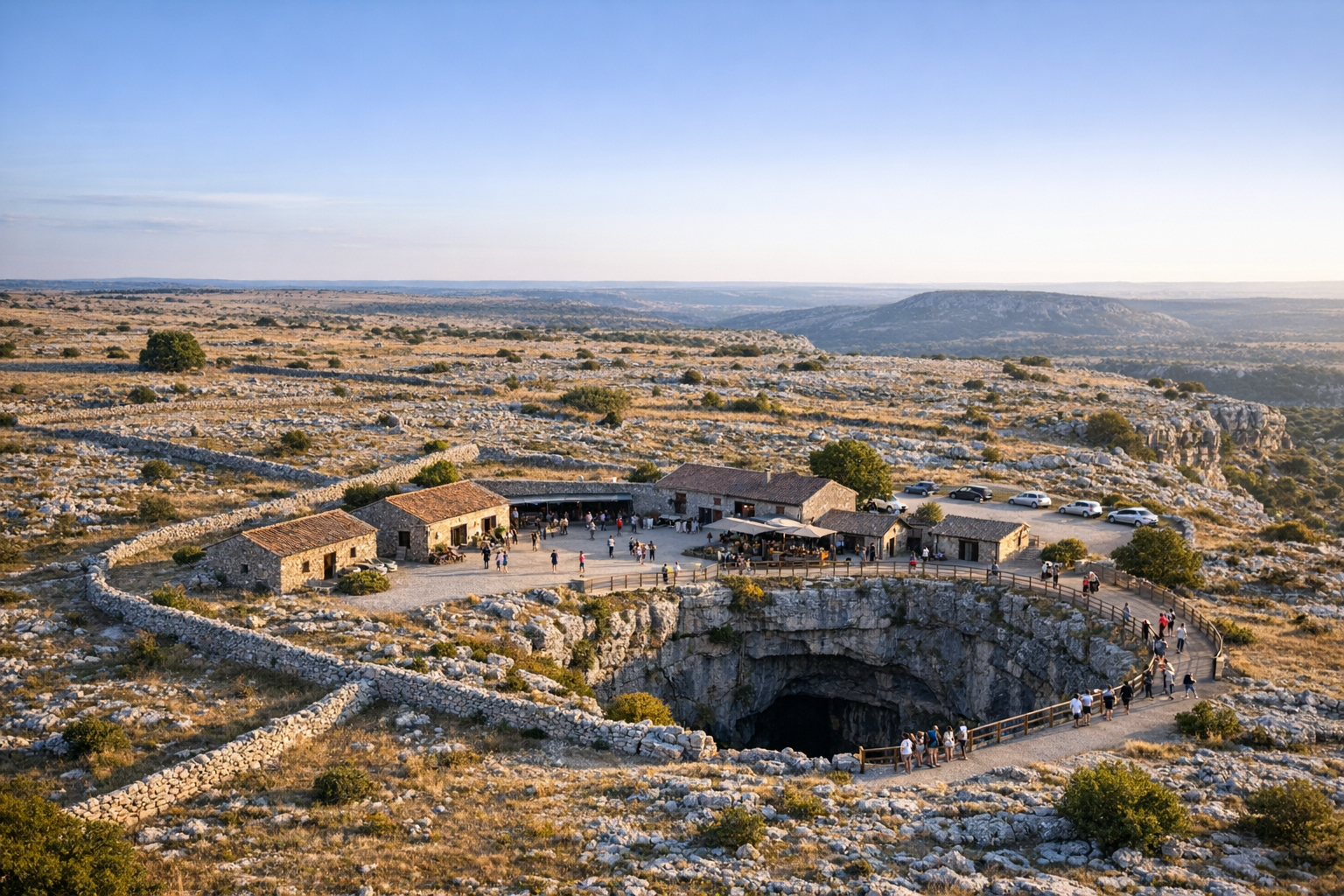
The cave sits within the Occitanie region, administered from the address Route de l'Aven Armand, 48150 Hures-la-Parade, roughly 11 kilometers northeast of the medieval village of Meyrueis. The word aven is Occitan for a vertical natural shaft or sinkhole—an apt name, since entry to this underground world is made through exactly such a shaft. The name Armand honors Louis Armand, the Nîmes blacksmith and amateur cave explorer who made the first descent on September 18, 1897, alongside Martel.
What distinguishes Aven Armand from the dozens of other show caves scattered across southern France is a combination of factors: the sheer scale of its single chamber, the extraordinary diversity of speleothem formations it contains, the pristine state of those formations, and the presence of a stalagmite that holds an outright world record. If you are building any itinerary through the Massif Central, the Causses, or the Gorges du Tarn, Aven Armand is not a detour—it is an anchor.
The World's Tallest Stalagmite and the 'Virgin Forest' of Formations
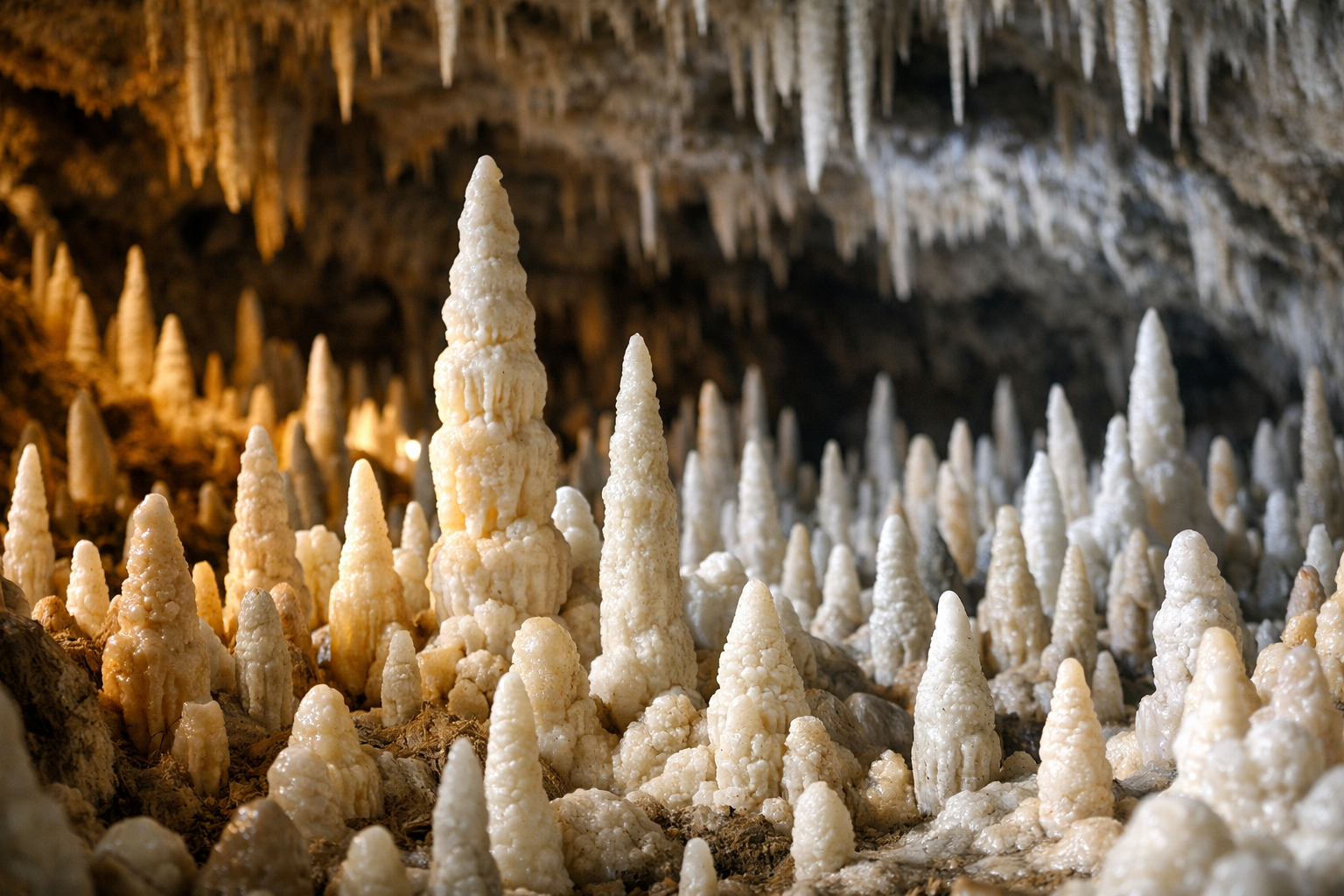
At the heart of Aven Armand's appeal is a single formation that stops visitors mid-stride: La Grande Stalagmite, officially recognized as the world's tallest known stalagmite, standing approximately 30 meters—roughly the height of a ten-story building. Built grain by grain from calcium carbonate-rich water dripping from the ceiling, it has been growing for an estimated 400,000 years at a rate of approximately one centimeter per century. Its color is white to cream calcite, and the guided walkway allows you to circle its base and view it from multiple angles under carefully calibrated lighting.
But singling out one stalagmite in Aven Armand is a little like visiting the Louvre and mentioning only the Mona Lisa. The chamber as a whole contains an extraordinary variety of speleothems: classic floor-growing stalagmites in every height and girth; stalactites hanging from the ceiling in curtains and needles; columns where the two have met and fused; translucent draperies and cave bacon formed by sheeting water; aragonite frostwork crystals; moonmilk deposits—that white, cheese-like calcium carbonate paste unique to certain cave environments; cave pearls; and helictites, those eccentric formations that seem to defy gravity by curling sideways in disregard of any conventional growth direction.
The formations range in color from pure white through cream, amber, warm brown, and occasional orange tints where iron oxide has stained the calcite. Because Aven Armand was not commercially quarried or privately looted before its carefully managed public opening in 1927—one of France's earlier show caves—the state of preservation is exceptional. A strict no-touch policy has been enforced since the beginning. What Martel saw in 1897 is, within the limits of ongoing geological time, essentially what you will see today.
Discovery and History: Martel, Armand, and the Birth of Speleology
The story of Aven Armand's discovery is inseparable from the story of modern speleology itself. Édouard-Alfred Martel, who organized the 1897 expedition, is widely credited as the founder of cave science as a systematic discipline. He had already explored the Gorges du Tarn and dozens of other karst features across France, but his correspondence suggests he had high hopes for the shaft on the Causse Méjean that local shepherds had long known about and avoided.
It was Louis Armand who made the first physical descent—lowered on a rope through the natural vertical shaft that still serves (via a more comfortable funicular today) as the cave's only entry point. What he found at the bottom was so extraordinary that Martel's subsequent published account used the phrase "virgin forest of stalagmites"—a poetic description that entered the literature of speleology and has been repeated in guidebooks, scientific papers, and traveller accounts ever since.
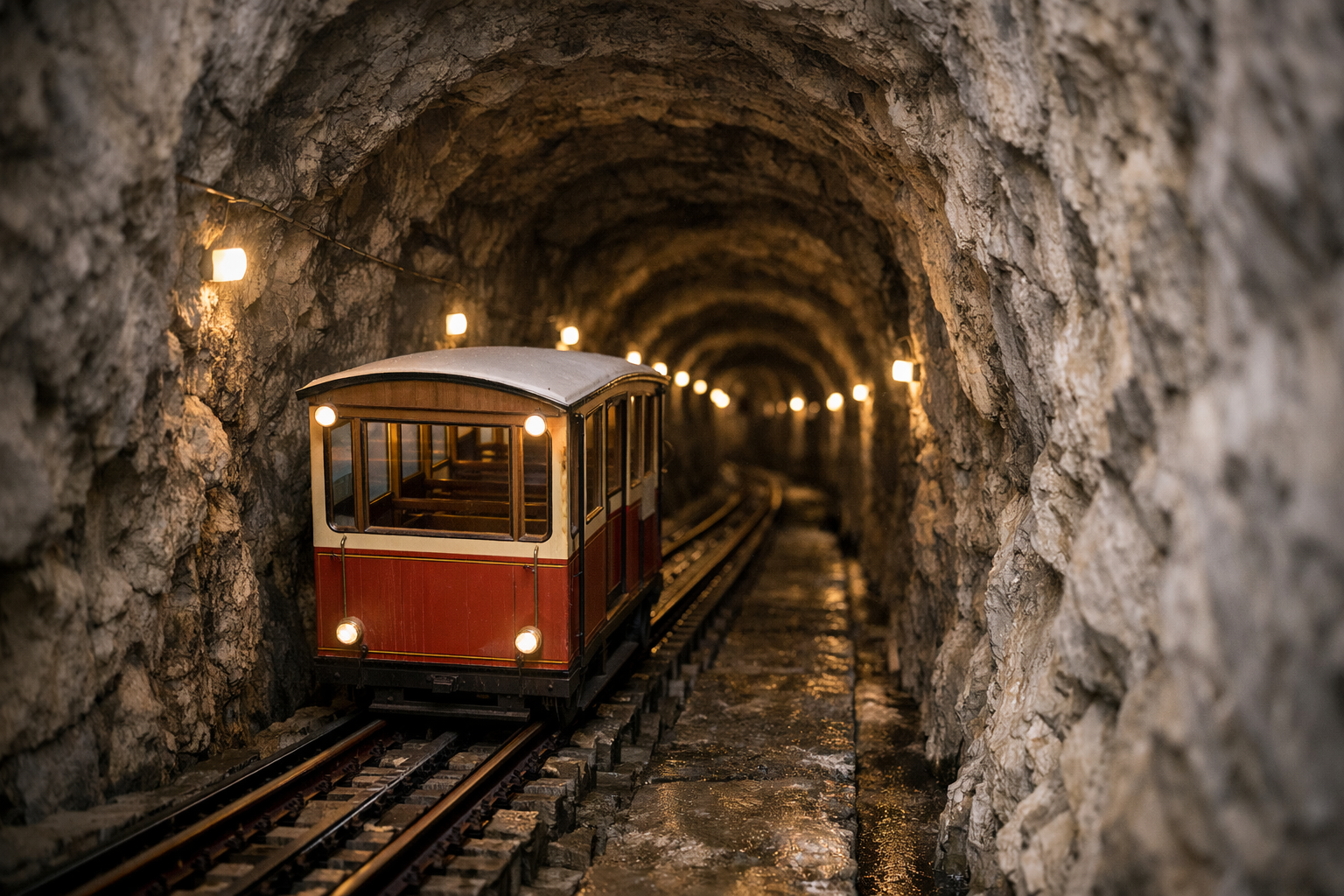
The cave was opened to the public in 1927 under managed conditions, a remarkably early date that reflects how quickly the site was recognized as being of exceptional public interest. The installation of the funicular railway—a small inclined tramway that descends approximately 200 meters through a bored tunnel at a steep angle before depositing visitors at the cave entrance—replaced the rope descent and made the experience accessible to ordinary visitors while protecting the cave floor from the kind of uncontrolled foot traffic that has damaged other sites. Today the cave is managed by the Compagnie des Causses, the same organization that operates Grotte de Dargilan, the neighboring pink-hued cave near Meyrueis. The funicular ride itself, taking around three to four minutes and passing through complete darkness before arriving at the threshold of the chamber, is considered part of the visitor experience—a deliberate transition ritual from the surface world to the underground one.
Plan this trip
Compare Car Rentals
Compare 500+ suppliers — Hertz, Enterprise, Sixt & more.
Find Cars →Vacation Rentals
Entire homes and condos — more space, more privacy.
Browse Rentals →Hotels in Aven Armand Cave France Complete Visitor to Europe's Underg
Top-rated hotels with free cancellation. Best price guaranteed.
Search Hotels →Planning Your Visit: Tickets, Tours, and Practical Details
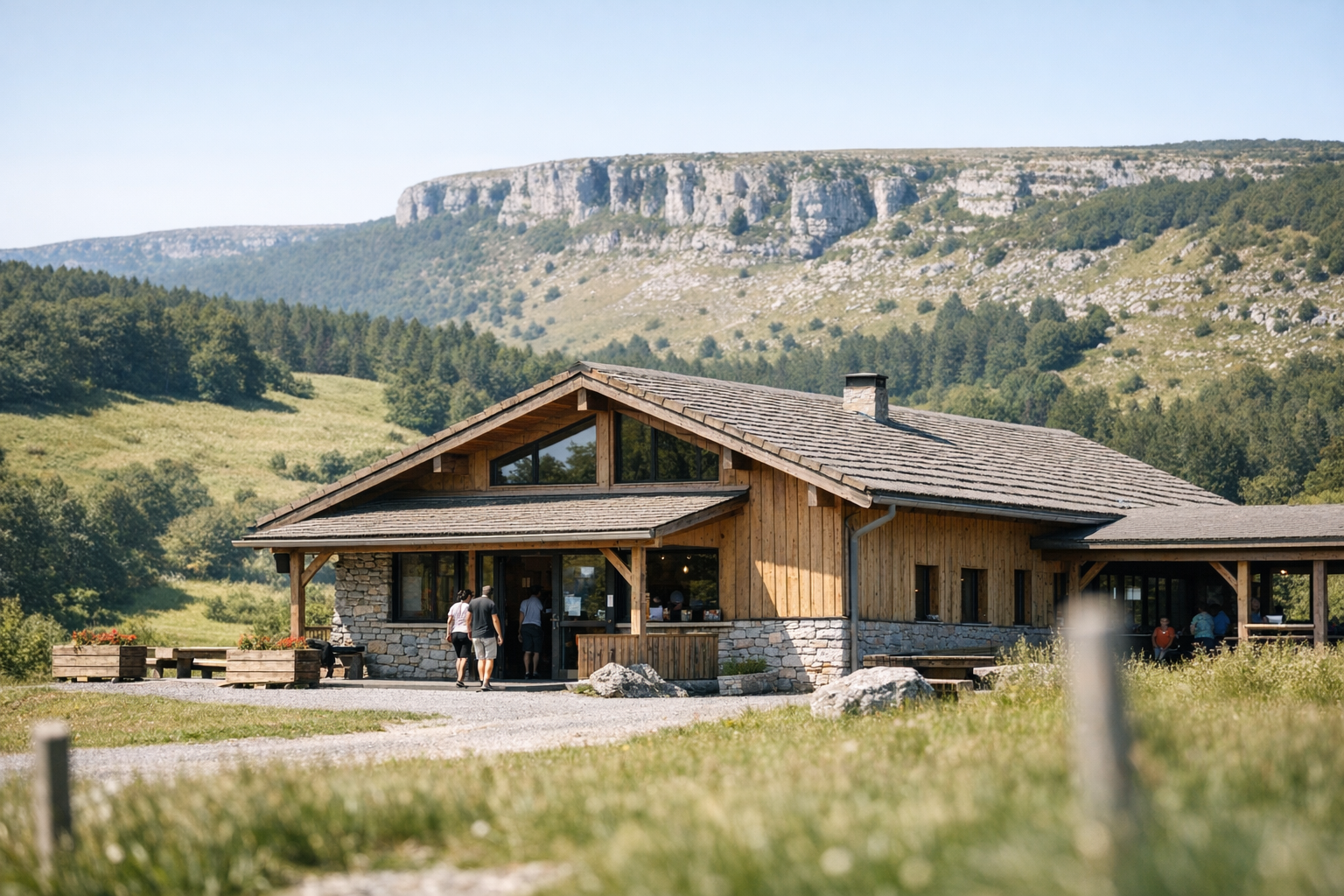
Aven Armand operates on a seasonal schedule, opening each year around Easter (the 2025 season began April 5) and closing in late October or early November. During this window, high-season hours run approximately 10:00 AM to 6:00 PM, with the last tour departures typically at 5:00 or 5:30 PM. Shoulder-season hours are reduced—check the official site at aven-armand.com or call +33 (0)4 66 45 61 31 before traveling, particularly in April, early May, or late October.
Adult tickets cost approximately €13.50 to €14.00 for the 2024–2025 season; children aged five to twelve pay roughly €8.50 to €9.00; children under five enter free. Student and senior concessions are available at around €11.00 to €12.00 with valid ID. A combined ticket covering both Aven Armand and the nearby Grotte de Dargilan is available for approximately €22 to €24 per adult—a saving of around €4 to €5 versus purchasing separately, and strongly recommended if your schedule allows both caves in a day.
All visits are guided—independent exploration is not permitted. French is the primary tour language, but English-language departures are scheduled once or twice daily during high season. Audio guides in English, German, Spanish, and Italian are available for an additional €2 to €3, a worthwhile supplement if you want scientific detail between guided commentary. Each tour covers approximately 400 meters on developed walkways with some steps; the route is not wheelchair accessible, and the cave maintains a constant temperature of 10 to 11°C year-round regardless of surface conditions. Bring a light layer even on the hottest summer day—that underground chill is persistent.
For July and August, online pre-booking is not merely convenient but essential: morning slots in particular sell out routinely. Even in June and September, booking a few days ahead avoids disappointment. The funicular is included in the ticket price, and there are no additional parking charges at the on-site car park.
Getting There: Transport Options and Driving Routes
Let us be direct about one practical reality: Aven Armand is only realistically accessible by private vehicle for the overwhelming majority of visitors. There is no direct public transport to the site, and the limited local bus connections between Millau and Meyrueis—one or two services per day at best in summer, none in winter—do not extend to the cave itself. Taxis from Meyrueis are available by prior arrangement and cost approximately €25 to €35 one way, which adds up quickly for a family or a return journey.
For visitors without a car, the most practical solution is car rental from Millau (the regional hub, roughly 55 kilometers away) or from Montpellier (approximately 130 kilometers). Millau sits on the Paris-Montpellier rail line and is the natural base for a self-drive exploration of the Causses. The drive from Millau to the cave takes approximately one hour, routing via the D809 and D986 across the plateau through genuinely spectacular scenery.
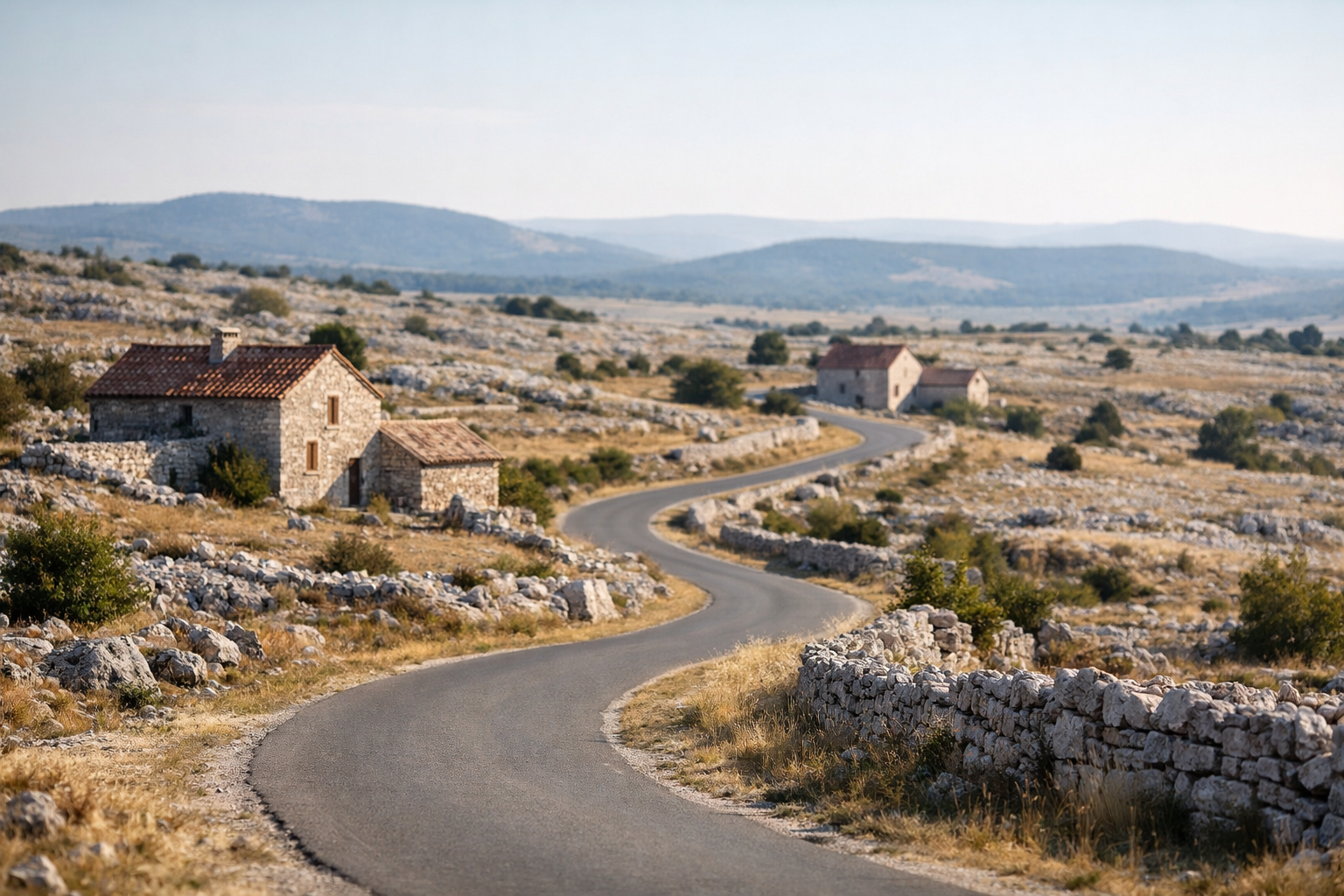
From Meyrueis, the nearest town and the recommended overnight base for the area, the drive is just 11 kilometers—around 15 to 20 minutes north on the D986 as it climbs onto the Causse Méjean plateau. The road involves some switchbacks but is entirely paved and manageable by any standard vehicle; campervans and caravans should take the bends carefully. From Montpellier, allow two to two and a half hours via the A75 motorway toward Millau, then local roads; from Paris, the A71/A75 Autoroute des Volcans covers the distance in around six hours, with toll costs of approximately €35 to €45 each way.
If you are planning to rent a car for this trip, comparing rates from major providers in Millau or Montpellier well in advance of peak summer dates will secure significantly better pricing. Planning the full logistics of a multi-day Causses itinerary—combining Aven Armand with the Gorges du Tarn, Grotte de Dargilan, and the Millau Viaduct—is exactly the kind of trip where professional travel planning support pays for itself. Our dedicated travel planning service can help you structure routes, book accommodation, and coordinate transport across the region.
Plan this trip
Compare Car Rentals
Compare 500+ suppliers — Hertz, Enterprise, Sixt & more.
Find Cars →Vacation Rentals
Entire homes and condos — more space, more privacy.
Browse Rentals →Hotels in Aven Armand Cave France Complete Visitor to Europe's Underg
Top-rated hotels with free cancellation. Best price guaranteed.
Search Hotels →Best Time to Visit Aven Armand: Season-by-Season Breakdown
Choosing when to visit Aven Armand meaningfully affects your experience—not the cave itself, which maintains its 10 to 11°C temperature and its formations regardless of what is happening above ground, but everything surrounding it: crowd levels, surface landscape, and the overall quality of a wider Causses trip.
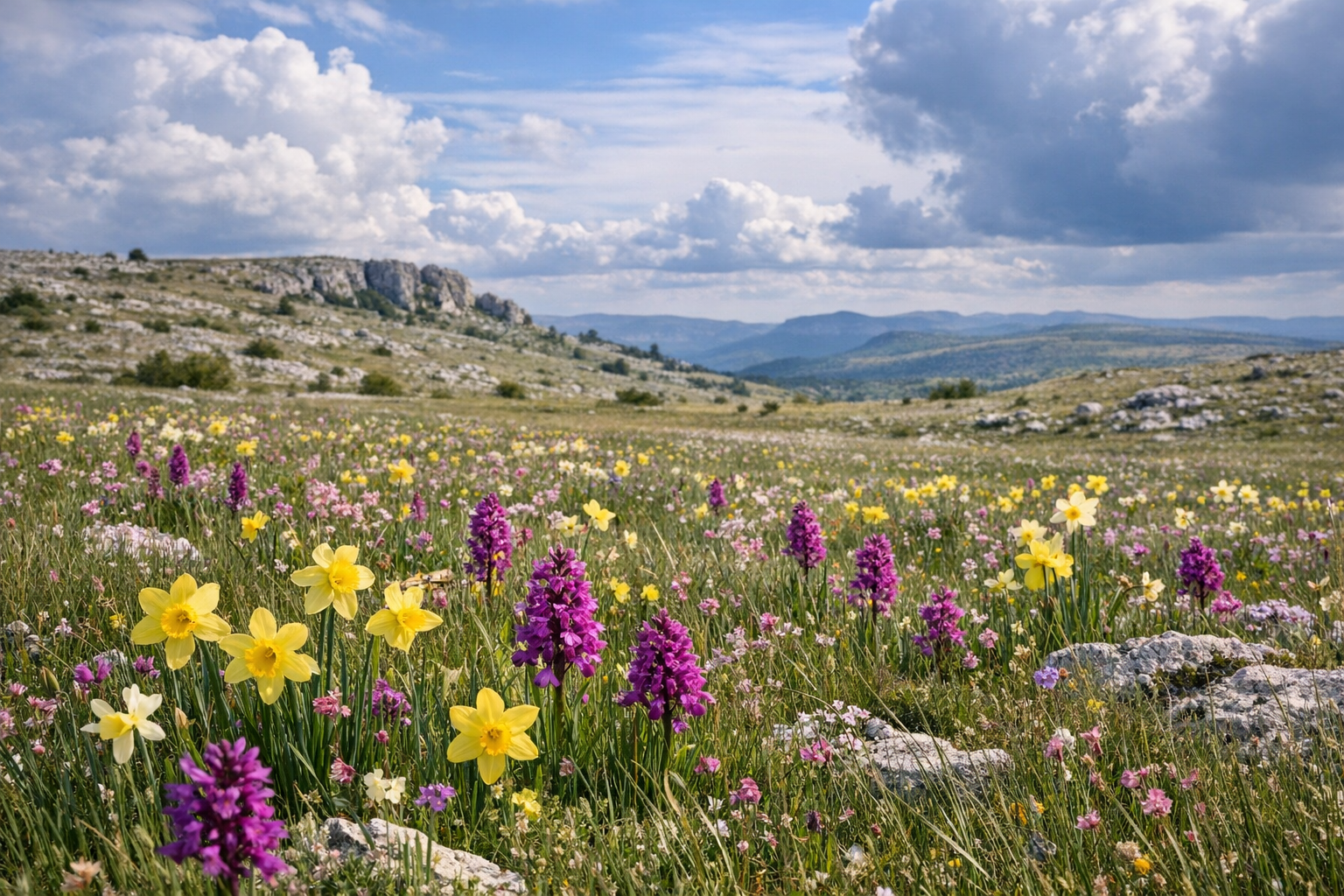
May and June stand out as the optimal window for most travellers. The Causse Méjean in late spring is covered in wildflowers—orchids, gentians, and narcissi bloom across a plateau that in summer reverts to dry, ochre-tinted grassland. Crowd levels are moderate, French school holidays have not yet begun, tours feel intimate rather than conveyor-belt, and temperatures on the plateau hover between 15 and 22°C—pleasant for walking between sites. The main caveat is a cluster of French public holidays in May (May 1, May 8, Ascension, Pentecost) that can briefly spike visitor numbers.
September and October are an excellent alternative, particularly for photographers and those who find summer crowds dispiriting. After mid-September, visitor numbers drop sharply. The gorges of the Tarn and Jonte turn amber and gold in October, the light is crystalline, and the cave tours are unhurried. The trade-off is a firmer eye on closing dates: the cave typically shuts in late October or by November 1, so plan accordingly.
July and August offer one genuine advantage: the cave's 10 to 11°C interior provides dramatic relief from summer heat that can reach 28 to 35°C on the exposed plateau. But this is peak French school holiday season, and the site is correspondingly busy. If you visit in this period, book the first morning tour online at least one to two weeks ahead, arrive at opening time, and manage expectations about group sizes. April is the quietest month of the open season and rewards the patient traveller with near-empty tours—but pack warm layers, because the plateau at 1,000 meters altitude can be cold and changeable in early spring.
Nearby Attractions: Building a Complete Causses Itinerary
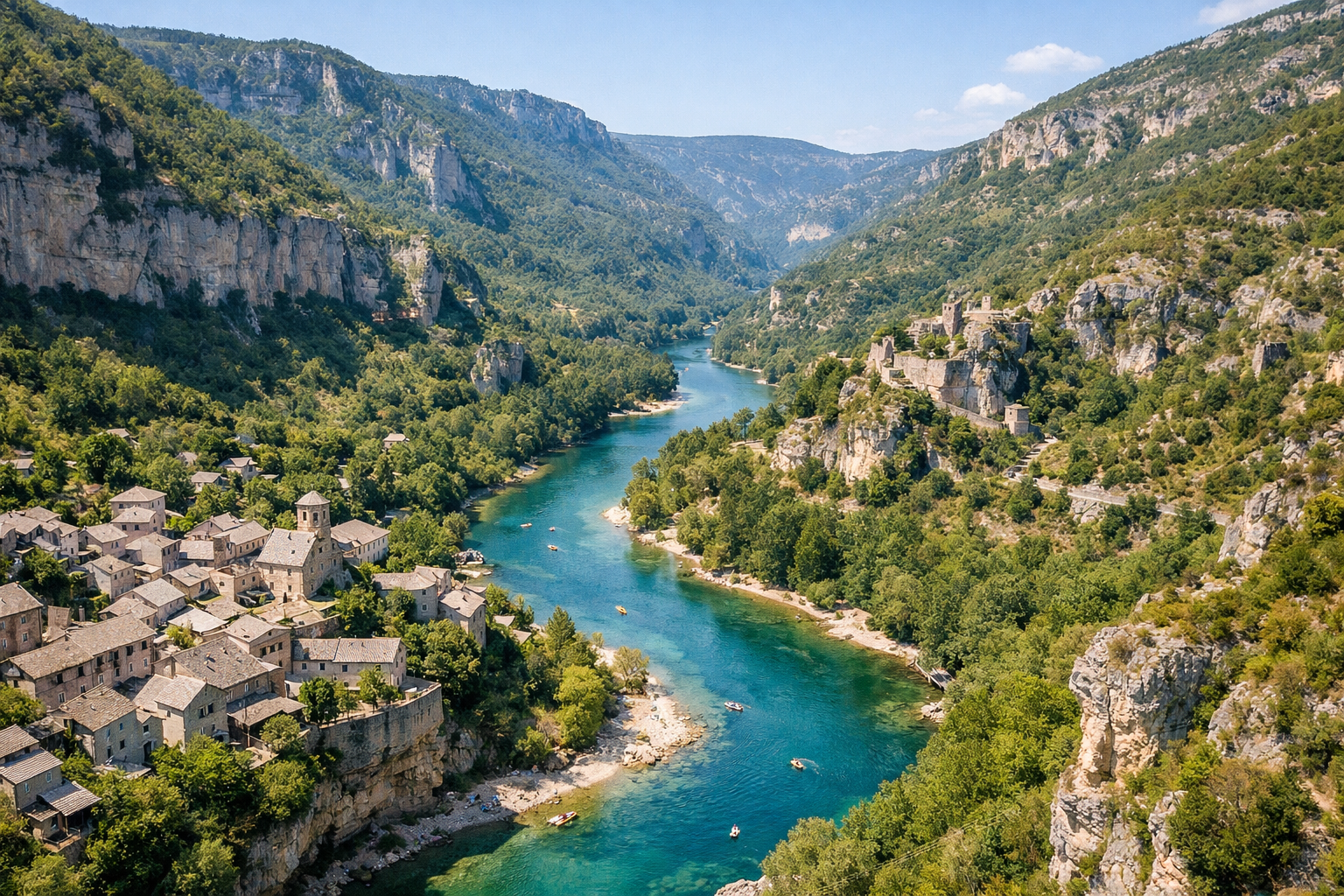
Aven Armand is most rewarding when treated not as an isolated day trip but as the centerpiece of a two- to four-day exploration of one of France's least-visited yet most dramatic regions. The cave's location on the Causse Méjean places it within easy reach of several exceptional natural and cultural sites.
The most obvious pairing is Grotte de Dargilan, just 14 kilometers away near Meyrueis. Known as 'La Grotte Rose' for its pink and rose-tinted formations, it was discovered in 1880 and opened to the public in 1890, making it an even older show cave than Aven Armand. The two caves are stylistically distinct enough to complement rather than duplicate each other, and the combined ticket from the Compagnie des Causses makes visiting both in a single day financially straightforward. The Chaos de Nîmes-le-Vieux, about 15 kilometers from Aven Armand, is a free and extraordinary natural rock formation where erosion has sculpted massive limestone blocks into shapes that an 18th-century traveller famously mistook for the ruins of a city—hence the name.
Slightly further afield, the Gorges du Tarn—arguably France's most spectacular river canyon outside the Verdon—begin around 25 kilometers from the cave. Flat-bottomed barque boat trips through the gorge between La Malène and Les Détroits cost approximately €12 to €15 per person and rank among the great short excursions of southern France. The Gorges de la Jonte, between Meyrueis and Le Rozier, offer world-class griffon vulture watching: following a successful reintroduction program begun in 1981, hundreds of these enormous raptors now nest on the gorge cliffs, and the Maison des Vautours at Peyre provides interpretation and live webcam feeds for around €5.
For something completely different, Roquefort-sur-Soulzon—about 40 kilometers south—allows you to visit the actual limestone caves where Roquefort cheese is aged. Free or very low-cost tours through the Société and Papillon cellars provide an interesting counterpoint to the day's geological theme: two very different kinds of cave, one producing world-record stalagmites, the other producing world-renowned cheese. The Millau Viaduct, 55 kilometers distant, is the world's tallest vehicular bridge at 343 meters and commands a dedicated viewing belvedere with free access.
For those extending their stay, the Cévennes National Park borders the Causse Méjean to the east, with Florac as its gateway town just 37 kilometers away. The GR70, known as the Robert Louis Stevenson Trail, crosses this landscape—one of Europe's great long-distance walking routes for those who have the time to slow down entirely. Planning a multi-attraction itinerary across this region is genuinely complex, involving road logistics, seasonal opening hours, and accommodation availability that varies significantly between the sparse plateau villages and the somewhat better-served gorge towns. Our travel planning resources can help you structure a Causses itinerary that makes the most of limited time.
Plan this trip
Compare Car Rentals
Compare 500+ suppliers — Hertz, Enterprise, Sixt & more.
Find Cars →Vacation Rentals
Entire homes and condos — more space, more privacy.
Browse Rentals →Hotels in Aven Armand Cave France Complete Visitor to Europe's Underg
Top-rated hotels with free cancellation. Best price guaranteed.
Search Hotels →Where to Stay Near Aven Armand
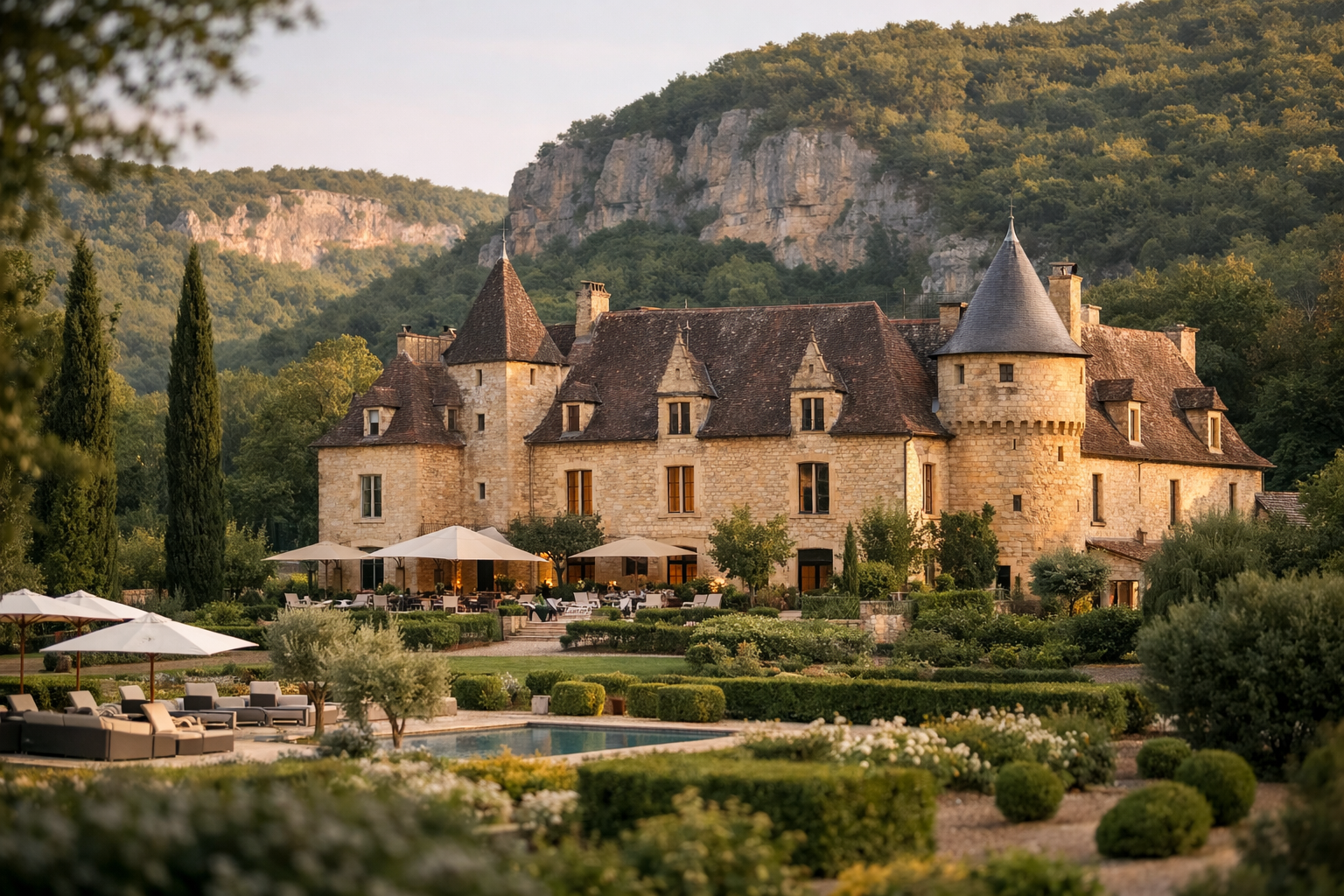
Accommodation near Aven Armand ranges from a 12th-century monastery to riverside campsites, but availability at every category is finite—this is genuinely rural France, and the Causse Méjean has fewer than a thousand permanent residents. Planning ahead is not optional during July and August.
Meyrueis, the nearest town at 11 kilometers, is the natural base. The Château d'Ayres, a former 12th-century monastery set in private grounds on the edge of town, is the most atmospheric accommodation in the area—double rooms run approximately €100 to €180 per night and the property has a restaurant serving regional cuisine. Book well ahead for high season. The Hôtel Family in the town center offers a more modest but perfectly comfortable option at €60 to €90 for a double, with an on-site restaurant. For families or longer stays, gîtes ruraux on the plateau itself—bookable through Gîtes de France at gites.fr or through Lozère Tourisme—offer self-catering accommodation from around €400 to €800 per week for properties sleeping four to six people. The Camping Le Pré de Charlet along the Jonte river near Meyrueis caters to tents and campervans from approximately €15 to €25 per pitch, with mobile homes available.
Millau, 55 kilometers away, provides a much wider selection including chain hotels at €50 to €70 and independent mid-range options at €80 to €130. If your itinerary includes the Millau Viaduct and Roquefort alongside Aven Armand, basing yourself in Millau for two nights and making day trips is a logical approach. Alternatively, self-catering rentals in the gorge villages—La Malène or Sainte-Enimie on the Tarn, or Rivière-sur-Tarn closer to Millau—combine access to the caves with proximity to the gorge activities. For help identifying and booking the right property for your group size, dates, and budget across this region, our accommodation advisory service can shortlist options that match your specific requirements.
Frequently Asked Questions
The guided tour inside the cave lasts approximately one hour, covering around 400 meters of developed walkways. Including the funicular descent and ascent (around 8 minutes total), the reception area, and any time spent in the on-site shop or café, most visitors should budget around 1.5 to 2 hours in total for the site.
Online pre-booking is strongly recommended for July and August, when morning tours in particular sell out regularly. In May, June, September, and October, walk-up tickets are usually available, but booking a day or two ahead online still avoids potential disappointment, especially on French public holiday weekends.
Yes, children generally find the cave spectacular. Children under five enter free. The tour involves around 400 meters of walking on developed paths with some steps—most children from around age 3 or 4 can manage this with adult assistance. The cave temperature is a constant 10–11°C, so bring a warm layer for small children regardless of surface weather.
The full guided tour is not wheelchair accessible due to steps and uneven pathways. The site advises contacting them directly at +33 (0)4 66 45 61 31 before visiting, as some viewing areas may be accessible. The funicular is the only access route to the cave—there is no walking alternative.
Yes, and this is a popular and well-organized combination. The two caves are approximately 14 kilometers apart and managed by the same company, the Compagnie des Causses. A combined ticket saves around €4 to €5 per adult versus separate purchases. Most visitors do Aven Armand in the morning and Grotte de Dargilan in the afternoon, or vice versa.
The cave maintains a constant 10 to 11°C year-round, regardless of surface temperatures. This makes it a welcome cool retreat in summer, when the Causse Méjean plateau can reach 28 to 35°C, but also means you should bring a light jacket or fleece even on the hottest day.
Meyrueis is the closest town, approximately 11 kilometers (15–20 minutes' drive) from the cave. It offers hotels, gîtes, and a campsite, and serves as the best base for exploring both Aven Armand and the nearby Gorges de la Jonte. The next significant accommodation hub is Millau, about 55 kilometers away.
No direct public transport serves Aven Armand. The nearest train station is Millau (on the Paris–Montpellier via Béziers line). Local bus services between Millau and Meyrueis are very limited—one or two per day in summer. From Meyrueis, taxis to the cave cost approximately €25–35 one way and must be arranged in advance. Car rental from Millau or Montpellier is the most practical solution for visitors without a private vehicle.
Plan this trip
Compare Car Rentals
Compare 500+ suppliers — Hertz, Enterprise, Sixt & more.
Find Cars →Vacation Rentals
Entire homes and condos — more space, more privacy.
Browse Rentals →Hotels in Aven Armand Cave France Complete Visitor to Europe's Underg
Top-rated hotels with free cancellation. Best price guaranteed.
Search Hotels →