

Why Family Travel Planning Matters More Than Ever in 2025

Planning a family vacation has never been more consequential — or more complex. The average American family of four now spends between $5,000 and $7,000 on a seven-day trip, according to AAA's 2025 Travel Survey. That is a significant financial commitment, and it does not account for the hidden costs that quietly inflate budgets: seat selection fees, resort charges, checked baggage, theme park parking, and the sheer caloric expense of keeping children fed inside attraction grounds. Get the planning wrong and you will spend your vacation managing meltdowns, budget overruns, and logistical fires. Get it right and you create memories that last a generation.
This complete family travel guide is built on verified 2025 data — real airline policies, actual attraction prices, honest lodging costs, and destination-specific insider knowledge. Whether you are orchestrating your first road trip with a toddler or coordinating an international expedition with teenagers, the strategies here will give you a concrete, actionable framework. Family travel planning is not about eliminating spontaneity; it is about creating enough structure that spontaneity becomes a pleasure rather than a panic.
One of the most important shifts in family travel over the past three years is the explosion of pricing complexity. Airlines now charge $25 to $75 per seat, per flight leg, simply to guarantee that your family sits together — a round trip for four passengers can add $200 to $600 before a single bag is checked. The good news: a 2024 Department of Transportation rule requires airlines to seat children 13 and under adjacent to an accompanying adult at no extra charge. Know this rule, cite it at check-in if needed, and refuse to pay seat-selection fees for young children. That single piece of knowledge can immediately put hundreds of dollars back in your travel fund.
Building a Realistic Family Travel Budget — Real Numbers, No Guesswork

The single biggest mistake families make is budgeting for the vacation they wish they were taking rather than the one they are actually planning. Here is what real family travel costs in 2025, broken down by category.
Airfare for Families Domestic round-trip flights for a family of four average $900 to $1,400 total on budget carriers and $2,200 to $4,000 on major carriers during peak season. Southwest Airlines remains the most genuinely family-friendly major carrier in the United States: no change fees, lap infants under two fly free, and most fares include at least one checked bag — a meaningful benefit when you are hauling car seats, strollers, and enough snacks to survive a delayed connection. Ultra-low-cost carriers like Frontier and Spirit advertise base fares of $29 to $89 per person one-way, but carry-on bag fees of $59 to $99 per bag rapidly erase those savings for a family traveling with gear. Do the full math before booking.
For international flights, children under two fly free as lap infants on most major carriers, but a separate seat costs a full child fare. The optimal booking window is six to eight weeks ahead for domestic travel — Tuesday and Wednesday departures are statistically the cheapest days — and three to six months ahead for international itineraries. Use Google Flights price-tracking alerts set well in advance; fare drops of $100 to $300 per ticket are common.
Lodging: Hotels vs. Vacation Rentals A standard hotel room marketed as 'sleeps four' runs $130 to $280 per night at mid-range properties, and connecting rooms or suites cost $220 to $450 per night. Always ask whether booking a suite is cheaper than two separate rooms — it frequently is. Vacation rentals through VRBO or Airbnb typically run $150 to $350 per night for a property that accommodates four to six people, and the kitchen alone saves $30 to $60 per day in meal costs. For a seven-day trip, that kitchen savings compounds to $210 to $420 — essentially paying for one or two nights of lodging.
All-inclusive resorts in Mexico and the Caribbean carry family room rates of $800 to $3,000 per night depending on property tier, putting a week-long AI vacation at $6,000 to $15,000 for a family of four before flights. They can deliver genuine value if your family makes full use of the included food and beverage, but they require honest self-assessment of how your children actually eat and behave at resort restaurants.
Food: The Budget Line Everyone Underestimates Theme park dining at Disney World averages $250 to $350 per day for a family of four in 2025. Quick-service meals run $12 to $18 per person inside any major park; a sit-down restaurant at a mid-range establishment outside the parks costs $80 to $130 for four with tip. The simplest budget lever available to any family is carrying snacks and breakfast items from a grocery store run on arrival day — this single habit saves $25 to $50 per day.
Hidden Costs to Budget Explicitly Travel insurance for a family of four on a seven-day trip with $5,000 in non-refundable bookings costs $180 to $350 and is genuinely worth it for any trip with significant prepaid components. Airport parking runs $15 to $35 per day at budget off-site lots and $30 to $55 per day on-site — a seven-day trip costs $105 to $385 at the airport. Alternatively, rideshare to the airport; for a family of four with luggage, expect $35 to $80 each way. Checked baggage on American, Delta, and United costs $35 to $45 for the first bag and $45 to $60 for the second per person. Two bags each for a family of four on a round trip totals $560 to $960 in baggage fees alone — a figure that makes Southwest's included bags look considerably more attractive.
Money-Saving Strategies with Measurable Returns AAA membership costs $72 to $119 per year and provides 5 to 15 percent savings at more than 150,000 hotels plus discounts at attractions, car rentals, and tour operators — it pays for itself on a single family trip. The ASTC (Association of Science and Technology Centers) and ACM (Association of Children's Museums) reciprocal admission programs are among the best-kept secrets in family travel: a single membership at your home city's science or children's museum, costing roughly $100 to $150 per year, grants free or reduced admission at more than 300 partner institutions nationwide. City passes like Chicago CityPASS ($80 per child, $109 per adult in 2025) and New York CityPASS ($148 per adult, $122 per child) save 40 to 50 percent compared to individual attraction tickets. For the America the Beautiful Annual Pass at $80, families visiting two or more national parks in a year will almost certainly recoup the cost — Yellowstone and Grand Teton alone would cost $70 per vehicle entry without it.
The Best Family Travel Destinations for 2025–2026

Choosing the right destination is the highest-leverage decision in family travel planning. The best destinations for families combine age-appropriate engagement, manageable logistics, reasonable cost structures, and genuine safety — and the options below have been evaluated on all four dimensions with 2025-verified data.
Orlando, Florida: The Benchmark for Theme Park Travel Orlando remains the world's most visited family destination for measurable reasons. Walt Disney World tickets in 2025 range from $109 to $189 per person per day, with Magic Kingdom commanding the premium pricing tier. A five-day park hopper package for a family of four runs $3,200 to $4,800 in tickets alone before hotel, food, or Lightning Lane passes are added. Lightning Lane Multi Pass — Disney's replacement for the discontinued Genie+ — costs $15 to $35 per person per day and allows advance booking of individual ride times. For the most popular attractions like Tron Lightcycle Run or Seven Dwarfs Mine Train, Lightning Lane Single Pass costs an additional $10 to $25 per person per ride.
The single most effective Disney strategy is timing. January and February (excluding Martin Luther King Jr. weekend), and September after Labor Day, offer the lowest crowd levels and no price reduction sacrifices. Avoid spring break entirely — the parks reach capacity by early morning throughout March and April — and give Thanksgiving and Christmas week a wide berth unless your family thrives in maximum-density environments.
Universal Orlando's Epic Universe opens May 22, 2025, marking the largest new theme park debut in 25 years. Five distinct themed worlds include an expanded Wizarding World anchored by a Hogwarts castle, Nintendo World, and How to Train Your Dragon land. Opening-year tickets range from $119 to $179 per person per day with tiered pricing. Expect extreme crowds through August 2025 — if your family's visit falls in that window, purchase tickets well in advance and arrive at rope drop.
Washington D.C.: The Best Free Family Destination in America No destination offers comparable value for families. All 19 Smithsonian Institution museums — including the National Air and Space Museum, the Natural History Museum, the American History Museum, and the National Zoo — charge zero admission. The National Zoo welcomed two new giant pandas, Bao Li and Qing Bao, from China in 2024, making it a particularly compelling stop for animal-loving children right now. A Smithsonian-focused day for a family of four costs nothing in attraction fees; budget $60 to $100 for food and $15 to $20 per person for Metro passes.
The optimal visiting window is September through October: comfortable temperatures around 70°F, substantially lower crowds than summer, and the city's full cultural calendar in operation. Cherry blossom season (late March to mid-April, with peak bloom typically in the first week of April) is spectacular but demands hotel reservations six to twelve months ahead as the city fills completely.
Yellowstone and Grand Teton National Parks: America's Wildlife Spectacle The America the Beautiful Annual Pass at $80 grants unlimited entry to all national parks for a full year — a family visiting Yellowstone and Grand Teton together in a single trip recoups the cost immediately, since vehicle entry is $35 per park. The best time to visit is late May to early June — wildlife is highly active, snowpack is receding at elevation, and crowds are a fraction of the July peak when Old Faithful's viewing area sees two-hour waits and parking lots fill by 8 AM. September is equally excellent: crowd levels drop by roughly 40 percent, wildlife concentrates before winter, and temperatures are cooler and more comfortable for hiking with children.
Every national park visitor center offers the Junior Ranger Program free of charge — children complete age-appropriate activity booklets and earn an official badge and certificate from a ranger. It is one of the most effective child-engagement tools in travel and costs nothing. Yellowstone lodging inside the park books up exactly one year ahead, opening online at 8 AM Mountain Time; the Old Faithful Inn runs $185 to $420 per night and is worth pursuing for the once-in-a-lifetime setting.
San Diego: Year-Round Family Infrastructure San Diego's combination of climate, wildlife attractions, beaches, and Legoland California (30 minutes north in Carlsbad) makes it one of the most logistically easy family destinations in the country. The San Diego Zoo charges $72 for adults and $62 for children ages 3 to 11 in 2025, with a combo pass covering both the Zoo and Safari Park available at $110 per adult and $90 per child. Average weather stays around 70°F year-round; August through October offers the best conditions, as June and July bring marine-layer mornings along the coast. Central Mission Valley hotels run $130 to $220 per night, providing affordable access to the city's main attractions via short drives.
Costa Rica: The International Destination Built for Family Adventure For families ready to take their first international adventure, Costa Rica delivers extraordinary wildlife, accessible nature, and a stable, safe environment. No visa is required for US, Canadian, or EU citizens. The country's mid-range eco-lodges and hotels run $100 to $250 per night, and a 4WD rental — essential for reaching the most rewarding destinations on unpaved roads — costs $60 to $120 per day. Manuel Antonio National Park charges $20 per adult and $10 for children under 12. Tabacón Hot Springs near Arenal Volcano offers day passes including meals for $100 to $130 per adult and $50 to $65 per child — one of the great family experiences in Central America. Families traveling during the green season (May through November) pay 20 to 30 percent less for hotels and find morning wildlife tours almost always rain-free.
Japan: The World's Most Organized Family Destination Japan's legendary punctuality, exceptional safety, and the universal childhood enthusiasm for anime, manga, and conveyor-belt sushi make it a genuinely exceptional family destination for slightly older children. The seven-day Japan Rail Pass costs $555 per adult and $277 per child under 12 and must be purchased before departure — it covers Shinkansen bullet train travel between Tokyo, Kyoto, and Osaka and is the most efficient way to structure a family itinerary. Ramen shops serve filling meals for $10 to $15 per person, and Japan's convenience stores (7-Eleven, Lawson, FamilyMart) offer genuinely high-quality food for $5 to $10 per person — a legitimate meal strategy that children often find thrilling. Two important 2025 updates: Mt. Fuji's Yoshida Trail now charges ¥4,000 (approximately $27) per climber with a daily cap of 4,000 visitors, and certain alleys in Kyoto's Gion district are now closed to tourists with fines enforced. Plan accordingly and book cherry blossom season travel nine to twelve months ahead.
Plan this trip
Vacation Rentals
Entire homes and condos — more space, more privacy.
Browse Rentals →Hotels in Planning & Tips
Top-rated hotels with free cancellation. Best price guaranteed.
Search Hotels →Compare Car Rentals
Compare 500+ suppliers — Hertz, Enterprise, Sixt & more.
Find Cars →Hotels in Planning & Tips
Top-rated hotels with free cancellation. Best price guaranteed.
Search Hotels →Mastering Transportation: Getting There and Getting Around with Kids
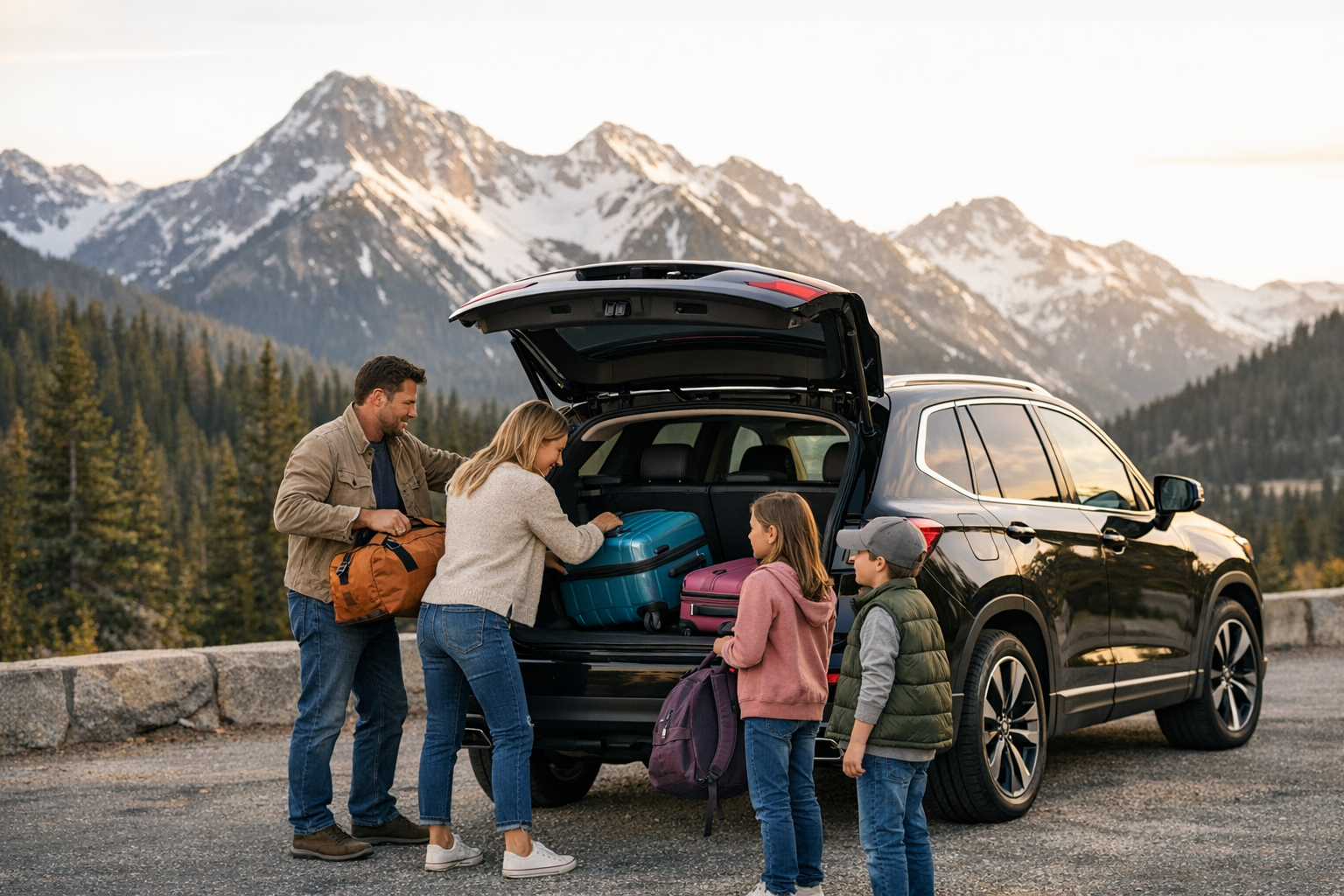
Transportation is where family travel plans most frequently unravel — and where advance knowledge creates the most outsized advantages. Understanding the specific policies, costs, and logistics of moving a family between and within destinations is foundational to stress-free execution.
Flying with Children: Policies That Matter The 2024 DOT rule requiring airlines to seat children 13 and under adjacent to an accompanying adult without additional fees is the single most important regulatory development for flying families in years. If an airline attempts to charge you a seat-selection fee to sit with your child at check-in or during booking, cite this rule explicitly. Enforcement varies by carrier — proactively call the airline after booking to confirm seat assignments for children, and document any verbal confirmation.
For families with infants, the lap-infant policy (children under two fly free on domestic routes on most carriers) saves significantly, but consider that transatlantic and transpacific flights are genuinely difficult without a separate seat for a child over six months. Several carriers offer discounted fares (roughly 10 percent of the adult fare) for infants assigned to a seat internationally — check individual airline policies before booking.
Carry-on packing strategy for families with children: pack a dedicated personal item for each child containing in-flight entertainment, headphones, healthy snacks, and a comfort item. This eliminates the single most common cause of mid-flight parental stress.
Car Travel: Road Trips and Destination Driving For families considering a road trip as part of their vacation structure, the planning calculus should account for realistic driving days. Children under 10 typically tolerate four to five hours of driving per day before engagement degrades meaningfully; teenagers can manage six to seven hours with structured breaks. Plan overnight stops every 300 to 400 miles when traveling with young children, and identify rest-stop locations in advance using the iOverlander or GasBuddy apps.
For destination car rentals — renting a vehicle on arrival rather than driving from home — pricing for full-size SUVs that comfortably accommodate four passengers with luggage runs $70 to $130 per day through major carriers. Booking through your primary credit card's travel portal often includes secondary collision coverage, potentially saving the $15 to $25 per day rental company CDW fee. Confirm coverage details before declining insurance at the counter.
Navigating Cities with Children Urban family travel rewards advance planning of transit logistics. New York City's subway charges $2.90 per ride in 2025, and children under 44 inches tall ride free — a meaningful savings when you are making multiple trips daily. Washington D.C.'s Metro is similarly family-friendly and eliminates the need for rental car expenses and parking fees near the National Mall. Tokyo's train system is arguably the world's most precise and is genuinely navigable with children using the IC card (Suica or Pasmo), which functions like a transit debit card purchasable at any major station.
For families visiting our [airport transportation services](/airport-transportation/) page, coordinating ground transfers in advance — particularly for early morning or late evening flights with tired children — removes one of the most stressful logistical moments of any family trip. Pre-booked car services with child seat accommodation are available through our [private transportation services](/private-transportation/) and eliminate the uncertainty of last-minute rideshare availability with proper car seat configurations.
For luxury-oriented family travel where comfort during transfers is a priority, our [luxury ground transportation](/luxury-transportation/) options provide dedicated family vehicle configurations with full luggage capacity and child-appropriate amenities, ensuring the journey to and from the airport reflects the quality of the vacation itself.
Accommodation Strategies: Where Your Family Sleeps Shapes the Entire Trip

Lodging is the single largest variable in family travel budgets — and the choice of accommodation type shapes every other aspect of the vacation experience. A hotel places your family in the flow of a destination's hospitality infrastructure; a vacation rental creates a home base with kitchen access and space to spread out; a resort all-inclusive simplifies every meal and activity decision at the cost of flexibility and budget.
Vacation Rentals: The Family Traveler's Structural Advantage VRBO and Airbnb vacation rentals have fundamentally changed the calculus of family accommodation. For a family of four to six people, properties typically run $150 to $350 per night — often less than two standard hotel rooms — and the kitchen access saves $30 to $60 per day in food costs. More practically, vacation rentals provide the physical space that families require and hotels rarely deliver: separate bedrooms so children and adults aren't synced to the same sleep schedule, living areas where children can play or watch television without sitting on a bed, laundry machines that eliminate the cost and logistical burden of managing dirty clothes across a multi-week trip.
When evaluating vacation rentals for family travel, filter specifically for properties with documented child-safety features — stair gates, pool fencing, covered electrical outlets — and read reviews from prior families explicitly. Look for properties with confirmed fast Wi-Fi (critical for families with teenagers), a full kitchen with confirmed cookware inventory, and proximity to a grocery store for the arrival-day provisioning run that will define your food budget for the trip.
National Park Lodging: Book a Year Out Without Exception Inside-park lodging at Yellowstone, Glacier, Grand Canyon, and other major national parks books exactly one year ahead, with reservations opening online at 8 AM Mountain Standard Time on the booking date. Missing this window means campsite or in-park lodge availability is essentially zero for peak summer dates. The Old Faithful Inn at Yellowstone runs $185 to $420 per night and represents one of the great historic American lodging experiences — the central log structure dating to 1904 is a National Historic Landmark that children find genuinely exciting to explore. If you miss the one-year booking window, set a daily alert for cancellations, which do appear regularly, and check the Recreation.gov platform each morning.
Hotel Suites vs. Connecting Rooms: Always Ask At most hotel properties, a suite is less expensive than two separate standard rooms — yet the suite option rarely surfaces automatically during online booking. Always call the property directly after booking to ask about suite availability and pricing. Specifically request 'family suites' or 'junior suites with sleeper sofa,' which typically accommodate four people in a single room at a price point competitive with or below two standard rooms. Hotel loyalty programs (Marriott Bonvoy, Hilton Honors, World of Hyatt) accumulate points on family travel spending that can be redeemed for free nights — even moderate family travel accumulates enough points for a free night every two to three trips on a paid loyalty card.
All-Inclusive Resorts: When They Make Sense All-inclusive resorts in Mexico's Riviera Maya and the Dominican Republic make financial sense for families who will fully utilize the food, beverage, and activity inclusions — and who value the cognitive simplicity of having every decision pre-made. For families with children under 10 who eat well in buffet environments and enjoy organized kids' clubs, an AI resort eliminates the mealtime negotiation that drains energy on typical family trips. The calculation breaks down for families with selective eaters, teenagers who prefer independence, or adults who find resort environments claustrophobic. Mexico Cancún AI family rooms run $800 to $2,500 per night at reputable properties; a week totals $5,600 to $17,500 before flights — make this investment only after honestly assessing your family's behavioral fit with the format.
Plan this trip
Vacation Rentals
Entire homes and condos — more space, more privacy.
Browse Rentals →Hotels in Planning & Tips
Top-rated hotels with free cancellation. Best price guaranteed.
Search Hotels →Compare Car Rentals
Compare 500+ suppliers — Hertz, Enterprise, Sixt & more.
Find Cars →Hotels in Planning & Tips
Top-rated hotels with free cancellation. Best price guaranteed.
Search Hotels →Packing, Logistics, and Day-of Execution: The Operational Details That Make or Break Trips

The gap between a stressful family vacation and a genuinely enjoyable one often comes down to operational execution — the specific logistics of packing, document management, daily rhythm, and contingency planning. These are the details that experienced family travelers have learned through trial and error, systematized here.
The Family Packing System The most effective family packing approach separates items by function rather than by person. One bag handles all medications, first aid, and health supplies — including children's acetaminophen, ibuprofen, antihistamines (Benadryl), bandages, antiseptic wipes, and any prescription medications in original labeled containers. International travel requires this bag to be audit-ready for customs. A second bag handles all electronics, chargers, and entertainment: tablets pre-loaded with offline content (Netflix, Disney+, and Spotify all support download-for-offline-playback), noise-canceling headphones for each family member, and a portable power bank rated at least 20,000mAh.
For checked baggage cost management, a family of four traveling on American, Delta, or United pays $35 to $45 for the first bag and $45 to $60 for the second per person each way — a round trip with two bags each costs $560 to $960 in fees. Systematically packing fewer, more versatile clothing items reduces bag count meaningfully. A seven-day trip for children realistically requires four to five outfit combinations (not seven separate outfits) when a laundry facility is available at the destination, which it will be in any vacation rental.
Document Organization and Digital Backups Create a shared digital folder (Google Drive or iCloud) containing photos of all passports, insurance cards, travel insurance policy numbers, hotel confirmation numbers, airline reservation codes, and emergency contact information for each destination. Share this folder with a trusted person at home who can access documents if originals are lost. International travelers should register with the U.S. Department of State's SMART Traveler Enrollment Program (STEP) — free, takes five minutes, and ensures the nearest embassy can contact you in an emergency.
Daily Rhythm With Children: The Structural Principle Every experienced family traveler arrives at the same structural insight: the day must be built around children's energy cycles, not adult preference schedules. Young children (under 7) have reliable high energy from morning until approximately 1 PM, followed by a significant midday energy drop. The most effective daily structure for family travel hits the major attraction before noon, returns to the hotel or rental for a 90-minute rest period (whether or not children actually sleep), and reengages with lower-intensity activities — swimming, dining, casual exploration — in the afternoon and evening. Families who push through the midday energy drop in pursuit of maximizing attraction coverage consistently report the worst vacation experiences.
Travel Insurance: The Non-Negotiable Investment At $180 to $350 for a family of four on a seven-day trip with $5,000 in non-refundable bookings, comprehensive travel insurance is the clearest value proposition in family travel planning. Look specifically for policies that include cancel-for-any-reason (CFAR) coverage at the rider level, emergency medical evacuation coverage of at least $250,000 (critical for remote destinations and international travel), and trip interruption coverage that reimburses unused prepaid portions of a trip. Children's illnesses are the most common cause of family trip cancellations — any family with young children and significant non-refundable bookings should treat travel insurance as a fixed budget line, not an optional add-on.
Age-by-Age Family Travel Planning: What Works at Every Stage

One of the most consistent mistakes in family travel guides is treating 'children' as a monolithic category. The travel needs, tolerance thresholds, engagement styles, and logistical requirements of a two-year-old are categorically different from those of a ten-year-old or a fourteen-year-old. Effective family travel planning is age-calibrated.
Traveling with Infants and Toddlers (Ages 0–3) This is logistically the most demanding travel window and, counterintuitively, often the most forgiving in terms of destination: children under three have no memory formation of the specific destination and derive all their travel satisfaction from parental presence and physical comfort. The destination matters far less than the accommodation quality and schedule predictability. Prioritize lodging with blackout curtains, a crib or pack-n-play (confirm availability before booking), and kitchen facilities for food preparation. Flights should align with nap schedules wherever possible. Gate-check the stroller at every domestic airport; it will be returned jet bridge-side on arrival. Bring twice as many diapers as you think you need, and pack formula and baby food in carry-on luggage — TSA permits infant food and formula in quantities exceeding the 3.4-ounce liquid rule.
Elementary Age Children (Ages 4–10) This is the golden window of family travel: children are old enough to form vivid memories and articulate preferences, young enough to be fully engaged by structured experiences, and not yet asserting the social independence of adolescence. National parks are disproportionately rewarding at this age — the Junior Ranger Program creates intrinsic motivation to engage with natural environments in ways no amount of adult explanation can match. Theme parks are also calibrated almost perfectly for this age group; children between roughly 42 and 48 inches tall unlock the majority of major-ride height requirements. Disney World's recommended height for most family coasters is 40 to 44 inches; Universal's major attractions begin at 40 inches.
Pre-Teens and Teenagers (Ages 11–17) Family travel with teenagers requires explicit negotiation of autonomy within safe parameters. The most successful approach gives teenagers meaningful input in destination selection and daily itinerary construction — not as a courtesy gesture, but as a genuine co-planning involvement. Cities with distinct youth culture (Tokyo's Harajuku, New York's Lower East Side, London's Shoreditch) tend to engage teenagers more effectively than nature destinations. Budget specific 'solo time' into the daily schedule at appropriate ages — a 15-year-old exploring a city's food market independently for two hours with a pre-loaded transit card and a shared location on family Find My generates far more positive vacation memories than being shepherded through another museum. This requires advance destination research to identify safe, walkable zones, but the engagement payoff is substantial.
Plan this trip
Vacation Rentals
Entire homes and condos — more space, more privacy.
Browse Rentals →Hotels in Planning & Tips
Top-rated hotels with free cancellation. Best price guaranteed.
Search Hotels →Compare Car Rentals
Compare 500+ suppliers — Hertz, Enterprise, Sixt & more.
Find Cars →Hotels in Planning & Tips
Top-rated hotels with free cancellation. Best price guaranteed.
Search Hotels →Family Travel Planning Timeline: What to Book When

The single most useful organizational tool for family travel is a reverse-engineered booking timeline that works backward from your departure date. Every item on this list has a specific lead time for good reason — most reflect genuine supply constraints rather than arbitrary recommendations.
12 Months Before Departure Book national park in-park lodging (Yellowstone, Glacier, Grand Canyon, Zion). Japanese cherry blossom travel (late March to early April) requires hotel booking at this horizon. Reserve Washington D.C. hotel for Cherry Blossom Festival dates. Obtain or renew passports — standard processing now takes 6 to 8 weeks; expedited service is available for 5 to 7 weeks at an additional $60 fee. Children's passports are valid for five years (adults: ten years) and require both parents' signatures or a signed parental consent form if one parent is absent.
6 Months Before Departure Book international flights and use Google Flights alerts to monitor for post-booking price drops (if the price drops significantly, rebooking or requesting a fare credit may be possible on refundable tickets). Reserve major attraction tickets: Disney World, Universal Epic Universe, and similarly high-demand parks release dates on a rolling basis. Yellowstone camping reservations open 6 months ahead on Recreation.gov at 7 AM Mountain Time.
3 Months Before Departure Book domestic flights. Secure vacation rental properties — the best VRBO and Airbnb inventory in popular destinations disappears at this horizon during peak season. Purchase travel insurance immediately after making your first non-refundable booking, not as an afterthought before departure. Purchase the America the Beautiful Pass if visiting multiple national parks. Order international currency or notify your bank of travel dates.
1 Month Before Departure Confirm all reservations and download confirmation documents to offline-accessible storage. Register with the STEP program for international travel. Confirm car seat rental availability with car rental companies or arrange to bring your own. Check current entry requirements, visa policies, and health advisories for international destinations on the State Department website — these change with less notice than most travelers expect.
1 Week Before Departure Download offline maps (Google Maps supports offline areas for international destinations). Download entertainment content for children's devices. Prepare the family document folder and share with your home contact. Confirm airport transportation — whether rideshare, personal vehicle, or pre-booked car service through our [airport transportation services](/airport-transportation/) — ensuring child seat requirements are accommodated in advance rather than at curbside.
Family travel planning at this level of systematic preparation transforms the pre-departure period from anxiety-producing to genuinely exciting. When logistics are resolved well ahead of departure, the vacation begins the moment you leave the driveway — not after you've spent the first two days working out problems that should have been solved six months earlier.
Frequently Asked Questions
According to AAA's 2025 Travel Survey, the average American family of four spends $5,000 to $7,000 on a seven-day vacation. Budget-conscious families staying in vacation rentals, preparing some meals, and focusing on free or low-cost attractions can manage $150 to $250 per day total. Mid-range travel with hotel accommodation, dining out twice daily, and paid attractions runs $400 to $700 per day. Premium resort travel, particularly at all-inclusive properties in Mexico or the Caribbean, can reach $1,000 to $2,500 per day before flights.
Yes. A 2024 U.S. Department of Transportation rule requires airlines to seat children 13 years old and under adjacent to an accompanying adult at no additional charge. If an airline attempts to collect a seat-selection fee for you to sit with your child, cite this DOT rule at check-in. Proactively call the airline after booking to confirm child seat assignments are adjacent to adult companions, and document any confirmation you receive.
January and February (excluding Martin Luther King Jr. weekend) and September after Labor Day offer the lowest crowd levels at Walt Disney World. These periods allow families to experience the park's major attractions without the two-to-three-hour wait times common during peak season. Avoid spring break entirely (mid-March through April), Thanksgiving week, and the period between Christmas and New Year's Day, when parks routinely reach capacity by early morning.
Vacation rentals through VRBO or Airbnb typically offer superior value for families of four or more. Properties run $150 to $350 per night — often less than two standard hotel rooms — and the kitchen saves $30 to $60 per day in food costs over a trip. The additional living space, separate bedrooms, and laundry facilities meaningfully improve the quality of a multi-day family stay. Hotels make more sense for shorter trips (one to two nights), when location in a specific urban area matters, or when on-site resort amenities like pools, kids' clubs, and concierge services justify the premium.
The America the Beautiful Annual Pass costs $80 and grants unlimited entry to all U.S. national parks, national forests, and federal recreation areas for one year from the month of purchase. A single family vehicle visit to Yellowstone and Grand Teton National Parks would cost $70 in entry fees without the pass. Any family visiting two or more national parks in a year will recover the cost completely — making it one of the best value purchases available to family travelers interested in nature destinations.
For cherry blossom season (late March to early April, peak bloom typically the first week of April), book flights and hotels nine to twelve months ahead — this is the most popular travel window in Japan and accommodations in Tokyo and Kyoto fill completely. For autumn foliage (October to November), book six to nine months ahead. The Japan Rail Pass, which covers Shinkansen bullet train travel and costs $555 per adult and $277 per child under 12, must be purchased before leaving your home country — it is not available for purchase inside Japan.
For a family of four on a seven-day trip with $5,000 in non-refundable bookings, comprehensive travel insurance costs $180 to $350. Prioritize policies that include cancel-for-any-reason (CFAR) coverage, emergency medical evacuation coverage of at least $250,000 (essential for international and remote destinations), and trip interruption benefits that reimburse unused prepaid portions of a disrupted trip. Children's illnesses are the most common cause of family trip cancellations — purchase insurance immediately after making your first non-refundable booking, not as a last-minute addition before departure.
Set Google Flights price-tracking alerts three to six months ahead for international routes and six to eight weeks ahead for domestic travel — fare drops of $100 to $300 per ticket are common when monitored over time. Tuesday and Wednesday departures are statistically the cheapest days for domestic flights. Southwest Airlines remains the most family-friendly major carrier for domestic travel: no change fees, lap infants under two fly free, and most fares include at least one checked bag per passenger, eliminating the $35 to $45 per bag per person fees charged by American, Delta, and United.
Plan this trip
Vacation Rentals
Entire homes and condos — more space, more privacy.
Browse Rentals →Hotels in Planning & Tips
Top-rated hotels with free cancellation. Best price guaranteed.
Search Hotels →Compare Car Rentals
Compare 500+ suppliers — Hertz, Enterprise, Sixt & more.
Find Cars →Hotels in Planning & Tips
Top-rated hotels with free cancellation. Best price guaranteed.
Search Hotels →