
Why a First-Time Cruise Feels Overwhelming—and How to Fix That
Booking your first cruise should feel exciting. Instead, most first-timers find themselves buried in conflicting advice, mysterious line-item fees, and an almost paralyzing number of choices before they've even stepped on a gangway. The cruise industry generated over $25 billion in global revenue in 2023 and carried more than 31.5 million passengers worldwide, according to the Cruise Lines International Association (CLIA)—yet first-timers routinely arrive underprepared, overspent, and mildly stressed.
The core problem is this: cruise lines advertise a headline fare that represents only 50–65% of what you'll actually spend. A $599-per-person seven-night Caribbean sailing on Royal Caribbean or Carnival sounds reasonable. Add mandatory gratuities, a drink package, a couple of shore excursions, Wi-Fi, and one specialty dinner, and that same cabin costs $1,400–$1,900 per person before you've bought a single souvenir. That isn't a scam—it's a pricing model you simply need to understand before you book.
This guide strips away the marketing language and gives you the framework that experienced cruisers use: how to choose the right line, what costs are truly unavoidable, where the industry routinely overcharges, and how to arrive at the pier feeling like you've done this before. Whether you're planning a three-night Bahamas getaway or a week in the Eastern Mediterranean, the principles are identical. Know the numbers, pack smart, and plan your ports—and the cruise experience genuinely delivers some of the best value in travel.
Choosing the Right Cruise Line: What the Price Tiers Actually Mean
The cruise industry organizes itself into three distinct tiers—mainstream, premium, and luxury—and confusing them is one of the most expensive mistakes a first-timer can make.
Mainstream Lines are the right starting point for most first-time cruisers. Carnival Cruise Line, Royal Caribbean, Norwegian Cruise Line (NCL), and MSC Cruises compete aggressively for the same budget-conscious traveler. Interior cabins on a seven-night Caribbean sailing start at roughly $399–$799 per person depending on the line and season. MSC is consistently the cheapest mainstream option, often coming in $100–$200 per person below equivalent Royal Caribbean sailings. Royal Caribbean's Oasis-class ships—Symphony of the Seas, Wonder of the Seas—are floating small cities with surf simulators, ice skating rinks, and Broadway-caliber shows, making them compelling first experiences even at a slight premium starting around $650 per person.
Premium Lines—Celebrity Cruises, Holland America, Princess Cruises—target travelers who want a quieter, more refined atmosphere without paying ultra-luxury prices. Seven-night interior cabins start at $549–$1,200 per person. The food quality, service ratios, and onboard atmosphere are noticeably superior to mainstream lines. Celebrity's Always Included fares bundle a drink package and Wi-Fi into the base price, which can make their apparent premium disappear once you do the true-cost math.
Luxury Lines operate in an entirely different financial universe. Viking Ocean cruises start around $2,499 per person for seven nights and include beverages, shore excursions, and Wi-Fi. Silversea and Regent Seven Seas run $4,000–$12,000+ per person but are genuinely all-inclusive—no gratuity anxiety, no nickel-and-diming at the bar. For a first cruise, these lines are rarely the right call unless budget is no object.
For most first-timers, the recommendation is simple: start with Royal Caribbean or Carnival for a mainstream experience, or Celebrity Cruises if you want a slightly elevated atmosphere without sticker shock. For planning your overall travel budget—including pre-cruise hotel nights and airport transfers—visit our [travel planning resources](/travel-planning/) for destination-specific cost breakdowns.
The True Cost of a Cruise: Breaking Down Every Fee
The single most important thing this guide can teach you is the difference between a cruise's advertised fare and its actual cost. Here is a complete accounting of every line item you will encounter.
Base Fare: The advertised price—always per person, always based on double occupancy. A cabin listed at $599 per person costs a minimum of $1,198 for two adults before anything else.
Taxes, Fees & Port Charges: These are non-negotiable government and port fees that cruise lines pass directly to passengers. Expect $150–$400 per person on a Caribbean itinerary, typically $200–$300 on a seven-night sailing. They are always disclosed at booking but easy to skim past.
Gratuities: This is the most misunderstood ongoing cost in cruising. In 2025, daily gratuity rates are automatically charged to your onboard account as follows: - Carnival: $18.00/day (standard cabins), $20.50/day (suites) - Royal Caribbean: $18.00/day (standard), $21.00/day (suites) - Norwegian: $20.00/day (standard), $25.00/day (Haven/suites) - MSC Cruises: $15.50–$16.50/day - Princess: $16.50–$17.50/day (standard) - Celebrity: $18.00–$19.00/day (standard)
For two adults on a seven-night Royal Caribbean sailing, that's $18 × 2 × 7 = $252 in automatic gratuities alone. Additionally, an 18–20% gratuity is automatically added to every individual drink order, spa service, and specialty dining charge—it is not included in the daily service charge.
Drink Packages: These are optional but heavily marketed. Royal Caribbean's Deluxe Beverage Package runs $79–$109 per person per day in 2025, covering cocktails, wine, beer, specialty coffees, and water. The critical fine print: all adults 21+ sharing a cabin must purchase the package simultaneously. For two adults over seven nights at the base rate, that's $1,106 minimum—though packages frequently go on sale at 30–45% off when booked in advance. The break-even point is roughly five to seven drinks per person per day. Carnival's Cheers! package runs $69.95–$89.95 per day; NCL's Open Bar package retails at $109–$129 per day, though it's often bundled as a complimentary perk through NCL's 'Free at Sea' promotion (with a mandatory $20/day service charge still applying).
Wi-Fi: Royal Caribbean's streaming package runs $25–$35 per device per day (frequently discounted to $17–$22 when purchased pre-cruise). Carnival's packages range from $13–$25 per day depending on the tier. For two adults over seven nights, budget $238–$490 for reliable streaming-capable connectivity. Satellite speeds at sea average 5–25 Mbps—sufficient for video calls, but streaming quality varies.
Specialty Dining: The main dining room and buffet are included in your fare. Specialty restaurants—steakhouses, sushi bars, hibachi venues—carry per-person cover charges. Royal Caribbean's Chops Grille costs approximately $59 per person; Carnival's Fahrenheit 555 Steakhouse runs $38–$48. NCL's specialty dining packages at $79–$149 for three restaurants save 20–40% versus booking individually.
Shore Excursions: Cruise line–booked excursions carry a meaningful premium over independently arranged alternatives. A snorkeling tour in Nassau, Bahamas runs $69–$89 through the cruise line; the identical or equivalent tour booked via Viator or GetYourGuide typically costs $35–$55. The critical trade-off: if a cruise-line excursion runs late, the ship is contractually obligated to wait for you. If you're on an independent tour and miss departure, you cover your own transportation to the next port—potentially $500–$2,000 in last-minute flights.
A Realistic Seven-Night Budget for Two Adults (Royal Caribbean, Caribbean): - Base fare (2 × $699 interior): $1,398 - Taxes & fees (2 × $280): $560 - Gratuities ($18/day × 2 × 7): $252 - Drink package (2 × $79/day × 7, pre-purchased sale price): $1,106 - Wi-Fi (2 devices × $20/day × 7): $280 - Two specialty dinners (2 × $59): $118 - Two shore excursions (2 × $75): $150 - Total: approximately $3,864 for two adults
This is not sticker shock—it's planning clarity. Book the same cruise knowing this number in advance, and you've already outperformed 70% of first-time passengers.
Plan this trip
Shore Excursions: When to Book Through the Cruise Line and When to Go Independent

Shore excursions are where first-time cruisers consistently leave the most money on the table—and occasionally make the most stressful mistake of their vacation. The decision framework is straightforward once you understand the one rule that governs everything: ship-sponsored tours guarantee your return; independent tours do not.
In busy Caribbean ports during peak season, traffic delays, tour operator issues, and simple bad luck can strand independent travelers on the pier watching their ship sail away. The cost of catching up to a ship that has departed—last-minute flights from Ocho Rios, Jamaica or St. Thomas to the next port of call—routinely runs $500–$2,000 per person. For high-traffic, timing-sensitive ports like Nassau during spring break season or Ocho Rios on a crowded Saturday, booking through the cruise line is the conservative and correct choice.
For low-risk, walkable ports, independent exploration saves real money. Here's a comparison of actual 2025 pricing on popular Caribbean routes:
- Snorkeling in Nassau, Bahamas: Cruise line $69–$89 per person vs. Viator/local operator $35–$55 - Stingray City, Grand Cayman: Cruise line $69–$99 vs. independent $40–$60 - Dunn's River Falls, Ocho Rios: Cruise line $79–$109 vs. $25 entrance fee + $25 taxi = approximately $50 total - ATV/Zipline combo, Cozumel: Cruise line $99–$139 vs. local operator $65–$85
Cozumel, Mexico—the world's most-visited cruise port with approximately five million passengers annually—is an excellent port for independent exploration. The pier is adjacent to a shopping zone, and taxis to the beach run $10–$15. Mr. Sancho's Beach Club offers a day pass for around $30, and Chankanaab National Park charges $35–$45 admission independently. These are genuinely low-risk alternatives.
Nassau, Bahamas is similarly forgiving. Junkanoo Beach is a five-minute walk from the pier and completely free. Cable Beach is a $15 Uber ride each way. For St. Thomas in the U.S. Virgin Islands—no passport required for U.S. citizens—Magens Bay Beach charges just $5 per person entrance.
For booking independent excursions, the most reliable platforms in 2025 are Viator and GetYourGuide, both of which offer verified operator reviews. Shore Excursions Group specifically caters to cruise travelers and offers a ship-delay guarantee on select tours, bridging the gap between cruise-line safety and independent pricing.
If you're planning a Mediterranean itinerary—Athens, Rome, Barcelona—independent excursions become even more compelling given the typically longer port times and the maturity of the independent tour market in European cruise ports. Our [European travel planning guide](/european-travel-guide/) covers port-specific logistics in detail.
What to Pack: The Veteran Cruiser's List (Including Items Most Guides Miss)

Packing for a cruise is genuinely different from packing for a hotel stay or a resort vacation. Cabin square footage on mainstream ships ranges from 150–185 square feet for a standard interior stateroom—comparable to a large walk-in closet. Storage is limited, outlets are scarce, and you'll need to dress for multiple environments: pool deck, formal dinner, port adventures, and sea-day lounging.
The Non-Negotiables Most First-Timers Forget
Magnetic hooks are the single most transformative packing addition veterans swear by. Cruise ship cabin walls are steel; a set of four strong magnetic hooks (available on Amazon for $8–$12) eliminates the constant search for surfaces to hang bags, lanyards, and accessories. Pack two to four per person.
An over-the-door shoe organizer—the kind with clear pockets—transforms bathroom organization in a space with almost no counter room. Use it for sunscreen, toiletries, medications, and small accessories. It hangs over the bathroom door and adds roughly 20 organizational pockets without consuming an inch of drawer space.
A non-surge-protecting power strip is essential. Standard cruise ship cabins offer one to two U.S. electrical outlets. Surge protectors are explicitly prohibited and will be confiscated at security screening; a standard multi-outlet strip without a surge protector is generally permitted and dramatically improves your charging situation.
Sunscreen is the highest-markup item in the ship's retail store. A $12 drugstore bottle of SPF 50 runs $28–$35 at the onboard shop—a 135–190% markup. Buy it at home. The same logic applies to Dramamine or Bonine for motion sickness, Sea-Bands, and any over-the-counter medication you might need; the ship's pharmacy charges premium prices.
Dress Code Reality Check
Most mainstream cruise lines operate one to two formal or 'elegant' nights during a seven-night sailing. Royal Caribbean and Carnival treat these as encouraged rather than enforced—a sport coat with slacks is entirely appropriate. NCL eliminated formal nights altogether; their 'dress to impress' policy is optional. Princess and Celebrity are slightly more traditional, with Celebrity's 'Evening Chic' standard discouraging shorts and T-shirts in the main dining room on designated evenings.
The practical packing advice: bring one blazer or structured dress that works for formal night and doubles as a dinner outfit. You do not need a full suit or a gown. Shorts are generally prohibited in the main dining room at dinner on all mainstream lines but are accepted everywhere else throughout the ship. Smart casual—collared shirts, slacks or clean jeans, blouses—covers you for 90% of onboard situations.
What Not to Pack
Candles, incense, clothes irons, and surge protectors are prohibited fire hazards and will be confiscated. Most lines allow passengers to bring wine aboard at embarkation—Royal Caribbean permits two bottles per cabin, Carnival allows one bottle per person—but spirits are universally prohibited for personal consumption. Drone cameras are banned on Carnival, Royal Caribbean, and NCL; some expedition-focused lines allow them with advance written permission.
Luggage Logistics
Checked bags are collected at the pier and delivered directly to your cabin, a process that can take two to six hours. Pack a carry-on bag with your swimsuit, medications, phone chargers, travel documents, and any embarkation-day essentials. Print your luggage tags—sent with your cruise documents two to three weeks before sailing—and attach them before arriving at the terminal. Arriving without luggage tags creates delays at check-in.
For pre-cruise accommodation near major embarkation ports like Miami, Fort Lauderdale, or Galveston, compare rates and read verified reviews through our [hotel booking guide](/hotel-guide/) to avoid the common mistake of booking a property that requires expensive transportation to the port.
Plan this trip
Onboard Life: Activities, Dining, Wi-Fi, and Navigating Your First Day
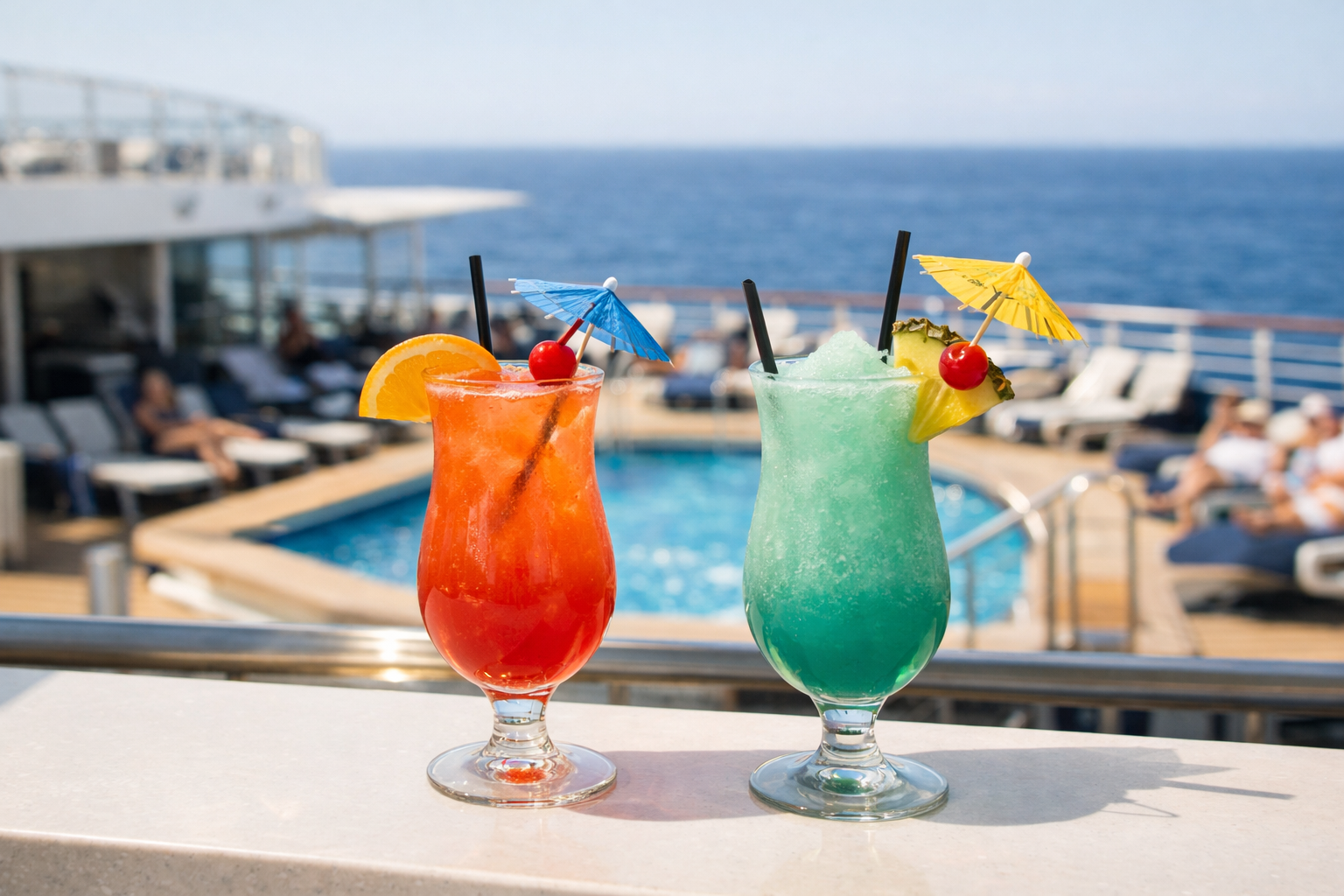
The first day on a cruise ship is deliberately overwhelming. Ships like Royal Caribbean's Wonder of the Seas carry 6,988 passengers at full capacity across 18 decks. Carnival's Mardi Gras stretches 1,094 feet and offers zones including a roller coaster. Knowing what to do the moment you board separates the prepared passenger from the bewildered one.
Embarkation Day Strategy
Your cabin will not be ready until approximately 1:00–1:30 PM, even if you board at 11:00 AM. Head directly to the Lido Deck buffet (called the Lido Market on Holland America, Windjammer on Royal Caribbean, Lido Marketplace on Carnival). Eat lunch, explore the ship's layout, locate your muster station (mandatory emergency drill before departure—now conducted digitally on most lines via the cruise app rather than in person), and make reservations for specialty dining and entertainment. Popular shows and restaurants sell out within hours of embarkation.
Main Dining Room vs. Specialty Restaurants
The main dining room is included in your cruise fare and serves three-course dinners nightly with rotating menus. Quality is consistently solid—not restaurant-quality by fine-dining standards, but genuinely better than most all-inclusive resort equivalents. You'll typically choose between Traditional Dining (fixed time, fixed table—same waiter nightly, excellent for families and those who value consistency) and My Time/Anytime Dining (flexible reservations, slightly longer potential waits).
Specialty restaurants carry per-person surcharges but represent a meaningful upgrade in both food quality and ambiance. If you plan to dine at two or more specialty venues, purchase a dining package at embarkation—NCL's three-restaurant package at $79–$149 and Carnival's specialty dining bundle typically save 20–40% versus booking à la carte.
Entertainment
Mainstream cruise ships include Broadway-style productions, comedy clubs, trivia, game shows, poolside concerts, and nightlife venues at no additional charge. Royal Caribbean ships feature ice shows (Quantum-class and above) and aqua theater performances. The daily activities newsletter—called the 'Fun Times' on Carnival or 'Cruise Compass' on Royal Caribbean—is distributed to your cabin each evening for the following day. Veterans recommend carrying a highlighter to mark priority activities; it sounds old-fashioned and remains completely practical.
The Spa Discount You Should Know
The onboard spa is consistently one of the most overpriced venues on the ship at standard rates—a 50-minute Swedish massage runs $119–$149, with 18–20% gratuity added automatically. However, the spa staff aggressively discounts services on embarkation day and sea days, when demand is lowest. Discounts of 20–30% off full price are genuinely available simply by asking or attending a spa orientation session on embarkation afternoon. Never book spa services through the pre-cruise website at full price.
Fitness and Classes
The gym is complimentary on all mainstream lines. Spin classes run $20–$30 per session; yoga is $15–$25. Personal training sessions cost $85–$130. If fitness classes are important to you, budget accordingly—or simply use the free weight room and treadmills, which are well-equipped on most modern ships.
Photography
Professional photographers work the embarkation gangway, formal nights, and various ship venues throughout the voyage. Individual 8×10 prints cost $25–$35 each. Digital photo packages—unlimited downloads of all images taken of your party—run $199–$299 but are typically discounted 30–40% on the final day of the cruise. If you want the photos, wait for the last-day sale rather than purchasing early at full price.
Before You Board: Documents, Check-In, and Pre-Cruise Logistics
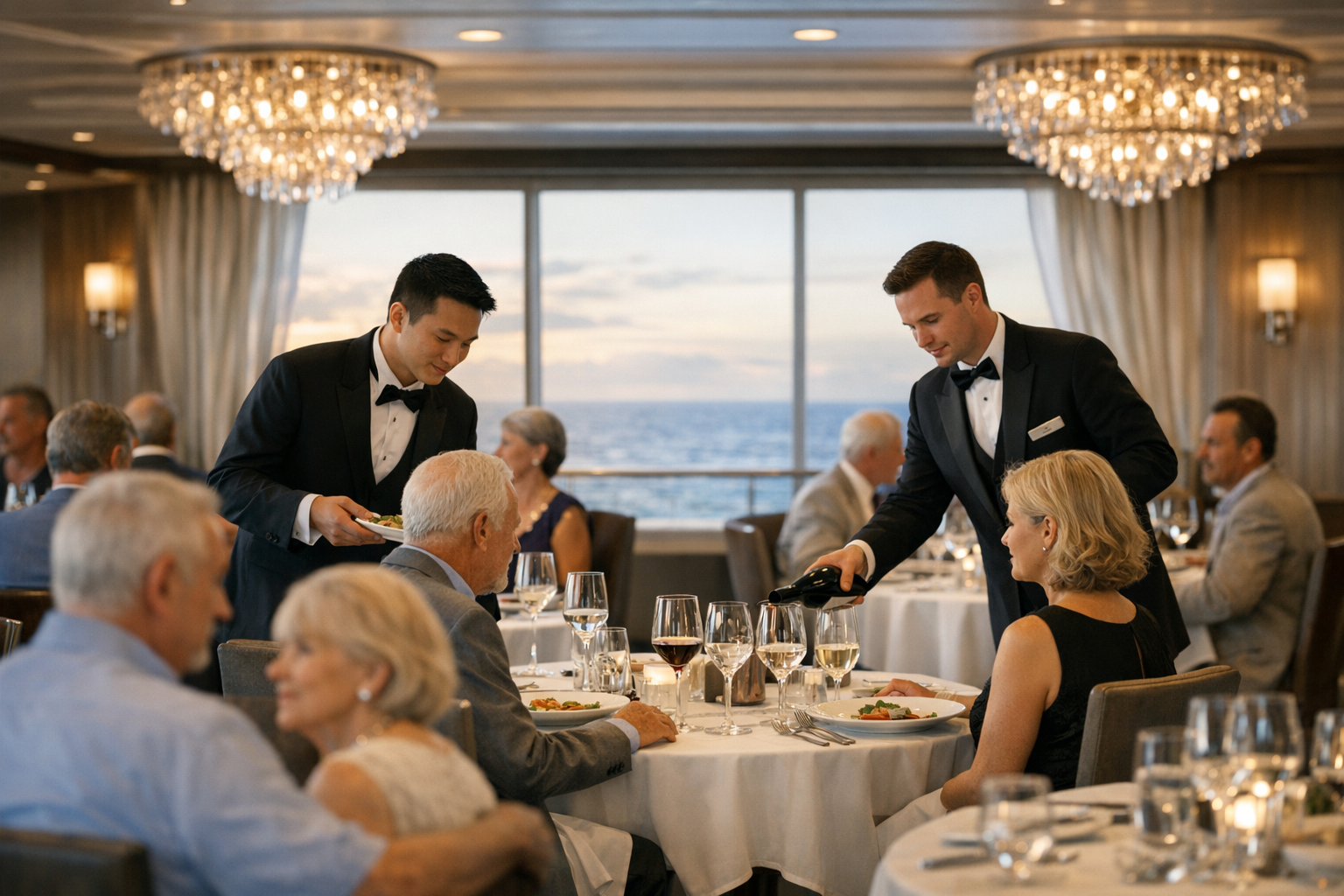
The administrative side of cruising is straightforward but unforgiving of last-minute errors. Missing documents at the pier results in denied boarding—the ship will leave on schedule regardless.
Passport vs. Birth Certificate
For Caribbean cruises departing from U.S. ports on closed-loop itineraries (ship leaves and returns to the same U.S. port), U.S. citizens are technically permitted to travel with a government-issued photo ID plus an original birth certificate. However, this is strongly inadvisable. If you experience a medical emergency requiring air evacuation from a foreign port, or if flight disruptions prevent you from rejoining the ship, re-entry to the United States without a passport becomes significantly complicated. Get a passport. Processing times for routine U.S. passport applications in 2025 run eight to eleven weeks; expedited service takes three to five weeks at additional cost.
Online Check-In
All major cruise lines now require online check-in completed before arrival at the terminal. Royal Caribbean's app and website open check-in 90 days before sailing; Carnival's opens at 16 days. Complete it early to secure preferred boarding time slots—early boarding times (10:30–11:30 AM) give you maximum time on the ship before departure. Upload your passport photo, complete health questionnaires, and register a credit card to your onboard account. Print or save your SetSail Pass (Royal Caribbean) or boarding documents digitally.
Travel Insurance
This is not optional for a first-time cruiser. Cruise-specific travel insurance covers trip cancellation, trip interruption, medical evacuation (the most financially catastrophic risk—a helicopter medical evacuation from international waters can cost $50,000–$200,000), baggage loss, and missed connections. The cruise line's own insurance products are convenient but rarely the best value; independent providers including Allianz Travel, Travel Guard, and Seven Corners offer comparable or superior coverage. Expect to pay 4–8% of total trip cost for a comprehensive policy.
Arriving at the Port
Most cruise terminals recommend arriving no earlier than your assigned boarding window and no later than 90 minutes before departure. Ships in Miami, Fort Lauderdale (Port Everglades), Galveston, and New York operate dedicated cruise terminal parking at $20–$30 per day—book in advance, as lots fill up. Rideshare (Uber/Lyft) drop-off is permitted at virtually all major terminals. For multi-night pre-cruise hotel stays near embarkation ports, our [ground transportation planning guide](/ground-transportation/) covers shuttle options, rideshare logistics, and parking cost comparisons at every major U.S. cruise homeport.
Plan this trip
Frequently Asked Questions
Budget $800–$1,500 per person beyond the advertised fare for a realistic seven-night Caribbean cruise. This covers mandatory gratuities ($126–$140 per person), a mid-tier drink package ($400–$550 pre-purchased), Wi-Fi ($119–$175 for one device), one specialty dinner ($38–$59), and two shore excursions ($100–$180). Light spenders can keep the total add-on closer to $500 by skipping the drink package; heavy drinkers with spa habits can easily spend $2,000+ above the base fare.
It depends entirely on your consumption habits. The break-even point for most 2025 cruise line beverage packages is five to seven alcoholic drinks per person per day, accounting for the 18–20% gratuity automatically added to individual drink orders. If you reliably have wine at dinner, two to three poolside cocktails, specialty coffees, and bottled water throughout the day, the math generally favors a package. If you're a light drinker having two drinks daily, pay per drink and save $300–$500. Always check whether the package requires all adults in the cabin to purchase simultaneously—this is a universal policy that trips up couples with different drinking preferences.
Technically, U.S. citizens on closed-loop Caribbean cruises (departing and returning to the same U.S. port) can travel with a government-issued photo ID plus an original birth certificate. In practice, a valid U.S. passport is strongly recommended. Without one, a medical emergency requiring air evacuation from a foreign port or any situation requiring you to fly back to the U.S. independently becomes significantly more complicated. In 2025, standard U.S. passport processing takes eight to eleven weeks; expedited service runs three to five weeks.
Royal Caribbean and Carnival are the most recommended first-time cruise lines for different reasons. Royal Caribbean offers the most elaborate ship amenities—particularly on their Oasis-class vessels—with organized, well-paced entertainment programming that makes the first-cruise experience intuitive. Carnival skews slightly younger in demographic and often prices $100–$200 per person cheaper for equivalent itineraries. MSC Cruises offers the lowest entry prices among mainstream lines and is a strong value option if budget is the primary concern. Celebrity Cruises is the best choice if you want a noticeably quieter, more refined experience without paying luxury-line prices.
Use the cruise line for ports with known traffic and timing risks—Ocho Rios, Jamaica during peak season; Nassau during spring break; any port where a delay of 30 minutes could realistically cause you to miss sailing. For low-risk, walkable ports like Cozumel, Mexico or Nassau's town center, independent booking through Viator or GetYourGuide typically saves 25–45% versus equivalent cruise-line excursions. The one non-negotiable: if you miss the ship on an independent excursion, you cover all costs to reach the next port yourself.
The five most surprising costs for first-time cruisers are: (1) automatic daily gratuities of $16.50–$20 per person per day charged to your onboard account; (2) the 18–20% gratuity added to every individual drink order on top of the drink's price; (3) room service fees—most lines now charge $5–$9.95 per delivery order, with only continental breakfast remaining free on some ships; (4) the requirement to buy a drink package for all adults in the cabin simultaneously, not just one person; and (5) specialty dining surcharges of $18–$65 per person for restaurants beyond the included main dining room and buffet.
Arrive within your assigned boarding window, which you select during online check-in. Early boarding windows (10:30–11:30 AM) are available to those who complete online check-in promptly after it opens. Arriving before your assigned window typically results in waiting in a holding area regardless. Do not arrive later than 90 minutes before the ship's scheduled departure time—documentation processing, security screening, and boarding formalities take 20–45 minutes, and ships depart on schedule without exception.