
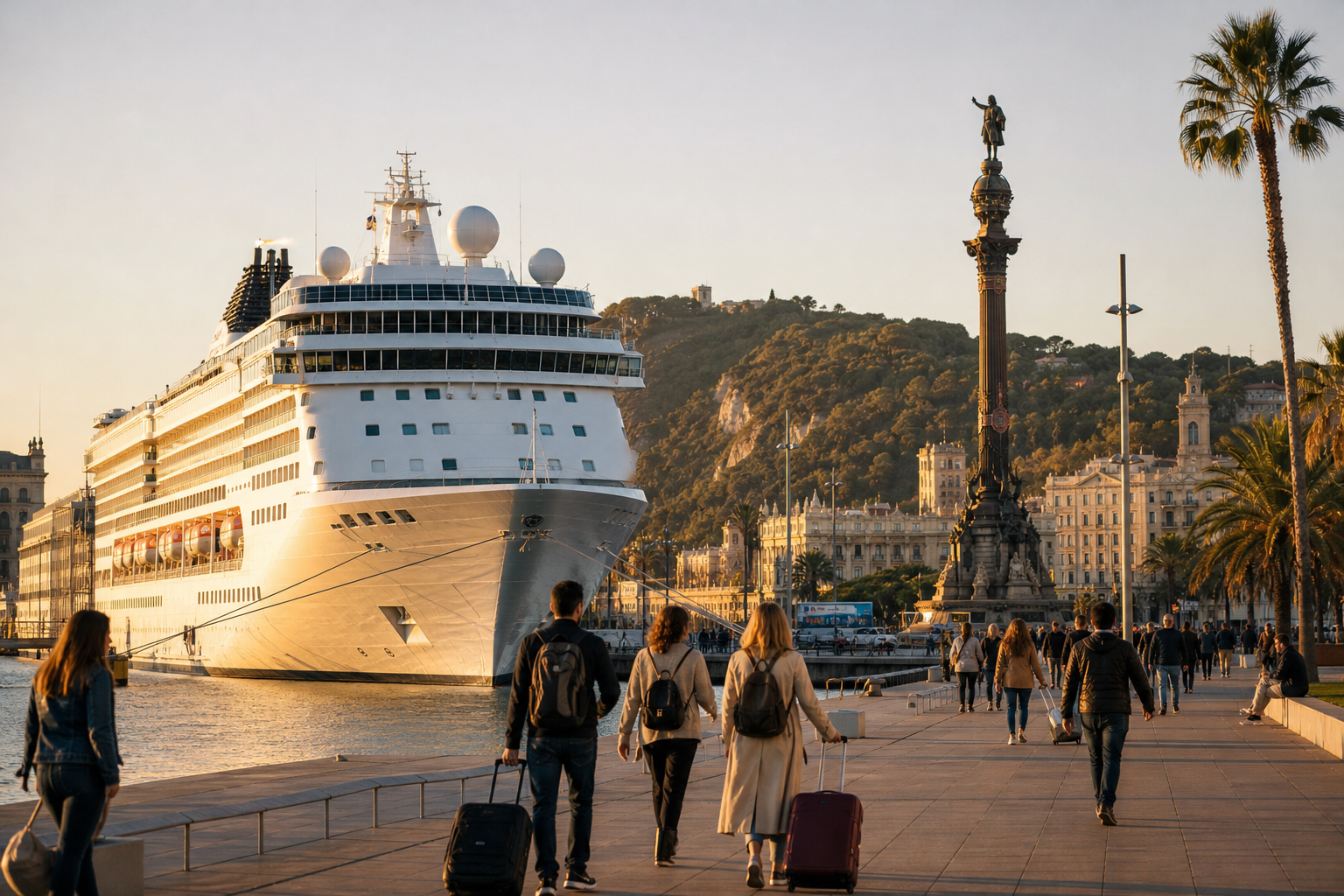
Barcelona Cruise Port at a Glance
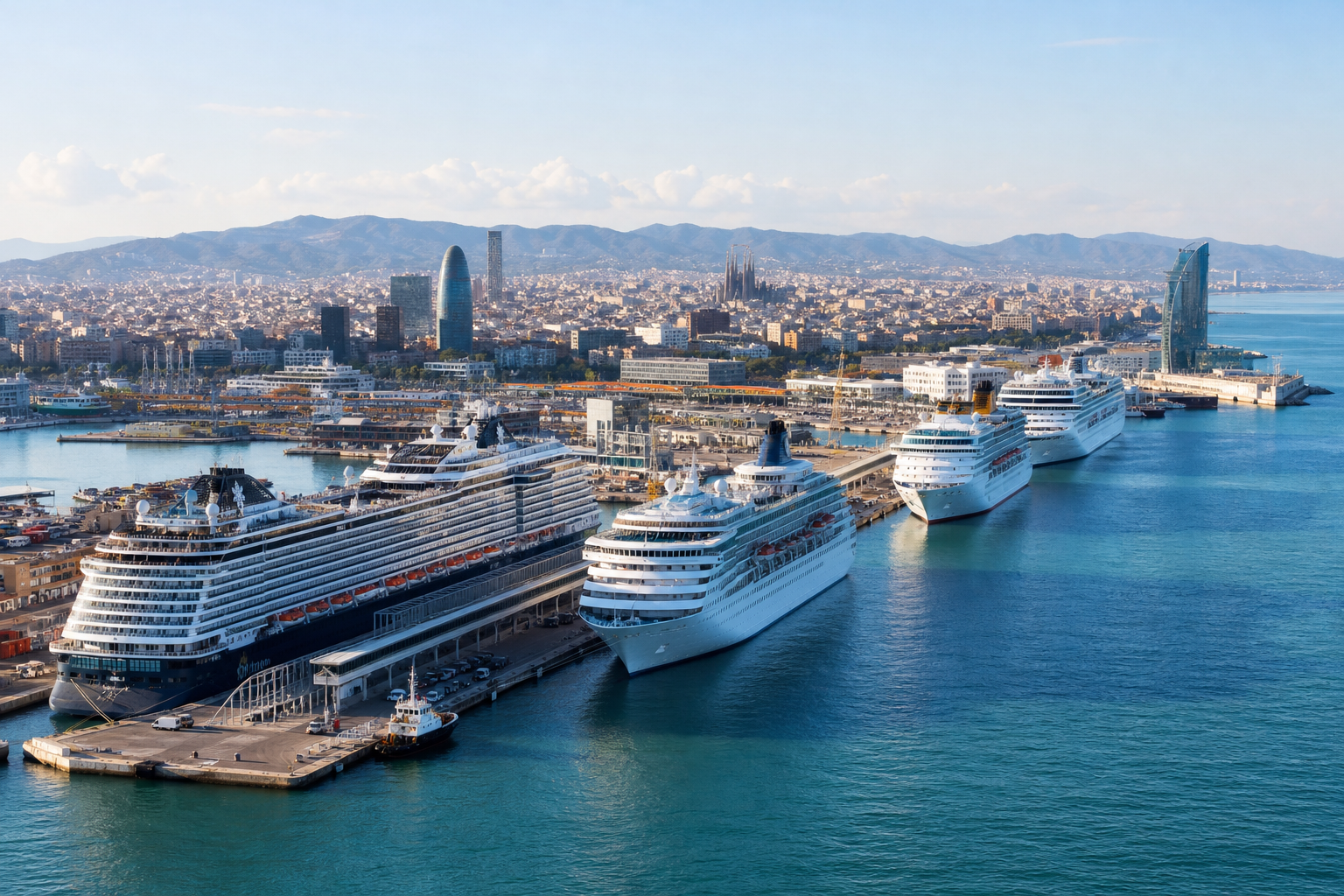
The Barcelona cruise port is a cluster of terminals along the city's waterfront, below Montjuïc hill and a short ride from Las Ramblas. Almost every ship now docks on the long Moll Adossat wharf, where the lettered terminals sit. The older World Trade Center terminals near the foot of Las Ramblas are being phased out, so do not assume you can walk to town. The trip to the city center takes roughly 10 to 25 minutes, depending on your terminal and how you travel.
Check your cruise line's boarding documents for your exact terminal letter. Ships can be reassigned between berths, and the distance from one end of the port to the other is not trivial. Barcelona is among the busiest cruise ports in Europe and a major Mediterranean homeport. Embarkation days can get crowded, especially when several large ships sail on the same afternoon.
This guide covers each terminal group, the ways to get from the port to the city center, airport transfer times, where to sleep the night before you sail, and how to use a spare day in Barcelona. If this is your first sailing, our first-time cruise guide at first-time cruise guide explains what to expect from check-in to sail-away.
Barcelona Cruise Terminals Explained
Barcelona is in the middle of reshaping its cruise port. The World Trade Center terminals, once the closest to the old town, are being retired: the North terminal has not handled cruise ships since late 2023, and the South terminal is scheduled for its last cruise at the end of 2026. From 2027 every ship is due to dock on Moll Adossat.
Moll Adossat is a long wharf running southwest along the coast, with a row of lettered terminals along it and the MSC terminal at the far end. Older terminals are being demolished in stages and new ones built, including a new Royal Caribbean terminal planned for 2027, so the letters in an older guide may no longer match what is there today. The pier is long, so the distance from the gangway to the nearest public street can be considerable. Walking into town with luggage is not practical. Most passengers use the cruise shuttle bus, a taxi or a pre-booked private transfer.
The Port of Barcelona and the cruise lines manage terminal assignments, and they can change by season and by ship. Your boarding pass or the cruise line app will list the terminal. If you are told simply to go to the port, confirm the letter before you set off. Give your taxi driver the terminal letter, not just the word port.
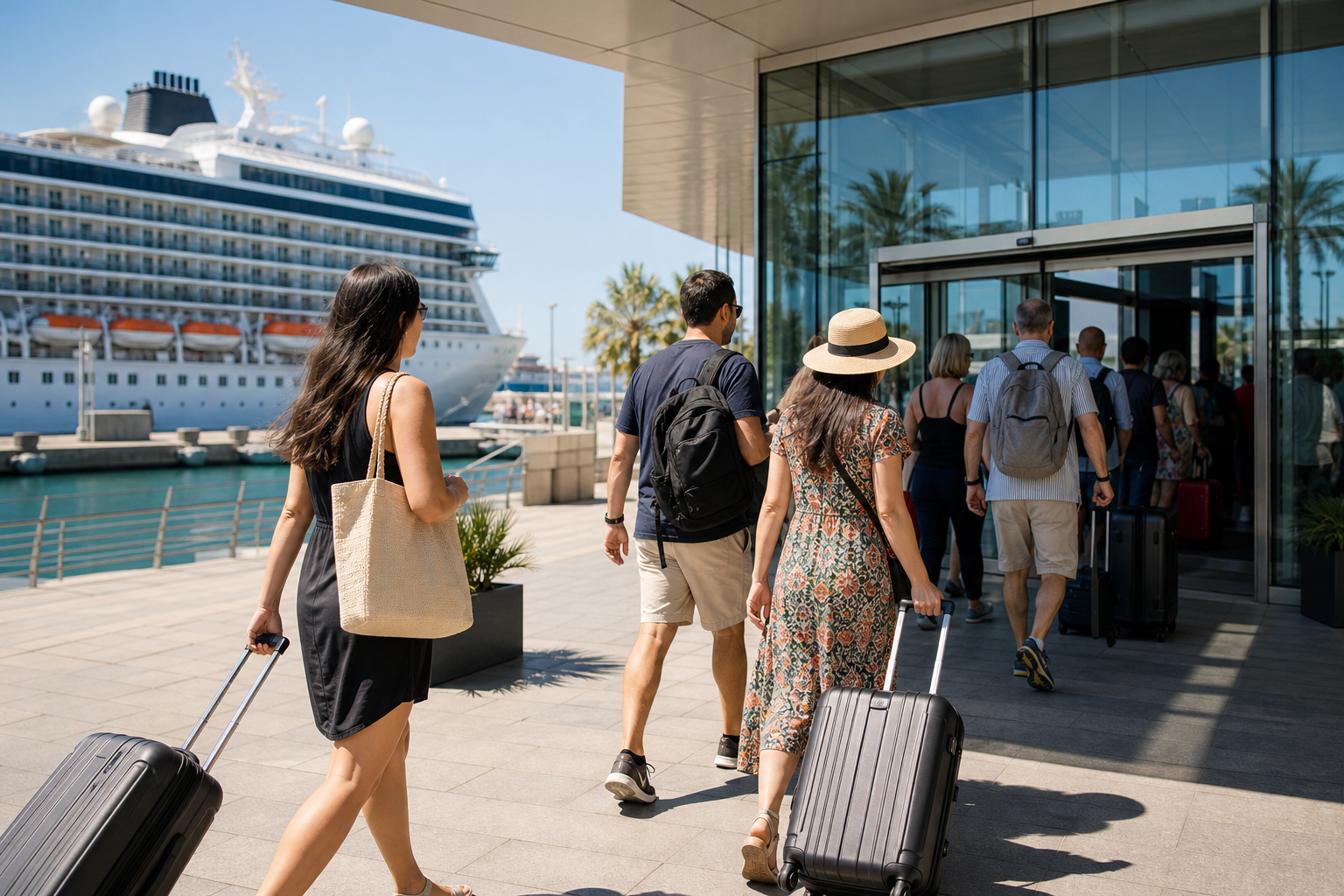
Inside, you will find the usual boarding-hall setup: baggage drop at the curb or in the hall, document and security checks, and a check-in desk. Facilities vary from terminal to terminal. Don't count on large cafes or shops beyond the basics, and bring a bottle of water on warm days.
Barcelona Cruise Port to City Center: Your Options
Getting from the Barcelona cruise port to the city center comes down to three realistic choices: the cruise shuttle bus, a taxi or a private transfer.
A dedicated cruise shuttle bus runs from the Moll Adossat terminals to the Columbus Monument at the foot of Las Ramblas. It is run by a private operator under the port's transport services, it is the cheapest option for cruise passengers, and it is popular on turnaround days. It takes cards only. The fare is a few euros each way. Fares, stops and operating hours change by season, so check the current timetable and price on the Port of Barcelona website before you rely on it. Allow extra time on busy days when several ships are in port, as queues can form.
Taxis wait outside the terminals and run on a meter. The ride into central Barcelona typically takes 10 to 20 minutes in normal traffic. Rates are regulated, and there may be supplements for luggage or for pickups at the port, so ask the driver or check the posted tariff. Stick to official black-and-yellow taxis rather than unmarked offers from touts.
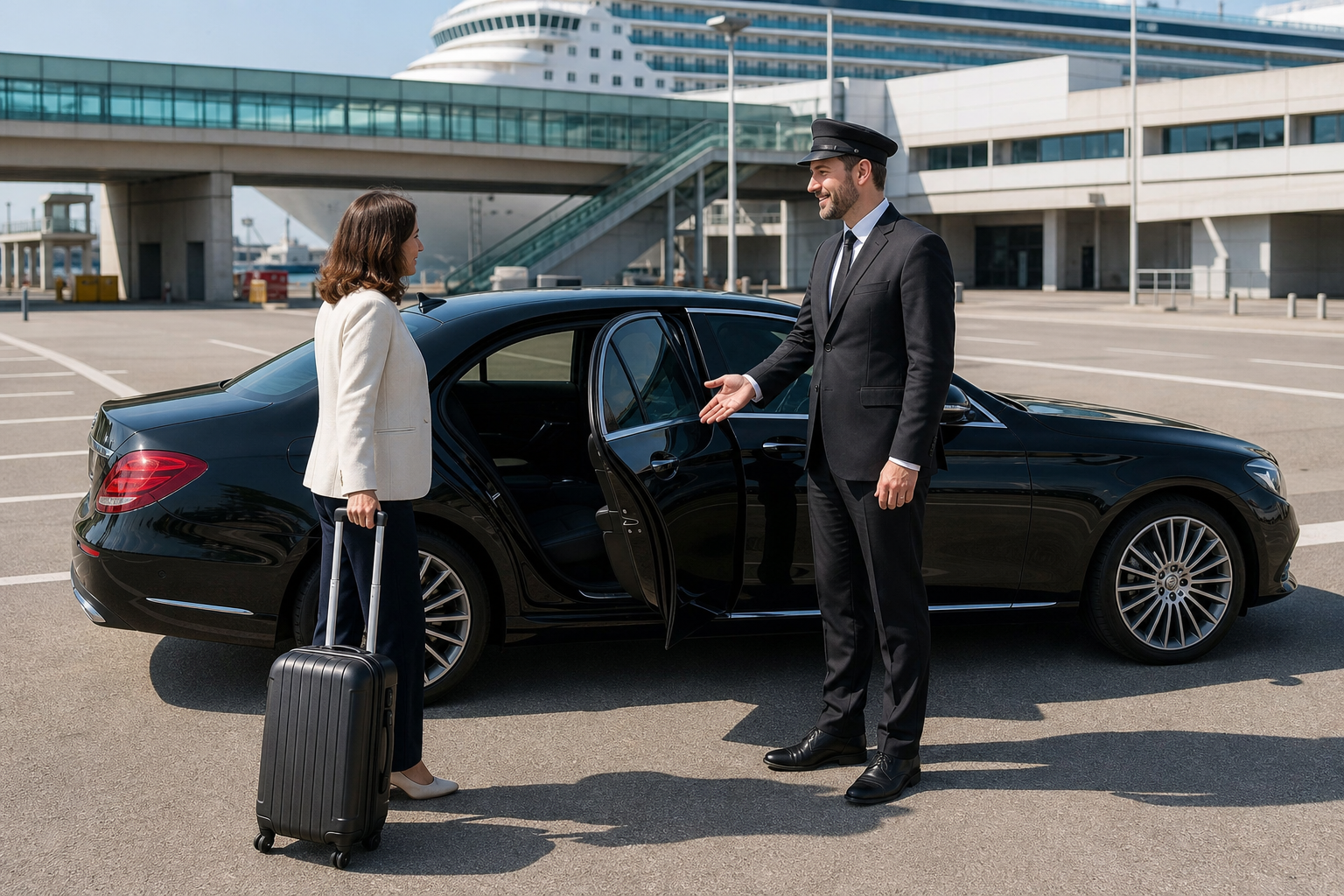
Private transfers can be booked in advance. They suit families or groups with several bags, since the driver meets you at a set location and you skip the queues. Compare the price against two taxis, which often costs about the same for a party of five or six.
If you want the metro, the nearest station to the Columbus Monument area is Drassanes on line L3. Paral·lel, on lines L2 and L3, is also close to the Montjuïc side of the port. Check current service information with TMB, Barcelona's transit operator, because routes and fares are updated periodically. Some old-town metro stations have stairs, so large suitcases are better handled by taxi.
Once you are on Las Ramblas, keep valuables secure. Travel advisories widely report pickpocketing in Barcelona's busiest tourist areas, so wear a zipped bag in front of you.
Getting Between Barcelona Airport and the Cruise Port

Barcelona-El Prat Airport (BCN) has two passenger terminals, T1 and T2. It lies about 12 to 15 kilometers southwest of the city. The drive to the cruise terminals typically takes 25 to 40 minutes, depending on traffic and which terminal you are heading to. Morning and evening rush hours can add a lot of time, so leave a margin if you have a firm boarding cutoff.
The simplest transfer is a taxi from the official rank outside T1 or T2 straight to your cruise terminal letter. A pre-booked private transfer is easier after a long flight, because the driver tracks your arrival and meets you in the hall. Many cruise lines also sell airport-to-ship transfers timed to your sailing. They can be convenient, but compare the price with a taxi.
If you prefer public transport, the Aerobus links the airport with central Barcelona, including Plaça d'Espanya and Plaça de Catalunya. From there, take a taxi or the metro on to the port. Metro line L9 Sud also serves the airport, and Rodalies commuter trains run from the T2 area toward the city. Services and timetables change, so check the current timetable before you travel.
One practical tip: if your flight lands on the morning of your cruise, build in a generous buffer. Delays are common in busy summer months, and cruise ships do not wait for late passengers.
Where to Stay Before Your Barcelona Cruise
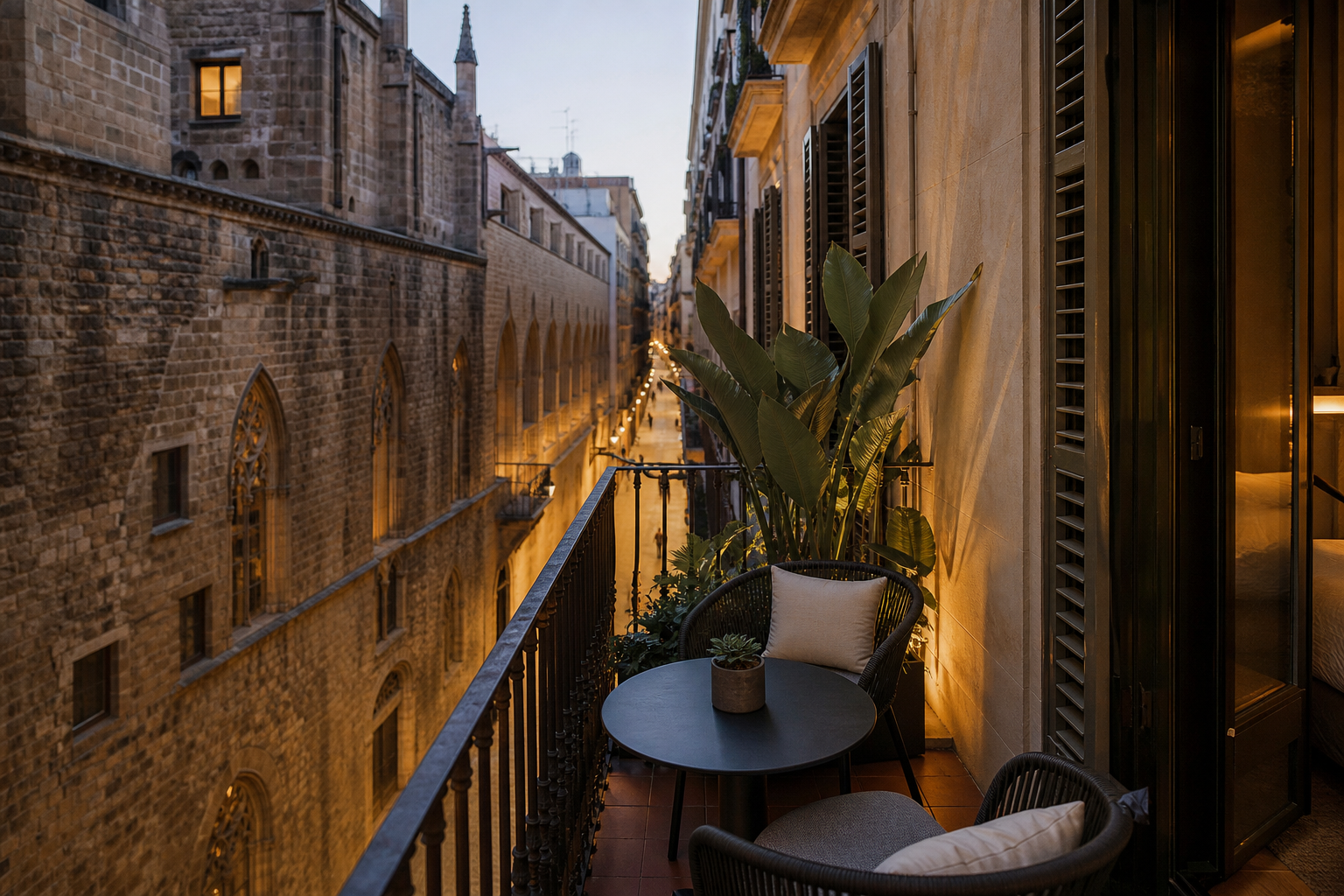
Arrive at least one night before your sailing. Flight delays are the most common reason passengers miss a ship, and a night in the city turns a stressful embarkation morning into a relaxed one. It also gives you an evening in one of Europe's great food cities.
The Barri Gòtic and El Born are the most atmospheric choices. You will be among medieval lanes, tapas bars and small plazas, and a short taxi ride to the cruise terminals is easy. The Eixample district, with its grid of wide boulevards and Modernista architecture, suits travelers who want to see Casa Batlló and Sagrada Familia. It also has larger hotels with elevators and quieter rooms. Barceloneta and Port Vell put you near the beach and the harbor, which helps if you have an early boarding time.
If you are arriving by train, hotels near Barcelona Sants station and around Plaça de Catalunya are practical. Both are well connected to the airport, and a taxi gets you to the port. When comparing rooms, look for free cancellation, luggage storage after checkout, and a reception that is staffed early in the morning.
To see current availability and rates across these neighborhoods, Browse Barcelona hotels on Hotels.com and filter by distance to the port or by guest rating. If your dates are flexible, you can also Compare hotel deals on Hotels.com to find the best value for the night before a sailing. Prices tend to rise sharply on peak cruise days in summer.
Making the Most of a Pre- or Post-Cruise Day
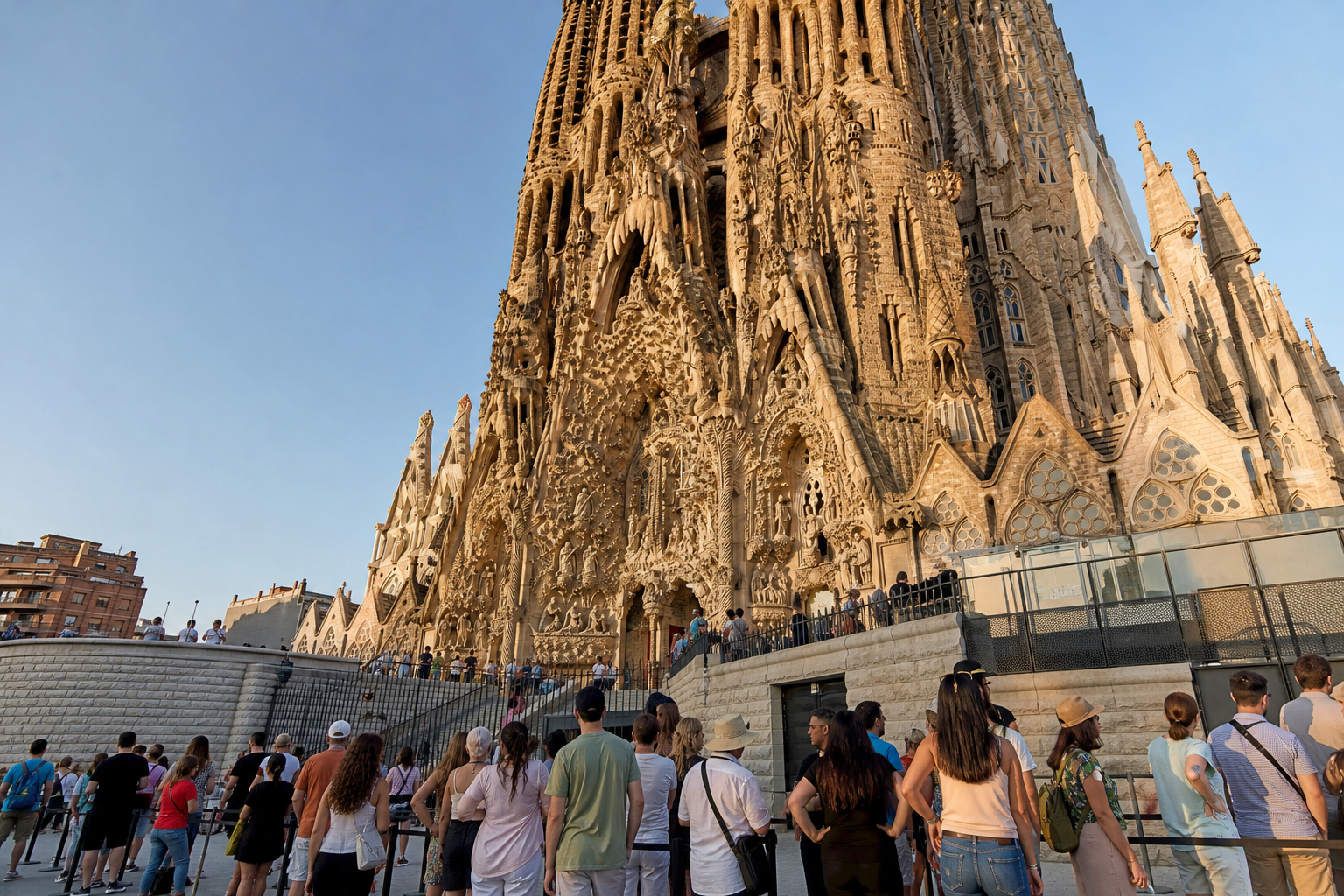
Many Barcelona sailings leave in the late afternoon, which gives you a free morning if you stay in the city. The key sight is the Sagrada Familia, Antoni Gaudí's basilica, under construction since 1882. Entry is by timed ticket, and slots sell out, especially in high season. Book on the official basilica website as far ahead as you can, and arrive on time. If you are sailing the same day, choose the earliest slot and keep the visit to about two hours, including the journey.
Other sights close to the port include the Gothic Cathedral, the Picasso Museum in El Born, the Boqueria market off Las Ramblas, and the cable car and gardens of Montjuïc. Park Güell and Casa Batlló also use timed entry, so book ahead.
Luggage is the main practical hurdle. If you are checking out of your hotel in the morning, ask the front desk to hold your bags. Most hotels do, but confirm in advance. Left-luggage services operate in the city, including near major transport hubs, though opening hours and fees vary, so check current details first. The safest plan is to take your luggage straight to the ship and enjoy the city afterward, if your cruise line allows early baggage drop.
On post-cruise days, disembarkation usually happens in the morning, and you can leave bags at your hotel before check-in time. For a deeper look at planning your whole trip, including packing, insurance and excursions, see our ultimate cruise planning guide at ultimate cruise planning guide.
Embarkation Day Timing and Practical Tips
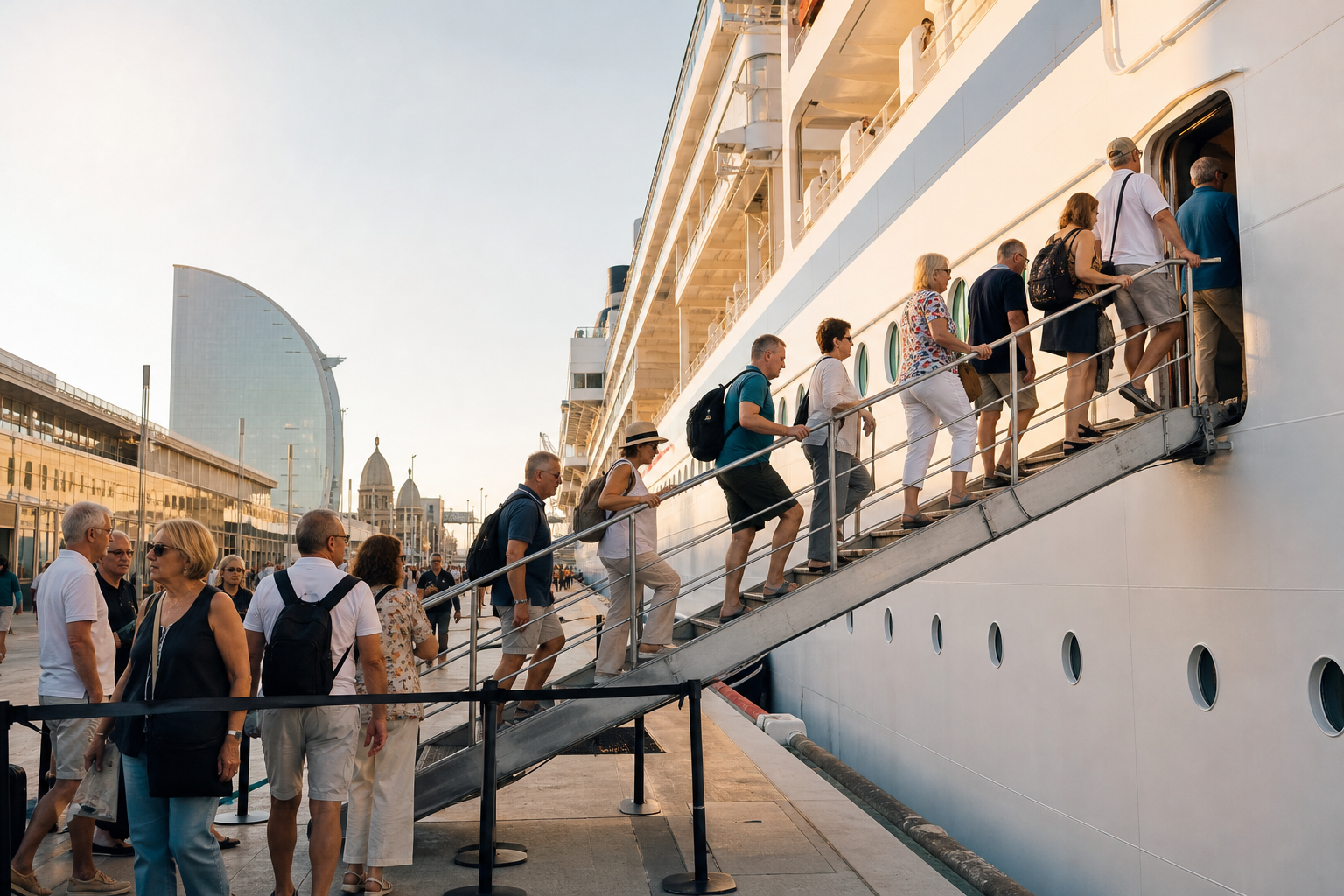
Your cruise line will assign a check-in window, so follow it. Arrive much earlier and you may wait outside. Arrive late and you risk missing the all-aboard time, which is usually set well before the ship sails. Check your documents for the exact times.
Leave your hotel about 30 to 45 minutes earlier than you think you need. Taxi queues and port traffic are unpredictable when multiple ships are in. Have your passport, boarding documents and any required health or immigration forms ready before you reach the terminal. Spain is in the Schengen Area, so non-EU travelers should check current entry requirements before departure, including any new travel authorization rules for visitors to Schengen countries.
Keep medications, valuables and a change of clothes in your carry-on, because checked bags can take several hours to reach your cabin. The Mediterranean sun is strong from late spring through early autumn, so carry sunscreen and water.
If your cruise calls at several ports, you may want to review the Mediterranean itineraries on offer, which brings us to what sails from here.
Cruises Departing From Barcelona
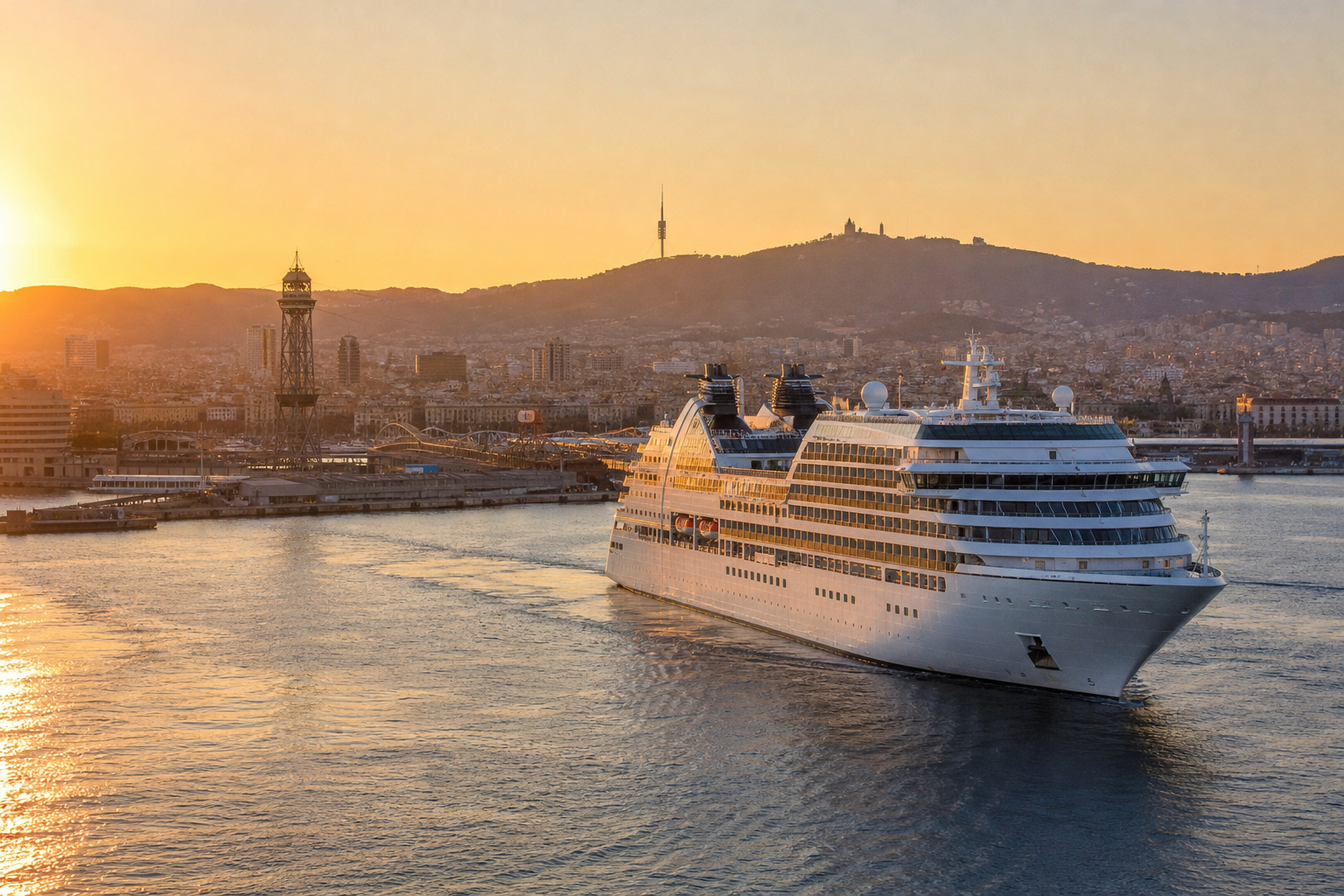
Barcelona is a major homeport for Western Mediterranean sailings, and its position makes it easy to combine with Italy, France and the Balearic Islands. Typical itineraries run seven nights and visit ports such as Marseille, Genoa, Civitavecchia (for Rome), Naples, Palma de Mallorca and Valencia. Longer routes include transatlantic repositioning cruises in spring and autumn, and some lines also offer Canary Islands or Morocco itineraries. Itineraries change by season, so check each cruise line for current schedules.
If you would like to add a few days in Mallorca, our guide to Palma de Mallorca at Palma de Mallorca guide covers what to see there.
When you are ready to compare sailings, you can See Barcelona cruises on CruiseDirect to check dates, ships and cabin categories. Book flights and your pre-cruise hotel only once your sailing is confirmed, and consider travel insurance that covers missed departures.
Frequently Asked Questions
The Barcelona cruise port is on the city's southern waterfront below Montjuïc hill, near the foot of Las Ramblas and the Columbus Monument. Cruise ships dock along the long Moll Adossat wharf, with the older World Trade Center terminals being phased out.
Barcelona has several cruise terminals, most of them lettered and located on the Moll Adossat wharf, plus a separate MSC terminal. The older World Trade Center terminals are closing, and terminals are being rebuilt in stages, so the exact list is changing. Check your boarding documents for your ship's terminal.
The Moll Adossat terminals are too far to walk with luggage. The taxi or shuttle ride to Las Ramblas usually takes 10 to 25 minutes.
Most passengers use the cruise shuttle bus, a taxi or a pre-booked private transfer. The shuttle runs from the Moll Adossat terminals to the Columbus Monument, takes cards only and costs a few euros each way. Check the current timetable and fare with the Port of Barcelona before you travel.
By taxi or private transfer, the trip from Barcelona-El Prat Airport (T1 or T2) to the cruise terminals typically takes 25 to 40 minutes, depending on traffic and your terminal.
Yes, we recommend arriving at least one night early. It protects you against flight delays and lets you enjoy the city before boarding.
Yes, if your ship sails in the afternoon. Book the earliest timed-entry ticket in advance on the official website, and keep your bags at the hotel or take them to the ship first.
Hotels commonly hold bags for guests, and left-luggage services operate in the city, including near major transport hubs. Hours and fees vary, so confirm details beforehand.
The Barri Gòtic, El Born and Port Vell are closest to the port and are good for atmosphere. The Eixample is better for larger hotels and sightseeing, while hotels near Sants station suit train arrivals.
Barcelona itineraries commonly visit Mediterranean ports in France, Italy and Spain, such as Marseille, Genoa, Civitavecchia, Naples and Palma de Mallorca. Schedules vary by season.