Grand Junction, Colorado at a Glance: Trip Overview
Grand Junction, Colorado sits on the Utah border as a high-desert basecamp where red-rock canyons, working vineyards, and world-class mountain bike trails are all within a 20-minute drive of downtown. The best time to visit is spring, April through May, or fall, September through October, when daytime highs stay in the 60s and 70s and the summer heat and crowds that hit nearby Moab haven't arrived yet. Whether you're weighing Grand Junction vacation rentals against Grand Junction hotels, or trying to figure out how the town stacks up against Denver or Moab as a home base, this guide walks through the logistics, the neighborhoods, and the bookings worth locking in for a 2026 trip.
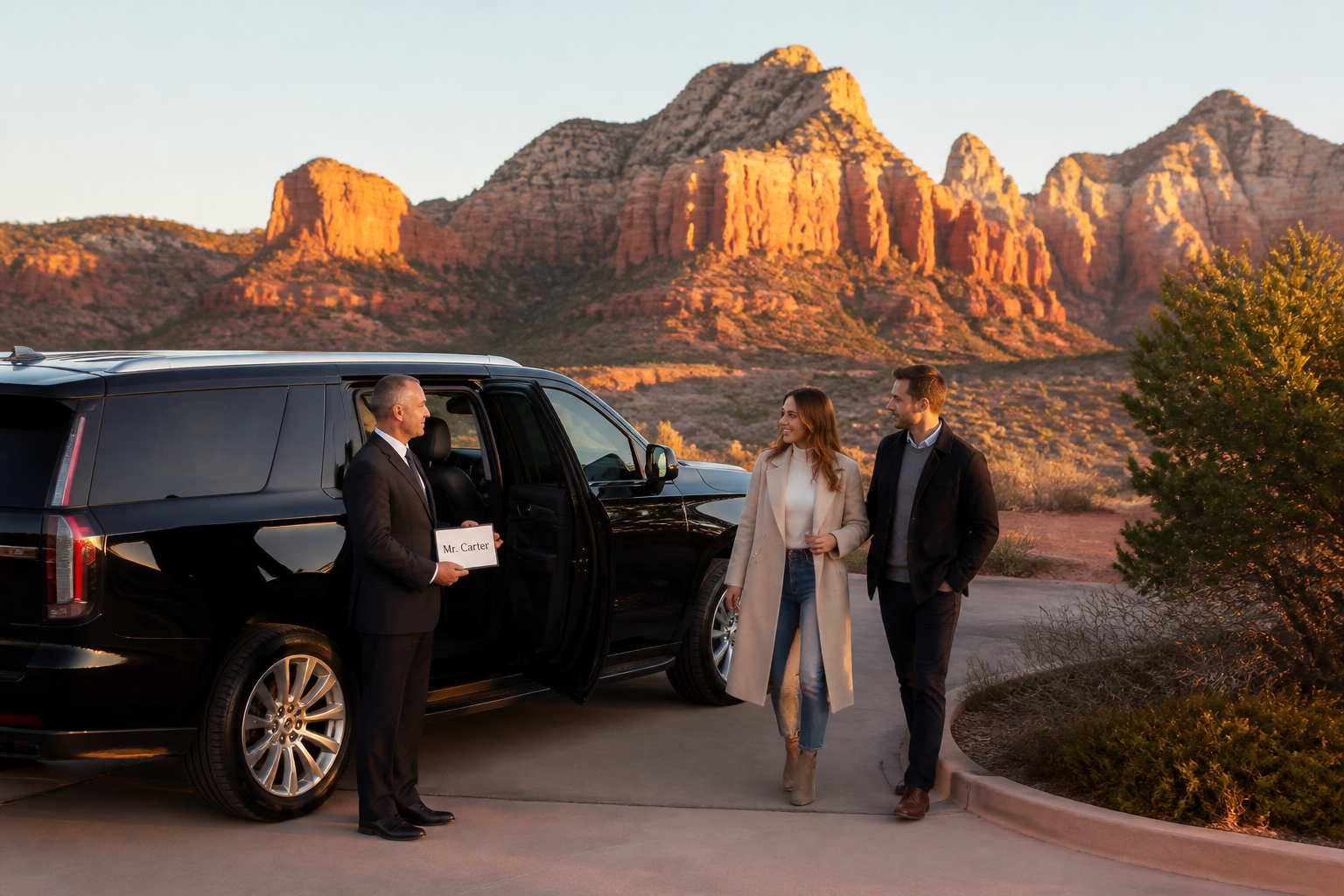
Most visitors get here one of two ways. Grand Junction Regional Airport, code GJT, sits about eight minutes from downtown and is served by United, American, Delta, and Allegiant, with direct flights from Denver, Dallas-Fort Worth, Phoenix, Salt Lake City, and seasonal service from Chicago O'Hare. GJT has a single small terminal with one arrivals curb, so pickup is simple compared to a sprawling hub airport where you'd otherwise be hunting for the right terminal number. Travelers who'd rather skip the rental car line can book our Grand Junction airport car service, which runs Cadillac XTS sedans for solo travelers and Chevrolet Suburbans for families and gear-heavy groups arriving with bikes or rafting equipment.
The other option is driving from Denver, a roughly four-hour, 243-mile trip west on I-70 that climbs over the Continental Divide through Glenwood Canyon before dropping into the Grand Valley. It's a genuinely scenic drive, but it's a long one to tack onto the front and back end of a short trip, which is why most travelers either fly straight into GJT or book a private one-way transfer instead. For groups splitting the difference, our private Denver to Grand Junction car service runs Lincoln Navigators and Mercedes Sprinter vans on the route, so you can work, nap, or just watch the canyon scenery roll by instead of driving it yourself.
Grand Junction's shoulder-season identity is its biggest edge over better-known Western Colorado and Utah destinations. It isn't a ski town, and it doesn't hit the summer-peak crowds that Moab or Aspen do, so spring and fall bring mild weather, blooming or turning orchards, and noticeably lower rates on both vacation rentals and hotel rooms than you'd find at comparable red-rock destinations during their busy months.
Colorado National Monument: Hiking & Outdoor Adventures
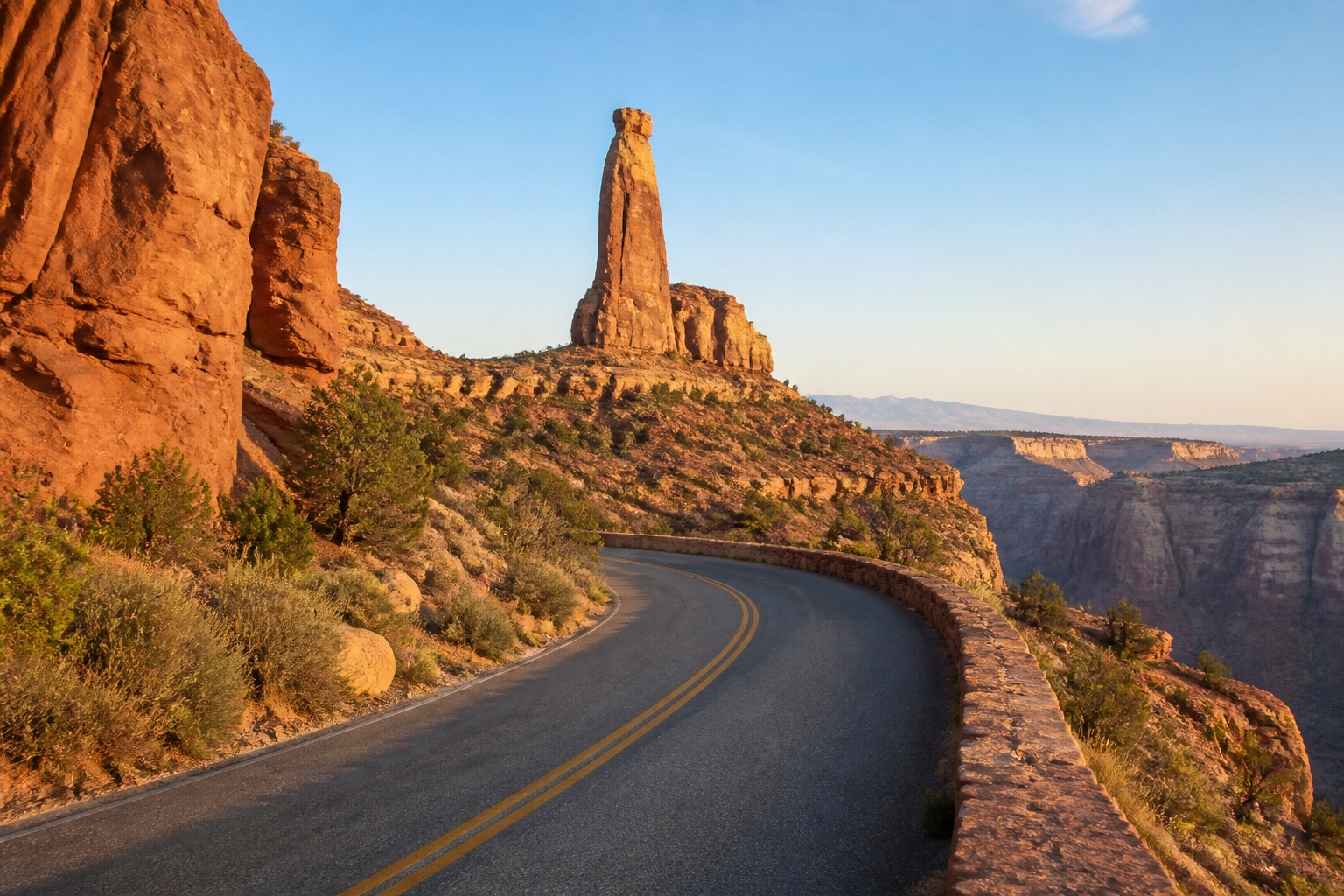
Colorado National Monument, established in 1911, is the centerpiece of any Grand Junction itinerary. A park pass costs 25 dollars per vehicle and stays valid for seven days. Rim Rock Drive, the park's signature road, runs 23 miles along the canyon rim between the Fruita and Grand Junction entrances, threading through three tunnels and past overlooks with views of Independence Monument, Wedding Canyon, and the Colorado River valley below. Drive it at sunrise or sunset if you can, both for the light on the sandstone and for cooler temperatures on the short overlook walks.
Mountain bikers know Grand Junction for the Lunch Loops, a network of technical slickrock and singletrack trails just south of downtown, including the well-known Tabeguache and Ribbon trails, ridable within minutes of most in-town lodging. More ambitious riders use Grand Junction as the western terminus of the Kokopelli Trail, a roughly 142-mile mountain bike route connecting the Grand Valley to Moab, Utah, which can be ridden in full over several days or sampled in shorter out-and-back sections.
On the water, the Colorado River's Ruby-Horsethief Canyon stretch, accessible from put-ins near Loma just west of town, draws paddlers for multi-day flatwater and mild-whitewater floats past red rock walls and sandy camp beaches, with a permit system managed by the BLM. Closer to town, half-day rafting trips through the Grand Valley itself are widely available and work well for families with kids.
Hikers and photographers should also carve out time for the Colorado National Monument's Devils Kitchen and Monument Canyon trails, both accessible from the park's east entrance. They offer close-up views of formations that look like distant silhouettes from the rim drive.
Grand Valley Wine Country: Palisade Vineyards & Tastings
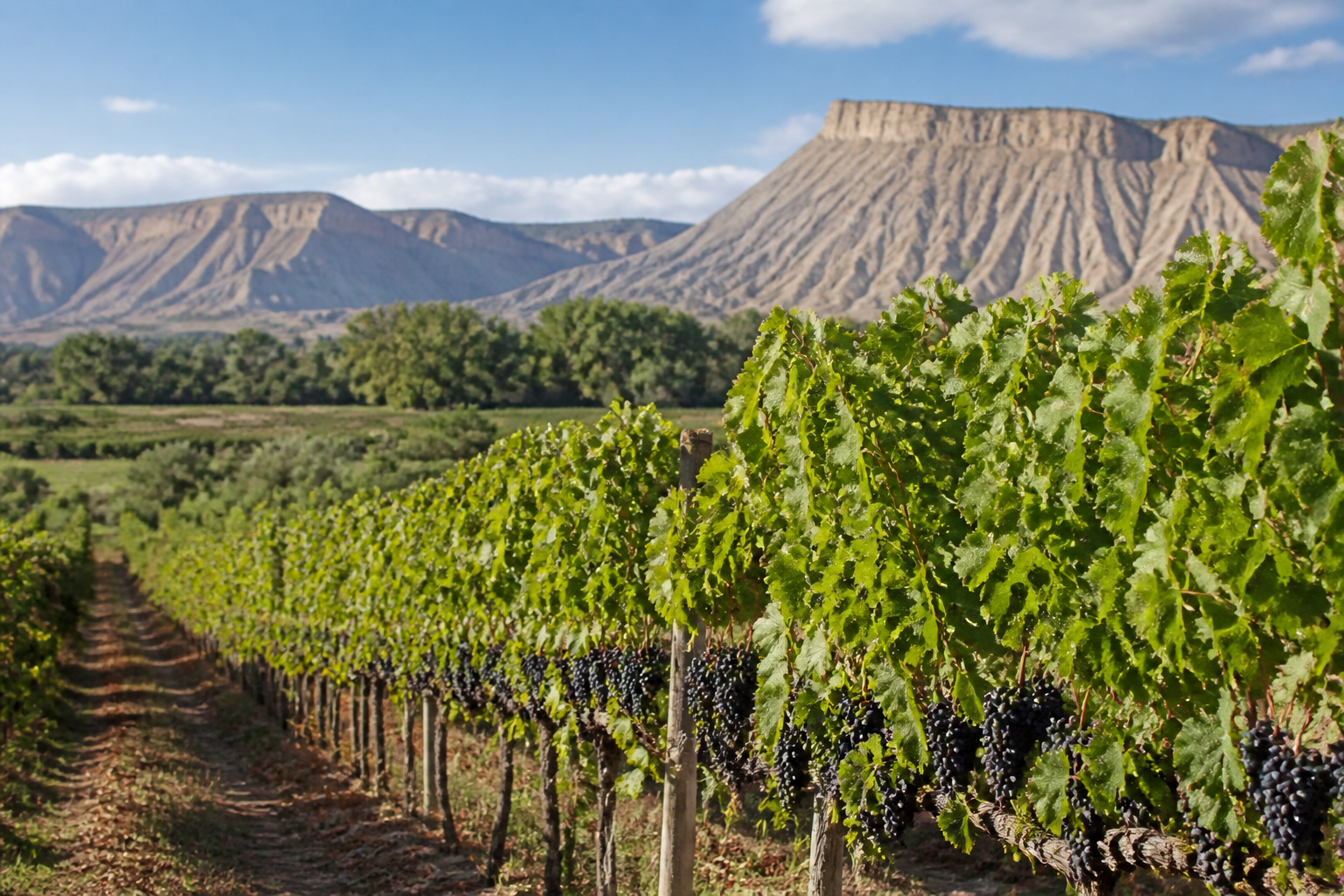
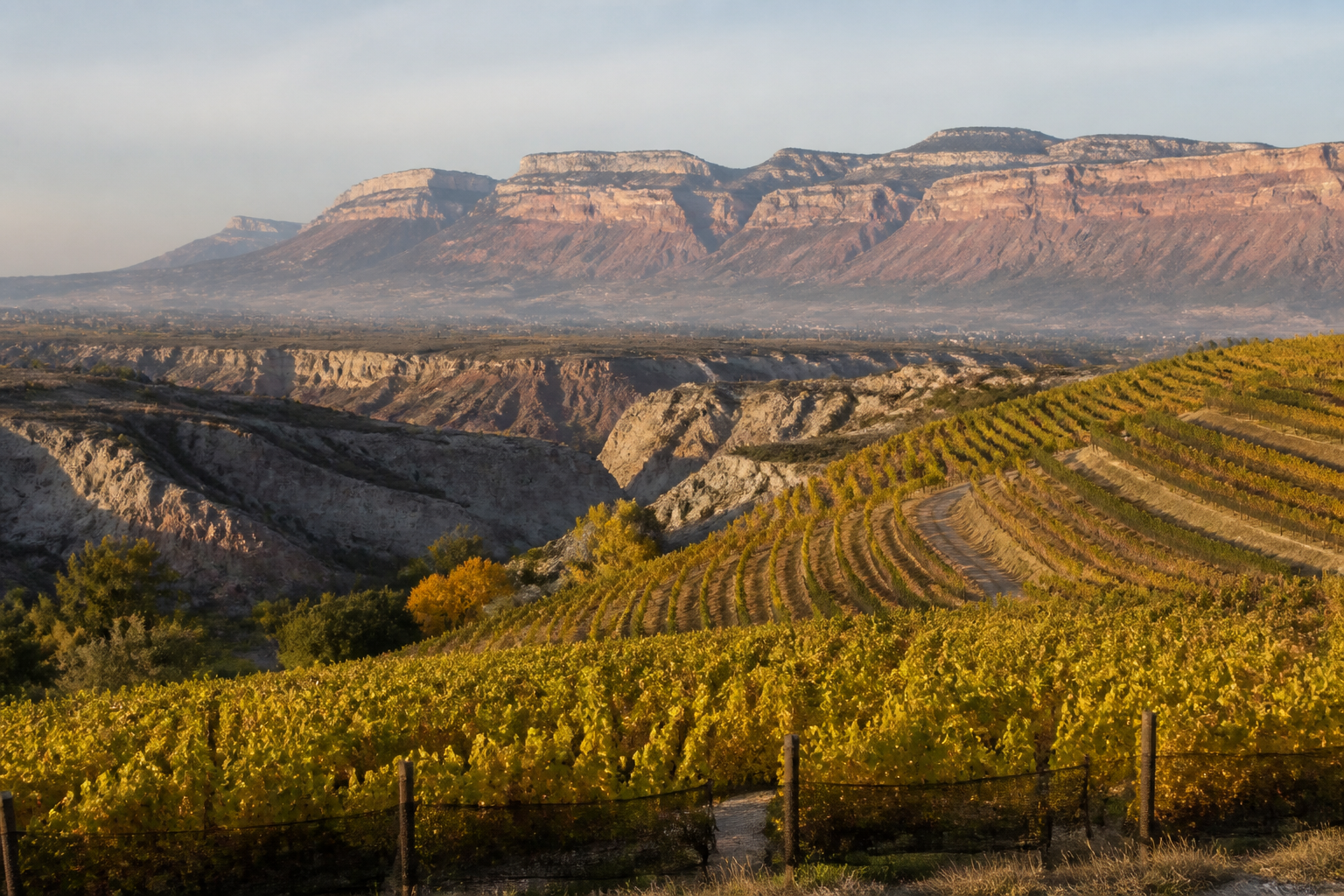
Fifteen minutes east of Grand Junction, the town of Palisade anchors the Grand Valley AVA, Colorado's largest wine-growing region, with more than 25 wineries and tasting rooms packed into a compact stretch of orchard and vineyard roads you can walk or bike between. The valley's combination of high elevation, over 4,700 feet, mineral-rich soil, and roughly 300 days of sunshine a year produces both wine grapes and the peaches Palisade is famous for across the state.
The Palisade Peach Festival, held annually in mid-August, draws visitors from across Colorado for fruit stands, live music, and orchard tours. If you're weighing a late-summer visit, that's a good reason to consider it, even though shoulder season is still the better weather bet. Fruit stands along Highway 6 sell peaches, cherries, and apples straight from the orchard from roughly June through October, with peach season typically peaking in August.
A popular way to see the valley is by bike along the Fruit and Wine Byway, a mostly flat route connecting multiple tasting rooms, or by booking a guided wine tour that handles the driving between stops. Palisade's tasting rooms range from small family operations pouring only estate fruit to larger producers with patio seating overlooking the Bookcliffs. Most are open for tastings Thursday through Monday, with shorter hours in the off-season.
Plan this trip
Grand Junction Vacation Rentals: Cabins, Condos & Homes
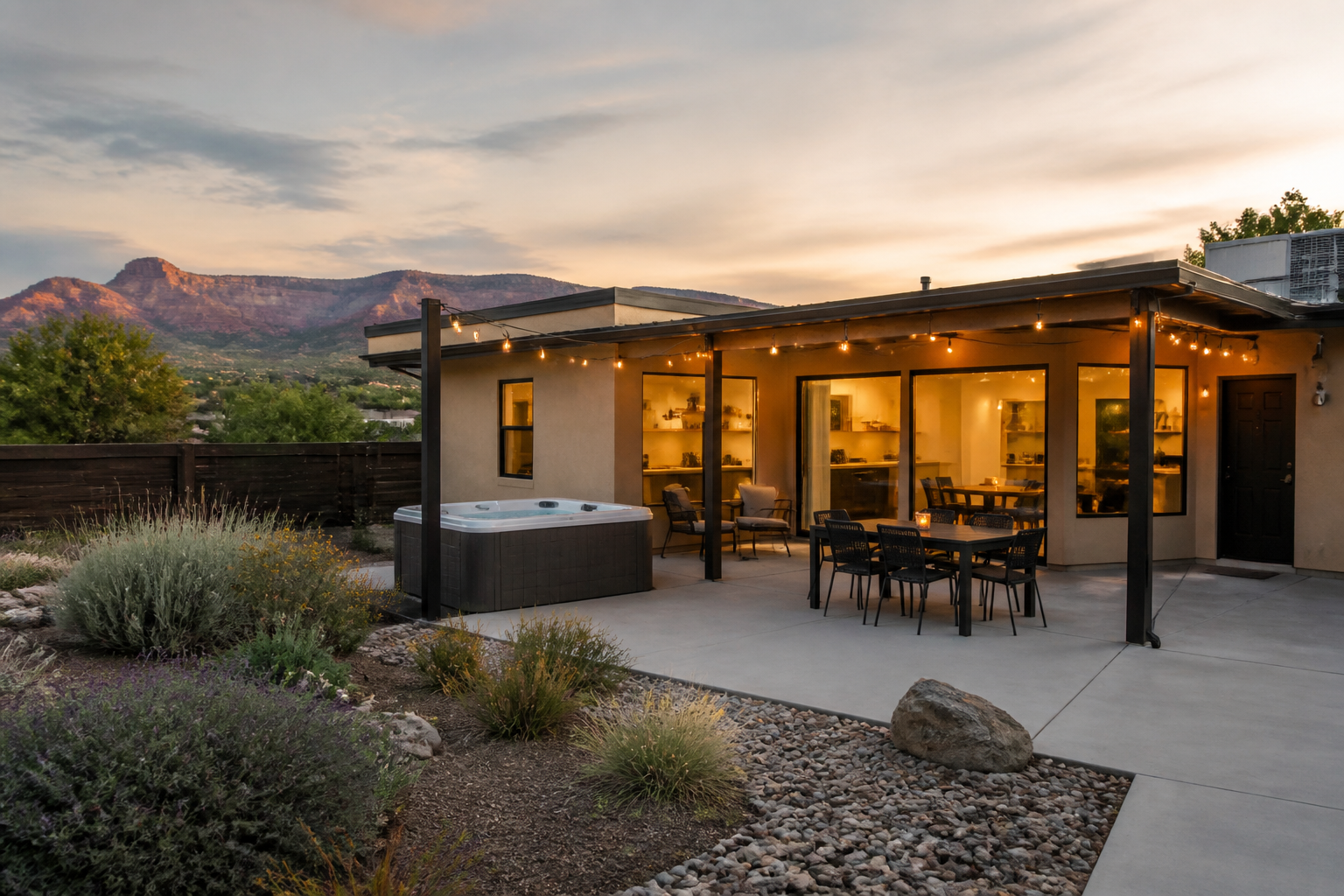
Grand Junction vacation rentals cluster in a few distinct areas, and picking the right one depends on what the trip is actually built around. Downtown Grand Junction rentals put you within walking distance of Main Street's restaurants and the Grand Junction Farmers Market, and they're the easiest option if you're skipping a rental car and using a private transfer for day trips instead. Rentals near the Redlands and Broadway corridor sit closer to the Colorado National Monument's east entrance and the Lunch Loops trailheads, which matters if mountain biking or an early rim-drive sunrise is the whole point of the trip. Out toward Palisade, vacation rentals tend to be freestanding houses on or near orchard and vineyard properties, popular with groups planning a wine-country weekend who'd rather have a porch and a firepit than a hotel corridor.
Grand Junction's rental market isn't nearly as saturated as Moab's or the Colorado mountain towns', so well-reviewed properties with private yards, hot tubs, and mountain bike wash stations are still available at rates well below comparable listings in Moab or Park City, especially during the April-May and September-October shoulder seasons this guide recommends. Groups of six or more traveling for a wine-country wedding weekend or a multi-generational trip generally do better with a rental than trying to book adjoining hotel rooms, since a house with a full kitchen also cuts down on the number of restaurant meals you need across a multi-day stay.
Start your search early for peak fall foliage weekends in late September and October, when Palisade's orchards turn and demand for valley-view rentals climbs. Browse Grand Junction vacation rentals on Vrbo to compare houses near Palisade wine country and downtown, or Find your perfect vacation rental on Vrbo if you're searching by specific dates and group size, since availability on the best hot-tub and yard properties can tighten up two to three months out for the strongest fall weekends.
If you are weighing a couple of areas against each other, browse Grand Junction vacation rentals on Vrbo and use the map view to judge the distances for yourself. Once you know roughly where you want to be, find your perfect vacation rental on Vrbo and sort by what matters most to you — pool, parking, walkability.
Best Hotels in Grand Junction, Colorado for 2026
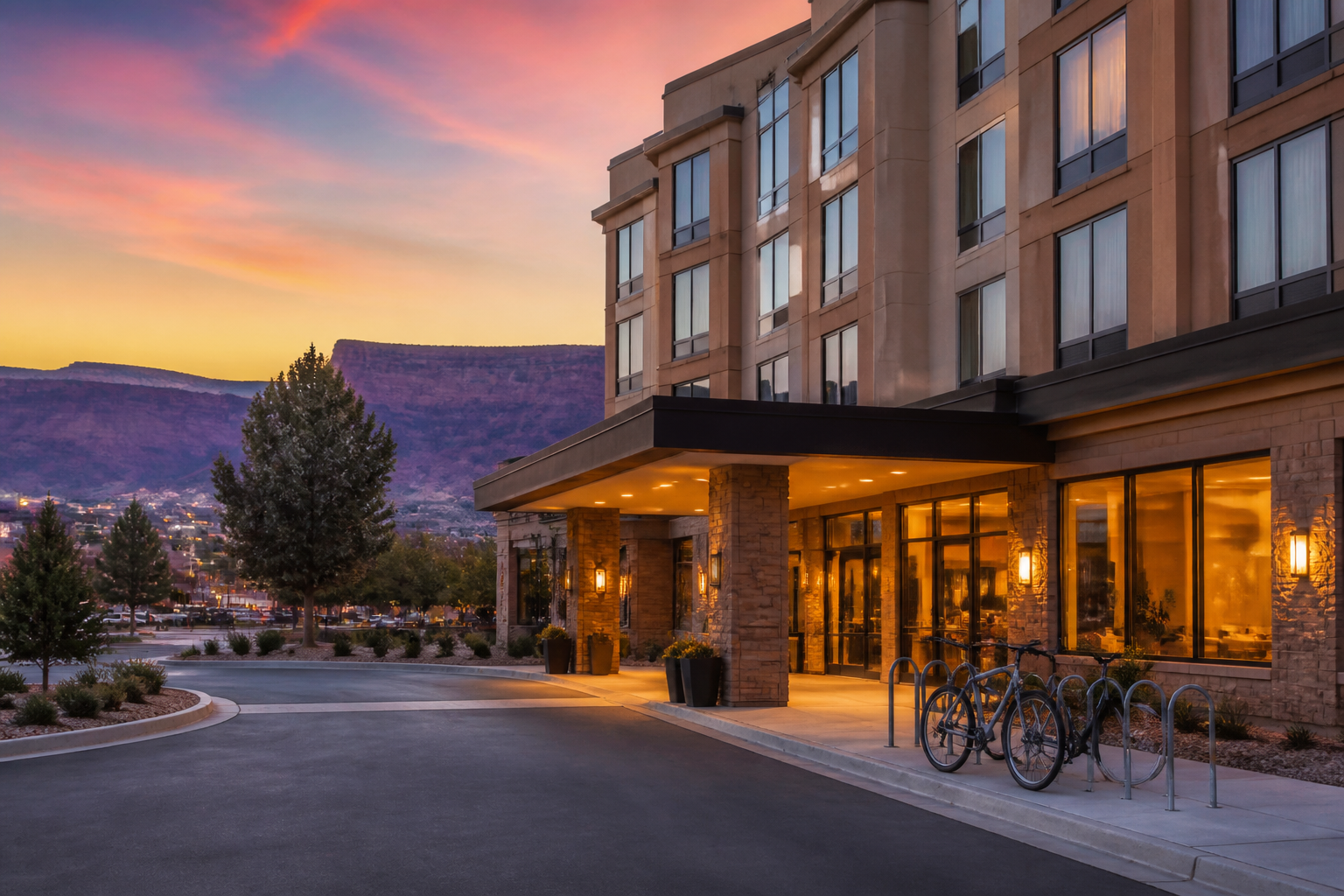
Travelers who'd rather have a front desk and daily housekeeping than a rental have solid options concentrated downtown and along Horizon Drive near the airport. Downtown properties put guests within walking distance of Main Street's outdoor sculpture-lined sidewalks, the Museum of the West, and the weekly farmers market, and they tend to work best for shorter stays built around wine tasting and town exploring rather than early-morning trailhead access. Horizon Drive hotels, clustered near GJT, are the practical choice for travelers on tight flight schedules or those using Grand Junction purely as an overnight stop before continuing on to Moab or Arches the next morning.
Mid-range chain hotels dominate the Grand Junction hotel market, and travelers shouldn't expect the boutique density of a larger resort town. That's actually part of the value here: rates for a comfortable three-star property in Grand Junction routinely undercut comparable lodging in Moab, especially during the high-demand months when Moab hotels are sold out or surge-priced. Extended-stay and suite-style hotels are worth considering for families or for travelers combining a wine-country visit with several days of mountain biking, since a kitchenette cuts down on dining costs over a multi-night stay.
Booking in advance matters most around two windows: the Palisade Peach Festival weekend in mid-August, and the peak fall color weekends of late September into October, when rooms near downtown and Horizon Drive can sell out well ahead of the date. Save 10% or more on hotels with Member Prices when you compare Grand Junction properties, or Compare hotel deals on Hotels.com to check availability and cancellation policies before locking in dates, particularly if your itinerary includes a flexible add-on day trip to Moab.
Save 10% or more on hotels with Member Prices — signing in to a free Hotels.com account applies the member rate to most properties in this area. For a straight comparison across properties, compare hotel deals on Hotels.com and check the cancellation terms while you are there.
Plan this trip
Grand Junction as a Basecamp for Moab & Arches National Park
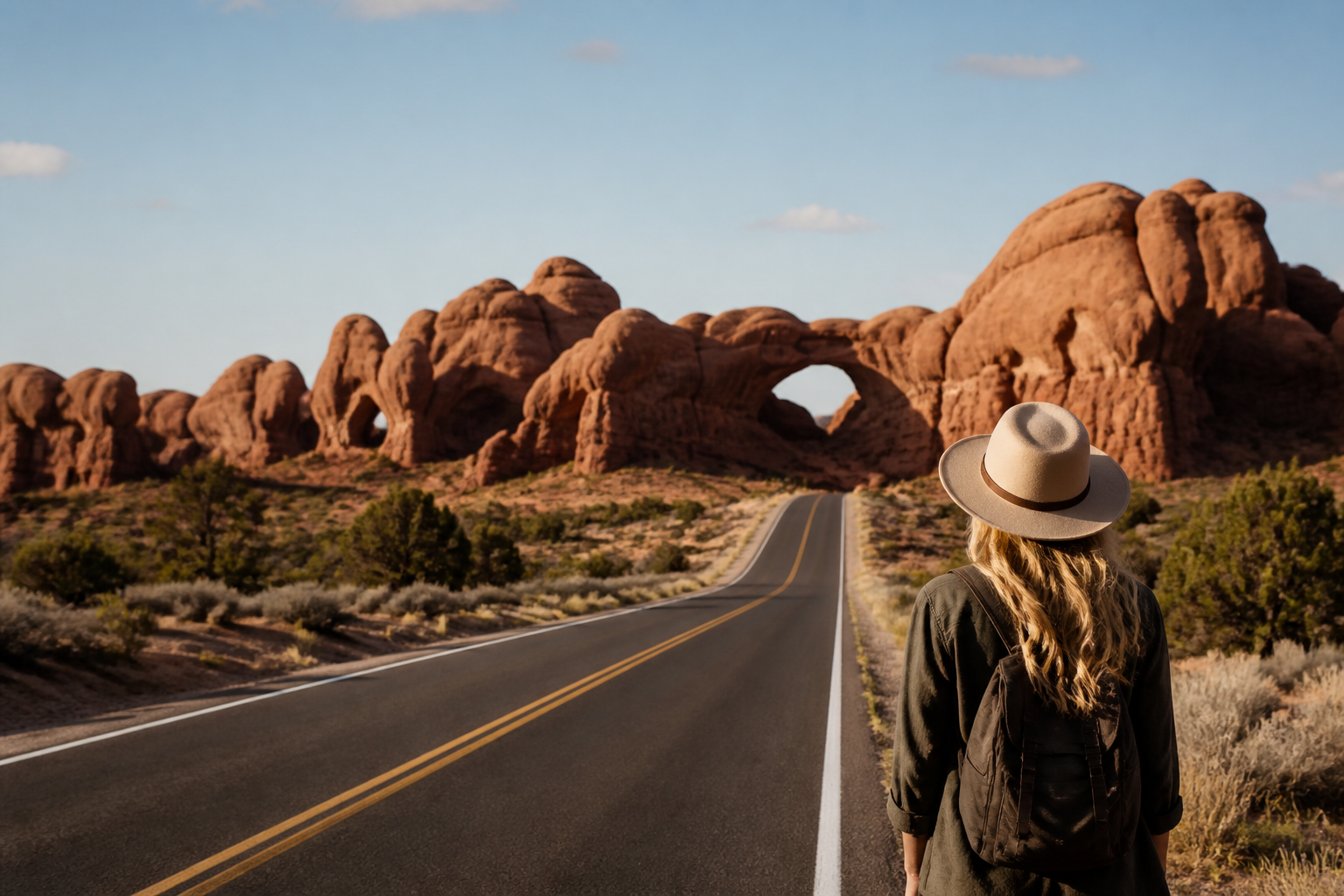
One of Grand Junction's most underused advantages is its proximity to Moab, Utah and Arches National Park, roughly 108 miles and about one hour and 45 minutes away via I-70 and US-191. That makes Grand Junction a legitimate alternative basecamp for travelers who want to see Arches and Canyonlands but would rather skip Moab's peak-season lodging prices and crowded in-town trailheads. Sleep in a quieter, less expensive market and just drive in for the day.
The drive itself crosses the Utah border through open high-desert scenery and is entirely paved, so it's an easy day trip rather than an expedition. Travelers heading to Arches for sunrise should plan to leave Grand Junction by around 4:30 to 5:00 a.m. depending on the season, since the park's timed-entry reservation system, in effect during peak months, and its popularity mean early arrival matters more than the drive time itself.
For groups who'd rather not manage a rental car for a single day trip, or who want to sightsee along Highway 128's Colorado River corridor without anyone having to focus on the road, our Grand Junction to Moab car service runs Mercedes Sprinter vans and Chevrolet Suburbans for full-day charters, with the vehicle and driver waiting in Moab for the return trip rather than requiring a second booking. That also solves the practical problem of Arches' small in-park parking lots, which routinely fill by mid-morning during spring and fall.
Grand Junction and Moab sit in different states, but both Colorado and Utah observe Mountain Time, so travelers don't need to worry about a time change, only the mile marker.
When to Visit Grand Junction: Best Time to Plan Your Trip
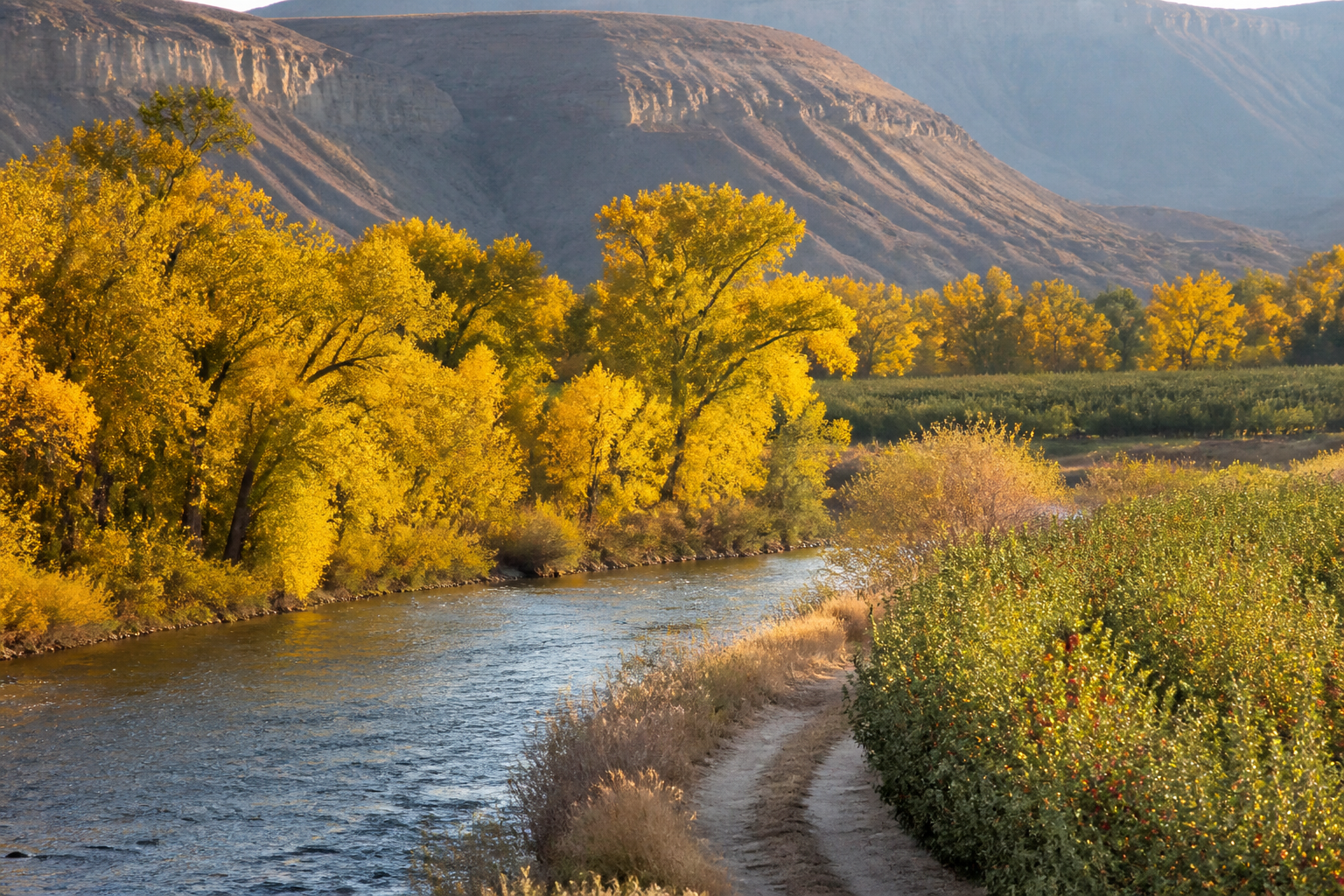
Grand Junction's identity as a shoulder-season destination is the single most important planning fact in this guide. April and May bring wildflowers to the Colorado National Monument, comfortable daytime highs in the 60s and 70s, and lower rates on both vacation rentals and hotels compared to summer. September and October bring the same comfortable temperatures along with Palisade's peach and grape harvest and the turning cottonwoods along the Colorado River, which makes fall arguably the strongest single window for a first visit.
Summer, June through August, still works, particularly for river rafting and early-morning mountain biking, but afternoon temperatures regularly reach the mid-90s to low 100s. That makes midday hiking on exposed monument trails uncomfortable and pushes most outdoor activity to early morning or evening. Winter is the quietest season by far, with mild but occasionally icy conditions on Rim Rock Drive and most wineries operating on reduced hours, though hotel rates drop accordingly for travelers mainly interested in wine tasting and town exploring rather than trail time.
A typical first-time itinerary runs three to four nights: one day for Rim Rock Drive and a monument hike, one day split between Palisade wine tasting and the Lunch Loops or a river float, and one full day dedicated to a Moab and Arches excursion, with the remaining time left open for the Grand Junction Farmers Market, the Museum of the West, or simply resting before a flight out of GJT. Booking lodging and any private transfers 60 to 90 days ahead is generally enough outside of the Peach Festival and peak fall foliage weekends, both of which benefit from earlier planning given Grand Junction's growing popularity as a lower-cost, lower-crowd alternative to Moab.
Plan this trip
Frequently Asked Questions
Yes. Grand Junction pairs Colorado National Monument's canyon scenery, Palisade wine and peach country, and mountain biking at the Lunch Loops within a compact area, and it is noticeably less crowded and less expensive than nearby Moab, Utah, especially during spring and fall shoulder seasons.
Spring, April through May, and fall, September through October, are the strongest windows, with daytime temperatures in the 60s and 70s, blooming or turning orchards, and lower lodging rates than summer's peak heat months.
About 243 miles, a roughly four-hour drive west on I-70 through Glenwood Canyon. Most vacationers instead fly directly into Grand Junction Regional Airport, code GJT, to avoid the long drive at the start and end of a short trip.
Roughly 108 miles and about one hour and 45 minutes via I-70 and US-191, making Grand Junction a practical, lower-cost basecamp for day trips into Arches and Canyonlands.
Yes. Grand Junction Regional Airport, code GJT, is about eight minutes from downtown and has a single terminal served by United, American, Delta, and Allegiant with direct flights from cities including Denver, Dallas-Fort Worth, Phoenix, and Salt Lake City.
Groups of four or more, or anyone planning a multi-day wine-country stay, generally do better with a vacation rental with a kitchen and yard, while solo travelers, couples, or those on a short overnight stop before Moab often find hotels near downtown or Horizon Drive more convenient.
Palisade, 15 minutes east of Grand Junction, is known for its peaches and for anchoring the Grand Valley AVA, Colorado's largest wine region, with more than 25 wineries and tasting rooms. The Palisade Peach Festival takes place annually in mid-August.
Yes. The Lunch Loops trail network sits minutes from downtown, and Grand Junction serves as the western terminus of the roughly 142-mile Kokopelli Trail, which connects to Moab, Utah.
Yes. The Ruby-Horsethief Canyon stretch near Loma, just west of town, is a popular multi-day float with red rock canyon walls and sandy campsites, and shorter half-day family rafting trips are also widely available in the Grand Valley.
A vehicle pass costs 25 dollars and is valid for seven days, covering unlimited access to Rim Rock Drive and all trailheads within the park.
Flying into GJT saves roughly four hours each way compared to driving from Denver, and is generally worth the airfare premium for trips of five nights or fewer, while the Denver drive can make sense for travelers already road-tripping through Colorado.