Why France Beyond Paris Deserves Its Own Itinerary
Paris is extraordinary—no serious traveler would dispute that. The Louvre alone contains more than 35,000 works of art, and the city attracts roughly 44 million visitors per year. But France is the world's most-visited country precisely because it offers so much more than its capital. Stretch beyond the Périphérique and you enter a country of genuinely distinct regions: each with its own dialect remnants, cuisine, architectural identity, and relationship with the land.
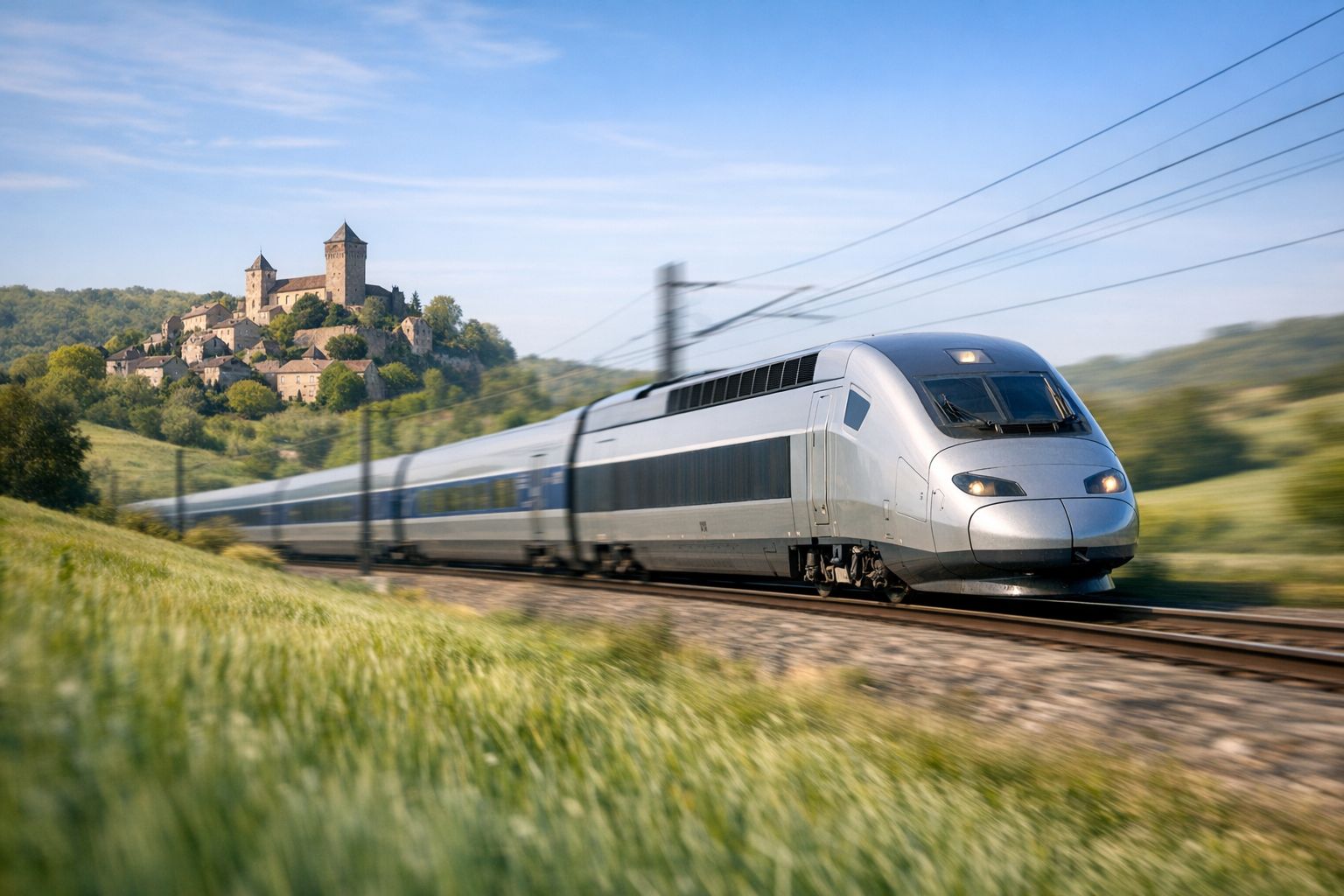
The good news is that getting out of Paris has never been easier or more affordable. SNCF's TGV high-speed network connects the capital to Lyon in just 2 hours, Bordeaux in 2 hours and 4 minutes, and Marseille in 3 hours 20 minutes—often for less than the price of a restaurant meal if you book in advance through SNCF Connect. Budget travelers can go further still with Flixbus (Paris to Lyon from €9) or BlaBlaCar rideshares, which typically run 30–50% cheaper than equivalent train journeys. For those planning multiple regional stops, an Interrail France Pass starts at approximately €179 for 3 travel days within a single month.
This guide covers three of the seven most compelling regions—Lyon and the Rhône-Alpes, Provence, and Bordeaux and its wine country—in the depth they deserve. Each section includes verified costs, the best times to visit, what to eat, where to sleep, and precisely how to get there. Whether you have a long weekend or three weeks, France beyond Paris is not a detour. For many travelers, it becomes the destination.
Lyon & the Rhône-Alpes: France's Gastronomic Capital
France's third-largest city—population roughly 520,000, with a metropolitan area of 2.3 million—occupies a peninsula between the Rhône and Saône rivers, 460 kilometres south of Paris. Its entire old town, Vieux-Lyon, has been a UNESCO World Heritage Site since 1998. But Lyon's most enduring claim on the traveler's imagination is culinary: this is, without serious argument, the gastronomic capital of France.
The Bouchon Experience
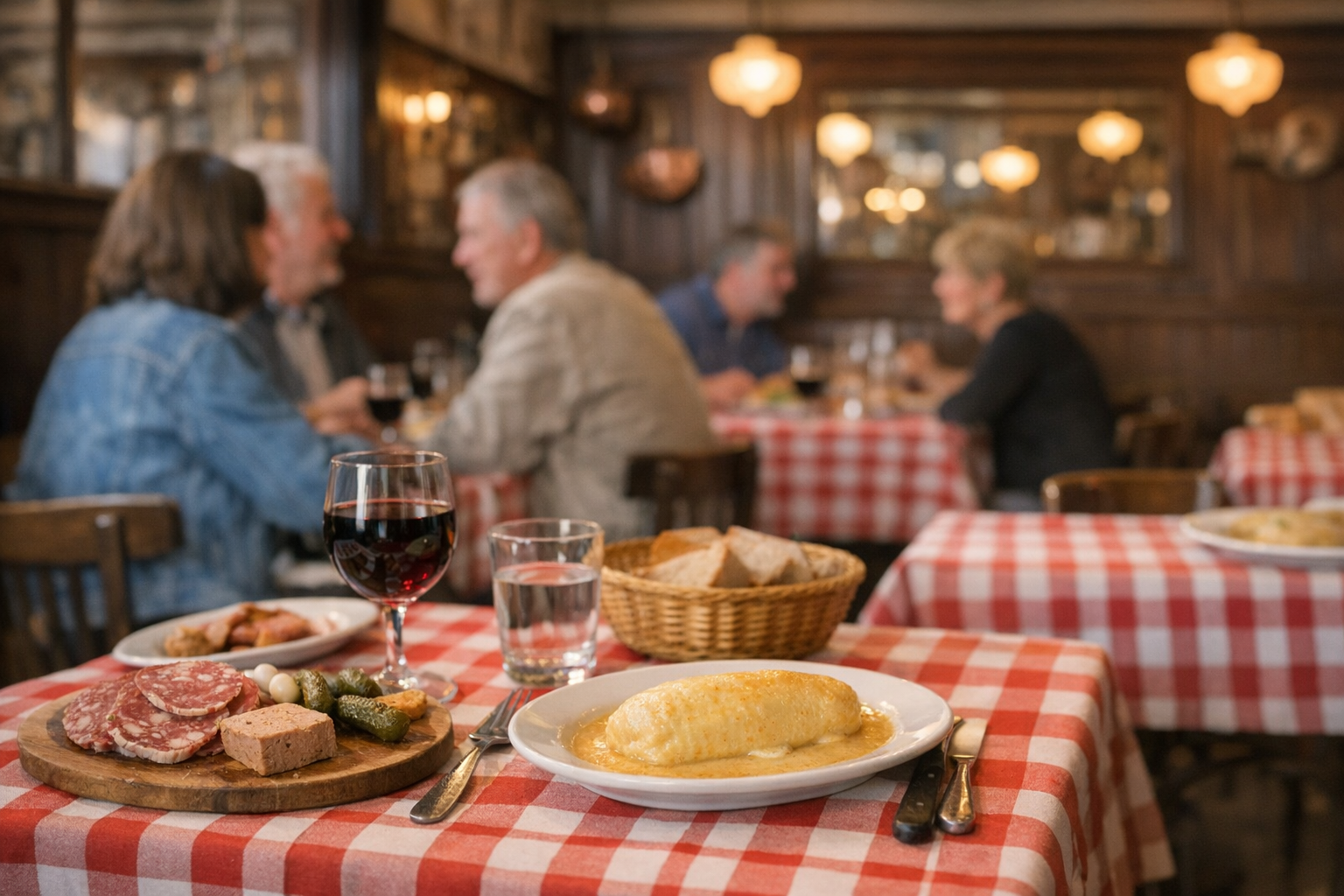
Lyon's traditional bistros, called bouchons, are unlike any other restaurant category in France. These intimate, often raucous dining rooms serve working-class Lyonnais food that has been elevated into something close to sacred: cervelle de canut (a herbed fresh cheese with shallots and vinegar), quenelles de brochet (pike dumplings in crayfish bisque), andouillette sausage, and tête de veau. Look for the 'Les Bouchons Lyonnais' certification label—around 20 establishments currently hold it, a guarantee of authenticity in a city where imitations proliferate.
Among the certified standouts: Daniel & Denise (three locations across the city, run by MOF-awarded Chef Joseph Viola; three-course lunch menus from €28–€35; book weeks in advance) and Chez Hugon at 12 Rue Pizay, the oldest operating bouchon, which opened in 1931 and closes on weekends, preserving the original weekday-lunch culture. Le Café du Jura on Rue du Bœuf offers mains from €16–€28 in a room that has changed very little since the mid-20th century.
For market devotees, Les Halles de Lyon Paul Bocuse at 102 cours Lafayette (open Tuesday to Sunday) is one of France's finest covered food markets: 50-plus stalls including Maison Sibilia for charcuterie and Bernachon, possibly the most respected chocolatier-pâtissier in the country, whose praline tarts are pilgrimages in themselves.
Culture and Architecture
Beyond food, Lyon rewards genuine curiosity. The Institut Lumière at 25 rue du Premier Film is the birthplace of cinema—Auguste and Louis Lumière shot the world's first projected film here in 1895—and the museum (€7 adult) preserves the original factory alongside a rich archive. The Musée des Confluences, housed in a deconstructivist building of striking geometric steel and glass (often compared to Zaha Hadid's vocabulary), charges €9 for adults and is free for under-18s; it covers science, anthropology, and natural history across four floors.
Vieux-Lyon's Renaissance architecture conceals one of the city's best-kept secrets: traboules. These are covered passageways that cut horizontally through apartment blocks, connecting streets on either side, and Lyon contains more than 230 of them. Approximately 40 are open to the public; the Lyon City Card (one day €26, two days €36, three days €46) includes transport on the excellent TCL metro and tram network, plus museum entry—it pays for itself quickly.
When to Go and What to Book Early
May–June and September–October offer the ideal combination of crowd levels and temperature (18–25°C). Avoid August, when many bouchons close and the city empties of locals. Two events demand advance planning: the Nuits de Fourvière festival (June–July 2026), which stages music and theatre in a genuinely intact Roman amphitheater above the city (tickets €15–€65), and the Fête des Lumières (December 5–8, 2026), when Lyon's buildings and public spaces are illuminated by artists from around the world. This free festival draws 2–3 million visitors over four nights. Book accommodation six to twelve months ahead.
Provence: Lavender, Light, and Living History
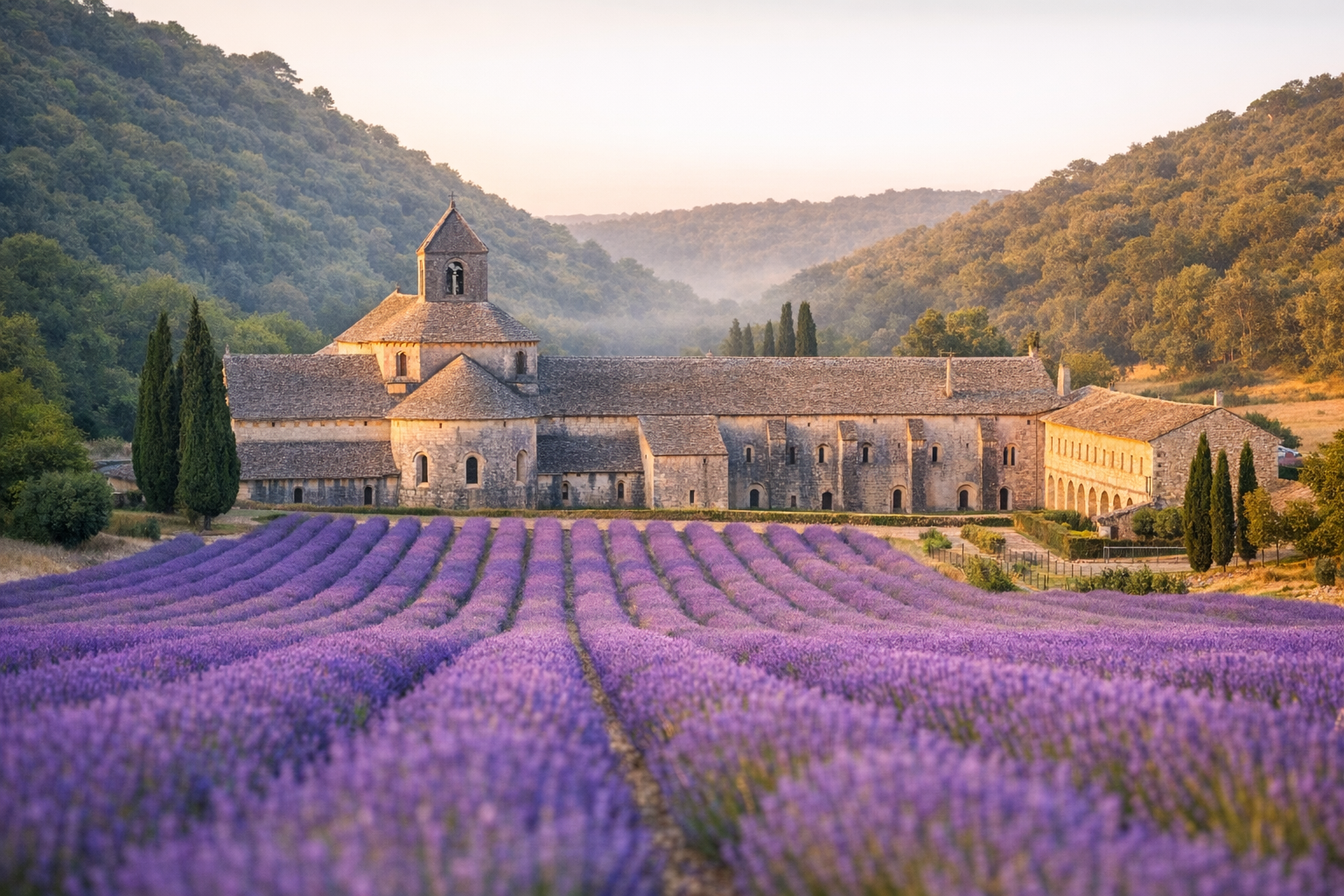
Provence covers roughly 31,400 square kilometres of south-eastern France and contains more genuinely distinct experiences per square kilometre than almost any other region in Europe. The light here—hard, white, and shadowless in midsummer—drew Van Gogh to paint more than 300 works in Arles between 1888 and 1889, and Cézanne to spend most of his life interpreting Mont Sainte-Victoire from the hills above Aix. Neither was wrong about what they found.
The Lavender Fields
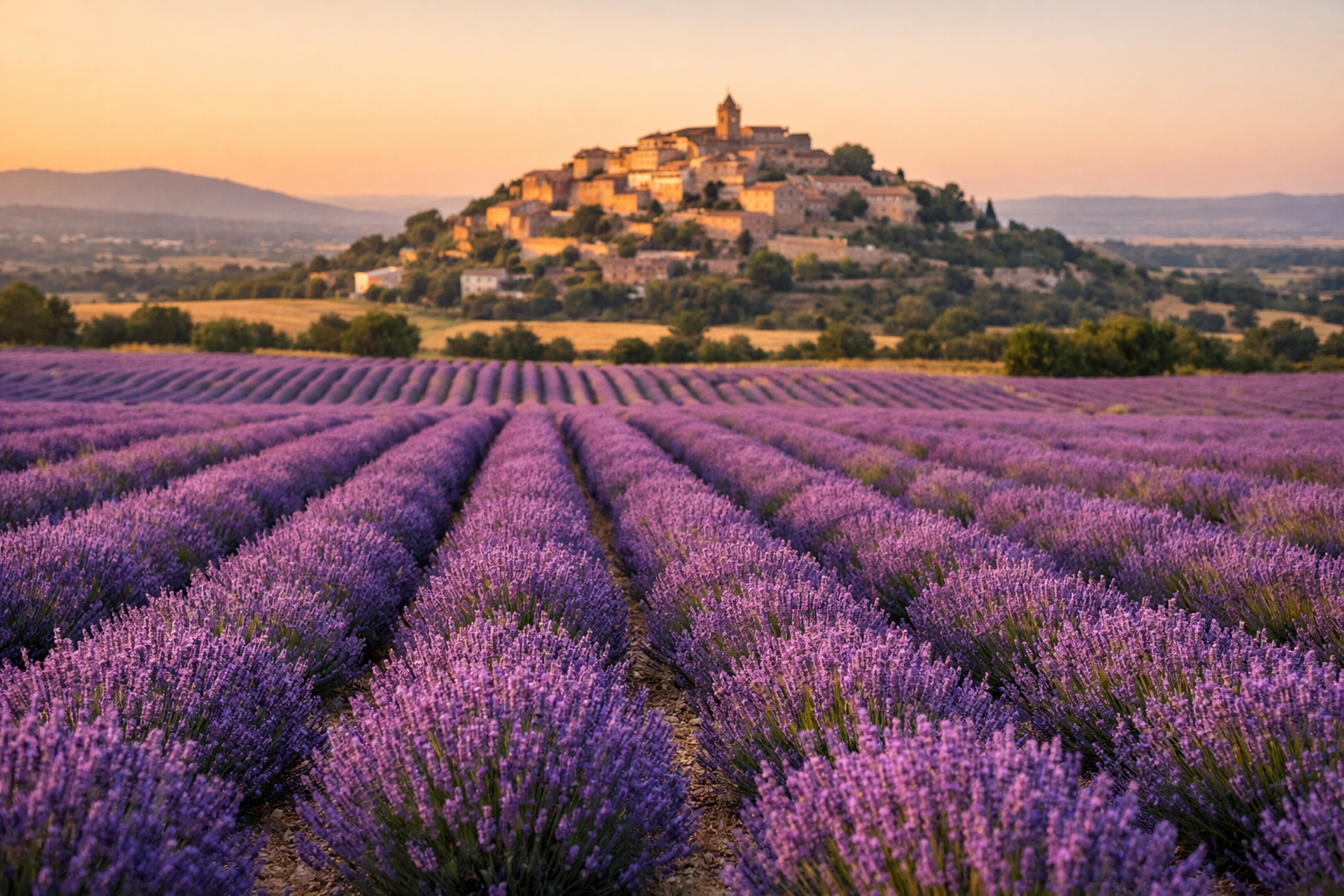
Provence's lavender season runs from late June through August, with peak bloom typically occurring between July 1 and 20. The most photographed location is the Plateau de Valensole, where rows of lavender stretch to the horizon across privately owned fields—do not enter them without permission, but the roadside views are extraordinary and completely free. For a more immersive experience, the village of Sault sits at 765 metres altitude, meaning its bloom arrives slightly later (late July), crowds are thinner, and the surrounding landscape adds drama. Sault hosts its lavender festival on the last Sunday of July.
The most reproduced single image of Provence is arguably the Abbaye de Sénanque, a 12th-century Cistercian abbey near Gordes, photographed across a foreground of lavender rows. Guided tours cost €8 and must be booked in advance; arrive before 8 AM in July if you want the scene without hundreds of fellow photographers.
Avignon and the Palais des Papes
Avignon's walled medieval city is one of the most complete examples of 14th-century urban architecture in existence. The Palais des Papes, which served as the seat of the Catholic Church from 1309 to 1377, is one of the largest Gothic buildings in Europe—€14 adult, with a combined ticket including the Pont Saint-Bénézet (the famous bridge of the nursery rhyme) at approximately €16. The Festival d'Avignon runs from approximately July 5–26, 2026, and divides into the ticketed 'In' programme (€12–€45 per show) and the 'Off' festival, which presents 600-plus performances at accessible prices across the city.
Arles: Van Gogh's City
The Fondation Vincent van Gogh Arles at 35ter rue du Docteur Fanton (€11 adult) contextualises Van Gogh's Arles period with rotating exhibitions from international artists responding to his legacy. The city's Les Arènes, a Roman amphitheater in near-perfect condition, charges €9 adult and still hosts bullfighting and concerts—a continuity of use spanning two millennia. More recent is Luma Arles, a Frank Gehry-designed contemporary art campus that opened in 2021; its crinkled stainless-steel tower (€14 adult) has become as much a landmark as anything Roman. The Rencontres d'Arles photography festival runs July 7 to September 28, 2026, with 40-plus exhibitions accessible on a single €42 pass.
Marseille: France's Oldest City
Founded by Greek settlers around 600 BC, Marseille is simultaneously France's oldest city and its second largest. The morning fish market at the Vieux-Port runs daily until roughly 13:00 and supplies the city's bouillabaisse restaurants—this fish stew, properly made from at least four varieties of local rockfish with rouille and gruyère, costs €55–€95 per person at serious establishments including Chez Fonfon (140 Vallon des Auffes) and must be ordered 24 hours in advance.
The MuCEM (Museum of European and Mediterranean Civilisations) on the J4 pier—€12 adult, closed Tuesdays—is housed in one of the most visually arresting contemporary museum buildings in France, its concrete lattice skin designed by architect Rudy Ricciotti. From here, boat tours depart the Vieux-Port (€22–€35) for the Calanques National Park, established in 2012: a protected coastline of white limestone cliffs dropping into impossibly clear turquoise water. Note that from July to August 2026, access to certain calanques may be restricted on high fire-risk days; check calanques-parcnational.fr 48 hours before your visit.
Getting Around and Staying
A car is essential for lavender fields, perched villages such as Gordes, and the Luberon. Car rental from Marseille or Avignon airports starts at approximately €35–€55 per day for a small car booked in advance. The major cities—Marseille, Aix-en-Provence, and Avignon—are connected by TGV and TER regional trains. The best months are May–June (wildflowers, temperatures of 20–26°C, no summer crowds) and September, when the harvest season brings warmth without the peak-season pressure and prices ease considerably.
Plan this trip
Hotels in France Beyond Paris 7 Stunning Regions You Need to Visit ( )
Top-rated hotels with free cancellation. Best price guaranteed.
Search Hotels →Compare Car Rentals
Compare 500+ suppliers — Hertz, Enterprise, Sixt & more.
Find Cars →Vacation Rentals
Entire homes and condos — more space, more privacy.
Browse Rentals →Bordeaux and the Wine Regions: Grand Châteaux and Arcachon Bay
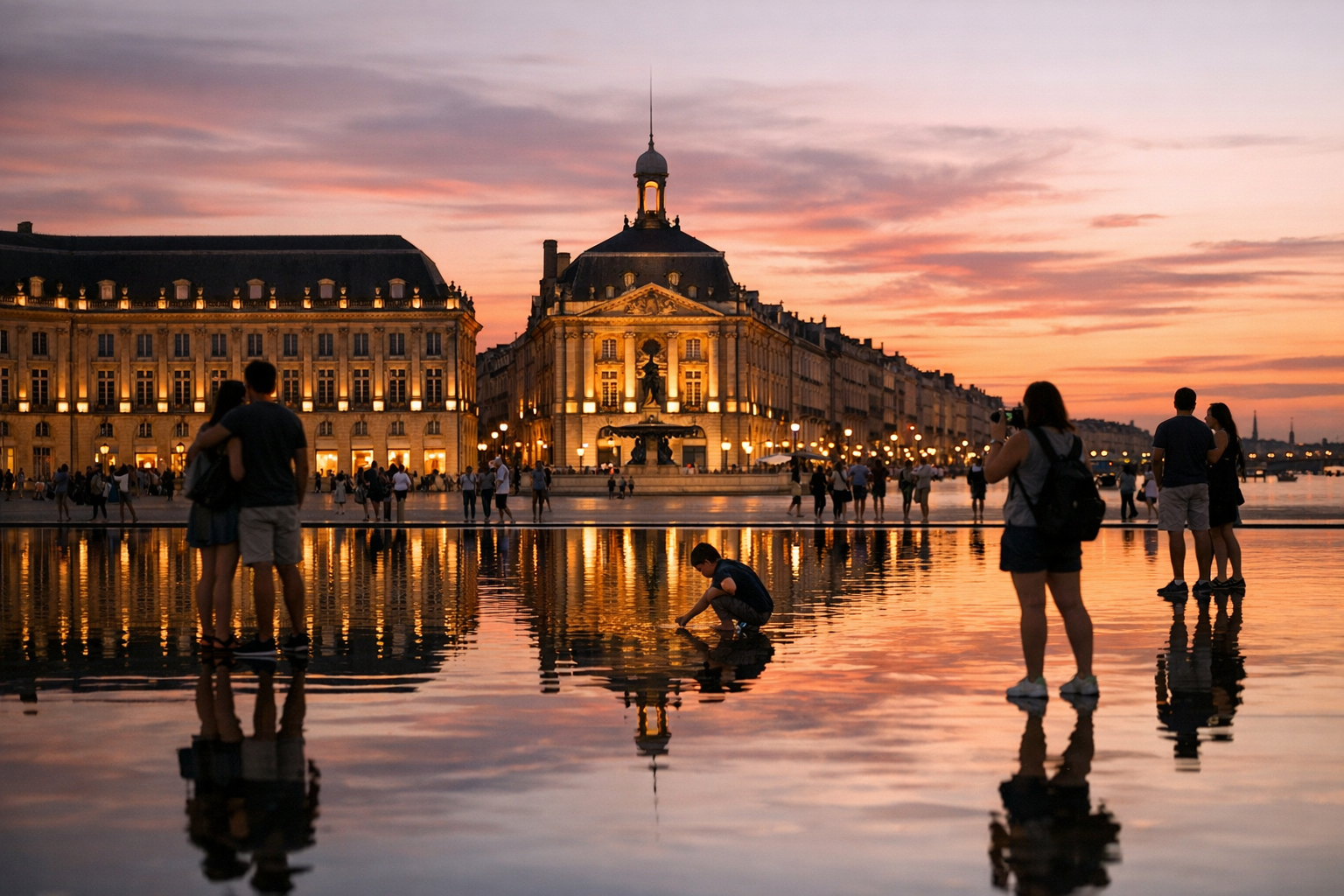
Bordeaux became a UNESCO World Heritage city in 2007—its designation as 'Port de la Lune' (Port of the Moon) referencing the crescent curve of the Garonne river around its historic waterfront. A major urban renovation completed between 2021 and 2024 has transformed it into one of the most liveable and visitable cities in France; with a TGV journey from Paris of just 2 hours and 4 minutes (from €30 booked ahead), it is also one of the most accessible.
La Cité du Vin and City Highlights
Any serious exploration of Bordeaux's wine culture begins at La Cité du Vin, a wave-shaped building on the Esplanade de Pontac that opened in 2016 and remains the world's most ambitious wine museum. At €22 per adult (which includes one wine tasting from the Belvedere bar on the upper floor, with panoramic views over the city and river), it covers 20 wine regions globally and contextualises Bordeaux's role in world wine history. Book tickets online to avoid queuing.
In the city itself, the Miroir d'Eau (Water Mirror) on the Place de la Bourse is the world's largest reflective pool at 3,450 square metres—entirely free and most magical at dusk when the neoclassical facade of the Bourse floats above its surface. The Marché des Capucins operates Tuesday to Sunday mornings; a plate of Arcachon Bay oysters with a glass of Entre-Deux-Mers white can be had for €10–€15, which is among the best-value eating experiences in France. For dinner, La Tupina at 6 rue Porte de la Monnaie serves traditional Gascon cooking—spit-roasted meats, foie gras, duck confit—with mains from €22–€45 in a dining room warmed by an open fireplace that has been burning since the restaurant opened in 1968.
The Médoc Wine Route and Château Visits
Bordeaux's wine country divides into two broad zones. The Left Bank (Médoc, Pauillac, Saint-Julien, Margaux) is Cabernet Sauvignon territory and home to the 1855 Classification's five First Growths: Châteaux Lafite Rothschild, Latour, Margaux, Mouton Rothschild, and Haut-Brion. The D2 Route des Châteaux through the Médoc is self-drivable with a map from the Bordeaux Tourist Office; many smaller châteaux maintain tasting rooms without appointment. For something more structured, Château Pichon Baron in Pauillac offers guided tours with tasting from €30–€60 (book online), and Château Léoville Barton in Saint-Julien runs intimate tours at approximately €25.
The Right Bank centres on Saint-Émilion, a UNESCO-listed village of cobblestone streets and honey-stone wine stores perched above vineyards of Merlot-dominant blends. The underground monolithic church hewn from solid limestone (€8, guided tour only) is unique in Europe. More accessible châteaux here—including Château Canon and Château Figeac—welcome consumer visits with two to four weeks' advance booking and charge €15–€30 for tastings. For the ultimate combination of wine tourism and luxury accommodation, Château Smith Haut Lafitte in Pessac-Léognan operates the Les Sources de Caudalie hotel and spa; rooms from €250, tastings from €25.
The Dune du Pilat and Arcachon Bay
Forty-five minutes west of Bordeaux by TER train (€9–€12 each way), Arcachon Bay offers one of France's most unexpected natural spectacles: the Dune du Pilat, Europe's tallest sand dune at 106 metres high, 500 metres wide, and 2.7 kilometres long. The climb to the summit takes roughly 15 minutes and rewards with views across the Bay of Arcachon on one side and the Landes pine forest—one of the largest man-made forests in Europe—on the other. Entry is free; arrive early in summer. From Arcachon town, a ferry (€11 return) crosses to Cap Ferret, where oyster shacks serve the day's harvest straight from the Bay with lemon and rye bread.
Planning Your Visit
The best window for Bordeaux is May–June or the vendanges harvest season (mid-September to mid-October), when the châteaux are at their most photogenic and many organize immersive harvest experiences for visitors. The city's tram network (three lines; one-hour ticket €1.80, 24-hour pass €5) makes it easy to navigate without a car. If you're exploring the wider wine regions, consider basing yourself in the city and driving out each day—parking and driving in the Médoc is straightforward outside peak summer weekends.
Alsace and Strasbourg: Europe's Most Distinctive Border Region
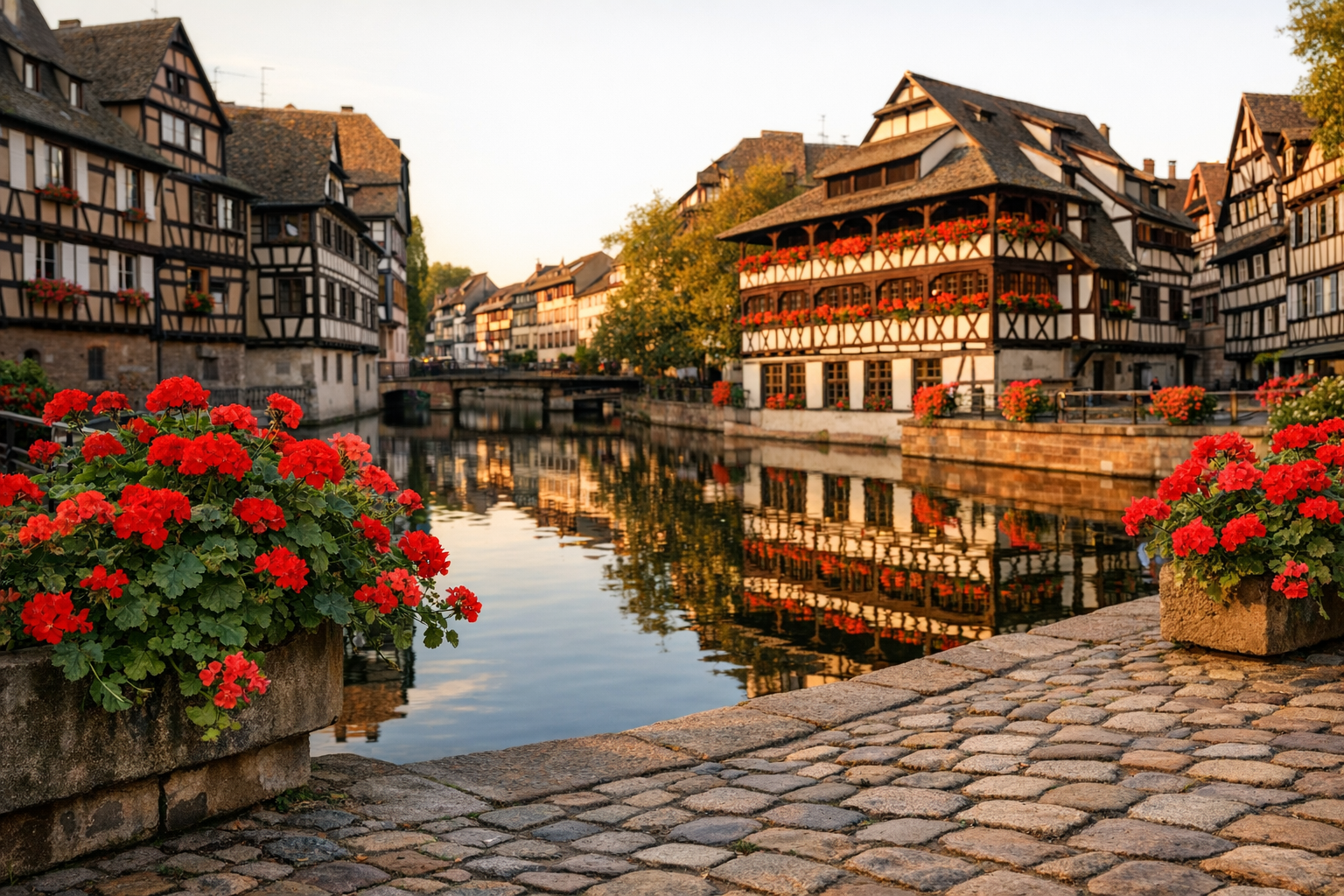
No region in France feels quite like Alsace. Sandwiched between the Vosges mountains and the Rhine, this narrow strip of territory changed hands between France and Germany four times between 1870 and 1945—and the architecture, cuisine, and language still bear every mark of that tumultuous history. Strasbourg, the region's capital, is reachable from Paris in just 1 hour and 46 minutes by TGV (from approximately €25), making it one of the fastest and most rewarding escapes from the capital.
Strasbourg's Grande Île (Great Island) has been a UNESCO World Heritage Site since 1988. The Cathédrale Notre-Dame de Strasbourg, built between 1015 and 1439, was the world's tallest building for more than 200 years and remains one of the finest examples of late Gothic architecture anywhere in Europe; the astronomical clock inside strikes at 12:30 daily and draws crowds accordingly—arrive by 12:15. The Musée d'Alsace and the city's Petite France quarter—a medieval tannery district of half-timbered houses, canals, and weir bridges—require at least half a day each.
Alsace's Wine Route (Route des Vins d'Alsace) runs 170 kilometres from Marlenheim to Thann through some of France's most photogenic wine villages: Riquewihr, Ribeauvillé, and Kaysersberg (birthplace of Albert Schweitzer) among them. Alsace specialises in aromatic whites—Riesling, Gewurztraminer, Pinot Gris—and the region's Christmas markets (late November to December 2026) are consistently ranked among Europe's finest, with Strasbourg's market dating to 1570.
For planners building multi-city itineraries, Alsace pairs naturally with a night in Lyon as a southward progression, or as a standalone long-weekend destination from Paris. Accommodation in Strasbourg runs from €70–€130 per night at mid-range hotels, with farmhouse gîtes along the wine route available from €90–€180 per night for a more immersive stay.
Plan this trip
Hotels in France Beyond Paris 7 Stunning Regions You Need to Visit ( )
Top-rated hotels with free cancellation. Best price guaranteed.
Search Hotels →Compare Car Rentals
Compare 500+ suppliers — Hertz, Enterprise, Sixt & more.
Find Cars →Vacation Rentals
Entire homes and condos — more space, more privacy.
Browse Rentals →Practical Planning: How to Build Your France Beyond Paris Itinerary
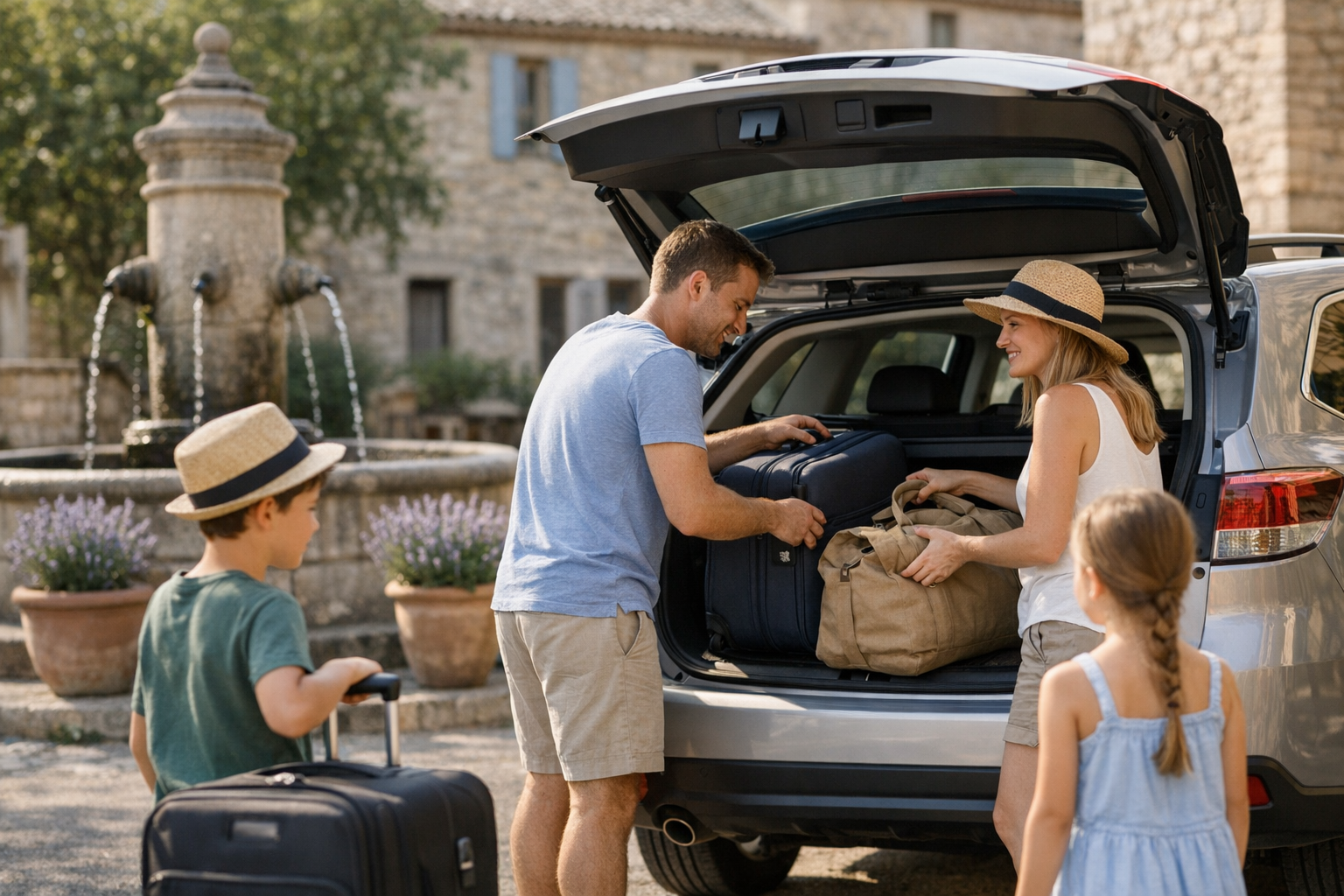
The single biggest mistake travelers make when exploring France beyond Paris is underestimating distances and overloading itineraries. France is roughly the size of Texas—it takes 8 hours to drive from Calais to the Spanish border, and cultural differences between, say, Alsace and Provence are as pronounced as those between any two European countries. Build your itinerary around a maximum of two or three regions per trip, and give each one at least two full days.
Transport Strategy
For a linear south-facing journey, the classic routing is: Paris → Lyon (2 hours TGV) → Avignon or Aix-en-Provence (1 hour TGV from Lyon) → Marseille or Bordeaux (connects via TGV). This circuit can be done entirely by train for a week-long itinerary without a car, though Provence's villages demand wheels once you leave the main cities. The Interrail France Pass (from ~€179 for 3 travel days within a month) makes financial sense for itineraries covering four or more TGV segments; point-to-point advance booking is better for two or three fixed journeys.
For Provence specifically, collecting a rental car in Avignon or Marseille and returning it in Bordeaux (one-way rentals are available, sometimes with a drop fee) gives maximum flexibility through the Luberon and Camargue before heading northwest. Book rental cars at least 4–6 weeks in advance for peak-season travel; prices increase dramatically in July and August.
Accommodation Choices
Each region offers a distinct accommodation culture. Lyon's best boutique hotels cluster in Vieux-Lyon and the Presqu'île (€90–€350 per night). Provence is the heartland of the French mas—a farmhouse property with pool and gardens that can be rented by the week through vacation rental platforms; a three-bedroom mas in the Luberon in September typically runs €1,200–€2,500 per week and represents exceptional value for families or small groups compared to equivalent hotel accommodation. For wine country, Bordeaux's urban hotels (€60–€200 per night, mid-range) work as a base for day trips to the châteaux, with the option of upgrading to a château hotel for one night as a splurge.
Budget Overview
A realistic daily budget for France beyond Paris, excluding intercity transport, breaks down roughly as follows: budget traveler (hostels, bouchon lunches, picnic dinners, free attractions) €60–€85; mid-range traveler (two-star hotels, restaurant lunches and dinners, paid museums) €140–€220; comfortable traveler (boutique hotels, wine tastings, chef restaurants) €280–€450 and above. The single most effective money-saving strategy across all regions is to eat your main meal at lunch: most restaurants—including Michelin-starred ones—offer fixed lunch menus (formules) at 40–60% of dinner prices.
What to Book Well in Advance
Certain experiences require booking months ahead: the Fête des Lumières in Lyon (accommodation; December 2026), the Festival d'Avignon (accommodation and 'In' programme tickets; July 2026), the Nuits de Fourvière (tickets; June–July 2026), the Daniel & Denise bouchon in Lyon, and any château visit in Bordeaux's Médoc during harvest season. For Provence in summer, both the Carrières de Lumières at Les Baux-de-Provence and the Abbaye de Sénanque require online pre-booking. None of these experiences are difficult to access with planning; all become nearly impossible without it.
Frequently Asked Questions
The TGV high-speed rail network is the most convenient option for most travelers. From Paris, journey times are approximately 2 hours to Lyon (from €25), 2 hours 4 minutes to Bordeaux (from €30), 3 hours 20 minutes to Marseille (from €35), and 1 hour 46 minutes to Strasbourg (from €25). All tickets are bookable through SNCF Connect. Budget travelers should consider Flixbus (Paris–Lyon from €9) or BlaBlaCar rideshares, which are typically 30–50% cheaper than trains. An Interrail France Pass (from ~€179 for 3 travel days within a month) is worth considering for multi-region itineraries.
Lavender peak bloom in Provence typically falls between July 1 and 20, though altitude affects timing. The Plateau de Valensole (at lower elevation) peaks earliest, while Sault at 765 metres blooms slightly later, usually around late July. For the iconic Abbaye de Sénanque near Gordes, arrive before 8 AM in July to photograph the abbey and lavender without crowds. Note that July–August also brings temperatures above 30°C and peak tourist pressure; May–June offers wildflowers, pleasant temperatures (20–26°C), and significantly smaller crowds.
It depends entirely on the region. Lyon, Bordeaux, Strasbourg, and Marseille are all easily navigable by public transport, and the TGV connects them to Paris efficiently. However, Provence's most celebrated landscapes—the Luberon villages, lavender plateaus, Gordes, Les Baux-de-Provence, and the Calanques trailheads—require a car. The Bordeaux wine route through the Médoc and the Alsatian Wine Route are both best explored by car. Rental cars are available from major airports and city stations; book at least 4–6 weeks in advance for summer travel to secure reasonable prices.
A bouchon is a traditional Lyonnais bistro serving hearty, working-class dishes rooted in the city's silk-worker culture: quenelles de brochet (pike dumplings), cervelle de canut (herbed fresh cheese), andouillette sausage, and tête de veau. Approximately 20 establishments currently hold the 'Les Bouchons Lyonnais' official certification, which guarantees authenticity. They are absolutely worth visiting—not just for the food, which is genuinely excellent and fairly priced (three-course lunch menus from €28–€35), but for the atmosphere, which is unlike any other dining experience in France. Book ahead, especially for Daniel & Denise or Chez Hugon.
Several First Growth châteaux (Margaux, Lafite Rothschild) are effectively closed to casual visitors, but a large number of excellent properties welcome consumers with advance booking. Château Pichon Baron in Pauillac offers guided tours with tasting from €30–€60 (book via their website); Château Léoville Barton in Saint-Julien runs tours at approximately €25. In Saint-Émilion, Château Canon and Château Figeac typically accept consumer visits booked 2–4 weeks ahead. The D2 Route des Châteaux through the Médoc passes numerous properties with open tasting rooms requiring no appointment. La Cité du Vin in Bordeaux city (€22, including one tasting) is also an outstanding starting point for understanding the region's full appellations.
The Fête des Lumières (Festival of Lights) is Lyon's signature annual event, held over the first full weekend after December 8 each year. In 2026, it falls approximately December 5–8. The festival transforms Lyon's streets, squares, and historic buildings into a free outdoor exhibition of light art, drawing 2–3 million visitors over four nights. Entry to all outdoor installations is free of charge. However, because of the enormous visitor numbers, accommodation must be booked 6–12 months in advance, and prices spike considerably during the festival period. Arrive early each evening for the best experience; the Fourvière hill and Presqu'île offer the most spectacular installations.
Daily budgets vary significantly by travel style, excluding intercity transport. A budget traveler using hostels, eating lunch at bouchons or markets, and self-catering for dinner can manage on €60–€85 per day. A mid-range traveler in two-star hotels with restaurant lunches and dinners and paid museum entries should budget €140–€220 per day. Those staying in boutique properties, visiting Michelin-starred restaurants, and doing wine tastings at châteaux should expect €280–€450 or more. The most effective money-saving strategy across all regions is eating your main meal at lunch: French restaurants—including many starred ones—offer formule lunch menus at 40–60% of dinner prices.
Plan this trip
Hotels in France Beyond Paris 7 Stunning Regions You Need to Visit ( )
Top-rated hotels with free cancellation. Best price guaranteed.
Search Hotels →Compare Car Rentals
Compare 500+ suppliers — Hertz, Enterprise, Sixt & more.
Find Cars →Vacation Rentals
Entire homes and condos — more space, more privacy.
Browse Rentals →