
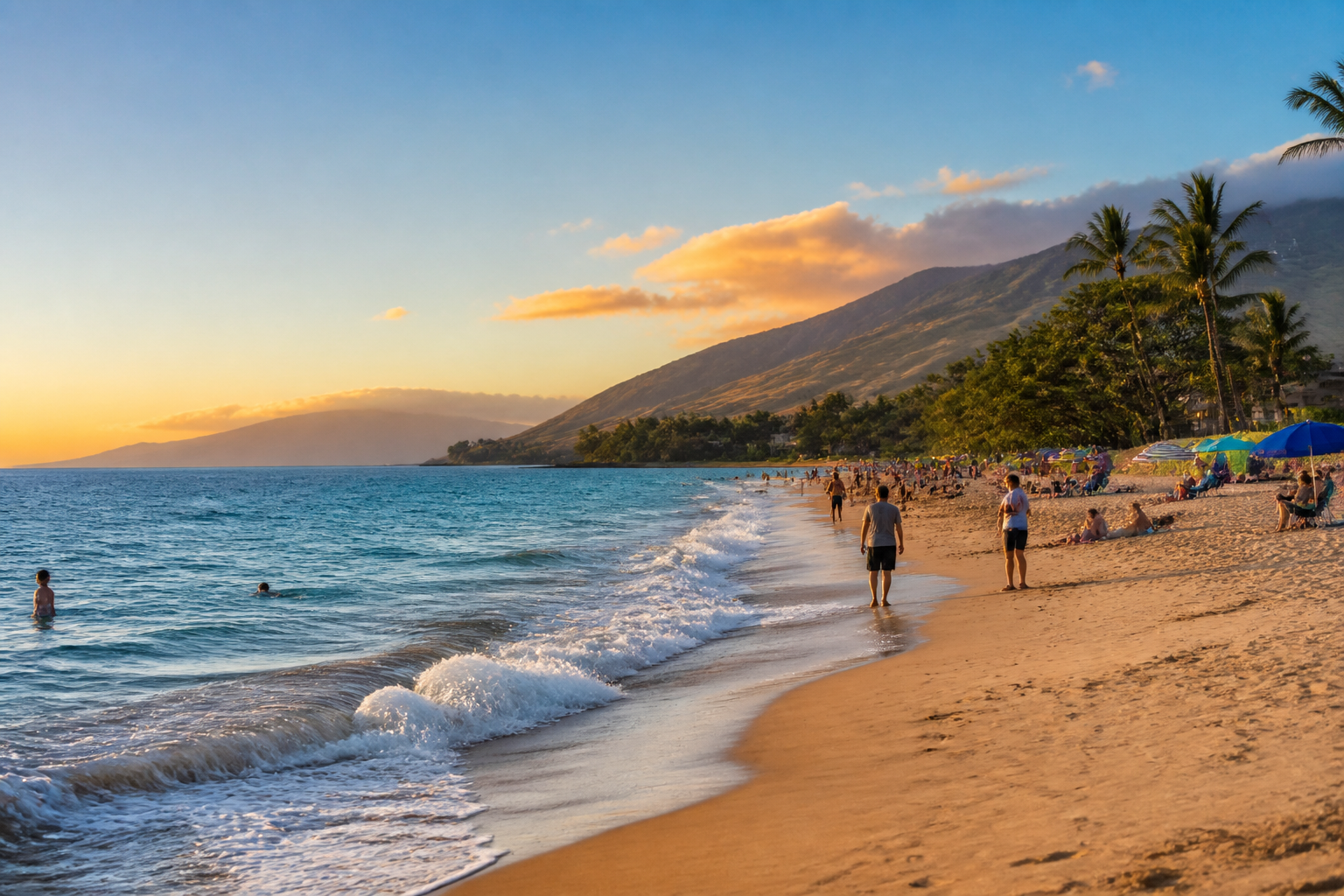
Kihei, Maui at a Glance: South Maui's Sunniest Home Base
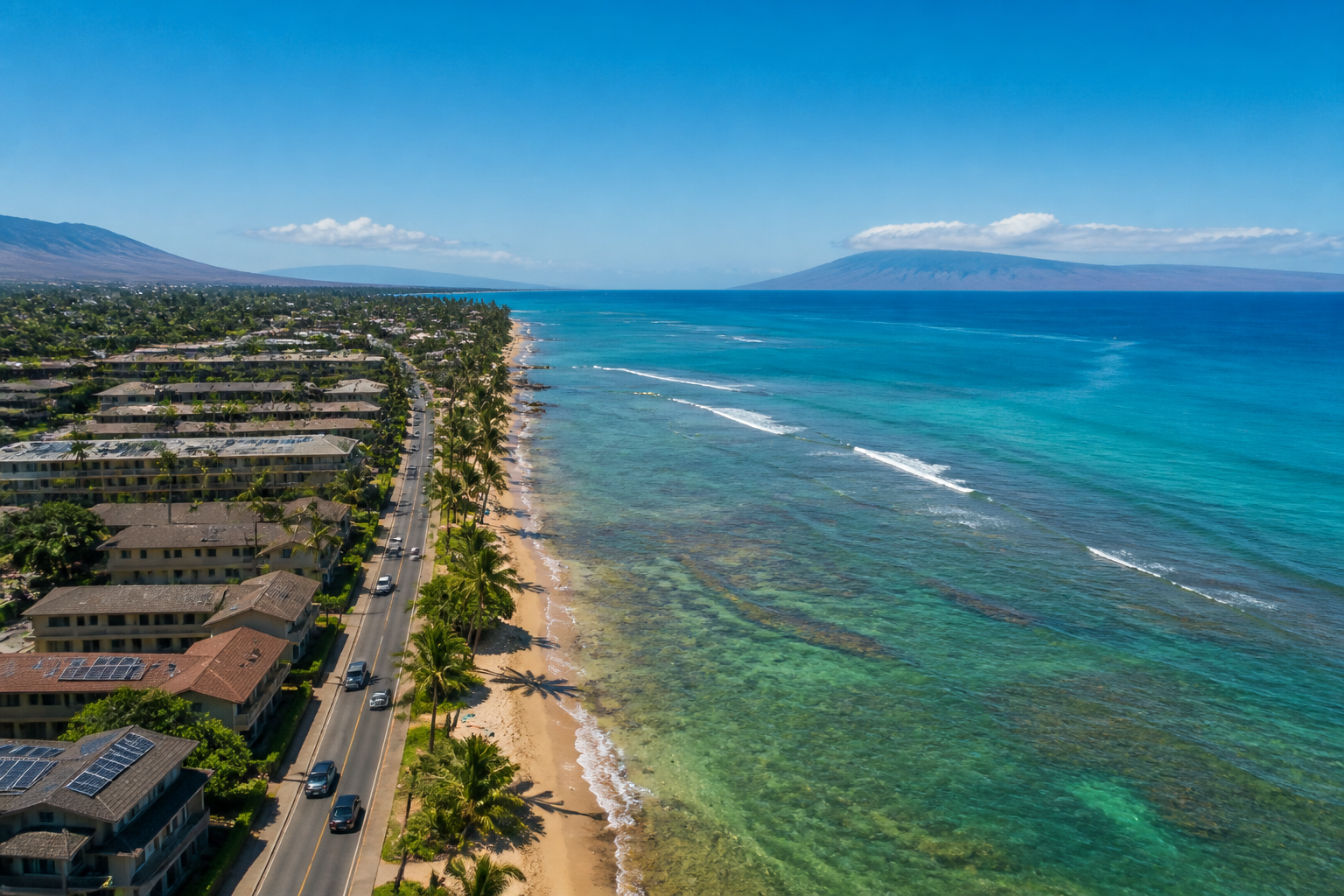
Kihei is a seven-mile run of leeward coastline along Maui's south shore, and it's where most independent travelers end up staying. The reason is simple: beach access paired with condo prices that undercut neighboring Wailea by a wide margin. If you want a full-kitchen unit within walking distance of sand, more sunshine than almost anywhere else on the island, and quick access to Molokini snorkel boats out of Maalaea Harbor, Kihei is the answer.
This guide assumes you've already settled on Maui as your island. If you're still weighing Maui against Oahu, Kauai, or the Big Island, that decision gets its own treatment in our Hawaii vacation planning guide. Here, we go deeper on the one neighborhood that delivers the best value-to-beach ratio on Maui's south side.
Kihei stretches roughly from Maalaea Harbor in the north down to the Wailea resort boundary near Keawakapu Beach in the south, with South Kihei Road threading the entire corridor. Nearly every condo, restaurant, and beach access point sits within a few minutes of that single road, which makes Kihei one of the easier South Maui neighborhoods to navigate without local knowledge.
For help planning a full Maui itinerary, including the drive to Hana and airport logistics, see our Road to Hana driving guide and our Maui airport transfer guide, both linked later in this article.
Kihei vs. Wailea: Which South Maui Neighborhood Fits Your Budget
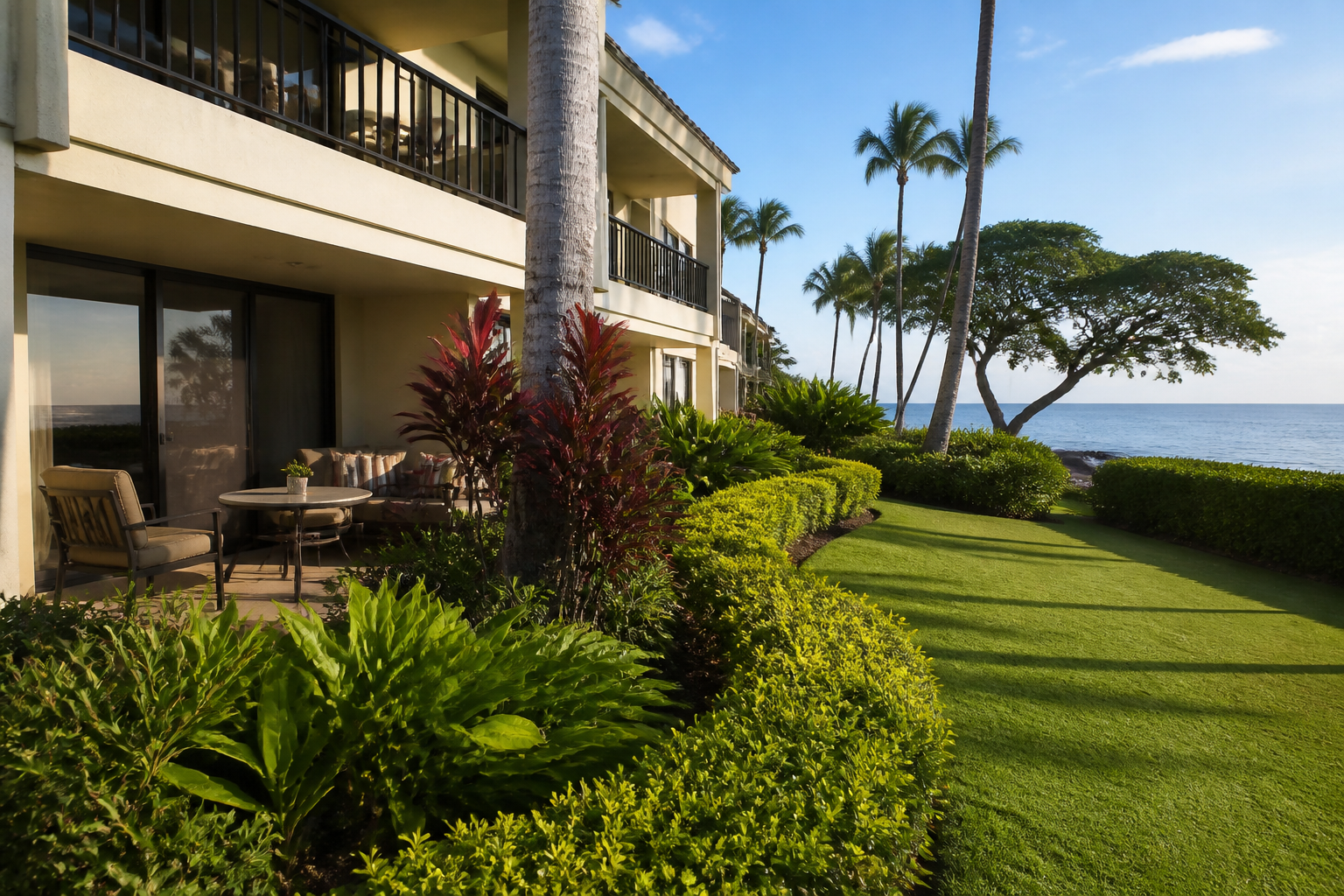
Kihei and Wailea sit back to back on the same south-facing coastline, but the price gap between them is real. Wailea is a master-planned resort district anchored by five-star properties like the Four Seasons Resort Maui, the Grand Wailea, and the Fairmont Kea Lani — manicured grounds, resort fees, and nightly rates that commonly run $600 to $1,500 and up in high season. Kihei, just to the north, is a working beach town of low-rise condo buildings, strip-mall restaurants, and public beach parks, where comparable oceanfront or ocean-view units are frequently available for a third to half of Wailea's rates.
The trade-off is polish, not location. Kihei's beaches, particularly the Kamaole parks, hold their own against Wailea's — and in several ways beat them for families, thanks to on-site lifeguards, restrooms, and free parking. What you give up in Kihei is the manicured resort infrastructure, valet service, and multiple on-property restaurants that come standard at Wailea's hotels.
We generally point first-time visitors and families toward Kihei condos for a one- to two-week stay, and save Wailea for travelers who specifically want a resort-style, adults-oriented stay with spa access and fine dining on property. Plenty of visitors split the difference on a longer trip: most nights in a Kihei condo, with a Wailea resort day pass or dinner treated as a splurge rather than a full relocation.
Kihei Vacation Rentals: Condos, Villas & Beach Homes
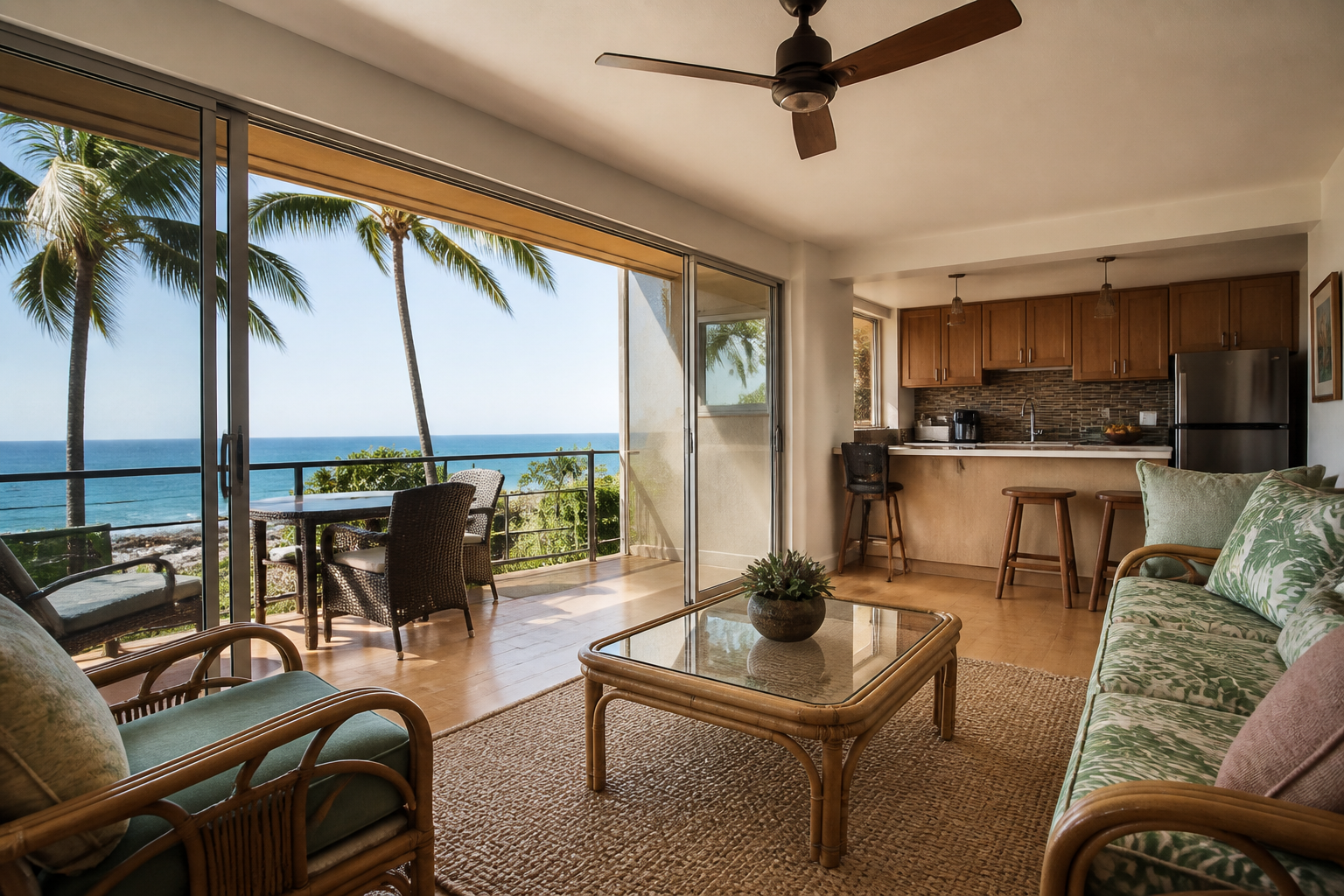
Condos, not hotels, are the dominant lodging type in Kihei, and knowing that upfront changes how you should shop. Buildings like Kamaole Sands, Maui Kamaole, Kihei Surfside, Menehune Shores, and the Mana Kai Maui line South Kihei Road with one- and two-bedroom units that include full kitchens, in-unit laundry in many buildings, and lanais facing either the ocean or the pool courtyard. Most of these buildings are individually owned condos rented out through independent owners or property managers rather than a single hotel brand, so pricing and quality vary unit by unit even within the same building. That's why reading recent guest reviews for the specific unit number matters more than the building name alone.
A one-bedroom garden-view condo in Kihei in 2026 typically runs $180 to $280 a night in shoulder season, with true oceanfront one-bedrooms in the $300 to $450 range. Two- and three-bedroom units suited to families or groups start around $350 and climb well past $600 for prime oceanfront buildings near Kamaole Beach Park II. Kitchens are the real value driver here: grocery prices on Maui run noticeably higher than the mainland, and a condo that lets you cook breakfast and pack a beach lunch can save a family of four $50 to $100 a day compared to eating out for every meal.
Book condo rentals directly through vacation rental platforms rather than calling individual buildings — most owners list exclusively online and don't take phone reservations. Start your search early for visits during the winter high season (mid-December through March) and during summer school-break weeks, when the best oceanfront units in buildings like Mana Kai Maui and Menehune Shores book out four to six months ahead.
Browse Kihei vacation rentals on Vrbo to compare current inventory by building and price, or use Find your perfect vacation rental on Vrbo to filter specifically for oceanfront or ocean-view units near Kamaole Beach Park I, II, or III.
If you are weighing a couple of areas against each other, browse Kihei vacation rentals on Vrbo and use the map view to judge the distances for yourself. Once you know roughly where you want to be, find your perfect vacation rental on Vrbo and sort by what matters most to you — pool, parking, walkability.
Plan this trip
Kihei Hotels: Best Picks for Your Maui Stay
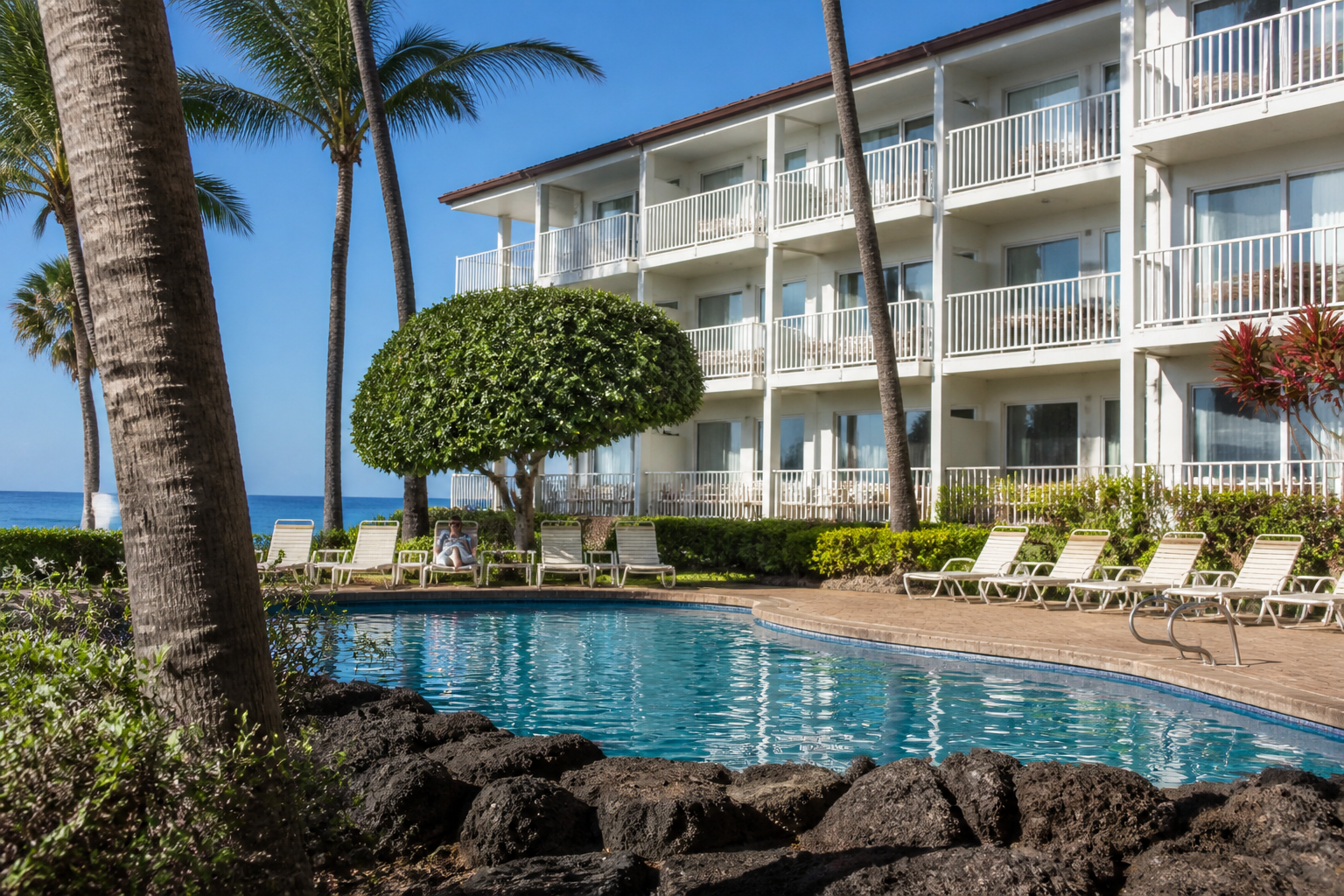
True hotels are scarce in Kihei compared to condos, but a handful of properties operate as traditional hotels or hotel-condo hybrids with front-desk service, daily housekeeping, and on-site amenities that condo buildings simply don't offer. The Mana Kai Maui, at the southern end of Kihei near Keawakapu Beach, functions as both a condo-hotel and a traditional hotel wing, with an on-site restaurant and direct beach access — one of the few Kihei properties where you can book like a hotel without sacrificing the beachfront location. Maui Coast Hotel, set back from the water in central Kihei near the Azeka Shopping Center, offers a more conventional hotel experience with a pool, on-site restaurant, and rates that typically run $50 to $100 a night below comparable Wailea resorts, though it's a five- to ten-minute walk rather than a beachfront position.
For travelers who want hotel-style service without condo self-catering logistics, Kihei's hotel stock is genuinely limited. Many visitors end up comparing Kihei's few hotel options against small boutique inns and larger resort hotels just south in Wailea. If a full-service resort with daily housekeeping, room service, and an on-property spa matters more to you than a beachfront kitchen, cross-shopping both neighborhoods is worth the extra time rather than assuming Kihei alone will have the right fit.
Whichever direction you go, book several months ahead for peak winter dates, and always compare member rates before finalizing. Save 10% or more on hotels with Member Prices when you create a free account before booking, and use Compare hotel deals on Hotels.com to check current nightly rates for Maui Coast Hotel, Mana Kai Maui, and nearby Wailea alternatives side by side.
Save 10% or more on hotels with Member Prices — signing in to a free Hotels.com account applies the member rate to most properties in this area. For a straight comparison across properties, compare hotel deals on Hotels.com and check the cancellation terms while you are there.
Kamaole Beach Parks I, II, and III: Kihei's Main Event
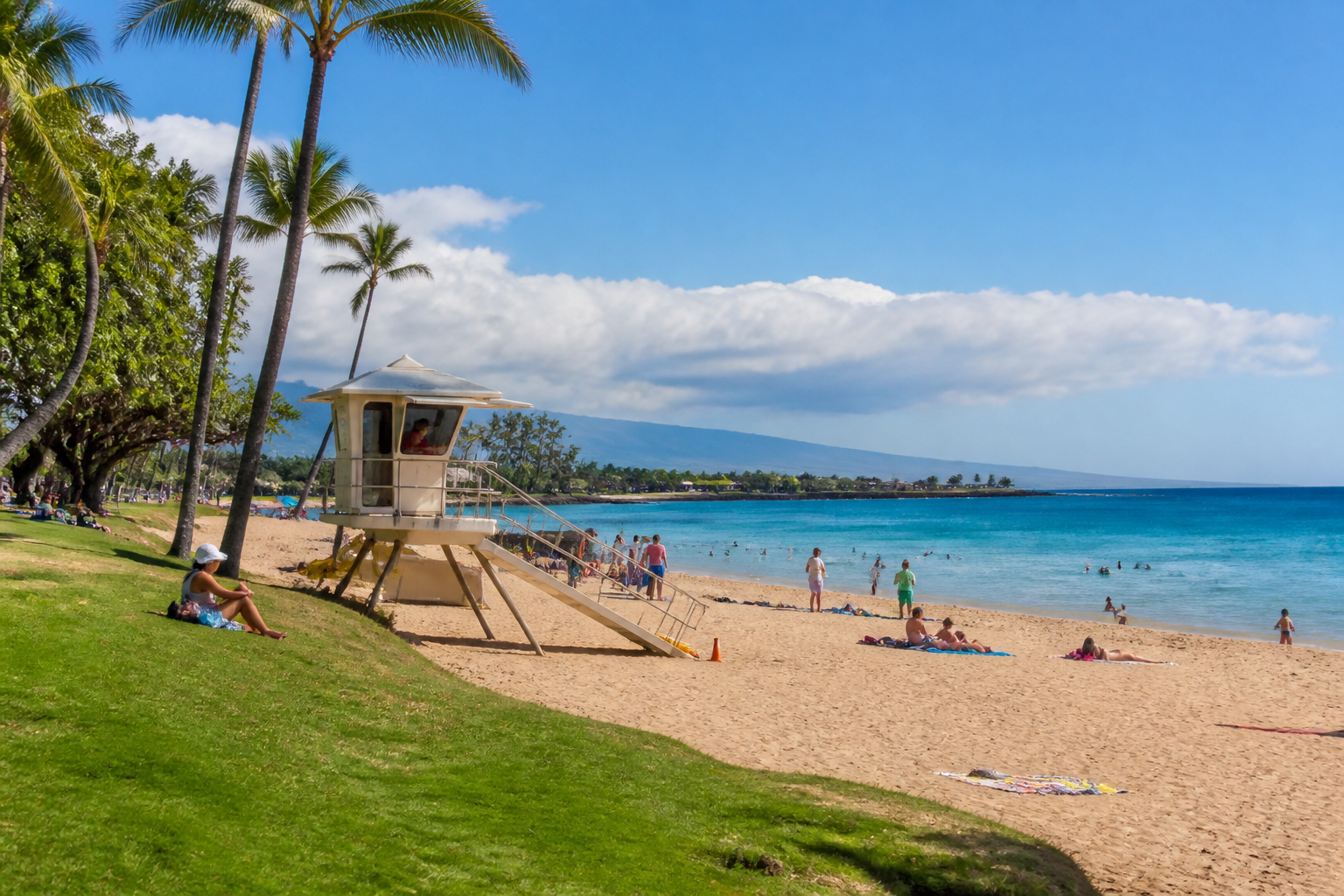
The three Kamaole Beach Parks — known locally as Kam I, Kam II, and Kam III — form the backbone of Kihei's beach life. They sit within a mile and a half of each other along South Kihei Road, each with its own county-maintained parking lot, restrooms, showers, and lifeguard towers staffed during daylight hours. Kamaole I, at the northern end, has the widest stretch of sand and a grassy park area that draws families with young kids. Kamaole II, in the middle, is the smallest of the three but sits closest to the highest concentration of condo buildings, which makes it the default beach for many Kihei renters. Kamaole III, the southernmost and largest, adds a playground, picnic pavilions, and a rocky point at its southern edge that offers decent snorkeling when the water is calm — typically in the morning hours before the trade winds pick up.
All three beaches face south to southwest, so they catch sun most of the day and stay relatively protected from the stronger windward surf that hits Maui's north and east shores. Afternoon trade winds do pick up at all three parks, usually by early afternoon, so mornings are the better window for swimming and snorkeling, while afternoons suit sunbathers who don't mind a breeze.
With lifeguards, free parking, and restrooms at all three, the Kamaole parks are consistently rated among the best family beaches on Maui. Staying within walking distance of one of them is the single biggest factor to prioritize when choosing a Kihei condo building.
Plan this trip
Maalaea Harbor to Molokini: Best Snorkel Trips from Kihei
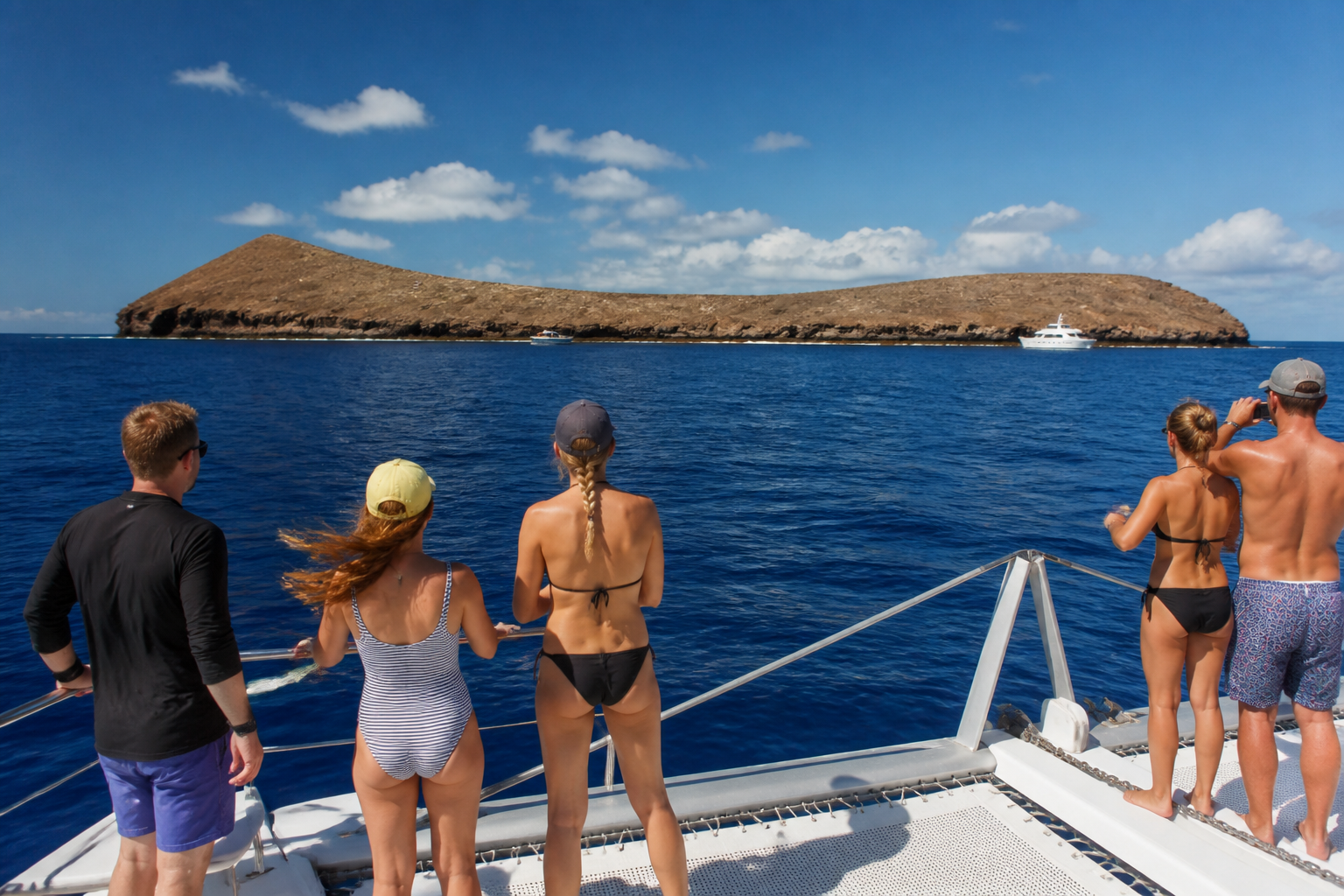
Maalaea Harbor sits at the northern edge of Kihei, roughly a ten- to fifteen-minute drive from most South Kihei Road condos, and it's the main departure point for snorkel and dive boats headed to Molokini Crater — the partially submerged volcanic caldera about three miles offshore known for some of the clearest water you'll find at a Hawaii snorkel site. Molokini's crescent-shaped reef is protected as a Marine Life Conservation District, and its enclosed shape blocks much of the open-ocean swell, which typically gives visibility of 100 feet or more on calm mornings.
Most operators running out of Maalaea depart between 6:00 and 7:00 a.m. to reach Molokini before winds and boat traffic pick up, with half-day trips commonly adding a second stop along Maui's Turtle Town coastline near Makena. Maalaea sits closer to Molokini than the harbors in Lahaina, so boats leaving from here generally reach the crater faster and with a calmer crossing — worth knowing if you or your travel companions are prone to seasickness.
Booking a morning slot directly through the boat operator's own site or by phone a few days ahead is usually enough outside peak holiday weeks. Popular catamaran operators with smaller passenger counts can still sell out further in advance during winter whale season, though, when many of the same boats also run humpback whale-watching trips from December through April.
Kihei's Leeward Weather: Why It's Maui's Sunniest Spot
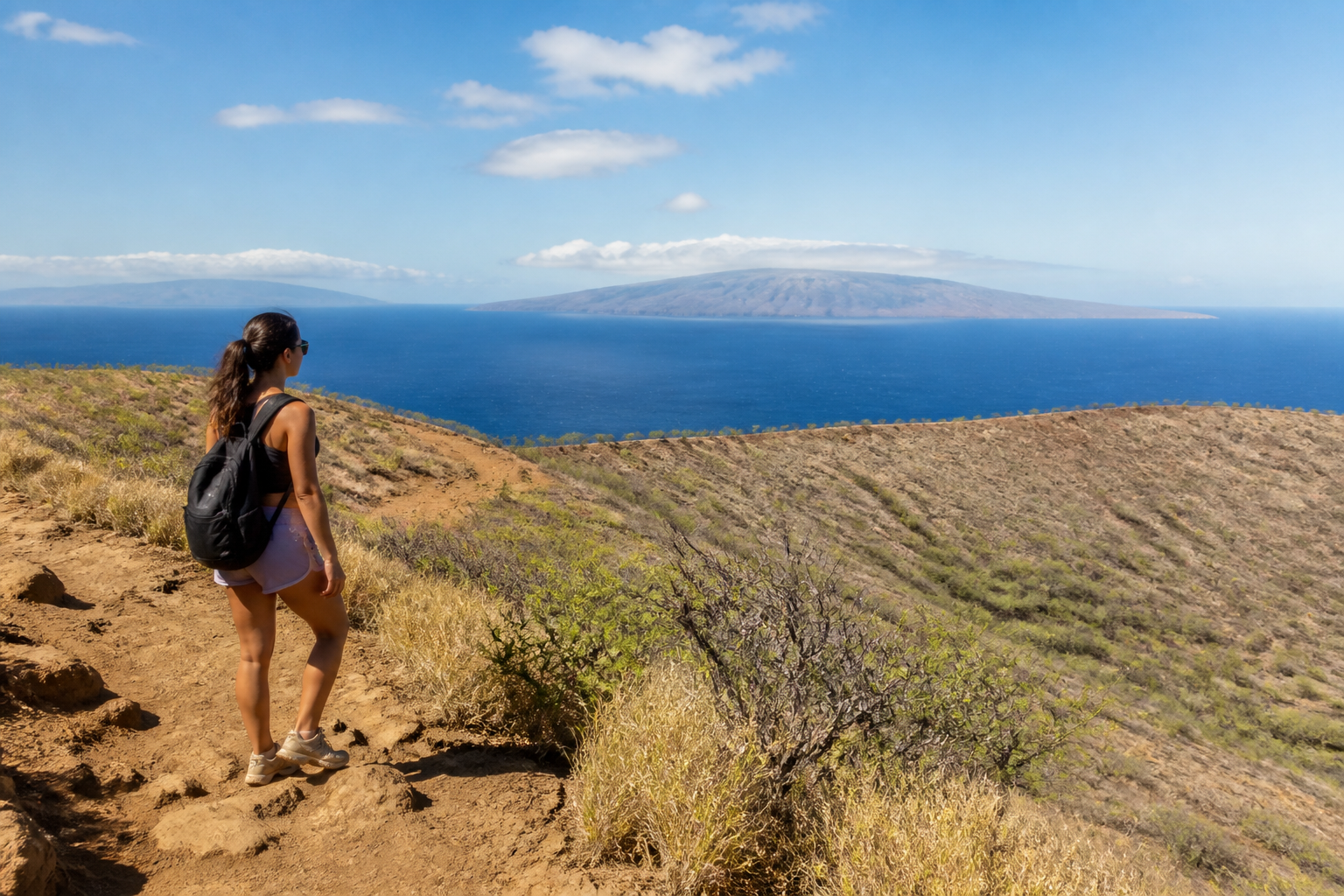
Kihei sits on Maui's leeward, or kona, side, which shields it from the moisture-laden trade winds that soak the island's windward coast. The practical result is dramatically less rain: Kihei gets roughly 10 to 15 inches of rainfall a year, compared to well over 60 inches annually in windward areas like Hana, and it logs sunny or mostly sunny conditions on the large majority of days year-round. This is the core reason South Maui, rather than the island's east or north shores, became Maui's primary resort corridor.
That dry-side advantage has a flip side. Kihei's landscape is noticeably more arid and scrubby than the lush, waterfall-dotted scenery most people picture when they think of tropical Hawaii. If that postcard rainforest look is what you're after, you'll need to drive toward Hana or up into Iao Valley to find it. Trade winds also funnel through the central Maui isthmus and can pick up strength by early-to-mid afternoon at Kihei's beaches, so plan swimming, snorkeling, and paddleboarding for morning hours when the water is calmer.
For day-trip planning that takes advantage of both sides of the island, the drive to Hana shows off the wet, jungle side of Maui in a single long day. Pair it with a few dry, sunny days based in Kihei, and you'll get the fullest sense of how varied Maui's microclimates really are.
Plan this trip
Haleakala Sunrise from Kihei: Driving Directions & Tips

Kihei's location makes it one of the more convenient South Maui bases for a Haleakala sunrise run. The drive to the 10,023-foot summit takes roughly 1 hour 45 minutes to 2 hours, depending on which Kihei condo you start from and how many switchbacks you take at a cautious pace in the dark. Because sunrise at the summit happens before dawn, most guests leave their Kihei condo between 3:00 and 3:30 a.m. to arrive with a buffer before the National Park Service's viewing window opens.
The National Park Service requires a separate, non-transferable sunrise reservation booked through recreation.gov for any vehicle entering Haleakala National Park between 3:00 a.m. and 7:00 a.m., on top of the standard park entrance fee. These reservations are limited, released 60 days in advance with a small batch also released the day before, and they routinely sell out for winter and summer holiday weeks. Booking as early as your 60-day window allows is the safest approach if sunrise is a must-do on your itinerary.
Temperatures at the summit commonly sit in the 30s and 40s Fahrenheit before sunrise, even though you started your drive from a Kihei condo where it was a balmy 75 degrees. Pack real layers, a hat, and gloves rather than relying on a beach cover-up. Fill your gas tank the night before — there are no fuel stations between Kihei and the summit — and expect the return descent to reveal switchback scenery you couldn't see in the dark on the way up.
If you'd rather not navigate unfamiliar mountain roads before dawn on limited sleep, several tour operators run guided sunrise vans from South Maui hotels and condos that handle the reservation and driving logistics for you. It's worth considering if this is your only Haleakala visit of the trip.
Lahaina Recovery: What's Open on Maui's West Side
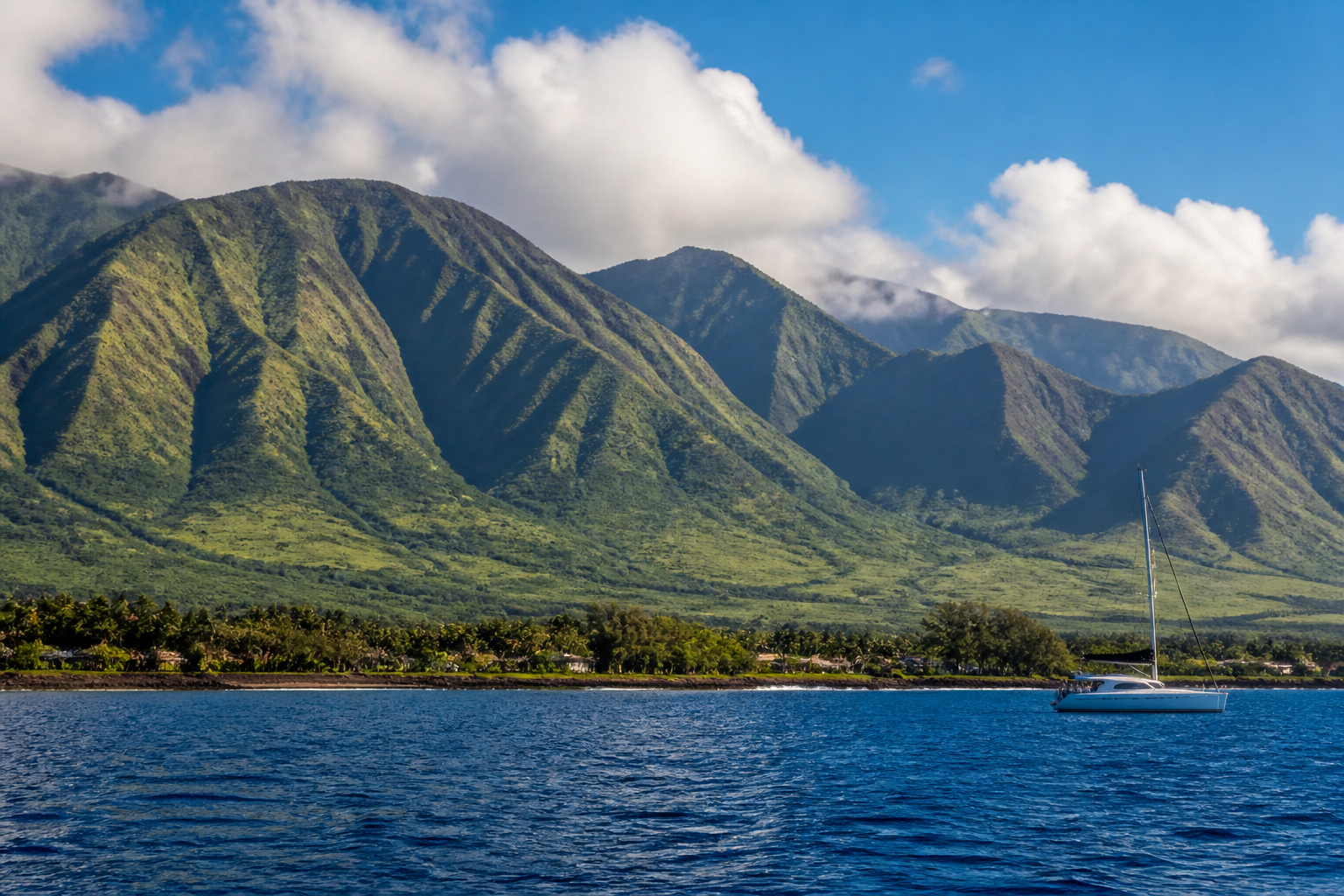
The August 2023 wildfires devastated the historic Lahaina town core on Maui's west side, and rebuilding remains an active, multi-year process as of 2026. Visitors should approach the area with respect: follow current signage and closures around the burn zone, and avoid treating the historic Front Street area as a sightseeing stop until local authorities and the community signal it's appropriate to do so.
Much of West Maui outside the immediate Lahaina town core reopened to visitors well before 2026, including the resort areas of Kaanapali and Kapalua to the north, which sustained far less direct damage and depend heavily on tourism to support local jobs and businesses. If your itinerary includes a West Maui day trip from your Kihei base, check current conditions and any active advisories before you go, and consider directing dining and shopping dollars toward West Maui businesses that have reopened — resuming visitor spending has been a consistent, publicly stated priority for the local economy during recovery.
Kihei sits on the opposite, south-facing side of the island from Lahaina, roughly 45 minutes to an hour away by car via the Honoapiilani Highway. Basing yourself in Kihei lets you enjoy South Maui fully while making an informed, respectful choice about whether and how to include West Maui in your plans.
Plan this trip
Kihei Transportation: Getting Around Without a Rental Car
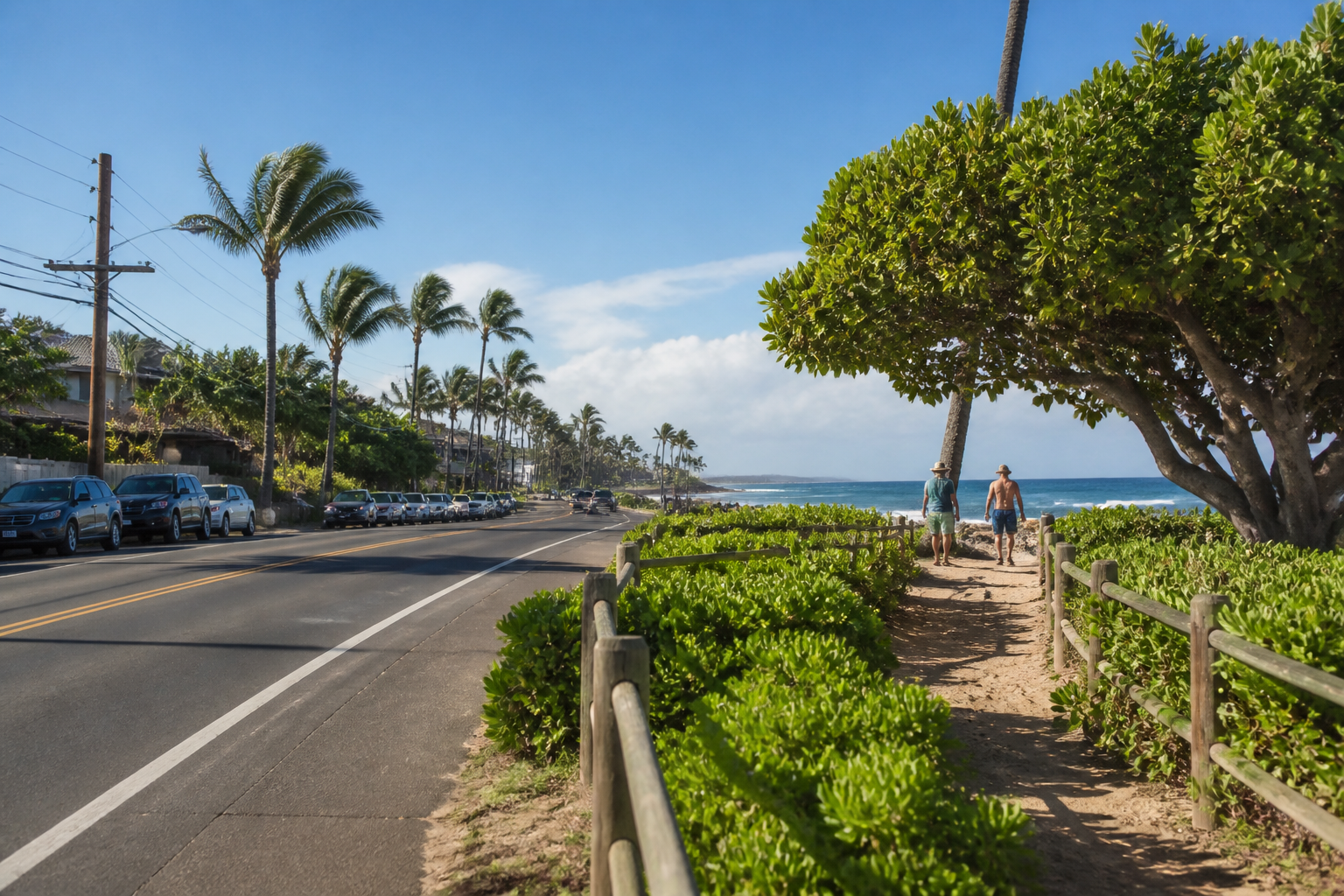
A rental car is the practical default for a Kihei stay. South Kihei Road and the parallel Piilani Highway connect condos, beaches, grocery stores, and day-trip routes to Haleakala and Hana in ways that are slow or impractical without one. That said, Kihei's compact layout means many visitors staying near Kamaole II or III can walk to a beach, a grocery store, and several restaurants without ever starting the car, saving the driving for day trips to Maalaea Harbor, Wailea, or up-country.
For arrival and departure, Kahului Airport sits about 20 to 25 minutes from central Kihei. Travelers who'd rather skip rental car logistics on arrival often prebook a private airport transfer directly to their condo or hotel, which is especially useful for groups traveling with car seats, snorkel gear, or extra luggage. Our Maui airport transfer guide covers current pickup procedures and typical transfer times from Kahului Airport to Kihei, Wailea, and Lahaina in more detail.
Within Kihei itself, a mix of walking for short beach and dinner trips and a rental car for day excursions works best for most visitors. It also keeps you from paying for a car you barely use, if your trip is mostly beach-and-condo days punctuated by one or two bigger driving days to Haleakala or Hana.
Frequently Asked Questions
Kihei offers comparable beaches to Wailea at roughly one-third to one-half the nightly cost, since it is dominated by individually owned condos rather than five-star resorts. Choose Kihei for value and a more local feel, and Wailea if a full-service luxury resort with on-site spa and dining is the priority.
Kihei's lodging inventory is overwhelmingly condo rentals rather than traditional hotels. The Mana Kai Maui and Maui Coast Hotel are the area's main hotel-style options, while most visitors book individually owned units in condo buildings like Kamaole Sands, Maui Kamaole, and Menehune Shores through vacation rental platforms.
Kamaole I has the widest sand and a grassy park area suited to young kids, Kamaole II sits closest to the largest concentration of condo buildings, and Kamaole III adds a playground and picnic pavilions. All three have lifeguards, restrooms, and free parking, making any of them a solid family choice.
Molokini snorkel boats depart from Maalaea Harbor, about 10 to 15 minutes from most Kihei condos. Maalaea sits closer to Molokini than Lahaina harbors, giving boats leaving from here a faster, generally calmer crossing to the crater.
Yes. The National Park Service requires a separate, non-transferable sunrise reservation through recreation.gov for any vehicle entering Haleakala National Park between 3:00 and 7:00 a.m., released 60 days ahead with a small daily batch released the day before. Plan on a 1 hour 45 minute to 2 hour drive from Kihei.
Kihei sits on Maui's leeward, or kona, side, sheltered from the moisture-laden trade winds that soak windward areas. It receives roughly 10 to 15 inches of rain annually compared to over 60 inches in windward Hana, making it one of the sunniest, driest bases on the island.
The historic Lahaina town core was devastated by the August 2023 wildfires and rebuilding remains ongoing as of 2026, so we encourage visitors to avoid treating the burn zone as a sightseeing stop. West Maui resort areas like Kaanapali and Kapalua, outside the immediate Lahaina core, reopened to tourism well before 2026 and depend on visitor spending.
A rental car is recommended for day trips to Haleakala, Hana, or West Maui, but Kihei's compact layout means visitors near Kamaole Beach Park II or III can often walk to beaches, restaurants, and groceries without driving every day.
Kihei is about 20 to 25 minutes from Kahului Airport by car, making it one of the more convenient South Maui bases for arrival and departure logistics compared to Wailea or West Maui.