The Outer Banks in 2026: 200 Miles of Barrier Islands and What That Actually Means
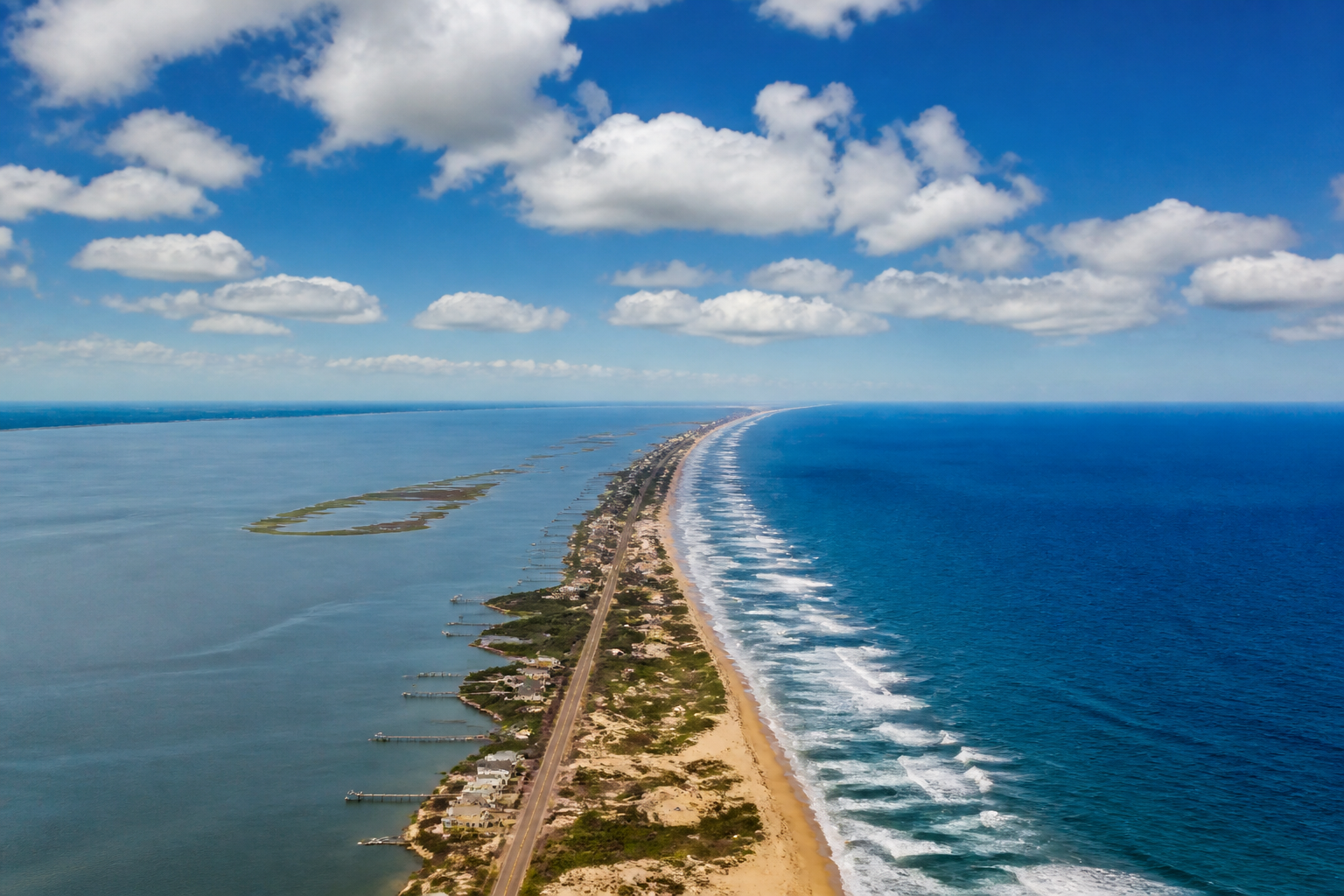
The Outer Banks is a 200-mile-long chain of narrow barrier islands stretching along the North Carolina coast, separated from the mainland by a series of shallow sounds — Currituck, Albemarle, Croatan, Roanoke, Pamlico, and Core — that rival the ocean for both beauty and ecological richness. These islands are technically in motion. Barrier islands migrate and shift with every storm cycle, and that restless geology is part of what makes the OBX both genuinely thrilling and worth understanding before you book.
In 2026, the OBX draws roughly three million visitors a year, placing it among the most visited stretches of coastline on the eastern seaboard. The pull is not simply the beaches — though the beaches are exceptional, with stretches of undeveloped National Seashore that feel genuinely wild — but also an unusual concentration of American history that few coastal destinations can match. The Wright brothers chose this stretch of barrier island for a reason: the consistent northeast winds that still sweep the dunes today are the same ones that made Kitty Hawk the ideal outdoor laboratory for powered flight.
We recommend spending at least seven nights to do the Outer Banks justice. The island chain runs from Corolla in the north, accessible in part only by 4WD vehicle on the open sand, through popular resort communities like Duck, Kitty Hawk, Kill Devil Hills, and Nags Head, then south through Cape Hatteras National Seashore to the lighthouse at Buxton, and finally across a free state ferry to the car-free calm of Ocracoke Island. Attempting to see all of it in a long weekend means missing the texture and pace that make this place remarkable. The Outer Banks is not a sprint destination — it rewards the traveler who slows down.
Choosing Your Base: Corolla, Duck, Nags Head, Hatteras or Ocracoke
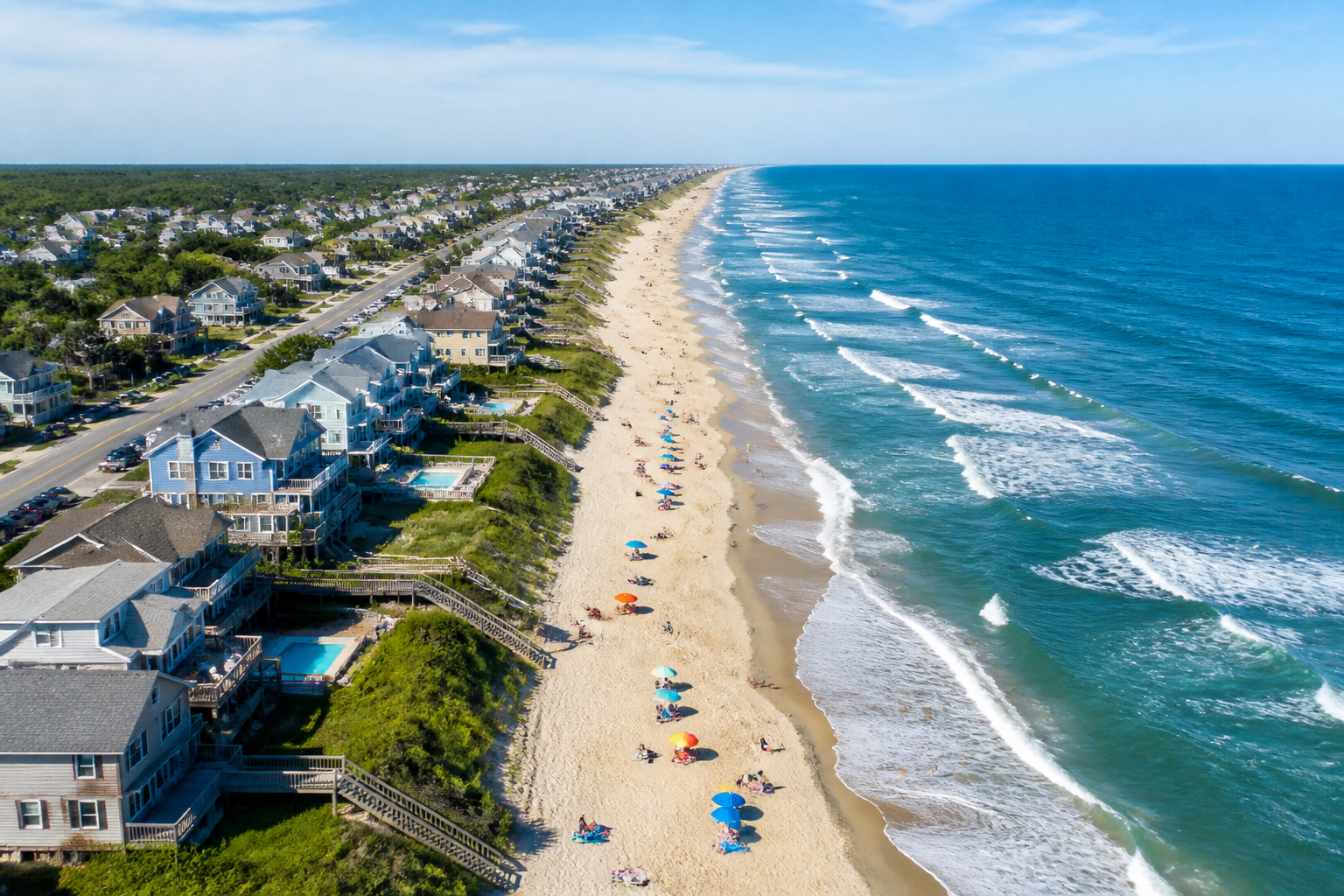
Where you anchor yourself on the OBX shapes everything — your drive times, your beach crowd levels, your grocery options, and your nightly rental rate. Here is how we break it down for 2026 travelers.
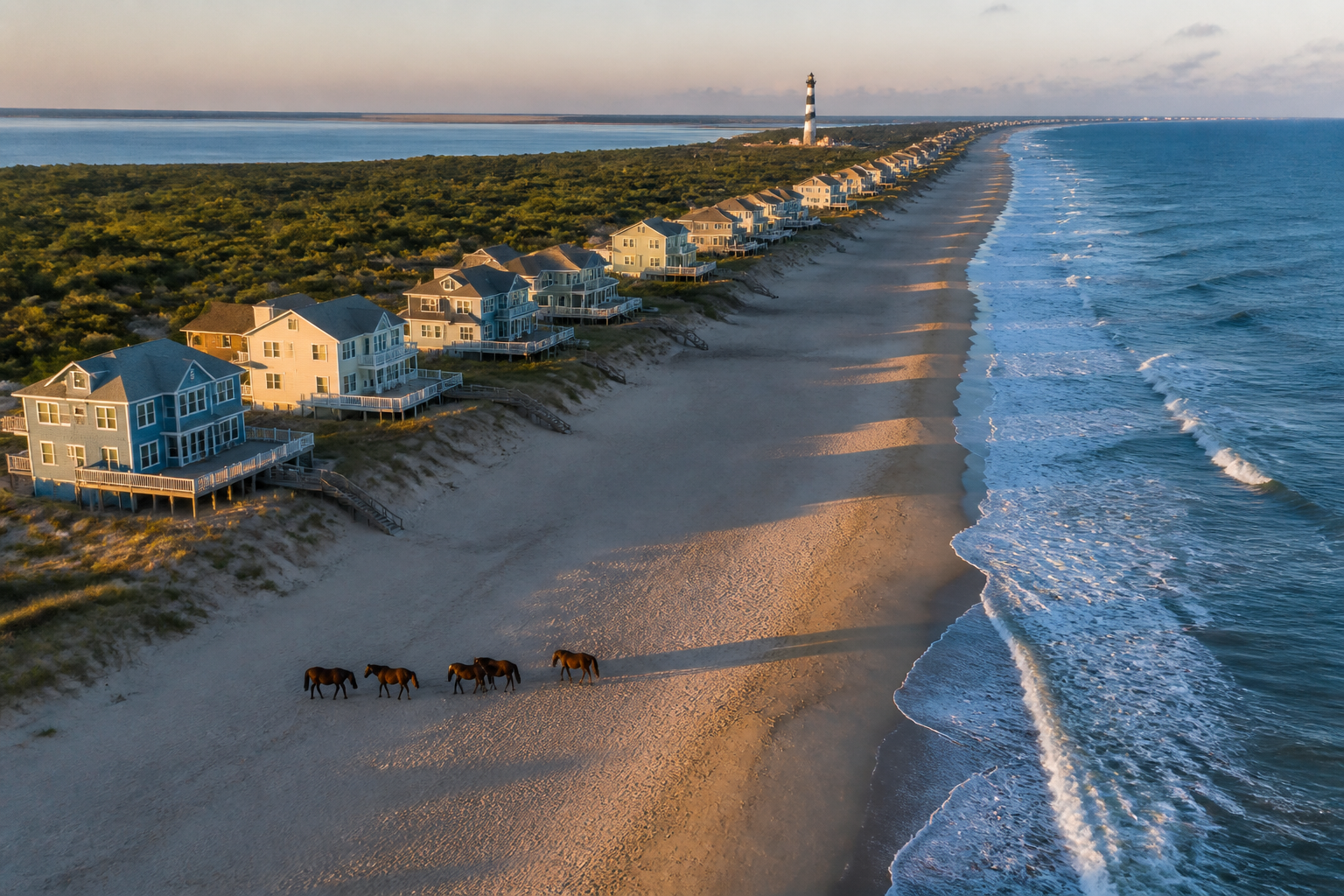
Corolla sits at the northern tip of the developed Outer Banks, home to the Currituck Beach Lighthouse, built in 1875 and still operational today. The four-wheel-drive beaches north of Corolla Village — accessible only by lowering tire pressure and driving on the open sand — are where the Colonial Spanish Mustangs roam freely across approximately 11,000 acres of undeveloped dune and maritime shrub. Corolla is family-oriented, upscale, and tends to book out 10 to 12 months in advance for peak summer weeks. We suggest treating a Corolla rental as a premium experience and planning accordingly.
Duck is a quieter, more intimate village four miles south of Corolla, known for its waterfront boardwalk, its independent restaurants, and a village character that has resisted the commercial sprawl common elsewhere on the island. It draws couples and multigenerational families who want atmosphere without the commercial strip. Parking in Duck's village center is tight in summer — plan to walk or bike.
Nags Head and Kill Devil Hills form the busy commercial heart of the OBX. This is where you will find most chain restaurants, full-service grocery stores, miniature golf, and the largest share of the accommodation inventory. The Wright Brothers National Memorial at Kill Devil Hills — where on December 17, 1903, Orville Wright completed a 12-second, 120-foot powered flight — sits right in the middle of this zone and deserves a spot on any itinerary.
Hatteras Village and Buxton sit roughly 75 miles south of Nags Head along Route 12, much of that drive threading through undeveloped National Seashore where deer graze beside the highway and osprey nest on every utility pole. These southern communities draw serious anglers, surfers chasing the world-class breaks off Cape Point, and anyone who wants genuine solitude. Ocracoke Island, reachable in 40 minutes on the free NC Ferry from Hatteras, is a world apart: no traffic lights, a village of roughly 800 permanent residents, and a harbor that still looks much as it did in the early 20th century.
For first-time OBX visitors, we suggest basing in the Nags Head–Kill Devil Hills corridor, which puts you within 30 minutes of most major attractions and within easy reach of both the northern communities and Hatteras. Return visitors almost universally migrate toward the quieter extremes of the island chain.
Where to Stay: Vrbo's Beach-House Capital
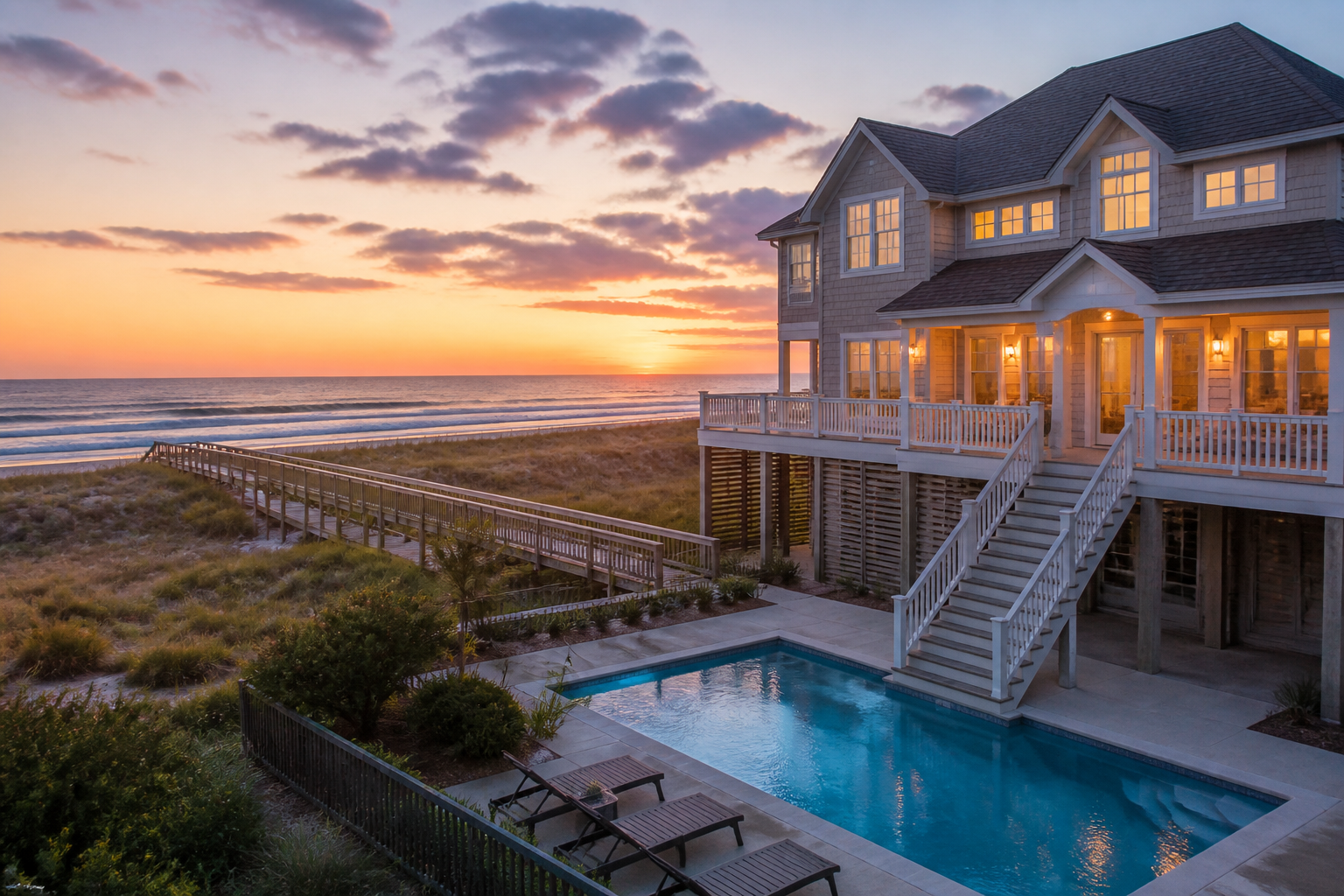
The Outer Banks has earned a reputation as one of the premier Vrbo markets in the United States, and the numbers justify it. Dare County alone lists more than 12,000 vacation rental properties, ranging from modest three-bedroom sound-side cottages to 15-bedroom oceanfront estates with private pools, elevators, and rooftop hot tubs that can sleep 30. That kind of range means virtually every travel group — young families, multi-family reunions, couples retreating for a week — can find something genuinely suited to them.
In 2026, expect to pay between $2,800 and $5,500 per week for a well-positioned five-bedroom oceanfront home in Nags Head or Kill Devil Hills during July. The same property in the shoulder season — late May or mid-September — typically runs 30 to 40 percent less, landing in the $1,800 to $3,400 range per week. Corolla oceanfront properties command a notable premium: a comparable seven-bedroom home with a private pool on a Corolla oceanfront lot typically starts at $6,500 per week in peak season and climbs significantly from there for the largest homes.
We recommend booking OBX vacation rentals no later than November 2025 for any summer 2026 week. The most sought-after properties — those that photograph beautifully, have elevator access for grandparents, or sit directly on the ocean strand — are often claimed by returning guests through the rental management company's priority re-booking window, sometimes as early as August. If your dates are flexible, checking Vrbo in February or March for cancellation re-listings can occasionally yield significant deals on premium properties.
Most rental weeks on the OBX run Saturday to Saturday, with check-in at 4 PM and check-out at 10 AM. Nearly all properties include linens, a fully equipped kitchen, and an outdoor shower — a quintessential OBX feature for rinsing off salt and sand. We always advise travelers to confirm pool-heating fees before signing a rental agreement; most management companies charge $50 to $100 per day extra to heat a pool, which is absolutely worth the cost if you are visiting in May or September when ambient temperatures can drop into the 60s overnight.
The major rental management companies on the OBX in 2026 include Sun Realty, SAGA Realty, Twiddy and Company, and Vacasa. Each aggregates their inventory on Vrbo, but booking directly through the management company can occasionally save on platform service fees and often gives you faster access to local contacts when something needs attention at the property.
Plan this trip
Top Beaches and Outdoor Adventures: Cape Hatteras, Jockey's Ridge and the Wild Horses
Cape Hatteras National Seashore encompasses 70 miles of undeveloped barrier island coastline from Bodie Island south through Ocracoke. Established in 1953, it was the first national seashore in the United States. The beaches within the seashore have no concession vendors, no lifeguards in most areas (always check posted flag conditions before entering the water), and virtually no development visible from the waterline — just open Atlantic, shorebirds working the tide, and the occasional pelican formation wheeling overhead. We recommend driving south on Route 12 through the seashore at least once during your trip simply to appreciate what undeveloped barrier island coastline looks like at scale.
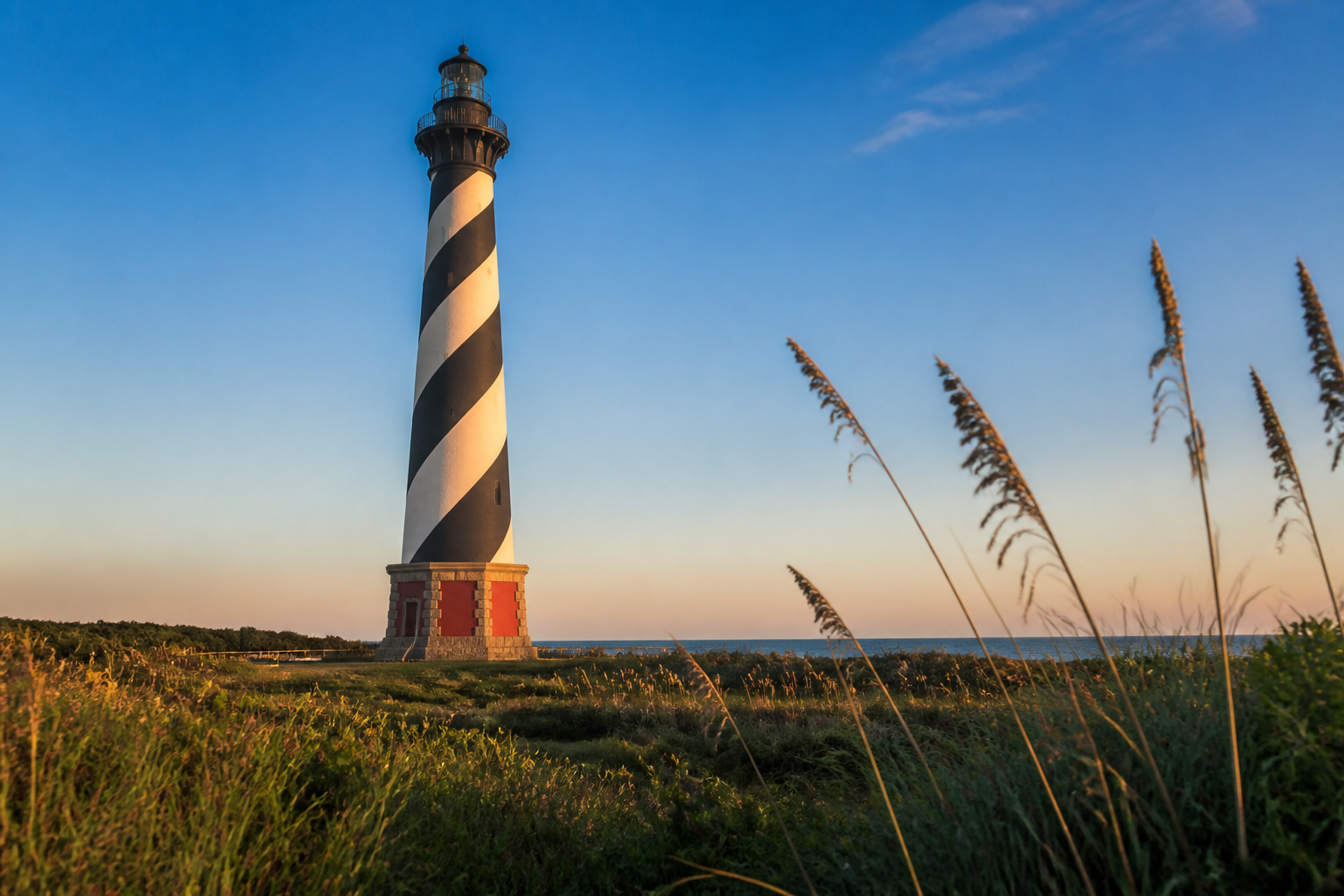
The Cape Hatteras Lighthouse, completed in 1870, stands 198 feet tall and is the tallest brick lighthouse in the United States. After decades of coastal erosion brought the Atlantic dangerously close to its foundation, the lighthouse was moved inland 2,900 feet in 1999 — a relocation that ranks among the most technically demanding engineering projects in lighthouse history. Visitors can climb its 257 spiral steps from late April through Columbus Day weekend for $10 per adult and $5 per child. The view from the lantern room over the Diamond Shoals — where the Graveyard of the Atlantic has claimed more than 1,000 documented ships — is something that stays with travelers long after the trip.
Jockey's Ridge State Park in Nags Head is home to the tallest active sand dune system on the East Coast, reaching between 80 and 100 feet depending on seasonal wind reshaping. Entry is free. We recommend arriving 90 minutes before sundown, making the moderately strenuous climb to the ridge line, and watching the colors shift over Roanoke Sound to the west while the Atlantic catches the last light to the east. Hang gliding lessons from the ridge are available through Kitty Hawk Kites, which has operated there for decades.
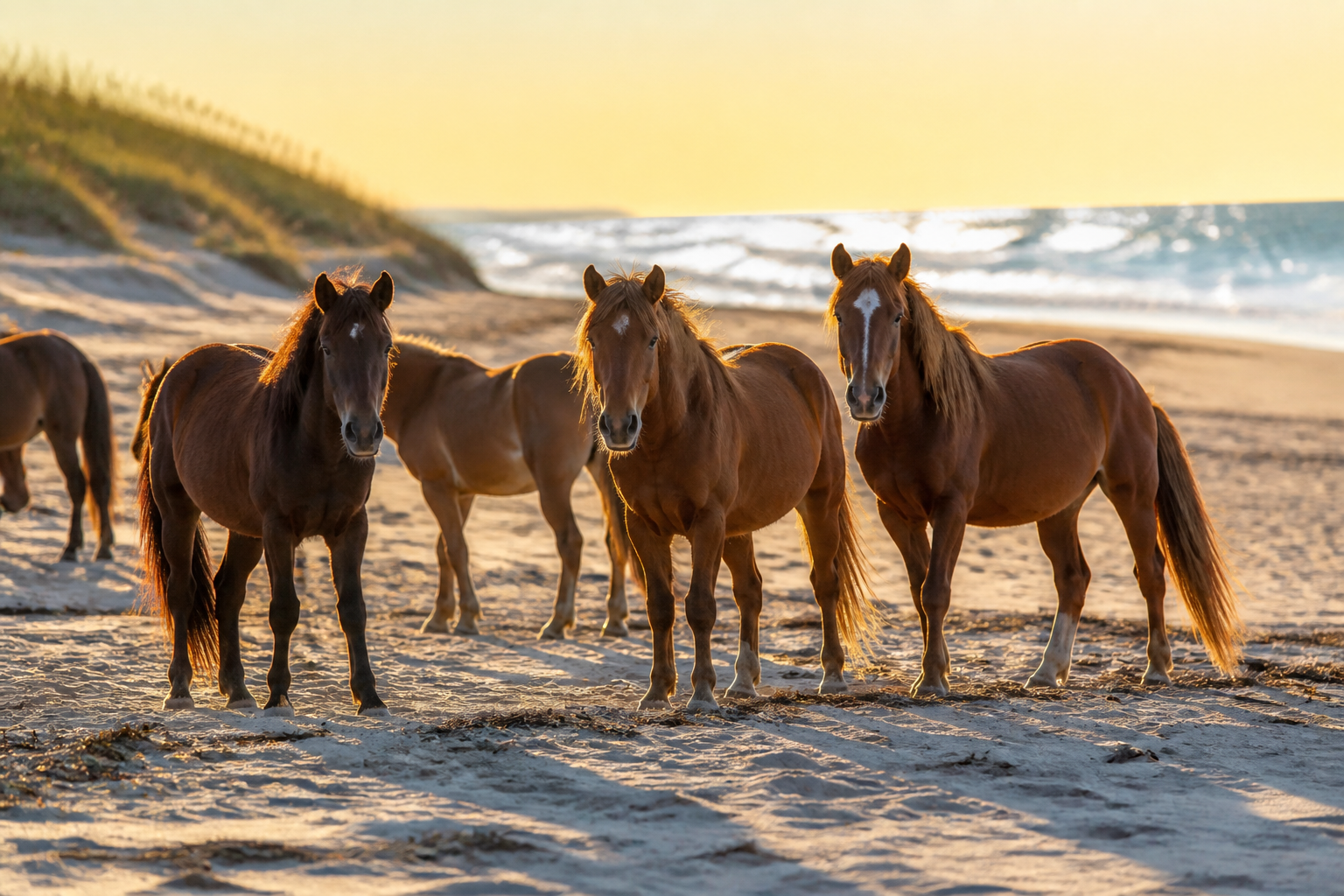
The Corolla wild horses deserve their own discussion. These Colonial Spanish Mustangs — a genetically distinct heritage breed directly descended from horses brought to the Americas by Spanish explorers in the 1500s — number approximately 100 animals and roam freely across the 11,000-acre Currituck National Wildlife Refuge north of Corolla Village. The only responsible and legal way to see them up close is via a licensed 4WD tour; the Corolla Wild Horse Fund sanctions multiple tour operators and actively manages the herd's health and welfare. Expect to pay $45 to $65 per adult for a 90-minute morning tour. North Carolina law establishes a mandatory 50-foot minimum distance from the horses for anyone on foot — this rule exists for both your safety and the animals' welfare, and tour operators enforce it strictly. We suggest booking the first morning tour of the day for the best photographic light and the most active herd behavior before the heat of the afternoon sets in.
Eating on the Outer Banks: Hush Puppies to Ocracoke Figs
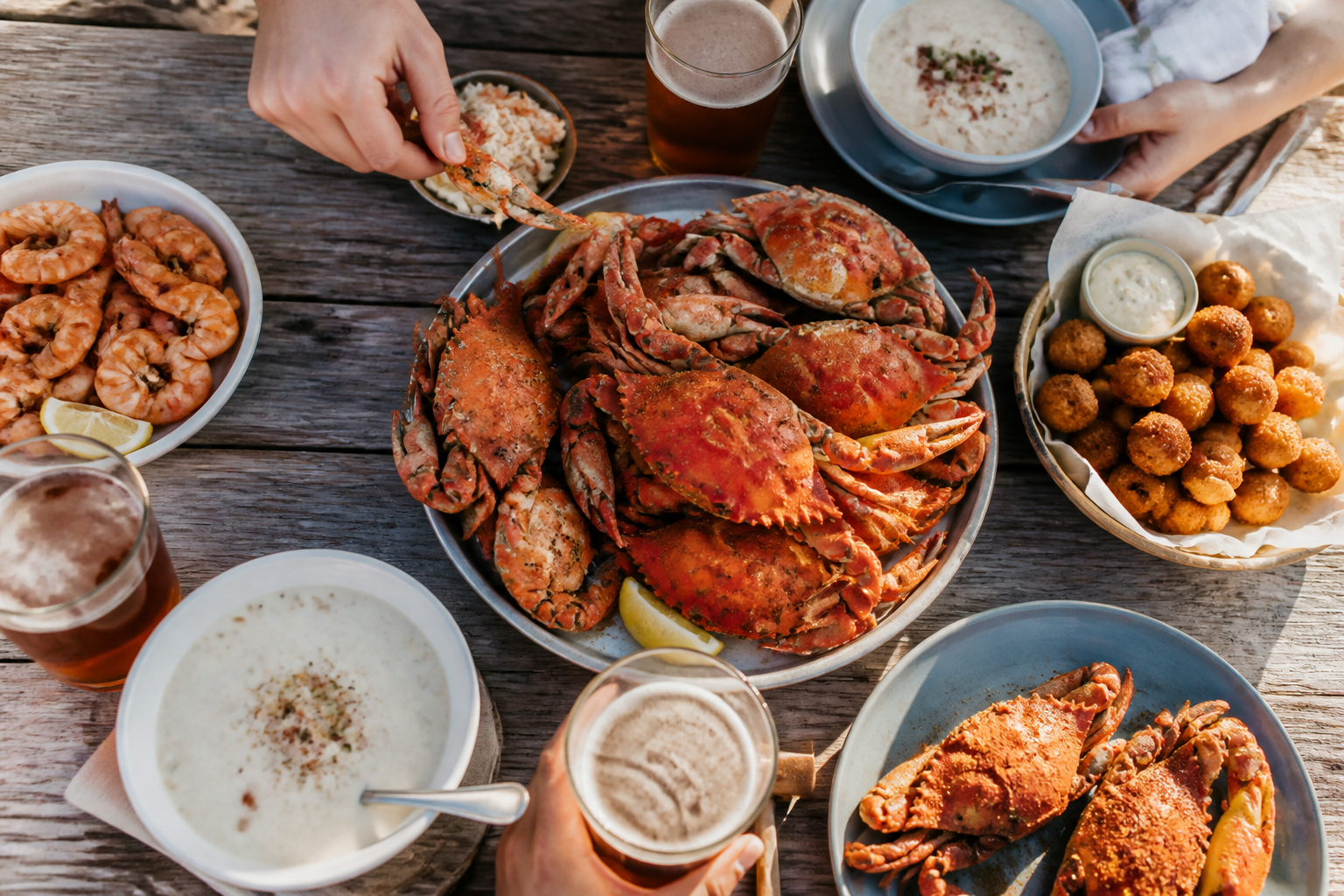
OBX dining has evolved considerably in the past decade. The region still executes fried seafood with authority — this is coastal North Carolina, and the hush puppies are genuinely non-negotiable — but a thoughtful farm-to-fork and water-to-table culture has taken root in Duck, Manteo, and Ocracoke that gives the more serious food traveler plenty to explore.
We recommend a few anchors across the island. Outer Banks Brewing Station in Kill Devil Hills operates the first wind-powered brewery in the United States and brews a rotating seasonal menu of ales and lagers that pair well with their fish tacos and crab dip. Blue Moon Beach Grill in Nags Head has been a local institution for years — the wait on a Friday evening is a reliable indicator of its quality, so arrive at opening or plan for it. John's Drive-In in Kitty Hawk has been serving hand-scooped milkshakes and simple beach food since 1946 and remains a rite of passage for OBX families. On Ocracoke, Dajio Restaurant is the standout for local seafood prepared with genuine care in an unassuming waterfront setting.
If you visit in fig season — typically late July through September — ask any Ocracoke local about the island's historic fig trees. These are heritage varieties tracing directly to the island's earliest English settlers, and the fruit they produce is intensely sweet and jammy, nothing like a grocery-store fig. Local chefs incorporate them into preserves, vinaigrettes, and cocktail syrups in ways that feel distinctly of this place.
For self-catering — and with OBX vacation rentals being full kitchen properties, self-catering is part of the experience — we suggest stocking up before you cross the bridge. The Harris Teeter in Chesapeake, Virginia or the Costco in Virginia Beach will save you 15 to 25 percent compared to island prices, and the checkout lines on Saturday changeover day at the Corolla Food Lion are a sight that motivates advance planning.
Plan this trip
History and Day Trips: Wright Brothers, Roanoke Island and The Lost Colony
The historical density of the Outer Banks is staggering for what is, at its narrowest, a quarter-mile-wide strip of sand. The Wright Brothers National Memorial at Kill Devil Hills commemorates the site of humanity's first successful powered flight on December 17, 1903. The National Park Service visitor center presents the engineering context clearly and compellingly; the granite markers outside indicate the landing points of all four flights that day, the longest of which covered 852 feet in 59 seconds. Admission is $10 per adult; children 15 and under enter free. We recommend visiting on a weekday morning before 10 AM when the site is quieter and the light is favorable.
Roanoke Island, accessible via the US-64 bridge from Nags Head, is where English colonists under Governor John White established the first English settlement in the Americas in 1587. The colony vanished sometime before White's return in 1590, leaving only the word CROATOAN carved on a post — a mystery that has endured for more than four centuries without a satisfying answer. The Fort Raleigh National Historic Site preserves the earthwork fortifications and offers interpretive ranger programming throughout the summer. Adjacent to the site, the Elizabethan Gardens — a privately operated formal garden originally established in 1960 — are at their peak bloom from April through October and make for a genuinely lovely 90-minute walk.
The outdoor drama The Lost Colony has performed at the Waterside Theatre on Roanoke Island every summer since 1937, making it the longest-running outdoor symphonic drama in the United States. In 2026, performances run from June 5, 2026 through August 22, 2026, with shows Tuesday through Sunday evenings. Tickets start at $18 for adults and $10 for children; reserved seats closer to the stage run $28 to $35. We suggest the Tuesday or Wednesday evening performances, which tend to draw smaller audiences than weekends and allow you to arrive at the theatre without traffic stress.
For a complete Roanoke Island day trip, we suggest starting at Fort Raleigh by 9 AM, walking the Elizabethan Gardens before midday heat, having lunch at the Tranquil House Inn in Manteo's downtown waterfront (the restored 1988 inn has an excellent dining room), browsing the galleries and shops along Manteo's boardwalk, and then catching the evening performance of The Lost Colony. You can read more about how we build full-day OBX itineraries through our destination planning service on TravelPlan.
Getting to the Outer Banks: Airports, Driving and the Ferry System
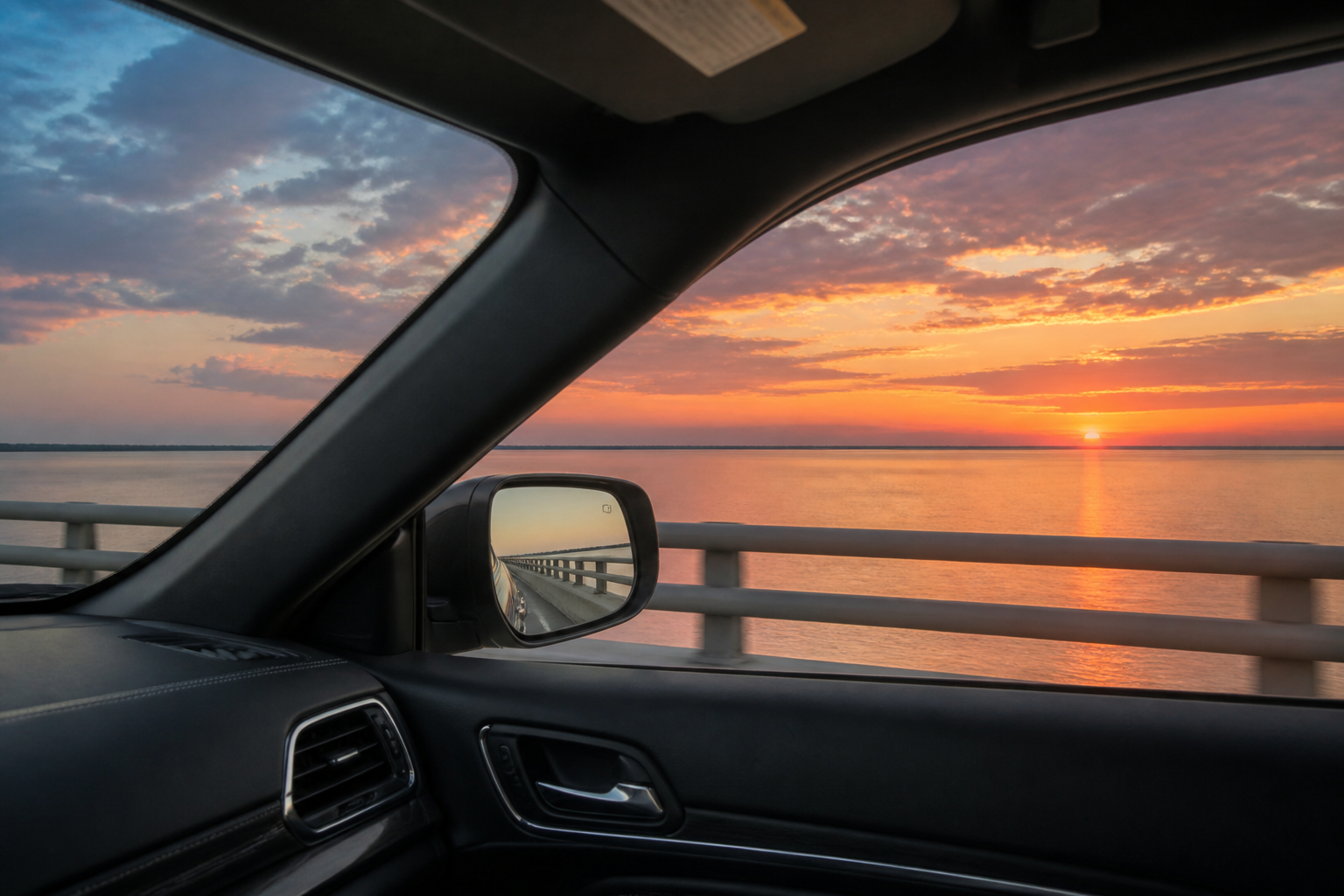
There is no commercial airport on the Outer Banks proper, which means nearly all visitors arrive by personal or rented vehicle. The nearest major airports to the northern OBX are Norfolk International Airport (ORF) in Virginia — roughly 85 miles from Corolla, a drive of 1.5 to 2 hours depending on summer bridge and causeway traffic — and Raleigh-Durham International Airport (RDU), approximately 175 miles from Nags Head, a drive of 3 to 3.5 hours in normal conditions. For travelers heading to Hatteras or Ocracoke, RDU is generally the more practical arrival point.
We strongly recommend flying into Norfolk International for any rental north of Oregon Inlet — meaning Corolla, Duck, Kitty Hawk, or Nags Head. The drive from ORF is manageable, and arriving on US-158 across the Wright Memorial Bridge — a 2.8-mile causeway over Currituck Sound — is a proper arrival moment that sets the tone for the week ahead. We also suggest considering a pre-arranged airport car transfer from Norfolk directly to your OBX rental property. Navigating an unfamiliar rental vehicle on the Wright Memorial Bridge during Saturday peak-changeover traffic, often with tired children and loaded luggage, is a stressor that a professional transfer eliminates entirely. Our partner transfer service accommodates groups of any size, from a Cadillac Escalade for four passengers to a Lincoln Navigator for larger families and a Mercedes Sprinter for groups of up to 14 — see our OBX Airport Transfer page for full scheduling and pricing details.
If you are renting a car at the airport, we recommend booking through our car rental service to compare rates and confirm vehicle class availability early. Full-size SUVs and minivans sell out quickly for summer OBX weeks as rental car demand on the eastern seaboard peaks from late June through Labor Day.
The free NC Ferry system is essential for any itinerary that includes Ocracoke Island. The Hatteras-Ocracoke route operates year-round, takes approximately 40 minutes, and runs roughly every hour from 5 AM to midnight in peak season at no charge for passengers or vehicles. The wait in July and August can exceed 90 minutes during peak afternoon hours; we recommend arriving at the Hatteras Ferry Terminal (located at the southern end of NC Route 12 in Hatteras Village) at least 90 minutes before your intended sailing time. The Cedar Island-Ocracoke and Swan Quarter-Ocracoke routes, which provide an alternative return route from Ocracoke to the mainland, require advance reservations and cost $15 to $30 per vehicle depending on overall vehicle length. Book these through the NC DOT Ferry Division website as slots fill weeks ahead during summer.
Plan this trip
Best Time to Visit OBX: Shoulder Seasons, Hurricanes and the Off-Season Quiet
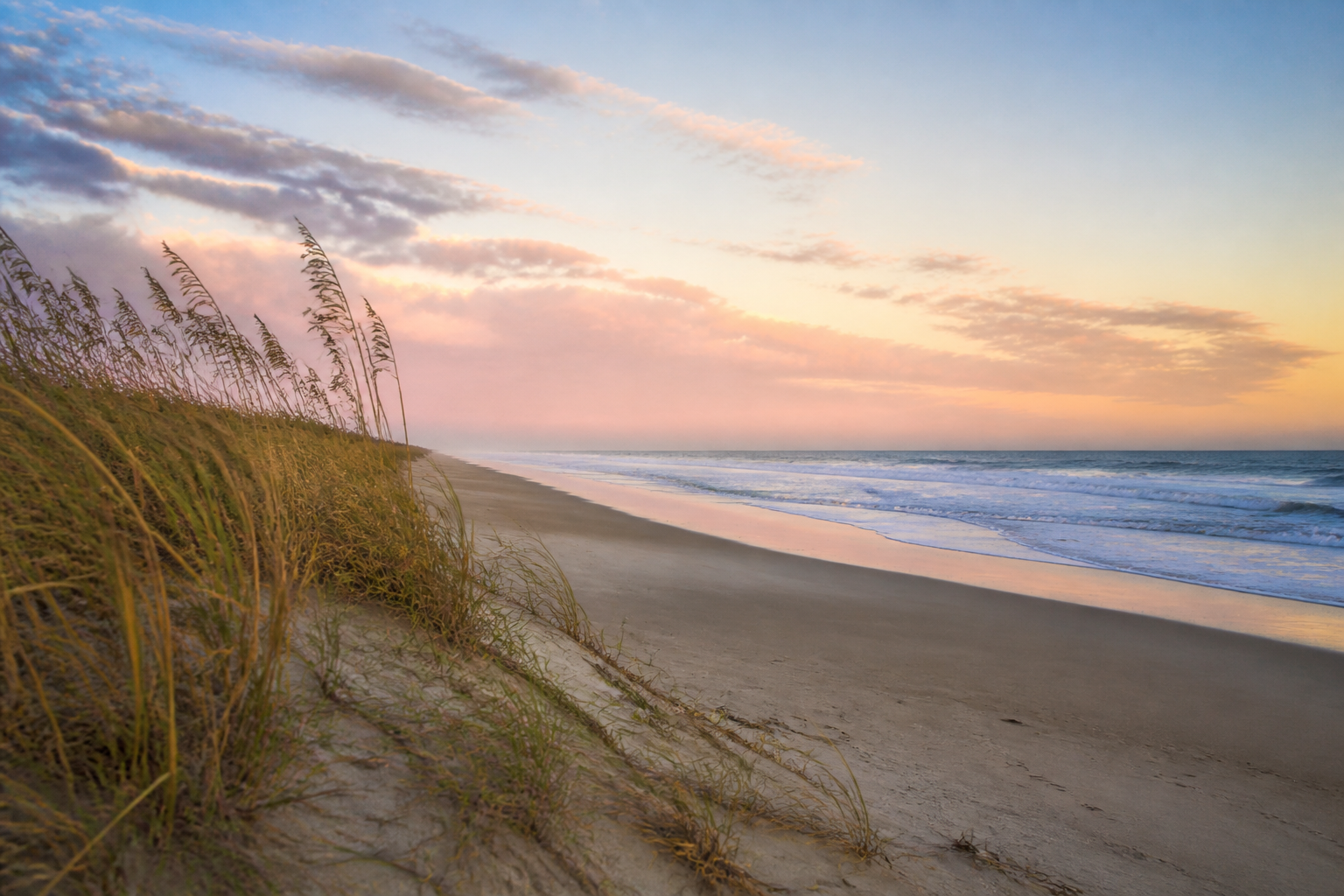
Peak season on the Outer Banks runs from late June through Labor Day weekend. Ocean water temperatures at Cape Hatteras average 78°F in July, making conditions ideal for swimming, surfing, stand-up paddleboarding, and kayaking through the sound. Crowds are at their heaviest, rental prices are at their annual maximum, and Route 12 through the National Seashore can back up significantly after any beach closure caused by storm-surge overwash.
We strongly recommend the shoulder seasons to any OBX traveler who has some flexibility. Late May and early June offer water temperatures in the low 70s, uncrowded beaches where you can walk for 20 minutes without passing another person, and rental rates 30 to 40 percent below peak. The wildflower blooms along the National Seashore are at their finest in May, and the birding — the OBX sits on the Atlantic Flyway — is extraordinary for waterfowl and shorebird migrations. September is arguably the finest month on the Outer Banks by almost every measure: water temperatures remain warm from the summer (averaging 75°F at Hatteras in early September), crowds thin dramatically after Labor Day, light turns golden and low-angled, and the best restaurants are no longer slammed. Surf conditions often peak in September as swells generated by distant Atlantic storms begin arriving.
The hurricane caveat is serious and deserves direct discussion. The Atlantic hurricane season runs from June 1 through November 30, with the statistical peak of tropical activity from mid-August through mid-October. Cape Hatteras projects far into the Atlantic, and this stretch of coastline absorbs a disproportionate share of major storm impacts each year. We recommend that every OBX traveler — regardless of travel month — purchase travel insurance that specifically covers trip cancellation and interruption due to weather events. The NC Ferry system suspends operations and NC DOT closes Route 12 through the National Seashore for days following a significant storm event, which can strand visitors on Ocracoke or cut off Hatteras entirely. Our travel insurance comparison tool on TravelPlan can help you identify the right policy for your specific booking situation.
October through April is the off-season. Many restaurants reduce to weekend-only hours or close entirely, and some rental management companies limit available properties. But a winter OBX visit — particularly to Ocracoke or Hatteras — is genuinely unlike any other. The beaches are empty in a way that feels ceremonial. Migrating tundra swans and snow geese fill the sounds in November and December. The particular quiet of a resort community returned to its own permanent residents, with wood smoke drifting from beach house chimneys and the sound of only surf and wind, is something few travelers who experience it forget.
Outer Banks Family Vacation Budget: Real 2026 Numbers
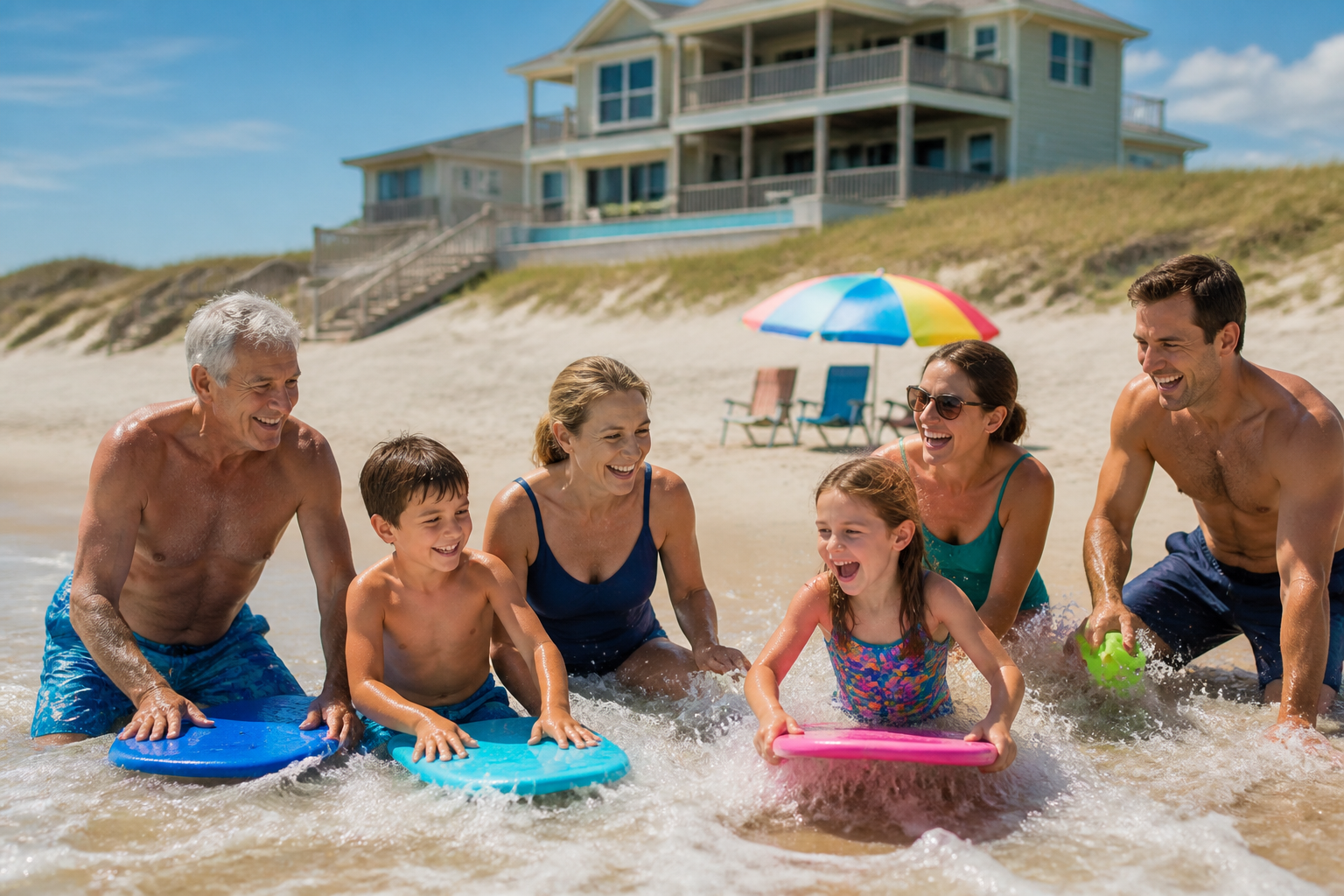
We believe travelers deserve honest budget projections, not aspirational lowball estimates. Here is what a family of six — two adults and four children — should realistically plan to spend for a peak-season week on the Outer Banks in July 2026.
Vacation rental: A four-bedroom semi-oceanfront home in Nags Head or Kill Devil Hills, booked for a Saturday-to-Saturday week through Vrbo or a local management company, will typically run $3,200 to $4,800 including all taxes and cleaning fees. An equivalent property in Corolla will start closer to $5,000 and climb from there. A sound-side or second-row property in the same communities can be found for $2,200 to $3,400 with comparable interior quality.
Groceries for the week: Budget $375 to $525. The economics strongly favor purchasing staples before you cross the Wright Memorial Bridge — a Costco in Virginia Beach, a Harris Teeter in Chesapeake, or a Walmart Supercenter in Elizabeth City will all save you 15 to 25 percent compared to island pricing on basics like meat, dairy, produce, and beverages.
Dining out — four dinners, daily lunches at the beach, and a few breakfasts at a local diner: Budget $450 to $650 for the family. The general rule on OBX is that anything with an unobstructed ocean view adds approximately 20 percent to the check. Seafood markets where you buy directly and cook at the rental are an excellent value; the Whalebone Seafood Market in Nags Head and the Hatteras Harbor Seafood market are both well regarded.
Activities: Cape Hatteras Lighthouse climb at $10 per adult and $5 per child, Wild Horse Tour at $50 per adult and $30 per child, Wright Brothers National Memorial at $10 per adult with children 15 and under free, The Lost Colony tickets at $18 to $28 per adult and $10 per child, and Jockey's Ridge State Park at no charge. Budget $250 to $350 for the activity category for a family of six.
Transportation on the island and a day-trip ferry to Ocracoke: Budget $90 to $160 depending on your vehicle's fuel economy, current gas prices, and whether you take a round-trip ferry to Ocracoke.
All-in realistic total, excluding airfare or your home-city drive: $4,500 to $6,700 for the peak-season week. The same trip executed in late May or mid-September 2026 will likely cost $3,100 to $4,800 — a meaningful difference that leaves real money for the surf lessons, the paddleboard rental, or the sunset kayak tour that inevitably calls your name by Wednesday. We always recommend building a 10 to 15 percent spending buffer into any OBX budget; this island has a well-documented and entirely justified ability to inspire one more experience.
Plan this trip
Frequently Asked Questions
We recommend late May through mid-June and September as the sweet spots for most travelers. Beaches are uncrowded, rental rates are 30 to 40 percent below the July peak, and ocean temperatures remain comfortable — averaging in the low 70s in late May and holding at 75°F through early September at Cape Hatteras. If peak-season July is your only option, book your rental by November 2025 and budget accordingly.
Norfolk International Airport (ORF) is the closest major airport for the northern Outer Banks — Corolla, Duck, Kitty Hawk, and Nags Head — sitting roughly 85 miles away, a drive of 1.5 to 2 hours. Raleigh-Durham International Airport (RDU) is about 175 miles from Nags Head and is a better choice for travelers heading to Hatteras or Ocracoke. We recommend pre-arranging a private transfer from Norfolk directly to your rental property, particularly on summer Saturdays when bridge traffic peaks.
Not safely or legally up close. The Corolla wild horses roam the 4WD-only beaches north of Corolla Village, which are accessible only by lowering tire pressure and driving on open sand — a standard passenger car will get stuck. The best and most ethical way to see the herd is via a licensed tour operator sanctioned by the Corolla Wild Horse Fund. Tours run approximately 90 minutes, cost $45 to $65 per adult, and include a knowledgeable guide who can position you within the legal 50-foot minimum distance. We recommend booking morning tours for the best light.
For any peak-season week in July 2026, we recommend booking no later than November 2025 — and ideally by September 2025 if you have a specific property or community in mind. The most desirable oceanfront homes with private pools and strong repeat-guest followings are often re-booked by returning guests through management company priority windows as early as August. For shoulder-season weeks in May or September, booking three to four months in advance is usually sufficient, though cancellation re-listings on Vrbo can surface deals as late as February or March.
Ocracoke Island is accessible only by ferry — there is no bridge. The most convenient route for OBX visitors is the free NC Ferry from Hatteras Village, which takes approximately 40 minutes and runs roughly every hour from 5 AM to midnight in peak season. No reservation is required, but in July and August, the wait can exceed 90 minutes. We recommend arriving at the Hatteras Ferry Terminal at least 90 minutes before your intended sailing. The Cedar Island-Ocracoke and Swan Quarter-Ocracoke routes, which connect Ocracoke to the mainland directly, require advance reservations and charge $15 to $30 per vehicle.
The Cape Hatteras Lighthouse is open for climbing from late April through Columbus Day weekend each year. In 2026, admission is $10 per adult and $5 per child. The climb involves 257 spiral iron steps to reach the lantern room at 198 feet — the highest point of the tallest brick lighthouse in the United States. The view over Diamond Shoals and the Graveyard of the Atlantic is exceptional. The National Park Service manages the site; we recommend arriving early in the morning on weekdays to avoid lines that can form by mid-morning in July.