Monaco at a Glance: Fast Facts Every Traveler Needs
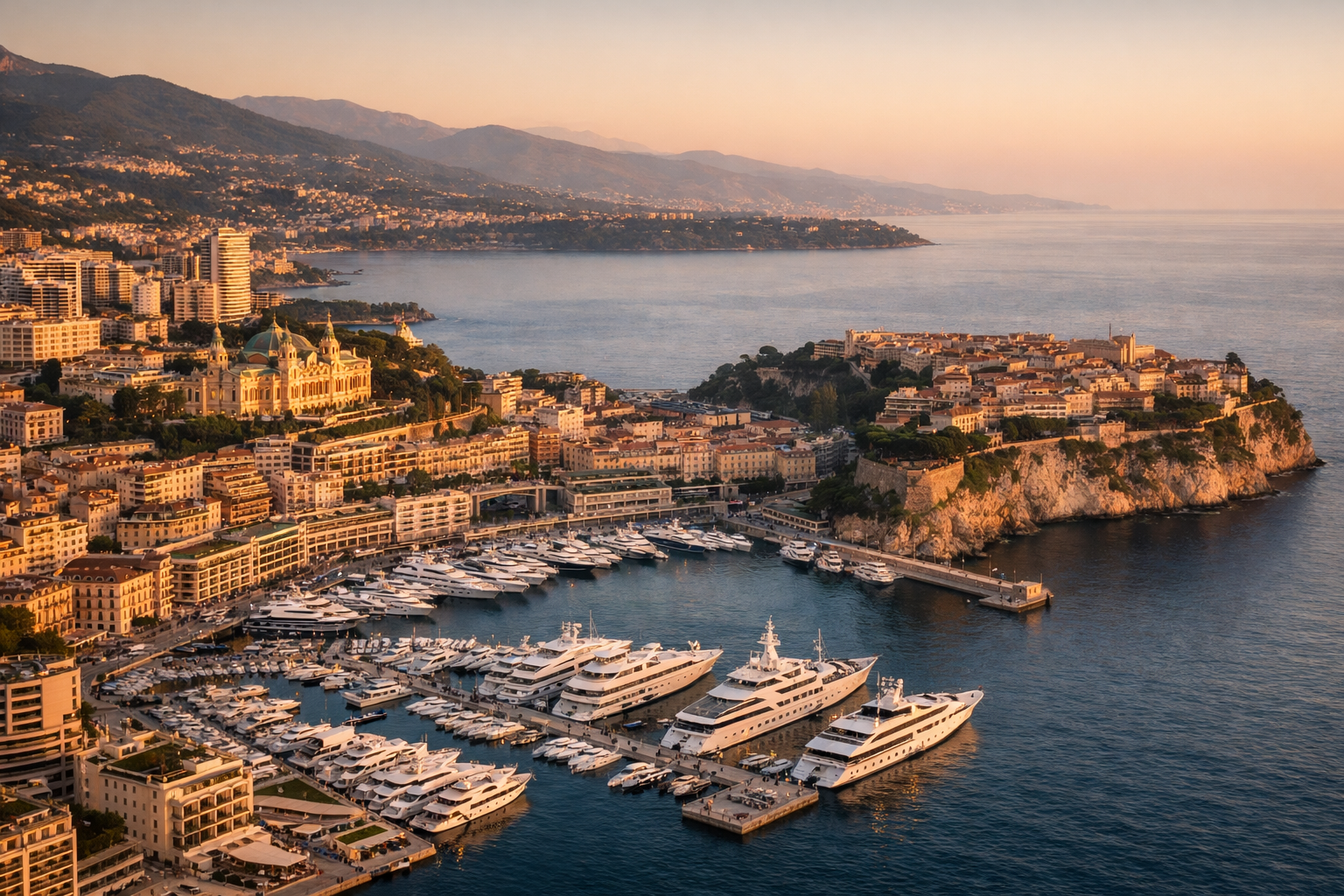
At just 2.02 square kilometers — roughly 500 acres — the Principality of Monaco is the world's second-smallest sovereign nation, surpassed in miniature only by Vatican City. Yet this sliver of coastline on the French Riviera packs more luxury, history, and spectacle per square meter than virtually anywhere on the planet. Home to approximately 38,000 residents and swelled daily by another 50,000 workers commuting from neighboring France and Italy, Monaco operates with the efficiency and ambition of a city twenty times its size.
Monaco uses the Euro, making it seamless to visit from most of Europe. French is the official language, but English is widely spoken in every hotel, restaurant, and tourist attraction worth visiting. The country operates on Central European Time (CET/UTC+1, CEST in summer), uses standard European 230V/50Hz electricity with Type E/F plugs, and its country code is +377. The Principality is divided into six distinct districts: the historic Monaco-Ville perched on its 60-meter promontory known as The Rock, the glamorous Monte Carlo, the working-class La Condamine, the industrial Fontvieille, the beach-fronting Larvotto, and the residential Moneghetti.
Prince Albert II has ruled since 2005, continuing a Grimaldi family dynasty that stretches back to 1297. One fact that surprises many visitors: Monaco levies no personal income tax, a policy that has attracted billionaires, Formula 1 drivers, and tennis champions to take up residency. Understanding this economic context explains everything about Monaco's character — it is simultaneously a real, functioning nation-state and the world's most exclusive residential address.
For travelers planning the logistics of a Monaco visit, it helps to think of the destination as a day trip from Nice or a short-stay addition to a broader French Riviera itinerary. Very few travelers stay inside Monaco itself, where hotel prices are stratospheric — but the infrastructure connecting the principality to the surrounding region is excellent and affordable.
How Much Does Monaco Cost? A Realistic 2026 Budget Breakdown
Monaco's reputation for eye-watering expense is well-earned, but it is also possible to experience the principality without bankrupting yourself — provided you plan strategically. The key insight most travel guides omit: Monaco is a superb destination for a day trip, and spending the night in nearby Nice dramatically cuts your costs without meaningfully reducing what you can see and do.
Budget traveler (day trip from Nice): Expect to spend €80–120 for a full day. The regional TER train from Nice to Monaco costs approximately €4.50 each way and takes about 25 minutes — one of the great travel bargains of the French Riviera. If you pack a lunch from Nice or grab provisions at the Carrefour supermarket in Monaco's Fontvieille district (prices comparable to mainland France), eat a modest café lunch, and stick to free attractions like the Changing of the Guard, Casino Square, the Japanese Garden, and Monaco-Ville's fortress walls, you can experience a genuinely rich day for under €100.
Mid-range traveler: Budget €300–600 per day. This assumes accommodation in Nice or nearby Èze, one proper sit-down dinner in Monaco (mid-range mains run €30–60), entry to two or three paid attractions — the Oceanographic Museum at approximately €19 for adults, the Prince's Palace at €13, the Monte Carlo Casino gaming rooms at €17 — and a few rounds of drinks at the Café de Paris.
Luxury traveler: €1,000–5,000+ per day covers a room at the Hôtel de Paris (rates typically €800–2,000+ per night), dinner at Le Louis XV (Alain Ducasse's three-Michelin-star temple, tasting menus from €450 per person without wine), and meaningful casino play. At this level, Monaco fully justifies its mythology.
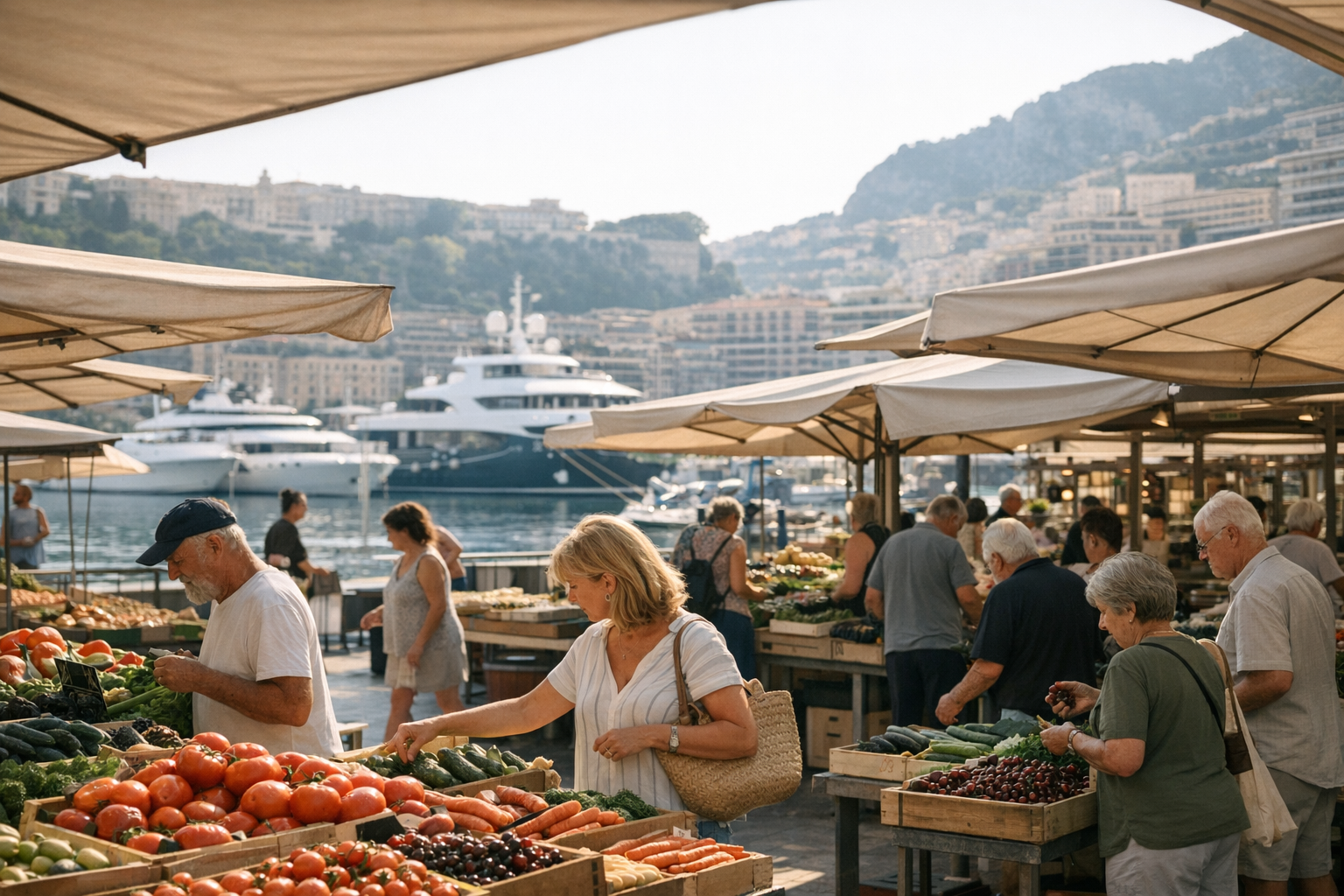
Food costs range wildly by context. An espresso at a non-tourist café runs €2.50–4; the same coffee at a Monte Carlo terrace can reach €10. A baguette or sandwich costs €4–7. The Marché de la Condamine market — open Tuesday through Sunday mornings — is the best budget food source inside Monaco, offering socca (Niçoise chickpea pancakes) and charcuterie from €3–8. For transportation within Monaco, the internal bus costs €2 per journey, while the city's extensive network of free public elevators and escalators connecting upper and lower districts is a genuinely useful amenity that most visitors discover only by accident.
If you're combining Monaco with a hire car along the Riviera, compare rental options in advance — picking up in Nice rather than Monaco itself is substantially cheaper. For transfers between cities, a [private airport transfer](/airport-transfers/) can be a cost-effective option when traveling in a group, especially given Côte d'Azur airport's position between Nice and Monaco.
Best Time to Visit Monaco: Month-by-Month Guide
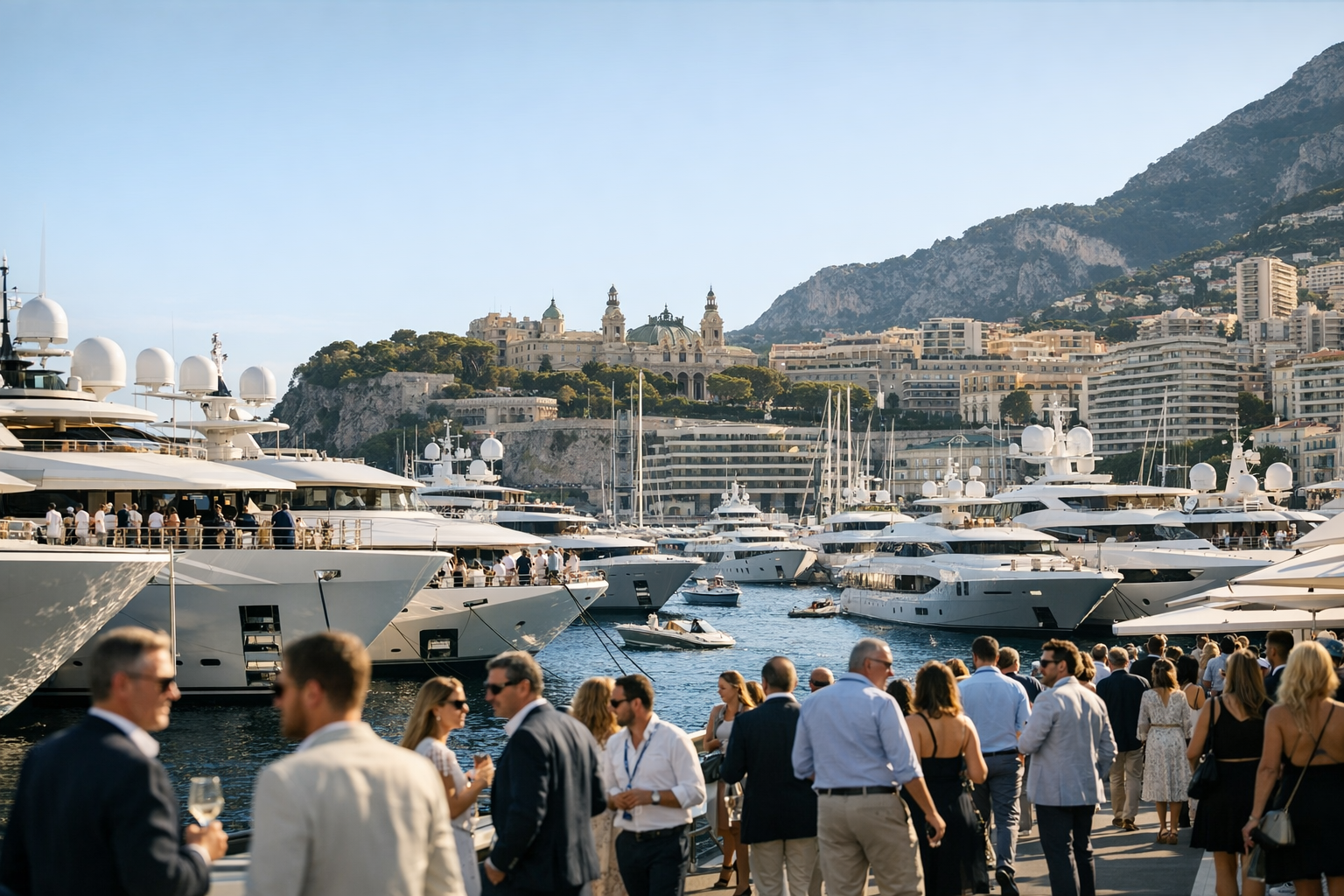
Monaco averages 300 sunny days per year and enjoys a classic Mediterranean climate — mild, wet winters and hot, dry summers. But the best month to visit depends heavily on what kind of experience you're after, because the calendar here is defined by a series of major events that can either be a reason to visit or a reason to stay away.
September is the single best month for most travelers. Crowds thin dramatically after the August peak, sea temperatures remain ideal for swimming at around 24–26°C, every attraction operates at full capacity, and hotel prices in nearby Nice begin to ease. The Monaco Yacht Show — typically held in the final week of September (2025 dates: September 24–27, with 2026 likely in the same window) — is an extraordinary spectacle even if you only observe from the public port walkways. Over 500 superyachts pack Port Hercule, some exceeding 100 meters in length.
June and October are runners-up for a balanced experience. June brings warm weather (20–25°C), open beaches, post-Formula 1 calm, and reasonable availability. October offers superb walking weather (16–21°C), negligible crowds, and a relaxed pace that lets you actually absorb Monaco's architecture and streetscapes rather than fighting through tour groups.
July and August deliver peak Mediterranean summer — sea temperatures of 24–26°C, 8–10 hours of sunshine daily, and the International Fireworks Festival with free public viewing from multiple vantage points across the principality. The downside is significant: cruise ships deposit thousands of day-trippers, Larvotto Beach is packed before 10am, and accommodation prices peak across the entire region.
January and February reward the hardy traveler willing to accept 8–12°C temperatures with empty streets, no queues at any attraction, and hotel prices in Nice that can drop 40–60% compared to summer rates. The Monte Carlo Rally — typically held in January — is an exciting spectacle that draws motorsport fans but also fills hotels well in advance.
Avoid Monaco entirely the third weekend of May unless you are attending the Formula 1 Grand Prix. Hotels inside Monaco book out 6–12 months in advance for that weekend, prices triple or quadruple throughout the region, and the street circuit closures make navigating the principality a logistical headache. If you do want Grand Prix tickets, the window for booking grandstand seats (€250–1,500+) and paddock access (€5,000+) opens in the preceding September — do not delay.
Plan this trip
Top Things to Do in Monaco: Attractions, Experiences & Hidden Gems
Monte Carlo Casino (Casino de Monte-Carlo)
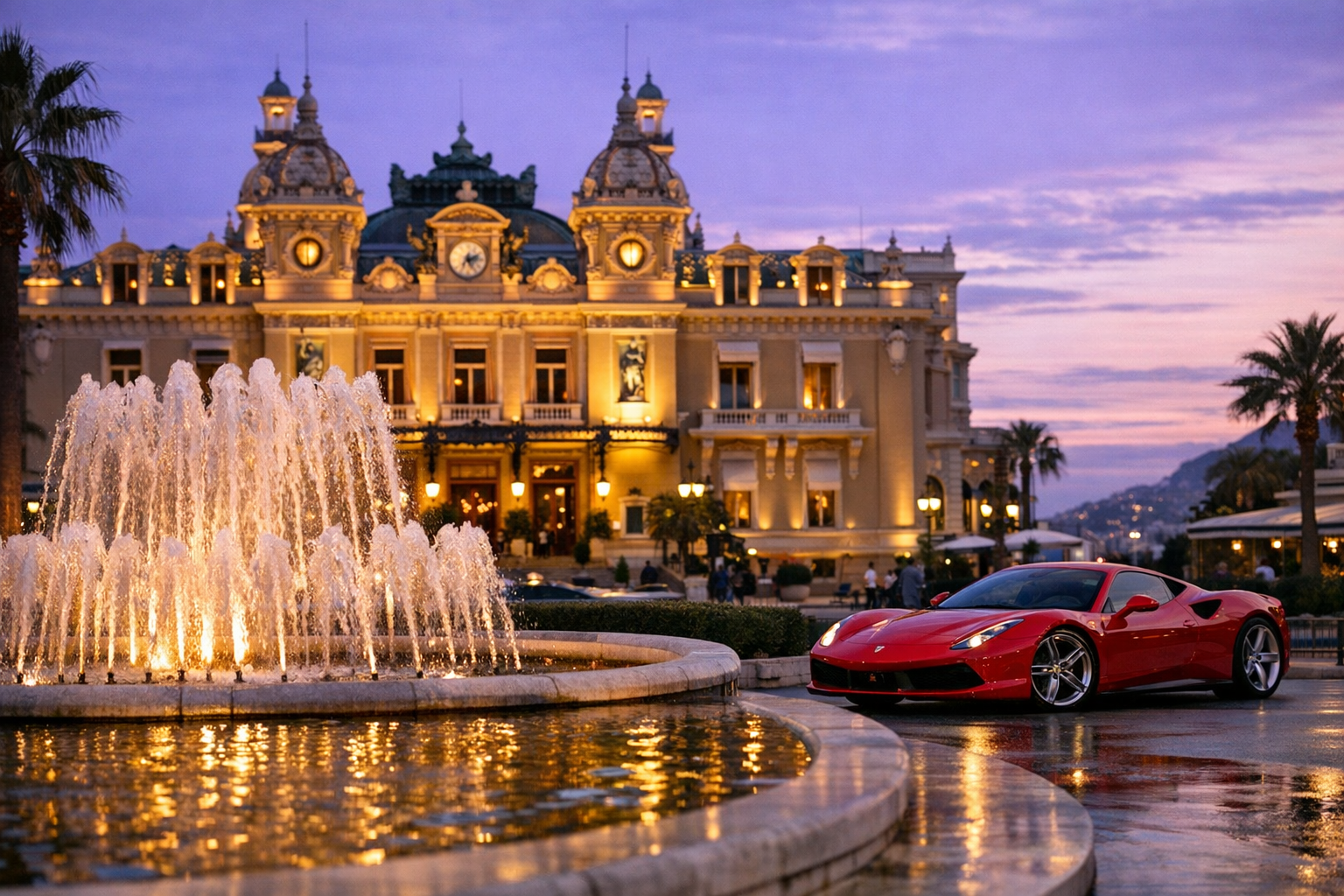
No building in Monaco carries more symbolic weight than the Casino de Monte-Carlo, designed in 1863 by Charles Garnier — the same architect responsible for the Paris Opéra — and completed in a Belle Époque style that has defined Monte Carlo's visual identity ever since. Gaming begins at 2pm daily; entry to the main rooms (Salon de l'Europe and Salon des Amériques) costs €17, and a passport or national ID is required at the door — no exceptions. Minimum bets in the main rooms typically start at €5–10, rising to €25–100 in the private salons accessible by invitation or higher entrance fees.
The smartest time to visit is between 2pm and 4pm on a weekday, when crowds are thinnest and you can actually appreciate the frescoed ceilings, sculpted bronze figures, and stained-glass atrium without jostling for position. A strict dress code applies: smart casual during the afternoon, jacket required in private rooms after 8pm, and no shorts, flip-flops, or sportswear after 2pm. Non-gamblers frequently pay the entry fee purely to experience the interiors — it is one of the genuinely remarkable architectural spaces in Europe. The cars parked outside — Ferraris, Bugattis, and Lamborghinis — are part of the spectacle and cost nothing to admire.
Prince's Palace & the Changing of the Guard
Perched at the summit of The Rock in Monaco-Ville, the Prince's Palace has served as the Grimaldi family residence since the 13th century. It opens to visitors from April 1 through October 31 (10am–6pm, until 7pm in July and August), with admission of €13 for adults and €7 for children aged 8–14. The audio guide, included in the entry price, narrates the State Apartments — ornate rooms including the Throne Room and the Gallery of Hercules.
Arrive at 11:45am to secure a good position for the Changing of the Guard at 11:55am, a free daily ceremony that is brief, precise, and genuinely photogenic. After the ceremony, proceed directly into the palace to get ahead of the crowds that gather afterward.
Oceanographic Museum
Founded in 1910 by Prince Albert I — a passionate oceanographer who made 28 scientific expeditions — and directed by Jacques Cousteau from 1957 to 1988, the Oceanographic Museum is built dramatically into the cliff face of Monaco-Ville. Adults pay approximately €19, children (6–17) around €11. The collection spans 100 tanks housing 6,000 species of marine life, a shark lagoon, interactive multimedia exhibits on ocean conservation updated in 2024–2025, and a rooftop terrace with sweeping harbor views. Budget two to three hours. Arrive at opening time (10am) in summer to avoid the afternoon crush.
Monaco-Ville: The Old Town
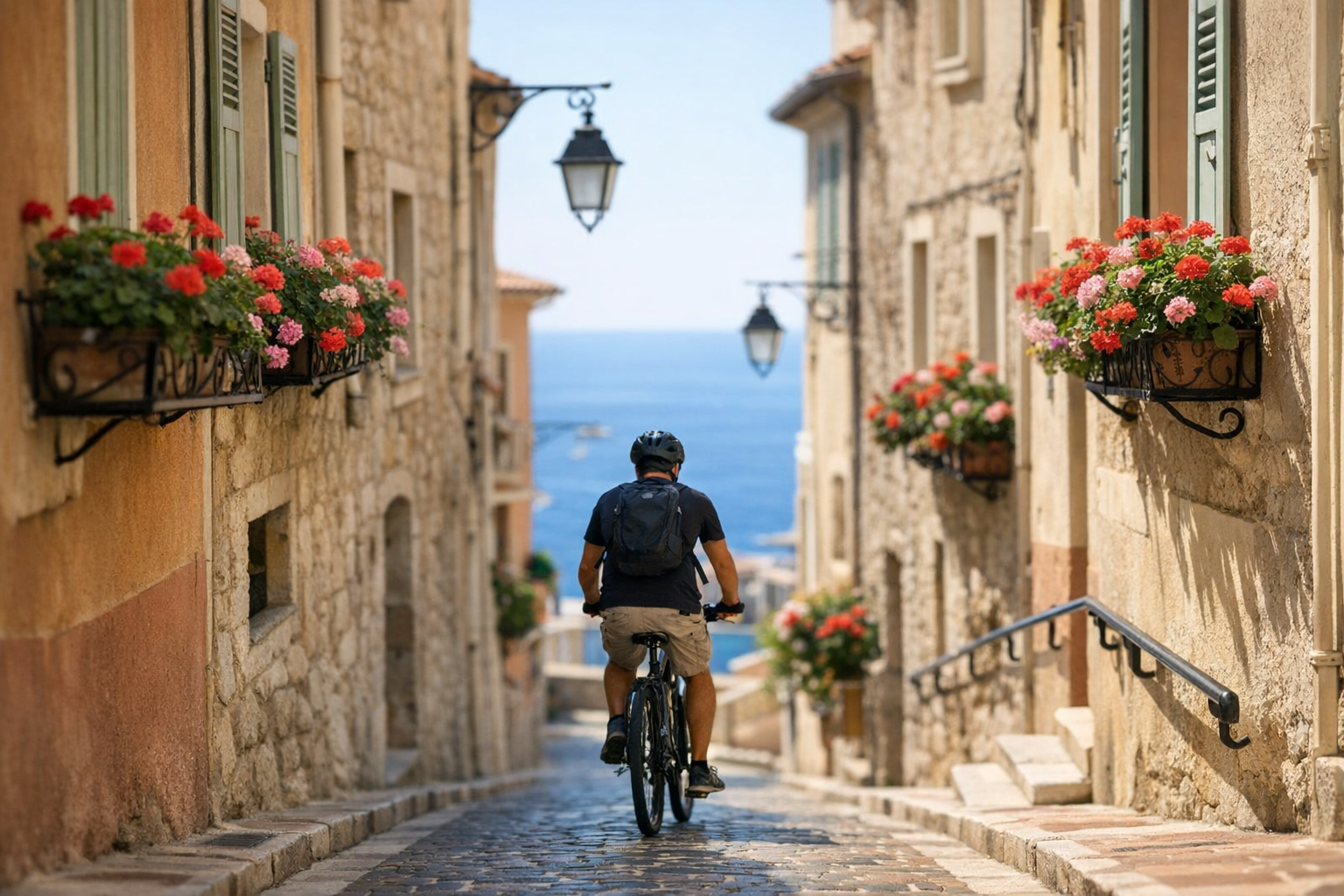
The historic heart of Monaco is free to explore on foot and rewards an unhurried morning. The Cathedral of Our Lady Immaculate — known locally as Saint Nicholas Cathedral — contains the graves of Princess Grace Kelly (who died in 1982 following a car accident on the corniche road) and Prince Rainier III. Entry is free. The Saint Martin Gardens along the clifftop offer sculpted sea views at no cost, and the narrow medieval lanes of the old town are largely pedestrianized and genuinely atmospheric. Use the free public elevator from the port level to avoid the climb in summer heat.
Larvotto Beach
Monaco's main public beach sits at the principality's northeastern tip, roughly a kilometer from Casino Square. The public sections are free; private beach club sun loungers run €25–50 per day. The water is exceptionally clean — Monaco invests significantly in seawater quality monitoring and maintains Blue Flag status. Note that it is a pebble beach, so water shoes are recommended. Arrive before 9am in July and August; in June or September, finding a spot is effortless.
Fontvieille: The Quiet District
Most tourists never make it to Fontvieille, Monaco's southwestern industrial and artisan district, which is precisely what makes it rewarding. The Princess Grace Rose Garden — free to enter and extraordinary in May and June when its 4,000 roses are in bloom — sits alongside Prince Rainier III's personal antique car collection (100 vehicles; €8 adults), a Naval Museum of historic ship models (€5), and a Stamp and Coin Museum (free). The Fontvieille Carrefour supermarket offers the principality's most affordable food shopping.
Formula 1 Circuit Walk
The Monaco Grand Prix circuit runs through the living streets of the principality, which means you are, at any time of year, walking or driving sections of the most famous street circuit in motorsport. The Fairmont Hairpin — the world's slowest Formula 1 corner, navigated at approximately 50 km/h — can be visited any day. The tunnel under the Fairmont Hotel, where cars exceed 280 km/h during racing, is part of the normal road network. The Monaco Tourist Office provides a free self-guided walking map of the full circuit.
Japanese Garden & Casino Square
The Jardin Japonais, designed in 1994 by landscape architect Yasuo Beppu, covers 7,000 square meters near Larvotto Beach and is entirely free to enter. Koi ponds, stone lanterns, a traditional tea house, and a small waterfall make it one of the most tranquil spots in Monaco. Casino Square itself — Place du Casino — is free to visit at any hour and delivers Monaco's essential spectacle: the illuminated Casino, the historic Hôtel de Paris (opened 1864), supercars circling the roundabout, and the Café de Paris terrace providing a front-row seat for the theater of wealth in motion.
Where to Eat in Monaco: From Michelin Stars to Market Lunches
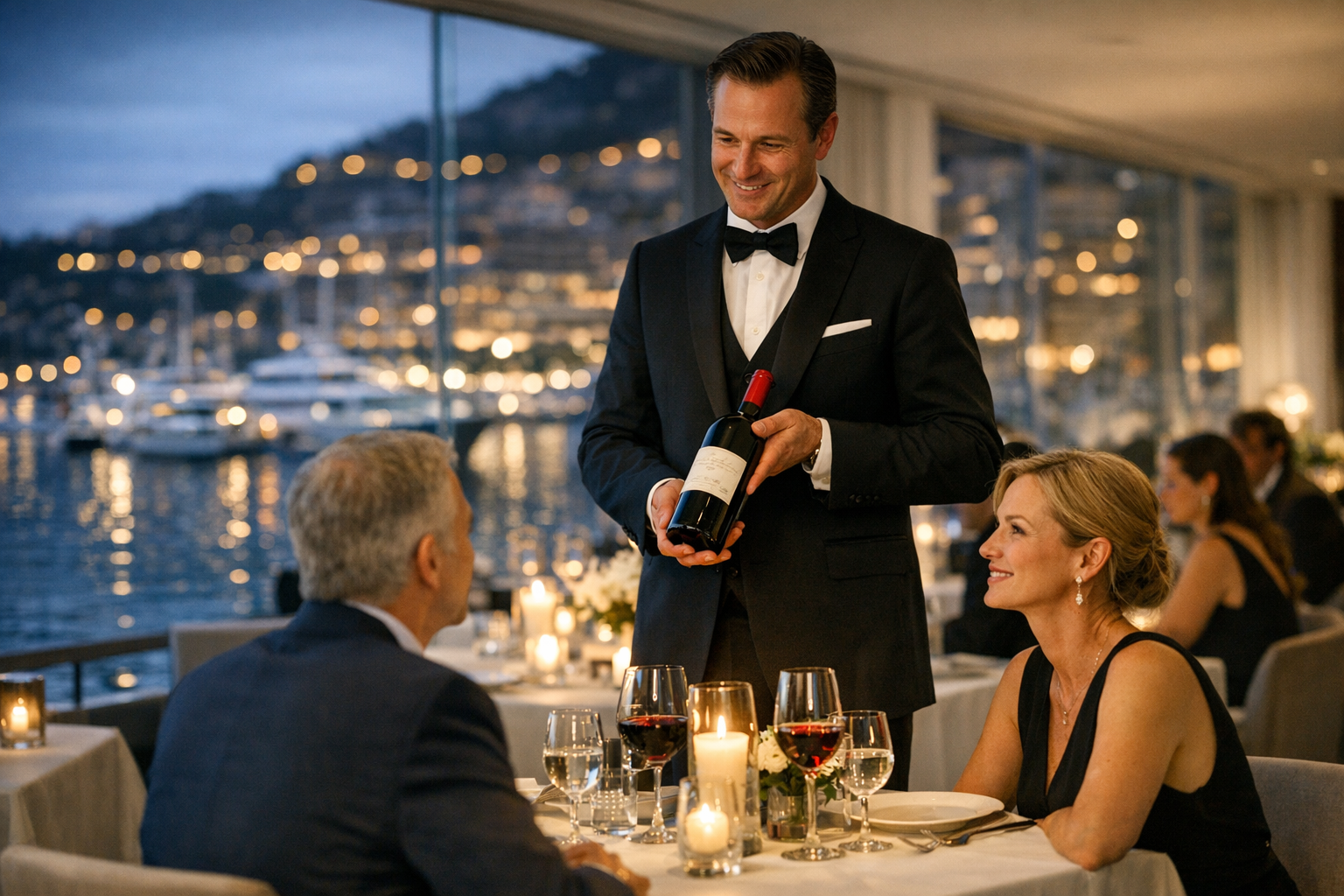
Monaco's dining scene is bifurcated in a way you rarely encounter elsewhere: it is simultaneously home to some of the world's most celebrated restaurants and a place where, if you know where to look, you can eat a perfectly good lunch for €15.
Splurge dining begins with Le Louis XV at the Hôtel de Paris, Alain Ducasse's flagship that has held three Michelin stars continuously since 1990 — a record in the Guide's history. Tasting menus run €450–550 per person before wine; reservations should be made three to six months in advance, and a jacket is required. The Joël Robuchon Monte-Carlo at the Hôtel Métropole, operating in L'Atelier format with two Michelin stars, offers a marginally more accessible entry point at €120–200 per person. Blue Bay at the Monte Carlo Bay Hotel — one Michelin star, led by chef Marcel Ravin whose cooking fuses Caribbean and Mediterranean influences — is considered by many the most creative kitchen currently operating in the principality (€150–200 per person).
Mid-range options worth knowing: Le Tip Top in Monaco-Ville is an unpretentious, old-school Monégasque brasserie beloved by locals, serving a plat du jour for €15–18 — extraordinary value given the postcode. Stars'N'Bars on the port in La Condamine is a long-established American-style sports bar decorated with Formula 1 memorabilia; burgers run €18–25 and it is reliably busy with an international crowd. Quai des Artistes on the La Condamine harbor front offers brasserie-style cooking with harbor views, mains at €25–45. Café Llorca, from Michelin-starred chef Adrien Llorca, offers lunch formulas from €35–45 with genuine culinary ambition.
Budget eating strategy: The Marché de la Condamine, open Tuesday through Sunday mornings, is the single best value food experience in Monaco. Socca — the Niçoise chickpea flour pancake that is also the snack of the French Riviera — costs €3–5 here, alongside fresh produce, local olives, and charcuterie. The Carrefour in Fontvieille stocks provisions at prices comparable to mainland France. An espresso at any café away from Casino Square's terrace will cost €2.50–4 rather than the €6–10 charged at prime tourist positions.
For travelers arriving by private car or planning a multi-destination itinerary across the Riviera, consider your transportation logistics in advance. A [luxury chauffeur service](/chauffeur-services/) between Nice, Monaco, and Cannes can make a long dining evening at Le Louis XV genuinely practical — no parking stress, no designated driver calculation, and you arrive at the Hôtel de Paris with the appropriate sense of occasion.
Plan this trip
Getting to Monaco and Getting Around: Transport Guide
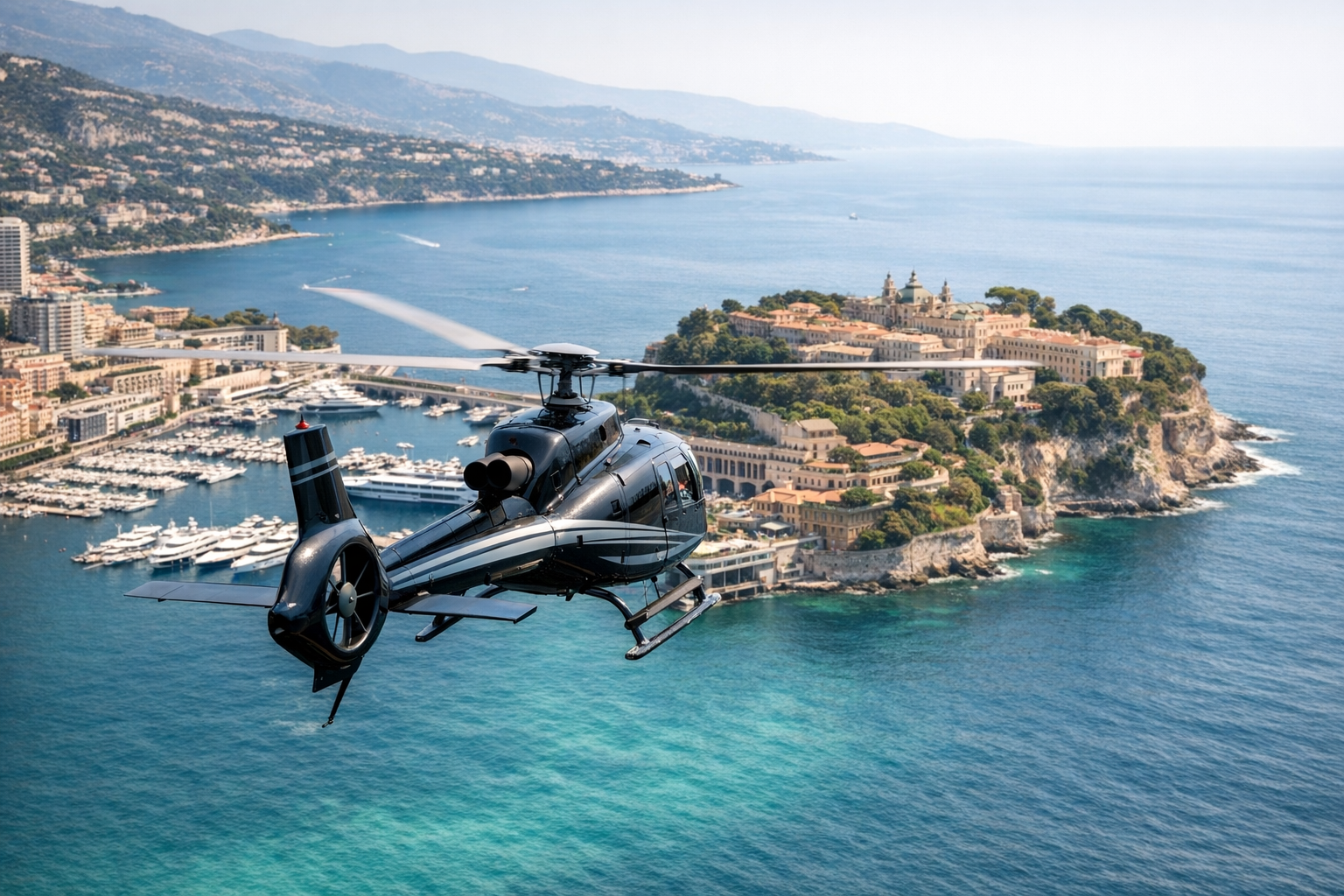
Monaco's geography — a densely built principality with no airport of its own — means that getting here is a well-practiced exercise in regional connectivity, and getting around once inside requires almost no transport at all.
By Train: The most practical and affordable option for most visitors. The SNCF regional TER service runs between Nice-Ville station and Monaco-Monte Carlo station approximately every 30 minutes, taking about 25 minutes and costing roughly €4.50 each way. From the Italian border town of Ventimiglia, the same line takes approximately 40 minutes and costs around €5. Monaco's train station is built underground; escalators bring you up into the La Condamine district.
By Bus: The TAM Line 100 bus runs along the coastal road between Nice and Menton, stopping in Monaco. Fares are €1.50, making it the cheapest option, but journey times of 45 minutes to 1.5 hours (depending on traffic) and standing room only in summer make the train substantially preferable for most travelers.
By Helicopter: Héli Air Monaco operates a scheduled helicopter service between Nice Côte d'Azur Airport and Monaco's helipad in Fontvieille. The seven-minute flight costs €160–180 per person one-way and is bookable in advance online. It is genuinely spectacular on a clear day and eliminates all road transfer time from the airport — a serious consideration when flights arrive late or connections are tight.
By Boat: Seasonal boat services connect Monaco with Nice, Antibes, and Cannes from approximately May through October, costing €25–40 one-way. Arriving by sea — gliding into Port Hercule with the Casino hill rising above you — is the most cinematic way to approach the principality.
Within Monaco: Given that the entire country is roughly walkable in 45 minutes, most visitors need minimal internal transport. The Monaco bus network charges €2 per journey. The real revelation is the network of free public elevators, escalators, and covered walkways connecting Monaco's many terraced levels — these are marked on tourist maps and the official Monaco app, and dramatically reduce walking time and effort when navigating between, say, the port and Monaco-Ville.
Taxis exist but are expensive relative to the distances involved — a short trip within Monaco can run €8–20 from a €3.50 starting meter. If you are planning a multi-day Riviera itinerary combining Monaco with Cannes, Nice, and other destinations, comparing [car rental options](/car-rentals/) for flexibility versus private transfers for comfort is worth doing well in advance. During the Monaco Grand Prix period in May, any vehicle-based logistics become exponentially more complicated — factor this heavily into planning.
For groups or travelers with luggage, a [private transfer from Nice Airport](/airport-transfers/) directly to Monaco hotels is frequently the most stress-free arrival option, with journey times of approximately 30–45 minutes by road depending on traffic.
Where to Stay: Monaco Hotels and the Smart Alternative
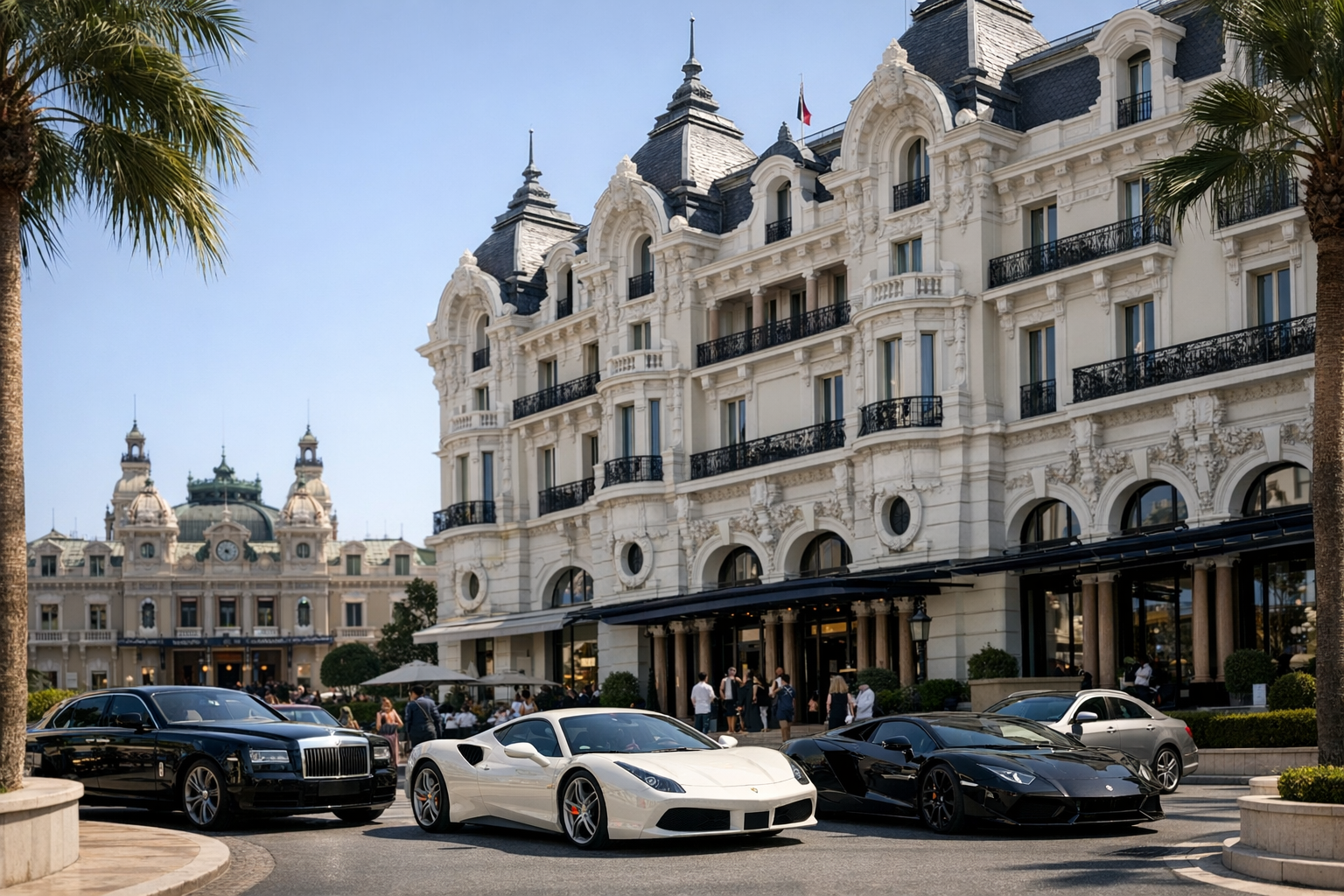
Staying inside Monaco is a genuine luxury experience — and priced accordingly. The Hôtel de Paris Monte-Carlo, opened in 1864 and recently restored to its full Belle Époque grandeur, is the definitive Monaco address: rates typically range from €800 to over €2,000 per night, and the wine cellar beneath the hotel — carved from solid rock and said to contain some 350,000 bottles, including vintages predating the First World War — is among the most remarkable in Europe. The Hôtel Hermitage Monte-Carlo and the Monte Carlo Bay Hotel & Resort offer slightly lower entry points while maintaining the level of service and setting that justifies a Monaco address.
For travelers who want proximity without the price — which describes the vast majority of visitors — Nice is the logical base. The 25-minute train journey means you can be in Monaco by 10am and back for dinner in Nice, where excellent hotel options exist at every budget level from €80 boutique properties to five-star seafront addresses on the Promenade des Anglais. The village of Èze, perched on a hilltop between Nice and Monaco, offers some of the most atmospheric accommodation on the entire Riviera — the Château Eza and Château de la Chèvre d'Or both occupy genuinely extraordinary clifftop positions — though rooms here also command significant premiums.
Menton, the sleepy border town on the other side of Monaco toward Italy, is consistently underrated as a base: quieter, cheaper, and charming in its own right, with Monaco reachable in under 15 minutes by train. During the Monaco Grand Prix in May, any accommodation within 30 kilometers will be either fully booked or priced at multiples of the normal rate — budget travelers should consider Antibes or Cannes as a base for that specific weekend.
When booking accommodation for a Monaco-centered trip, comparing rates across the Riviera and factoring in transport costs gives a more accurate picture of true trip cost. Booking platforms with flexible cancellation policies are particularly useful for a destination whose weather and events calendar can occasionally require itinerary adjustments.
Plan this trip
Practical Tips, Safety & Insider Advice for Monaco 2026
Dress appropriately for context. Monaco's dress code expectations are real and enforced, particularly at the Casino (smart casual from 2pm; no shorts, flip-flops, or sportswear; jacket in private rooms after 8pm) and at fine dining establishments. The rest of the principality is relaxed, but visibly sloppy dress will occasionally earn you slow service at upscale cafés.
Bring your passport. Required for casino entry, even for EU nationals who normally travel on ID cards. This is a hard rule with no exceptions.
Use the free lifts and escalators. Monaco's vertical geography is substantial — the difference in elevation between the port and Monaco-Ville is significant. The free public elevator network is genuinely useful and marked on every tourist map. The Monaco official app (available free on iOS and Android) includes an accurate map of all lifts, bus stops, and attractions.
Arrive at the Oceanographic Museum at opening. The museum becomes very busy by 11am in summer. An early visit is qualitatively different from an afternoon one.
Free Monaco highlights: The Changing of the Guard (11:55am daily, free), Casino Square viewing (free at all hours), the Japanese Garden (free), the Princess Grace Rose Garden (free), the F1 circuit walk (free), Monaco-Ville fortress walls (free), and the extraordinary view from the Saint Martin Gardens (free) collectively constitute a full and satisfying day without a single paid entry. Budget travelers should note this — Monaco's free experiences are among its best.
Grocery shopping: The Carrefour in Fontvieille is a 15-minute walk from Casino Square and charges mainland French prices. Buying breakfast, snacks, and drinks there rather than at tourist cafés reduces daily food costs significantly.
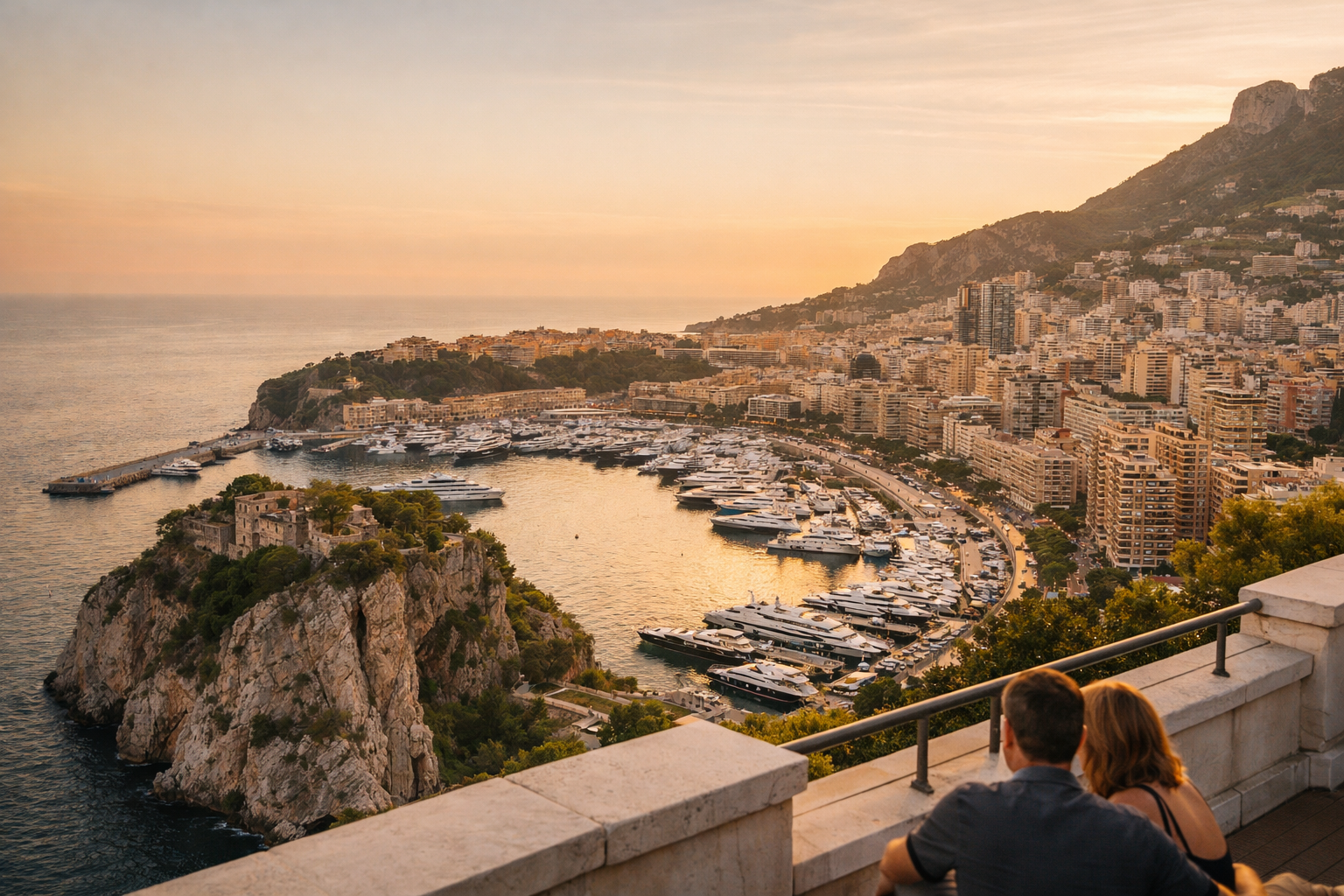
Photography: Monaco is extraordinarily photogenic. Golden hour — roughly 6:30–8pm in summer — turns the harbor and Casino facades into genuinely spectacular scenes. The rooftop terrace of the Oceanographic Museum (included in admission) provides one of the best harbor panoramas in the principality.
Safety: Monaco has one of the highest police-per-capita ratios of any country in the world and consistently ranks among the safest destinations in Europe. Petty crime is rare, but standard common-sense precautions apply in crowded tourist areas. The principality has its own emergency number: 17 (police), 18 (fire), 15 (medical).
Currency and cards: The Euro is universal, and card payments are accepted almost everywhere. However, the casino requires cash for gaming — ATMs are available inside, though they charge fees. Bring sufficient cash if you plan to play.
Language: French is official and appreciated in any attempt, however basic. English is spoken fluently in every hotel, restaurant, and tourist attraction. Italian is widely understood near the border.
Monaco Card: Available at the tourist office (located in the Boulevard des Moulins), offering discounts on museum entry and reduced bus fares. Worth calculating against your planned itinerary — if you're visiting three or more paid attractions, it typically pays for itself.
Frequently Asked Questions
Monaco is not a member of the European Union but has an open border with France and participates in the Schengen Area. Citizens of EU member states, the United States, Canada, Australia, the United Kingdom, and most other developed nations do not require a visa for stays up to 90 days. Entry requirements are effectively the same as for France. Always verify current requirements with Monaco's official government website before travel, as policies can change.
A single full day is sufficient to cover Monaco's main highlights — the Changing of the Guard, Monaco-Ville and the Cathedral, the Oceanographic Museum, Casino Square, and Larvotto Beach — especially for first-time visitors. Two days allows a more relaxed pace, time in Fontvieille, and the opportunity for one memorable dining experience. A third day is rarely necessary unless you're attending a specific event like the Grand Prix or Yacht Show.
The regional TER train from Nice-Ville to Monaco-Monte Carlo is the cheapest and fastest option: approximately €4.50 each way, with a journey time of about 25 minutes and departures roughly every 30 minutes. The coastal bus (TAM Line 100) costs €1.50 but takes 45 minutes to 1.5 hours depending on traffic and is significantly less comfortable in peak season.
Yes. Paying the €17 entry fee to the main gaming rooms (Salon de l'Europe and Salon des Amériques) grants access to see the Casino's extraordinary Belle Époque interiors even without placing a bet. Many visitors do exactly this. Remember to bring your passport, as it is required at the entrance for all visitors regardless of nationality.
The third weekend of May during the Formula 1 Monaco Grand Prix is the most challenging time to visit unless you have Grand Prix tickets — hotels across the region triple or quadruple in price and book out months in advance, and road closures make navigating the principality difficult. July and August, while offering excellent beach weather, see Monaco at its most crowded, with cruise ship day-trippers adding significantly to congestion.
It depends entirely on where you eat. A three-Michelin-star dinner at Le Louis XV costs €450–550 per person; a lunch plat du jour at Le Tip Top in Monaco-Ville runs €15–18. The Marché de la Condamine market offers socca and local food from €3–8. Buying provisions at the Carrefour in Fontvieille — where prices match mainland France — is the smartest budget strategy.
French is the official language of Monaco. Monégasque — a blend of Ligurian Italian and Old French — is also recognized and taught in schools, though rarely encountered by visitors. Italian is widely understood, particularly in areas close to the Italian border. English is spoken fluently in virtually every hotel, restaurant, and tourist attraction that visitors are likely to use.
The Monaco Yacht Show, held each September in Port Hercule, is primarily a trade event for the superyacht industry. Public day tickets are available but limited, typically priced from approximately €30–50 per day — check the official Monaco Yacht Show website for current ticket availability. Even without tickets, a significant number of yachts are visible from the public port walkways surrounding the harbor at no cost.
Monaco offers a surprising number of excellent free experiences: the Changing of the Guard at the Prince's Palace (11:55am daily), the Japanese Garden near Larvotto, the Princess Grace Rose Garden in Fontvieille, the Saint Martin Gardens clifftop walk, Casino Square people-watching, the Formula 1 circuit self-guided walk, and the public beach at Larvotto. The city's network of free public elevators and escalators is also worth noting — they connect Monaco's different elevation levels and save considerable energy in summer heat.