Palma de Mallorca at a Glance: What You Need to Know Before You Go
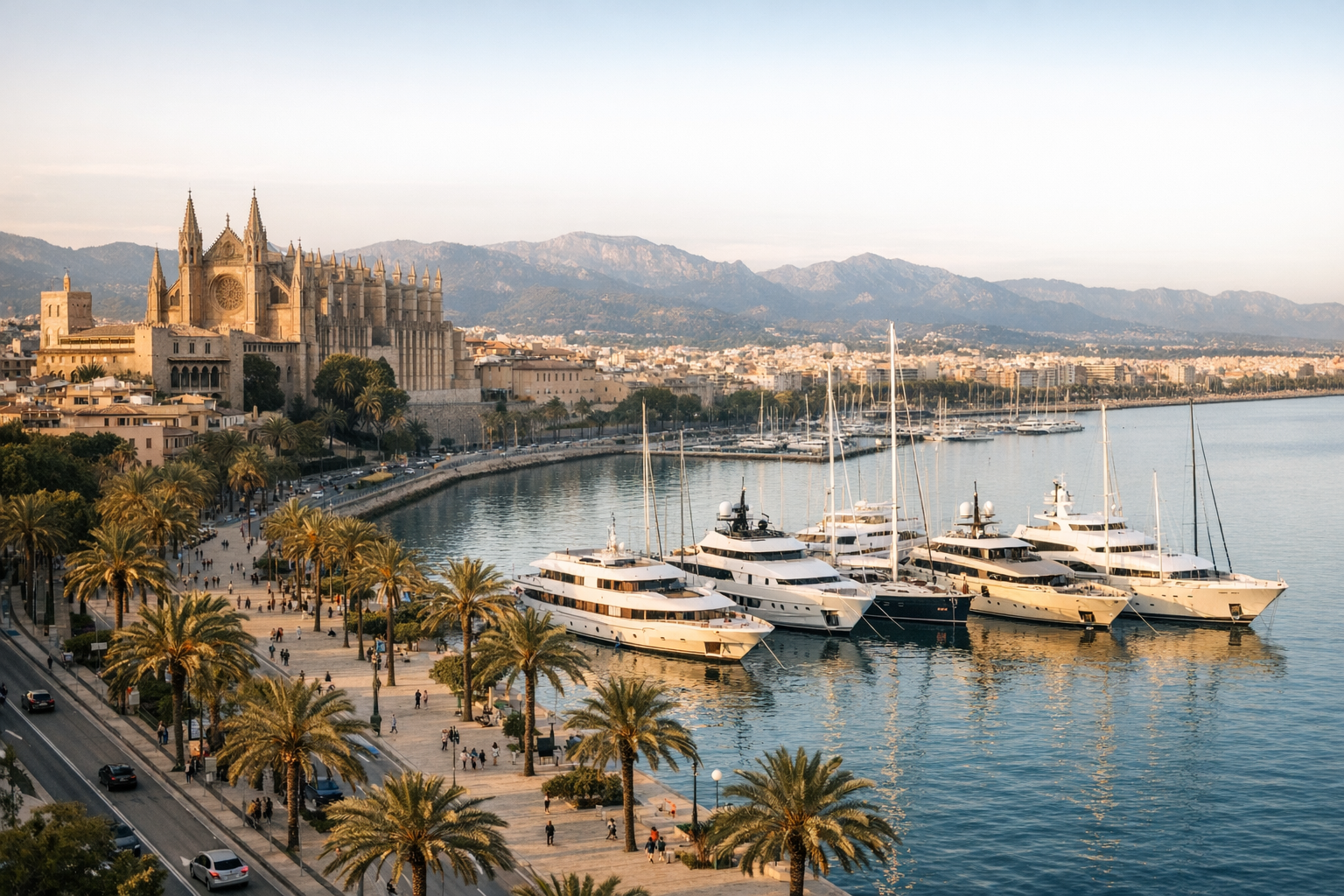
Officially rebranded simply as 'Palma' in 2016, Palma de Mallorca is the capital of the Balearic Islands and one of the most compelling city-beach destinations in the western Mediterranean. With a metropolitan population of around 420,000, it punches well above its weight—think Gothic cathedrals standing beside Modernista masterpieces, world-class museums, a thriving food scene, and a working port where superyachts jostle with traditional llaut fishing boats.
Mallorca itself covers approximately 3,640 km², roughly 100 kilometres long and 75 kilometres wide, meaning Palma serves as an ideal base from which to explore dramatic mountain villages, protected nature parks, and beaches of every character—from buzzing 6-kilometre Playa de Palma to the wild, car-free sands of Es Trenc.
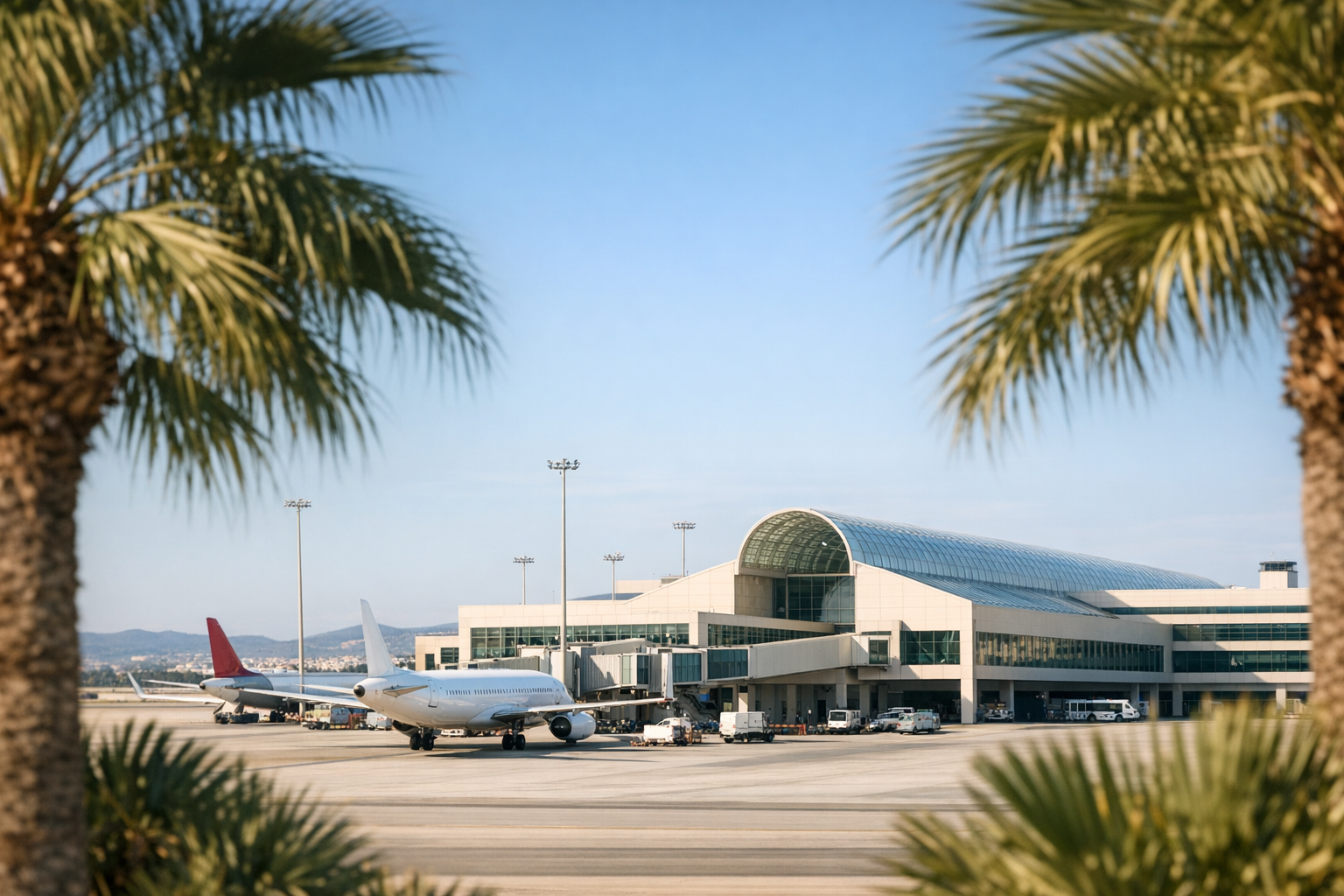
The city operates on Central European Time (CET, UTC+1; CEST UTC+2 in summer), uses the euro, and is officially bilingual in Spanish (Castilian) and Catalan—specifically the Mallorquí dialect. A polite 'gràcies' goes a long way with locals. Palma de Mallorca Airport (PMI), just 8 kilometres east of the city centre, is Spain's second busiest airport, served by budget carriers including Ryanair, easyJet, Vueling, and Jet2. Direct flights from London take around 2 hours 15 minutes, while Barcelona is a remarkable 55 minutes away.
Getting from the airport into the city is straightforward. EMT Bus Line 1 runs every 15 minutes to Plaça d'Espanya for a flat €5 fare, taking roughly 15–20 minutes. A licensed taxi operates on a fixed airport tariff of €20–25 to the city centre. Rideshare apps Uber and Cabify are both active in Palma and typically undercut taxis slightly. If you plan to explore the island's more remote beaches and mountain villages independently—and you absolutely should—renting a car is the most practical option, with rates starting around €25 per day in shoulder season, though expect to pay €60–100 or more at the peak summer height. For a seamless arrival experience, pre-booking your airport transfer ensures you step off the plane with one less thing to think about.
When to Visit Palma: Choosing the Right Season
Timing your trip to Palma correctly can be the difference between a transformative experience and a sweaty queue. The island receives sunshine year-round—even January averages around 14°C highs—but the experience varies dramatically by season.
Peak Season (June–August) delivers the Mediterranean at its most seductive: sea temperatures of 24–26°C, long evenings, and an electric social atmosphere. July and August average highs of 30–32°C, making beach days genuinely spectacular. The trade-off is real: queues at La Seu Cathedral can stretch 45 minutes or more, accommodation rates double or triple compared to spring, and Es Trenc beach's car park fills before 10am. The Palma Jazz Festival runs in July for music lovers willing to embrace the crowds.
Shoulder Season (April–May and September–October) is where savvy travellers earn their bragging rights. September in particular is arguably Palma's finest month—the sea still sits at a swimming-friendly 23–25°C, temperatures hover around 22–28°C, summer crowds have thinned noticeably, and hotel rates drop 30–50% below August peaks. The Nit de l'Art gallery night in September is a genuinely wonderful cultural event. October remains warm enough for beach days well into the month. April and May bring spring wildflowers and the island's famous cycling festival, the Mallorca 312 sportive.
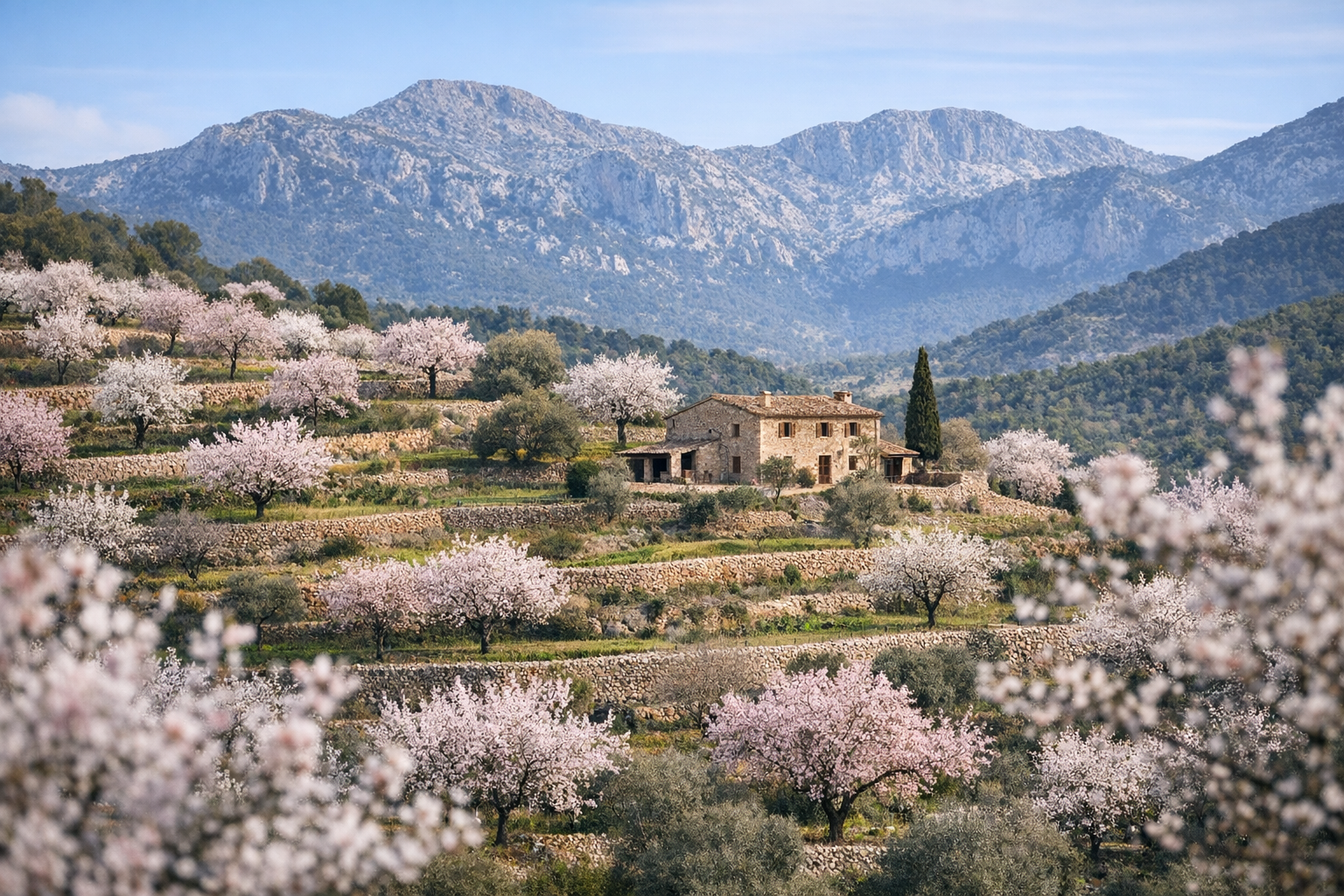
Low Season (November–March) rewards city-focused travellers and hikers particularly well. The Tramuntana mountains are at their most walkable in cooler temperatures, Palma's cultural calendar (theatre, galleries, local restaurants) runs at full throttle for residents rather than tourists, and a four-star hotel room can cost €60–80 per night. February is genuinely special: almond blossom season turns the island's interior into a sea of pink and white flowers, celebrated with the festival at Mancor de la Vall. Sant Sebastià on 19–20 January—Palma's patron saint festival—fills the city with outdoor concerts, bonfires, and free events that feel authentically local rather than performatively touristic.
The verdict: book mid-September to mid-October for the best overall balance of weather, value, and experience. If your schedule demands summer, go early July before schools break up across northern Europe.
La Seu Cathedral and the Almudaina Palace: Palma's Historic Heart
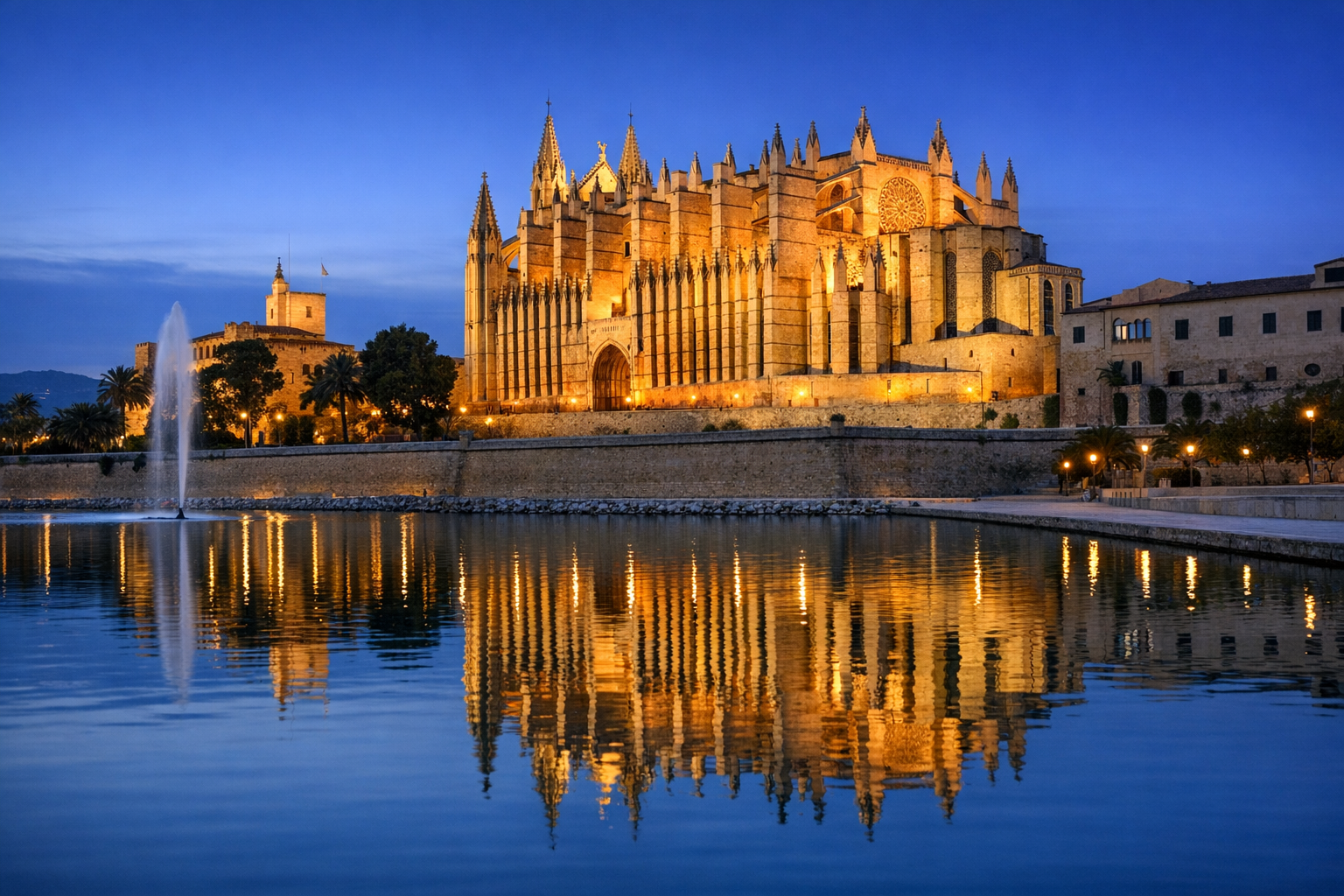
No honest Palma de Mallorca travel guide can start anywhere other than La Seu, the city's magnificent Gothic cathedral that anchors the waterfront like a limestone battleship. Construction began in 1229 following the Christian conquest of Mallorca by King James I of Aragon, and the building was largely complete by 1601—though the story didn't end there. Antoni Gaudí renovated the interior between 1904 and 1914, adding the extraordinary wrought iron canopy suspended over the high altar, known as the Corona. The effect—Gaudí's organic, nature-inspired metalwork hanging within a soaring Gothic nave—is unlike anything else in Spain.
The cathedral's rose window, known as the 'Eye of the Cathedral,' measures an extraordinary 12.5 metres in diameter and contains 1,236 pieces of coloured glass. When morning light floods through it onto the opposite wall, the visual impact is genuinely overwhelming. More recently, Mallorcan artist Miquel Barceló completed a massive 300-square-metre ceramic mural in the Chapel of the Holy Sacrament in 2007, depicting the biblical miracle of the loaves and fishes in bold, expressive relief. Controversial when unveiled, it is now accepted as one of the most significant contemporary artworks in any religious building in Europe.
Admission is €9 for adults (€6.50 for students and over-65s; children under 10 free), and booking in advance at catedraldemallorca.org is strongly recommended to bypass the queue. One genuinely free option: Sunday morning mass, during which the cathedral is open to worshippers at no charge, though tourist access is appropriately restricted during the service itself. Even if you skip the interior, the view of La Seu from the Parc de la Mar below—particularly at dusk when the façade glows amber and its reflection shimmers in the artificial lake—is among the most photographed moments in the Balearic Islands.
Directly adjacent stands the Palau de l'Almudaina, the Royal Palace of Palma. Originally a Moorish fortress (alcázar), it was converted into a Gothic royal palace by King James II of Mallorca in the late 13th century and remains an official royal residence—the Spanish royal family typically spends part of August here. Highlights include the Gothic throne room, the ornate royal chapel, a Moorish courtyard of quiet beauty, and terraced ramparts with sweeping views over the marina. Admission is €7 for adults, with EU citizens and residents paying €3.50, and free entry available on Wednesday afternoons (EU citizens) and for all visitors on Thursdays between 16:00 and 18:00. A combined ticket with the cathedral offers the most economical way to cover both in a single morning.
Plan this trip
Compare Car Rentals
Compare 500+ suppliers — Hertz, Enterprise, Sixt & more.
Find Cars →Hotels in Destinations
Top-rated hotels with free cancellation. Best price guaranteed.
Search Hotels →Vacation Rentals
Entire homes and condos — more space, more privacy.
Browse Rentals →Hotels in Destinations
Top-rated hotels with free cancellation. Best price guaranteed.
Search Hotels →Bellver Castle, Es Baluard, and the Joan Miró Foundation: Art and Architecture Beyond the Old Town
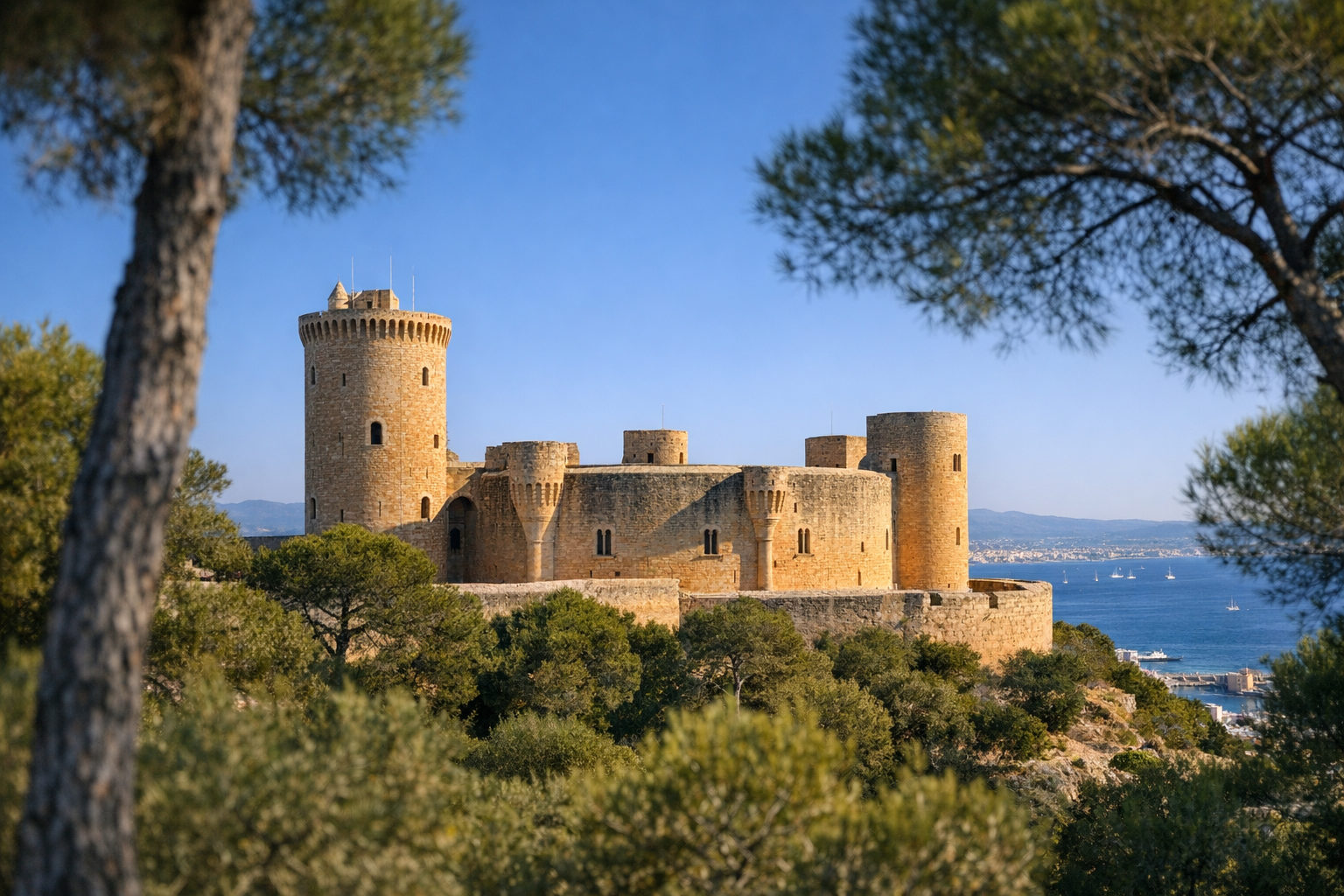
Three kilometres west of the city centre, perched on a pine-forested hill 112 metres above sea level, Bellver Castle is one of the architectural curiosities of medieval Europe: a circular Gothic castle, built between 1300 and 1311 by King James II of Mallorca, at a time when virtually every other castle on the continent was being built to an angular defensive plan. The cylindrical design, with its round towers and central courtyard open to the sky, creates a spatial drama that photographs cannot fully convey. Entry costs just €4 for adults (children under 14 accompanied by an adult are free; Sunday mornings free for all), and Bus 50 from Plaça d'Espanya reaches the base in around 20 minutes. In July and August, the 'Serenates a Bellver' open-air classical music series transforms the courtyard into one of Palma's most romantic summer venues; tickets run approximately €15–20 and sell out quickly.
Back in the city, Es Baluard Museum of Modern and Contemporary Art occupies a space that is itself a work of architectural ambition: a 21st-century building constructed ingeniously into the fabric of Palma's 16th-century sea-facing city walls. The permanent collection holds over 700 works, including pieces by Miró, Picasso, and Richard Serra alongside significant Mallorcan artists. The museum's rooftop walkway, which follows the line of the ancient ramparts with unbroken views across the Bay of Palma, is worth the admission alone. Entry is €8 for adults (€5.50 concessions), free on Saturday afternoons from 15:00, and free on the first Sunday of each month.
For those with a deeper interest in modern art, the Fundació Pilar i Joan Miró in the Cala Major district (roughly 5 kilometres southwest of the centre) is an essential pilgrimage. Joan Miró made Mallorca his permanent home from 1956 until his death in 1983, and the foundation preserves his studios precisely as he left them—paint-stained floors, canvases propped against walls, brushes still in their jars—alongside a collection of over 2,500 works spanning paintings, sculptures, drawings, and prints. Admission is €9 adults, €6.50 concessions, with free entry on Saturday afternoons after 15:00. Take Bus 46 from Plaça d'Espanya, or factor in a €12 taxi from the city centre.
The Old Town, Arab Baths, and Santa Catalina Market: Palma at Street Level
Palma's Old Town rewards the traveller who is willing to simply get lost. The Barrio de la Lonja—the medieval merchant quarter clustered around the 15th-century Gothic exchange building, Sa Llotja—is arguably the most architecturally coherent historic neighbourhood in the Balearic Islands. Sa Llotja itself, designed by architect Guillem Sagrera and completed around 1452, is a masterpiece of Mallorcan Gothic: slender spiral columns rising to a vaulted ceiling, the whole building suffused with light through tracery windows. It now functions as an exhibition space and is free to enter when shows are running.
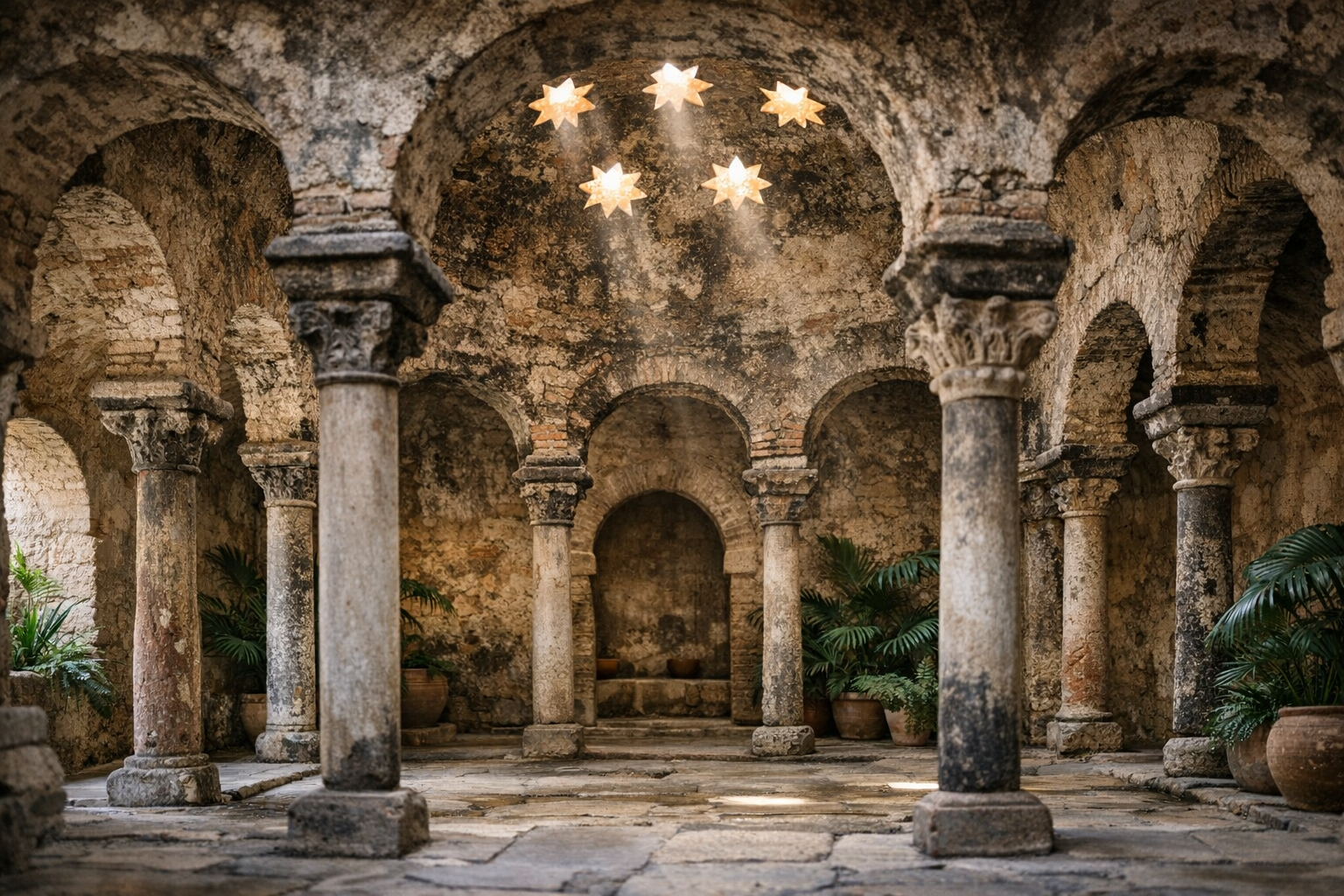
Nestled within the labyrinthine streets of the Old Town on Carrer de Can Serra, the Arab Baths (Banys Àrabs) represent the most evocative surviving remnant of Palma's Moorish past. Dating from the 10th century, the domed bathing chamber—with its star-shaped skylights filtering light into the warm stone interior—is small in scale but extraordinary in atmosphere. Entry is just €2.50, open daily from 10:00 (until 19:30 in summer), and a visit rarely takes more than 30 minutes. It pairs naturally with a wander through the adjacent lanes of Sa Gerreria, Palma's former bohemian quarter, now gentrified into a pleasant mix of cocktail bars, independent boutiques, and gallery spaces.
The Passeig des Born, Palma's elegant tree-lined central promenade, connects the Old Town to the waterfront shopping districts. Unlike Barcelona's more frenetic Las Ramblas, the Born retains a genuinely local character—the 18th-century palace Can Solleric at its northern end houses a municipal art gallery with free admission, and the café terraces beneath its plane trees are a civilised place to watch Palma go about its day.
For the most authentic market experience in the city, the Mercat de Santa Catalina in the neighbourhood of the same name (a 10-minute walk west of the Old Town) is unmissable. Built in 1920 and beautifully restored, it operates Tuesday to Saturday mornings from 08:00 to 14:00, with Saturday the busiest and most atmospheric session. Look for Mallorcan sobrassada—the distinctive paprika-cured pork sausage sold here in every possible grade—along with fresh ensaïmada pastries dusted with icing sugar, local olive oils, and the pungent island cheeses. The surrounding Santa Catalina neighbourhood has evolved into Palma's most exciting dining district, with dozens of independent restaurants within a few blocks offering everything from Mallorcan traditional cooking to inventive contemporary cuisine. Arriving hungry is the correct strategy.
Plan this trip
Compare Car Rentals
Compare 500+ suppliers — Hertz, Enterprise, Sixt & more.
Find Cars →Hotels in Destinations
Top-rated hotels with free cancellation. Best price guaranteed.
Search Hotels →Vacation Rentals
Entire homes and condos — more space, more privacy.
Browse Rentals →Hotels in Destinations
Top-rated hotels with free cancellation. Best price guaranteed.
Search Hotels →Palma's Best Beaches: From City Sands to Wild Coves
Mallorca's reputation as a beach destination is entirely deserved, and the variety available from Palma as a base is remarkable. Within walking distance of the city centre, Platja de Can Pere Antoni is a genuinely pleasant urban beach backed by a dedicated cycling and running path—sunbed rental runs around €6–8 per day, the water quality holds Blue Flag status, and the views back towards La Seu Cathedral are uniquely photogenic. For convenience, it is hard to beat.
Playa de Palma—more formally s'Arenal—stretches 6 kilometres east of the city, accessible on EMT Bus Line 15 for €2.50 in around 35 minutes. It is one of Mallorca's longest beaches, heavily developed, extremely well-facilitated, and frankly very busy in July and August. In shoulder season, it mellows considerably and the sheer scale of the beach means finding a comfortable patch of sand is never difficult.
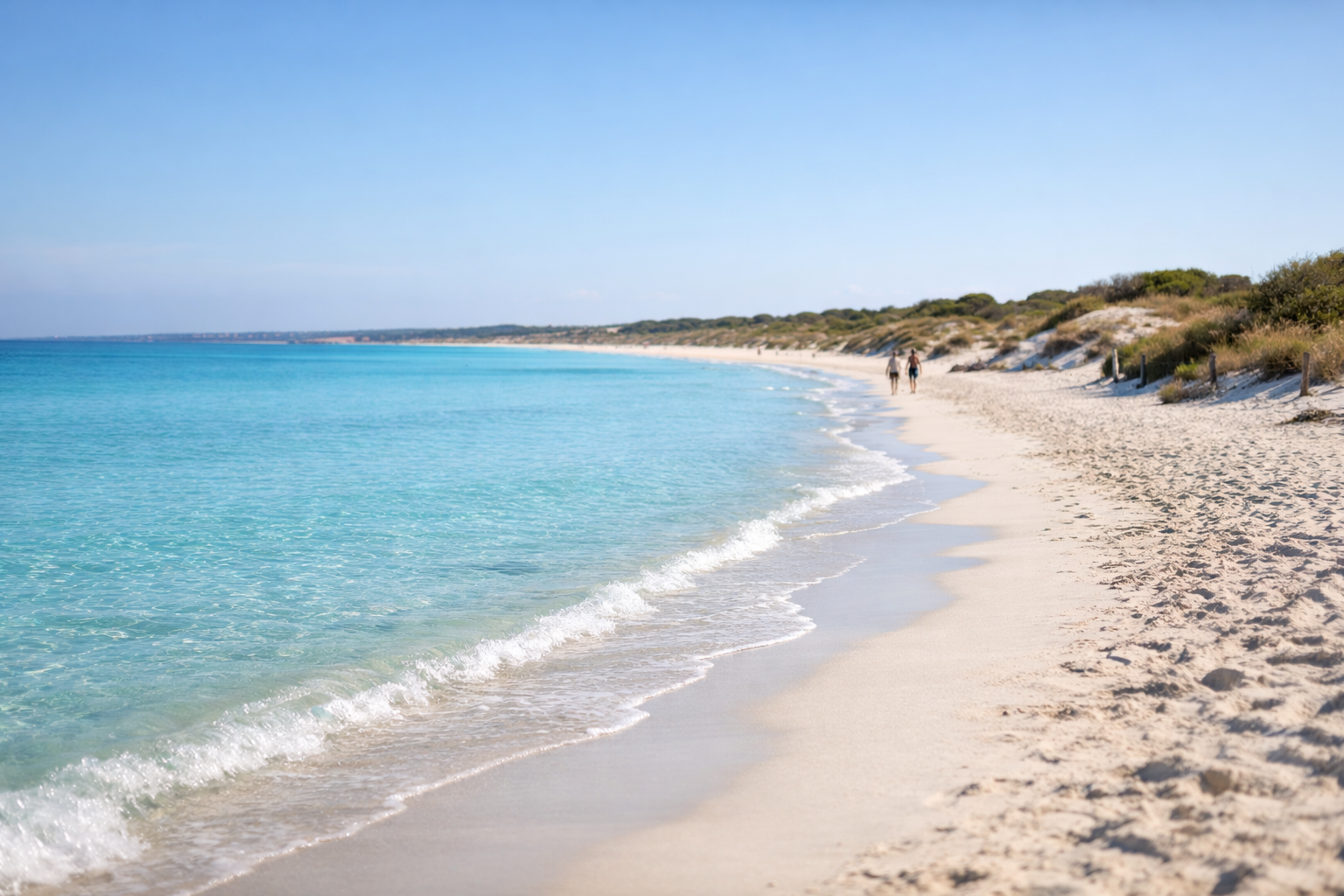
For the most beautiful beaches, the island's geography demands a short drive or organised excursion. Es Trenc, 52 kilometres south of Palma (roughly 45 minutes by car), is the benchmark against which other Mallorcan beaches are judged: 3 kilometres of white sand, shallow turquoise water, low dunes, and an almost complete absence of large-scale resort development. Access in peak season is best managed via the shuttle bus from Colònia de Sant Jordi, which runs June through September and costs a few euros return; the paid car park fills before 10am in July and August without exception. Arrive early or after 17:00.
Cala Mondragó, protected within a natural park in the island's southeast, offers two linked coves of crystalline water with limited development by deliberate policy—the lack of large hotels is precisely the point. Formentor Beach in the northeast is arguably Mallorca's most dramatic setting: white sand beneath pine-forested cliffs with the rocky cape extending into the sea beyond. Since 2024, private vehicles are banned from the Formentor peninsula road between June and October; the mandatory shuttle bus from Port de Pollença costs approximately €5 return and should be booked online in advance. The recently renovated Barceló Formentor hotel at the beach is a beautiful place to extend a day visit into a longer lunch.
If you are travelling with family or first-time visitors to the island, planning your beach days alongside other activities can feel complex. Our [destination transport guide](/destination-transport-guide/) covers the most efficient ways to reach the island's key beaches without a rental car for each season.
Day Trips from Palma: Valldemossa, Sóller, and the Serra de Tramuntana
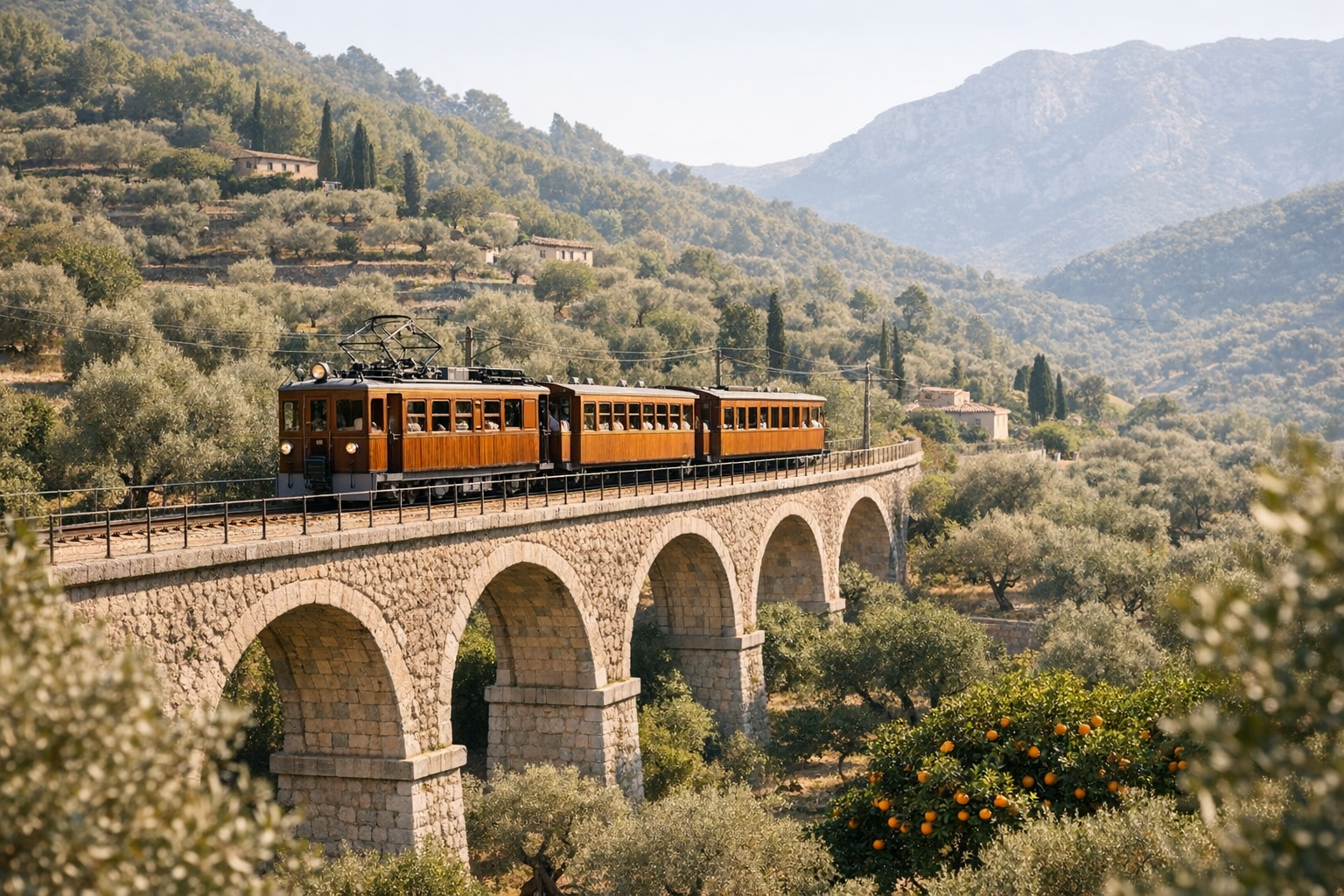
Palma's position on Mallorca's southwest coast places it within comfortable striking distance of the island's most spectacular interior scenery. The Serra de Tramuntana mountain range, running in a dramatic arc along the northwest coast, was designated a UNESCO Cultural Landscape World Heritage Site in 2011—recognition of how centuries of human terracing, irrigation, and olive cultivation have created a landscape of extraordinary beauty and historical depth.
Valldemossa, 17 kilometres north of Palma, is the most visited inland village on the island and justifiably so. The Carthusian Monastery (Real Cartuja de Valldemossa) is where Frédéric Chopin and George Sand famously—and unhappily—spent the winter of 1838–39; Chopin composed several of his Preludes here, and Sand wrote her contentious memoir 'A Winter in Majorca' about the experience. Entry to the monastery costs around €9.50 and includes Chopin's original piano. The village itself, with its stone-paved streets and flower-filled balconies, warrants a full morning of exploration.
Sóller, reached most memorably via the vintage wooden train that runs from Palma's Plaça d'Espanya (a journey of around an hour through mountain tunnels and olive groves; tickets approximately €20 return), sits in a fertile valley of orange and lemon trees with the Tramuntana peaks rising on all sides. From Sóller, an antique tram descends 5 kilometres to the Port de Sóller, a horseshoe-shaped bay with a promenade of excellent seafood restaurants. It is one of Mallorca's genuinely satisfying full-day excursions.
For walkers, the GR221 long-distance route—the 'Dry Stone Route' (Ruta de Pedra en Sec)—traverses the Tramuntana from Port d'Andratx in the south to Pollença in the north, passing through some of the island's most remote and beautiful terrain. Individual sections are manageable as day walks in appropriate footwear; the cooler months of October through April are far more comfortable for serious hiking than the heat of summer. Our [guided excursion planning page](/guided-excursion-planning/) has specific recommendations for Tramuntana walks at every fitness level, while our [luxury transfer service](/luxury-transfer-service/) can arrange private mountain transfers for groups who want the hiking experience without the logistics.
Plan this trip
Compare Car Rentals
Compare 500+ suppliers — Hertz, Enterprise, Sixt & more.
Find Cars →Hotels in Destinations
Top-rated hotels with free cancellation. Best price guaranteed.
Search Hotels →Vacation Rentals
Entire homes and condos — more space, more privacy.
Browse Rentals →Hotels in Destinations
Top-rated hotels with free cancellation. Best price guaranteed.
Search Hotels →Where to Stay in Palma: Neighbourhoods and Accommodation Options
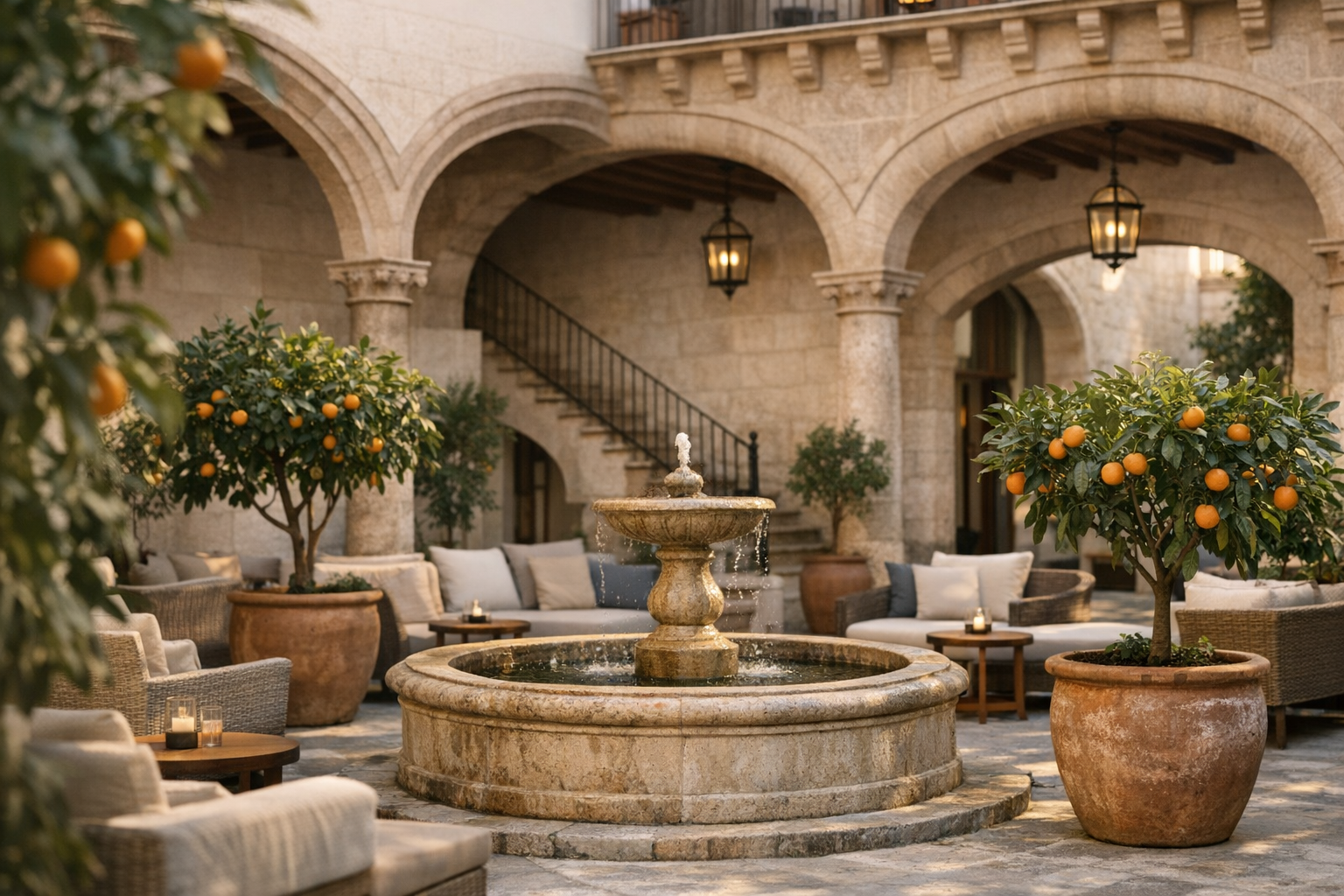
Palma's accommodation landscape spans the full spectrum from boutique hotels in converted 16th-century palaces to sleek design hotels on the waterfront, family-friendly apartments in the beach districts, and rural fincas in the city's outer parishes. The neighbourhood you choose shapes the entire character of your stay.
The Old Town (Casc Antic) places you within walking distance of the cathedral, the Lonja district, and the waterfront, and is the obvious choice for first-time visitors. Palau Sa Font and Hotel Born—both occupying handsome historic buildings on atmospheric streets—are long-established boutique options. Expect to pay €150–250 per night in shoulder season for a quality Old Town hotel, rising sharply in July–August.
Santa Catalina, immediately west of the Old Town, has matured into Palma's most desirable residential neighbourhood and now hosts several contemporary design hotels alongside the market and restaurant scene. It offers a slightly more local, less tourist-saturated atmosphere than the historic core.
Portixol, 2 kilometres east of the centre along the seafront cycling path, is Palma's quietly prestigious enclave—a former fishing village now home to the iconic Hotel Portixol, known across Europe for its weekend brunch and Nordic-inflected design. Staying here means a pleasant 25-minute flat walk or €5 taxi ride into the Old Town.
For families or groups planning an extended stay of a week or more, a self-catering villa or apartment unlocks both financial savings and a more immersive quality of life—access to a private pool, flexibility around meals, and the space that hotel rooms simply cannot provide. The Santa Ponsa and Portals Nous areas southwest of Palma combine beach access, marina dining, and reasonable proximity to the city. Checking vacation rental options early is particularly important for the July–August window, when well-located properties book out months in advance.
Frequently Asked Questions
Three full days is the comfortable minimum to cover the main city attractions—La Seu Cathedral, Almudaina Palace, Bellver Castle, the Old Town, and Santa Catalina Market—alongside at least one beach day. Add two more days if you want to make day trips into the Serra de Tramuntana or reach the southeast beaches like Es Trenc and Cala Mondragó. A week allows you to genuinely settle into the pace of the island and explore further afield.
Mid-September to mid-October offers the most balanced combination of warm sea temperatures (23–25°C), comfortable air temperatures (22–28°C), significantly reduced crowds compared to summer, and hotel rates 30–50% lower than August. April and May are excellent for city sightseeing and hiking. Peak summer (July–August) is best for beach culture but demands advance booking for everything and patience with crowds.
Yes, if you want to reach beaches like Es Trenc, Cala Mondragó, or the mountain villages of the Tramuntana independently. Palma city itself and Playa de Palma are easily navigable by public bus and on foot. Formentor Beach has banned private vehicles from its access road between June and October, requiring shuttle bus use regardless. Budget for €25–60 per day depending on season, and book early in summer when supply tightens.
It depends entirely on when you visit and how you travel. In shoulder season (April–May, September–October), four-star hotels run €100–180 per night, restaurant meals cost €15–25 per person for a sit-down lunch with wine, and entry to major attractions is generally under €10. In peak summer, accommodation costs roughly double and restaurant covers at popular spots increase. Budget carriers frequently offer return flights from the UK for under €100 in shoulder season.
Yes—Sunday morning mass is open to all at no charge, and attending as a worshipper (not a tourist) is entirely free. However, access is for the service itself; independent sightseeing is not permitted during mass. The exterior, the Parc de la Mar lakefront view, and the surrounding promenade are of course always free and spectacular at any hour, particularly at sunset.
EMT Bus Line 1 is the most economical option at €5 per journey, running every 15 minutes and taking 15–20 minutes to Plaça d'Espanya. Licensed taxis operate on fixed airport tariffs of €20–25 to the city centre. Rideshare apps Uber and Cabify are also active in Palma. Pre-booked private transfers are available for those with luggage or arriving late at night.
Sobrassada is the definitive Mallorcan product—a soft, spreadable paprika-cured pork sausage with a rich, slightly spicy depth; buy it at Santa Catalina Market to take home. Ensaïmada, a coiled pastry made with saïm (rendered pork fat) and dusted with icing sugar, is Mallorca's most iconic baked good and is sold at every bakery. Pa amb oli (bread rubbed with tomato and olive oil, topped with local cheese or sobrassada) is the Mallorcan equivalent of Catalan pa amb tomàquet and found everywhere. For seafood, arròs brut ('dirty rice,' a thick soupy rice with meat and vegetables) is a traditional island staple.
Plan this trip
Compare Car Rentals
Compare 500+ suppliers — Hertz, Enterprise, Sixt & more.
Find Cars →Hotels in Destinations
Top-rated hotels with free cancellation. Best price guaranteed.
Search Hotels →Vacation Rentals
Entire homes and condos — more space, more privacy.
Browse Rentals →Hotels in Destinations
Top-rated hotels with free cancellation. Best price guaranteed.
Search Hotels →