San Francisco Beaches: Setting the Right Expectations
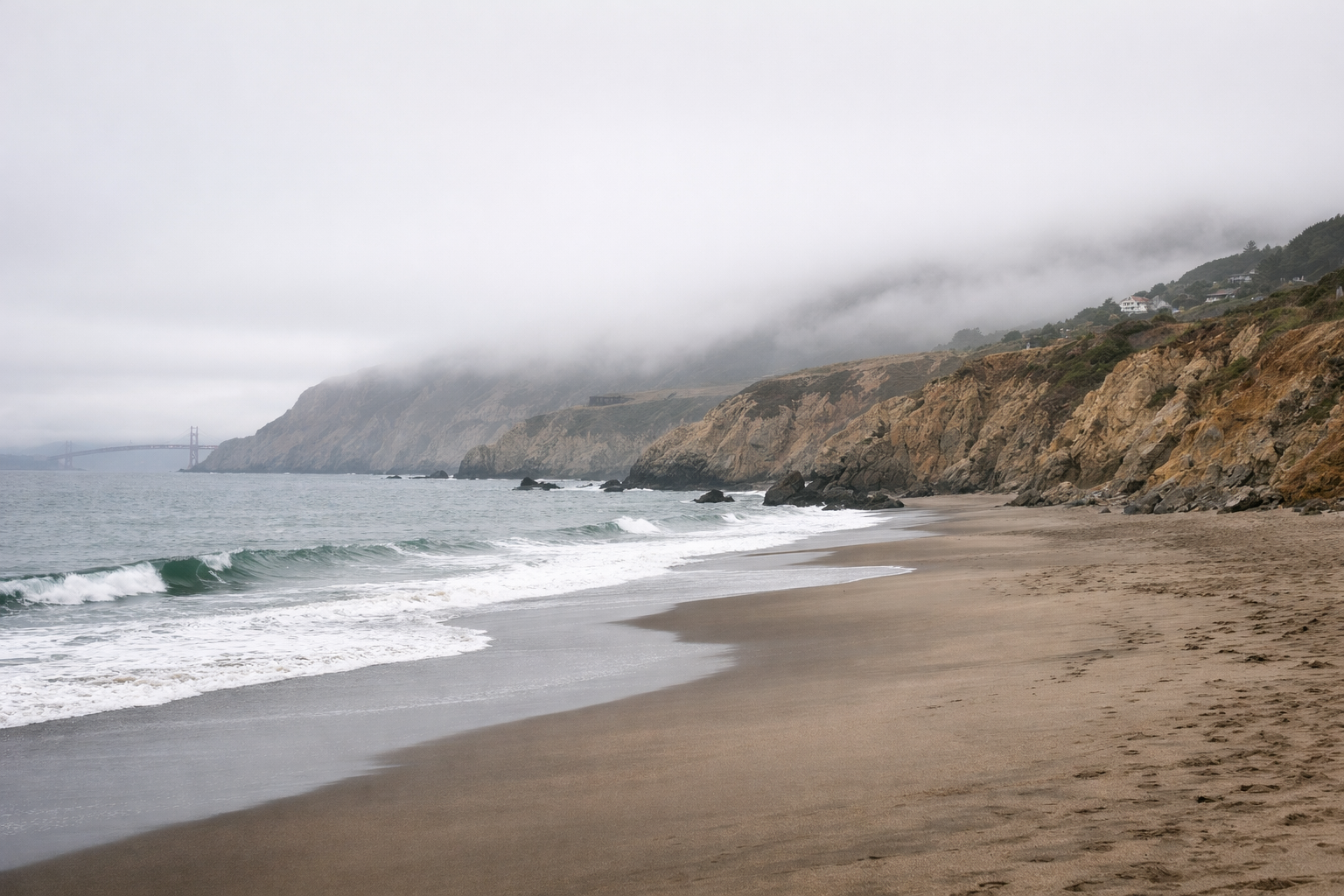
San Francisco's beaches defy every postcard cliché about California coastal life. Forget bronzed sunbathers, calm turquoise water, and ice cream vendors working the shoreline. The Pacific Ocean along San Francisco's approximately 7.5 miles of ocean-facing coastline averages a bracing 55–60°F year-round, rarely climbing above 65°F even at the height of summer. Powerful rip currents, sudden sneaker waves, and near-constant wind make these shores more suited to dramatic walks, wildlife watching, and photography than swimming or sunbathing.
That is not a flaw — it is the defining character of San Francisco's coastal identity. These are beaches where you pull on a windbreaker, let the salt spray hit your face, and watch hang gliders launch from 200-foot sand dunes while sea lions bark somewhere in the fog. They are places of raw, cinematic beauty that the sun-soaked beaches of Southern California simply cannot replicate.
Another fact that surprises most visitors: the best beach weather in San Francisco does not arrive in June or July. The notorious 'June Gloom' and 'Fogust' phenomenon — the marine layer that blankets the city through peak tourist season — keeps average summer highs in the low-to-mid 60s°F with mornings and evenings socked in with dense fog. September and October are consistently the finest months for visiting SF beaches, with average highs reaching 68–72°F on clear days, minimal fog, and a noticeable drop in crowds after Labor Day. Plan accordingly and you will experience these shores at their spectacular best.
All six beaches covered in this guide are free to access and managed by either the National Park Service's Golden Gate National Recreation Area (GGNRA) or California State Parks — a remarkable public land legacy that keeps San Francisco's entire ocean-facing coastline open to everyone.
Baker Beach: Golden Gate Views From Sea Level
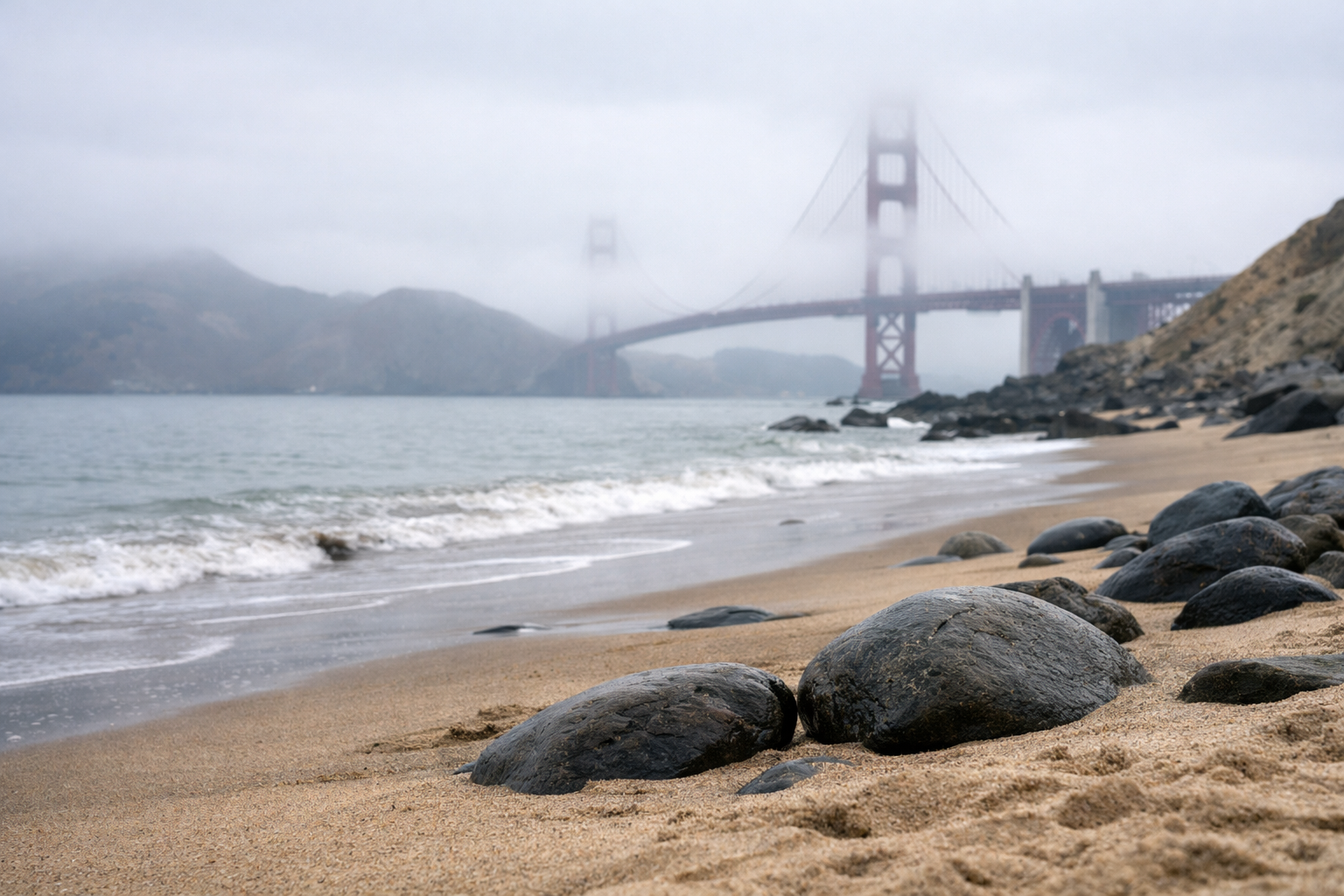
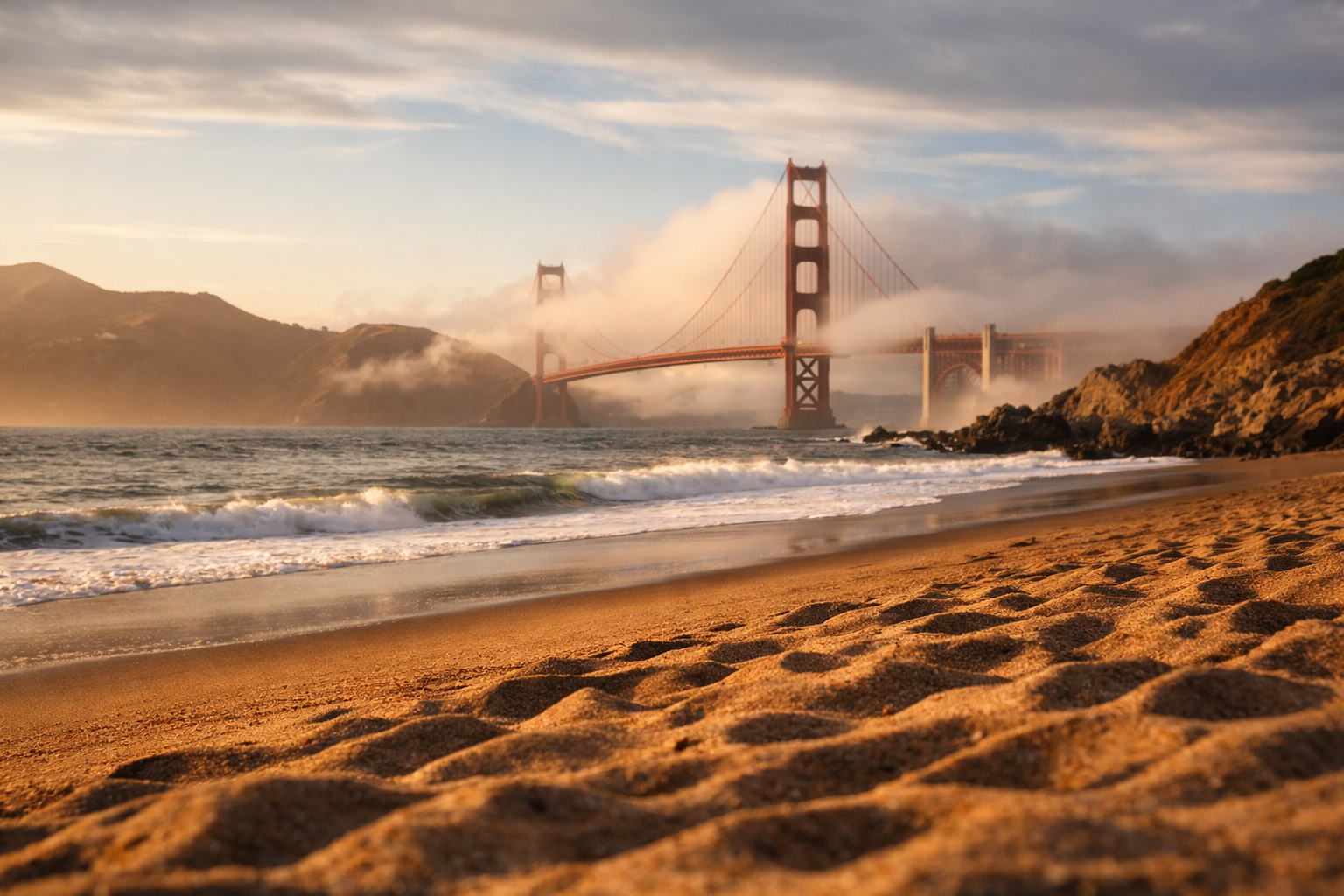
If you visit only one San Francisco beach, make it Baker Beach. Tucked into the northwest corner of the Presidio at Lincoln Boulevard and Bowley Street, this half-mile stretch of sand delivers what many photographers consider the finest unobstructed ground-level views of the Golden Gate Bridge anywhere in the city. From the north end of the beach, the bridge's rust-orange towers rise directly above you, close enough to feel imposing, with the Marin Headlands completing the backdrop. On mornings when fog rolls through the towers, the effect is nothing short of extraordinary.
Baker Beach is managed by the NPS as part of the Golden Gate National Recreation Area and is entirely free to access. The south end of the beach has a parking lot off Bowley Street (also free), along with picnic tables, charcoal grills on a first-come basis, and clean restroom facilities. On summer weekends, that parking lot fills by 10–11am, so either arrive early or take the free PresidiGo Downtown Shuttle, which runs from the Embarcadero and Financial District on weekends and holidays in summer. Muni's Route 29-Sunset bus stops at Merchant Road, a 0.3-mile walk from the beach through the Presidio's forest.
Dogs are welcome on-leash throughout Baker Beach. The north end transitions into a well-established clothing-optional area — legal, long-standing, and well-separated from the family-oriented south end where the picnic facilities are located. Off-leash dogs are permitted on the north end with demonstrated voice control.
For photography, arrive between 8 and 10am in summer for moody, fog-wrapped bridge shots, or return in late afternoon — around 4 to 6pm — on clear days for warm golden-hour light washing across the bridge cables. September and October consistently produce the most reliably clear conditions.
One critical safety note: swimming at Baker Beach is strongly discouraged and has been responsible for multiple fatalities over the years. Rip currents along this stretch are severe, there are no lifeguards on duty, and sneaker waves can appear with little warning on the north end. This is a beach for walking, picnicking, photography, and watching the bridge — not for entering the water.
Ocean Beach: San Francisco's Wild, Windswept Frontier
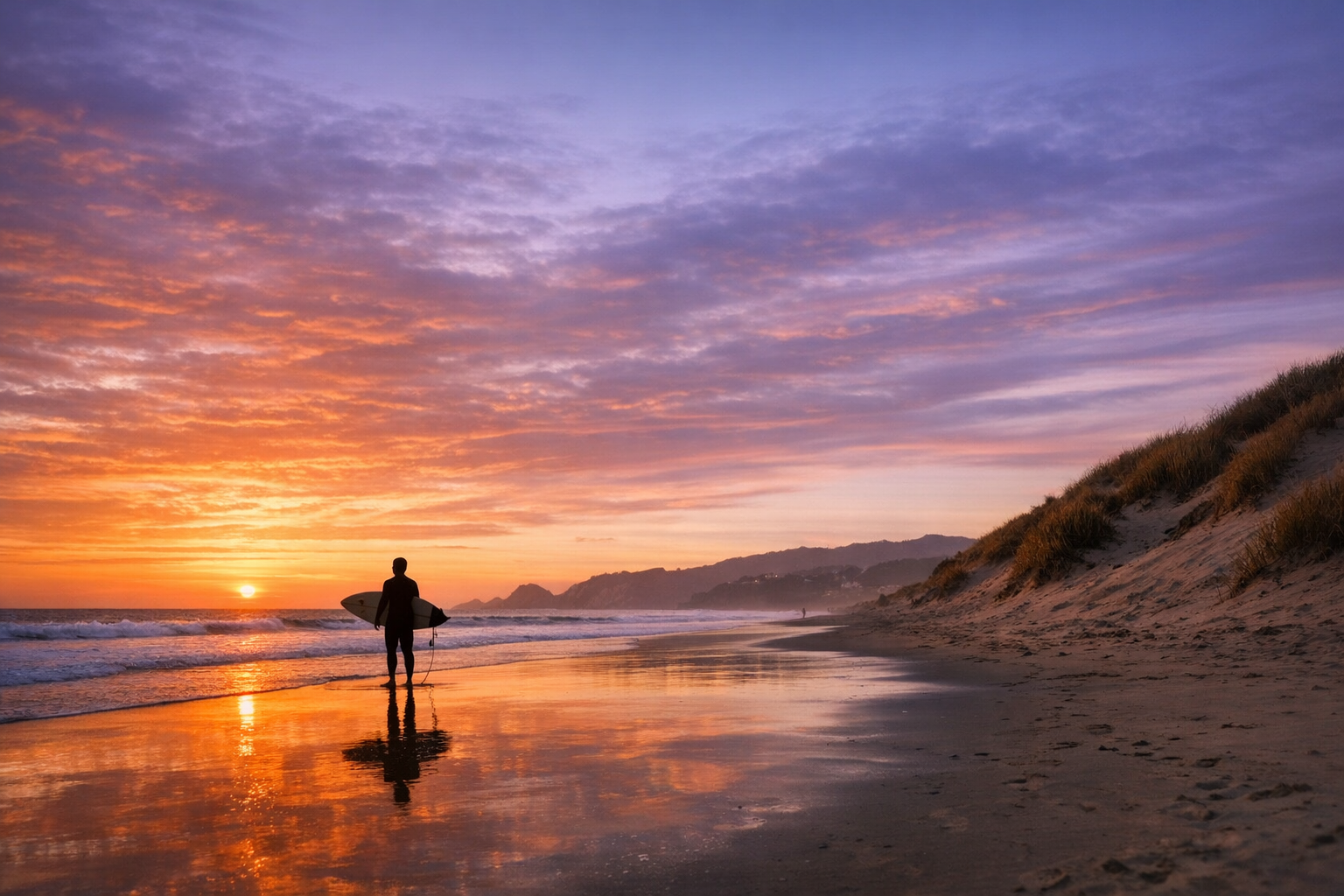
Ocean Beach is San Francisco at its most elemental. Stretching approximately 3.5 miles along the city's western edge from the Cliff House area south to Fort Funston, it is one of the longest urban beaches in the United States — a vast, wind-scoured expanse of gray-gold sand where the full force of the open Pacific arrives unfiltered. The mood shifts dramatically with the light and season: austere and fog-shrouded on a July morning, blindingly luminous at sunset in October, thunderous and wild after a winter storm.
Surfers have worked these waters for generations. The beach is an intermediate-to-advanced break — the shore break is heavy, rip currents are among the most powerful in California, and multiple fatalities occur here each year. Several surf schools, including Aqua Surf School, offer group lessons that run approximately $95–120 per person as of 2024–2025. Surfers typically concentrate between Judah and Noriega Streets. Non-surfers should treat the water strictly as a spectator experience.
For everyone else, Ocean Beach rewards beachcombers hunting for sea glass and shells, runners who want a flat, hard-packed surface along a dramatic coast, and anyone seeking a proper San Francisco sunset. Because Ocean Beach faces due west with no obstructions on the horizon, sunsets here — when the fog cooperates — rank among the most spectacular in Northern California.
The beach's approximately 15 designated metal fire rings near the Balboa Street area represent one of the few places in San Francisco where wood fires on the beach remain legal. Fires must be extinguished by 10pm. You bring your own wood — no foraging from the beach environment — and the rings operate on a first-come, first-served basis. On clear summer evenings and throughout fall, expect competition for rings from late afternoon onward.
A significant infrastructure change took effect in early 2025: San Francisco voters approved Proposition K in November 2024, permanently closing the upper section of the Great Highway (from Lincoln Way to Sloat Boulevard) to cars and converting it into a pedestrian and cycling promenade called the Great Walkway. This affects how you approach parking for Ocean Beach — the street parking along this stretch that many regulars relied upon is no longer accessible to vehicles. The southern section of the Great Highway, from Sloat Boulevard to Skyline, remains open to cars. Free street parking on side streets off Lincoln Way and at the lot near Sloat Boulevard are now the primary options. The best transit access remains the N-Judah streetcar to its Ocean Beach terminus — a direct, roughly 30–35 minute ride from downtown with a flat fare of $2.50–3.00 on Clipper.
September through November offers the best combination of weather, surf consistency, and sunset reliability. The fall northwest swells regularly produce clean 4–8 foot waves, and the marine layer retreats inland enough on most days to reveal the full horizon by early afternoon.
Plan this trip
Crissy Field Beach: Family-Friendly Waterfront With Iconic Views
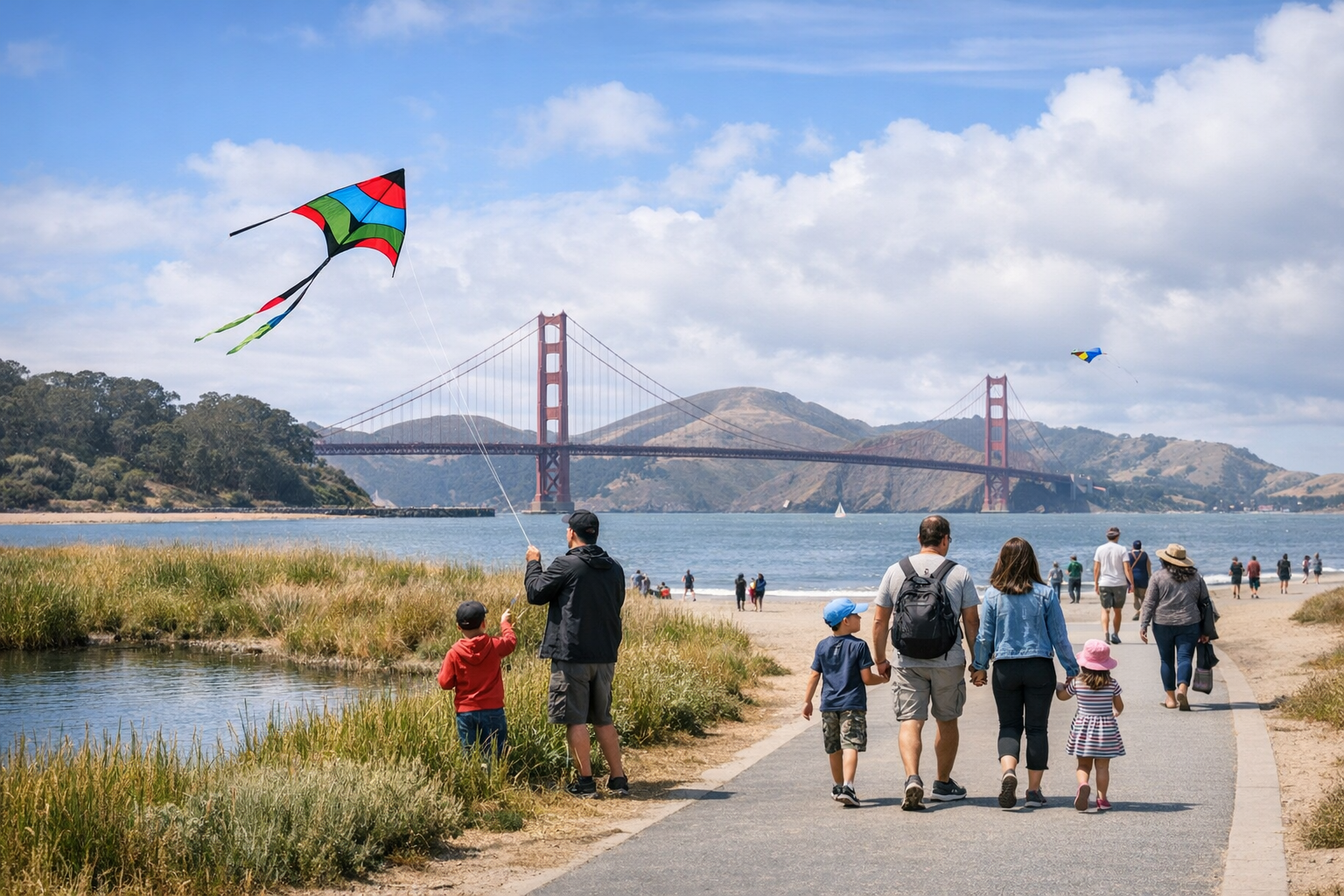
Where Ocean Beach and Baker Beach offer wild Pacific energy, Crissy Field Beach on the Presidio's northern waterfront provides something closer to approachability. This bay-facing beach benefits from the shelter of the San Francisco Bay, producing calmer water conditions than the Pacific-facing shores — though 'calm' is relative, and the water temperature still averages around 57°F. It is not a swimming beach by conventional standards, but it is the most comfortable shoreline in San Francisco for families with young children, casual walkers, and those who want proximity to the Golden Gate Bridge without the intense conditions of Baker Beach.
The Crissy Field restoration is itself a remarkable story. What was a crumbling, industrially contaminated airfield was transformed over roughly a decade of restoration work into 20 acres of recovered tidal marsh, coastal dune habitat, and beach. The project, completed in the early 2000s by the Golden Gate National Parks Conservancy and hundreds of community volunteers, is now considered one of the most successful urban ecological restoration projects in American history. Walking the restored marsh trail alongside the beach gives you both a scenic waterfront path and a functioning wetland ecosystem that supports migratory shorebirds year-round.
The constant wind that blows across Crissy Field — frustrating for picnickers trying to hold down napkins — is a genuine asset for kite fliers, who flock here on weekend afternoons, and for the windsurfers and kitesurfers who launch from the beach with remarkable regularity. East Beach, the eastern section of Crissy Field, has two public volleyball courts and sits within easy walking distance of the Palace of Fine Arts, making a combined visit natural.
The Warming Hut, located at the western end of Crissy Field near the beach, is a legitimately good café operated by the Parks Conservancy serving organic coffee (approximately $4–6), soups, and sandwiches ($10–14 range). It is open daily from 9am with extended hours in summer. After a windy beach walk, it functions as exactly what the name promises.
For transportation, Crissy Field is among the most transit-accessible beaches in San Francisco. From Fisherman's Wharf, it is a flat 1.5-mile walk or bike ride along the waterfront path — arguably the finest urban coastal walk in the Bay Area. The free PresidiGo shuttle connects the beach to the Embarcadero on weekdays and from downtown on weekends. Planning your wider San Francisco trip? Our [ground transportation guide](/ground-transportation/) and [city arrival options](/san-francisco-airport-transfers/) can help you navigate the city without a car.
China Beach: San Francisco's Most Sheltered Hidden Gem
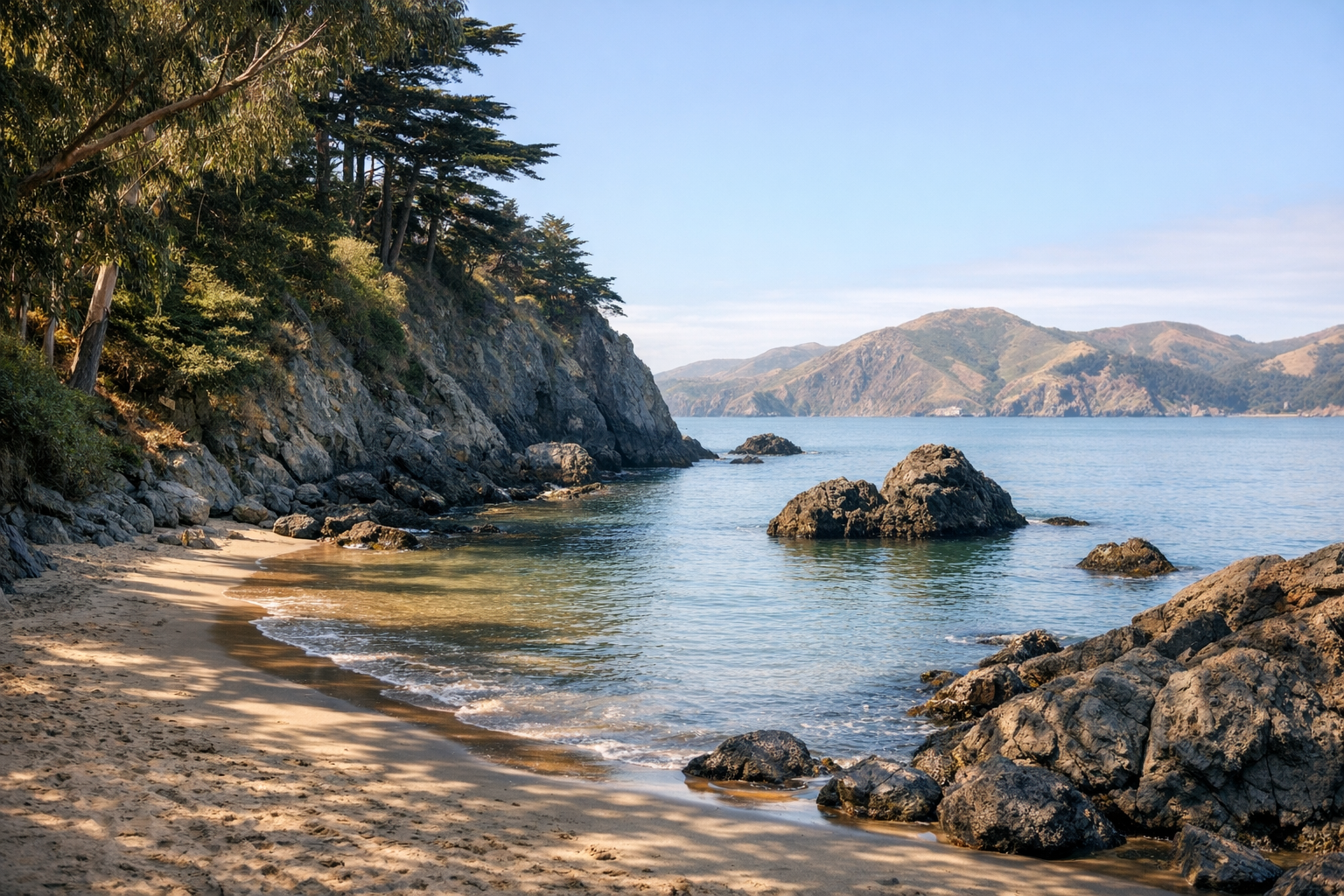
China Beach earns the 'hidden gem' designation honestly. Tucked into a sheltered cove in the affluent Sea Cliff neighborhood at 100 Sea Cliff Avenue, it is easy to miss even for San Franciscans who have lived in the city for years. The beach takes its name from the Chinese fishermen who camped here in the nineteenth century — a detail that connects the small cove to the broader, complex history of Chinese immigration and labor in Gold Rush-era California.
The approach sets the tone: you descend a steep, winding path through a canopy of cypress and eucalyptus, the city noise falling away behind you, the sound of the ocean growing below. The cove itself stretches barely 300 feet of sand, enclosed by dramatic headlands that block the prevailing northwest winds and create the most protected microclimate of any San Francisco beach. Those same headlands mean the sun reaches the cove fully only around midday — early morning and late afternoon visitors find the beach in shadow, so timing your arrival for 10am to 2pm on clear days maximizes the warmth and light.
In relative terms, China Beach is San Francisco's most swimmable beach. A seasonal lifeguard service operates typically from Memorial Day through Labor Day on weekends and select weekdays — verify current schedules with the San Francisco Fire Department or California State Parks before assuming coverage is in place. Changing rooms and an outdoor cold-water shower are available during lifeguarded season. Dogs are not permitted on the beach itself during the staffed season, though they are allowed on the access path on-leash year-round.
Parking is a genuine constraint: the small lot on Sea Cliff Avenue holds perhaps 10–15 vehicles, and street parking in this quiet residential neighborhood is limited. Arriving before 10am on weekends is not a luxury — it is a necessity if you want to park anywhere near the access path. The Route 29-Sunset Muni bus serves the Sea Cliff area, though service is infrequent enough that driving or rideshare is the practical choice for most visitors.
Views across the water to the Marin Headlands are stunning from within the cove, and the wooded descent gives China Beach an intimacy and seclusion that nowhere else on San Francisco's coastline can match at this scale.
Plan this trip
Fort Funston: Dunes, Dogs, and the Art of Hang Gliding
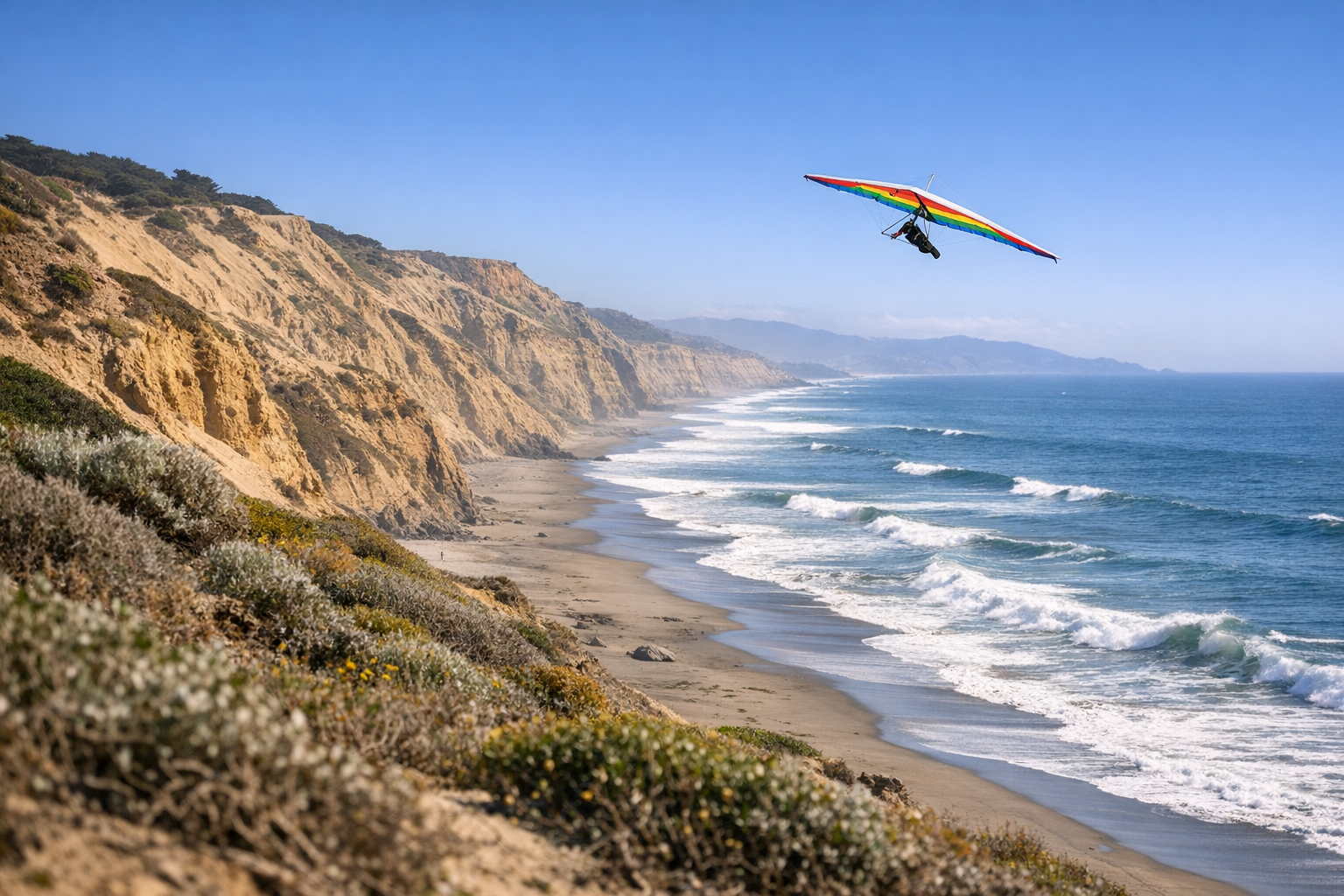
Fort Funston sits at the southern terminus of San Francisco's coastline where Skyline Boulevard meets Lake Merced Boulevard, roughly nine miles from downtown and a world apart in atmosphere. This is where the city's edge genuinely feels like an edge — 200-foot coastal sand dunes rising above the Pacific, hawk-watched bluffs eroding slowly into the sea, and the almost constant sight of brightly colored hang gliders launching from the cliff rim into the reliable afternoon thermals.
Those thermals — generated by the interaction of cool marine air with the warm dune surface — make Fort Funston one of the premier hang gliding sites in Northern California. Certified pilots from across the Bay Area fly here regularly, and tandem introductory flights are available through operations including the SF Hang Gliding Center at approximately $150–200 for a tandem intro experience. Watching pilots launch, bank, and soar above the cliffs while the Pacific crashes below is genuinely spectacular even if you never intend to leave the ground.
The beach itself sits at the base of the bluffs, reached via a steep 15-minute trail descent. No lifeguards, severe currents, and no reasonable swimming — but the beach is raw and beautiful in the way that Fort Funston's entire landscape is raw and beautiful: weathered, windblown, and emphatically not managed for human convenience. Battery Davis, a World War II-era gun battery partially buried in the dunes, adds a layer of historical texture to the site.
What draws most San Franciscans to Fort Funston, however, is the off-leash dog access. This is widely considered the city's best dog beach: a large, designated off-leash area on the bluffs and trails above the beach where dogs can run freely with voice control. On any given weekend morning, the parking lot fills with dog owners making the pilgrimage, and the trails buzz with a sociable, outdoor-oriented energy that is among the most characteristically San Franciscan scenes the city produces.
Parking in Fort Funston's large free lot is the easiest of any major SF beach — it rarely reaches capacity outside of holiday weekends. Drive south on Skyline Boulevard from I-280 or north from the Great Highway's open southern section via Sloat Boulevard. For visitors planning multiple coastal stops in a single day, Fort Funston pairs naturally with a sunset drive back north along the Great Walkway. Check our [San Francisco day trip planning guide](/san-francisco-day-trips/) for curated coastal itineraries that combine Fort Funston with Ocean Beach and Baker Beach efficiently.
Aquatic Park Beach: Cold-Water Swimming and Maritime History
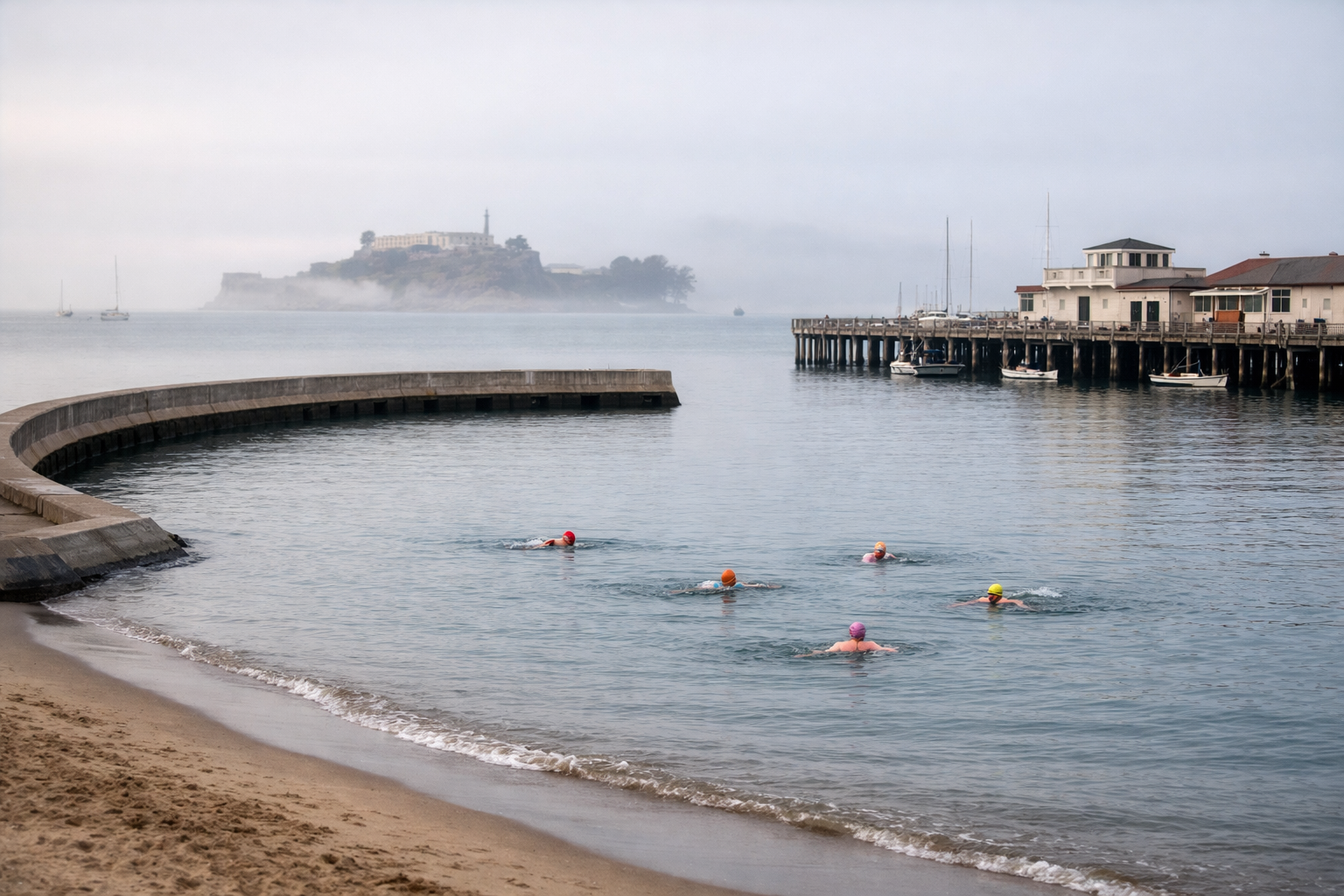
Aquatic Park Beach occupies a unique niche in San Francisco's coastal landscape — a small, protected bay beach that is actually used for swimming, by the most committed cold-water enthusiasts in the Bay Area. Located at the foot of Van Ness Avenue and Beach Street, adjacent to Fisherman's Wharf, the beach is built around a modified semicircular concrete breakwater that creates a partially enclosed lagoon with calmer, shallower water than anywhere else along the city's waterfront.
The beach is home base for two of San Francisco's most storied athletic institutions: the South End Rowing Club, founded in 1873, and the Dolphin Club, founded 1877. Members of both clubs swim in these 55–58°F waters year-round, in wetsuits and without, as part of a cold-water swimming tradition that stretches back nearly 150 years. The sight of open-water swimmers stroking through the gray bay on a January morning — while tourists in parkas watch from the promenade above — is one of the more peculiar and admirable scenes in a city that produces many of both.
For non-swimmers, Aquatic Park functions as a scenic waterfront gathering place rather than a traditional beach. The bocce ball courts on the lawn above the sand are open to public use. Hyde Street Pier, immediately adjacent, houses a working collection of historic ships as part of the San Francisco Maritime National Historical Park — admission is $15 for adults, $7.50 for visitors under 15. The F-Market historic streetcar line and the Powell-Hyde cable car both terminate nearby, making this one of the most transit-connected beach spots in the city.
The beach's central Fisherman's Wharf location means it integrates naturally into a broader downtown waterfront visit. If you are staying in a Fisherman's Wharf hotel, Aquatic Park is a five-minute walk. If you are looking for accommodation near the city's northern waterfront, our [San Francisco hotel guide](/san-francisco-hotels/) covers the best options across price points within easy walking distance of both Aquatic Park and Crissy Field.
Plan this trip
Practical Guide: Getting to San Francisco's Beaches
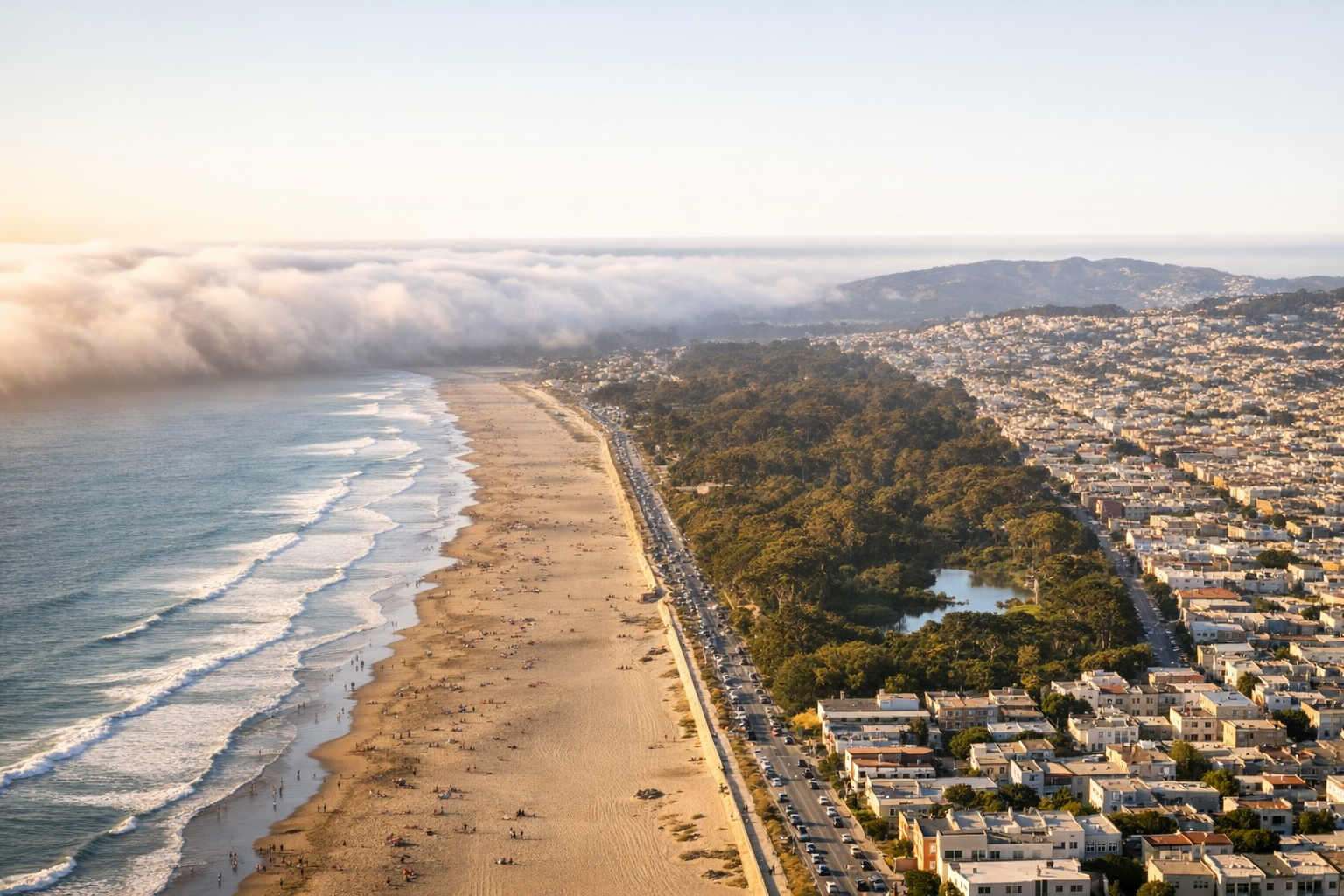
San Francisco's beach geography rewards planning. The Pacific-facing beaches — Ocean Beach, Baker Beach, China Beach, and Fort Funston — cluster along the western and northwestern edges of the city, while Crissy Field and Aquatic Park line the northern bay waterfront. None of the major beaches requires a paid entry fee, and parking at all of them is free where available, but 'free' does not mean 'easy' on weekend mornings in summer and fall.
The single best transit option for beach access is the N-Judah streetcar to Ocean Beach, running directly from the Embarcadero and downtown for the standard $2.50–3.00 Muni fare on Clipper, with a journey time of roughly 30–35 minutes. For Baker Beach and Crissy Field, the free PresidiGo Downtown Shuttle operates from Embarcadero and Financial District stops on weekdays, expanding to a weekend-and-holiday Downtown Shuttle in summer — check the Presidio Trust website for current schedules before you go, as service hours adjust seasonally.
If you are renting a car, allocate extra time for parking on weekends between June and October. Baker Beach's Bowley Street lot fills by 10–11am on summer weekends. Ocean Beach street parking has been significantly reduced by the 2025 Great Walkway conversion. China Beach has perhaps 10–15 dedicated spots total. Fort Funston has the most generous parking of any SF beach and should be your driving-day anchor point.
For visitors arriving from outside the city, airport ground transportation connects to the northern waterfront and Fisherman's Wharf area with straightforward rideshare or shuttle service from SFO — a journey of approximately 45 minutes to an hour depending on traffic. Our [San Francisco airport transfer guide](/san-francisco-airport-transfers/) outlines the most reliable and cost-effective options for getting from SFO or Oakland Airport to your waterfront hotel without the stress of navigating Bay Area traffic on arrival day.
Weather preparation is non-negotiable. Even in September and October — the best beach months — temperatures at the coast can run 10–15°F cooler than inland San Francisco due to the marine layer and wind. Bring a windproof layer regardless of the forecast. Sunscreen matters even on overcast days; UV penetration through SF's coastal cloud cover is significant and frequently underestimated by visitors.
Frequently Asked Questions
Swimming is strongly discouraged at most San Francisco beaches due to severe rip currents, cold water averaging 55–60°F year-round, and no lifeguard coverage at Pacific-facing beaches. China Beach is the most sheltered option and has a seasonal lifeguard service from Memorial Day through Labor Day on select days. Aquatic Park in Fisherman's Wharf has a protected breakwater and is regularly used by cold-water swimming clubs, but there are no on-duty lifeguards. For any ocean swimming, check conditions carefully beforehand.
September and October are consistently the best months for visiting SF beaches. The notorious June Gloom and July/August 'Fogust' phenomenon keeps summer highs in the low-to-mid 60s°F with heavy morning and evening fog. By September the marine layer retreats significantly, temperatures on clear days can reach 68–72°F, crowds drop after Labor Day, and fall northwest swells produce excellent surf at Ocean Beach. Winter beach visits can produce dramatic scenery but expect cold, rain, and wind.
Fort Funston at the southern end of the coastline is widely considered San Francisco's best dog beach, offering a large designated off-leash area on the bluffs and trails above the beach with voice control required. Baker Beach allows dogs off-leash with voice control on the northern clothing-optional section. Ocean Beach allows on-leash dogs throughout with some off-leash areas toward the Fort Funston end. China Beach prohibits dogs on the beach itself during lifeguarded season.
Yes — all of San Francisco's major beaches offer free parking. Baker Beach has a free lot off Bowley Street in the Presidio. Ocean Beach has free street parking, though the 2025 Great Walkway conversion of the upper Great Highway has significantly reduced available spots. Fort Funston has the most generous free parking lot. China Beach has very limited free parking (10–15 spots). Crissy Field has small free lots near the Warming Hut and East Beach area. Arrive early on weekend mornings — popular lots fill by 10–11am in summer.
Wood beach fires are permitted only in the designated metal fire rings at Ocean Beach, concentrated near the Balboa Street area (approximately 15 rings total). Fires must be extinguished by 10pm and you must bring your own wood — no foraging from beach vegetation. Baker Beach has charcoal grills at the south end picnic area, but open beach fires are not permitted. Fires are not allowed at Crissy Field, Fort Funston, China Beach, or Aquatic Park.
The free PresidiGo Downtown Shuttle runs from Embarcadero and Financial District stops on weekdays and expands to a Downtown Shuttle on weekends and holidays in summer — check the Presidio Trust website for current schedules. Muni Route 29-Sunset stops at Merchant Road for a 0.3-mile walk through the Presidio. From Fisherman's Wharf, you can also bike via the Crissy Field path and then climb through the Presidio — approximately 1.5 miles with elevation gain from Crissy Field.
San Francisco voters approved Proposition K in November 2024, permanently closing the upper section of the Great Highway from Lincoln Way to Sloat Boulevard to vehicle traffic. This stretch opened as the Great Walkway pedestrian and cycling promenade in early 2025. The southern section from Sloat Boulevard to Skyline remains open to cars. Visitors to Ocean Beach should now plan to use side street parking off Lincoln Way, the lot near Sloat Boulevard, or take the N-Judah streetcar to the Ocean Beach terminus.
Baker Beach on the Presidio's northwest corner provides the most dramatic ground-level views of the Golden Gate Bridge of any San Francisco beach, with the bridge rising directly overhead from the north end of the sand. Crissy Field Beach offers a different but equally iconic perspective — looking west toward the bridge with the San Francisco skyline behind you — and is more easily accessible by transit and on foot from Fisherman's Wharf. Both are worth visiting for different compositional perspectives.