
Best Time to Book a Cruise in 2026

Cruise pricing runs on a calendar, and knowing that calendar is the single biggest way to save money. The sweet spot is Wave Season — January through March every year. During Wave Season 2026, every major line (Royal Caribbean, Carnival, Norwegian, Celebrity, MSC, Princess, Holland America, and the rest) threw out aggressive deals: $100 to $600 in onboard credit per stateroom, free drink packages, reduced deposits as low as $25 per person, complimentary Wi-Fi, and kids-sail-free offers.
Why? Cruise lines need ships filled 9 to 18 months out to secure financing and plan provisioning. January through March is when most people book — CLIA data consistently shows roughly 40% of annual cruise bookings land in Q1. The lines fight hard for those bookings, and you're the one who benefits.
But Wave Season isn't your only shot. Here are the other windows worth knowing:
Last-Minute Deals (30-90 days before sailing): If a ship still has empty cabins, prices can drop 20-40% from the original fare. The trade-off: you're stuck with whatever's left, usually inside cabins on lower decks. CruiseCritic's forums are full of veterans who scored $40-60 per person per night on 7-day Caribbean sailings by booking 6-8 weeks out. The catch is that popular sailings — school holidays, Alaska summer, Mediterranean peak — almost never discount. Last-minute works best for flexible travelers on shoulder-season Caribbean, Bahamas, or repositioning routes.
Repositioning Cruises (April-May and September-November): When ships move between seasonal deployments — say, Caribbean to Europe in April or Europe to Caribbean in October — those one-way voyages get priced 30-50% below comparable round-trip itineraries. A 14-night transatlantic repositioning on Celebrity or Holland America can run $70-100 per person per night, all-in. The downside: limited port stops (often just 1-3 on a 12-14 night crossing) and lots of sea days. If you love the ship itself, this is half-price paradise.
Booking Far Ahead (12-18 months): Inaugural sailings and new ships — like Royal Caribbean's next Oasis-class or MSC's new World-class vessels — sell out fast at announcement pricing. Early bookers on new ships often get the best cabin selection AND the best rates, because the line wants strong initial demand numbers. If a specific ship, itinerary, or cabin category matters to you, book early and then use a price-drop guarantee (more on that below). That's the expert play.
When NOT to Book: Avoid 4-6 months out on popular itineraries. This is the dead zone — Wave Season deals are gone, the line has decent occupancy, and there's no reason to discount. You'll pay the highest rack rates during this window on in-demand sailings.
Bottom line: Wave Season or last-minute flexibility saves you 15-40% versus booking at any other time of year.
2026 Cruise Pricing Trends: What You Will Actually Pay
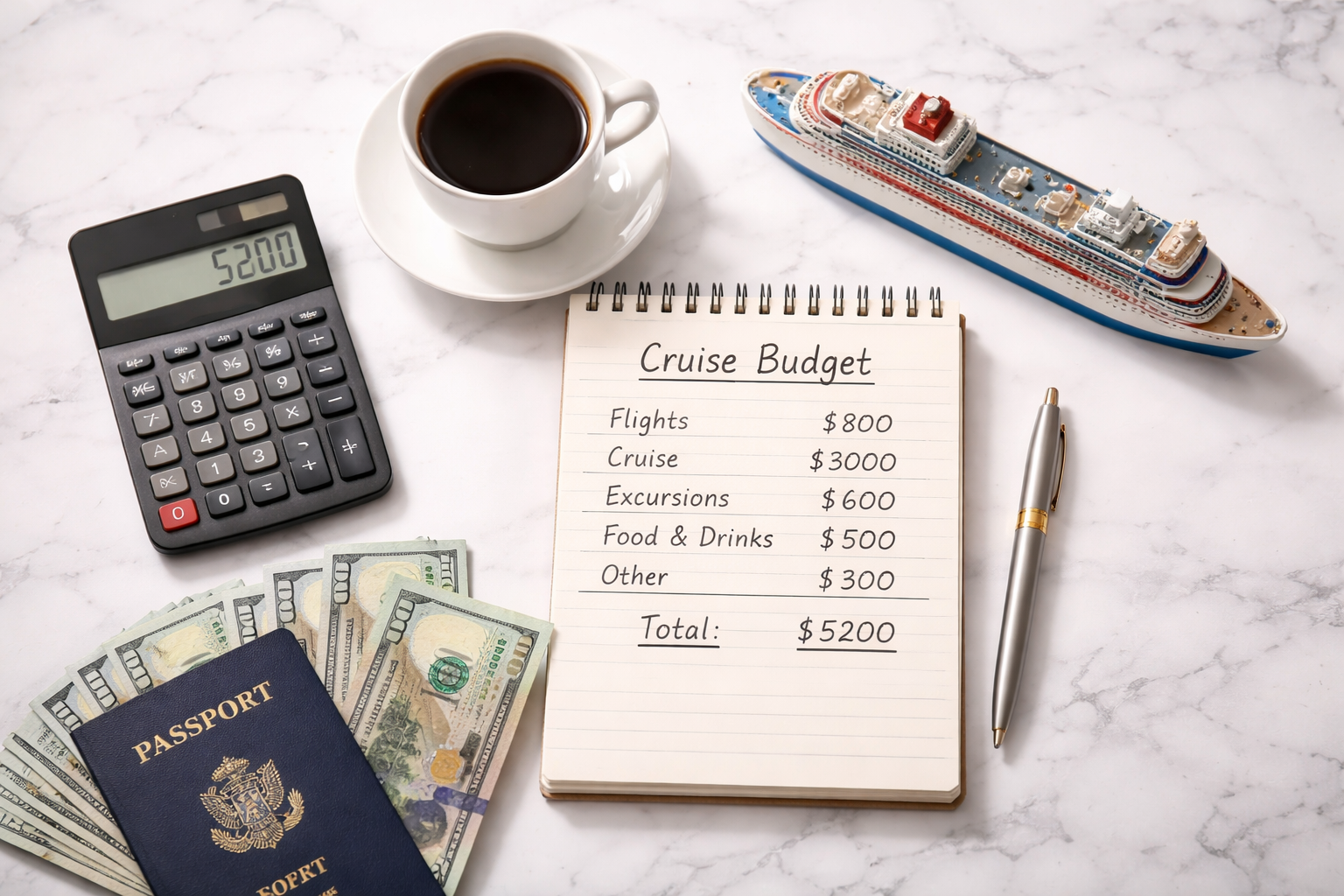
Cruise pricing in 2026 reflects a market that fully recovered from the pandemic and is now dealing with record demand, new ship capacity, and inflation hitting fuel, food, and labor. Here's what the numbers actually look like across three tiers.
Budget Tier (Carnival, MSC, Costa): $75-150 per person per night Carnival is still the price leader in North America. A 7-night Caribbean cruise on Carnival in a standard interior cabin runs $500-750 per person ($70-107/night) during shoulder season and $800-1,100 ($114-157/night) during peak weeks like spring break or Christmas. MSC, which has been expanding aggressively in the U.S. with ships like MSC World America (debuted 2025), often prices $50-100 less than Carnival for comparable itineraries from Miami — introductory pricing to grab market share. Costa primarily serves Europeans at similar budget levels.
Here's the thing about budget lines: the base fare is low, but the extras pile up. Carnival's drink packages run $60-70 per person per day, Wi-Fi is $15-20/day, and specialty dining is $25-45 per meal. A realistic all-in budget for Carnival is $150-200 per person per day once you add drinks, excursions, and tips (auto-charged at $16-18 per person per day on most lines).
Mid-Tier (Royal Caribbean, Norwegian, Celebrity, Princess, Holland America): $150-300 per person per night Royal Caribbean's pricing has climbed hard since 2023. The Icon-class ships (Icon of the Seas, Star of the Seas) command $200-350 per person per night. Standard Oasis-class ships are more reasonable at $130-200/night. Norwegian sits in a similar range, though their Free at Sea promotion — which bundles drinks, Wi-Fi, excursion credit, and specialty dining into the fare — makes the all-in cost more transparent. Expect $180-280/night all-in.
Celebrity has pushed itself into premium-mid territory with The Retreat suite class and the Beyond/Ascent ships. Base fares run $150-250/night with Always Included pricing that bundles drinks, Wi-Fi, and tips. Princess and Holland America are the best value in this tier for longer trips — their 10-14 night itineraries often work out to $120-180/night with Princess Plus or Holland America's Have It All packages.
Luxury Tier (Viking, Regent Seven Seas, Silversea, Oceania, Seabourn): $400-1,200+ per person per night Viking Ocean sits between premium and luxury with all-inclusive pricing at $300-500/night that covers beer, wine, Wi-Fi, one shore excursion per port, and specialty dining. Regent Seven Seas is the most all-inclusive line out there — fares of $600-1,000/night include business-class airfare, unlimited shore excursions, all drinks, all dining, Wi-Fi, and gratuities. Silversea runs $500-900/night with similar inclusions. Oceania is the value pick in luxury at $300-600/night with exceptional food but more limited drink inclusions.
Inflation Impact: Fares have risen roughly 8-15% since 2023 across all tiers. But here's what most people miss — cruise pricing has actually outperformed land-based vacation inflation. A 7-night all-inclusive resort stay in the Caribbean runs $350-500 per person per night in 2026. A mid-tier cruise at $180-250/night all-in is genuinely better value. You visit multiple destinations, all meals come with the base fare, and entertainment is free.
Gratuities — The Hidden Cost: Auto-gratuities keep climbing. Royal Caribbean charges $18.00/person/day (suite guests: $20.50), Carnival charges $16.00/day, Norwegian charges $20.00/day, and Celebrity now folds them into the fare. On a 7-night cruise for two, that's $224-280 in tips alone on lines that charge separately. Always factor this in.
The Bottom Line: Budget a minimum of $150/person/day all-in for a budget cruise, $250/person/day for mid-tier, and $500+/person/day for luxury. A 7-night cruise for two will cost $2,100-3,500 all-in at the budget level, $3,500-7,000 mid-tier, and $7,000-17,000+ luxury.
Top Booking Strategies the Pros Use
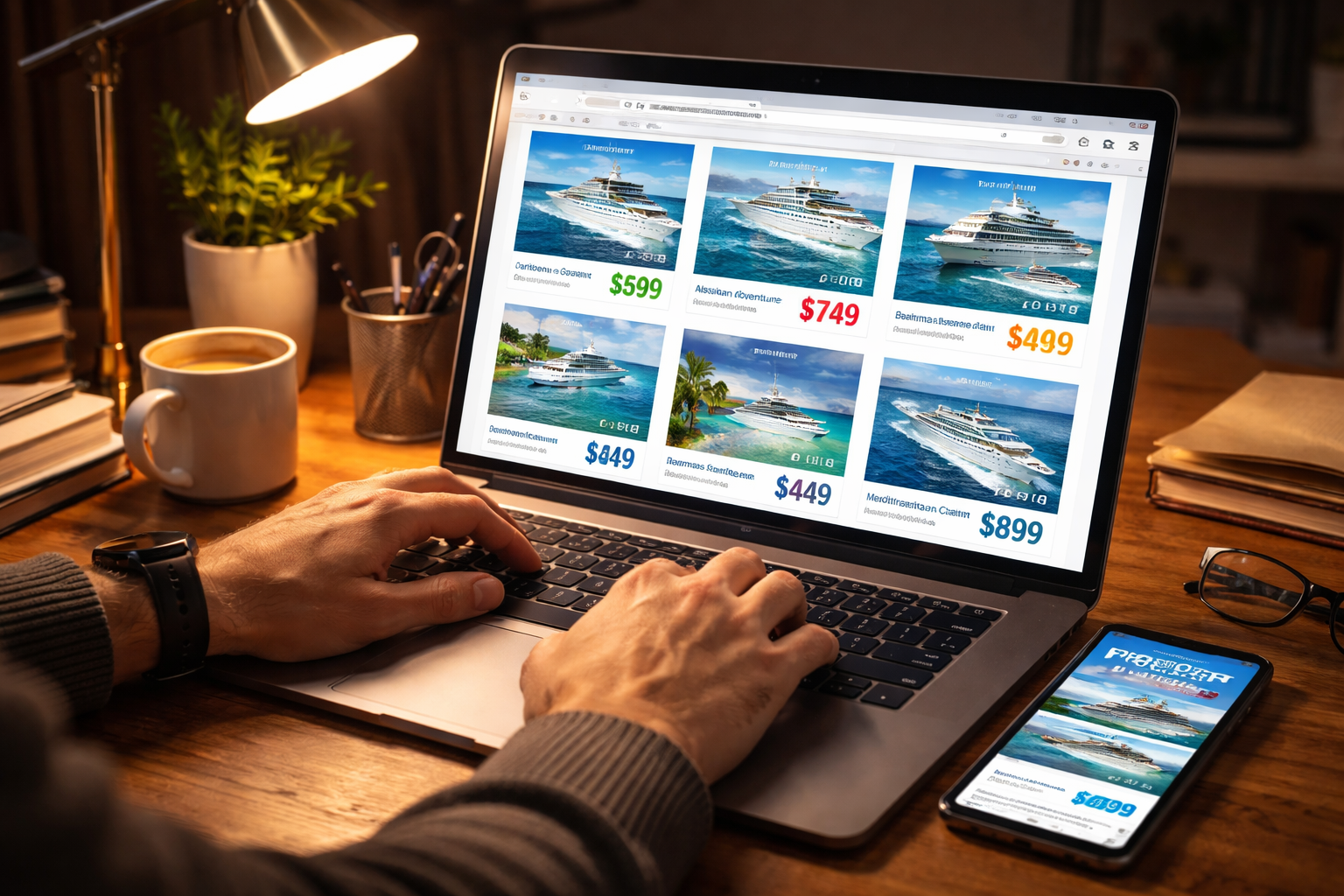
Seasoned cruisers don't just find a decent fare and hit "book." They work a system — and it can save hundreds or thousands per sailing. Here's what actually works in 2026.
1. Use a Price Drop Guarantee (or Monitor Manually) Most cruise lines will adjust your fare if the price drops after you book, but you have to ask. Royal Caribbean, Celebrity, and Princess have formal best-price guarantees during certain promo periods. Outside those windows, call the line directly and request a fare adjustment or onboard credit. CruiseCritic members report success rates of 60-70% when calling within 30 days of a price drop. Third-party tools like CruiseWatch and Pruvo monitor your booking automatically and alert you to drops.
The key rule: adjustments only happen before final payment (typically 90 days before sailing for standard bookings, 120 days for suites and luxury). After final payment, your fare is locked on most lines.
2. Book Through a Travel Agent — Yes, Really This is the most underused strategy out there. Cruise-specialist agents (through agencies like MEI Travel, Costco Travel, or independent agents on Avoya) get group rates and exclusive promos that aren't available to direct bookers. A good agent can offer the exact same cabin at the same or lower price PLUS add $50-200 in onboard credit, a free beverage package upgrade, or other extras — because the commission structure allows it.
It costs you nothing. The cruise line pays the agent's commission, and the agent passes perks to win your business. The only time booking direct wins is if you need a very specific direct-only promo (rare) or you're booking last-minute and need instant confirmation.
3. Repositioning Cruises Are Wildly Underpriced Repositioning cruises in April-May and September-November offer 30-50% savings. But here's the smart move: pair a repositioning cruise with a one-way budget flight. A 14-night transatlantic from Fort Lauderdale to Barcelona at $1,200 per person plus a $200 one-way flight home gives you a 16-day European vacation for $1,400. That's $87 per person per day including the flight.
4. Start Building Loyalty Early Every major line has a loyalty program: Royal Caribbean's Crown & Anchor Society, Carnival's VIFP Club, Norwegian's Latitudes, Celebrity's Captain's Club, MSC Voyagers Club. The entry-level tiers (earned after just 1-2 sailings) unlock real perks: priority boarding, behind-the-scenes tours, free internet minutes, exclusive cocktail parties, and cabin discounts on future bookings.
The pro move: if you're choosing between two comparable cruises on different lines, pick the one where you already have loyalty status. The compounding benefits add up faster than you'd think. Some lines also do status-matching — if you have mid-tier status on one line, NCL and MSC have historically matched it to steal your business.
5. Book Guarantees for the Best Price (If You're Flexible) A guarantee cabin means you book a category (e.g., ocean-view balcony) but let the cruise line assign your exact cabin. You pay $50-200 less than choosing a specific cabin. The line typically assigns it 2-4 weeks before sailing, and upgrades are common — book a standard balcony guarantee and you might end up in a premium balcony or mini-suite if the ship hasn't sold out in higher categories.
6. Stack Promotions During Wave Season Wave Season 2026 had cruise lines offering combinable perks: Royal Caribbean's Buy One, Get One 50% Off plus $200 onboard credit plus kids sail free. Norwegian's Free at Sea gave a choice of 2-5 free perks (drinks, Wi-Fi, excursion credit, specialty dining, third/fourth guest free). The power move is booking during Wave Season through a travel agent who stacks their own onboard credit on top of the line's promotion. Triple-stacking is real and can add $500-800 in value to a single booking.
7. Consider Cruise Line Credit Cards Carnival, Royal Caribbean (through Chase), and Norwegian all offer co-branded credit cards. Sign-up bonuses (typically $100-300 in onboard credit) and ongoing earning (2-5 points per dollar on cruise purchases) pay for themselves quickly if you cruise even once a year.
Packing Tips: What Experienced Cruisers Always Bring
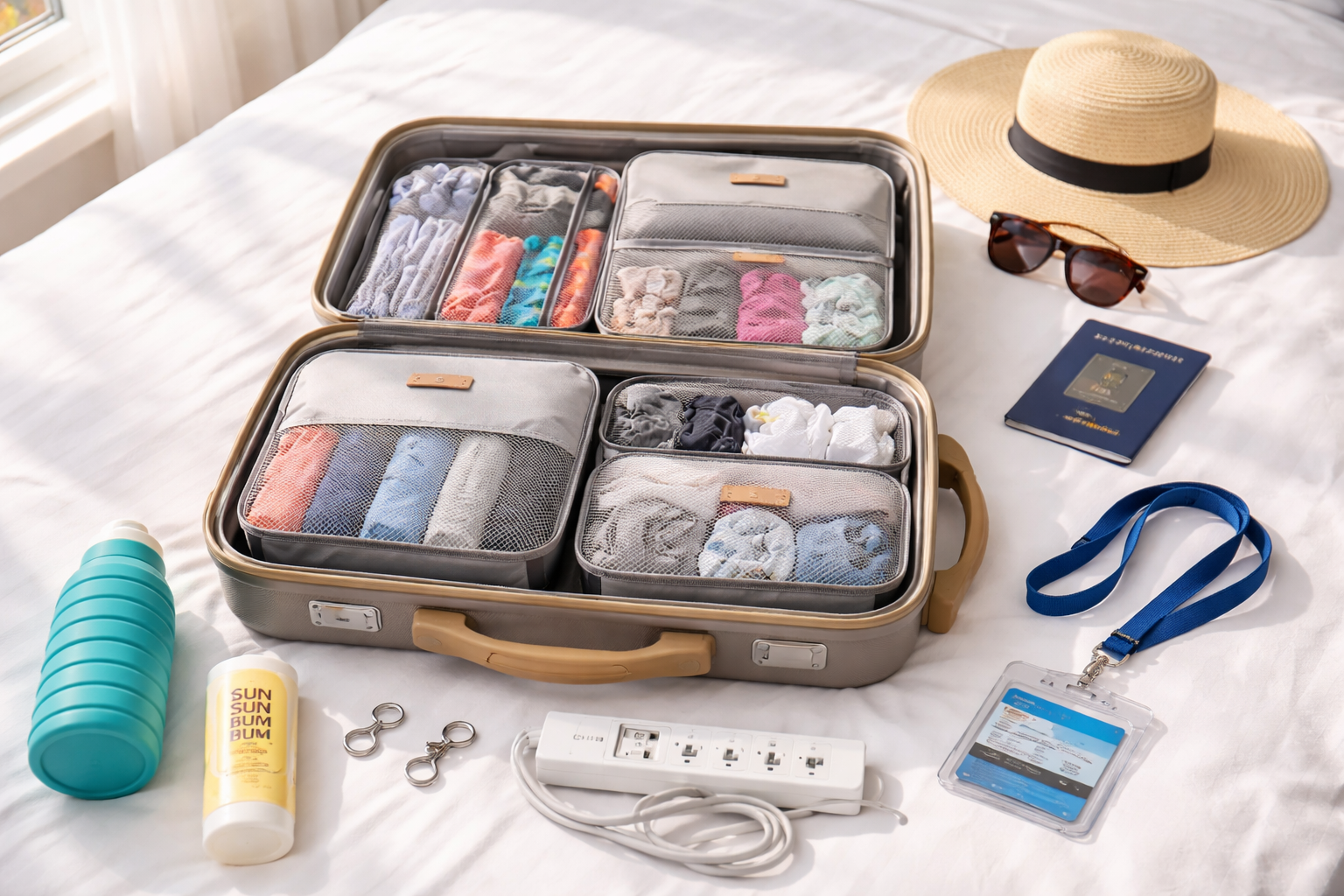
After hundreds of collective sailings, the cruise community has landed on a packing list that goes well beyond clothes and sunscreen. These are the items experienced cruisers consider absolutely essential — and the ones that'll get confiscated at the gangway.
The Must-Pack Items:
Magnetic Hooks and Clips: Cruise cabin walls are steel behind the surface. A $10 set of magnetic hooks from Amazon gives you 4-6 extra hanging points for hats, lanyards, wet swimsuits, and bags. This is the single most-recommended item across every cruise forum and blog. Cruise Mummy, Life Well Cruised, and La Lido Loca all put it at the top of their lists. Pair them with a magnetic dry-erase board for the cabin door to leave notes for your travel party.
A Non-Surge-Protected Power Strip or USB Hub: Most cruise cabins have only 1-2 electrical outlets (European-style on many ships). A power strip WITHOUT surge protection is allowed on every major cruise line — bring one with 3-4 outlets and 2-3 USB ports. Surge-protected strips and extension cords are prohibited by maritime safety regulations and will be confiscated at security. The Anker 6-port USB charger and Belkin 3-outlet non-surge strip are the community favorites.
A Lanyard for Your Cruise Card: Your cruise card (or the digital version on your phone) is your cabin key, charge card, and boarding pass. A retractable lanyard keeps it accessible at all times. Most experienced cruisers go with a waterproof lanyard holder so they can wear it at the pool.
Packing Cubes: A standard inside cabin is 160-185 square feet with limited closet and drawer space. Packing cubes keep clothes organized and compressed. The go-to is a 6-piece set with different sizes for tops, bottoms, undergarments, and accessories.
Over-the-Door Shoe Organizer: A clear, hanging shoe organizer with 20+ pockets doubles as a bathroom organizer for toiletries, medications, sunglasses, chargers, and small items. Hang it on the bathroom door and your counter space stays clear. This is the second most-recommended tip after magnetic hooks.
Reef-Safe Sunscreen (SPF 50+): Multiple Caribbean ports — Aruba, Bonaire, US Virgin Islands, Key West, and others — have banned or restricted oxybenzone and octinoxate sunscreens to protect coral reefs. Bring reef-safe formulas to avoid fines or confiscation at ports. Onboard shops charge 2-3x retail for sunscreen.
A Collapsible Water Bottle: Refill at water stations on the pool deck and buffet. Saves $3-5 per bottled water purchase and is allowed in all ports.
Seasickness Remedies: Even if you've never been seasick, pack Dramamine, Sea-Bands (acupressure wristbands), or ginger chews as insurance. The ship's medical center charges $10-15 for two Dramamine tablets. Green apples at the buffet are a well-known crew trick for settling stomachs.
A Small Day Bag or Backpack: For port days, you need something that holds sunscreen, water, your phone, a towel, and cash. A packable daypack that folds into its own pocket takes up zero suitcase space.
What NOT to Pack:
- Irons and Steamers: Prohibited on all cruise lines (fire hazard). Use Downy Wrinkle Releaser spray instead — the single most-recommended workaround. - Surge Protectors and Extension Cords: Confiscated at embarkation. Only non-surge power strips are allowed. - Candles and Incense: Prohibited (open flame). - Hard Liquor: Most lines allow 1-2 bottles of wine per person (750ml) at embarkation but prohibit hard liquor. Carnival allows one 750ml bottle of wine or champagne per person. Norwegian allows wine and champagne only. Royal Caribbean allows 2 bottles of wine per stateroom. Anything else gets confiscated and returned on the last night or a corkage fee applies. - Drones: Banned on all major cruise lines and in most port areas. - Clothing with Offensive Graphics: Dress codes are enforced in main dining rooms and specialty restaurants. No swimwear, tank tops, or flip-flops at dinner on most lines.
Pro Tip from Don's Family Vacations: Pack a small first-aid kit with Band-Aids, Imodium, Tylenol, and Benadryl. The ship's medical center charges resort-spa prices for basic OTC medications — $5-10 per dose is typical.
First-Timer Mistakes That Cost You Money and Time

First-time cruisers make the same handful of mistakes, and most of them hit the wallet. Cruise lines are very good at selling add-ons that sound great but don't deliver value for everyone. Here's where the money actually gets wasted.
Mistake #1: Buying the Drink Package Without Doing the Math The unlimited drink package on Royal Caribbean (Deluxe Beverage Package) costs $60-89 per person per day depending on the sailing and when you buy it. On Carnival (CHEERS!), it's $52-62/day. Norwegian bundles it into Free at Sea. To break even on Royal Caribbean at $70/day, you need 5-6 alcoholic drinks per day (cocktails average $12-15 each). Every single day. Including sea days when you might be at an excursion until 3pm and port days when you're off the ship for 8 hours.
The math rarely works for wine drinkers (glasses are $9-14, so you'd need 5-8 per day), casual drinkers (2-3 drinks per night = $30-45, less than the package), or anyone spending serious time in port. The package DOES pay off for heavy cocktail drinkers on sea-day-heavy itineraries (think 7-night with 4+ sea days) and people who also hit the specialty coffee bar ($5-7 per drink, included in the package on most lines).
Mistake #2: Buying the Expensive Wi-Fi Package Ship Wi-Fi has gotten much better with SpaceX Starlink Maritime rolling out across Royal Caribbean, Carnival Corporation, and Norwegian fleets. But it's still $15-25 per day for a single-device plan and $20-35/day for premium streaming. The rookie mistake is buying premium Wi-Fi to stream Netflix or video-call home every night. You're on vacation. The social media package ($10-15/day) covers messaging apps, Instagram, Facebook, and email — that's enough for 90% of cruisers. Plenty of experienced cruisers skip Wi-Fi entirely and use free port Wi-Fi at cafes during stops.
Pro tip: if connectivity matters to you, Norwegian's Free at Sea and Celebrity's Always Included both bundle basic Wi-Fi into the fare. On Royal Caribbean, the Surf package (basic browsing) often comes at 30-40% off if you buy pre-cruise through the app rather than onboard.
Mistake #3: Over-Planning Shore Excursions First-timers book a $150/person excursion at every single port. On a 7-night cruise with 4 ports, that's $1,200 for a couple — often more than the cruise fare itself. The smarter approach: pick 1-2 must-do excursion ports (e.g., Cozumel for snorkeling, Alaska for a helicopter glacier tour) and self-explore the rest. Walking ports like Nassau, St. Thomas, Juneau, and most Mediterranean cities are perfectly manageable on your own with a free walking tour or a $5 taxi to the beach.
Mistake #4: Paying for Specialty Dining Every Night The main dining room and buffet are included in your fare, and honestly, the food is good on mid-tier and above lines. Royal Caribbean's main dining room serves lobster tail, filet mignon, and multi-course meals nightly at no extra charge. Celebrity's main restaurant has a Michelin-starred consulting chef. Specialty restaurants ($35-75 per person) are a nice splurge once or twice, but eating there every night adds $500-1,000+ to a couple's trip. Do one special night at the steakhouse and enjoy the included dining the rest of the time.
Mistake #5: Not Downloading the Cruise Line App Every major line now has an app (Royal Caribbean, Carnival Hub, Norwegian, Celebrity) that lets you check in pre-cruise, select boarding times, make dining reservations, book excursions, view the daily schedule, and message travel companions onboard for free. First-timers who skip the app end up standing in long guest services lines for things that take 30 seconds on a phone. Download and set up the app at least a week before you sail.
Mistake #6: Choosing the Wrong Cabin Location Midship cabins on decks 7-10 have the least motion. Forward and aft cabins feel the ship's movement more — especially at the bow where pitching is worst. Cabins directly below the pool deck, above the theater, or near the elevator banks are noticeably louder. On CruiseCritic, cabin-location complaints outnumber every other review category. Use CruiseCritic's cabin reviews and deck plans to dodge known problem cabins before you book.
Mistake #7: Ignoring Embarkation Time Slots Modern cruise check-in assigns you a boarding time window. First-timers show up at 11am thinking they'll beat the crowds, only to wait 60-90 minutes because their window isn't until 1pm. Book the earliest available slot (usually 11:00-11:30) through the app, arrive at the terminal 15 minutes before your window, and you'll be onboard by noon when the ship is practically empty.
Best Cruise Lines by Category in 2026

Not all cruise lines are the same, and the best one for you comes down to who you're traveling with and what you actually want out of the trip. Here's how they stack up in 2026, based on thousands of reviews, industry awards, and community consensus.
Best for Families with Kids: Royal Caribbean and Disney Cruise Line Royal Caribbean owns the family market. They have the largest, most activity-packed ships afloat. The Icon-class ships (Icon of the Seas and Star of the Seas) have 6 waterslides, a surf simulator, a suspended dry slide over the ocean, a kids' aqua park, 40+ restaurants and bars, and Adventure Ocean kids' clubs for ages 6 months to 17 years. Kids' programming is included in the fare, and children under 6 sail free on select sailings. If your family wants maximum activities at moderate pricing, Royal Caribbean wins — it's not even close.
Disney Cruise Line is the premium family pick at roughly 40-60% higher fares. What you get for that premium: character meet-and-greets, Broadway-quality shows with Disney, Pixar, Marvel, and Star Wars theming, rotational dining (you move through three themed restaurants with your server following you), and the best kids' clubs in the industry. The Disney Treasure (launched 2024) and upcoming ships keep pushing the bar higher. Worth every penny for families with kids under 10 who love Disney. Less compelling for families with teenagers who'd rather have Royal Caribbean's adventure stuff.
Best for Couples: Celebrity Cruises and Viking Ocean Celebrity's Edge-class ships (Edge, Apex, Beyond, Ascent) nail the combination of modern design, top-tier dining, and adult atmosphere in the mid-to-premium range. The Rooftop Garden, Magic Carpet cantilever platform, and Eden multi-level venue are architecturally striking. Celebrity's crowd skews 40-65 with fewer kids, which keeps things quieter. Always Included pricing bundles drinks, Wi-Fi, and tips — easy budgeting for couples.
Viking Ocean is for culturally curious couples who care more about the destinations than onboard waterslides. No casino, no kids under 18, no waterslides. What you get instead: a Nordic spa with a snow grotto, included shore excursions at every port, TED Talks and destination lectures, and itineraries built around overnight port stays and smaller, less-touristy ports. Viking's Scandinavian-minimalist design is polarizing — you'll either love it or find it cold. There's no in-between.
Best Budget Cruise Line: Carnival and MSC Carnival is the fun-first budget leader in North America. The Excel-class ships (Mardi Gras, Carnival Celebration, Carnival Jubilee) have BOLT — the first roller coaster at sea — plus Guy Fieri's burger joint, Shaq's Big Chicken, and a lively party vibe. Fares start under $75/person/night on 3-5 night Bahamas runs. Carnival's crowd is younger and more diverse than most lines, with a Spring Break energy that people either love or actively avoid.
MSC is the budget alternative with European flair. They're aggressively pricing newer ships (MSC World Europa, MSC World America, MSC Euribia) to grab U.S. market share. MSC's loyalty program (Voyagers Club) is among the most generous in the industry — Silver status after one sailing, Gold after two, with meaningful perks. The ships are gorgeous and modern, though service consistency has been a recurring complaint in North American reviews.
Best Luxury Cruise Lines: Regent Seven Seas and Silversea Regent Seven Seas is the most all-inclusive cruise line, period. Every fare includes: round-trip business-class airfare (on intercontinental itineraries), unlimited shore excursions in every port, all drinks including premium spirits, all specialty dining, Wi-Fi, gratuities, and pre-cruise hotel stays on select voyages. The Seven Seas Grandeur and Seven Seas Splendor are intimate 750-passenger ships with all-suite, all-balcony accommodations. If price isn't your primary concern, Regent removes every single friction point.
Silversea leans more expedition-focused. Their standard ships (Silver Dawn, Silver Nova) compete head-to-head with Regent, but the expedition fleet (Silver Cloud, Silver Wind for Antarctic and Arctic voyages) is the best in the business for luxury adventure travel. Butler service in every suite, Relais & Chateaux dining partnerships, and an inclusive fare structure (though airfare is separate on most sailings).
Best for Solo Travelers: Norwegian Cruise Line Norwegian pioneered solo cabins with their Studio staterooms — small, efficient cabins designed for one person with access to a private Studio Lounge where you can meet other solo travelers. Available on the Breakaway-Plus, Prima, and Viva-class ships. You dodge the dreaded single supplement (typically 50-100% surcharge on other lines) and get a built-in social scene. Royal Caribbean has followed with some solo cabins on newer ships, but Norwegian is still the standard here.
New Ships Launching in 2026: What to Watch
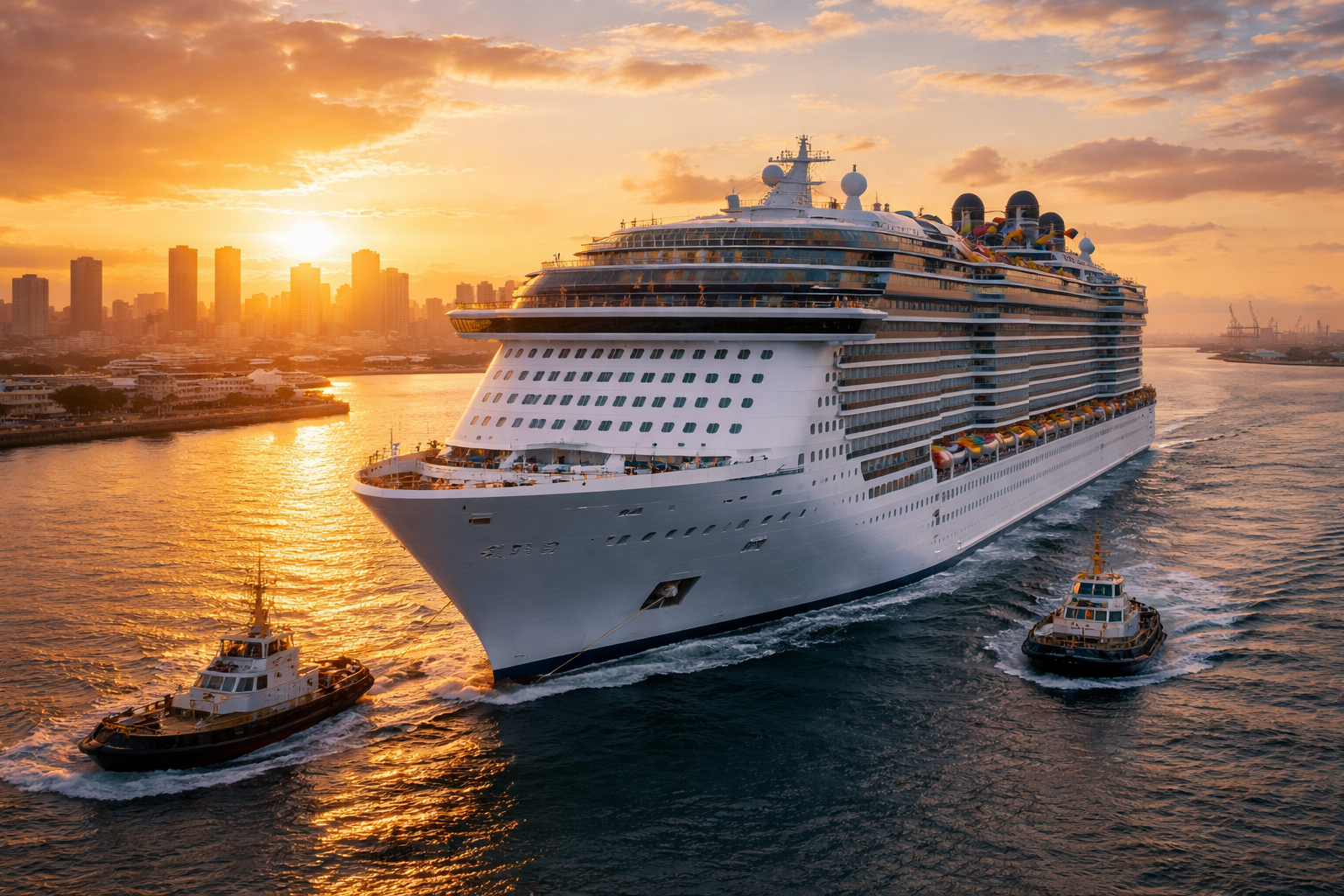
The cruise industry's shipbuilding pipeline is running at full tilt in 2026, with several major new vessels entering service. Here's what's hitting the water and what it means for you.
Star of the Seas — Royal Caribbean (Summer 2025 into full 2026 service) The second Icon-class ship, Star of the Seas, entered service in late summer 2025 and will be running full Caribbean seasons in 2026 from Port Canaveral, Florida. At approximately 250,800 gross tons with capacity for 5,610 guests (double occupancy), she's among the largest cruise ships ever built. Like her sister Icon of the Seas, she features eight distinct neighborhoods, the Category 6 waterpark, the AquaDome glass-enclosed pool venue, and Surfside — a dedicated family area with a kids' pool, arcade, and family dining. Early CruiseCritic reviews point to improvements over Icon in traffic flow, restaurant wait times, and Suite Neighborhood amenities. If you love mega-ships or have kids, this is the must-sail ship of 2026.
MSC World America — MSC Cruises (April 2025 into 2026 service) MSC's newest World-class vessel debuted in Miami in April 2025 and sails year-round Caribbean itineraries through 2026. At approximately 215,000 gross tons and 6,762 guest capacity, she's MSC's largest ship and their North American flagship. Highlights include a redesigned Yacht Club (MSC's ship-within-a-ship luxury concept), an 11-deck dry slide, expanded kids' areas, and improved dining options aimed at American tastes — a direct response to earlier criticism. This ship represents MSC's most serious play for U.S. market dominance.
Celebrity Xcel — Celebrity Cruises (Expected Late 2025/2026) The fifth Edge-class ship continues Celebrity's design-forward formula. Expected upgrades include an expanded Retreat suite class, new dining concepts, and updates to the signature Magic Carpet venue. Celebrity Xcel will likely sail Caribbean and potentially Mediterranean itineraries, targeting the premium couples market.
Sun Princess / Star Princess — Princess Cruises (2026 Continued Service) Princess's Sphere-class ships, led by Sun Princess (debuted 2024) and Star Princess (2025), are Princess's largest at approximately 175,000 gross tons and 4,300 guests. The Sphere-class brought a massive dome-covered pool area, an expanded Princess Arena for entertainment, and a Piazza with multiple dining and shopping levels. These ships put Princess into the mega-ship conversation while keeping the line's traditionally quieter, more relaxed personality. In 2026, both ships run full Mediterranean and Caribbean seasons.
Utopia of the Seas — Royal Caribbean (Full 2026 Service) Launched in mid-2024, Utopia of the Seas is an Oasis-class ship built specifically for short 3-4 night getaways from Port Canaveral. In 2026, she continues short-cruise service, which makes her a great first-timer ship — the full Royal Caribbean mega-ship experience in a long-weekend format at a lower total cost.
Disney Adventure — Disney Cruise Line (Expected 2025/2026 Singapore) Disney's first ship based in Asia, homeporting in Singapore, opens Southeast Asian itineraries with Disney's signature family formula. A big deal for the Asia-Pacific cruise market.
Expedition and Luxury Launches: Viking keeps delivering identical ocean ships at a steady pace, sticking with its no-kids, destination-focused identity. Silversea and Ponant are growing their expedition fleets for Arctic, Antarctic, and Galapagos sailings — a segment that's expanding 15-20% per year.
The Trend to Watch: LNG and Sustainability Most new ships launching in 2025-2026 use liquefied natural gas (LNG) dual-fuel engines, cutting emissions by approximately 20-25% versus traditional marine fuel. MSC, Royal Caribbean, Carnival Corporation, and Disney have all committed to LNG for new builds. Shore power connections — letting ships plug into port electricity instead of running engines — are expanding quickly in Europe and Alaska. If environmental impact matters to you, the newest ships have the smallest footprint.
Cruise Travel Insurance: Why You Cannot Afford to Skip It
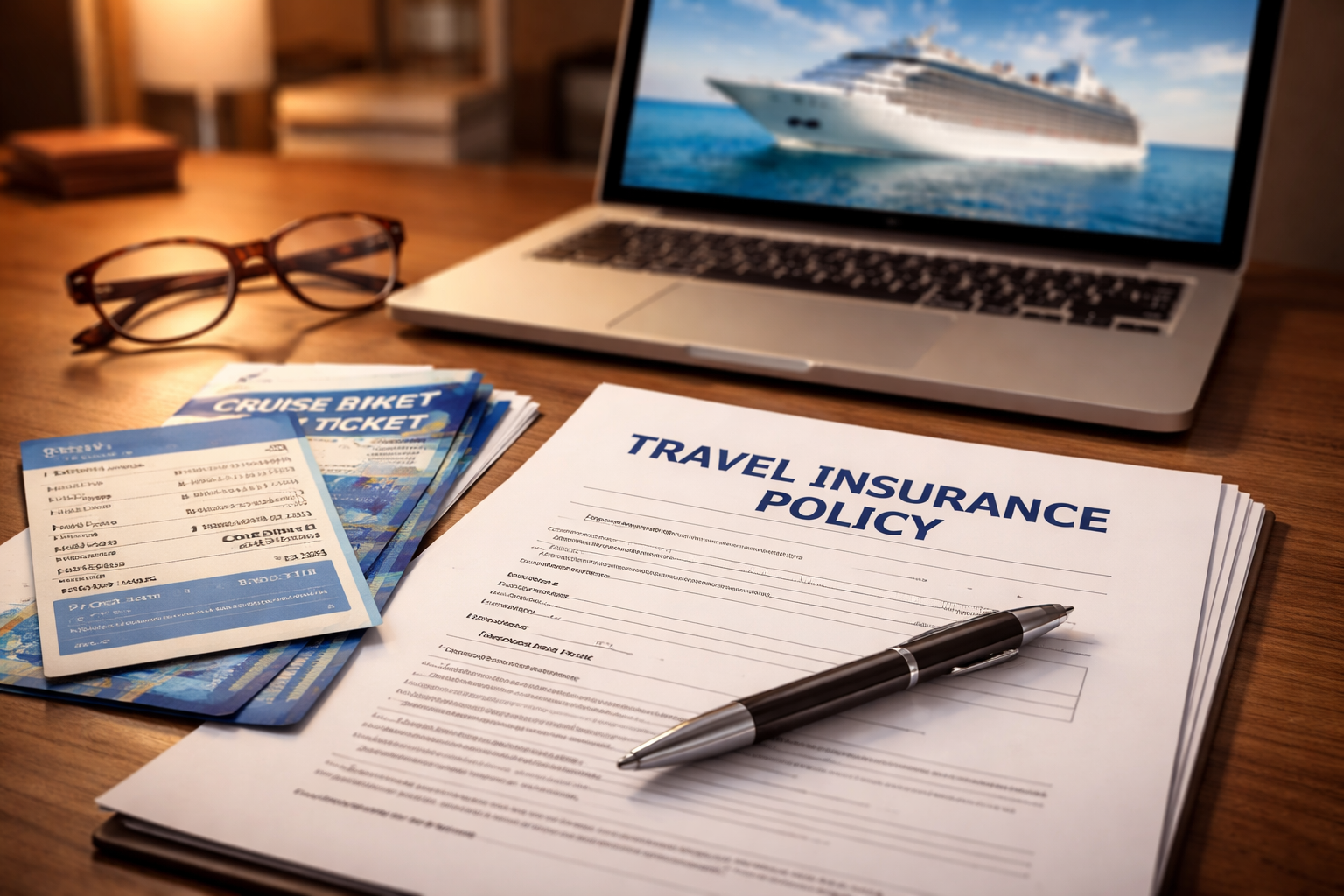
Cruise insurance is the boring part of trip planning. It's also the part that saves you from financial disaster if something goes sideways. A cruise is riskier than a land vacation in ways most people don't think about: you're on a vessel in international waters, potentially thousands of miles from home, with a medical center that charges premium rates and limited ability to just change your flight and leave.
Why Cruise Insurance Matters More Than Regular Travel Insurance:
1. Medical Evacuation Costs: Emergency medical evacuation from a ship at sea — a helicopter medevac — runs $25,000-60,000. A shore-side ambulance transfer in a foreign port can cost $5,000-15,000. Standard U.S. health insurance (including most PPO and HMO plans) does NOT cover international medical care or evacuation at sea. Medicare provides zero coverage outside the U.S. One medical emergency without coverage can generate a six-figure bill.
2. Trip Cancellation for Covered Reasons: Cancel a $5,000 cruise for a covered reason (illness, injury, family emergency, jury duty, job loss, airline cancellation) within the policy terms, and trip cancellation coverage reimburses non-refundable costs. Without insurance, cruise line cancellation policies are brutal: Royal Caribbean charges 25-100% of the fare depending on when you cancel, with zero refund inside 30 days for standard bookings.
3. Trip Interruption: If you have to leave the cruise mid-voyage — family emergency, illness requiring disembarkation at a foreign port — trip interruption coverage pays for return transportation and reimburses the unused portion of your cruise. Getting home from a random Caribbean island on zero notice is not cheap.
4. Missed Connection / Delay: Flight to the port delayed or cancelled and you miss the ship? Trip delay coverage pays for hotel, meals, and alternative transportation to meet the ship at the next port. This happens more than you'd expect — CruiseCritic forums have hundreds of stories about missed embarkations from flight issues.
What to Look For in a Cruise Insurance Policy:
- Trip cancellation coverage equal to the full cost of your cruise (not just the deposit) - Medical coverage of at least $50,000-100,000 per person (onboard medical visits run $200-500 for basics, and hospital stays in foreign ports can hit $1,000-5,000/day) - Medical evacuation coverage of at least $250,000 (helicopter evacuations alone can blow through a $100,000 limit) - Trip interruption at 150% of trip cost (to cover one-way return transportation at last-minute pricing) - Cancel for Any Reason (CFAR): This is the upgrade worth knowing about. Standard policies only cover cancellation for specific listed reasons. CFAR lets you cancel for literally anything — changed your mind, nervous about weather, just don't feel like going — and recover 50-75% of your trip cost. CFAR typically must be purchased within 14-21 days of your initial cruise deposit and adds 40-60% to the base policy cost. On a $5,000 cruise, a CFAR policy runs $400-600 vs. $250-350 for standard coverage.
Top Providers for Cruise Insurance in 2026: Allianz Travel Insurance, Travel Guard (AIG), Generali Global Assistance, and Travelex are the most-used third-party providers. Comparison sites like InsureMyTrip and SquareMouth let you stack 30+ plans side-by-side filtered by coverage limits and price.
Cruise Line Insurance vs. Third-Party: Cruise lines sell their own protection plans (Royal Caribbean's Cruise Care, Carnival's Vacation Protection). Convenient, yes — but typically pricier and less thorough than third-party policies. They also may only offer credit toward a future cruise rather than cash back. Third-party policies almost always give you better coverage, more flexibility, and cash refunds.
The Rule of Thumb: If your cruise costs more than $3,000, insurance is a no-brainer. Even on a $1,500 budget cruise, a $100-150 basic policy buys real peace of mind. The only cruisers who can rationally skip insurance are those booking fully refundable fares (available on luxury lines) or those with enough liquid savings to absorb a total loss and sleep fine.
Shore Excursion Tips: When to Book Independent and When to Stick with the Ship
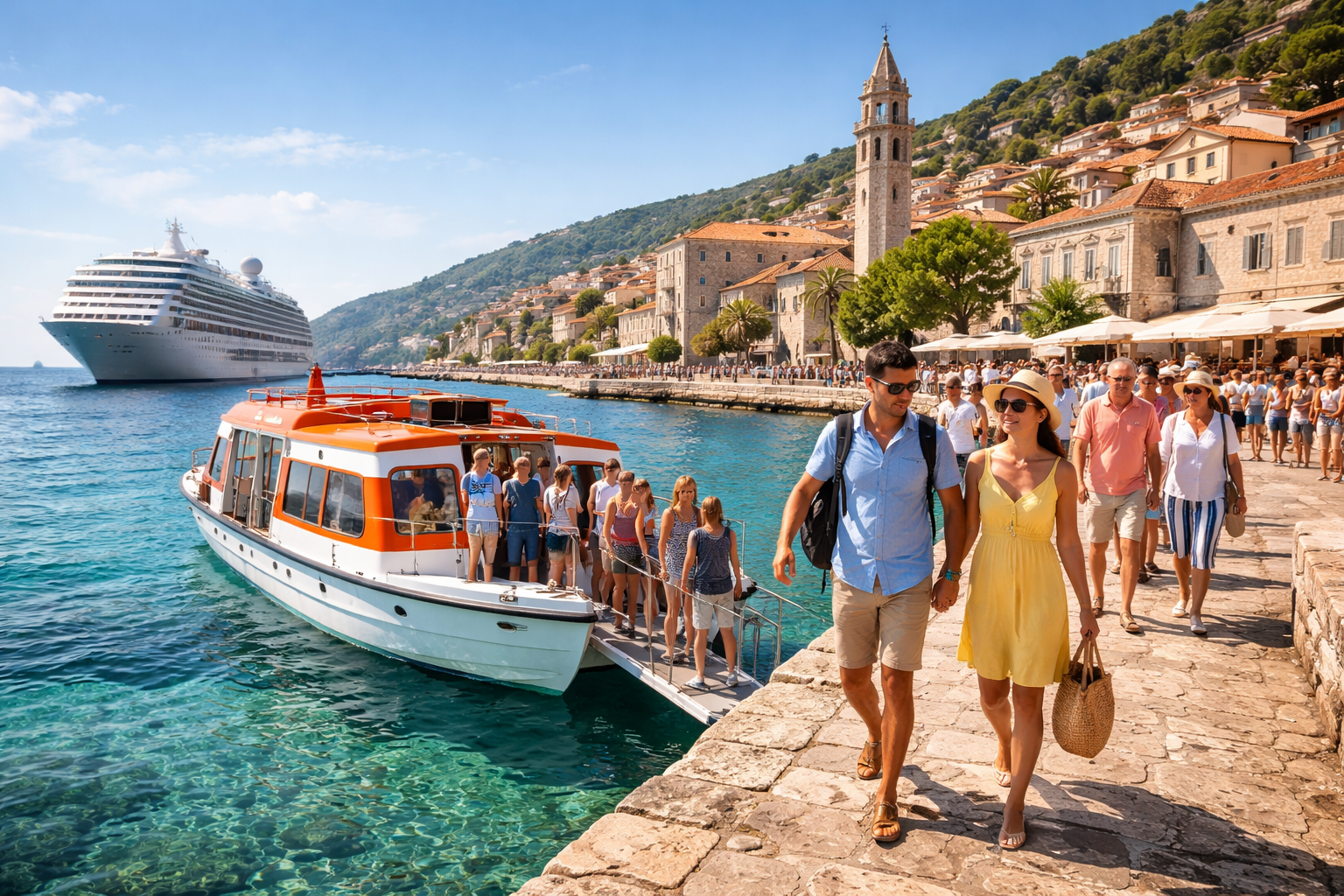
Shore excursions are where cruisers either find the trip's best moments or blow money on forgettable experiences. The core question — book through the cruise line or go independent — doesn't have a universal answer. It depends on the port.
When to Book Through the Cruise Line:
1. Tender Ports: When the ship anchors offshore and you take a small boat (tender) to the dock, the cruise line controls who gets ashore first. At tender ports like Grand Cayman, Belize City, Santorini, and Kotor, cruise line excursion guests get priority tendering — often 30-60 minutes ahead of everyone else. If your time in port is already tight (6-7 hours), losing an hour to the tender queue hurts. Book through the line at tender ports.
2. Remote or Logistically Tricky Ports: In Alaska (Skagway, Juneau, Ketchikan), Iceland, Norway's fjords, and small Mediterranean islands, the cruise line has pre-arranged access to limited-capacity experiences: helicopter glacier landings, small-group wildlife viewing, and access-controlled archaeological sites. Independent operators may exist but can be unreliable or sold out.
3. When the Ship Won't Wait for You: This is the golden rule. Book through the cruise line and your excursion runs late? The ship waits. Book independently and you're late? The ship sails without you. In ports with unreliable transportation (some Caribbean islands, parts of Southeast Asia), the cruise line guarantee is worth the premium.
When to Book Independent:
1. Walking Ports in Europe and the Caribbean: Barcelona, Rome (Civitavecchia), Dubrovnik, Nassau, Cozumel, St. Thomas — all easy to explore on your own. A taxi from Civitavecchia port to central Rome costs about $150-180 round-trip for up to 4 people. The cruise line charges $100-150 per person for a bus tour. For a family of four, that's $180 vs. $500.
2. Beach Days: Cruise line beach excursions to popular spots (Magens Bay in St. Thomas, Seven Mile Beach in Grand Cayman, Trunk Bay in St. John) charge $60-80 per person for what is literally a $15 taxi ride. This is where the markup gets absurd.
3. Popular Activities with Established Operators: Snorkeling in Cozumel, ATV tours in Aruba, catamaran sails in St. Maarten — well-reviewed operators on Viator, GetYourGuide, and TripAdvisor run these for 30-50% less than the cruise line version, often using the exact same local company.
The Independent Booking Playbook:
- Book through Viator or GetYourGuide for the cancellation protection and reviews. Booking directly with local operators is cheapest but riskier. - Always confirm the tour meets you at or near the cruise port, not somewhere that requires separate transportation. - Build in a 60-90 minute buffer before the ship's all-aboard time. If all-aboard is 4:30pm, be back at the port by 3:00pm at the latest. - Have the ship's port agent phone number saved. If everything goes wrong, the port agent can help coordinate. - Download offline maps of every port city before the cruise. Google Maps lets you download regions for offline use — do this on ship Wi-Fi or before you leave home.
Excursion Pricing Comparison (Typical 2026 Examples): - Cozumel snorkeling: Cruise line $80-110/person vs. independent $35-55/person - Rome (Civitavecchia) tour: Cruise line $150-200/person vs. independent taxi + self-guided $50-70/person - Alaska whale watching (Juneau): Cruise line $180-220/person vs. independent $150-180/person (smaller gap — book through the line for the guarantee) - Caribbean beach day: Cruise line $65-85/person vs. independent taxi $10-20/person
Pro Tip: Many cruise lines now offer a "Your Way" or independent excursion credit. Royal Caribbean's excursion credit (sometimes available as a Wave Season perk or loyalty benefit) gives you $50-100 per port toward their excursions, which narrows the price gap a lot.
Embarkation Day Hacks: How to Start Your Cruise Right
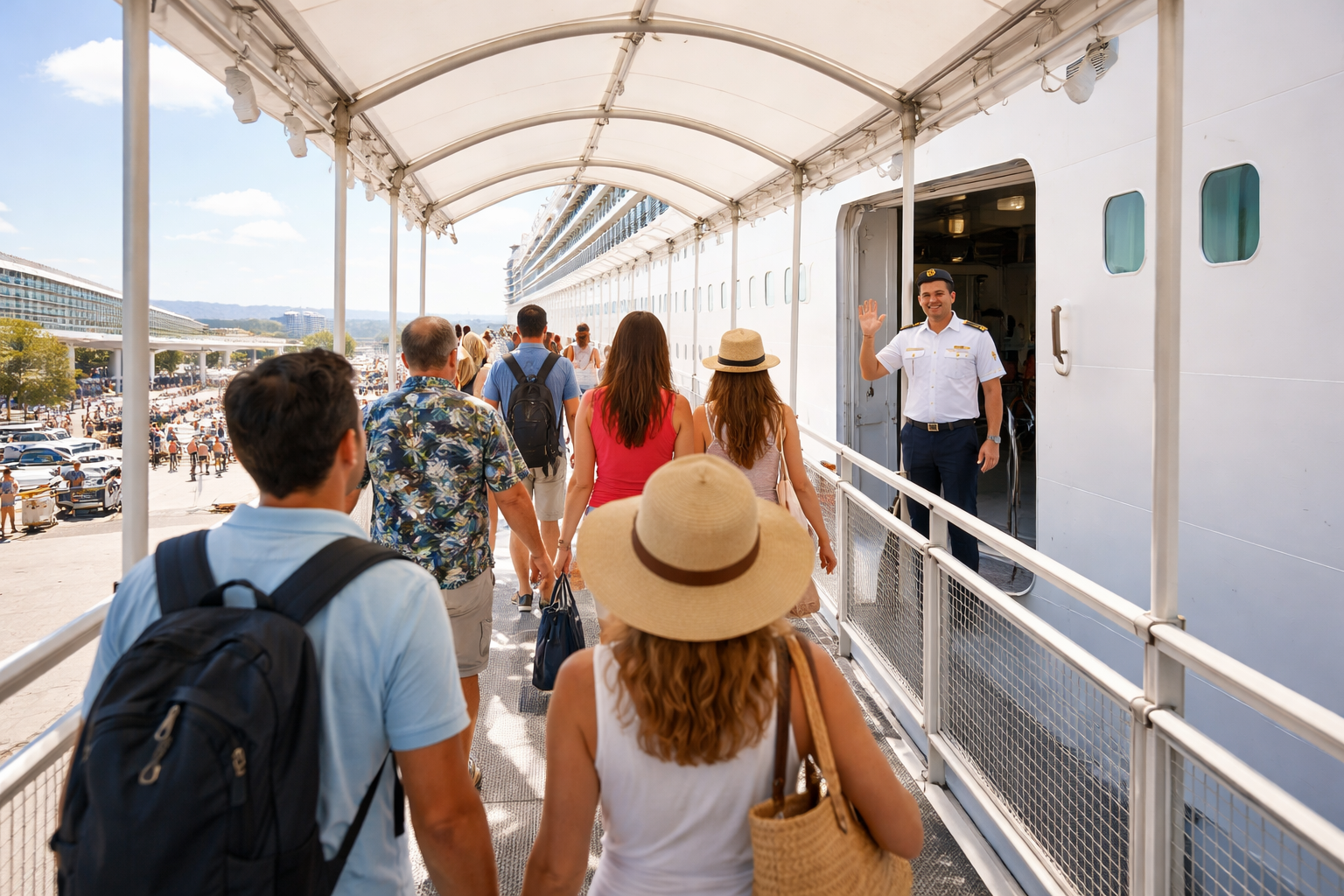
Embarkation day sets the tone for the whole cruise. Experienced cruisers treat it like a planned operation, and the difference between a smooth start and a frustrating mess comes down to prep and timing.
Before You Arrive at the Terminal:
1. Complete Online Check-In 100%: Every major cruise line requires pre-cruise check-in through their app or website. Do this the moment it opens (typically 30-45 days before sailing). Upload your passport photo, emergency contacts, credit card for onboard charges, and health screening. The reward: PortMiami, Port Canaveral, Galveston, and most major terminals now have a dedicated lane for guests who've finished check-in, and it moves 3-5x faster than the general line.
2. Select the Earliest Boarding Group: When you check in online, you pick a boarding time window. The earliest slots (11:00-11:30 AM on most lines) give you maximum time on the ship on Day 1. Late boarders (2:00-3:00 PM) miss 3-4 hours of included food, drinks, and exploration. On a 7-night cruise, you're basically throwing away half a day you already paid for.
3. Arrive 15-30 Minutes Before Your Boarding Window: Not earlier. Terminal waiting areas are crowded and uncomfortable. Show up right at or just before your window, and you walk in, scan your documents, and head to the gangway with almost no waiting.
What to Carry On (Not in Checked Luggage):
Your checked bags go to porters at the terminal and might not reach your cabin until 4:00-6:00 PM. Everything you need for the first 4-6 hours should be in your carry-on:
- Swimsuit and cover-up — pools open at embarkation and are at their emptiest between noon and 2 PM while most guests are still boarding - Medications — anything you take on a schedule; your checked bag could be delayed - Phone charger and portable battery — you'll be on your phone constantly for check-in, cabin key, and the ship's app - Travel documents — passport, boarding docs, cruise line luggage tags (print these at home) - A change of clothes — just in case your luggage shows up late on embarkation night - Valuables — jewelry, electronics, cameras — never in checked bags
First Hour Onboard — The Pro Sequence:
1. Go straight to the buffet or pool deck grill. Lunch runs from noon to about 2:30 PM. The buffet on embarkation day is the least crowded it'll be all cruise — eat now and skip the rush later.
2. Explore the ship while it's empty. Between noon and 2 PM, most guests are still boarding. Walk every deck. Find the hidden hot tub on deck 16. Locate the quiet adults-only pool. Scope out the best lounging spots. Take photos of the deck plan near the elevators — you'll reference them all week.
3. Book specialty dining and shows. The popular restaurants (steakhouse, teppanyaki, Chef's Table) and headliner shows sell out within hours of embarkation. Use the app to reserve immediately. Many experienced cruisers lock these in 30-60 days ahead through the app.
4. Hit the spa for port-day deals. The spa runs an embarkation-day open house with discounted packages and port-day specials (30-40% off on days the ship is in port and the spa sits empty). If you want a massage during the cruise, book it now at the discounted rate.
5. Do the muster drill right away. The mandatory safety drill is self-guided on most lines now (watch a video on your phone, check in at your muster station). Knock it out as soon as it opens — usually within 30 minutes of boarding. Put it off and an announcement will interrupt whatever you're doing later.
Luggage Tips:
- Attach cruise line luggage tags before arriving — print them at home and use the provided tag holders or zip ties. Porters handle thousands of bags; clearly tagged bags arrive faster. - Tip the porters $2-5 per bag at the terminal — they're handling your stuff and their pay depends on tips. - Put a unique identifier on your luggage — a bright ribbon, distinctive tag, or colored tape. Every other suitcase is black.
Embarkation Day Timing by Port: - PortMiami / Port Everglades: Arrive by 11:30 AM, terminal opens at 11:00. Parking is $22-25/day; Uber/Lyft drop-off is free. Pre-booked parking saves $5-10/day. - Port Canaveral: Arrive by noon; less crowded than Miami. A lot of cruisers combine with a Kennedy Space Center visit the day before. - Galveston: Arrive by 11:30 AM; single terminal, easy process. - Barcelona / Southampton / Civitavecchia: European ports often open boarding at noon with 4-5 PM departure. Taxis from city center run $20-40.
The #1 Embarkation Hack: Set your cabin AC as soon as you board (the thermostat is usually near the door). Cabins run warm when you first arrive, and it takes 30-60 minutes to cool down. By the time your luggage shows up and you're ready to settle in, the room is perfectly chilled.
Frequently Asked Questions
January through March (Wave Season) has the best promos and lowest fares for future sailings. For last-minute deals on cruises departing soon, September and October tend to have the steepest Caribbean discounts since hurricane season keeps demand down. Repositioning cruises in April-May and September-November are the cheapest per-night rates you'll find — often 30-50% below comparable round-trip fares.
Only if you drink 5-6 alcoholic drinks per day, every day. At $60-89 per person per day (depending on the line), you need $70-90 worth of drinks daily just to break even. It pays off for heavy cocktail drinkers on sea-day-heavy itineraries, especially when the package also covers specialty coffee ($5-7 per drink). For wine drinkers, casual drinkers, or anyone spending a lot of time in port, buying drinks as you go is almost always cheaper.
Depends on the port. Book through the cruise line at tender ports (Grand Cayman, Santorini), remote ports with limited operators (Alaska, Iceland), and anywhere with unreliable local transportation. Go independent at walkable ports (Barcelona, Nassau, St. Thomas) and for beach days where the cruise line markup runs 200-400% over a simple taxi ride. Operators on Viator and GetYourGuide typically charge 30-50% less for the same tours.
Yes — especially if your cruise costs more than $3,000. Standard U.S. health insurance doesn't cover medical care at sea or in foreign ports, and medical evacuation from a ship runs $25,000-60,000. Trip cancellation coverage protects your non-refundable fare if illness, injury, or other covered events force you to cancel. Cancel for Any Reason (CFAR) policies cost 40-60% more but let you cancel for literally any reason and recover 50-75% of your trip cost.
Royal Caribbean is the consensus pick for most first-timers. Their ships have the widest range of activities (waterslides, rock climbing, surf simulators, Broadway shows), solid kids' programming, and a well-designed app that makes getting around easy. For couples without kids, Celebrity Cruises' Always Included pricing (drinks, Wi-Fi, and tips bundled) takes the guesswork out of budgeting. Budget-conscious first-timers should look at Carnival's 3-4 night Bahamas runs from $300-500 per person — low-risk, low-cost intro to cruising.