Why Saint-Étienne Belongs on Your France Itinerary
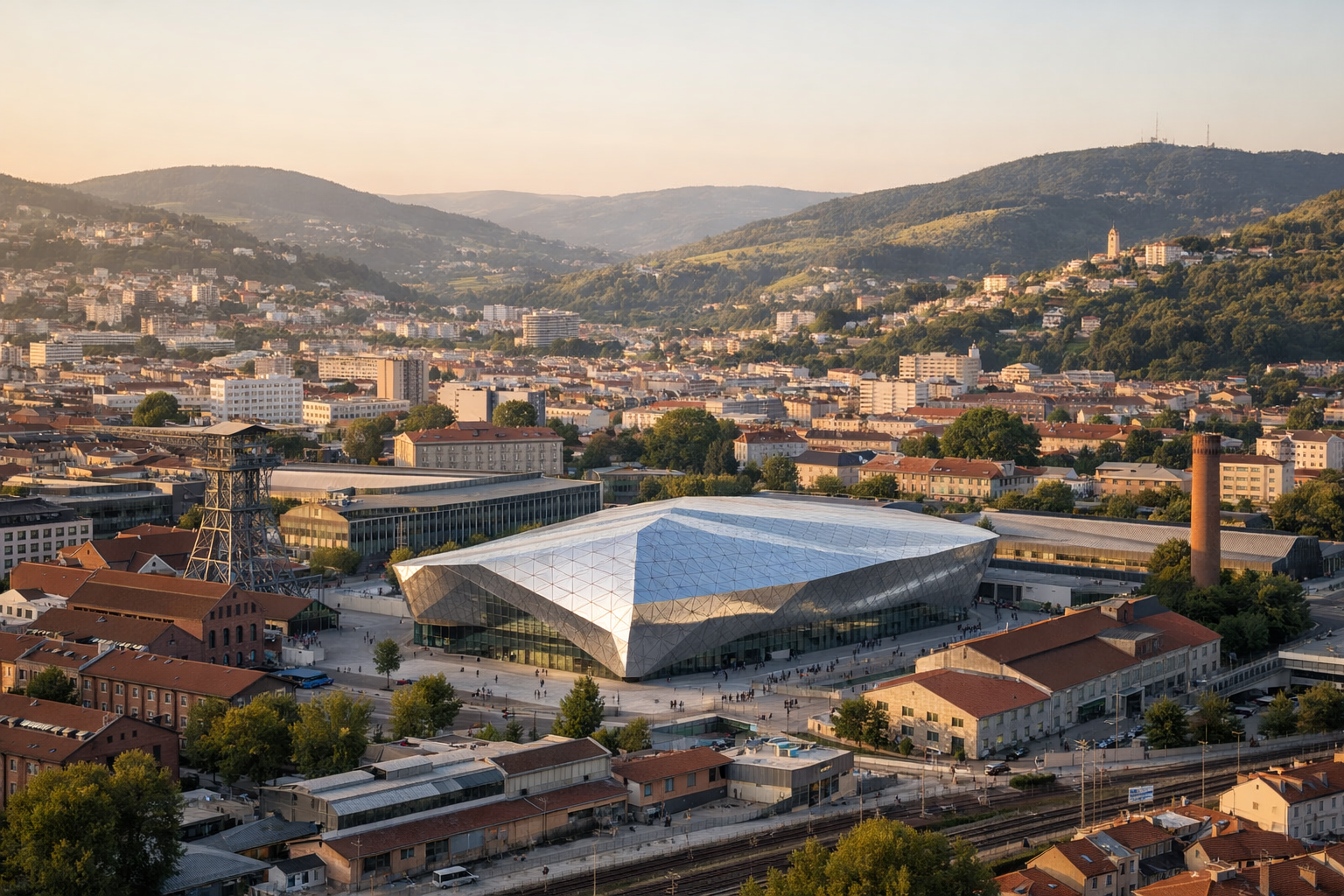
Sixty kilometres southwest of Lyon, at an elevation of around 500 metres in the Loire département, Saint-Étienne is one of France's most compelling travel secrets. With a city population of roughly 170,000 and a metropolitan area approaching 400,000, it is large enough to sustain a genuinely rich cultural calendar yet compact enough to explore on foot in a long weekend. While international visitors pile into Paris, Bordeaux, and the Côte d'Azur, Saint-Étienne rewards the curious traveller with world-class museums, an extraordinary design ecosystem, dramatic natural landscapes on its doorstep, and a rawness that feels entirely authentic.
The city's industrial DNA — coal mining, arms manufacturing, ribbon weaving, and bicycle production — gives it a gritty elegance that Lyon's polished gastro-tourism scene simply cannot replicate. But Saint-Étienne has not rested on that legacy. In 2010, UNESCO designated it France's first and only Creative City of Design, recognising a living ecosystem of studios, schools, and design-led industries that continues to shape the city's identity today. That distinction is most visible at the biennial festival that draws 200,000 visitors over three weeks — and the next edition lands in March 2026, making this precisely the right moment to plan a visit.
For travellers who enjoy the feeling of discovering a city before the guidebook crowd arrives, Saint-Étienne — affectionately nicknamed Ville Verte for its surprising greenery — is close to unmissable. Prices run noticeably lower than Lyon or Paris, the locals are unguarded and proud, and the story of post-industrial reinvention is one of the most honest and inspiring in contemporary France.
UNESCO City of Design: The Cité du Design and the 2026 Biennale
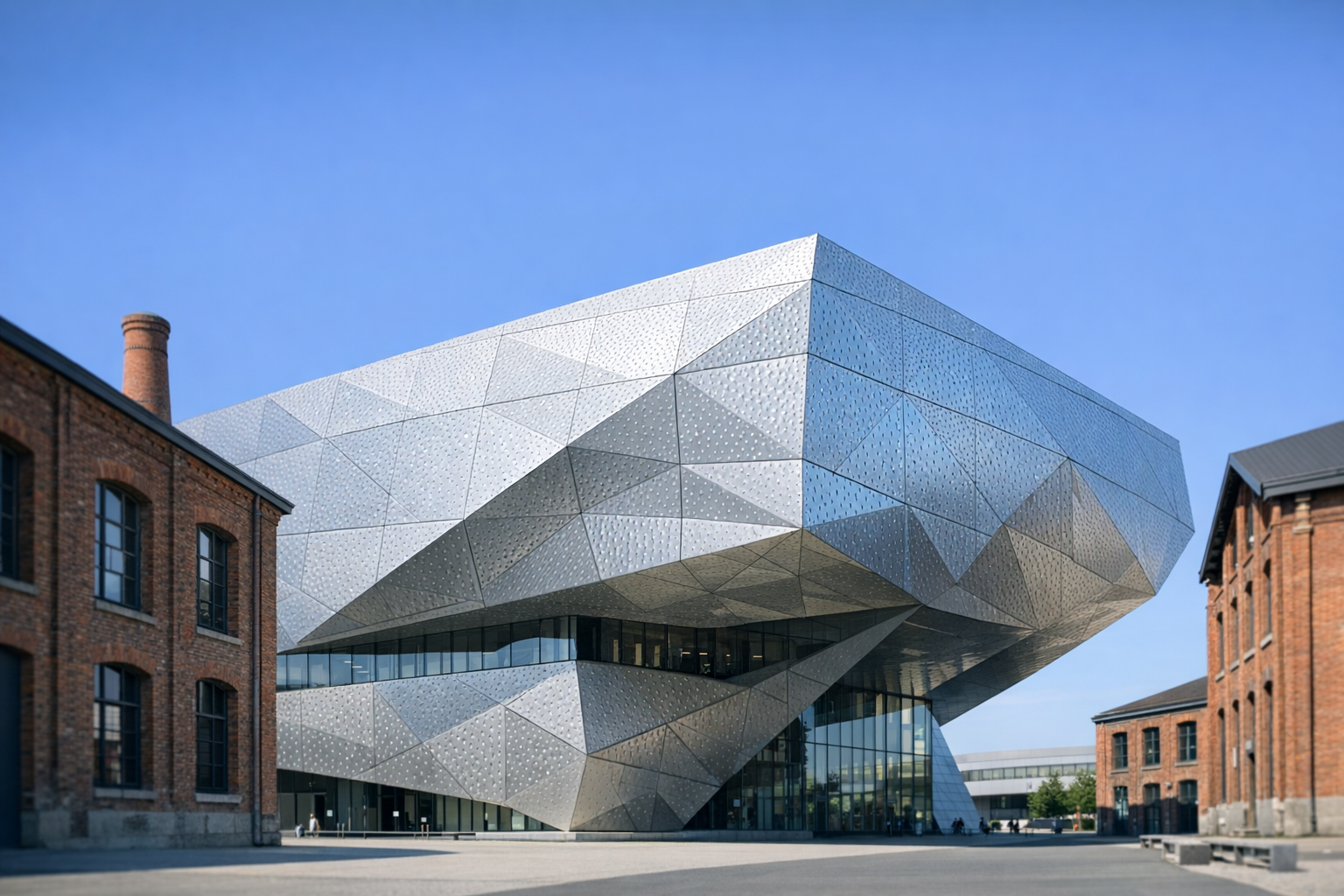
Saint-Étienne's UNESCO Creative City of Design designation is not a plaque on a wall — it is a working civic philosophy embedded in street furniture, public installations, school curricula, and an international festival that genuinely moves the needle on global design discourse. The physical heart of this identity is the Cité du Design at 3 rue Javelin Pagnon, a beautifully repurposed former weapons factory (the Manufacture d'Armes de Saint-Étienne) whose industrial bones have been given new life as studios, exhibition halls, and design school premises.
The most architecturally arresting structure on site is the Platine building — a large, gleaming silver rectangle that has become an unofficial symbol of the new Saint-Étienne. It houses major temporary exhibitions year-round. The Cité also hosts ESADSE (École Supérieure d'Art et Design de Saint-Étienne), one of France's leading design schools, meaning the campus hums with creative energy even outside festival periods. Admission fees vary by exhibition, but budget approximately €10–15 per day during Biennale weeks based on 2024 pricing.
The Biennale Internationale Design Saint-Étienne is the flagship event, held every two years and drawing designers, architects, students, and curious visitors from across Europe and beyond. The 2024 edition attracted around 200,000 attendees across three weeks — remarkable for a city of this size. The 2026 edition is scheduled for March of that year, with exact dates to be confirmed by mid-2025 via citedudesign.com. If you can align your trip with even a few days of the Biennale, do it without hesitation: the programme spills out from the Cité campus into venues across the city, and the atmosphere is electric in a way that feels distinctly un-touristy. If March 2026 is not possible, the Cité runs compelling programming throughout the year and merits a visit on any trip to the city.
The Best Museums in Saint-Étienne
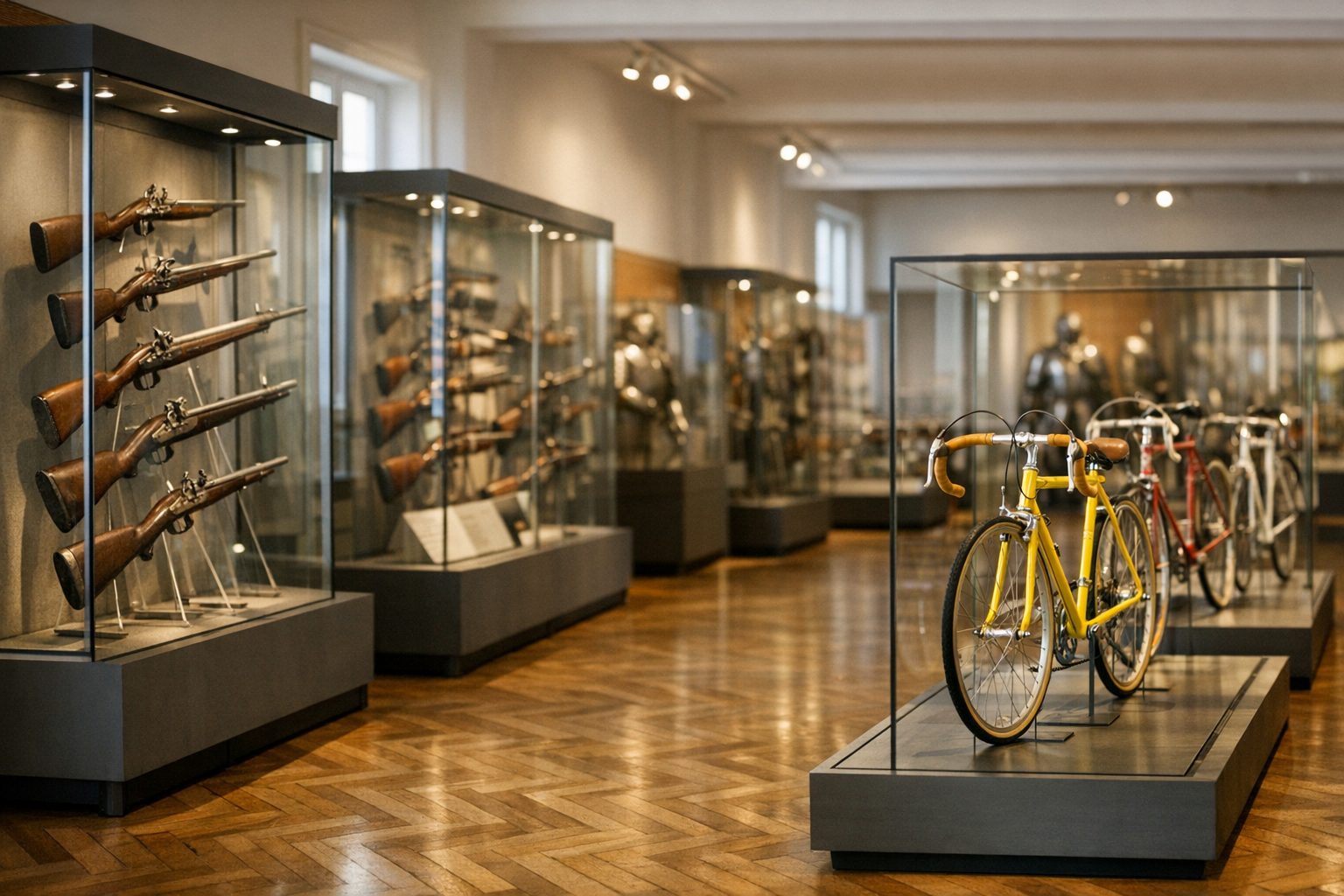
Musée d'Art et d'Industrie (MAI) Situated at 2 Place Louis Comte near Place du Peuple in the city centre, the Musée d'Art et d'Industrie is the single most essential museum in Saint-Étienne, and it earns that status through sheer specificity. The permanent collection is divided into three sections that map directly onto the city's industrial history. The arms gallery showcases firearms manufactured in Saint-Étienne from the 17th century through the modern era — including weapons produced for Napoleon's armies — with a craftsmanship so refined it borders on sculptural. The cycling section traces bicycle manufacturing history with a collection that includes extraordinary vintage racing machines from the era when Saint-Étienne was a hub of French cycle production. The third section is devoted to passementerie, the intricate silk ribbon weaving tradition that connected the city to Lyon's wider silk trade. Entry costs approximately €5.50 for adults, €3 reduced, and is free for under-18s. Hours run Tuesday through Sunday, 10am to 6pm.
Musée d'Art Moderne et Contemporain (MAMC+) Located at La Terrasse in the inner suburb of Saint-Priest-en-Jarez (accessible by Tram T1 or bus, roughly 5km from the city centre), MAMC+ is one of France's most significant modern art museums outside Paris — and one of its most undervisited. The permanent collection runs to approximately 19,000 works including pieces by Picasso, Léger, Matisse, Warhol, and Dubuffet, with particular depth in post-war French art. Crucially, admission to the permanent collection is free, making this one of the best value cultural experiences in the Auvergne-Rhône-Alpes region. Temporary exhibitions are priced at approximately €6–8. The museum's purpose-built contemporary building offers free on-site parking, and the permanent galleries are rarely crowded even on Saturday afternoons.
Musée de la Mine For a visceral understanding of what Saint-Étienne actually was for two centuries, the Musée de la Mine at 3 Boulevard Franchet d'Esperey is unmissable. The city was one of France's primary coal mining centres from the 18th century until its last mine closed in 1983. Guided tours descend into real former mine shafts and convey the physical reality of that world with considerable atmosphere. Underground temperature holds at a constant 12°C year-round regardless of the season above, so bring a layer. Tours last approximately 1.5 hours, run Tuesday through Sunday at multiple times daily, and cost roughly €9–10 for adults and €6 for children aged 6–12. Because tours are guided and groups are capped, booking in advance is strongly recommended, particularly at weekends and during French school holidays. Full details at musee-mine.saint-etienne.fr.
Plan this trip
Le Corbusier at Firminy: A UNESCO World Heritage Site Worth the Detour
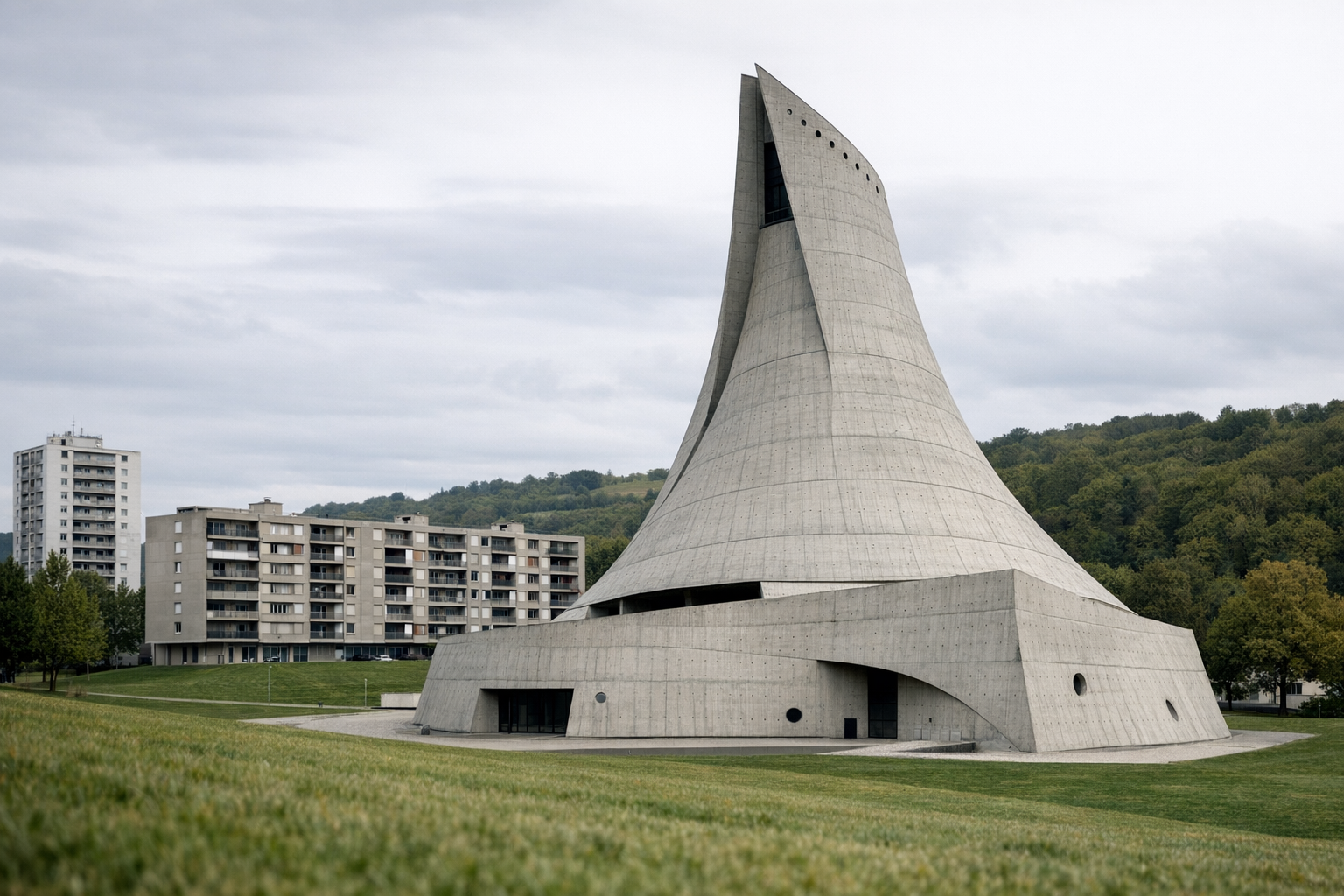
Just 15 kilometres southwest of Saint-Étienne lies Firminy, home to one of the most ambitious modernist architectural ensembles in Europe. Le Corbusier was commissioned to redesign a quarter of Firminy in the early 1960s as part of the Firminy-Vert project, and the result is a concentration of his work — a Unité d'Habitation housing block, a cultural centre, a stadium, and a church — that has no parallel outside Chandigarh.
The Église Saint-Pierre de Firminy is the centrepiece and the most poignant. Le Corbusier died in 1965 before the church was completed; it was finally finished in 2006 following his original plans, making it one of only three churches he designed worldwide. In 2016, it was inscribed as a UNESCO World Heritage Site as part of the 'Architectural Work of Le Corbusier' transnational nomination that includes the Villa Savoye and the Unité d'Habitation in Marseille. Entry to the church costs approximately €5, with guided tours available. The Unité d'Habitation at Firminy can also be visited, and several apartments within the building are available for overnight stays at approximately €80–120 per night — a genuinely special experience for architecture enthusiasts that is impossible to replicate anywhere else in France. Full details via sitecorbusierfirminy.fr. Getting there is straightforward by car (around 20 minutes from Saint-Étienne city centre) or by bus from the main bus station (approximately 40 minutes).
Pairing a Firminy visit with your Saint-Étienne itinerary adds minimal effort and substantial reward. If you are travelling with a rental car — which we strongly recommend for exploring the surrounding region — Firminy fits naturally into a morning or afternoon slot.
ASSE and the Cauldron: Saint-Étienne's Football Obsession
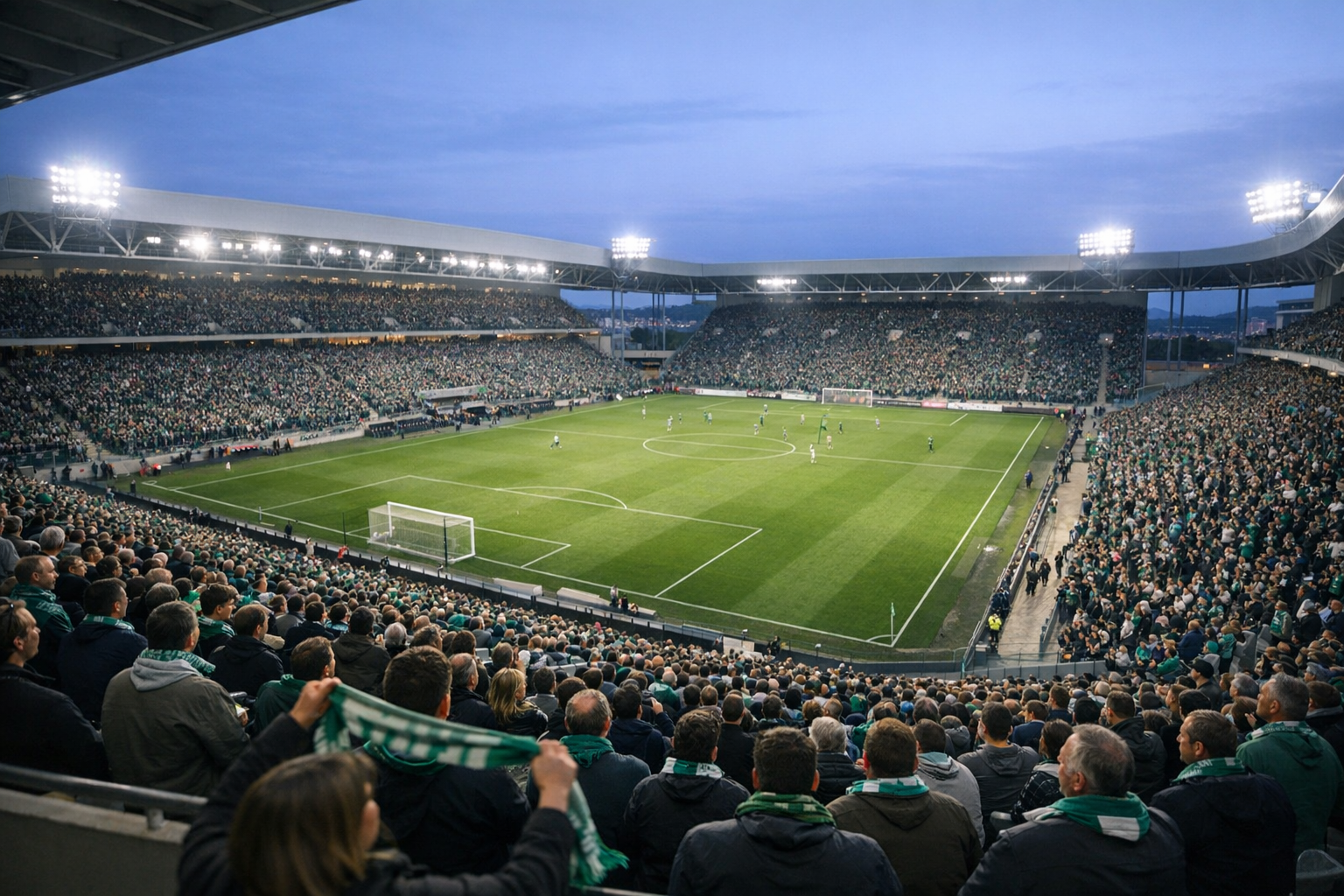
To visit Saint-Étienne without engaging with its football culture is to miss something fundamental about the city's soul. Association Sportive de Saint-Étienne, founded in 1919, is one of France's most storied clubs, sharing the record for most Ligue 1 titles (10) with Olympique de Marseille. Its green shirts, its nickname Les Verts, and its home — Stade Geoffroy-Guichard — are institutions in French sporting life.
The stadium itself, known as Le Chaudron (The Cauldron) for the intensity of its atmosphere, holds approximately 42,000 spectators following recent renovations and hosted matches during UEFA Euro 2016. It sits southeast of the city centre, easily reached by Tram T3 to the Stade Geoffroy Guichard stop. On non-match days, stadium tours costing approximately €8–10 per person are available and worth taking — the pitch-side perspective is genuinely impressive, and the adjacent Musée des Verts documents the club's history through trophies, shirts, and memorabilia.
For the 2025-2026 season, ASSE is back in Ligue 1 following promotion, which has reignited considerable local enthusiasm. Match tickets range from approximately €15 to €45 depending on category and fixture. One fixture above all others defines this rivalry: Le Derby against Olympique Lyonnais is one of the most passionately contested regional derbies in French football, and if your travel dates coincide with it, securing tickets (via asse.fr) should be a priority — they sell out rapidly. The club's European high-water mark, a 1976 European Cup Final appearance against Bayern Munich, still resonates across French football folklore, as does the legendary 'magic post' moment from the semi-final against Liverpool that year.
Plan this trip
Gorges de la Loire and Parc du Pilat: Nature on the City's Doorstep
Saint-Étienne's identity as a Ville Verte is not merely civic branding. Within 30 minutes of the city centre in virtually any direction, the landscape transforms from urban to genuinely wild — a quality that distinguishes it from almost every comparable French city.
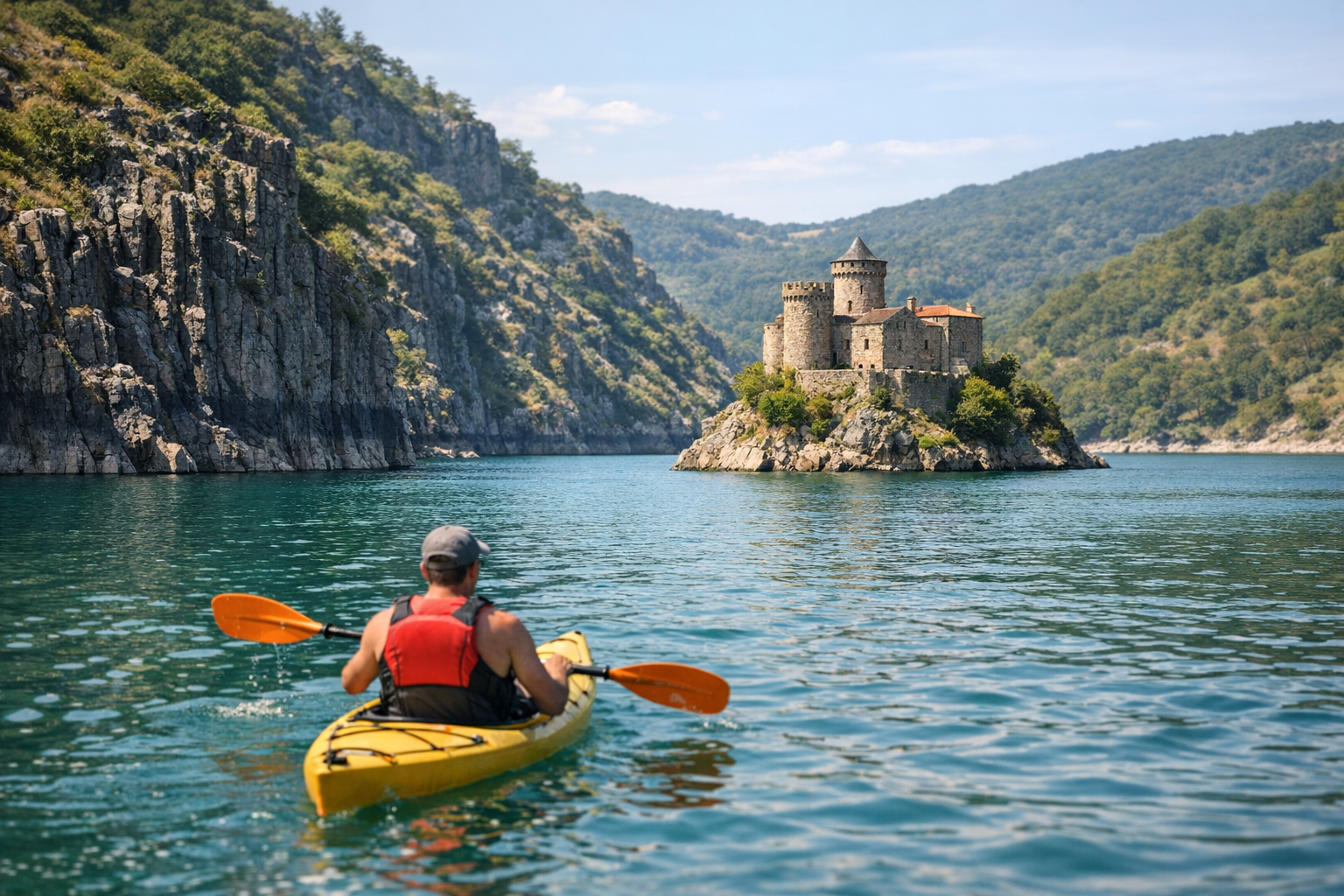
Gorges de la Loire The Loire River — France's longest — cuts spectacular gorges through basalt cliffs to the west and northwest of Saint-Étienne before widening into the gentler valley most visitors associate with château country further north. The Lac de Grangent, an artificial reservoir created within these gorges, is one of the most photogenic spots in the entire Loire département. A ruined medieval château sits on an island in the middle of the lake, accessible by seasonal boat tours (approximately €8–12) or framed from walking paths along the shoreline. The village of Saint-Victor-sur-Loire, roughly 15km from the city centre on the lake's edge, offers kayak and canoe rentals at approximately €15–25 for a half-day between May and September, along with waterside restaurants and a small beach area that fills with locals on summer weekends. For the best elevated views over the gorges, the village of Chambles (around 20km from the city) offers a vantage point that justifies the short drive.
Parc Naturel Régional du Pilat Directly east of Saint-Étienne, the Pilat massif rises to 1,432 metres at the Crêt de la Perdrix — making it accessible high country rather than distant Alpine wilderness. The park covers 700 square kilometres of mixed forest, moorland, and vineyard-fringed slopes. The Crêt de l'Oeillon at 1,370 metres is reachable by car to within a short 30-minute walk of the summit, where an orientation table on clear days points toward Mont Blanc. October brings some of the best autumn foliage in the Rhône-Alpes region. Walking trail maps are available from the Maison du Parc in Pélussin (the main gateway town, roughly 35km from Saint-Étienne) or from the city's tourist office on Place Roannelle. A rental car is the most practical way to explore both the gorges and the Pilat on the same trip — picking one up at Châteaucreux station from providers including Europcar, Hertz, or Sixt is straightforward and opens up the entire region. Plan your transport and accommodation together to make the most of these natural assets; our guide to planning a Loire Valley itinerary covers the wider regional context, and our car hire booking guide can help you secure the best rates.
Getting to Saint-Étienne and Getting Around
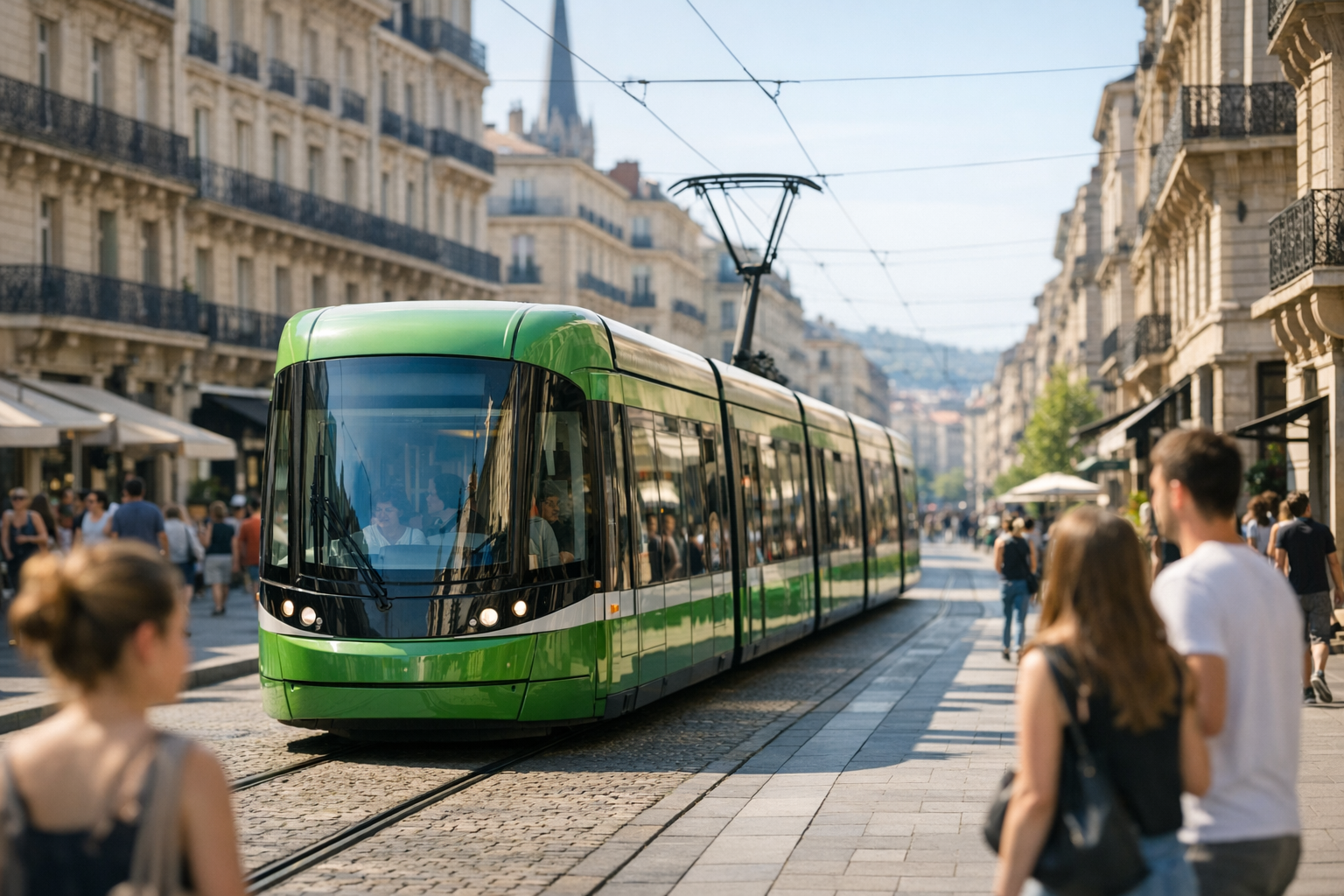
Arriving by Train The train is the cleanest option for reaching Saint-Étienne from Lyon. Direct TER and Intercités services depart Lyon Part-Dieu approximately every 30–60 minutes, with journey times of 40–55 minutes and fares typically ranging from €10 to €18. Book via SNCF Connect (sncf-connect.com). From Paris Gare de Lyon, the most practical route is a TGV to Lyon (approximately 2 hours, from around €29 in advance) followed by the connecting regional service — total journey time of roughly 3–4 hours city-centre to city-centre. Saint-Étienne has two stations: Châteaucreux is the main terminus, slightly north of the city centre but connected by tram; Carnot is more central but not served by all trains, so check your booking carefully.
Arriving by Air Lyon-Saint Exupéry Airport, 75km away, is the practical entry point for international travellers. There is no direct shuttle to Saint-Étienne; the standard route is the Satobus shuttle to Lyon Part-Dieu followed by the train (total around 1.5–2 hours). Saint-Étienne–Bouthéon Airport handles very limited scheduled traffic and is not a reliable option for most visitors.
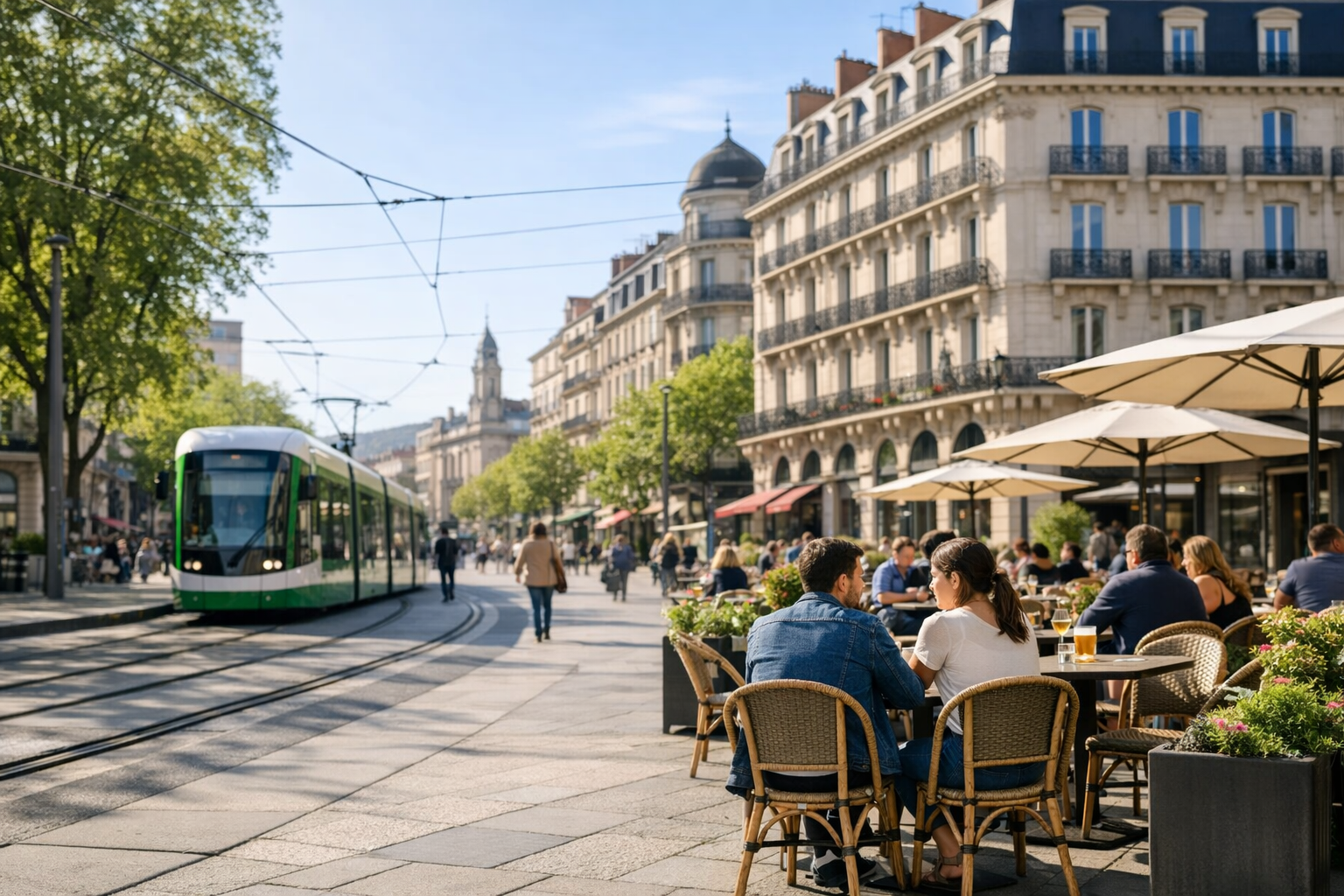
Getting Around the City The STAS network of four tram lines and connecting buses covers all major sights efficiently. A single ticket costs approximately €1.60; a day pass is around €4. Tram T1 reaches MAMC+ (the modern art museum); Tram T3 goes directly to Stade Geoffroy-Guichard. The city centre is compact and walkable between Place Jean Jaurès and Place du Peuple in around ten minutes on foot. The Vélo'St bike-share scheme provides docked bicycles throughout the centre with the first 30 minutes free on a day pass of around €1 — useful for flat central riding. For day trips to the Gorges de la Loire, Parc du Pilat, or Firminy, a rental car collected at Châteaucreux station is essentially indispensable. Our France transport guide covers train booking strategies, regional passes, and road trip planning in further detail.
Plan this trip
Where to Stay in Saint-Étienne
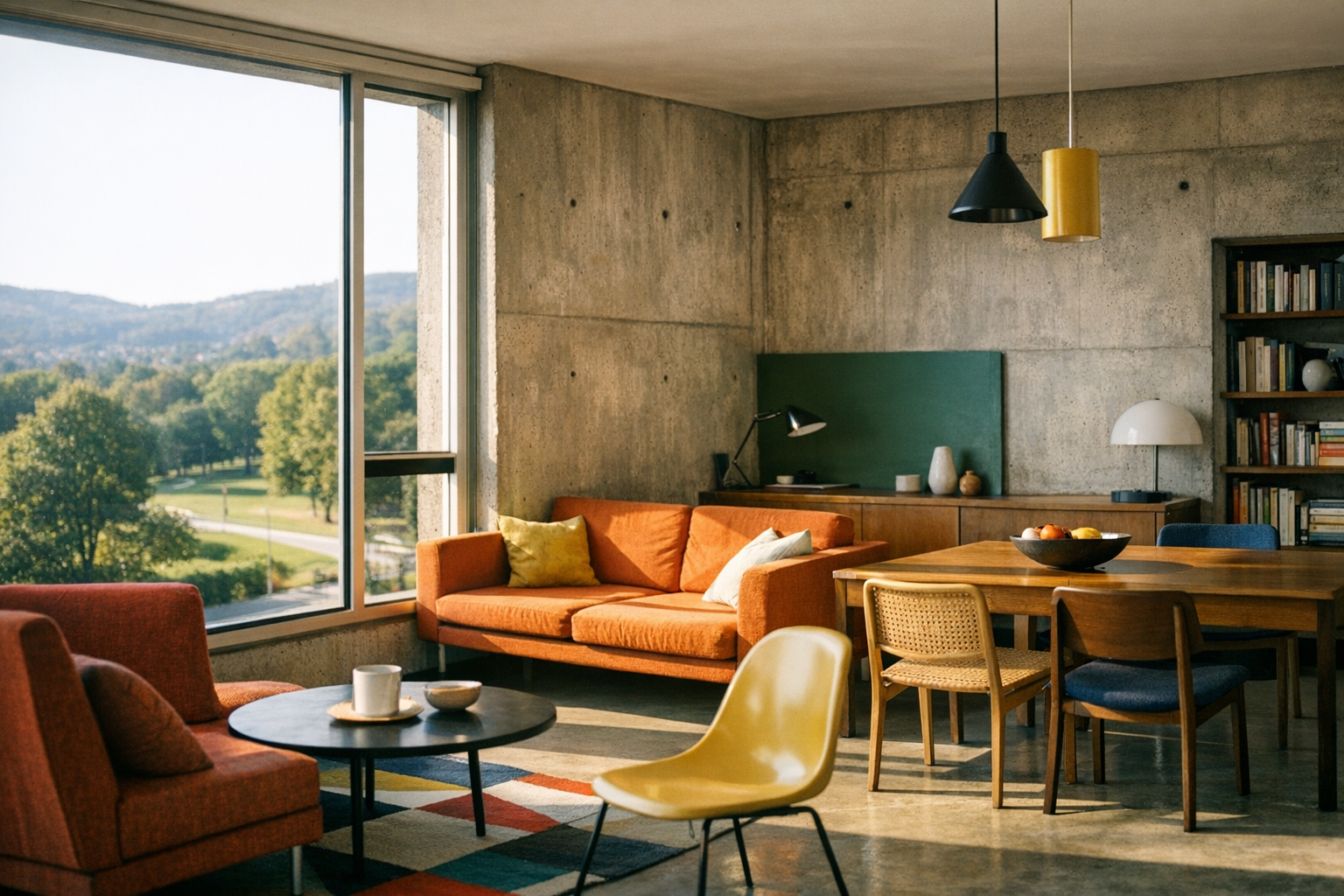
Saint-Étienne's accommodation landscape reflects its under-the-radar status: pricing is genuinely favourable compared to Lyon, options are plentiful in the mid-range, and there is one genuinely unique stay that belongs on any shortlist of memorable French accommodation experiences.
Budget (under €70/night) The Ibis Saint-Étienne Centre Gare near Châteaucreux station provides reliable, no-surprise accommodation at approximately €55–75 per night. Budget travellers should note that hostel infrastructure in Saint-Étienne is limited; some visitors base themselves in Lyon (a 45-minute train ride) for cheaper shared accommodation and commute in for day trips.
Mid-Range (€70–150/night) The Hôtel Astoria near Place Jean Jaurès is an independently operated property with consistently strong reviews for service and a location that puts everything in the city centre within walking distance, at approximately €75–100 per night. The NH Hotel Saint-Étienne offers reliable chain standards centrally at around €80–110. For proximity to the Cité du Design, the Mercure (Hôtel du Golf) sits in the right neighbourhood at approximately €85–120 per night.
Unique: Le Corbusier Apartments in Firminy For architecture enthusiasts, renting an apartment within the Unité d'Habitation in Firminy — one of Le Corbusier's completed residential buildings, 15km from the city centre — at approximately €80–120 per night is a rare opportunity. Waking inside a UNESCO World Heritage listed building and walking to the Église Saint-Pierre before the day visitors arrive is an experience that justifies the slight distance from central Saint-Étienne. Details via sitecorbusierfirminy.fr.
Luxury (€150+/night) Saint-Étienne does not currently offer five-star hotel infrastructure. Visitors requiring luxury positioning — a Relais & Châteaux property, for example — will be better served basing in Lyon and making Saint-Étienne a focused day trip or overnight excursion. Our luxury hotel guide for the Auvergne-Rhône-Alpes region provides curated options at every price point.
Frequently Asked Questions
Absolutely, particularly for travellers seeking an authentic, off-the-beaten-path French city experience. Saint-Étienne offers world-class museums (including one of France's best modern art collections outside Paris), UNESCO-recognised design culture, dramatic natural landscapes within 30 minutes of the centre, and living football heritage — all at prices noticeably lower than Lyon or Paris. It is especially compelling during the Biennale Internationale Design, next scheduled for March 2026.
Two full days covers the core city museums and the Cité du Design comfortably. Add a third day for Firminy (Le Corbusier) and either the Gorges de la Loire or Parc du Pilat. Four days allows you to see everything at a relaxed pace, including a possible ASSE match. Saint-Étienne pairs naturally with Lyon as part of a longer Auvergne-Rhône-Alpes itinerary.
Spring (April–June) and early autumn (September–October) offer the most pleasant weather and the liveliest cultural calendar. March 2026 is the standout target date for the Biennale Internationale Design. Summer (July–August) is warm and good for lake and gorge activities, though the city itself quietens as locals depart for holidays. Winter is mild by alpine standards given the 500m elevation, but can be grey — though Christmas markets add seasonal atmosphere.
The train is the best option. Direct TER services from Lyon Part-Dieu to Saint-Étienne Châteaucreux run approximately every 30–60 minutes with a journey time of 40–55 minutes and fares from around €10–18 each way. Book in advance via sncf-connect.com for the lowest prices. By car, the A47 motorway takes approximately one hour depending on traffic.
It is one of Europe's most important design festivals, held every two years across the Cité du Design campus and venues throughout the city. The 2024 edition attracted approximately 200,000 visitors over three weeks. The next edition is scheduled for March 2026. The event showcases international design, architecture, and innovation across dozens of exhibitions, workshops, and public installations. General admission during the Biennale was approximately €10–15 per day in 2024; check citedudesign.com for 2026 pricing and exact dates.
For the city itself, no — the STAS tram network and walkable centre mean you can access all key museums and cultural sites without a vehicle. However, a rental car is strongly recommended if you want to explore the Gorges de la Loire, Lac de Grangent, Parc Naturel Régional du Pilat, or the Le Corbusier ensemble at Firminy. Car hire is available at Châteaucreux station from major providers including Europcar, Hertz, and Sixt.
The permanent collection at Musée d'Art Moderne et Contemporain (MAMC+) in Saint-Priest-en-Jarez is free of charge as of 2024–2025, making it one of the most remarkable free cultural experiences in France. The collection includes works by Picasso, Matisse, Warhol, Léger, and Dubuffet across approximately 19,000 pieces. Temporary exhibitions carry a separate charge of approximately €6–8. Always confirm current pricing via the museum's official website before visiting.
Yes. ASSE is back in Ligue 1 for the 2024-25 season and tickets are available via asse.fr or the official ticketing partner, ranging from approximately €15–45 depending on category and fixture. The stadium (Stade Geoffroy-Guichard, Le Chaudron) is easy to reach by Tram T3. The most sought-after fixture is Le Derby against Olympique Lyonnais, which sells out extremely fast. On non-match days, stadium tours are available for approximately €8–10 per person.