
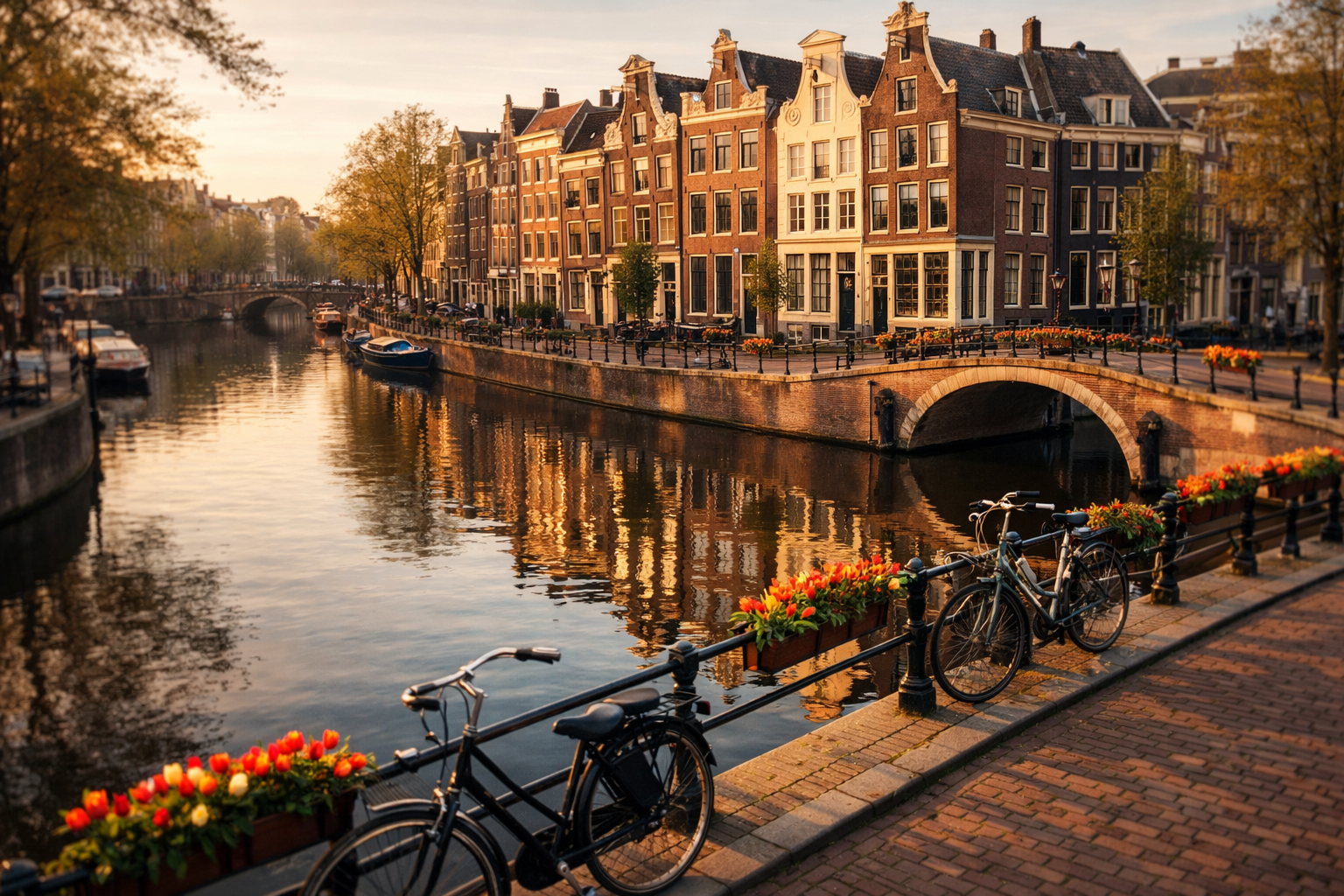
Why Amsterdam Belongs on Every Serious Traveler's Bucket List
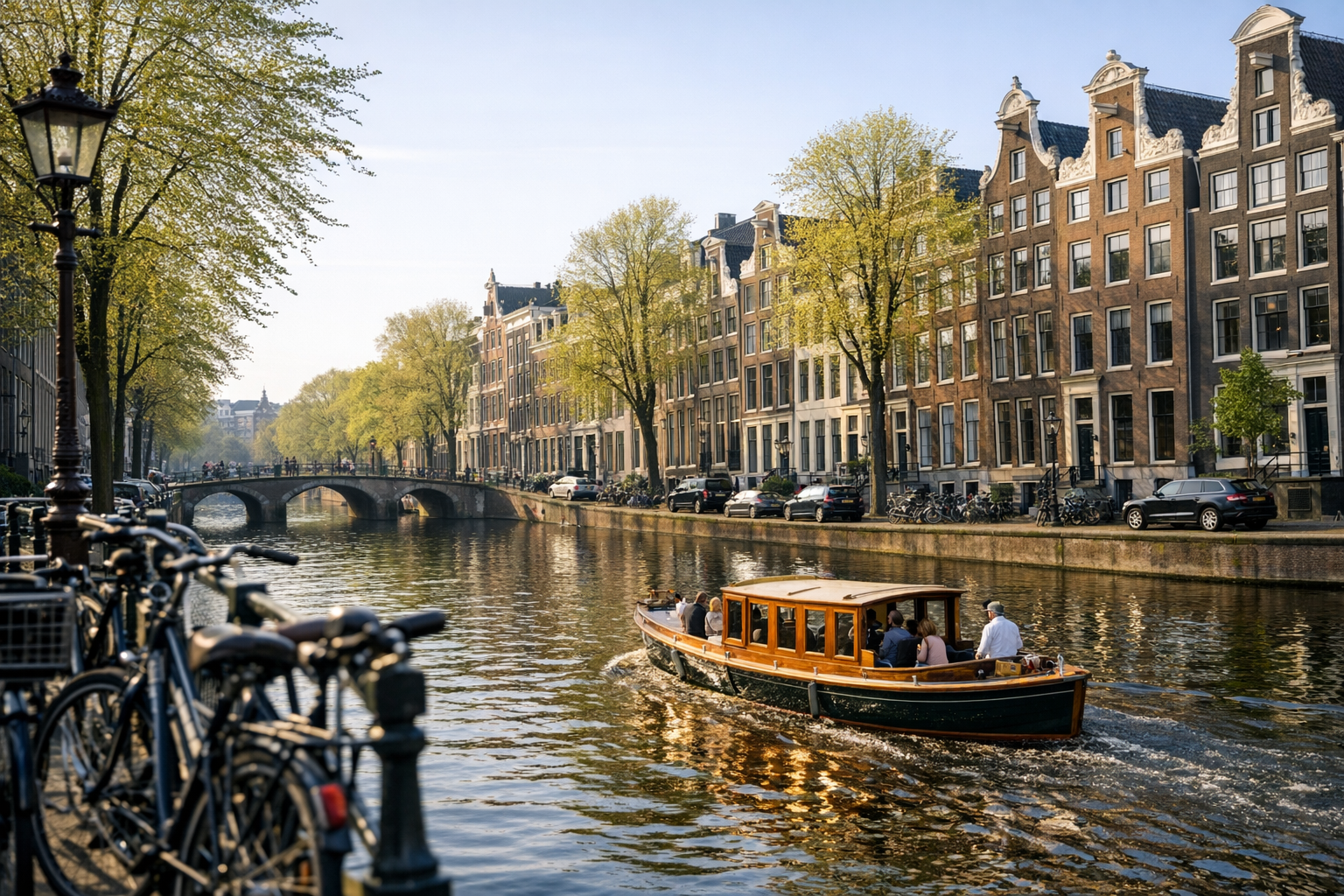
Amsterdam is one of those rare cities that rewards every style of traveler — the museum devotee, the architecture enthusiast, the food explorer, and the aimless wanderer who simply wants to get lost along a canal. With approximately 165 canals, 1,500 bridges, and 2,500 houseboats woven across a city of under one million residents, Amsterdam packs an extraordinary density of culture, history, and beauty into a remarkably walkable footprint.
Designated a UNESCO World Heritage Site in 2010, the 17th-century canal ring known as the grachtengordel remains one of the most intact examples of planned urban expansion anywhere in the world. The same merchants who built their narrow, elegantly gabled townhouses along the Herengracht, Keizersgracht, and Prinsengracht four centuries ago would recognize the skyline today — and that continuity is part of what makes Amsterdam so compelling.
What surprises most first-time visitors is how livable the city feels despite drawing approximately 20 million tourists annually (a figure that returned to pre-2020 levels by 2024). Amsterdam's residents still cycle to work, shop at open-air markets, and drink in brown cafés that have barely changed since the 1700s. The city has implemented tourist reduction policies since 2023–2024 — including restrictions in the Red Light District and limits on short-term rentals — which means the experience of visiting is becoming more curated and, in many respects, more authentic.
For practical travel planning purposes, Amsterdam is also one of the most English-friendly destinations in the world, with more than 90% of the population speaking English fluently — one of the highest rates globally. Navigation, ordering food, buying museum tickets, and asking for directions are all seamless, even without a single word of Dutch.
When to Visit Amsterdam: Seasonal Breakdown for Smart Travel Planning
Timing your Amsterdam vacation correctly can mean the difference between a magical experience and a frustrating one. Each season offers a genuinely distinct character, and your ideal travel window depends on your priorities.
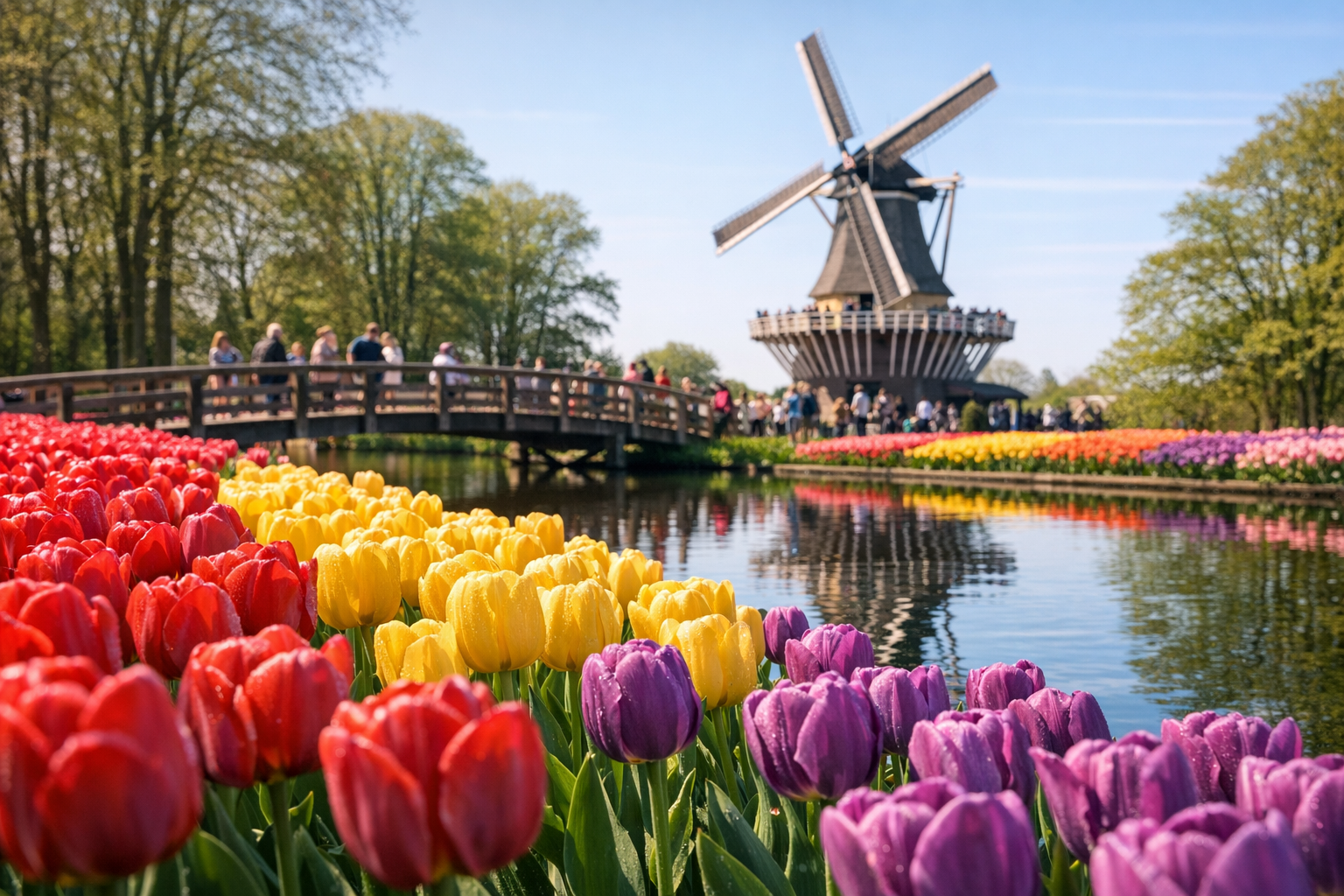
Spring (April–May): The Peak Season Worth the Crowds April is the single most popular month to visit Amsterdam, and for good reason. Tulip season peaks around mid-April, Keukenhof Gardens — located 35 kilometers southwest in Lisse — runs from March 20 through May 11, 2025, and the city erupts in orange for King's Day (Koningsdag) on April 26, 2025. King's Day is a city-wide street party with flea markets on the canals, live music in every square, and the kind of communal joy that is impossible to manufacture. Temperatures range from 8–15°C (46–59°F), and hotel prices run €180–€350 per night. Book accommodation three to six months in advance for this window.
Summer (June–August): Maximum Daylight, Maximum Crowds June brings up to 17 hours of daylight, making canal-side evenings feel endless in the best possible way. Amsterdam Pride's famous Canal Pride boat parade takes place in late July or early August 2025, drawing enormous crowds and genuine celebration. Summer is the warmest season (18–25°C / 64–77°F), though rain remains possible year-round — always pack a light jacket. Hotel prices peak at €200–€400 per night, and the major museums will be at their most crowded.
Autumn (September–October): The Smartest Value Window For travelers who want the full Amsterdam experience at a fraction of the stress, mid-September through October is the insider's choice. Crowds drop sharply after the summer holidays, fall foliage transforms the canal-side trees into amber and gold, and hotel prices fall to €120–€220 per night. Museum Night (Museum Nacht), typically held in early November, opens 50-plus museums until 2am on a single evening ticket of approximately €20.
Winter (November–February): The Underrated Season Amsterdam in winter is atmospheric in a way that photographs cannot fully capture — candlelit canal reflections, Christmas markets at Museumplein and Rembrandtplein, and the Amsterdam Light Festival (November 28, 2025 – January 18, 2026), which installs illuminated art installations along the canals. Walking the route is free; boat tours through the illuminated canal ring run €25–€35. Hotel prices drop to €90–€170 per night, and the museums are at their most peaceful. The trade-off is short daylight hours and temperatures of 2–7°C (35–45°F), which feel colder with Amsterdam's characteristic damp wind.
For most first-time visitors working through a comprehensive travel planning guide, late April (avoiding King's Day itself unless you embrace chaos) or early September offers the best balance of good weather, open attractions, and manageable crowds.
The Essential Amsterdam Attractions: What to See and How to Plan Each Visit
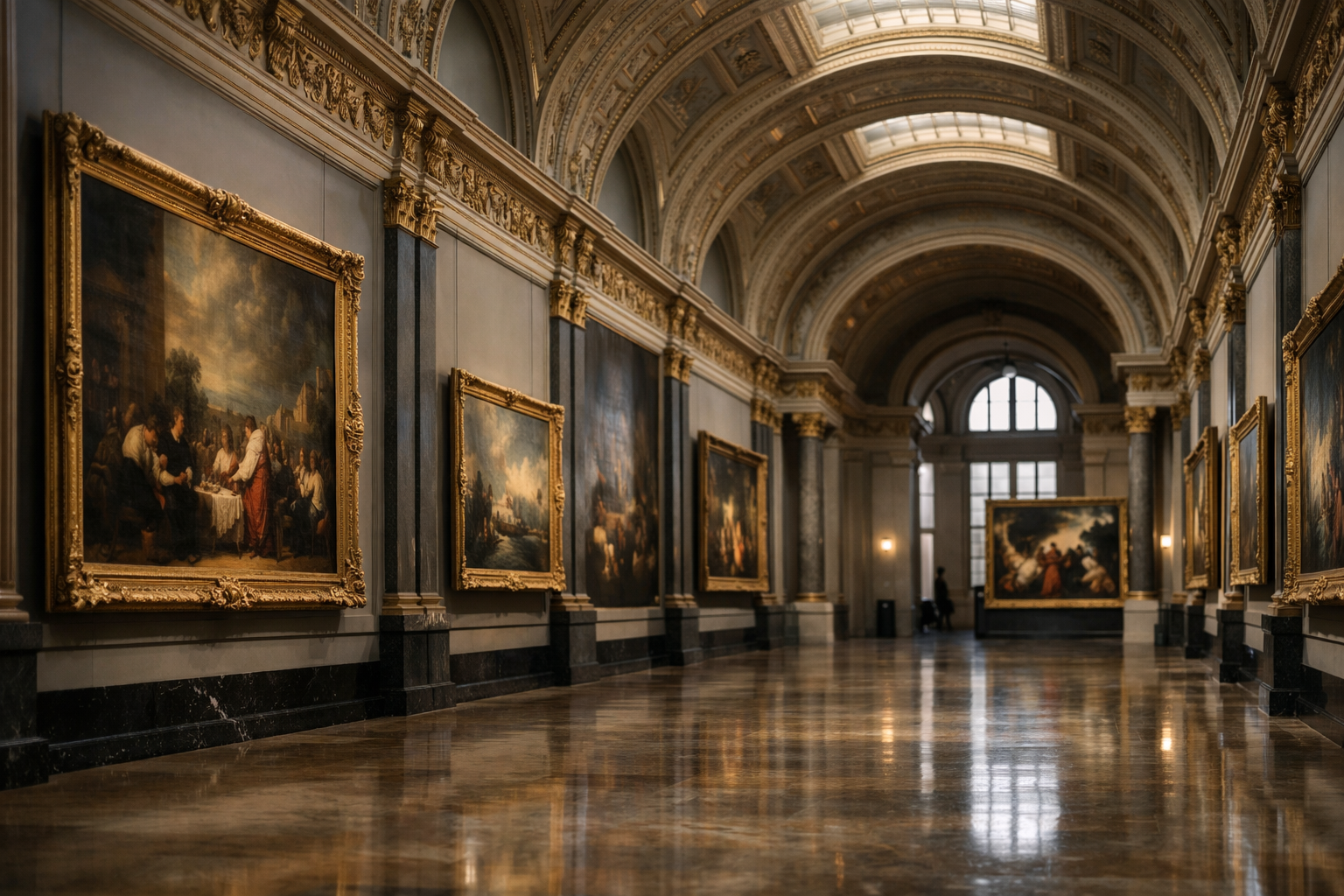
Amsterdam's cultural infrastructure is extraordinary, but it requires advance planning — especially for the headline museums, which frequently sell out timed-entry slots weeks ahead during peak season. Here is a frank, practical assessment of the city's top attractions.
Rijksmuseum: The Crown Jewel The Rijksmuseum (Museumstraat 1) is, quite simply, the world's premier collection of Dutch Golden Age art. Open daily 9:00–17:00 with adult admission of €22.50 (under-18 free), it houses more than 8,000 objects drawn from a total collection exceeding one million pieces. Rembrandt's *The Night Watch* — recently restored and displayed in its own dedicated gallery, the Eregalerij — and Vermeer's *The Milkmaid* alone justify the visit. Book online with timed entry well in advance; during April and August, slots disappear two to three weeks ahead. Allow a minimum of two to four hours, and note that the museum's Museumtuin garden is free to enter even without a ticket.
Anne Frank House: Book the Moment Tickets Release No Amsterdam visit is complete without the Anne Frank House (Westermarkt 20), where Anne Frank and her family hid in the Secret Annex from 1942 to 1944. The experience is sobering, essential, and not to be rushed. Tickets (€16 for adults, €8 for ages 10–17, free under 10) are released approximately two months in advance and sell out within hours for peak dates. Online booking is mandatory. The museum operates extended hours until 22:00 specifically to distribute visitor flow. If you miss the initial release, check at 9pm the night before your desired date — canceled tickets occasionally re-enter the system. Allow 90 minutes minimum.
Van Gogh Museum: Friday Evenings Are Your Secret Weapon The Van Gogh Museum (Museumplein 6) holds the world's largest collection of Van Gogh's work — more than 200 paintings, 500 drawings, and 700 letters, including *Sunflowers*, *The Potato Eaters*, and *Almond Blossom*. Adult admission is €22 (ages 13–17 pay €11; under-13 free), and the audio guide is included via app. Mandatory timed entry sells out weeks ahead in peak season. Friday evenings, when the museum stays open until 21:00, are consistently less crowded and include access to a wine bar — the best version of this visit for those who plan accordingly.
Keukenhof Gardens: A Day Trip That Requires Its Own Itinerary Located 35 kilometers southwest of Amsterdam near Lisse, Keukenhof is the world's largest flower garden and one of the most visually spectacular experiences in all of Europe. The 2025 season runs March 20 through May 11 with a theme of 'Colour Explosion.' The 32-hectare park contains more than seven million flowering bulbs across 800-plus tulip varieties. Adult admission is €22 (children 3–11 pay €11). The most efficient route from Amsterdam is the Connexxion Bus 858 combo ticket from Centraal Station, which costs approximately €35 total including entry. Visit on a weekday before 11am if possible — weekends during peak bloom in mid-April are extraordinarily crowded.
A'DAM Lookout and Amsterdam-Noord: Cross the IJ Many first-time visitors never cross the IJ river to Amsterdam-Noord, which is a significant oversight. The IJ Ferry from Centraal Station is free, runs 24 hours a day, and takes three minutes. On the far bank, the A'DAM Lookout Tower (Overhoeksplein 5) offers 360-degree panoramic views from 100 meters, with adult admission of €17.50 — or €23 if you add the 'Over the Edge' swing that hangs over the building's exterior. Also in Amsterdam-Noord: the Eye Film Museum with its striking white deconstructivist building (free entry to the building and café; exhibitions cost €11–€12) and the NDSM Wharf creative arts district, home to Pllek beach bar and rotating public art installations.
The Stedelijk Museum: The Insider's Choice For contemporary and modern art (1870 to present), the Stedelijk Museum (Museumplein 13) holds works by Mondrian, Malevich, Warhol, and Basquiat at €20 adult admission — and crucially, no advance booking is required. It is far less crowded than the Rijksmuseum or Van Gogh Museum and consistently delivers an outstanding experience for those who seek it out.
Plan this trip
Amsterdam's Neighborhoods: Where to Base Yourself and What to Explore
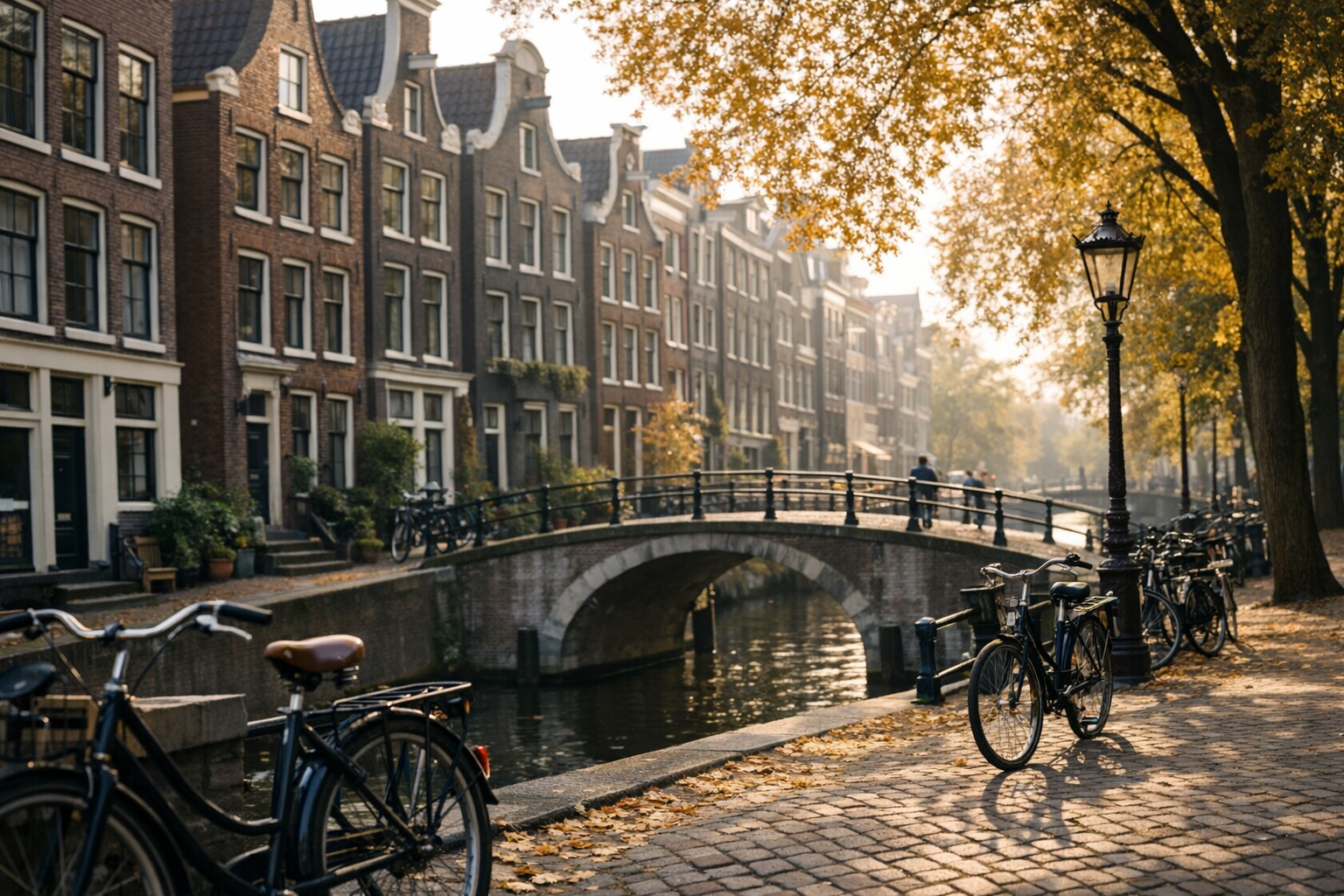
Amsterdam's neighborhoods are distinct enough that where you stay shapes the entire texture of your trip. Understanding the city's geography is one of the most useful travel planning things you can do before departure.
Jordaan: The Most Beloved Neighborhood in Amsterdam The Jordaan, situated west of the historic canal ring, was a working-class district in the 17th century and is now one of Amsterdam's most desirable addresses. Its narrow streets and intimate canals — lined with independent bookshops, gallery spaces, and boutique cheese shops — reward slow exploration. The Saturday Noordermarkt (open 9:00–16:00) combines an organic farmers market with a vintage flea market, and entry is free. Westerkerk, Amsterdam's tallest church at 85 meters and the burial place of Rembrandt, charges €10 for its tower climb. The Houseboat Museum on Prinsengracht 296 (admission €5) offers a genuine glimpse into life aboard a 1914 canal vessel.
De Pijp: Where Locals Actually Eat The De Pijp neighborhood, south of the canal ring, is Amsterdam's most multicultural and arguably most food-forward district. Albert Cuyp Market, the city's largest outdoor market with 260-plus stalls (open Monday–Saturday, 9:00–17:00, free entry), is the essential starting point. Fresh stroopwafels straight off the iron cost €1–€2; raw herring with onions and pickles runs €3–€4. This is where to eat like an Amsterdammer rather than a tourist.
Centrum and De Wallen: The Historic Core Dam Square, the Royal Palace (Koninklijk Paleis Amsterdam, admission €12.50 for adults, free under 18), and the medieval De Wallen neighborhood form the historic heart of Amsterdam. Note that De Wallen — the Red Light District — is undergoing significant regulatory change. The city council has voted to ban outdoor prostitution activities as part of broader tourism management policies, with implementation ongoing as of 2025. The area still contains Amsterdam's oldest building, the Oude Kerk (circa 1306, entry €12.50), which regularly hosts contemporary art exhibitions, as well as the Hash Marihuana & Hemp Museum (entry €12). Photography of sex workers is strictly prohibited and actively enforced.
Amsterdam-Noord, Plantage, and Oost For travelers who want to experience the city beyond the tourist circuit, Amsterdam-Noord (reached free via IJ ferry), the green Plantage neighborhood (home to Artis Royal Zoo and the Hortus Botanicus botanical garden), and the multicultural Oost district (Dappermarkt, Foodhallen Oost) each offer a more residential, unhurried version of Amsterdam life.
Getting Around Amsterdam: Transportation Planning Made Simple
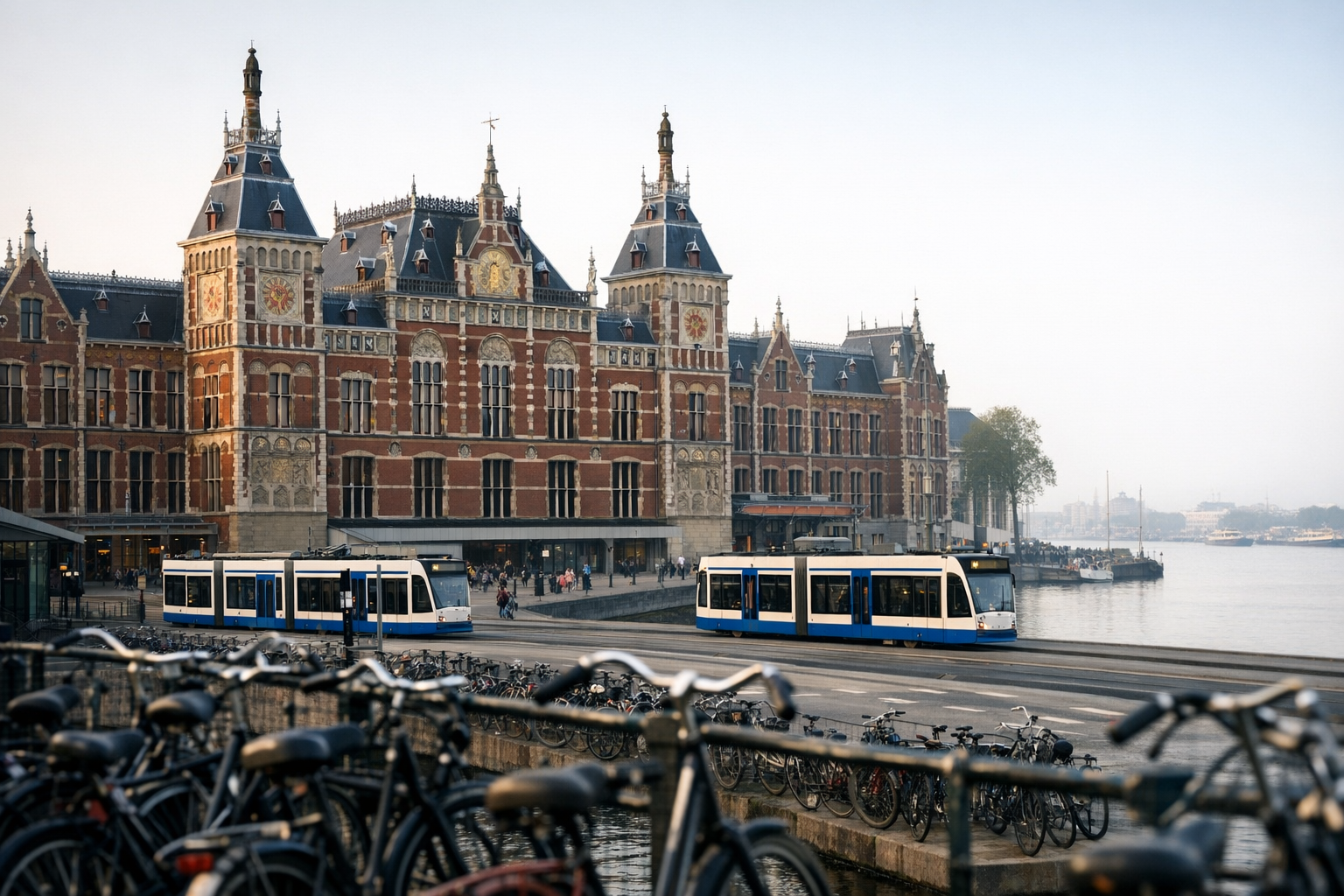
Amsterdam is one of the most navigable cities in Europe, and understanding your transportation options before you arrive removes a significant source of travel stress.
Cycling: The Local Way Amsterdam has approximately 881,000 bicycles in a city of 921,000 people — the math alone tells you something about local culture. Rental bikes are available throughout the city for €12–€15 per day from operators including MacBike, Donkey Republic, and Swapfiets. The cycling infrastructure is world-class, with dedicated lanes on virtually every major road. First-time cyclists should be aware that Amsterdam's cycling rules are enforced: stay in bike lanes, signal turns, and lock your bike with a quality chain lock (bike theft is common).
Tram, Metro, and Bus The GVB public transit network covers the entire city efficiently. The most tourist-relevant tram lines are 2, 5, and 12, which connect Centraal Station to the museum district (Rijksmuseum, Van Gogh Museum, Stedelijk). Single-ride tickets cost approximately €4; the GVB multi-day pass (24-hour: €9.50, 48-hour: €16.50, 72-hour: €22) offers better value for those planning multiple daily trips. The OV-chipkaart (national transit card, available at Centraal Station) works across trams, buses, and the metro.
Amsterdam Centraal: Your Navigation Hub Amsterdam Centraal Station is the city's travel nerve center — virtually all tourism radiates outward from here. Intercity trains to Schiphol Airport run every 10–15 minutes and take approximately 17 minutes (€4.60 single fare). Trains to Rotterdam, The Hague, Utrecht, and Brussels depart regularly. The IJ Ferry to Amsterdam-Noord departs from the rear of Centraal Station and is completely free.
Canal Boats Beyond the iconic hop-on hop-off canal tours (€18–€25 for a classic one-hour circuit from operators including Lovers, Blue Boat, and Stromma), Amsterdam offers electric boat rentals (€15–€25 per hour from Boaty and Canal Motorboats), pedal boats, and stand-up paddleboard hire (€15–€20 per hour). Evening dinner cruises range from €60 to €120 depending on the operator and menu.
Getting to Amsterdam from Schiphol Amsterdam Airport Schiphol (AMS) is 18 kilometers southwest of the city center and is consistently ranked among Europe's three busiest airports. The direct train connection to Centraal Station (approximately 17 minutes, departing every 10–15 minutes) is by far the most efficient arrival option. Taxis and rideshares are available but significantly more expensive — expect €35–€50 for the airport-to-center journey. For those requiring premium transportation, pre-booking a private transfer ensures a seamless arrival, particularly useful for groups or travelers with substantial luggage. For guidance on arranging luxury airport transfers and ground transportation, visit our [airport car service planning page](/airport-car-service/) for curated operator recommendations.
Plan this trip
Amsterdam Food, Markets, and the Brown Café Culture
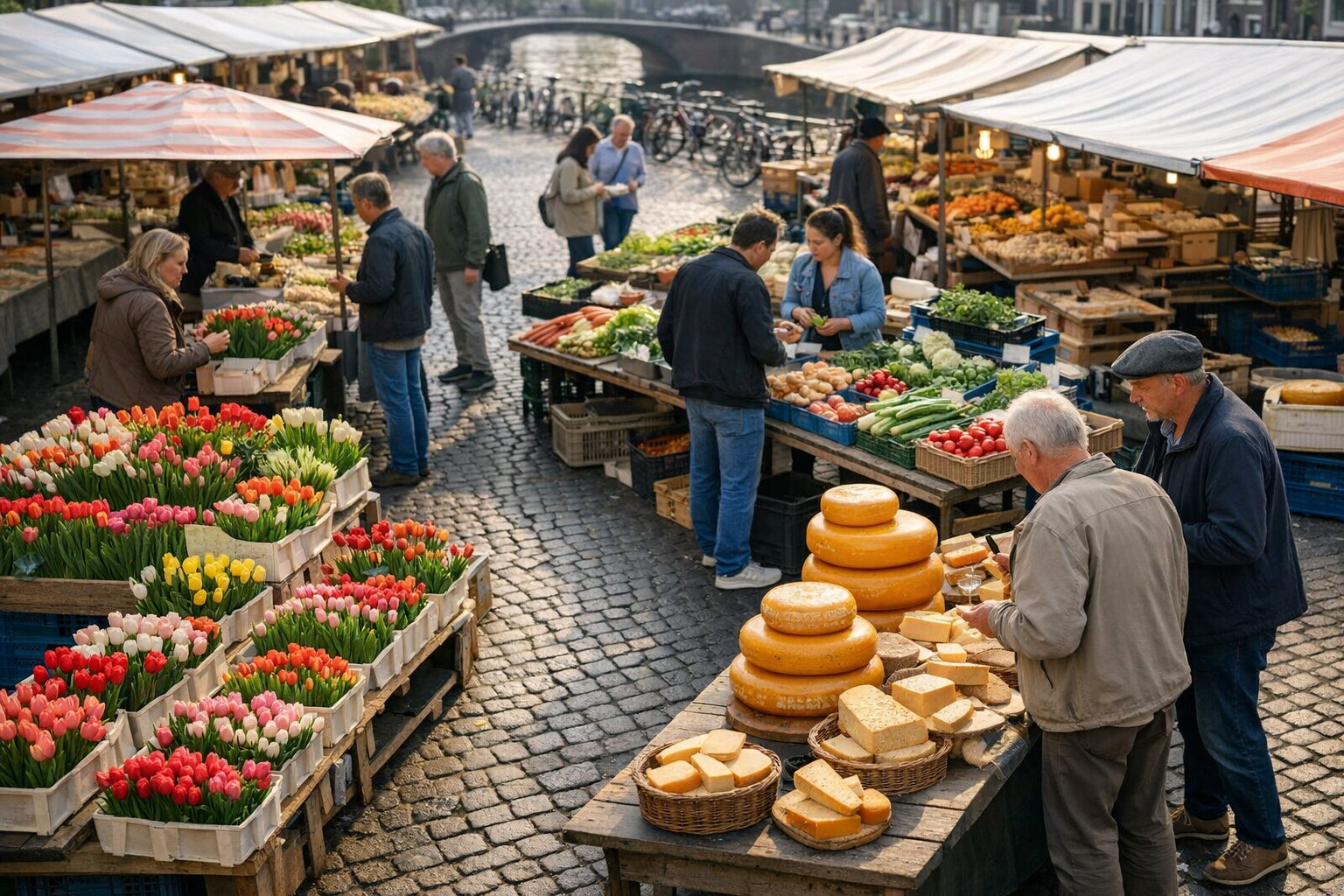
Any honest Amsterdam travel planning guide must address the food scene with the same seriousness given to museums and canals. Dutch cuisine has an underserved reputation — the street food alone justifies building an itinerary around it.
Essential Dutch Foods Start with a fresh stroopwafel at any outdoor market — the caramel-filled waffle sandwich costs €1–€2 and is infinitely better than any packaged version. Between May and July, Hollandse Nieuwe (raw herring with onions and pickles) is at its freshest and most delicious, running €4–€6 from market stalls. Bitterballen — deep-fried crispy balls of beef ragout — are the essential pub snack, available at virtually every brown café for €6–€10 a plate. Poffertjes (mini Dutch pancakes with powdered sugar and butter) make an ideal market breakfast for €5–€8.
For Dutch cheese, skip the overpriced tourist shops on the main canals and head to Reypenaer or Henri Willig, where knowledgeable staff offer tastings of aged Gouda at various stages (jong, belegen, oud) alongside genuine Edam and Leerdammer.
Where to Eat: Specific Recommendations Café de Jaren (Nieuwe Doelenstraat 20) is the quintessential Amsterdam grand café — a two-story space with a terrace that juts over the Amstel River, excellent brunch dishes ranging €12–€18, and a clientele that mixes students, journalists, and tourists without friction. For something more neighborhood-oriented, Restaurant Rijsel (Marcusstraat 52) serves Belgian-influenced moules frites and roast chicken at €18–€28 per main course; book ahead.
Foodhallen (Bellamyplein 51, West) is Amsterdam's answer to the indoor food market format — 20-plus vendors under one covered roof, with dishes running €8–€18 and a bar scene that extends well into the evening. It is ideal for groups with divergent tastes. For the distinctly Dutch fast-food experience, seek out a FEBO automat — wall-mounted machines dispensing warm snacks (kroketten, frikandellen) for €1.50–€3, operated since 1941 and beloved by locals without irony.
Brown Cafés: The Social Infrastructure of Amsterdam The bruine kroeg (brown café) is Amsterdam's most important institution that no guidebook adequately conveys. Named for the tobacco-stained patina that accumulates over decades on wooden interiors, these bars are genuinely old — Café Hoppe on Spui 18 dates to 1670 and remains a legitimate local haunt rather than a tourist recreation. Café 't Smalle (Egelantiersgracht 12, Jordaan), dating from 1786, has a canal-side terrace that defines the word atmospheric. Draft beer runs €3.50–€5.50; craft options reach €8. Spend at least one evening in a brown café without an agenda — it is one of the most authentically Dutch experiences available to a visitor.
The Markets Albert Cuyp Market in De Pijp (Monday–Saturday, 9:00–17:00) is the city's largest outdoor market at 260-plus stalls and is entirely free to browse. Waterlooplein Flea Market (Monday–Saturday, 9:00–17:00) covers vintage clothing and antiques in the shadow of the Jewish Historical Museum. The Bloemenmarkt on Singel Canal — the world's only floating flower market, operating on permanent barges — sells genuine tulip bulbs and seeds (exportable within the EU; check phytosanitary regulations for non-EU travel) alongside the inevitable tourist merchandise.
For travelers planning a multi-city European itinerary, or looking to extend their trip with a private villa or apartment rental that allows home cooking with market-fresh ingredients, exploring curated accommodation options through our [vacation rental planning resource](/vacation-rentals/) can significantly enhance the Amsterdam experience.
Amsterdam Travel Planning Essentials: Budgeting, Booking, and Practical Tips
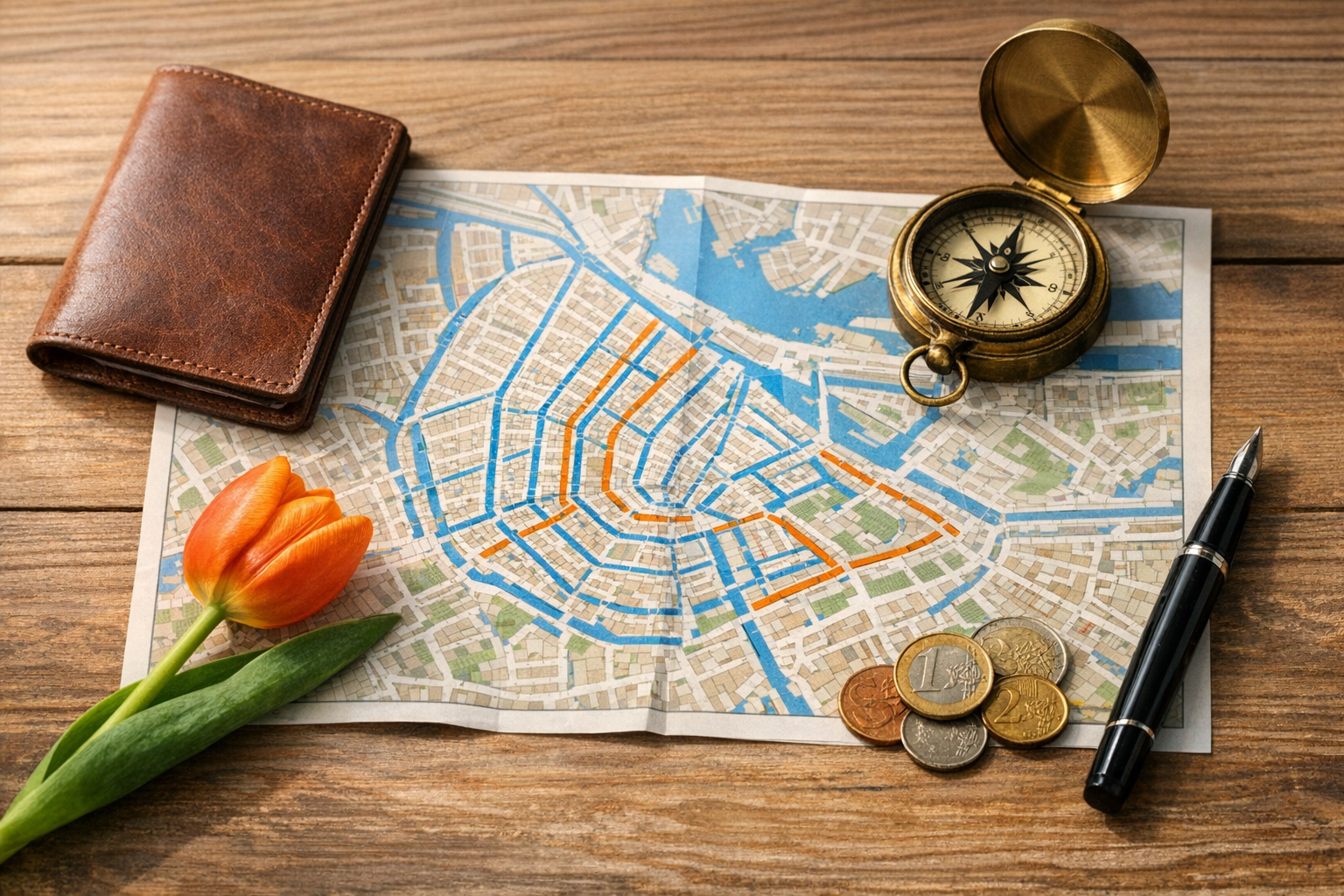
The mechanics of Amsterdam travel planning — booking windows, budgets, practical logistics — are where many otherwise well-researched trips encounter avoidable friction. Here is what experienced travelers know before they arrive.
Budgeting Realistically Amsterdam is a mid-to-high-cost European destination. A realistic daily budget for a couple staying in a mid-range hotel breaks down approximately as follows: accommodation €150–€280 (hotel), museum admissions €35–€50 per person for two attractions, meals €50–€80 per person across breakfast, lunch, and a sit-down dinner, transit €10–€18 (tram day pass or bike rental), and incidentals €20–€40. A comfortable two-person daily budget is therefore €400–€550, excluding flights.
What to Book in Advance The non-negotiable advance bookings for any Amsterdam vacation: - Anne Frank House: Book the moment tickets release (approximately two months ahead); do not assume you can purchase at the door - Rijksmuseum: Book at least two to three weeks ahead during April, July, and August - Van Gogh Museum: Same window as Rijksmuseum; Friday evening slots are the last to sell out - Keukenhof Gardens: Book tickets online before travel; the combo bus+entry ticket from Connexxion also sells out - Hotels: Three to six months ahead for April; six to eight weeks ahead for summer
The I Amsterdam City Card The I Amsterdam City Card offers free or discounted entry to more than 70 museums and free unlimited use of the GVB public transit network. A 24-hour card costs €65; 48 hours costs €85; 72 hours costs €105; 96 hours costs €120. The card pays for itself quickly if you plan to visit two or three major museums per day, but requires disciplined itinerary planning to extract full value.
Practical Details Power sockets in the Netherlands use the European standard Type F (Schuko) plug at 230V/50Hz — North American travelers need a plug adapter and should verify device voltage compatibility. Tap water in Amsterdam is among the cleanest in Europe — carry a refillable bottle. Tipping is appreciated but not mandatory; rounding up to the nearest euro or leaving 5–10% at sit-down restaurants is standard practice. Emergency number throughout the Netherlands is 112.
For travelers coordinating complex multi-leg itineraries — combining Amsterdam with Brussels, Paris, or Copenhagen by rail, or arranging premium ground transportation for business or leisure groups — detailed route planning support is available through our [international travel planning services page](/international-travel-planning/), where you'll find guidance on private car arrangements, airport logistics, and multi-city coordination.
Plan this trip
Frequently Asked Questions
Most travelers find that three to four full days covers Amsterdam's essential highlights comfortably — the Rijksmuseum, Anne Frank House, Van Gogh Museum, a canal boat tour, and time to explore at least two neighborhoods such as Jordaan and De Pijp. Adding a day trip to Keukenhof Gardens (during March–May) or Haarlem extends the experience meaningfully. Budget-focused visitors who prioritize efficiently can cover the must-sees in two intense days, but four days allows for the slower, more rewarding pace that Amsterdam genuinely rewards.
Amsterdam sits in the mid-to-upper tier of European travel costs — more expensive than Lisbon or Budapest, comparable to Paris, and generally less expensive than Zurich or Copenhagen. The biggest costs are accommodation (€120–€350 per night depending on season and area) and museum admissions (€16–€22.50 per major attraction). Food costs can be managed strategically: eating at markets and brown cafés keeps daily food spend to €30–€50 per person, while sit-down restaurants push that to €60–€80. The I Amsterdam City Card (from €65 for 24 hours) can deliver strong value for museum-focused visitors.
No — Amsterdam has one of the highest English fluency rates in the world, with over 90% of the population speaking English comfortably. Museum staff, restaurant servers, transit operators, hotel reception, and shop owners will all speak English without hesitation. Learning a few Dutch courtesies (dank je wel for thank you, alsjeblieft for please) is appreciated but entirely optional. Amsterdam is among the most accessible European capitals for English-speaking visitors.
The direct train from Amsterdam Airport Schiphol (AMS) to Amsterdam Centraal Station is the fastest and most economical option — the journey takes approximately 17 minutes, trains depart every 10–15 minutes, and a single ticket costs €4.60. This is almost universally the right choice for individual travelers and couples. For groups, travelers with heavy luggage, or those arriving late at night requiring premium service, a pre-booked private transfer to the city center costs approximately €35–€50 and eliminates navigation stress on arrival.
The peak tulip bloom in the Netherlands typically occurs in mid-April, though the exact timing varies by year depending on winter temperatures and spring weather patterns. Keukenhof Gardens, which runs from March 20 to May 11, 2025, is the most concentrated floral display available to visitors — 32 hectares and more than seven million bulbs. The surrounding Bollenstreek (bulb region) between Leiden and Haarlem also offers stunning field views from the roadside during this period. For the gardens themselves, visiting on a weekday morning before 11am significantly reduces crowds.
Yes — cycling is one of the most enjoyable ways to experience Amsterdam, and the infrastructure makes it accessible even for occasional cyclists. Rental bikes are available citywide for approximately €12–€15 per day. The key practical points: always use designated bike lanes (painted red on most roads), signal your intentions with hand signals, use the provided lock at every stop (bike theft is common), and be alert to trams at intersections. The city's relatively flat terrain makes cycling comfortable for most fitness levels, and many Amsterdam neighborhoods are genuinely better experienced by bike than by foot or tram.
The Amsterdam Light Festival is an annual outdoor art event in which illuminated artworks and light installations are placed along the city's canals and in public spaces. The 2025–2026 edition runs from November 28, 2025 through January 18, 2026. The walking route through the city is free of charge, making it one of Amsterdam's most accessible winter experiences. Guided boat tours through the illuminated canal ring are also available for approximately €25–€35 per person and offer a particularly atmospheric perspective on the installations. The festival draws large crowds on weekend evenings; weekday visits are recommended for a quieter experience.